
France’s politics can feel unusually personal for a European parliamentary democracy because the President and Prime Minister both play visible, but different, roles.
That balance is the key to understanding the Fifth Republic. It also explains why the makeup of government can change while the constitutional framework remains the same.
For a visitor, the practical value is context: a little political literacy makes the country’s news, institutions, and public symbols easier to read.
What Type of Government Does France Have?
France is a semi-presidential democratic republic under the 1958 Constitution of the Fifth Republic. It has a President, a Prime Minister and government, and a bicameral Parliament made up of the National Assembly and the Senate. Travelers using a France eSIM can keep official notices and local travel updates available when they need them.
Institution | Core role |
|---|---|
President | Head of state; appoints the Prime Minister. |
Prime Minister and government | Direct government action and policy. |
Parliament | Legislation and oversight through two chambers. |
When discussing forms of government, people often fall into either-or debates, like the classic question: “democracy or republic?”
However, France’s political system is not so simple. It follows a hybrid model known as the semi-presidential system, which means that while it is a democratic republic in nature, its exercise of power combines features of both presidential and parliamentary systems, maintaining a relative balance of power between the President and Parliament in practice.
At the core of the French government is a unicameral parliament composed of two parallel but equally important bodies—the National Assembly and the Senate. The National Assembly is the main legislative body, directly elected by the people, while the Senate focuses more on regional interests and is elected by representatives from various local and regional authorities.
This structure allows for dual representation of both the nation as a whole and its local regions.
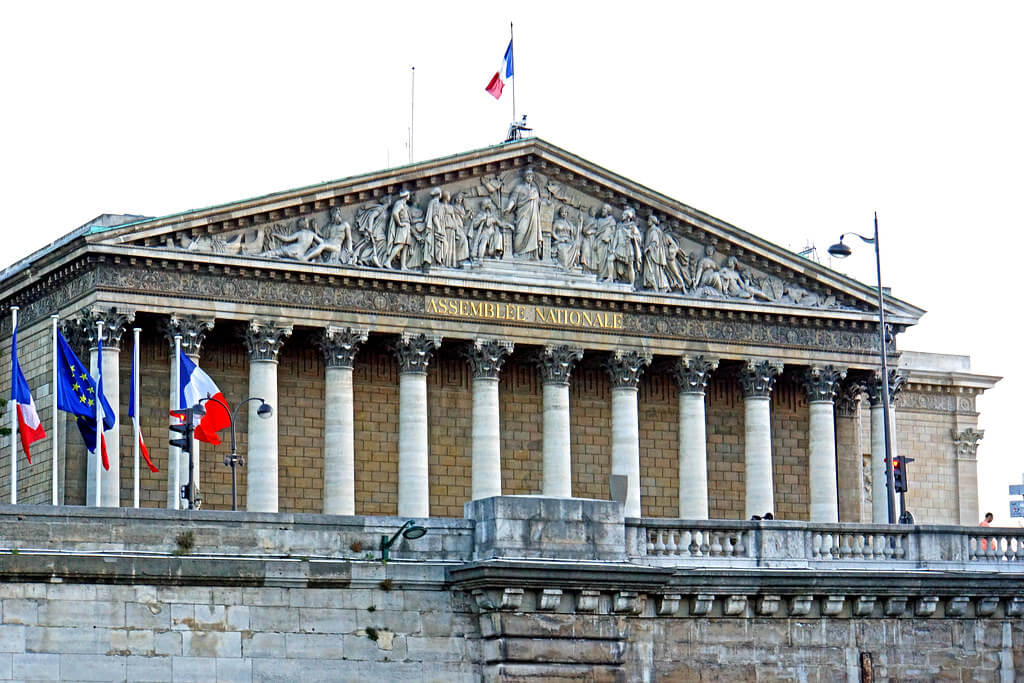
The 1958 Constitution of the Fifth Republic established what is known as a rationalized parliamentary system, designed to prevent the government from being easily overthrown by Parliament and to enhance political stability.
A 2008 reform slightly shifted the balance of power toward Parliament, strengthening the role of the National Assembly and its oversight of the government.
This system ensures a flexible separation of powers: the government is accountable to Parliament, while Parliament retains the authority to dissolve the National Assembly.
Are There Other Countries with Similar Government Systems?
Several other countries run semi-presidential systems similar to France, with the dual head of state and head of government characterized by distinct but interrelated roles and powers.
Portugal: Again, a semi-presidential system akin to France's, with the President wielding significant influence but executive power is shared with the Prime Minister.
Russia: Another semi-presidential system, although power is more heavily weighted toward the presidency.
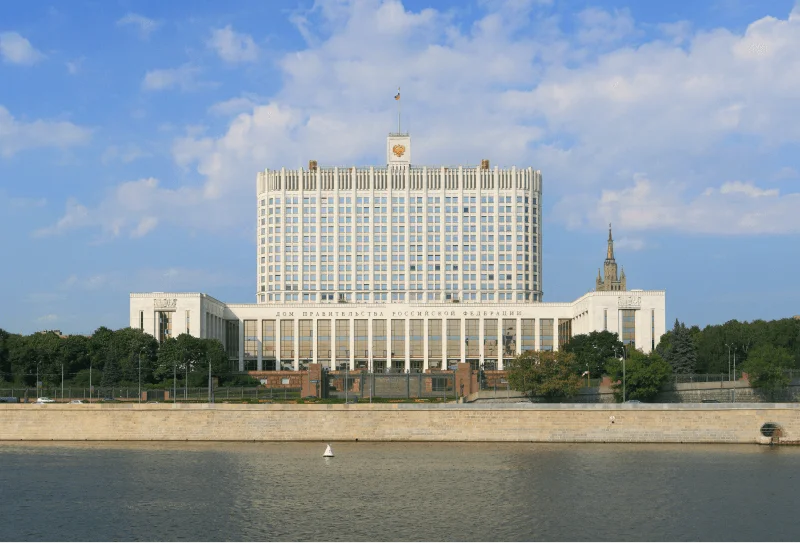
Finland: Here, the system is more akin to dividing power equally between president and parliament, as in France.
Composition of the French Government
The government’s highest leader is the Prime Minister, appointed by the President, who oversees administration and implements national policies affecting both the economy and daily life.
France’s statutory holidays and paid leave are managed by the Ministry of Labour, while cultural activities enrich the holiday experience.
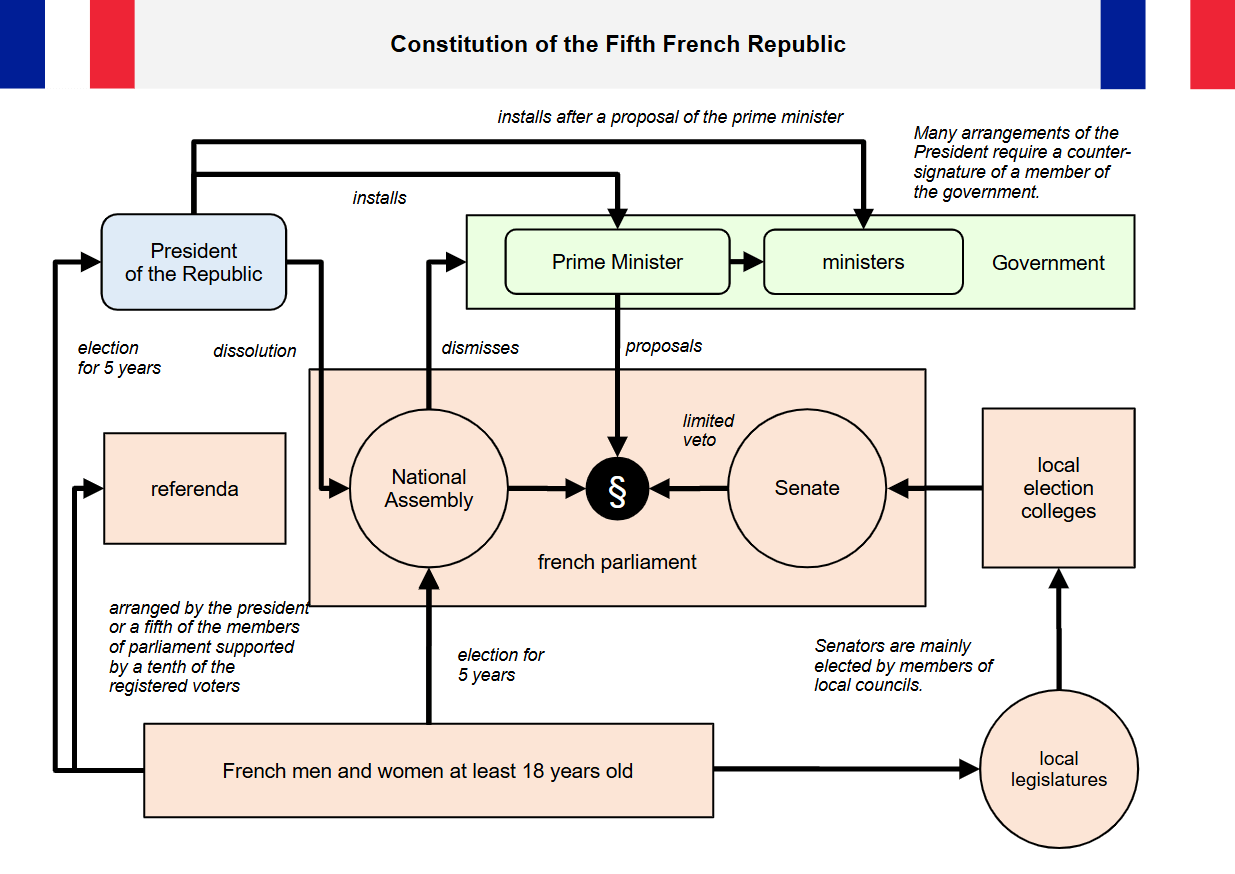
Ministers of Finance, the Interior, Foreign Affairs, European Affairs, and Defence each handle specific areas, ensuring the government runs efficiently.
Current office-holders
Office-holders and ministerial portfolios change, so use the official Élysée and French Government websites for the current lineup rather than relying on a dated list.
Check | Best source |
|---|---|
Current President | Élysée website. |
Current cabinet | French Government website. |
A Glimpse into French Political History
The modern system makes more sense when seen against the long shift from monarchy to republic and the later creation of the Fifth Republic.
When was the monarchy abolished and who was France's last king?
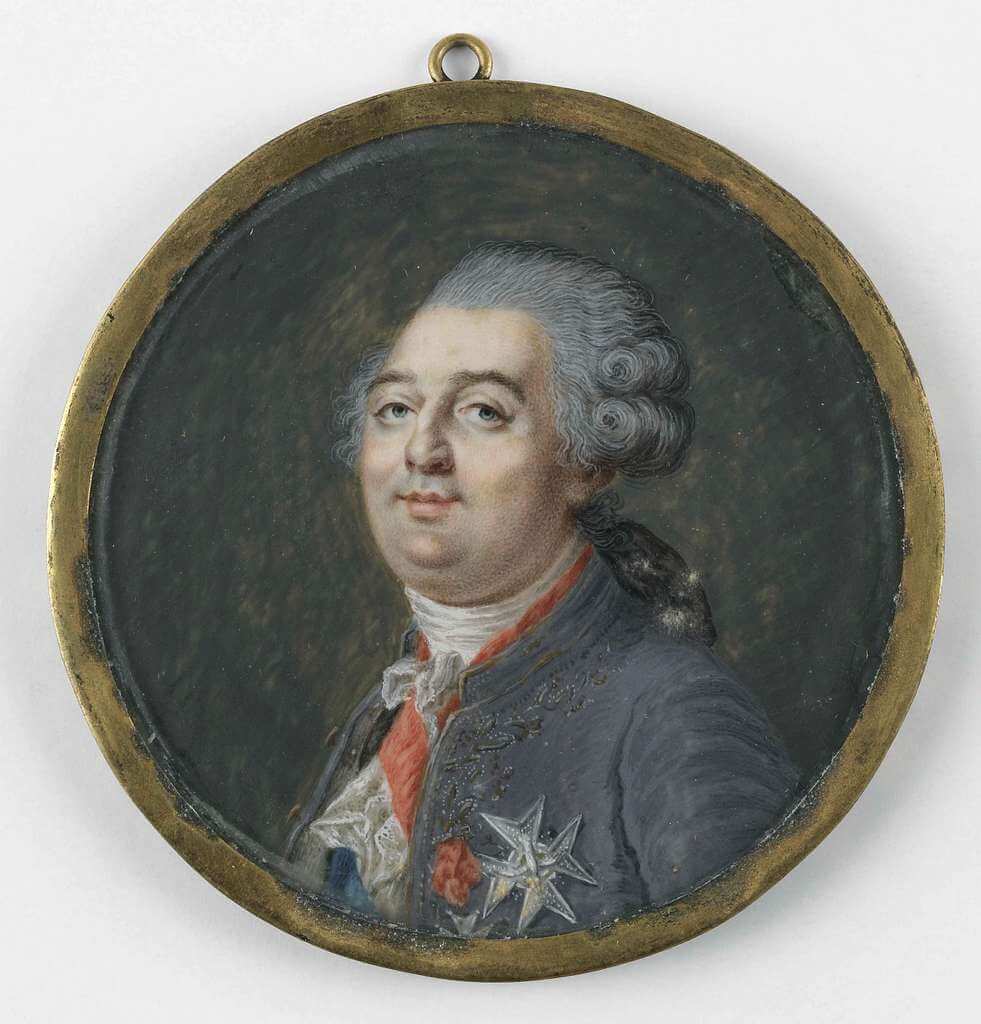
The French monarchy unraveled in the throes of the French Revolution, with the head of state, Louis XVI, being the monarch of France at the time of its dissolution.
Though he led the country until 1791, the uprisings and insurrections of the period saw him deposed, then executed in 1793, replacing centuries of hereditary rule with republicanism.
When did France become a democracy?
France's birth as a democracy came in fits and starts in the wake of the French Revolution, but the establishment of the Third Republic in 1870 proved the most significant, following the fallen empires and restored monarchies in both the revolution's own aftermath and the wake of the First Empire of Napoleon.
When was France unified as a single nation?
The idea of the nation-state was introduced in the 1791 Constitution of the French Revolution, establishing France's borders and identity as a truly singular entity for the first time in its history.
France government Tips
For a current office-holder or policy update, check an official French institution instead of an undated explainer.
FAQ
1. Is France a democracy or a republic?
It is both: France is a democratic republic with a semi-presidential system.
2. Does France have one parliament chamber?
No. Parliament is bicameral, with the National Assembly and the Senate.
3. Who appoints the Prime Minister?
The President of the Republic appoints the Prime Minister under the Constitution.
4. Why do France’s governments change?
Cabinet membership can change with political circumstances while the constitutional system remains in place.
5. Where can I check the current government?
The official French Government and Élysée sites publish current institutional information.
Conclusion
Understanding the French government is a keyhole gaze into how one of the world's most prominent nations has crafted a system choate with its past trials and present demands.
France is a heady mix of tradition, innovation and republicanism – now you know how its system works.
Stay tuned for more updates about France!