
Skiing in Japan offers more than a day on the slopes. Fresh snow, warming bowls of local food, and an evening soak in an onsen can turn a winter getaway into a memorable journey.
Whether you’re planning your first ski holiday or looking for a new mountain to explore, this guide helps you compare ten resort areas, choose your travel dates, and prepare for the trip.
An iRoamly eSIM makes it easier to check weather forecasts, find your accommodation, and coordinate transfers as you travel between the airport, town, and resort.
What Makes Skiing in Japan Special?
Japan’s appeal extends beyond its famous powder snow. Different mountain landscapes and the chance to combine skiing with hot springs, local food, and traditional towns give each resort area its own character.
Japan’s Powder Snow and Winter Conditions
Japan’s powder snow, often nicknamed “Japow,” is a major reason skiers travel here. Frequent winter storms can bring fresh snow to the mountains, with cold conditions helping it stay light and soft, particularly in Hokkaido.
However, fresh powder is only part of the experience. Wind, temperature, and visibility affect daily conditions, and storms can interrupt exposed lifts. A resort with enjoyable groomed runs as well as powder terrain gives you more options when the weather changes.
Varied Terrain Across Japan’s Ski Regions
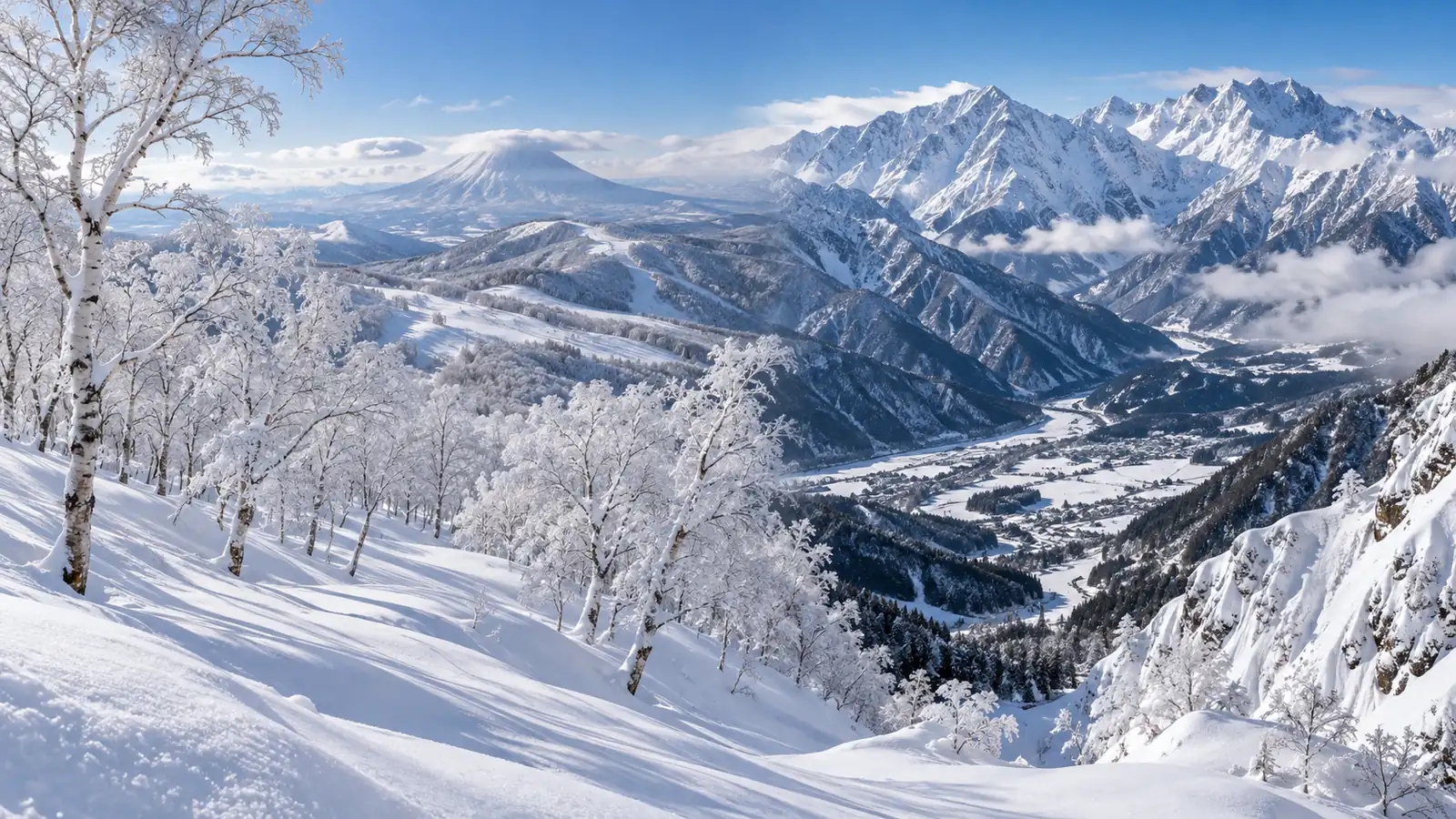
Japan’s ski regions offer different terrain, from wooded slopes to open alpine mountains and extensive groomed runs. Your preferred style of skiing can help narrow the choice before you compare individual resorts.
Region | Typical Terrain and Character | Best Suited To |
|---|---|---|
Hokkaido | Cold powder, wooded slopes, and many lower-angle runs | Skiers seeking powder and permitted tree-skiing areas |
Nagano and Niigata | A varied mix of alpine terrain, long groomed runs, and deep-snow resort clusters | Groups wanting a broad choice of terrain and resort styles |
Tohoku | Forested mountains, distinctive winter scenery, and a stronger regional atmosphere | Travelers interested in skiing alongside local culture |
These are broad differences rather than rules for every mountain. Resorts within the same region can vary considerably in steepness, beginner facilities, and permitted off-piste access.
Onsen Towns and Après-Ski Experiences
A day of skiing in Japan can end with a hot-spring bath, a bowl of noodles, or a walk through a snow-covered village. In traditional onsen towns, these experiences are part of the destination itself, giving you reasons to explore beyond the lifts.
The evening atmosphere also varies. Larger international resorts offer more restaurants, bars, and English-language services, while smaller towns often provide quieter nights and a closer connection to local life.
Choosing the setting you enjoy after skiing can matter just as much as choosing the terrain.
When Is Japan’s Best Ski Season?
The best time to ski in Japan depends on the experience you want. Midwinter generally suits powder-focused trips, while later dates offer longer days and more opportunities to combine skiing with sightseeing.
Period | Typical Conditions | Best For |
|---|---|---|
December | Snow coverage builds gradually, and some runs may remain closed | Early-season trips with flexible expectations |
January–February | Frequent snowfall, colder temperatures, and shorter days | Powder enthusiasts and dedicated ski holidays |
March–Spring | Longer daylight, milder weather, and increasingly variable snow | Families, groomed-run skiing, and sightseeing combinations |
December for Early-Season Ski Trips
December can suit travelers who want to begin their winter holiday before the main ski-season rush. However, opening dates depend on snowfall, and a resort may start operating with only part of its terrain available.
Northern and higher-elevation resorts are generally better options for early trips.
If skiing is the main purpose of your visit, traveling later in December usually gives snow more time to accumulate. Check actual snow coverage and open runs before committing to your daily plans.
January and February for Powder
January and February are usually the strongest months for travelers hoping to experience Japan’s famous powder. They suit trips built around several consecutive ski days, giving you more chances to enjoy fresh snowfall.
Allow some flexibility rather than scheduling every day too tightly. Storms may affect visibility, lifts, and transport, while popular winter dates bring greater demand for accommodation and lessons. Weekday skiing can help reduce crowd pressure at busy resorts.
March and Spring for Longer Days
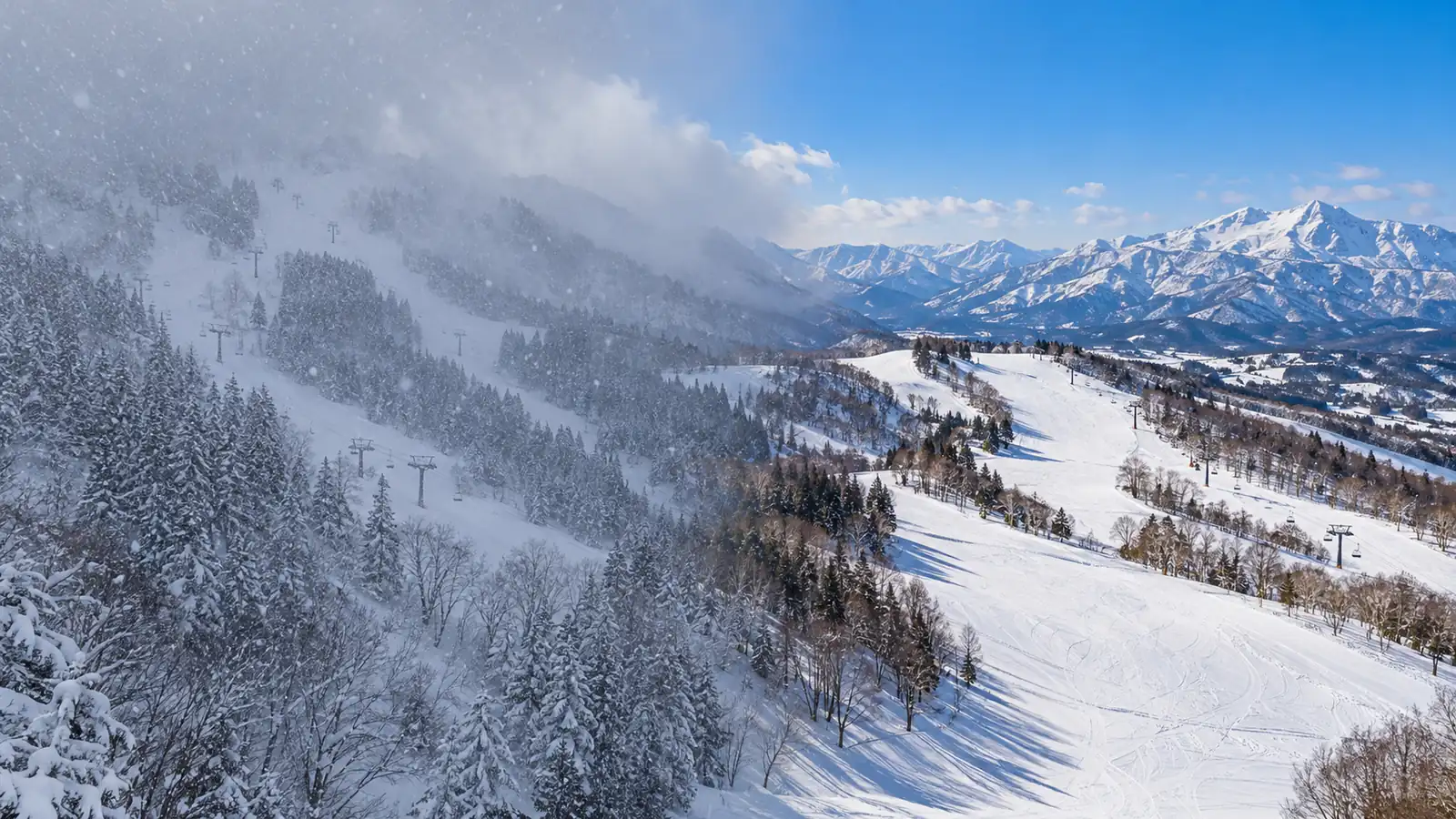
March offers a different balance: more daylight, generally milder temperatures, and easier opportunities to combine mountain time with town visits or other sightseeing. It can be an appealing choice for families and travelers who mainly enjoy groomed runs.
Snow conditions increasingly depend on elevation and the day’s temperature. Lower slopes may become soft or slushy, while higher terrain can retain better coverage. Later in spring, choose resorts with confirmed operations and check which lifts and runs remain open.
Choosing Dates for Your Itinerary
For a short ski break, select one resort with convenient access so travel takes up less of your holiday. A stay of about a week allows several ski days and a flexible day for weather, rest, or an onsen visit.
Longer trips can include a second resort area, but leave a clear transfer day between them. Whatever the length, avoid making the final ski day depend on a tight connection to your flight home.
Where to Ski in Japan?
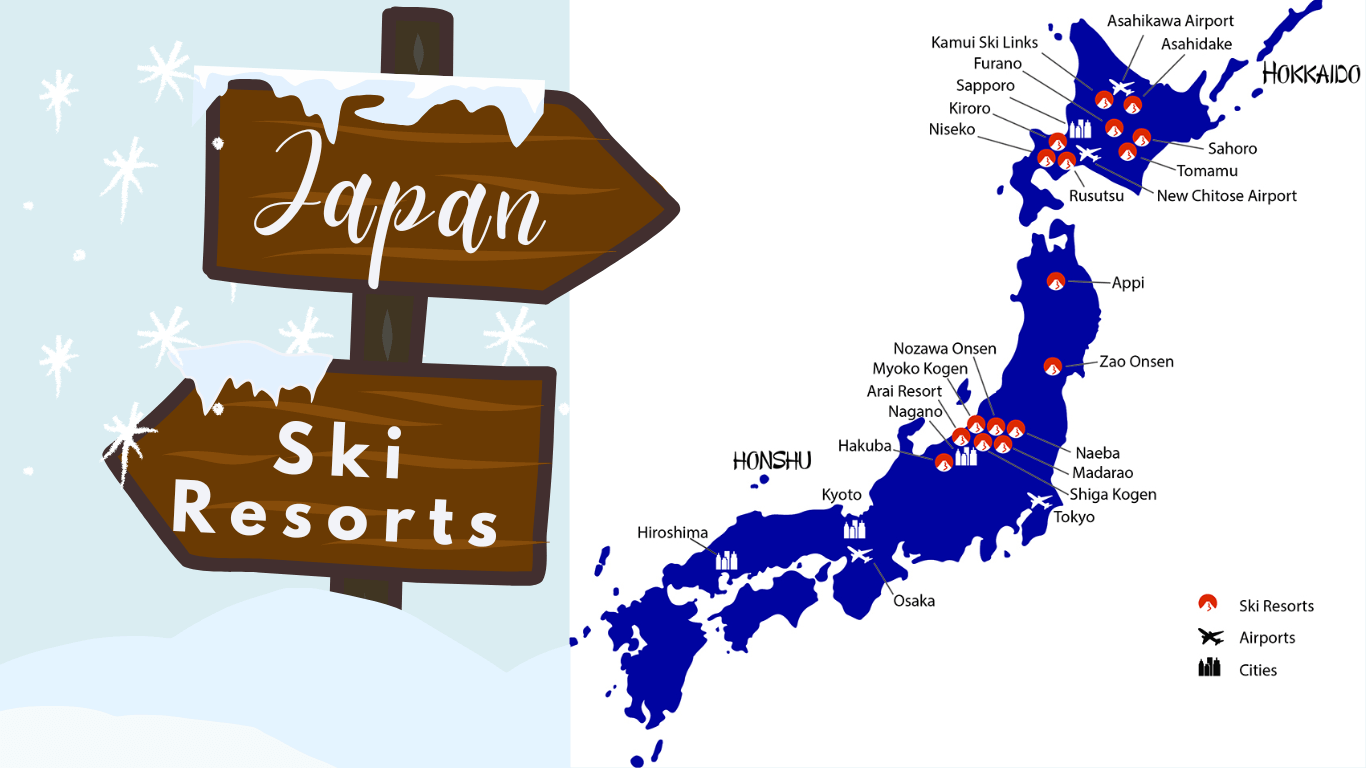
From lively resort villages to traditional onsen towns, Japan offers ski destinations for different abilities and travel styles. These ten areas give you a starting point for finding the right mix of slopes, accommodation, and experiences beyond the mountain.
Resort area | Best for | Useful gateway | Main trade-off |
|---|---|---|---|
Niseko | First Hokkaido trip, broad services, nightlife | New Chitose | High demand and a more international feel |
Rusutsu | Tree skiing and a quieter resort stay | New Chitose | Limited village life outside the resort |
Furano | Groomers, local-town atmosphere, central Hokkaido | Asahikawa | Less nightlife and a more dispersed regional plan |
Hakuba Valley | Steeper terrain and multi-resort variety | Tokyo–Nagano | Resorts are spread out and weather can affect alpine terrain |
Nozawa Onsen | Traditional town, hot springs, mixed abilities | Tokyo–Iiyama | Popular lodging can sell early |
Shiga Kogen | Long piste days, families, intermediates | Tokyo–Nagano | Nightlife is quiet and the area is spread across bases |
Myoko Kogen | Deep snow, tree terrain, Japanese town character | Tokyo–Nagano or Joetsumyoko | Local movement is easier with a planned shuttle or car |
Yuzawa | Fast Tokyo access and short ski breaks | Tokyo–Echigo-Yuzawa | Weekend crowds and more variable lower-elevation snow |
Zao Onsen | Tohoku scenery, onsen culture, regional atmosphere | Tokyo–Yamagata | Longer local connection and fewer international services |
Kiroro | Convenient premium Hokkaido stay and reliable resort facilities | New Chitose or Sapporo/Otaru | No substantial traditional ski town |
1. Niseko, Hokkaido
Niseko is the easiest Hokkaido choice for travelers who want English support, lessons, rentals, restaurants, nightlife, and terrain for different abilities. The four Niseko United sectors create variety without changing accommodation.
Choose it for a smooth first international ski trip or a mixed group. Look elsewhere if quiet evenings, lower lodging pressure, or a strongly local atmosphere matter more than convenience.
2. Rusutsu, Hokkaido
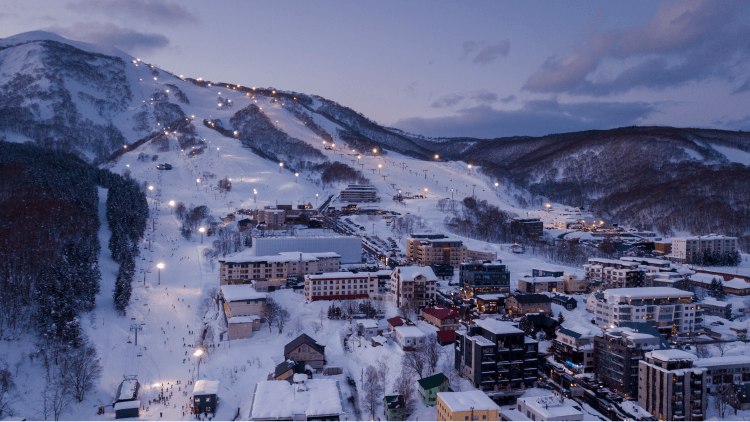
Rusutsu is a strong alternative for skiers who want Hokkaido powder and tree terrain without staying in Niseko. Its interconnected mountain areas suit a resort-centered trip, and families appreciate the self-contained facilities.
The trade-off is limited village life. Travelers who want a different restaurant or bar every night may prefer Niseko or pair Rusutsu with another Hokkaido base.
3. Furano, Hokkaido
Furano combines groomed runs, off-piste opportunities where permitted, and a working town rather than a purely international resort village. It suits skiers who want a quieter base and may explore central Hokkaido with a car, guide, or organized transfer.
Choose Furano for a more local rhythm and reliable piste skiing. Plan dining and regional movement in advance because the town and surrounding ski options are more dispersed than a compact resort complex.
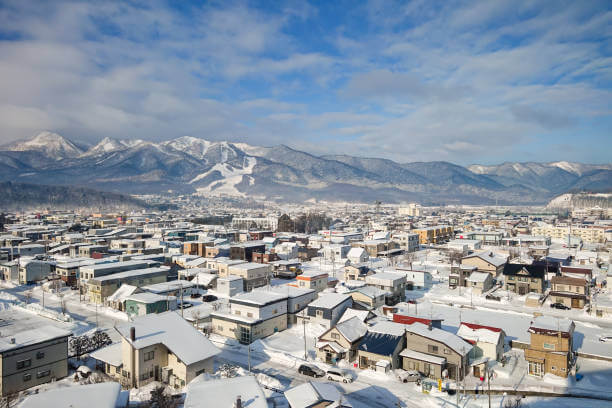
4. Hakuba Valley, Nagano
Hakuba is the Honshu choice for skiers who want larger mountains, steeper terrain, and several resorts with different personalities. Happo-One emphasizes alpine scale, while areas such as Tsugaike, Cortina, and Norikura broaden the mix of beginner, tree, and powder terrain.
The valley is not one fully linked resort. Confirm shuttle routes, pass coverage, and the distance from lodging to the mountain you expect to ski most often.
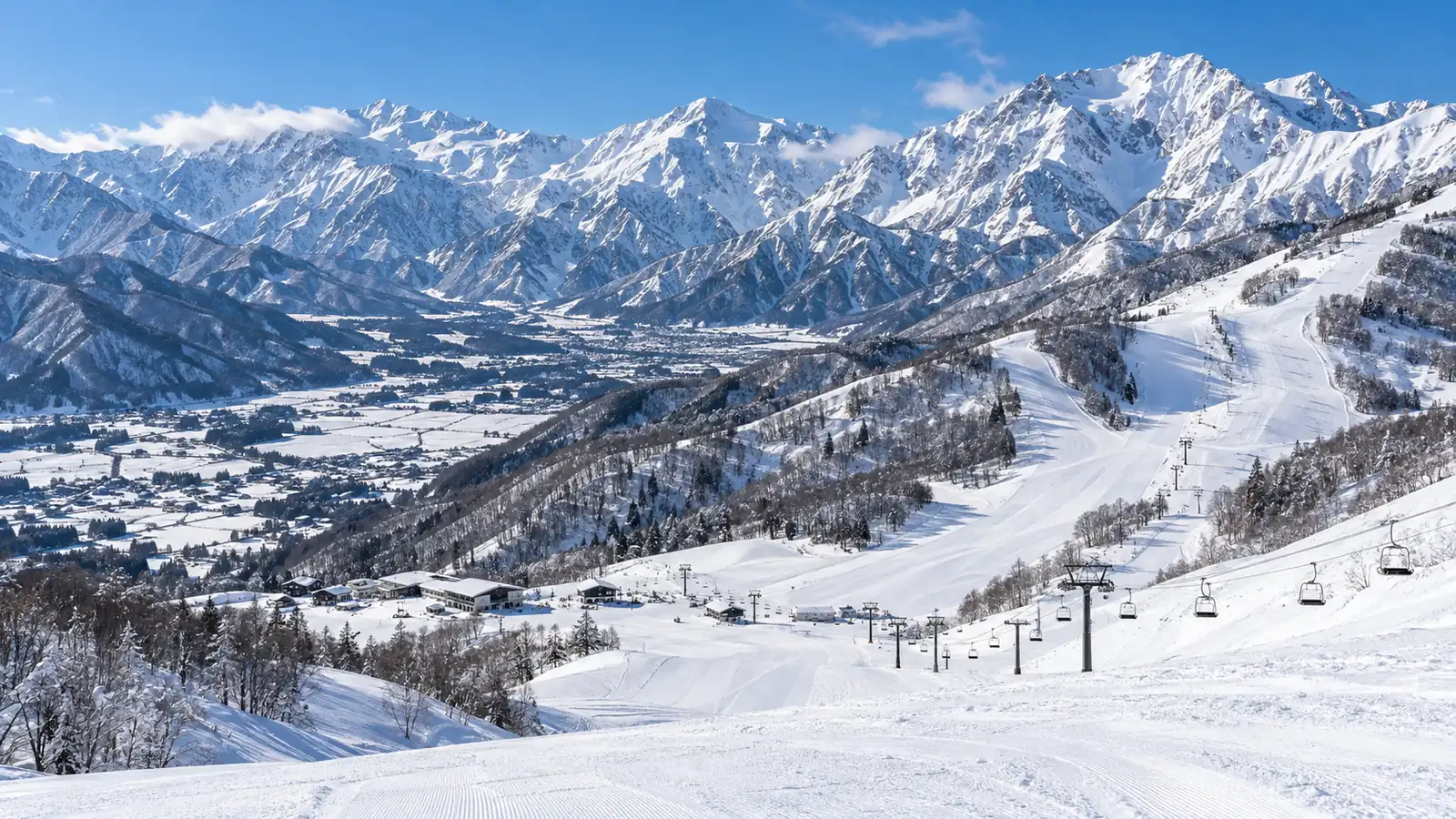
5. Nozawa Onsen, Nagano
Nozawa Onsen balances a substantial ski area with a walkable traditional town and public hot-spring culture. It is a good fit when the evening atmosphere matters as much as the mountain.
Reserve lodging early for popular winter dates and learn basic onsen etiquette before arrival. Travelers focused only on high-speed lifts or nightlife may find a larger international resort more suitable.
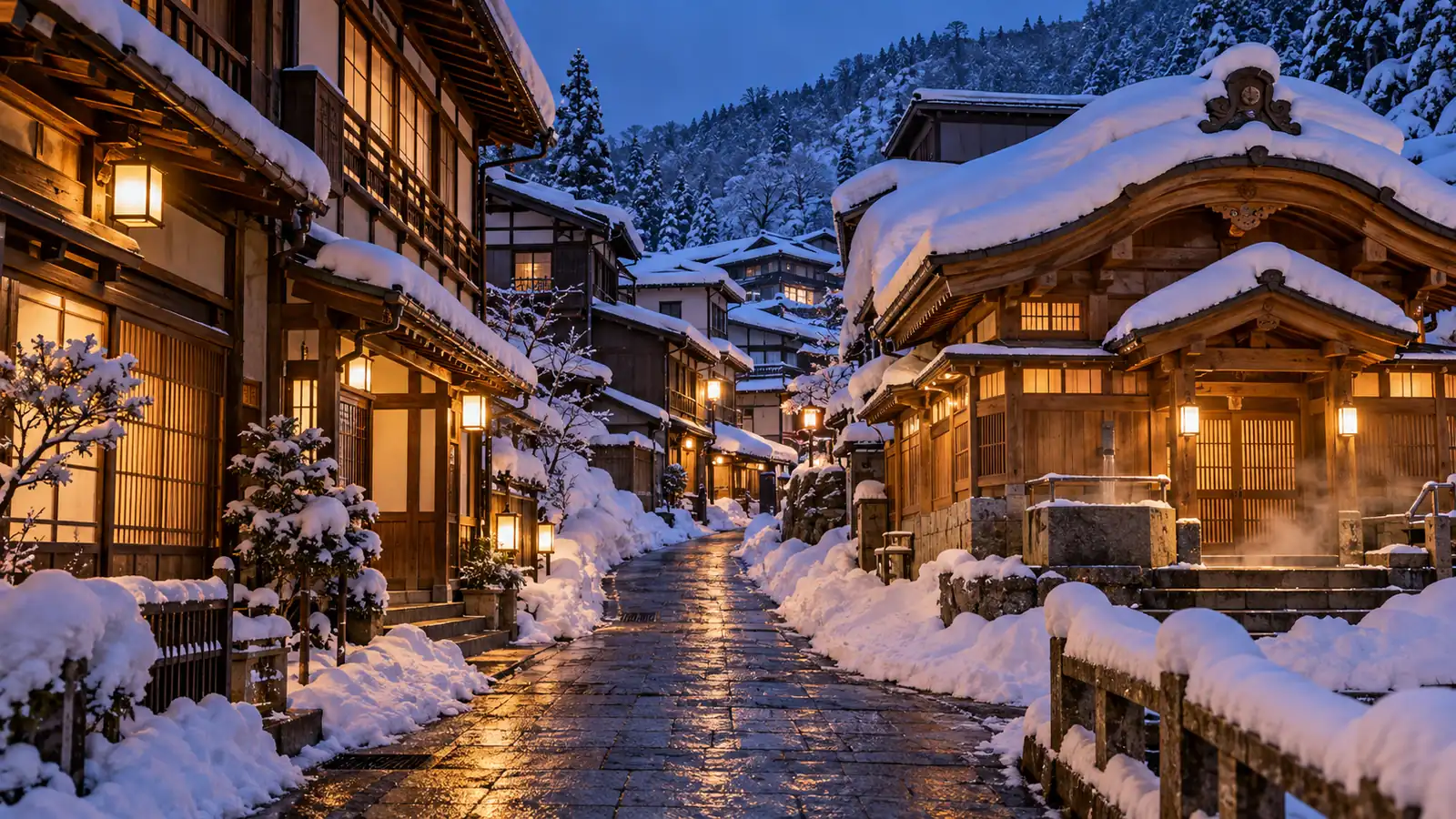
6. Shiga Kogen, Nagano
Shiga Kogen rewards skiers who enjoy long piste days and broad intermediate terrain. Its scale gives families and mixed-ability groups room to separate during the day without changing regions.
The area has several lodging bases, so map accommodation against the lifts and buses rather than treating it as one compact village. It is quieter after skiing than Niseko or central Hakuba.
7. Myoko Kogen, Niigata
Myoko is a cluster of ski areas rather than one mountain. It appeals to travelers who want deep snow, tree terrain, and towns that retain more Japanese character than the largest international destinations.
A base around Akakura works for several mountains, but local transfers require planning. Madarao and Lotte Arai can extend a Niigata or Nagano trip when their terrain and access fit the group.
8. Yuzawa, Niigata
Yuzawa is the practical choice for travelers who want to add skiing to a Tokyo stay. The Shinkansen reaches Echigo-Yuzawa quickly, and GALA Yuzawa, Kagura, and Naeba provide different short-trip options around the area.
It works for a day trip or compact ski break, but weekends can be busy and snow quality varies more than at colder northern resorts. Check the final bus or gondola connection before committing to a late return.
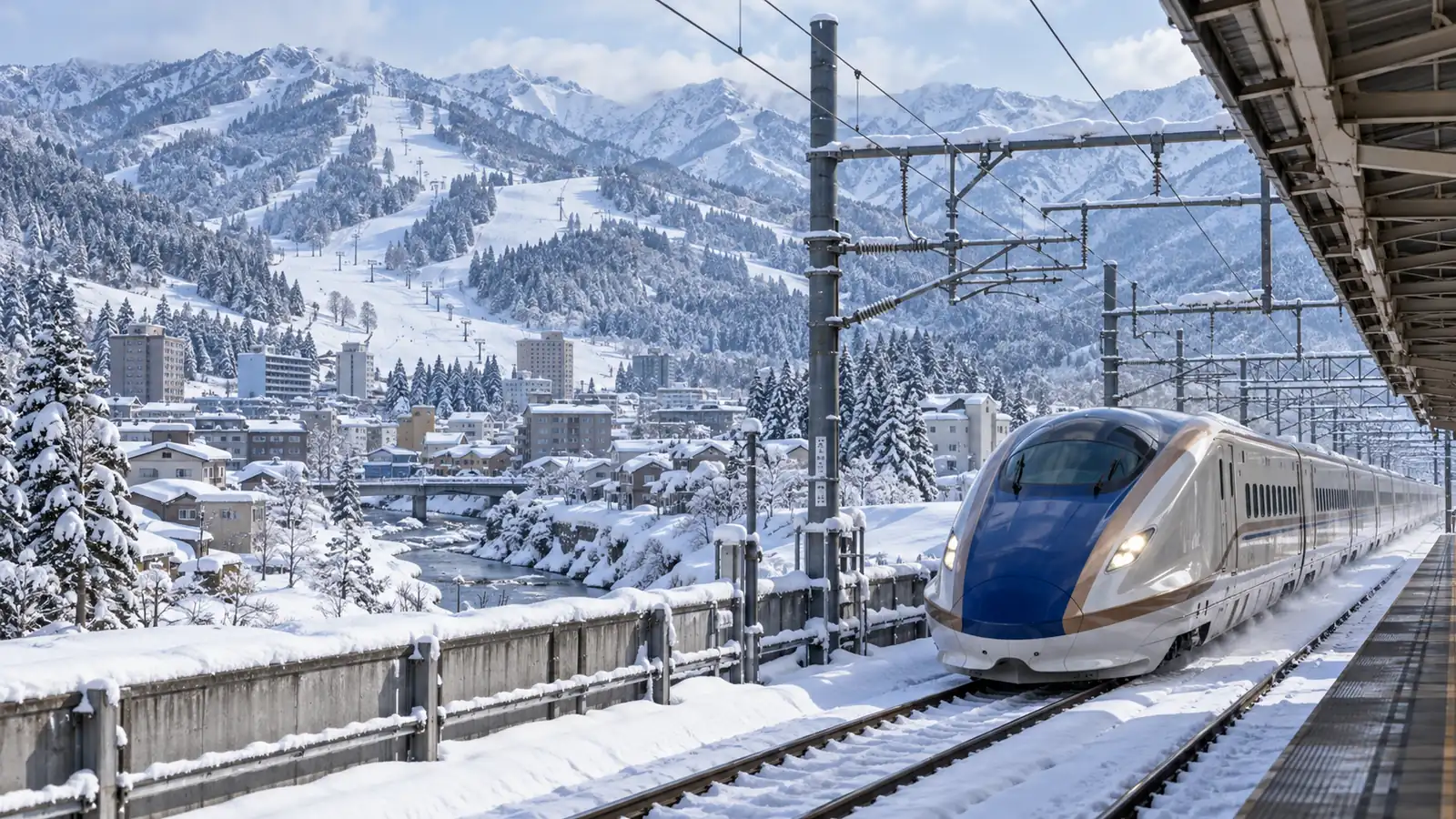
9. Zao Onsen, Yamagata
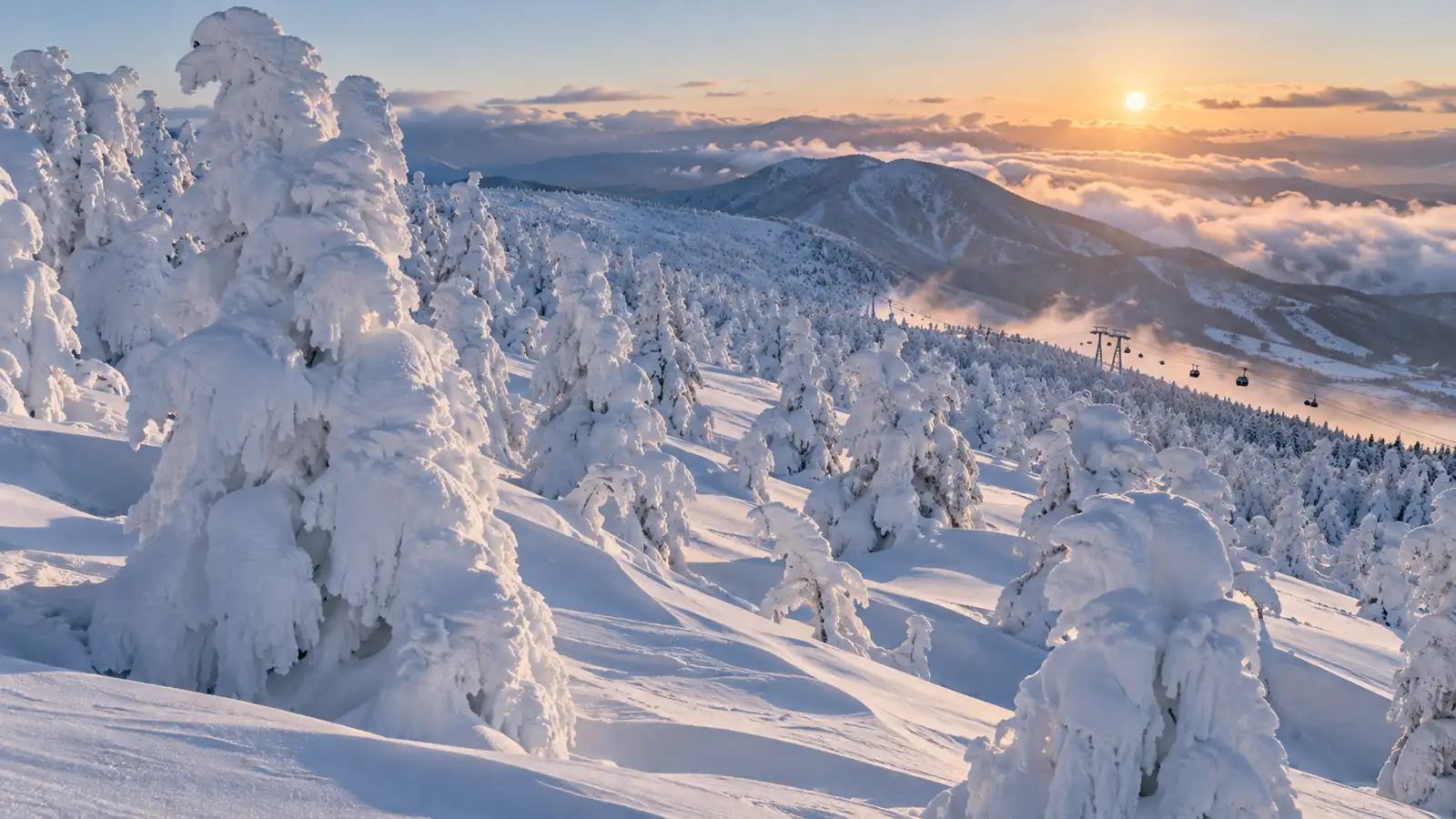
Zao Onsen combines a historic hot-spring town with Tohoku skiing and the winter “snow monster” landscape created by snow and ice on the trees. It suits travelers who value regional atmosphere and a distinctive winter setting.
The journey is more involved than a Tokyo-area resort, and international services are fewer. Appi Kogen is another Tohoku option for travelers who prioritize groomed terrain, resort facilities, and family support.
10. Kiroro, Hokkaido
Kiroro is a compact Hokkaido choice with modern lodging, strong resort facilities, and access from the Sapporo–Otaru side of the island. It suits families and travelers who want a convenient premium base without Niseko's scale.
There is no substantial traditional town at the base. Travelers seeking independent restaurants, nightlife, or a walkable local village should compare Niseko, Furano, or Nozawa Onsen instead.
There is no universal winner. Niseko is the smoothest all-round international introduction; Hakuba provides the broadest alpine variety; Nozawa emphasizes town character; Yuzawa saves transfer time; and Rusutsu, Furano, Myoko, Zao, Shiga Kogen, and Kiroro each solve a more specific trip preference.
How to Get to the Resorts?
Airport choice should follow the ski region rather than the cheapest fare alone. A low fare can lose its value when it creates an extra flight, a missed final bus, or an overnight stay far from the mountain.
The Japan airport guide helps compare the main gateways. Confirm the final train, bus, or transfer before booking a late arrival.
Match Airports to Ski Regions
Niseko, Rusutsu, and Kiroro: New Chitose Airport is the usual gateway, followed by a scheduled bus, private transfer, train connection, or rental car.
Furano and central Hokkaido: Asahikawa is often the most direct airport, while New Chitose may offer more flight choices with a longer ground transfer.
Nagano, Niigata, and Yamagata: Tokyo's airports connect to rail or bus routes through Nagano, Iiyama, Echigo-Yuzawa, Joetsumyoko, or Yamagata.

Transport Options for Japan’s Ski Resorts
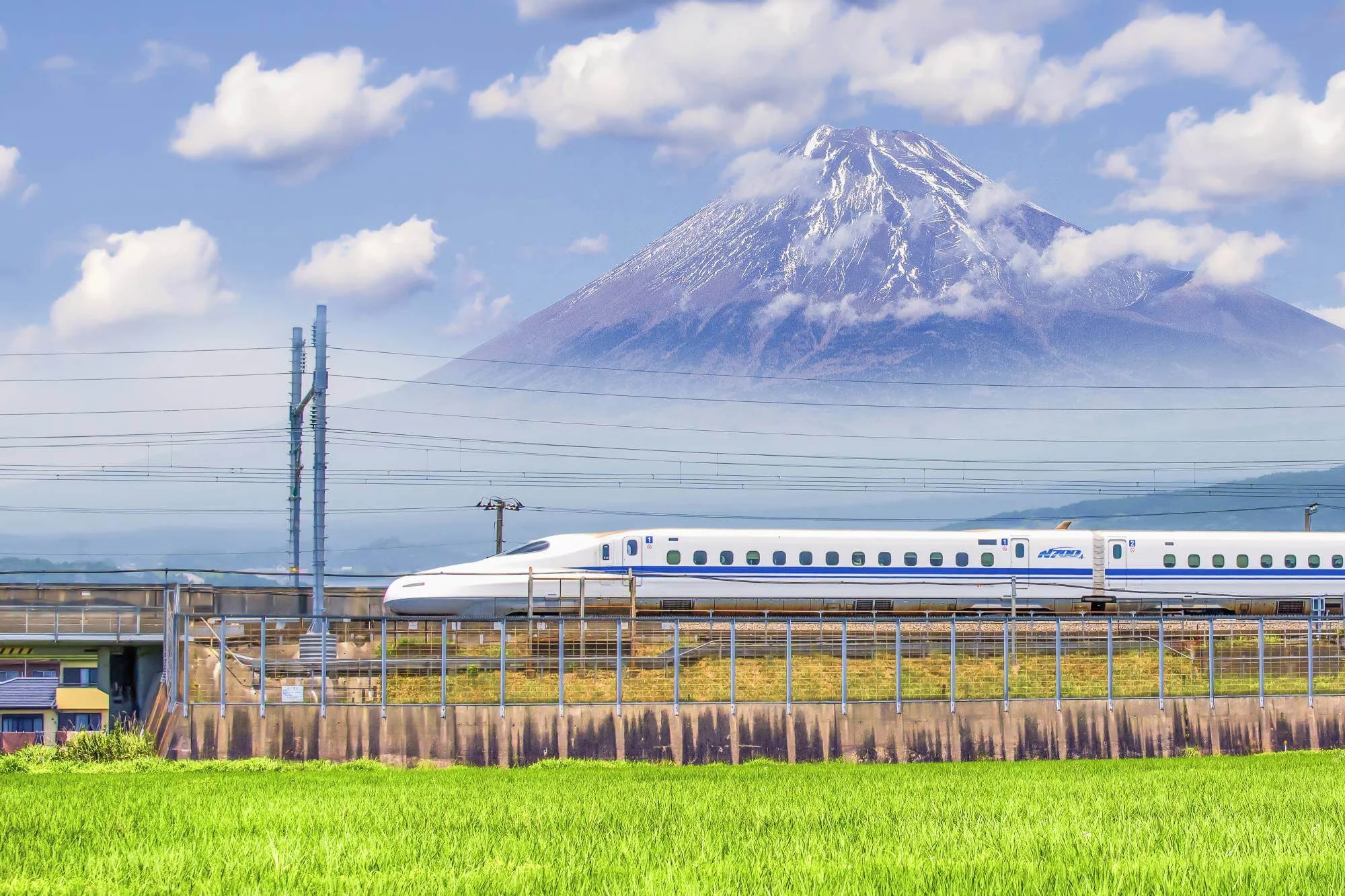
Use rail and scheduled buses for Yuzawa, Nozawa Onsen, Shiga Kogen, Hakuba, Zao, and many single-base trips. This avoids winter driving and works best when accommodation is close to the local shuttle network.
Use a direct airport transfer when arrival time, children, or several ski bags make multiple changes difficult. Reserve it before the trip rather than assuming a seat will be available after landing.
Rent a car when exploring several smaller mountains around Furano, Myoko, or another regional cluster. Only choose this option if the driver is comfortable with snow, local licensing requirements, left-side traffic, and parking rules.
Move Ski Gear Between Stops
Japan's luggage-delivery services can send ski or snowboard bags between airports, hotels, and resort accommodation. Delivery is not instant, so confirm the cutoff and arrival date before separating from essential gear.
This service is especially useful when a ski trip includes Tokyo or Kyoto. The official JNTO luggage guide explains the main storage and forwarding options.
Planning Your Japan Ski Trip
Once you have chosen your resort and transport, focus on where to stay, whether you need lessons, and what equipment to prepare. Arranging these details before departure makes each ski day easier and helps you keep the trip within budget.
Choosing Accommodation Near the Slopes
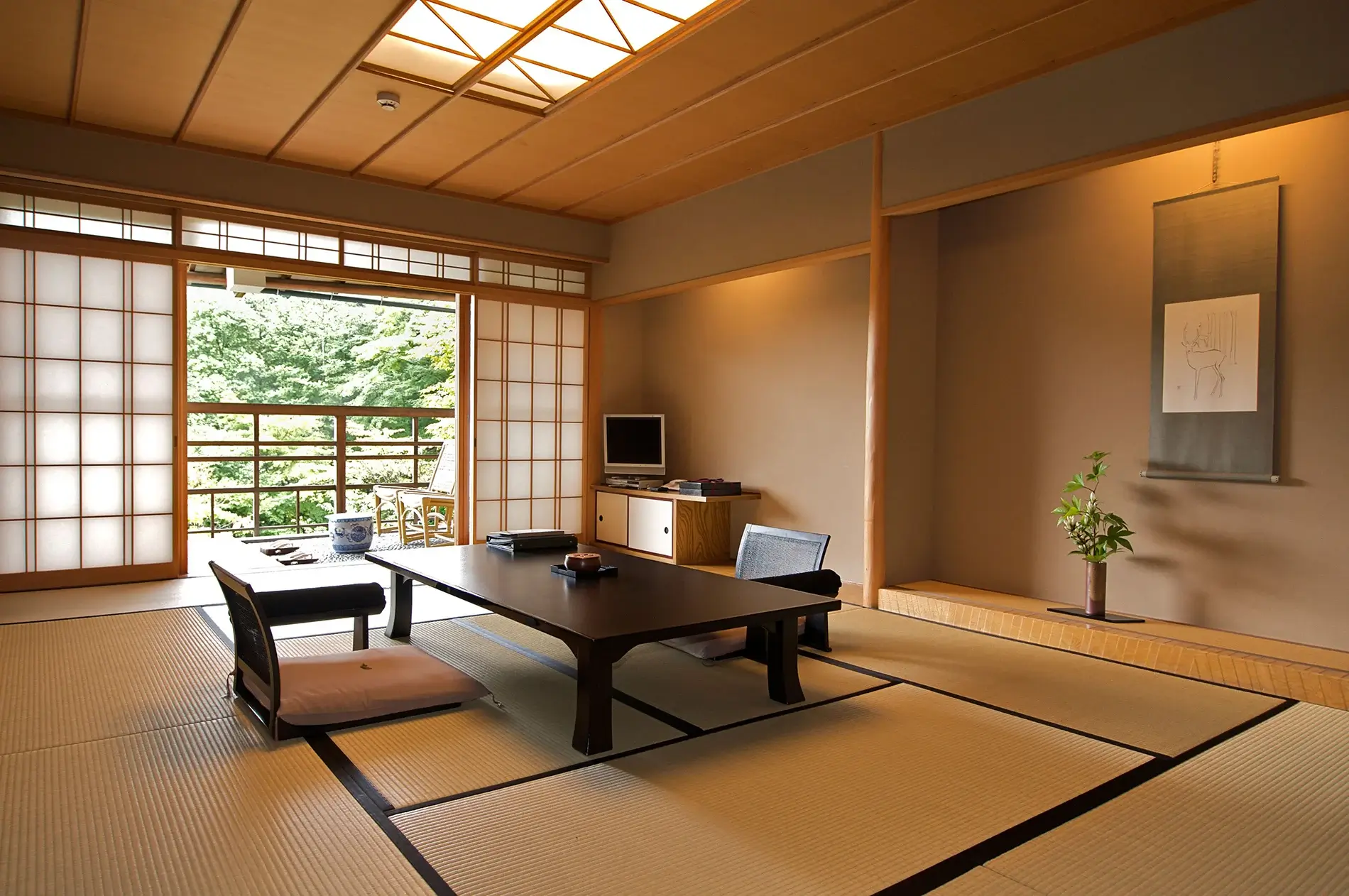
Location affects how your day begins and ends. Staying near a lift or shuttle stop reduces the time spent carrying equipment, while accommodation in town may offer more restaurants and a livelier evening atmosphere.
Different accommodation types suit different needs:
Ryokan: Traditional accommodation, often with meals and bathing facilities, for travelers who value local atmosphere.
Self-catering apartments: Useful for families and groups who want kitchen facilities and more space.
Ski-in/ski-out hotels: Convenient for reaching the slopes and returning for breaks during the day.
Check access to your preferred ski area, equipment storage, and shuttle schedules before booking. Popular winter dates fill quickly, especially for larger rooms and well-located properties.
Booking Ski Lessons and Guides
Beginners can benefit from lessons that build confidence with stopping, turning, and using lifts. More experienced skiers may prefer coaching to improve technique or adapt to unfamiliar snow conditions.
If you need ski lessons taught in English, confirm the teaching language when booking. Check whether the school offers skiing or snowboarding instruction, suitable ability groups, and age-appropriate classes for children.
Guiding serves a different purpose from a standard lesson. Travelers planning to explore unfamiliar off-piste terrain should look for a qualified local guide with relevant terrain and snow-safety experience. Confirm the route, required ability, equipment, and what the service includes.
Budgeting for Your Ski Holiday
Look at the total cost of the trip rather than the lift ticket alone. Your main expenses will usually include:
Accommodation and meals.
Lift passes.
Equipment rental.
Lessons or guiding.
Airport transfers and local transport.
A cheaper room farther from the slopes may offer little saving if it requires daily taxis. Likewise, changing resorts frequently adds transport costs and reduces time on snow. One well-chosen base can offer better value for a shorter holiday.
Check what accommodation and rental packages include so you can compare options fairly.
Packing and Renting Ski Equipment
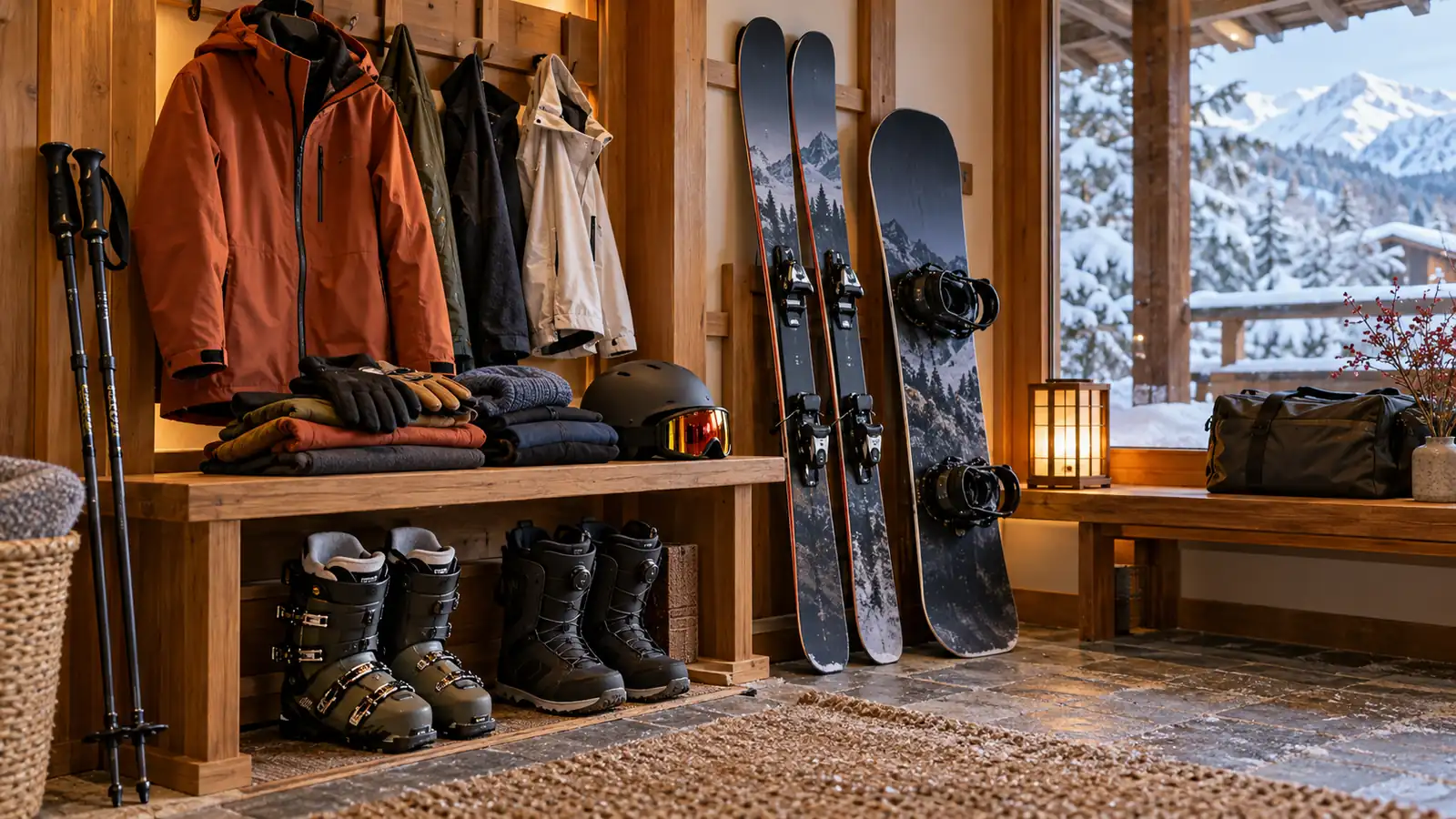
Renting is convenient for first-time skiers and travelers combining skiing with city sightseeing. Larger resorts commonly offer skis, snowboards, boots, and helmets, with outerwear available at some rental shops.
Confirm the contents of each rental package. Goggles, gloves, and other personal items may need to be brought separately. Reserve children’s equipment, less common boot sizes, and specialist powder gear ahead of busy dates.
For clothing and accessories, prepare:
Thermal base layers and an insulating mid-layer.
Waterproof outerwear and suitable ski socks.
Warm gloves, with a spare pair if possible.
Goggles suitable for low visibility.
A neck warmer and sun protection.
If bringing your own equipment, check airline baggage allowances and charges. Luggage delivery can also simplify city stops, provided you allow enough time for the equipment to reach your accommodation.
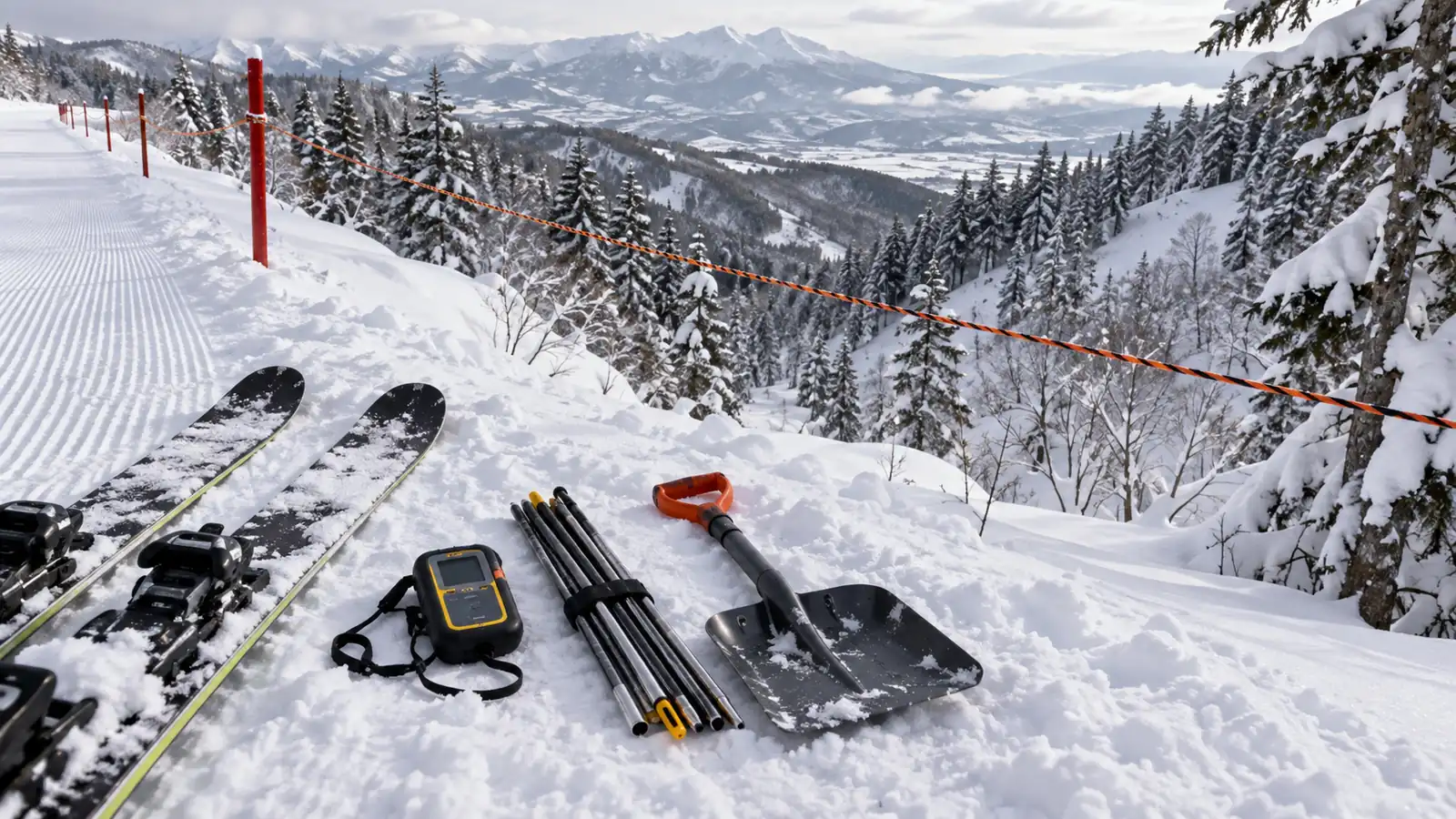
Understanding Resort and Backcountry Safety
Marked resort runs and terrain beyond managed boundaries require different preparation. A route reached from a lift or access gate is not necessarily patrolled or protected from avalanches.
Stay within your ability, follow signs and patrol instructions, and respect closures. Before leaving managed terrain, understand the resort’s access rules and the current conditions.
Backcountry travel requires appropriate training, avalanche equipment, and the ability to use it. A qualified local guide can help assess routes and conditions, but does not remove the risks.
Check that your insurance covers the activities you intend to undertake, including any off-piste skiing and rescue costs.
Planning Activities Beyond the Slopes
A rest day gives you time to enjoy the destination and recover between ski days. Depending on your base, you might visit an onsen, try regional dishes, or take a short walk through town. Keep these plans flexible enough to use when the weather interrupts skiing.
At an onsen, wash before entering the bath, keep towels out of the water, and check tattoo policies in advance. In smaller towns, confirm restaurant opening hours and reserve tables when necessary.
A Japan eSIM can help with weather updates, translation, and changes to local transport. Download resort maps, accommodation details, and important contact information as well, since mountain coverage can vary.
FAQ
1. Do Japan ski resorts accept cards?
Major resorts and hotels usually accept cards, but smaller restaurants, ticket machines, lockers, and local services may require cash. Carry a modest yen backup rather than relying on one payment method.
2. Do I need winter-sports travel insurance?
Choose a policy that explicitly covers the skiing or snowboarding you plan to do, including medical care, rescue, equipment, and any guided off-piste activity. Standard travel insurance may exclude winter sports or uncontrolled terrain.
3. Can snowboarders use Japan ski resorts?
Most major Japanese resorts welcome snowboarders and provide rentals, lessons, terrain parks, and powder terrain. Check mountain-specific rules for off-piste zones, access gates, and any restricted lifts.
4. Is Japan practical for solo ski travelers?
Yes. Rail-access resorts, shared lessons, hostels, lodges, and scheduled transfers make solo travel workable. Avoid skiing uncontrolled terrain alone, and choose a base with evening dining and transport that do not depend on a private car.
Conclusion
A rewarding ski trip to Japan starts with choosing a resort that suits your ability and travel style. Consider the slopes, the town, and the journey there, then choose dates that match the experience you want.
Book accommodation and essential services early, while leaving room to adjust daily plans around the weather. A manageable itinerary gives you more time to enjoy the mountains without rushing between destinations.
Beyond the snow, make time for local meals, hot springs, and the atmosphere of mountain towns. These moments can be just as memorable as your best run of the trip.