
Choosing the best cities to visit in Spain is not only about picking the biggest names. Spain works best when you mix grand capitals, coastal neighborhoods, old-town evenings, regional food, and a little breathing room between train rides.
This guide is built for travelers who want a realistic city list, not a rushed checklist. You will find cultural heavyweights like Madrid and Barcelona, southern favorites such as Seville and Granada, northern food cities, island bases, and smaller places that make a Spain route feel personal.
Use it as a starting point, then adjust for your season, budget, travel pace, and whether you care most about art, beaches, architecture, nightlife, food, or easy day trips.

12 Best Cities in Spain
Spain's cities feel very different from one another, so the strongest itinerary usually combines two or three regions instead of trying to see the whole country in one sprint. The cities below are the ones most travelers can build a rewarding route around.
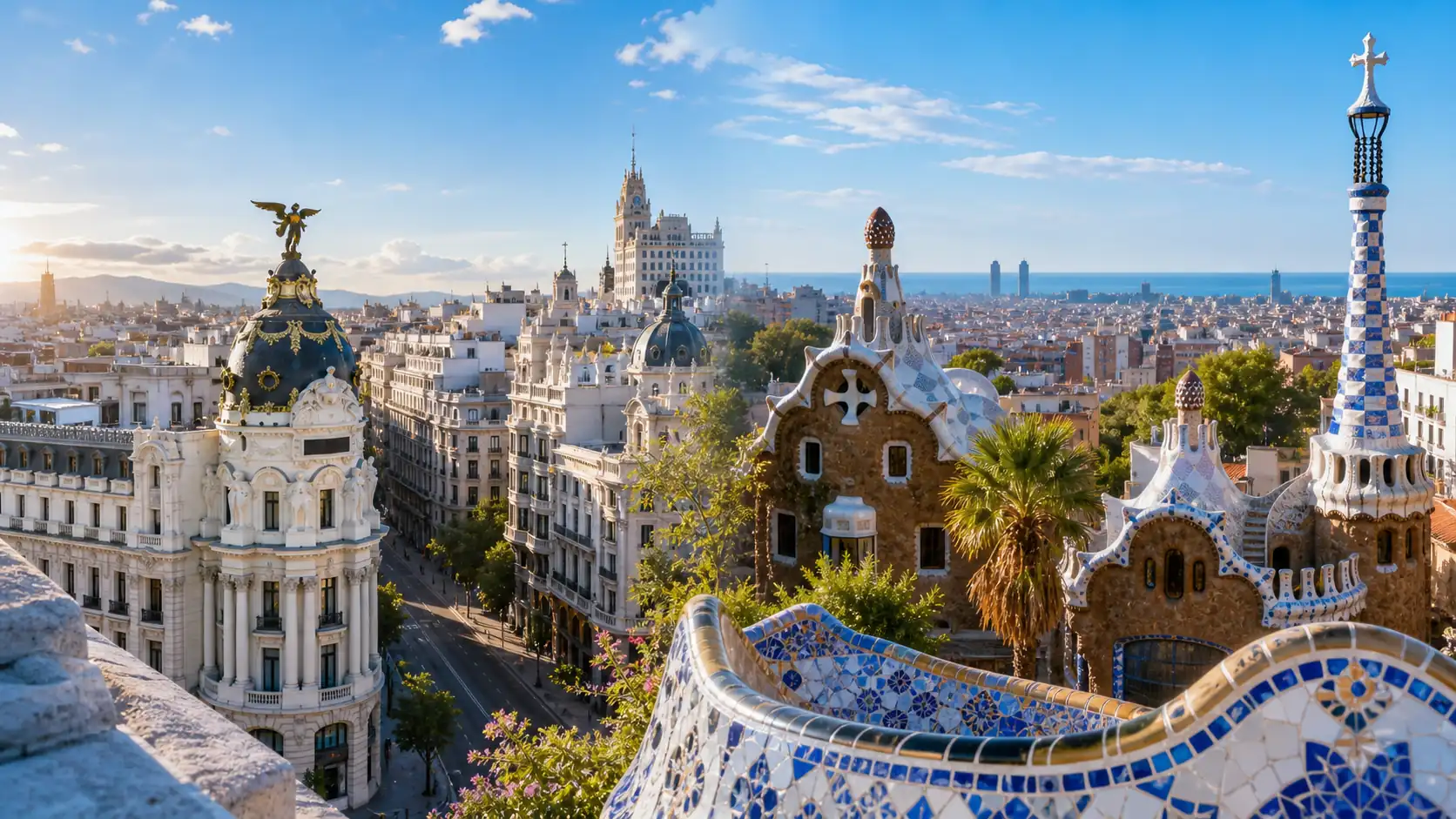
1. Madrid
Madrid is the best first stop if you want art, nightlife, food markets, royal history, and easy train connections. The city is inland, energetic, and less instantly scenic than Barcelona, but it rewards slow evenings in neighborhoods such as Malasaña, Las Letras, Chamberí, and La Latina.
Best for: museums, tapas nights, day trips to Toledo or Segovia, and a central route base. If it is your first visit, leave time for the Prado, Retiro Park, the Royal Palace area, and a relaxed late dinner rather than packing every hour.
For official destination details and current visitor information, the Madrid travel page is a useful planning reference.
2. Barcelona
Barcelona combines beaches, design, food, nightlife, and some of Europe's most recognizable architecture. It is the easiest city to recommend to first-time visitors who want a high-impact introduction, though the most famous areas are also the busiest.
Travel tip: book major sights ahead when your dates are fixed, especially in spring, summer, and holiday periods.
3. Seville
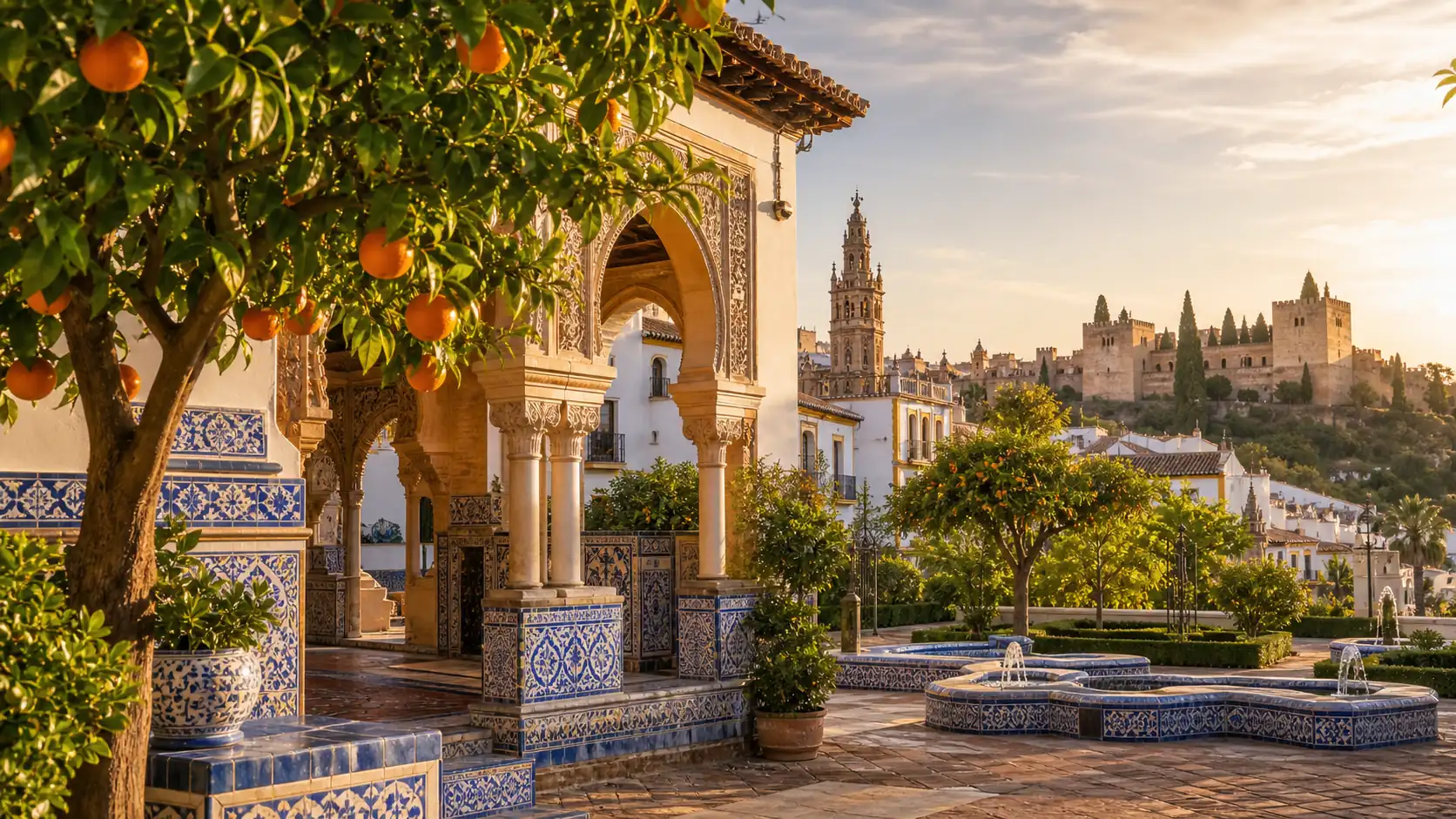
Seville gives many travelers the Spain they imagined before arriving: orange trees, tiled patios, late dinners, flamenco, old lanes, and warm plazas that come alive after sunset. It is especially good in spring and autumn, when daytime wandering is more comfortable.
How long to stay: two full days works for the cathedral area, Alcázar, Santa Cruz, Triana, and a slow evening. Add a third day if you want flamenco, food markets, or a day trip without rushing.
4. Granada
Granada is smaller than Madrid, Barcelona, or Seville, but it leaves a deep impression because the Alhambra, Albaicín lanes, mountain views, and tapas culture sit so close together. It suits travelers who enjoy walking, viewpoints, and layered history.
Reservation note: the Alhambra is one of Spain's sights where advance planning matters. Use the official Alhambra ticket reservations page for current availability and entry conditions.
5. Valencia
Valencia is a strong choice when you want city life without losing beach time. It has a lively old town, the futuristic City of Arts and Sciences, bike-friendly streets, paella culture, and a more relaxed pace than Barcelona.
Who should choose it: travelers who want food, architecture, beaches, and a lower-pressure city base. It also works well as a gentler coastal stop between Madrid, Barcelona, or Andalusia.
6. San Sebastián
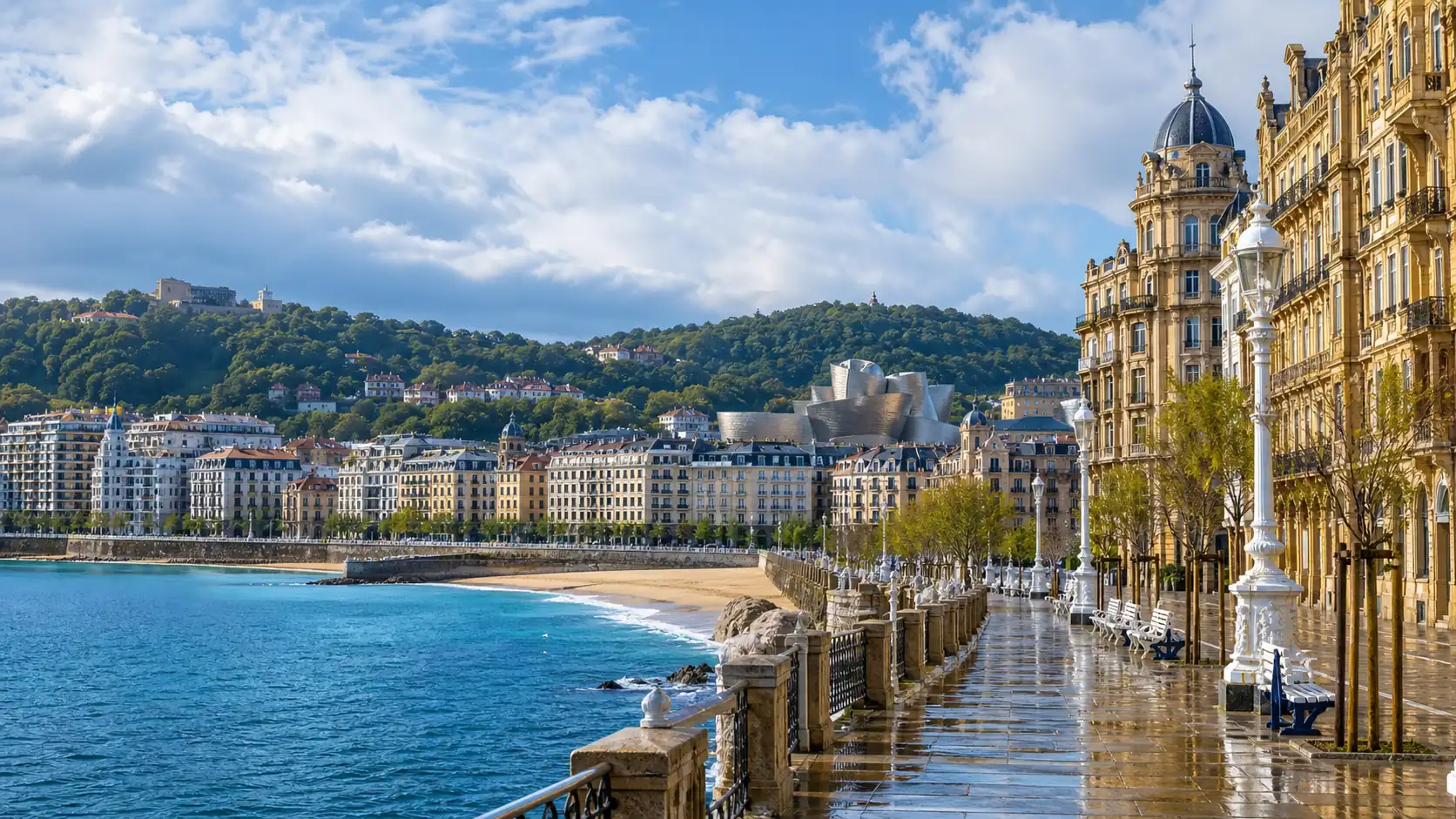
San Sebastián is one of Spain's great food cities, with pintxos bars, elegant beaches, and green hills wrapped around the bay. It is less about rushing through monuments and more about eating well, walking the waterfront, and enjoying a refined northern rhythm.
Food note: plan at least one evening for a pintxos crawl in the old town, but keep it casual. Order a small bite and drink, move on, and repeat instead of sitting down for one long meal.
7. Bilbao
Bilbao has transformed into a confident cultural city, with the Guggenheim, riverside walks, design-forward public spaces, and excellent access to the Basque coast. It pairs naturally with San Sebastián if you want a northern Spain itinerary.
Good pairing: spend two nights in Bilbao and two in San Sebastián, then add a coastal village or wine area if you have extra time. This route feels different from the classic Madrid-Barcelona-Andalusia triangle.
8. Córdoba
Córdoba is compact, beautiful, and easy to fit between Seville and Granada or as a day trip from Seville. Its historic center, flower-filled patios, Roman bridge, and mosque-cathedral area make it one of the most rewarding smaller cities in Spain.
Best way to visit: stay overnight if you can. Day-trippers leave in the evening, and the old lanes feel calmer once the tour groups thin out.
9. Málaga
Málaga is more than an airport gateway to the Costa del Sol. It has museums, a walkable center, a waterfront, nearby beaches, hilltop viewpoints, and a relaxed food scene that makes it a useful southern base.
Travel rhythm: use Málaga when you want a softer ending after Seville, Granada, or Córdoba. It is also practical if your trip needs beach time without moving to a resort town.
10. Palma de Mallorca
Palma works when you want island scenery with a proper city base. The old town, cathedral, markets, courtyards, and nearby coves make it more flexible than a beach-only stay.
Best for: travelers who want Mediterranean light, scenic drives, sea views, and a city center that still has good restaurants and evening walks.
11. Zaragoza
Zaragoza is often overlooked because it sits between Madrid and Barcelona, but that is exactly why it can be useful. The city has striking basilica views, Roman and Moorish layers, local food, and fewer international crowds.
When to add it: choose Zaragoza if you are traveling by train between Madrid and Barcelona and want a lower-key city that breaks the journey naturally.
12. Santiago de Compostela
Santiago de Compostela has a mood unlike Spain's bigger city stops. Pilgrim routes, stone streets, Galician food, rainy-day atmosphere, and the cathedral square give the city a reflective pace.
Who it suits: travelers interested in walking routes, spiritual history, northern food, or a quieter finish after busier Spanish cities.
How to Choose Your Spain City Route
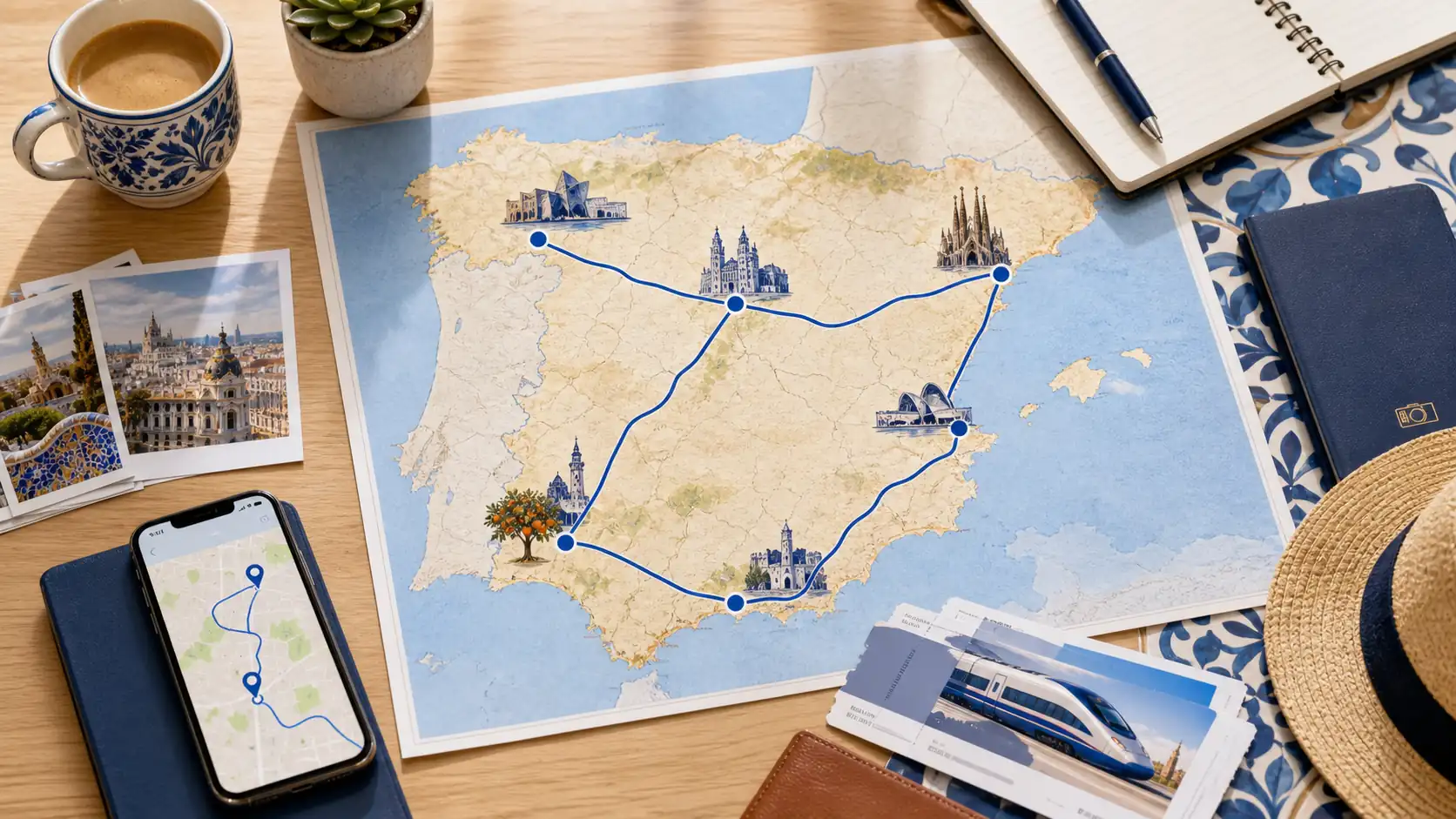
The right route depends on how many nights you have and how much movement you enjoy. Spain's rail network makes several city pairs easy, but long cross-country jumps can still eat into your trip if you change hotels too often.
1. First-Time Classic Route
For a first trip of 8 to 10 days, Madrid, Barcelona, and one Andalusian base is the safest combination. Madrid gives museums and day trips, Barcelona brings architecture and the sea, while Seville or Granada adds the southern atmosphere many visitors hope for.
2. Food and Culture Route
If food is the priority, consider Madrid, San Sebastián, Bilbao, and Barcelona, or build a slower northern route around the Basque Country and Galicia. This route is less beach-focused and more about markets, pintxos, seafood, museums, and distinctive regional identity.
3. Warm-Weather Coastal Route
For beach access, Valencia, Málaga, Palma, or Barcelona make more sense than an all-inland plan. Summer heat can be intense in parts of inland and southern Spain, so a coastal base can make the trip feel easier.
Here is a quick way to narrow your choices before booking hotels:
Travel Style | Best City Mix | Why It Works |
|---|---|---|
First visit | Madrid, Barcelona, Seville or Granada | Strong mix of art, architecture, food, and classic Spain atmosphere. |
Food trip | Madrid, San Sebastián, Bilbao, Santiago | Excellent markets, pintxos, seafood, and regional cooking traditions. |
Beach plus city | Barcelona, Valencia, Málaga, Palma | Urban sightseeing stays close to waterfronts or island scenery. |
Slower culture trip | Seville, Córdoba, Granada, Zaragoza | Historic centers, layered architecture, and easier walking days. |
This kind of comparison is more useful than ranking alone. A city can be excellent and still be wrong for your route if it adds too much travel time or repeats an experience you already have elsewhere.
4. Keep Your Phone Ready
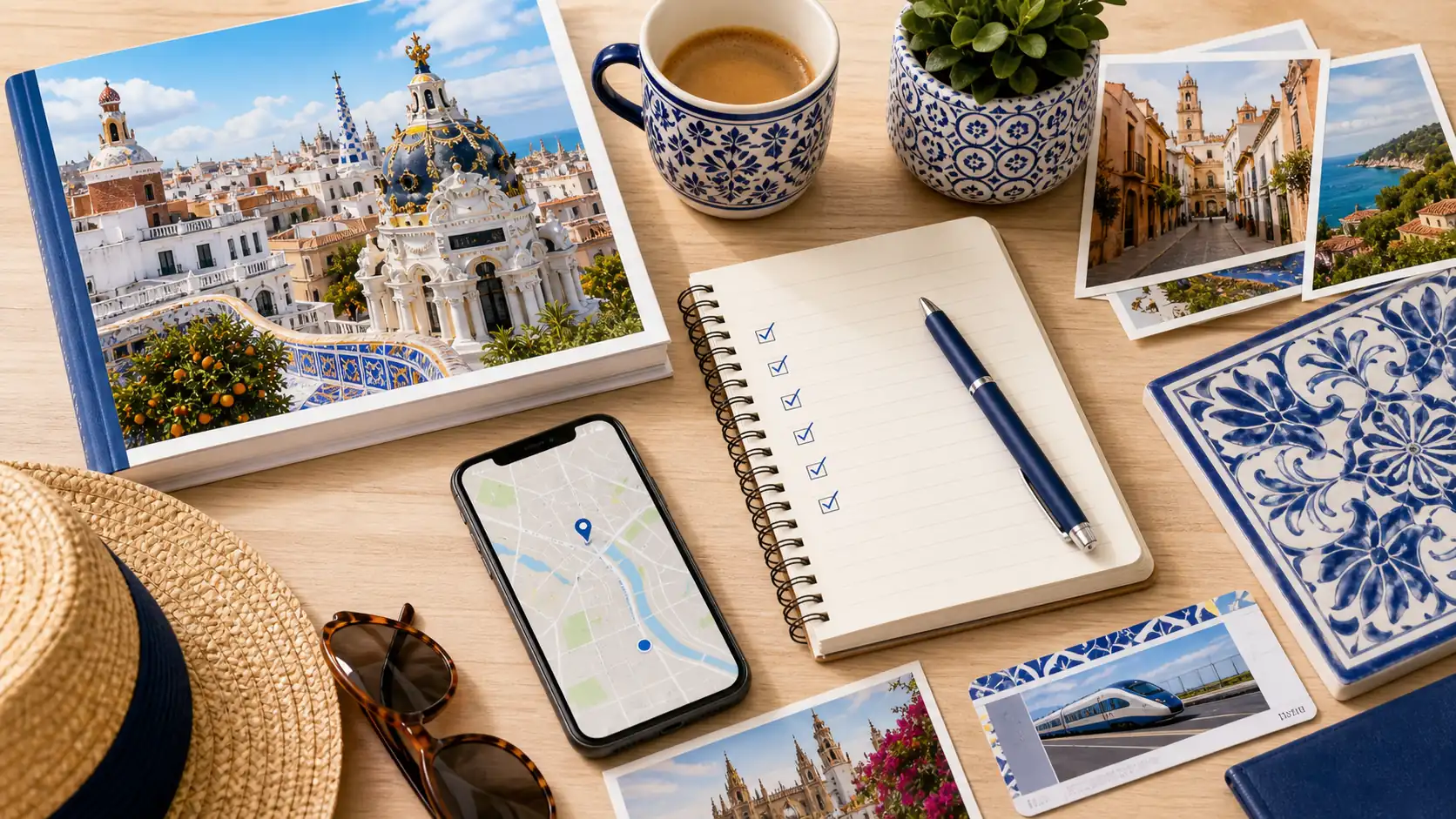
Spanish city travel relies heavily on live maps, restaurant searches, train updates, ticket confirmations, translation, and messaging hotels or hosts. If your phone supports eSIM, setting up an iRoamly travel eSIM before arrival can make those small travel moments smoother, especially when switching cities by train.
Spain City FAQs
These quick answers cover the common decisions travelers still face after choosing a short list of cities.
1. How many Spanish cities should I visit in one week?
Two cities are comfortable, and three is possible if the rail connections are simple. For one week, Madrid and Barcelona make a strong pair, while Madrid plus Seville and Granada works well if you prefer southern Spain.
2. Is Madrid or Barcelona better for a first trip?
Barcelona is more immediately scenic because of the sea and Gaudí architecture. Madrid is better for art, nightlife, central train connections, and day trips. Many first-time routes include both because they serve different travel moods.
3. Which Spanish city is best for food?
San Sebastián is the standout for pintxos and high-end dining, but Madrid, Bilbao, Seville, Valencia, and Santiago are also excellent. The best choice depends on whether you want tapas, seafood, paella, markets, or fine dining.
4. Which cities are easiest to combine by train?
Madrid, Barcelona, Valencia, Seville, Córdoba, Granada, Zaragoza, and Málaga are common rail-based combinations. Northern routes can also work well, but they may need more careful timing depending on your exact city pair.
5. What is the best city in Spain for beaches?
Barcelona is the easiest beach-and-city choice for many visitors, while Valencia feels more relaxed. Palma is excellent for island scenery, and Málaga works well for a southern city base near the Costa del Sol.
6. Should I rent a car for Spanish cities?
You usually do not need a car inside major Spanish cities. Trains, metros, buses, taxis, and walking are easier. Rent a car only for rural routes, beach hopping, mountain areas, or small villages that are inconvenient by public transport.
Conclusion
The best cities to visit in Spain depend on the trip you want, not on a single universal ranking. Madrid, Barcelona, Seville, Granada, Valencia, San Sebastián, Bilbao, and Córdoba are easy to recommend, but smaller or more regional choices can make your route feel more memorable.
If this is your first visit, build around two or three anchor cities and give yourself enough time to enjoy evenings, meals, neighborhoods, and day trips. Spain is much better when you leave space between the headline sights.
Once your route is set, check ticket rules for major attractions, keep transport days realistic, and prepare your phone for maps and bookings. A little planning makes each Spanish city feel easier to enjoy once you are there.