
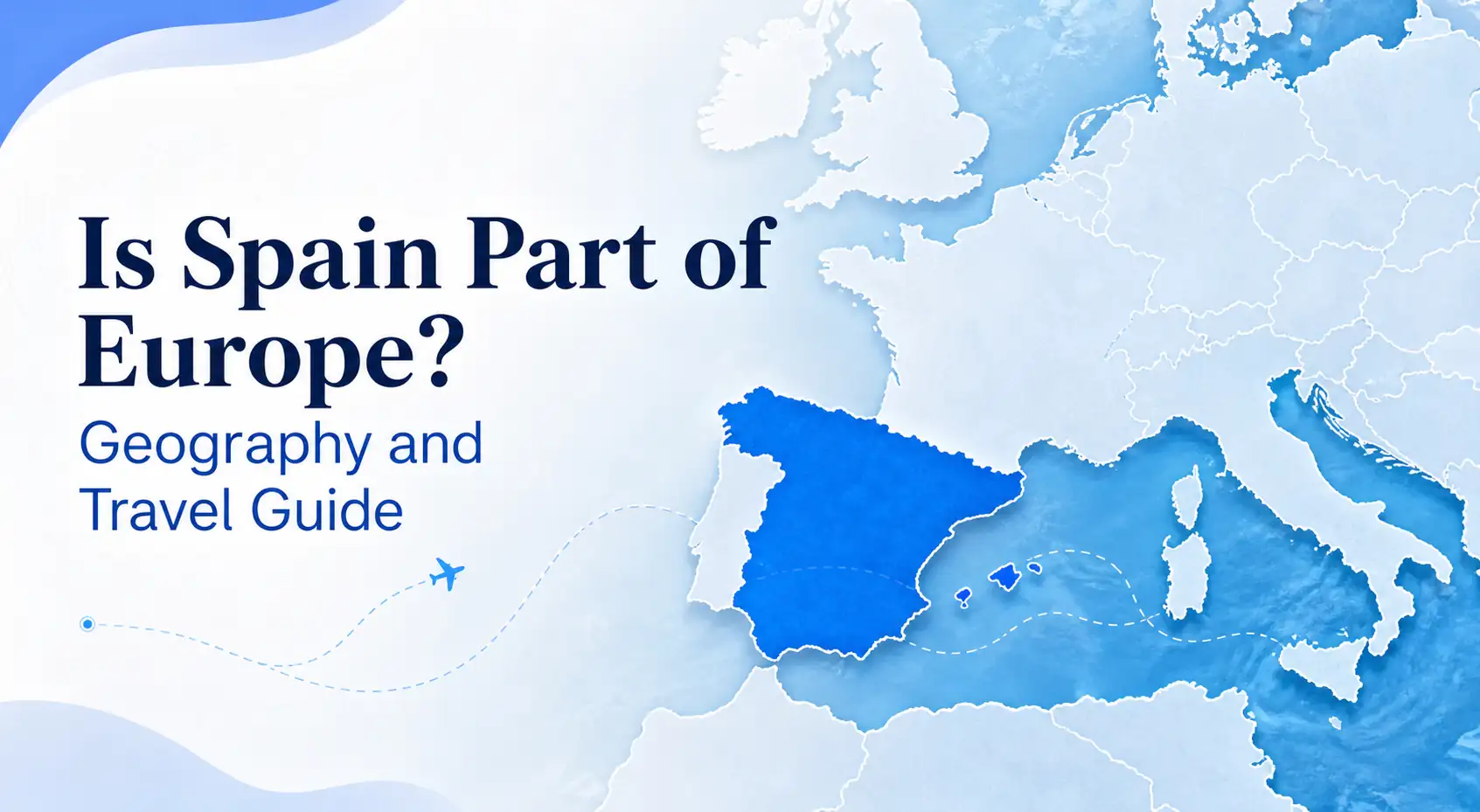
If you are asking, “is Spain part of Europe,” the short answer is yes. Spain is geographically in southwestern Europe, shares the Iberian Peninsula with Portugal and Andorra, and is closely connected to the rest of the continent by land, sea, air, politics, currency, and travel rules.
The confusion usually comes from Spain’s islands, its North African cities, and the way travelers use words like Europe, the European Union, and Schengen as if they mean the same thing. They overlap, but they are not identical.
This guide explains where Spain sits in Europe, what its EU and Schengen status means, and what travelers should know before planning a Spain trip across cities, beaches, islands, and border routes.
Quick Answer: Spain Is in Europe
Spain is part of Europe in both the everyday geographic sense and the political sense. Most of the country sits on the Iberian Peninsula in southwestern Europe, bordered by Portugal to the west, France and Andorra to the northeast, the Bay of Biscay to the north, the Atlantic Ocean to the west and southwest, and the Mediterranean Sea to the east and south.

Spain is also a member country of the European Union. For travelers, that usually matters because Spain uses the euro, participates in the Schengen travel area, and is commonly combined with other European destinations on the same trip.
Geographic region: Southwestern Europe.
Main landmass: Iberian Peninsula.
Political status: EU member country and Schengen Area participant.
Travel meaning: Spain works naturally with multi-country Europe itineraries.
Geography: Mainland, Islands, and Borders
Spain’s mainland location is straightforward, but its territory is more varied than many first-time visitors expect. The country includes mainland Spain, the Balearic Islands in the Mediterranean, the Canary Islands in the Atlantic, and the autonomous cities of Ceuta and Melilla on the North African coast.

1. Mainland Spain
Mainland Spain is the part most travelers picture first: Madrid, Barcelona, Seville, Valencia, Bilbao, Granada, Malaga, and the long Mediterranean and Atlantic coasts. It is firmly in Europe and connected to France by road, rail, and air routes.
2. Spanish Islands
The Balearic Islands, including Mallorca, Menorca, Ibiza, and Formentera, are European Mediterranean islands. The Canary Islands are geographically closer to northwest Africa, but politically they are part of Spain, the EU, and Spain’s travel system.
3. Ceuta and Melilla
Ceuta and Melilla often cause the most confusion because they are on the African continent. They are Spanish autonomous cities, so they are part of Spain, though border procedures and local travel context differ from a normal mainland Spain itinerary.
Area | Where It Is | Traveler Takeaway |
|---|---|---|
Mainland Spain | Southwestern Europe | Best for classic city, food, culture, rail, and road trips. |
Balearic Islands | Mediterranean Sea | Ideal for beaches, sailing, nightlife, and island-hopping. |
Canary Islands | Atlantic Ocean near northwest Africa | Good for year-round sun, hiking, beaches, and volcanic scenery. |
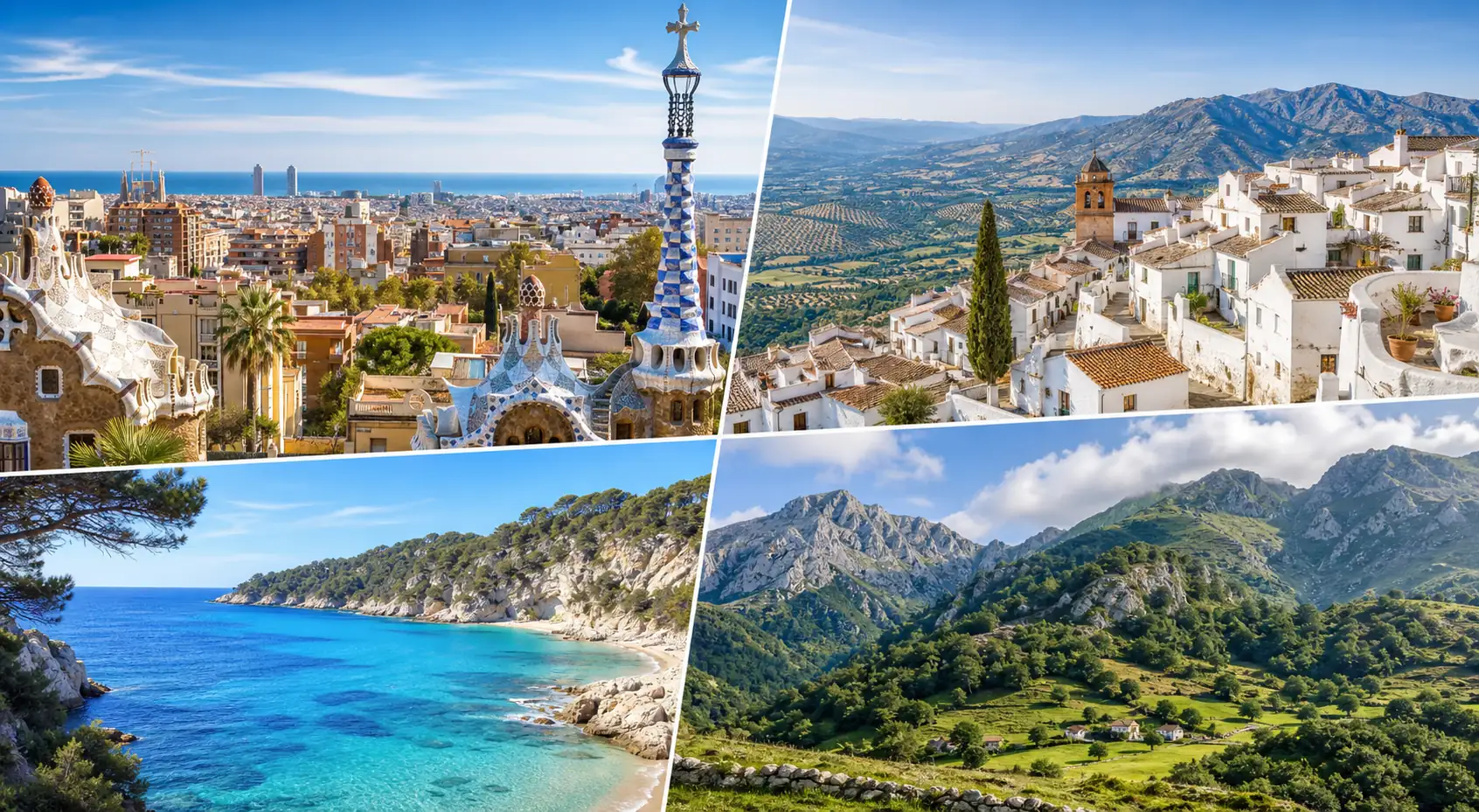
This is why Spain can feel Mediterranean, Atlantic, alpine, island-like, and even subtropical depending on where you go.
EU, Schengen, and Euro Basics
Spain is an EU member country, and the European Union lists Spain among its official member states. You can confirm the country profile on the EU’s Spain member country page.
However, Europe, the EU, the Schengen Area, and the eurozone are different concepts. Europe is a continent. The EU is a political and economic union. Schengen is a border-free travel area for many short-stay travelers. The eurozone refers to countries using the euro as their currency.
Question | Spain’s Status | Why It Matters |
|---|---|---|
Is Spain in Europe? | Yes | It is geographically in southwestern Europe. |
Is Spain in the EU? | Yes | EU rules affect currency, roaming context, consumer protections, and travel policy. |
Is Spain in Schengen? | Yes | Short-stay rules often apply across multiple Schengen countries, not just Spain. |
Does Spain use the euro? | Yes | Travelers can use the same currency as in many other EU destinations. |
The key mistake is assuming all European countries are in the EU or all EU countries use the euro. Spain happens to fit all four categories, which makes it simpler than many cross-border Europe trips.
What This Means for Travelers
For most visitors, Spain being part of Europe means it is easy to combine with nearby countries. You can fly into Madrid or Barcelona, continue by train or flight to Portugal, France, Italy, or the Netherlands, and keep the same broad travel framework for currency and Schengen time limits.
1. Multi-country routes are practical
Spain pairs especially well with Portugal and southern France. Madrid to Lisbon, Barcelona to the south of France, and Andalusia to the Algarve are common route ideas, though travel time can be longer than the map suggests if you rely only on trains.
2. Regional variety is huge
Spain is European, but it is not one single travel mood. Barcelona feels different from Seville, Bilbao differs sharply from Malaga, and the Canary Islands feel nothing like the Pyrenees. Plan by region, not just by country.
3. Border-free does not mean rule-free
If your nationality is subject to Schengen short-stay limits, time spent in Spain may count together with time spent in other Schengen countries. Keep a simple calendar of arrival and departure dates if your itinerary includes several countries.
Traveler tip: Do not build a two-week Spain route that jumps every day. Spain looks compact on a Europe map, but Madrid, Barcelona, Andalusia, northern Spain, and the islands each deserve different pacing.
Entry Checks Before You Go
Spain’s entry requirements depend on your nationality, passport, trip purpose, length of stay, and the rules in force when you travel. Many short-stay leisure travelers enter under Schengen rules, but you should still confirm passport validity, visa needs, and any special documentation before booking nonrefundable flights.
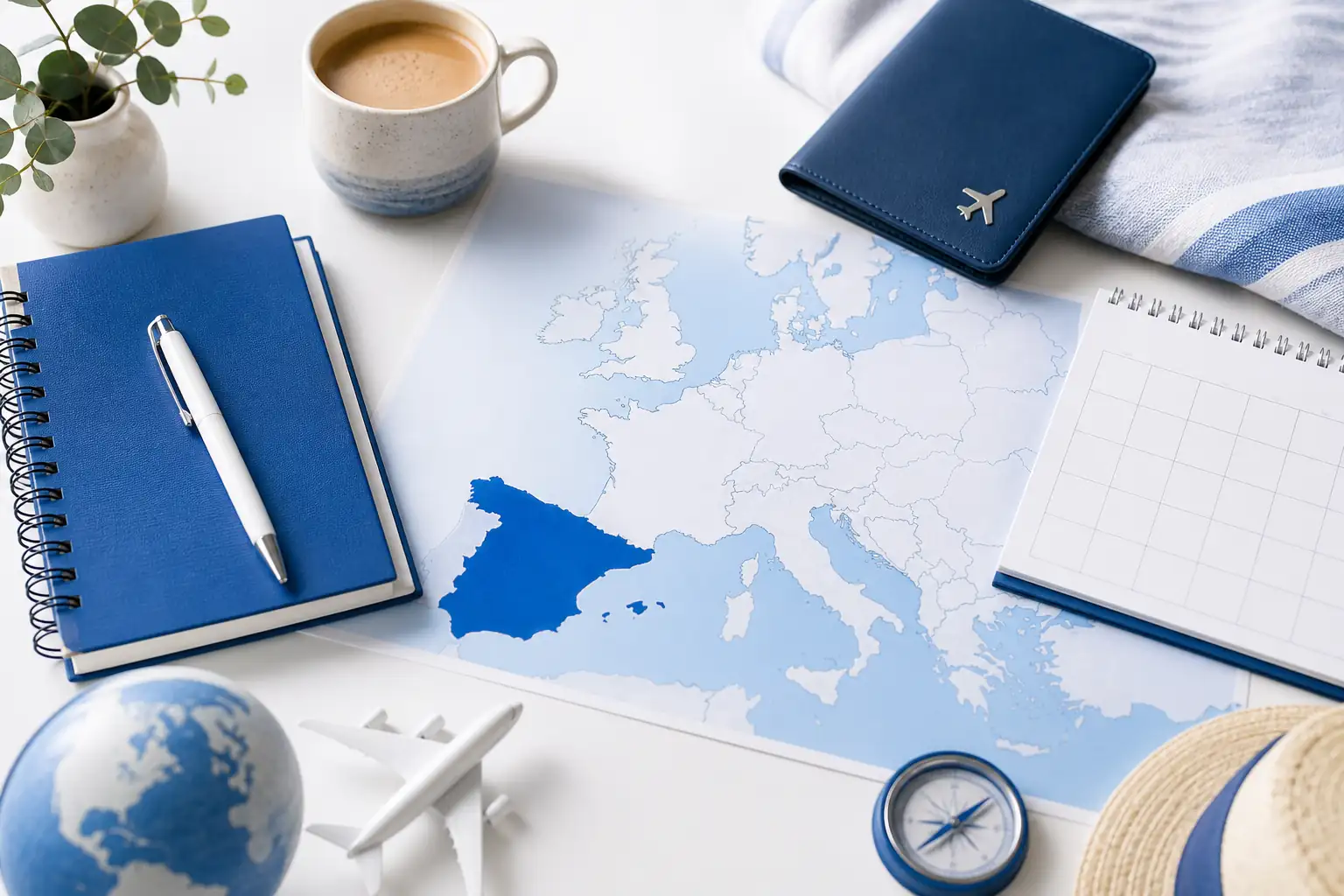
For official guidance, check Spain’s current visa and passport information before departure. Rules can change, and airlines may also check documentation before boarding.
1. Check your passport early
Do not wait until the week before travel to review passport validity. Renewal timelines, consular appointments, and airline boarding checks can create problems even when your trip itself is simple.
2. Know your Schengen days
If you are visiting multiple Schengen countries, count the full journey, not just your Spain portion. A traveler doing Paris, Barcelona, Rome, and Amsterdam is still moving within the same short-stay framework for many nationalities.
3. Keep proof of plans accessible
Accommodation addresses, return or onward tickets, travel insurance details, and proof of funds may be useful at border checks. Store copies offline as well as in your email or cloud drive.
Good habit: Save hotel addresses in Spanish and English.
Common mistake: Assuming a visa-free passport means no documentation can ever be requested.
Staying Connected Across Spain
Spain is easy to navigate with mobile data, especially if you are using live maps, train apps, ride-hailing where available, restaurant reservations, translation tools, and messaging with hotels or tour operators. A travel eSIM is often simpler than buying a local SIM after arrival.

1. Choose data before arrival
For a first Spain trip, set up mobile data before you land so airport transfers, metro directions, and hotel check-in messages are not stressful. The iRoamly travel eSIM can fit naturally into this preparation, especially for travelers who want data ready without visiting a phone shop.
2. Match coverage to your route
A city-only route in Madrid and Barcelona is different from a road trip through Andalusia or a beach-and-island itinerary. Check whether your plan fits the countries and regions you will actually visit, especially if Spain is part of a wider Europe trip.
3. Download offline backups
Even with mobile data, save offline maps, train tickets, hotel confirmations, and emergency contact details. This is useful in old towns with thick walls, mountain areas, underground stations, and busy events.
Travel Need | Why Data Helps | Backup Plan |
|---|---|---|
Airport arrival | Maps, rides, hotel messages, and transit directions. | Save the hotel address and route screenshots. |
Old town wandering | Restaurant searches, translation, and walking routes. | Pin your accommodation before leaving. |
Cross-border travel | Rail changes, flight updates, and border-day logistics. | Keep tickets available offline. |
FAQ

1. When did Spain become Europe?
Spain has always been part of the European continent geographically. If you mean politically, Spain joined the European Economic Community (EEC)—the predecessor of the European Union—on January 1, 1986.
2. Are Spain and France in Europe?
Yes. Both Spain and France are countries in Europe, located in the southwestern part of the continent. They share a border along the Pyrenees Mountains.
3. Is being Spanish considered European?
Yes. Spanish people are European by nationality and geography. They are both Spanish (their nationality) and European.
4. Which country speaks the purest Spanish?
There is no single country that speaks the "purest" Spanish. Spanish has many regional varieties, and all are considered correct by the Royal Spanish Academy (RAE). However:
Spain (especially central Spain) is often viewed as the source of standard Castilian Spanish.
Colombia—particularly the Bogotá region—is frequently praised for its clear pronunciation and neutral accent.
Mexico has one of the most widely understood forms of Spanish due to its large number of speakers and influence in media.
Ultimately, there is no officially "purest" Spanish, only different regional accents and vocabulary.
Final Thoughts
So, is Spain part of Europe? Yes. Spain is geographically European, politically part of the European Union, included in the Schengen travel area, and a euro-using country.
For travelers, that makes Spain practical to combine with other European destinations, but it does not remove the need to check passport rules, count Schengen days when relevant, and plan routes realistically.
The best way to understand Spain is as both clearly European and deeply regional. Give yourself time for its cities, coasts, islands, food, and local rhythms, and your trip will feel much richer than a simple map answer.