
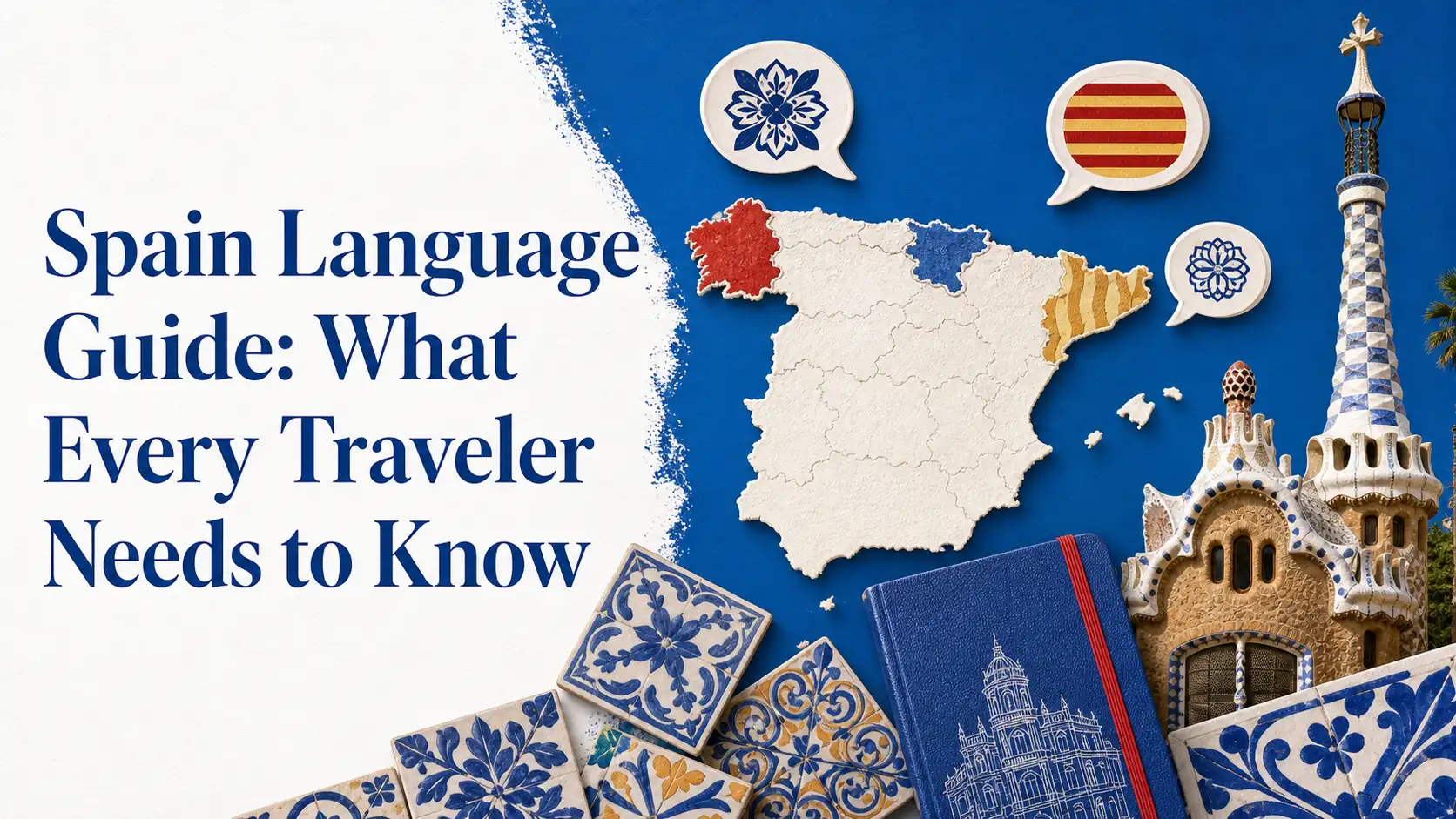
Spain language questions are more interesting than the simple answer “Spanish.” Castilian Spanish is understood nationwide, but several regions also use co-official languages in public life, education, signage, and local culture.
Travelers do not need to become multilingual before a holiday. A small set of respectful phrases, awareness of regional names, and a reliable translation setup are enough for most hotels, restaurants, stations, and attractions.
This practical guide maps the country's main languages, explains where visitors will encounter them, and gives useful Spanish for real travel situations. It also shows how to communicate when pronunciation, speed, or regional vocabulary becomes challenging.
Spain's Linguistic Landscape
Article 3 of the Spanish Constitution establishes Castilian Spanish as the official language of the state and allows other Spanish languages to be official within their autonomous communities. The government's constitutional overview identifies the principal co-official arrangements.
1. Spanish across the country
Spanish, often called castellano in Spain, is the common language for nationwide administration and communication. A traveler who speaks standard Spanish can function throughout the mainland, Balearic Islands, Canary Islands, Ceuta, and Melilla.
2. Co-official languages
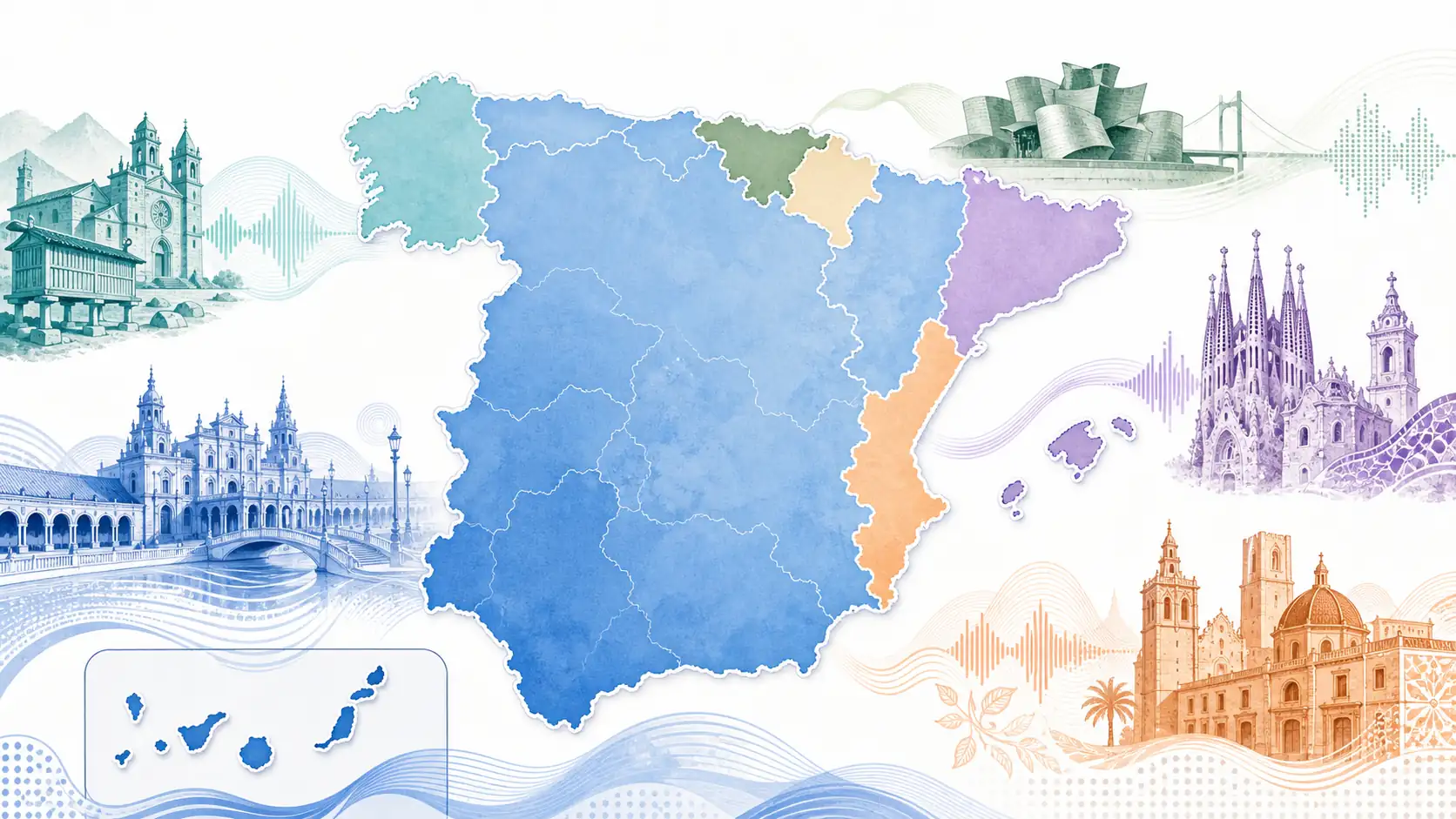
Catalan is co-official in Catalonia and the Balearic Islands; Valencian is the local statutory name used in the Valencian Community. Galician is co-official in Galicia, Basque in the Basque Country and designated parts of Navarre, and Aranese in Catalonia.
3. Other recognized language varieties
Spain also has languages and varieties with different levels of legal or cultural recognition, including Asturian, Aragonese, Leonese, and regional forms of speech. Their visibility varies greatly, and visitors are more likely to notice them in cultural programming or place names than in essential tourism services.
Nationwide default: Spanish works everywhere.
Regional courtesy: A greeting in the local language is often appreciated.
Signage: Bilingual or locally dominant signs are normal, not a sign that Spanish is unavailable.
Spanish Basics for Everyday Travel
Clear, simple Spanish is more useful than memorizing long conversations. Focus on polite openings, numbers, time, directions, and the ability to ask someone to repeat themselves.
1. Pronunciation shortcuts
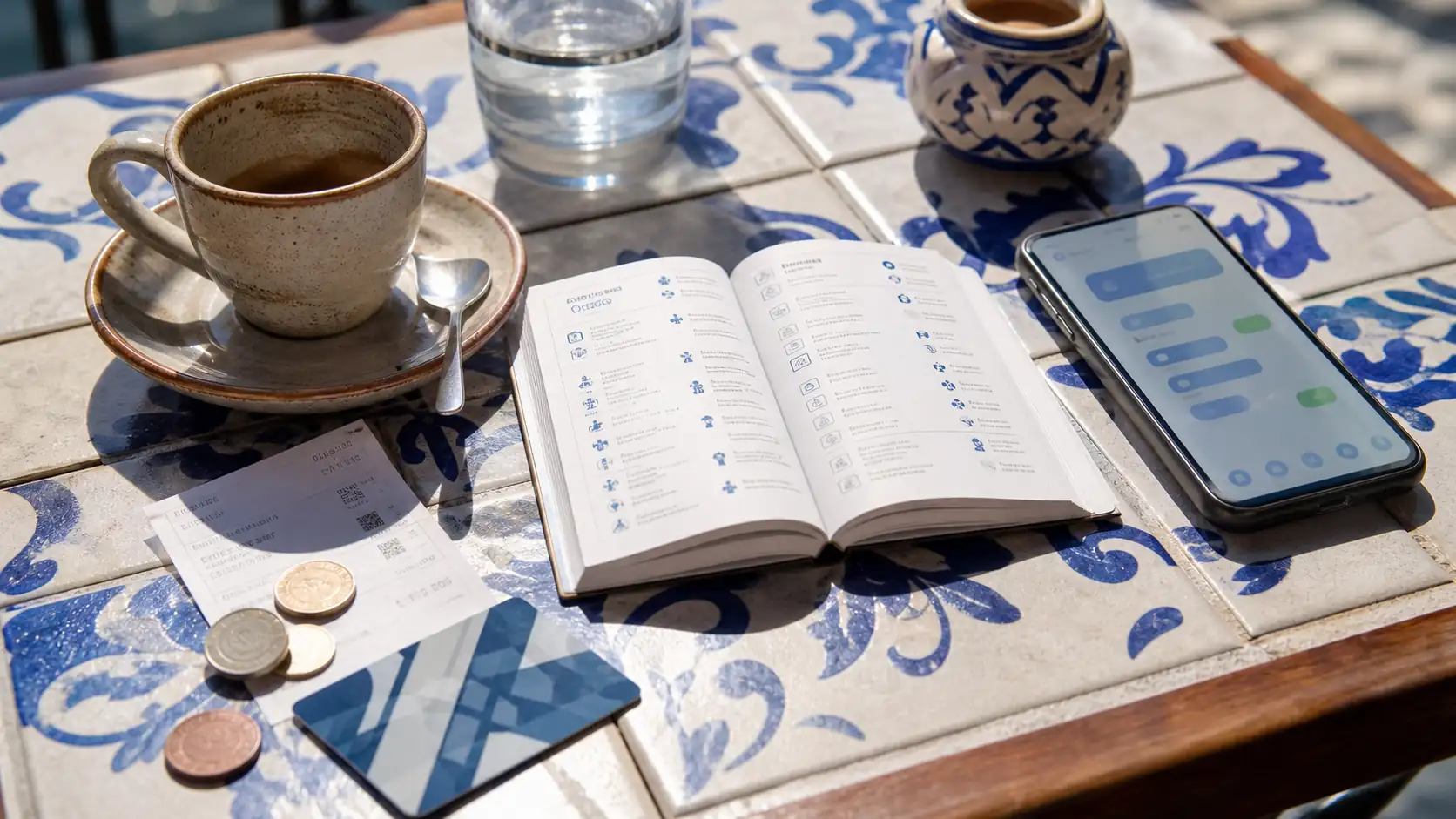
Spanish vowels are comparatively consistent: a, e, i, o, and u keep stable sounds. The letter h is silent, while j has a strong breathy sound. In much of Spain, z and soft c sound similar to English “th,” though other pronunciations are readily understood.
2. Politeness that sounds natural
Hola, por favor, and gracias cover many situations. Use perdone to get attention politely or apologize, and disculpe when asking a stranger for help.
3. When you do not understand
¿Puede repetirlo, por favor? — Can you repeat that, please?
Más despacio, por favor. — More slowly, please.
No entiendo. — I don't understand.
¿Habla inglés? — Do you speak English?
Ask before switching to English instead of beginning with the assumption that everyone speaks it. Even a short Spanish greeting changes the tone of the interaction.
Regional Languages Travelers Will See
Regional languages are most visible in transport names, street signs, museums, menus, and public announcements. Learning a few patterns makes them easy to navigate.
1. Catalan and Valencian
Visitors to Barcelona may see sortida for exit, carrer for street, and si us plau for please. In Valencia, closely related Valencian appears in forms such as eixida. Spanish remains widely understood in both destinations.
Travel tip: Search transport stops by the exact spelling shown on local signs. Translation apps sometimes replace a locally official name with a Spanish version that does not match the station display.

2. Galician
Galician, or galego, shares features with Portuguese and appears throughout Galicia. Travelers may notice rúa for street, praza for square, and grazas for thank you.
3. Basque
Basque, or euskara, is unrelated to the Romance language family. Common signs include irteera for exit and kalea for street. Kaixo means hello and eskerrik asko means thank you.
4. Aranese
Aranese is a variety of Occitan centered in the Val d'Aran in the Pyrenees. Visitors are likely to encounter it on local signs and cultural information alongside Catalan and Spanish.
Useful Phrases by Travel Situation
A small phrase set is easier to recall when grouped by what you are trying to accomplish. Save these lines offline and add your hotel's address underneath.

1. Transport and directions
¿Dónde está la estación? — Where is the station?
¿Este tren va a...? — Does this train go to...?
Un billete de ida y vuelta. — A return ticket.
¿A qué hora sale? — What time does it leave?
2. Hotels and restaurants
Tengo una reserva. — I have a reservation.
¿Me trae la carta, por favor? — May I have the menu, please?
Sin frutos secos, por favor. — Without nuts, please.
La cuenta, por favor. — The bill, please.
3. Problems and emergencies
Necesito ayuda. — I need help.
He perdido mi pasaporte. — I have lost my passport.
¿Dónde hay una farmacia? — Where is a pharmacy?
Llame a emergencias. — Call emergency services.
Safety note: For a serious allergy or medical condition, carry a professionally translated card rather than relying only on improvised speech.
Communication Tools and Etiquette
Technology helps most when it supports, rather than replaces, respectful human interaction. Prepare your tools before the first connection problem.
1. Download offline language support
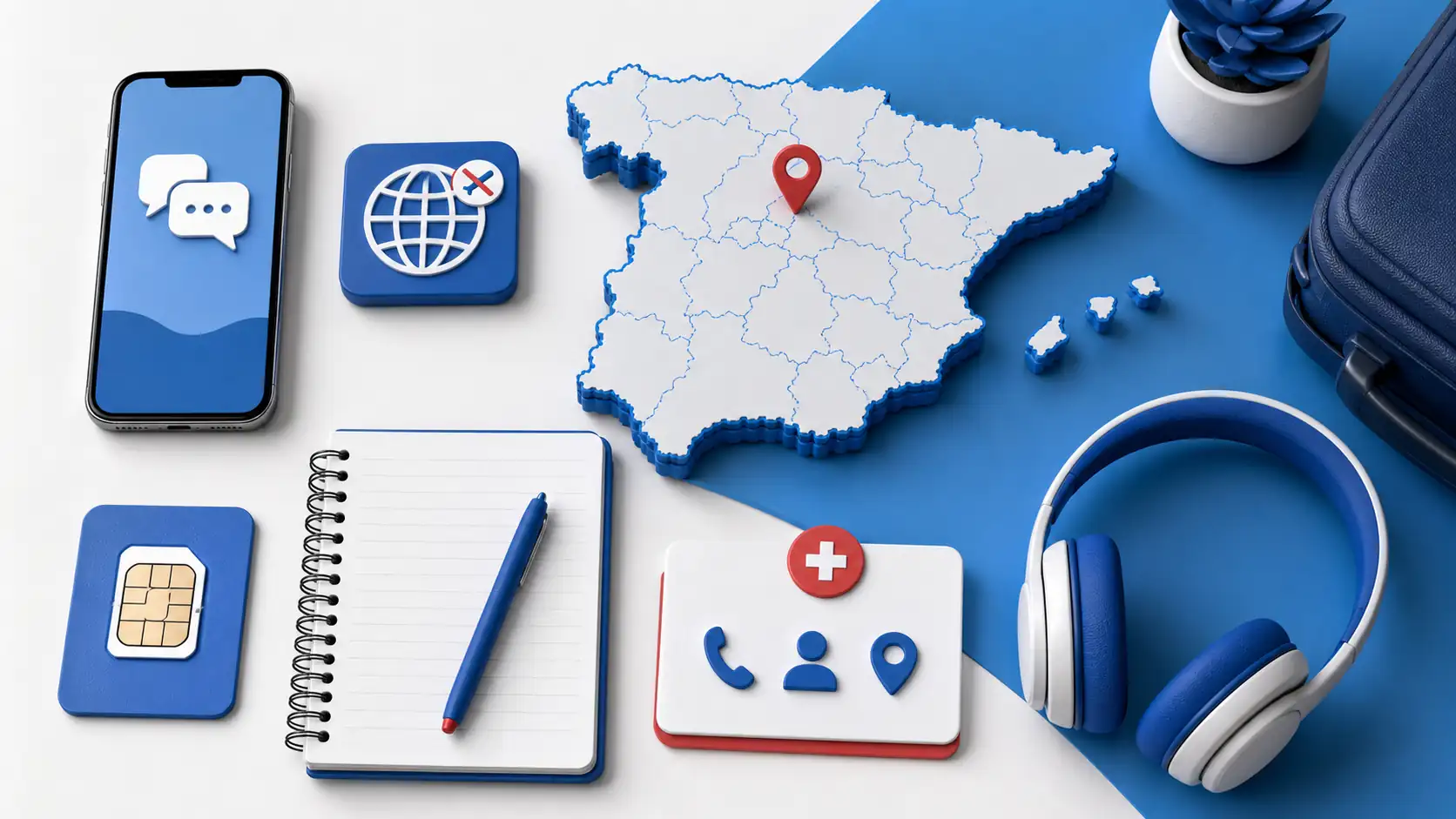
Install Spanish offline dictionaries and translation packs, then save screenshots of bookings and addresses. Camera translation can help with signs and menus, but verify allergy and legal information with a person.
2. Keep mobile data available
Live translation, maps, and messages to accommodation staff depend on connectivity. An iRoamly travel eSIM can provide a practical data option for a compatible device; install it before departure and keep the QR or activation details stored securely.
3. Read the social context
Speech can be animated and direct without being unfriendly. Greetings matter when entering small shops, and a polite goodbye is normal. In busy service settings, concise wording is more considerate than testing a long memorized sentence.
Spain Language FAQ

1. Can I travel in Spain using only English?
Many workers in major tourist areas speak some English, but coverage varies by region, age, and setting. Basic Spanish is especially useful in small towns, local markets, pharmacies, and transport disruptions.
2. Is Castilian different from Latin American Spanish?
The core language is mutually intelligible. Pronunciation, everyday vocabulary, and the use of vosotros differ, but speakers generally adapt without difficulty.
3. Should I speak Spanish in Barcelona or Bilbao?
Yes. Spanish is understood, and visitors are not expected to master Catalan or Basque. A local greeting is a thoughtful bonus, not a requirement.
4. Are menus always available in English?
No. Tourist centers often offer translated menus, but traditional restaurants may use only Spanish or a regional language. Camera translation helps, although allergy questions should be confirmed directly.
5. What is the most useful phrase to learn?
¿Puede repetirlo más despacio, por favor? is unusually versatile because it keeps a conversation going when you understand some Spanish but not the speaker's speed.
Minimum set: hello, please, thank you, excuse me, and I don't understand.
Best confidence tool: a saved note with addresses and key phrases.
Conclusion

The Spain language landscape adds depth to a journey without making travel complicated. Spanish is the nationwide bridge, while Catalan, Valencian, Galician, Basque, Aranese, and other local varieties express regional identity.
Learn a compact set of practical Spanish, recognize the language used on signs, and prepare offline and connected translation tools. These steps solve far more problems than memorizing pages of vocabulary.
Most importantly, begin with a greeting and a little patience. Clear words, respectful curiosity, and a willingness to repeat or write something down make communication work.