
Spain plug type questions are easy to solve once you separate three issues: the shape of the plug, the voltage your device accepts, and whether the device needs grounding.
Spain uses round-pin European sockets, so travelers from the United States, Canada, the United Kingdom, Ireland, Australia, and many other countries usually need an adapter. Most modern phone and laptop chargers accept Spain’s voltage, but high-power appliances deserve closer checking.
This guide explains Type C and Type F, voltage and frequency, device labels, adapters versus converters, and a safe charging setup for your trip.
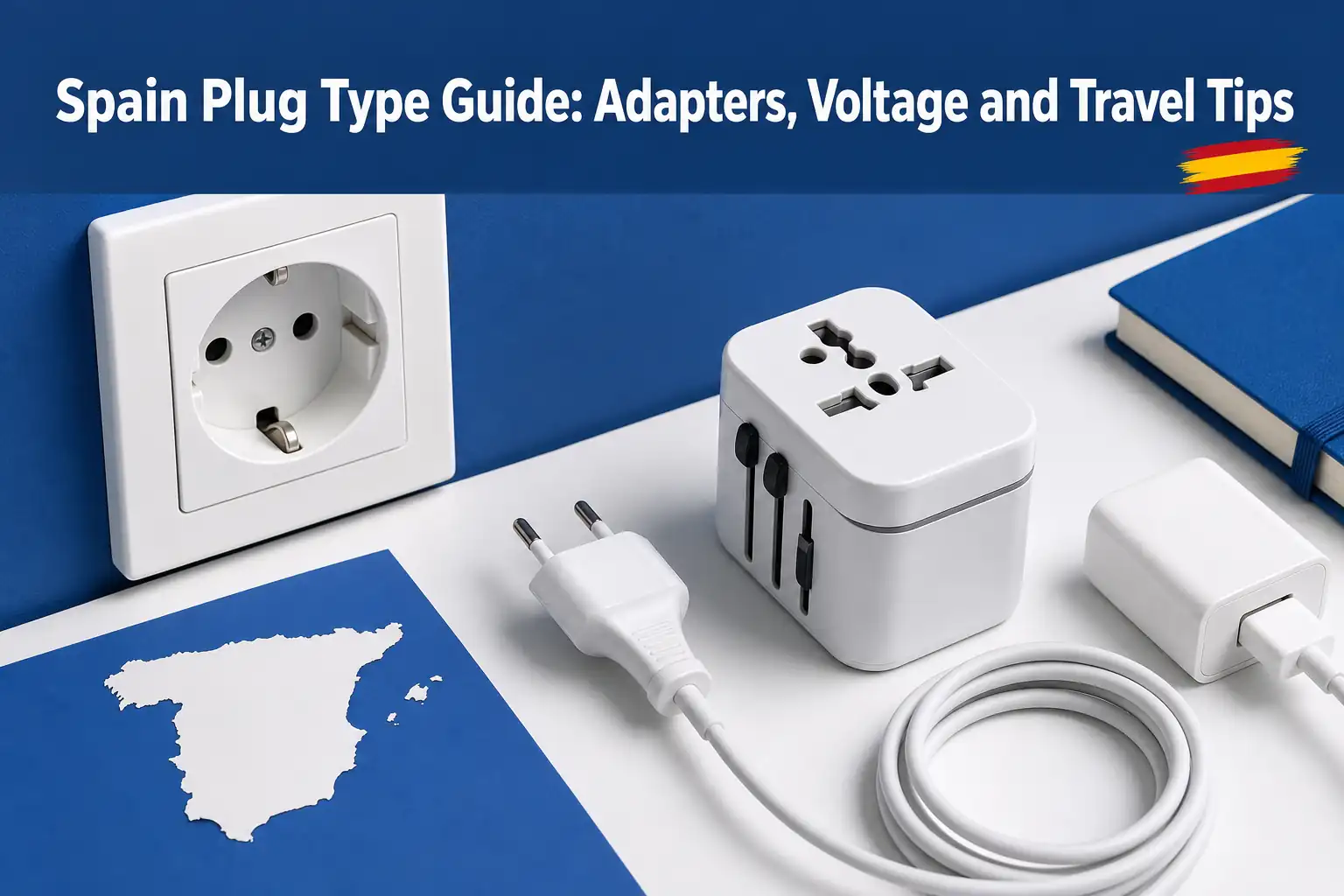
Spain Uses Type C and Type F Plugs
Spanish sockets follow the European round-pin system. The official Spain plug and electricity information confirms round-pin sockets and a 50 Hz alternating-current supply.
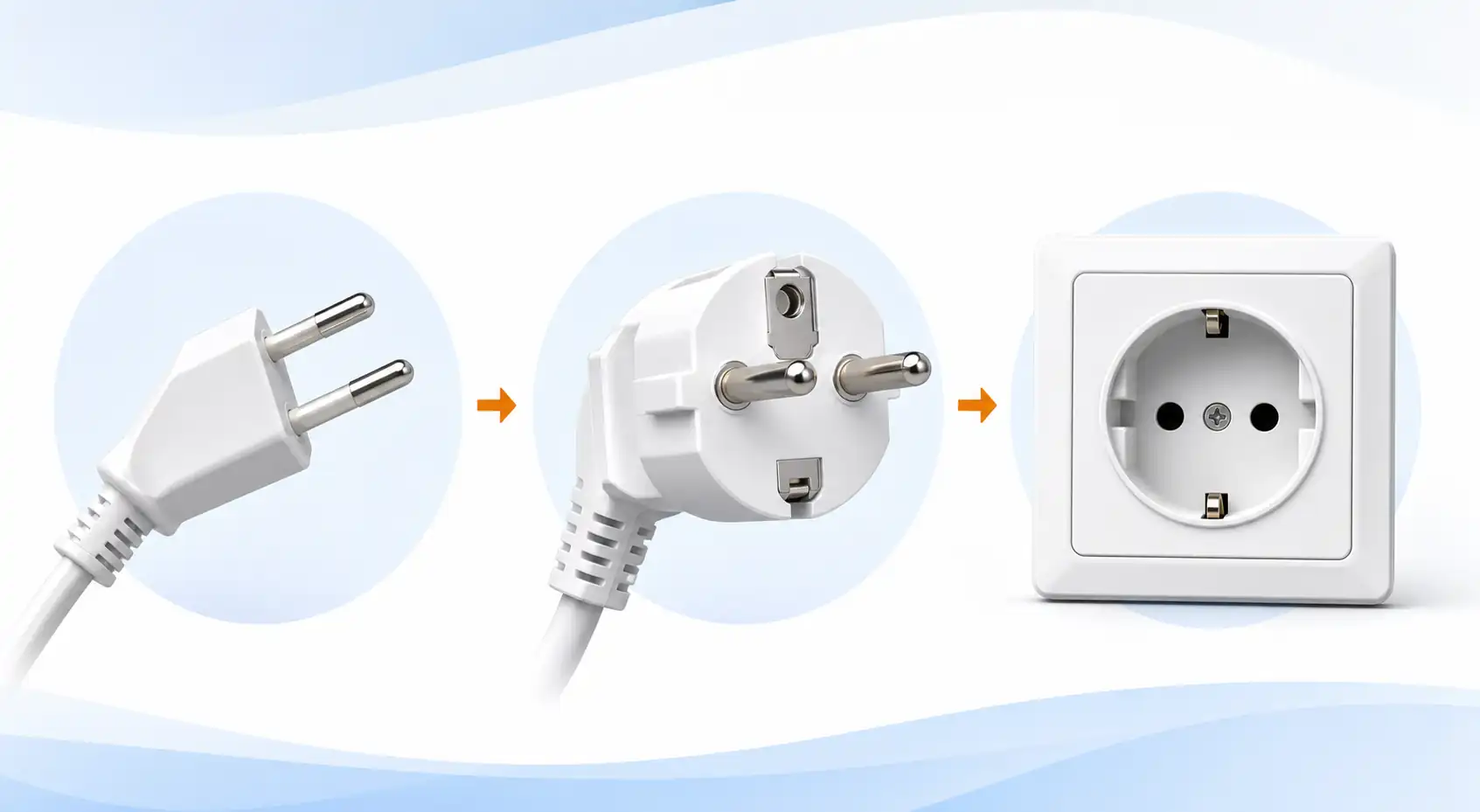
1. Type C
Type C is the slim two-round-pin plug commonly found on low-power, double-insulated devices and small chargers. It does not provide an earth connection. A Type C plug usually fits a Type F socket.
2. Type F
Type F, often called Schuko, also has two round pins but adds grounding contacts on the sides. Spanish wall outlets are commonly recessed Type F sockets, designed for grounded plugs while also accepting compatible Type C plugs.
Two slim round pins: typically Type C.
Two round pins plus side earth contacts: Type F or a compatible CEE 7/7 plug.
Flat or rectangular pins: normally require an adapter in Spain.
Direct answer: if your plug already has two compatible European round pins, you may not need a shape adapter. If it uses US, UK, Australian, or another pin system, bring one.
Voltage and Frequency in Spain
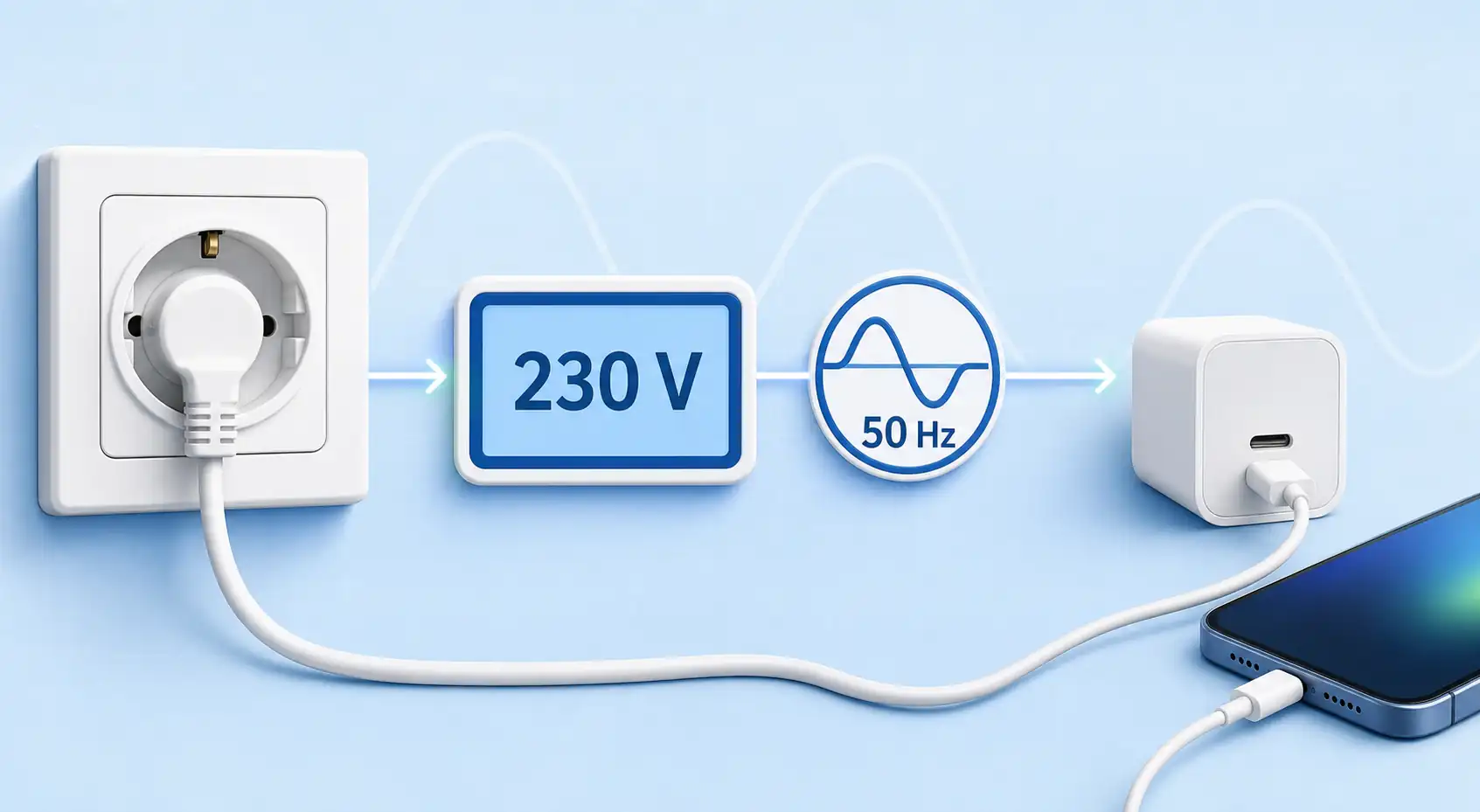
Spain’s household electrical system is generally treated as 230 V at 50 Hz under the modern European standard. Some tourism information still refers to 220 V in traveler-facing wording, but device compatibility should be checked against the label on your own equipment.
Electrical detail | Spain | Why it matters |
|---|---|---|
Nominal voltage | 230 V | Single-voltage 110–120 V appliances may be unsafe without suitable conversion |
Frequency | 50 Hz | Some motors, clocks, and older appliances can behave differently if designed only for 60 Hz |
Common socket | Type F, accepting compatible Type C plugs | Pin shape and grounding must match |
Voltage is the bigger concern for most travelers. A plug adapter changes only the physical connection; it does not turn 230 V into 120 V.
Who Needs an Adapter?
Whether you need an adapter depends on the plug attached to your charger, not your passport. The following cases cover the most common visitor origins.
1. United States and Canada
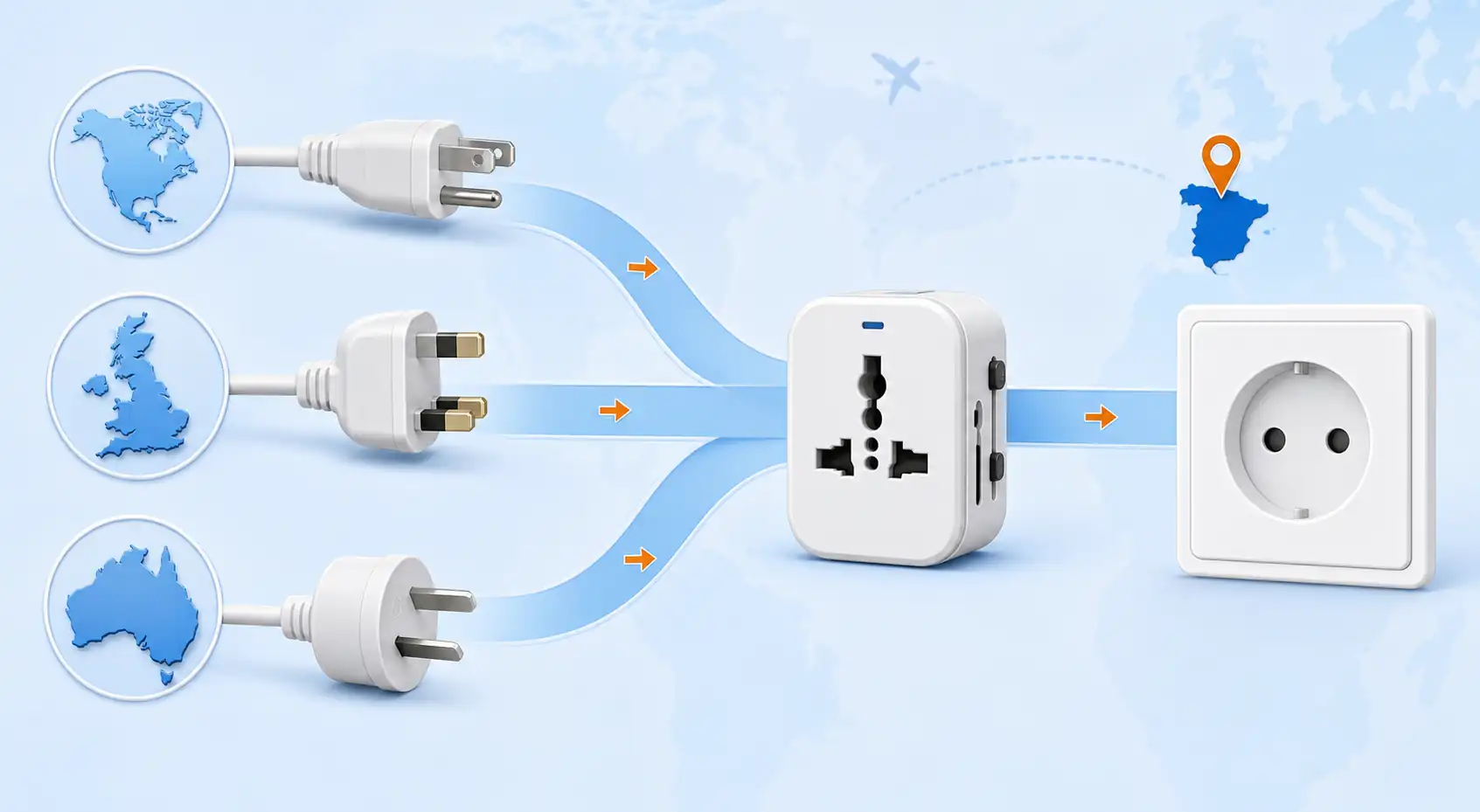
Type A and Type B plugs use flat blades, so they do not fit Spanish sockets. Bring an adapter with a European Type C or compatible Type F output. Then verify that the device accepts 230 V.
2. United Kingdom and Ireland
Type G plugs have three rectangular pins and require an adapter. Most modern USB chargers accept 100–240 V, but the label remains the deciding evidence.
3. Australia, New Zealand, and China
Type I plugs use angled flat pins and need an adapter. Multi-country travelers may prefer a compact universal adapter, provided it is correctly rated for the devices they will connect.
4. Much of Continental Europe
Many travelers already use Type C, E, or F-compatible plugs. A slim Type C plug generally works, while grounded compatibility depends on the exact plug and socket design. Inspect high-power or grounded equipment more carefully.
Match the plug shape.
Check voltage and frequency.
Preserve grounding when the appliance requires it.
Check Every Device Label
The safest answer is printed on the power brick, charger, appliance, or manual. Look for an input line before connecting anything.
1. Dual-Voltage Electronics
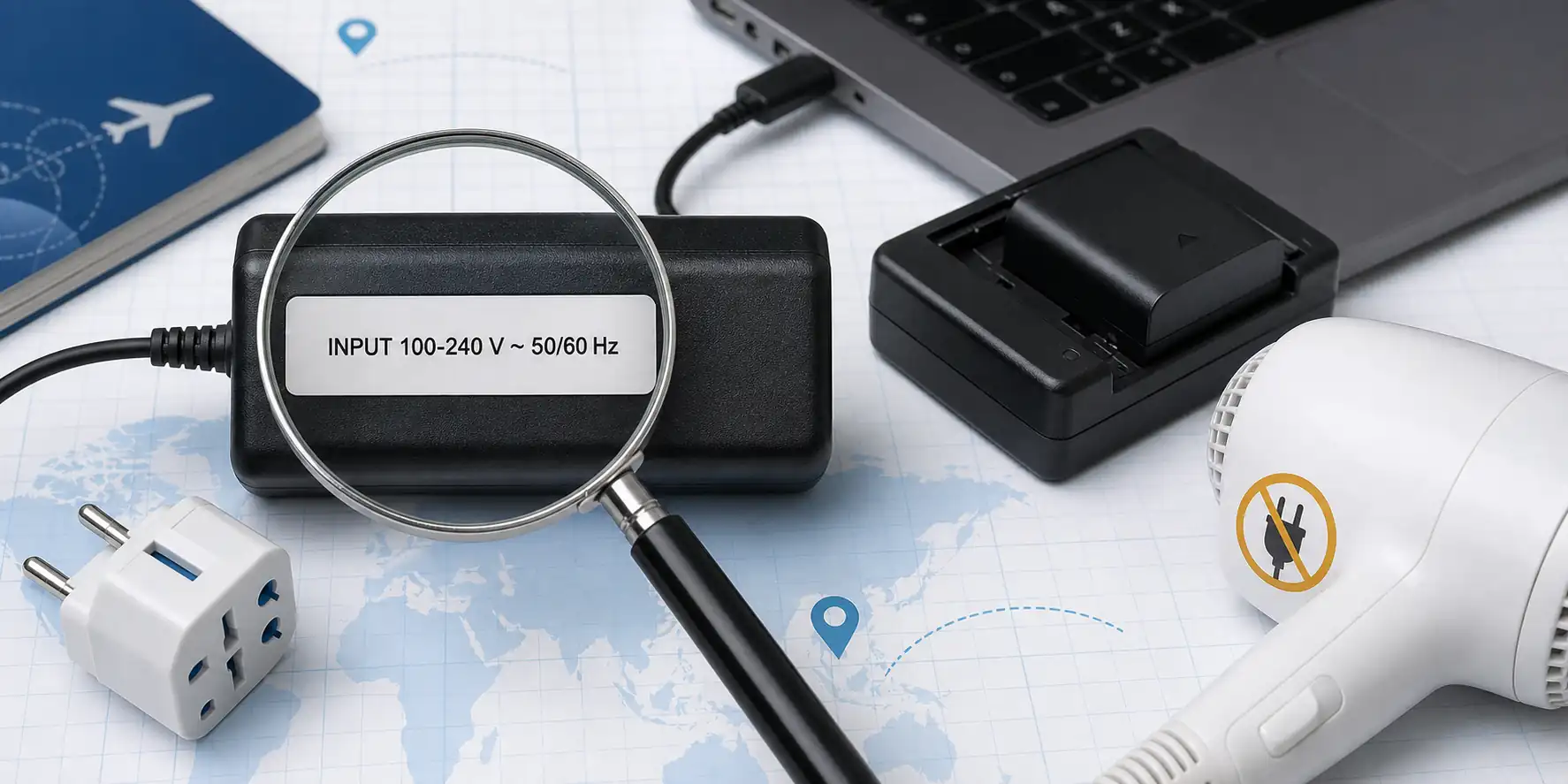
A label such as INPUT 100–240 V, 50/60 Hz means the power supply is designed for both common voltage ranges. Phones, tablets, laptops, camera chargers, and many electric shavers often use this kind of supply.
These devices normally need only a plug-shape adapter in Spain. The adapter must still be in good condition and rated for the load.
2. Single-Voltage Appliances
A label showing only 110 V, 115 V, or 120 V is a warning for Spain’s 230 V system. Hair dryers, curling irons, heating tools, older shavers, and compact kitchen appliances are common risk items.
Using a single-voltage 120 V appliance directly on 230 V can damage it and create a safety hazard. Leave it at home, use a suitable converter, or choose a dual-voltage travel model.
3. Frequency-Sensitive Equipment
Most switched-mode electronics handle both 50 and 60 Hz. Devices whose speed or timing depends on the mains frequency may not. If the label does not include 50 Hz, check the manufacturer’s documentation.
Do not guess: if the input label is unreadable or missing, do not assume a small device is automatically dual voltage.
Adapter or Voltage Converter?
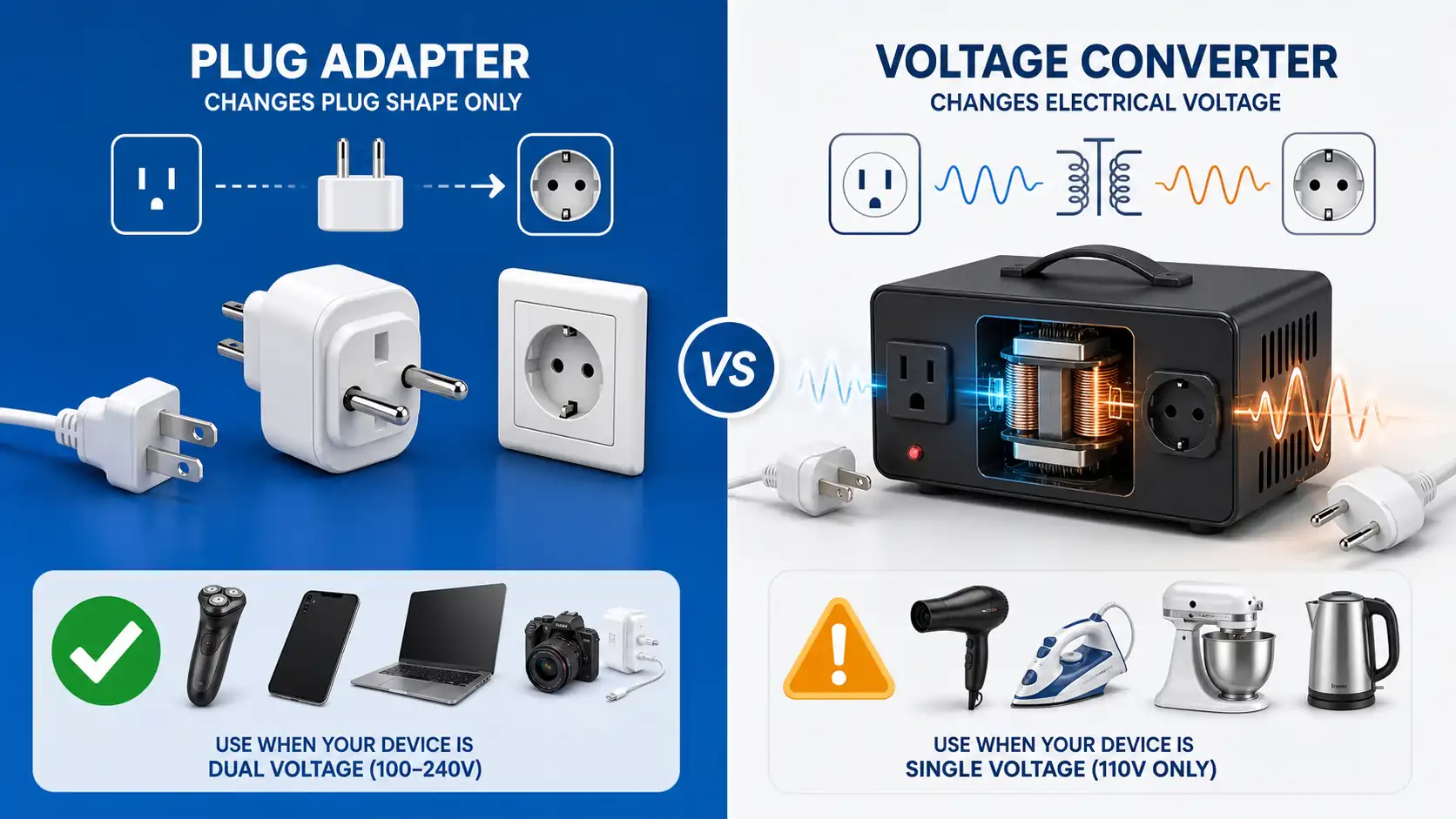
Adapters and converters solve different problems. Buying the wrong one is the most common electrical planning mistake.
Device | What it changes | Use it when |
|---|---|---|
Plug adapter | Pin shape only | Your device accepts 230 V but its plug does not fit Type C/F sockets |
Voltage converter | Electrical voltage | A compatible converter is specifically rated for your single-voltage appliance and wattage |
USB charger with EU plug | Provides regulated USB output | You want a simple charging hub for several low-power devices |
Converters have wattage limits and may not suit electronic temperature controls, motors, or high-heat tools. In many cases, replacing a hair dryer with a dual-voltage travel model—or using the hotel’s appliance—is safer and lighter than carrying a converter.
1. For Phones and Laptops
If the original charger says 100–240 V, use a reliable adapter or an EU-compatible USB charger. A converter is unnecessary.
2. For Hair Tools
Check both voltage settings and wattage. A switchable dual-voltage tool must be set correctly before use. A passive adapter cannot protect a 120 V-only tool.
3. For Medical Equipment
Follow the manufacturer’s exact power requirements and carry any essential accessories in hand luggage. Contact the accommodation in advance if the device needs uninterrupted power or a specific socket setup.
Safe Charging and Packing Tips
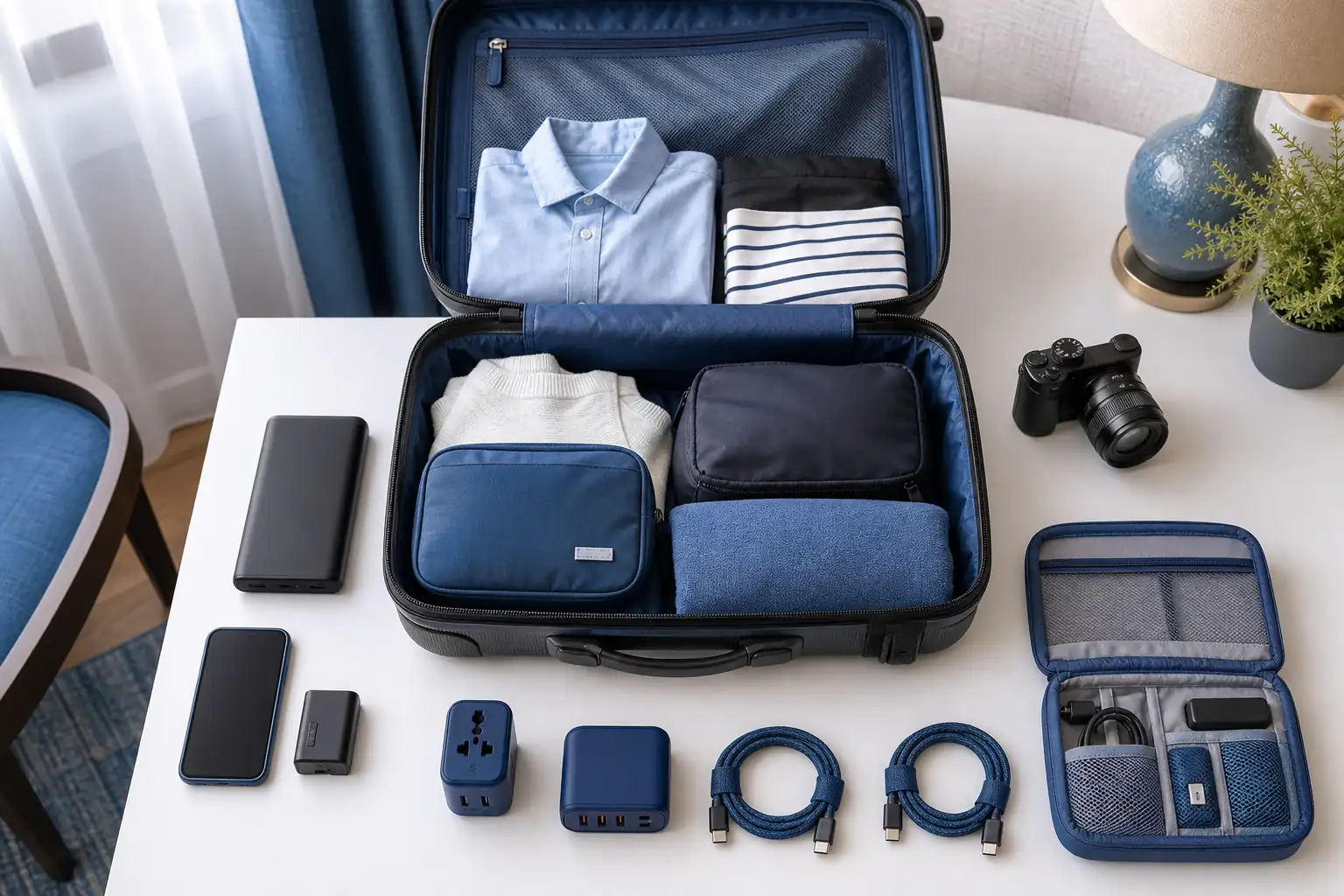
A compact setup is usually better than a bag full of single-use adapters. Plan around the number of devices you charge overnight and the wattage they require.
1. Pack One Quality Adapter
Choose a well-built adapter that fits firmly, has appropriate safety certifications, and is rated for the connected load. Avoid stacking several loose adapters, especially with heavy power bricks.
2. Add a Multi-Port Charger
A dual-voltage USB charger with enough ports can power phones, tablets, watches, and some laptops from one socket. Confirm USB-C power-delivery output if a laptop needs higher wattage.
3. Keep Batteries Travel-Ready
Carry power banks and spare lithium batteries according to your airline’s current cabin-baggage rules. Do not place a damaged, swollen, or overheating battery in your luggage.
4. Prepare Connectivity Too
Save maps and booking details offline, then set up mobile data before a busy travel day. An iRoamly travel eSIM can keep navigation, translation, and accommodation messages available while you move between airports, stations, and hotels.
Photograph device input labels before packing.
Carry one spare cable for the most important device.
Unplug adapters that become loose, unusually hot, or noisy.
Do not exceed the adapter, charger, or extension lead rating.
Frequently Asked Questions
1. Will a Type C plug fit a Type F socket in Spain?
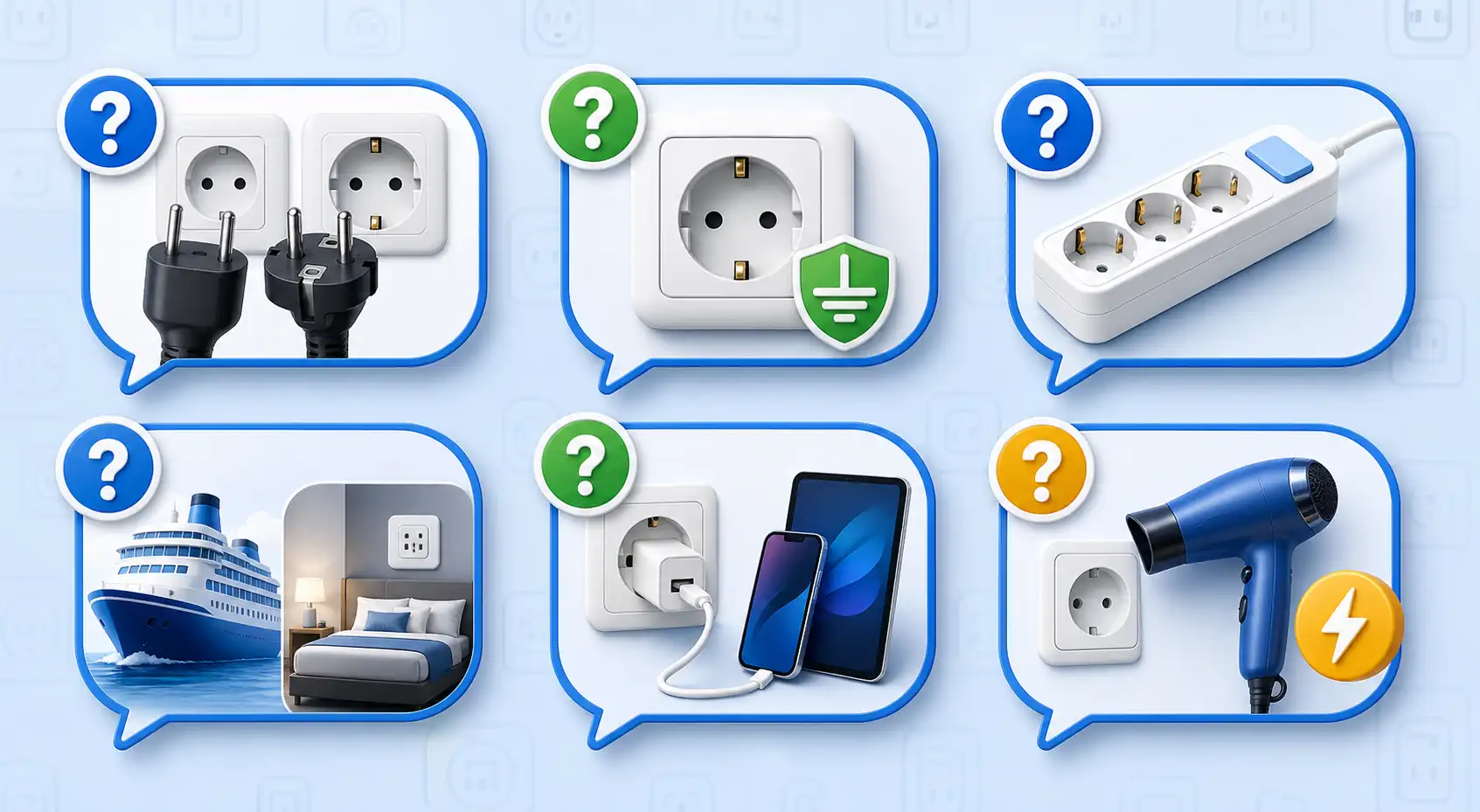
Generally yes. Type C plugs are designed to fit compatible European sockets, including common Type F outlets. Type C itself is ungrounded, so it is not a substitute for grounding where required.
2. Can I charge an iPhone or Android phone in Spain?
Most original and reputable phone chargers accept 100–240 V and 50/60 Hz, but check the label. If it does, you need only a compatible plug connection.
3. Do Spanish hotels provide adapters?
Some do, but availability is not guaranteed and the adapter may already be in use. Bringing your own is more dependable.
4. Can I use a US power strip with one adapter?
Only if the strip and every connected device are rated for 230 V and the total load is within limits. Surge protection designed only for 120 V may not be suitable. An EU-compatible charging hub is usually simpler.
5. Are cruise ship outlets the same as Spanish hotel outlets?
Not necessarily. Ships may provide several outlet types or restrict certain appliances and power strips. Check the cruise line’s current rules before packing.
6. Is a universal adapter automatically a voltage converter?
No. Most universal travel adapters change plug shape only. Unless the product explicitly provides conversion and is correctly rated, assume it does not change voltage.
Conclusion
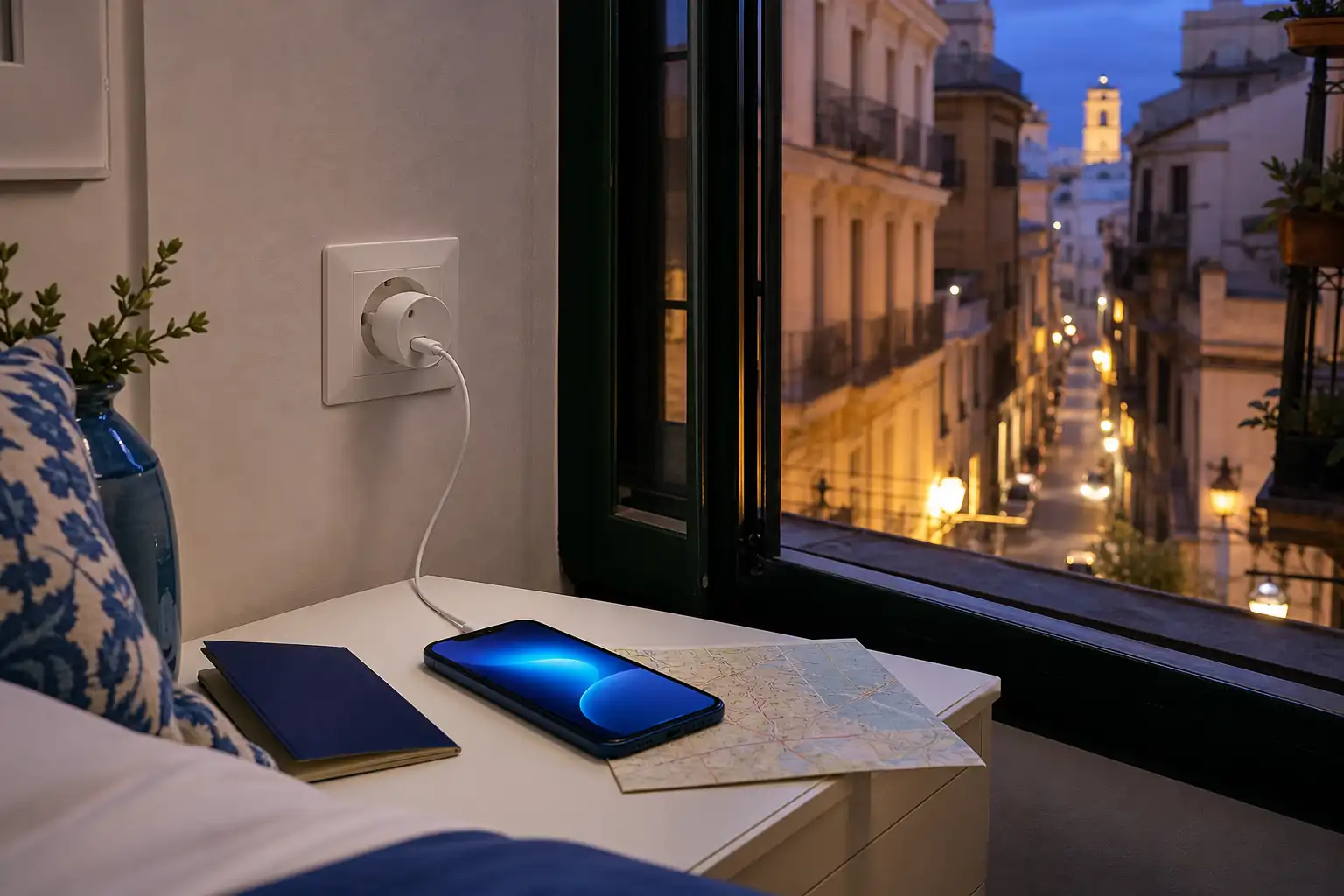
For most travelers, Spain’s plug setup is simple: bring a Type C/F-compatible adapter and confirm that each charger accepts 230 V at 50 Hz.
Phones, tablets, and laptops are commonly dual voltage, while hair tools and other high-power appliances need more caution. Read the input label instead of relying on the device category.
With a quality adapter, a correctly rated charger, and a compact cable kit, you can keep essential devices powered without carrying unnecessary electrical gear.