
Weather in Spain in May is usually springlike rather than uniformly hot: southern cities can feel close to summer, central Spain has warm afternoons and cooler nights, the north stays greener and wetter, and the islands follow their own patterns.
That variety makes May one of Spain's most flexible travel months. It can suit city breaks, road trips, hiking, food-focused journeys, and early beach time, provided you choose the right region and pack for daily changes.
This guide compares official climate normals for representative destinations, explains rain and sea conditions, and turns the data into practical packing and itinerary decisions. Climate averages are not forecasts, so always check the short-range outlook before departure.

Spain's May Weather at a Glance
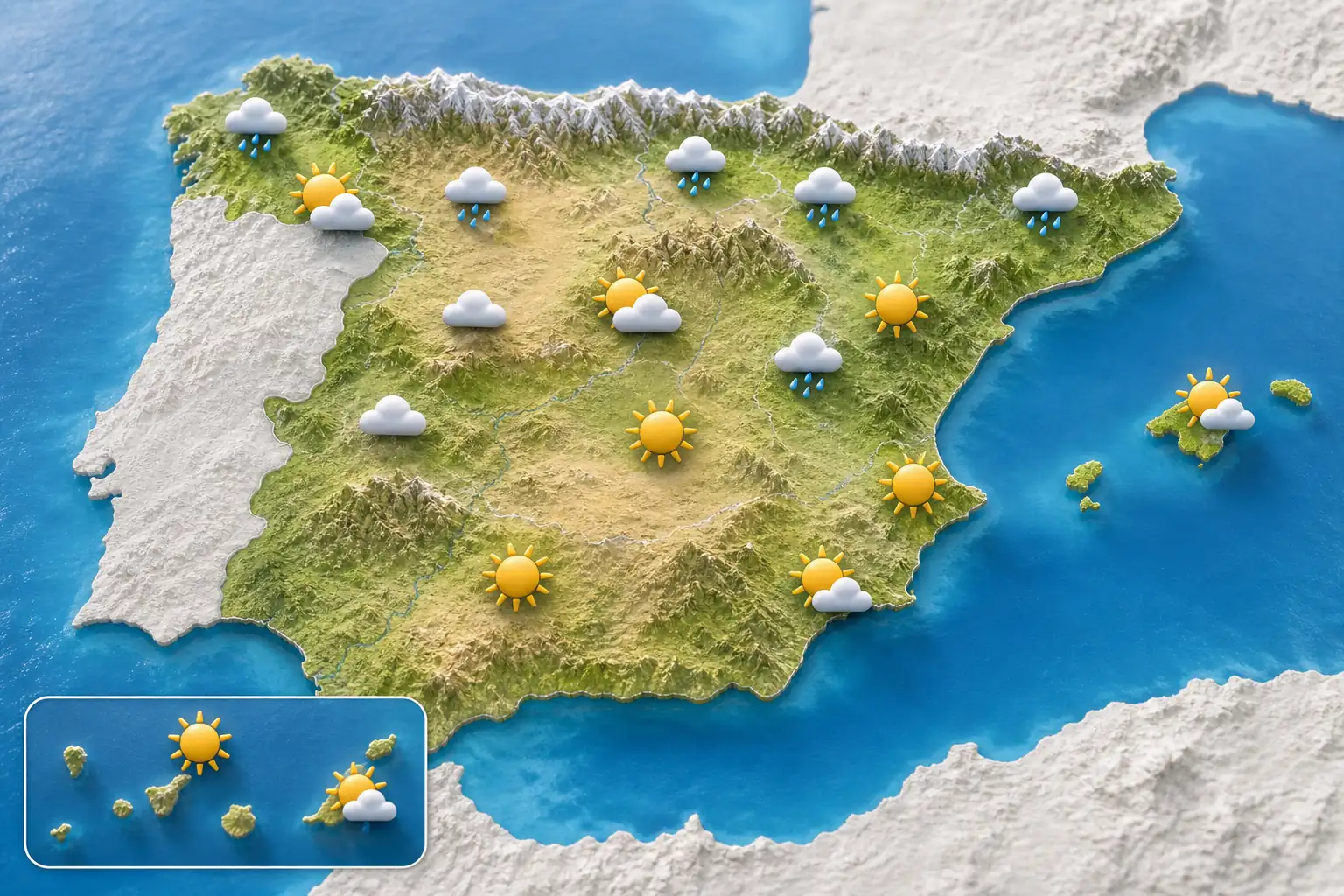
May typically brings long days, strengthening sunshine, and a real difference between daytime and nighttime temperatures. The comparison below uses AEMET station normals for 1981-2010; these are useful planning benchmarks, not predictions for a specific trip.
Representative destination | Average high | Average low | Monthly rain | Days with at least 1 mm |
|---|---|---|---|---|
Madrid Retiro | 22.2°C / 72°F | 11.3°C / 52°F | 50 mm | 7.3 |
Barcelona Airport | 21.1°C / 70°F | 12.8°C / 55°F | 47 mm | 4.7 |
Seville Airport | 27.2°C / 81°F | 14.2°C / 58°F | 30 mm | 3.7 |
Bilbao Airport | 20.8°C / 69°F | 10.6°C / 51°F | 78 mm | 10.5 |
Palma de Mallorca Airport | 23.7°C / 75°F | 11.3°C / 52°F | 32 mm | 3.8 |
Tenerife South Airport | 23.9°C / 75°F | 17.0°C / 63°F | 1 mm | 0.3 |
The table shows why a national average is not very helpful. Seville afternoons can be much warmer than Bilbao's, while Tenerife South has milder nights and far less typical rainfall than the mainland examples.
Warmest city-break conditions: Inland and southern destinations such as Seville and Córdoba.
Mild coast and culture mix: Barcelona, Valencia, and the Balearic Islands.
Green scenery with more rain risk: Basque Country, Cantabria, Asturias, and Galicia.
Most reliable mild beach weather: The drier southern Canary Islands, though wind and local microclimates still matter.
For station-specific normals and current forecasts, use the AEMET climate data service. Check the exact destination rather than the nearest famous city when mountains or islands are involved.
How May Weather Changes by Region
Spain's terrain and surrounding seas create sharp regional differences. A multi-city trip can cross several weather zones in a few days, so plan layers and activities around the route rather than the calendar alone.

1. Central Spain
Madrid, Toledo, and the Castilian plateau often have pleasant daytime warmth but notably cooler mornings and evenings. Dry sunshine can switch to a spring shower or thunderstorm, and exposed plazas feel warmer than shaded streets.
Best strategy: Sightsee outdoors in the morning and late afternoon, carry a compact rain layer, and keep a light sweater for dinner.
2. Southern Spain
Andalusia is commonly the warmest mainland choice. Seville, Córdoba, and inland Granada can deliver summerlike afternoons, while the Costa del Sol is moderated by the sea.
Watch for: A warm spell can push temperatures beyond the monthly average. Shift demanding walking to early hours and book a shaded midday stop.
3. Mediterranean Coast
Barcelona, Valencia, Alicante, and nearby coasts are generally mild to warm, with humidity making some afternoons feel different from inland Spain. Showers are possible but usually do not define the entire trip.
Good for: Travelers who want urban sightseeing, terraces, and coastal walks without peak-summer heat.
4. Northern Atlantic Spain
Bilbao, Santander, Asturias, and Galicia stay lush because Atlantic systems bring more frequent rain and cloud. Clear intervals can be beautiful, but a completely dry week is less reliable than in the southeast.
Route advice: Keep one indoor museum, food market, or historic building in reserve each day and use waterproof footwear for coastal paths.
5. Balearic Islands
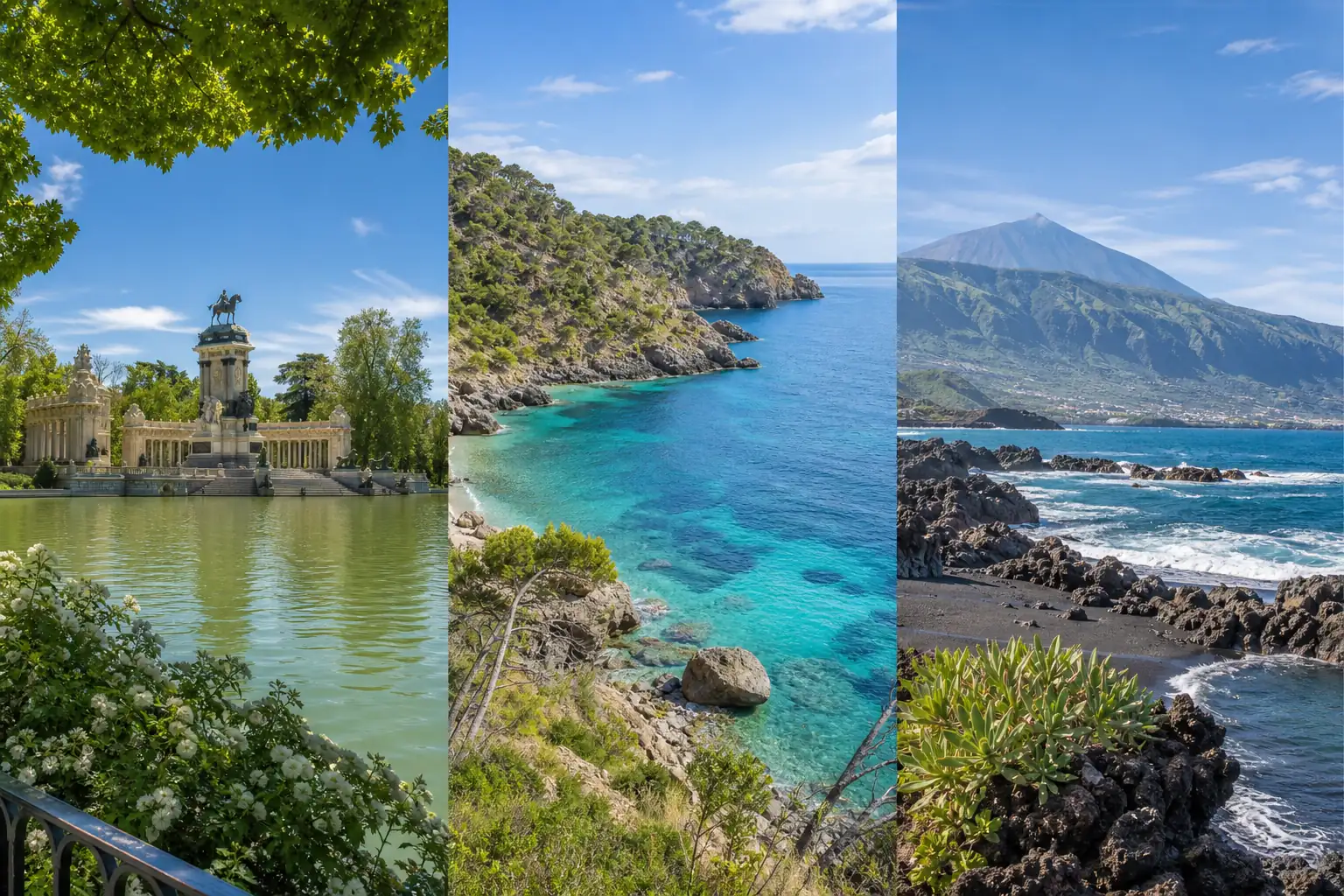
Mallorca, Menorca, and Ibiza can be sunny and comfortable before high-season crowds peak. Sea breezes and cool evenings remain possible, and the water may feel brisk to swimmers accustomed to tropical conditions.
Best use of May: Combine coves with hiking, cycling, villages, and historic towns instead of building the trip around swimming alone.
6. Canary Islands
The Canaries are often the most dependable choice for mild warmth, but local conditions vary dramatically by island, altitude, and exposure. Southern Tenerife can be dry and sunny while higher or northern areas are cooler and cloudier.
Packing note: Bring a layer for mountain viewpoints even when your coastal hotel forecast looks warm.
Rain, Sunshine, and Sea Conditions
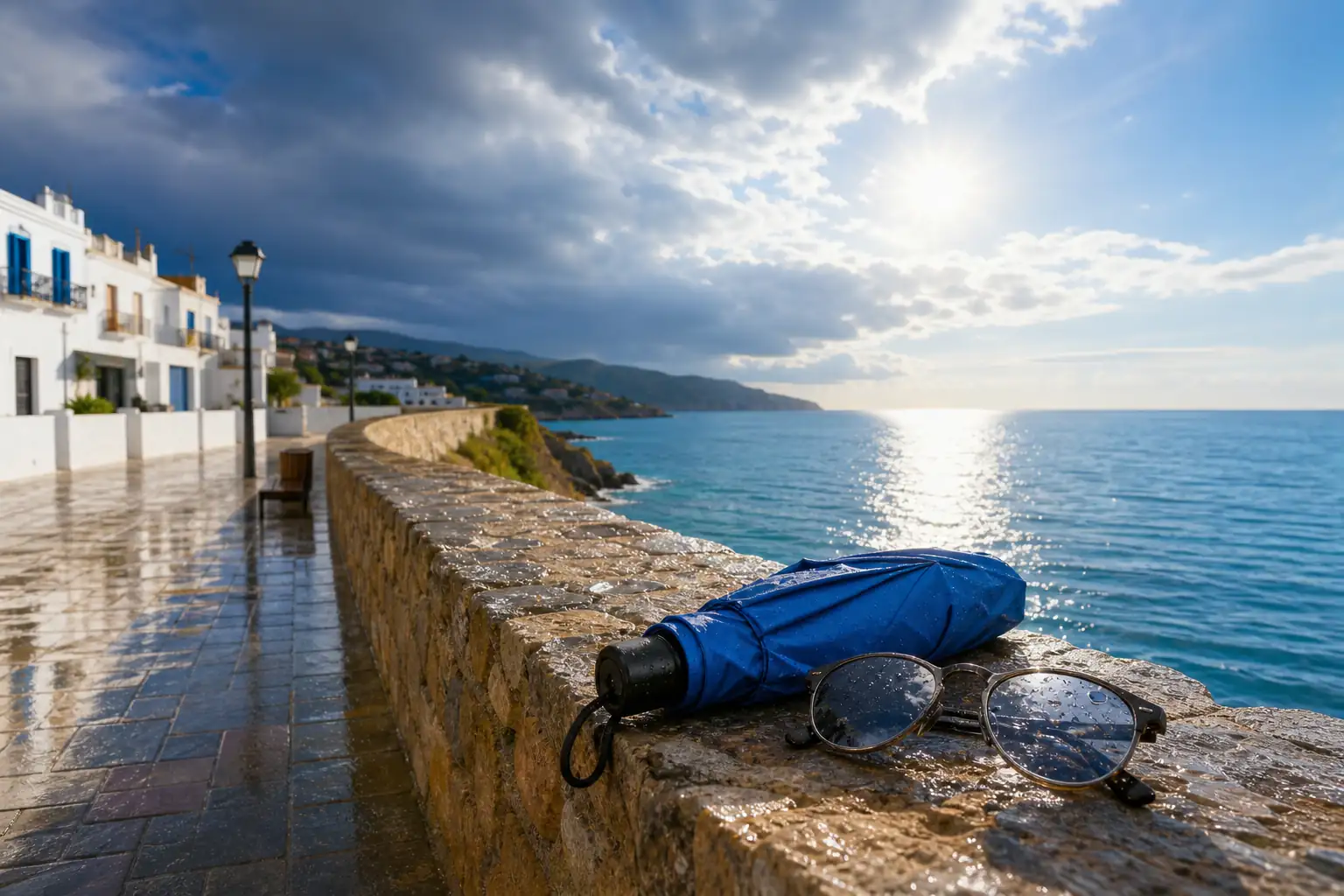
May weather often changes within the day rather than settling into uninterrupted rain. A brief shower can be followed by bright sun, which is why waterproof layers and sun protection belong in the same bag.
1. Rain Patterns
Northern Spain has the highest likelihood of repeated wet periods among popular routes, while central and Mediterranean destinations can see showers or thunderstorms separated by dry intervals. Southern and southeastern Spain are usually drier, but no mainland region is rainproof.
Check hourly forecasts, not only a daily rain icon.
Choose a light shell instead of a heavy winter coat.
Protect electronics and tickets in a small waterproof pouch.
2. Sunshine and UV
Longer days make May excellent for sightseeing, and UV exposure can be strong even when the air feels mild. Cloud cover does not remove the need for sunscreen.
Practical routine: Reapply sunscreen during long outdoor days, carry water, and add a hat for exposed archaeological sites or plazas.
3. Swimming and Sea Temperature
Mediterranean and Atlantic water is still cool for many visitors in May. Sheltered coves may feel more inviting than exposed beaches, while heated pools can be a better fit for families.
Before booking: If swimming is essential, check recent local sea temperatures, wind, lifeguard schedules, and whether your hotel pool is open and heated.
What to Pack for Spain in May
The ideal May wardrobe is modular: light pieces for warm afternoons, one insulating layer for cool nights, and compact weather protection. Adjust the balance for your route.

1. Clothing Layers
Breathable shirts and comfortable trousers or skirts
A light sweater, cardigan, or fleece for mornings
A compact waterproof shell
One warmer layer for northern coasts or mountain areas
Southern travelers may use the sweater only at night, while a northern road trip may require it daily. Avoid packing only shorts because historic interiors and cooler evenings can make them impractical.
2. Shoes and Outdoor Gear
Bring supportive walking shoes with grip for cobbles, hills, and damp pavements. Add trail footwear only if the itinerary includes serious hiking; bulky boots are unnecessary for ordinary city travel.
Small essentials: Sunglasses, sunscreen, a reusable bottle, compact umbrella, swimwear, and a lightweight day bag cover.
3. Connectivity and Forecast Checks
Weather-aware travel depends on live radar, transport updates, digital reservations, and route changes. Download offline maps before departure and use a reliable data option such as an iRoamly travel eSIM to check AEMET forecasts without depending on hotel Wi-Fi.
Device tip: Set up the eSIM and save essential booking details before flying, then keep a power bank in your day bag.
Best May Destinations and Activities
May is not simply a compromise between seasons. For several travel styles, it creates a better balance than midsummer.
1. Cities and Cultural Routes
Madrid, Toledo, Salamanca, Seville, Córdoba, Granada, Barcelona, and Valencia are strong choices before the most intense summer heat. Book major attractions, but leave time for parks, patios, evening walks, and café terraces.
Best for: First-time visitors, architecture-focused trips, and rail itineraries that mix indoor and outdoor sightseeing.
2. Hiking and Green Landscapes
Northern Spain, the Pyrenean foothills, and lower-elevation island trails can be vivid and comfortable. Mountain conditions are different: snow, mud, closures, and rapid changes may persist at altitude.
Safety step: Check local trail conditions and turn back when cloud, wind, or storms arrive faster than expected.
3. Islands Before Peak Season
The Balearics suit active beach-and-village trips, while the Canaries offer more dependable warmth and diverse volcanic landscapes. May can provide better availability than midsummer, though popular weekends still book up.
Choose by priority: Pick the Canaries for warmer-weather confidence and the Balearics for a Mediterranean spring atmosphere close to mainland routes.
4. Road Trips
A car makes regional variety easier to explore, but weather can change between coast, plateau, and mountains. Avoid an itinerary that requires a different hotel every night; flexible two- or three-night bases make forecast changes manageable.
Keep a scenic indoor alternative for rainy days.
Do not leave luggage visible in a parked vehicle.
Check parking restrictions and low-emission rules for each city.
Spain in May Weather FAQ

1. Is Spain hot in May?
Parts of southern and inland Spain can be hot during warm spells, but the country as a whole is not reliably summer-hot. Northern coasts, mountains, mornings, and evenings can remain cool.
2. Can I have a beach holiday in May?
Yes, especially in the Canaries or with a flexible Mediterranean itinerary. Sunbathing may be comfortable, but sea temperatures and wind can make swimming less reliable than in summer.
3. Do I need a jacket at night?
A light jacket or sweater is useful almost everywhere. Bring a warmer layer for northern Spain, high elevations, windy coasts, and early departures.
4. Is May crowded in Spain?
It is generally less intense than peak summer, but festivals, public holidays, weekends, and famous attractions can still create high demand. Reserve anchor experiences and flexible-rate accommodation early.
5. Are mountain trails fully open in May?
Not necessarily. High routes can retain snow or face weather-related restrictions even when nearby cities feel warm. Check park or local authority notices shortly before hiking.
Conclusion

May is an excellent month for travelers who value long sightseeing days, spring scenery, outdoor dining, and warmer weather without relying on peak-summer conditions. It is particularly strong for cultural routes and mixed city-and-nature trips.
The main tradeoff is variability. Northern routes need stronger rain planning, inland nights can feel cool, southern afternoons may become hot, and Mediterranean swimming is not guaranteed to feel warm.
Choose destinations by region, pack adaptable layers, and check the current forecast just before each travel day. With that approach, Spain's May weather becomes an advantage rather than an uncertainty.