
Hotels in Tokyo Japan cover everything from station-connected luxury stays to practical apartment-style suites in old neighborhood districts. That range is part of the fun, but it also makes the booking process feel much harder than it should.
Most travelers searching this topic are really trying to answer two questions at once: which part of Tokyo fits their trip, and which hotel in that area will make daily transport, meals, and sleep feel easy rather than stressful. A smart Tokyo hotel choice is usually more about location and travel style than about star rating alone.
This guide focuses on both. You will find the best areas to stay, specific hotels that match different priorities, and practical booking advice for first-timers, repeat visitors, families, and travelers who want a calmer base in a city that rarely slows down.
Choose the Right Tokyo Area First
Before you compare room photos, look at the neighborhood. Tokyo is enormous, and shaving even one transfer off your daily routine can change the whole rhythm of a trip. If you expect early trains, late dinners, or day trips by shinkansen, location matters just as much as the room itself.
The table below is a fast way to match a Tokyo base to the kind of trip you actually want to have.
Area | Best for | What it feels like | Main tradeoff |
|---|---|---|---|
Tokyo Station / Marunouchi | First-timers, rail travelers, splurge stays | Elegant, polished, extremely convenient for trains | Usually higher room rates |
Shinjuku | Nightlife, shopping, late arrivals, easy connections | Fast, bright, busy, always open | Can feel intense and crowded |
Shiodome / Shinbashi | Design hotels, quieter evenings, Ginza access | Modern towers with good transit links | Less neighborhood charm after business hours |
Asakusa | Families, slower sightseeing, traditional atmosphere | Historic, walkable, scenic around Senso-ji | Not as central for west-side nightlife |
Otsuka / North Yamanote | Repeat visitors, value seekers, local feel | Relaxed, practical, easier pace than Shinjuku | Fewer headline sights on your doorstep |
Bunkyo / garden districts | Quiet luxury, couples, retreat-style stays | Green, refined, removed from the rush | Less plug-and-play for first-time sightseeing |
If you only have a few days, it is usually better to book a slightly smaller room in a better-connected area than a larger room that adds long subway rides every morning and night. Tokyo rewards simplicity.
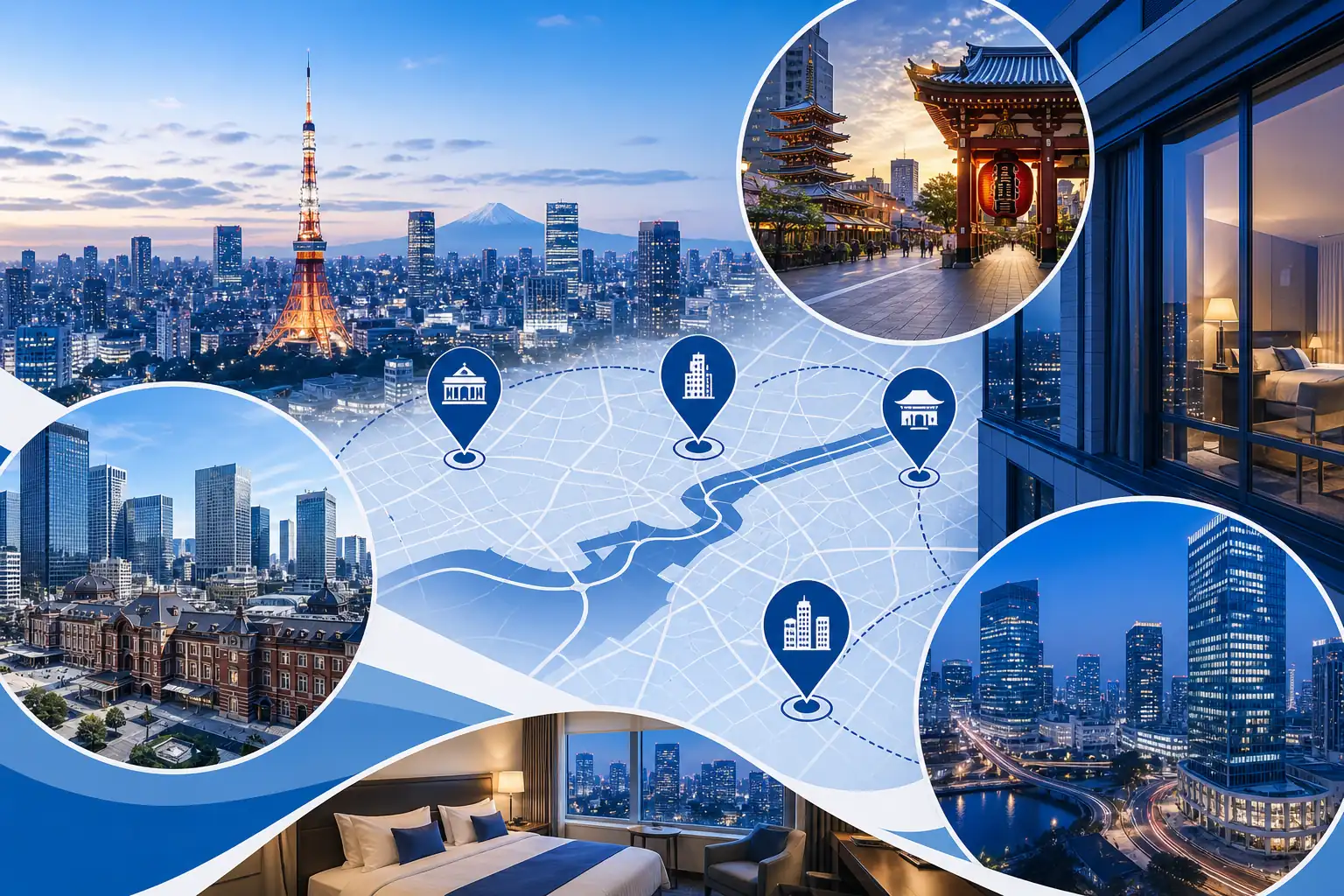
Best Hotels in Tokyo for Different Travel Styles
These picks are not meant to cover every hotel in the city. They are here to give you reliable starting points across different neighborhoods and budgets, with strengths that are clear enough to match to a real trip.
1. The Tokyo Station Hotel
If you want the classic "Tokyo from the center outward" experience, this is the easiest splurge to justify. The hotel sits inside Tokyo Station itself, and its official site notes that it has welcomed guests since 1915 and preserves the station’s original architectural beauty. That matters because the stay feels rooted in the city rather than simply convenient for it.
Best for: first-time visitors, rail-heavy itineraries, and anyone planning shinkansen day trips.
What stands out: direct station access, heritage interiors, and a calm mood that contrasts with the rush outside.
Good to know: the hotel says its 150 guestrooms and suites balance classic design with modern comfort, so this is a genuine luxury base rather than just a historic address.
2. Park Hotel Tokyo
Park Hotel Tokyo is the strongest choice if you want a stay that feels distinctively Tokyo without being overly formal. The hotel describes itself as an art hotel where contemporary Japanese artistry is woven through each floor, and that identity comes through clearly enough to make the stay memorable even when you are just returning for the night.
Best for: couples, design-minded travelers, and visitors who want easy access to Ginza, Shinbashi, and waterfront areas.
Neighborhood feel: Shiodome is modern and efficient, with smoother evenings than Shinjuku.
Travel tip: this is a smart pick if you want a polished hotel but do not need to stay directly in the busiest shopping districts.
3. Tokyu Stay Shinjuku
For travelers who want Shinjuku access without committing to a full-on luxury rate, Tokyu Stay Shinjuku is a very practical answer. Its official site highlights that it is in the heart of Shinjuku, a few minutes from Shinjuku Station, and that rooms include washer-dryer units, microwaves, and high-speed Wi-Fi.
Why it works: you get one of Tokyo’s strongest transport hubs plus amenities that make short or extended stays easier.
Who it suits: solo travelers, couples, and anyone combining sightseeing with laundry, convenience-store breakfasts, or longer stays.
Watch for: this is a function-first hotel rather than a destination property, which is exactly why many travelers end up liking it.
4. MIMARU SUITES Tokyo Asakusa
Families and small groups often struggle in Tokyo because many rooms are compact, and splitting across several rooms can drain both budget and flexibility. MIMARU SUITES Tokyo Asakusa solves that well. Its official site says it is a three-minute walk from Asakusa Station and that all suite rooms have two bedrooms, which is a major advantage for group travel.
Best for: families, multigenerational trips, and friends who want shared space without giving up privacy.
Area advantage: Asakusa makes mornings and evenings feel more atmospheric, with Senso-ji, river walks, and easy Skytree access nearby.
Good to know: this is the kind of stay that lowers friction, especially when children or jet lag are part of the equation.
5. OMO5 Tokyo Otsuka by Hoshino Resorts
OMO5 Tokyo Otsuka is ideal for travelers who want to stay on the Yamanote Line but sleep somewhere less overwhelming than Shibuya or central Shinjuku. The official site says it is one minute from Otsuka Station and five stops from Shinjuku, which puts you close to major districts while keeping the immediate neighborhood more relaxed and local.
Who it suits: repeat visitors, younger travelers, and anyone who likes a lived-in district with quick rail access.
What makes it distinctive: the hotel leans into its neighborhood rather than isolating you from it.
Planning note: if you value atmosphere over prestige, this can be a more satisfying base than a generic business hotel downtown.
6. Hotel Chinzanso Tokyo
When the goal is to feel removed from the city without actually leaving it, Hotel Chinzanso Tokyo is the standout. The property describes itself as Tokyo’s "most unlikely oasis," with expansive gardens, seasonal scenery, and eight restaurants. It is a different kind of Tokyo stay altogether: quieter, greener, and more self-contained.
Best for: couples, celebration trips, and travelers who want their hotel to be part of the itinerary.
Signature mood: a retreat-like stay with gardens, views, and a slower pace.
Worth knowing: if your trip is packed with first-time sightseeing across multiple districts, the location may feel less immediate. If your goal is rest, romance, or a final night upgrade, it is excellent.
Not everyone needs the same "best" hotel. Tokyo Station works when movement is the priority, Shinjuku wins for range and energy, Asakusa is easiest for families, and a garden hotel only makes sense if you actually want time to enjoy the garden. That sounds obvious, but matching hotel style to trip style prevents most booking regret.
Booking Tips That Actually Matter in Tokyo
Many Tokyo hotel decisions get easier once you focus on the daily realities of the city rather than broad labels like luxury or budget. The right room is the one that saves your energy.
1. Near a Station Beats Almost Everything
Tokyo is easy to navigate, but the city is large enough that long walks with luggage, multiple transfers, or late-night returns can become annoying fast. A hotel that is genuinely near a major station is often worth a moderate price jump, especially in summer heat or during rainy periods.
2. Group Size Changes the Best Option
Couples can fit smoothly into many Tokyo hotel formats, but families and groups should look carefully at room layout before booking. Apartment-style hotels in areas such as Asakusa often outperform standard chain rooms once you factor in luggage, sleeping arrangements, and the ability to rest without splitting up.
3. Think About Your First and Last Day
If you land late, depart early, or plan a bullet-train side trip, staying near Tokyo Station or a major interchange can simplify the trip more than an extra restaurant recommendation ever will. On a shorter itinerary, removing one complicated transfer each day creates noticeably more sightseeing time.
4. Plan Your Mobile Data Before Arrival
Hotel addresses, train platforms, restaurant queues, and backup navigation all move more smoothly when you are connected from the airport onward. If you want maps and booking apps working the moment you land, arranging a iRoamly travel eSIM before departure is one of the easiest Tokyo planning upgrades.

FAQ About Hotels in Tokyo Japan
1. What area is best for first-time visitors staying in Tokyo?
Tokyo Station, Shinjuku, and Asakusa are the easiest first choices. Tokyo Station is best for rail convenience, Shinjuku is best for range and nightlife, and Asakusa is best for travelers who want a more traditional, slower-feeling base.
2. Is it better to stay near Tokyo Station or Shinjuku?
Choose Tokyo Station if you plan shinkansen day trips or want a polished central base. Choose Shinjuku if you want broader nightlife, shopping, and one of the city’s most useful transit hubs for west-side exploring.
3. Are family rooms hard to find in Tokyo?
Standard rooms can feel tight for families, so it is usually worth prioritizing apartment-style hotels or suite-style properties. Areas like Asakusa are especially good for this because the pace is easier and rooms built for groups are more common.
4. How far in advance should I book a Tokyo hotel?
For spring cherry blossom season, autumn foliage periods, and year-end holidays, booking early is wise. For quieter periods, you still benefit from earlier booking if you want the best room categories or station-adjacent properties.
5. Is Shibuya or Shinjuku better for hotels?
Shibuya is great if you want trend-driven food, shopping, and nightlife with a youthful atmosphere. Shinjuku usually offers more hotel range, slightly easier regional rail connections, and a wider mix of nightlife styles.
6. Should I stay in one hotel for the whole Tokyo trip?
Usually, yes. Tokyo is extensive, but moving hotels can eat up time. One well-chosen base is enough for most trips unless you specifically want a final-night splurge somewhere like a garden retreat or station luxury hotel.
Conclusion
Tokyo has enough hotel choice to support almost any style of trip, but the best booking decisions are usually simple ones. Stay where your daily routes are easiest, and let the city do the rest.
If you want the classic Tokyo experience, book a strong transit base and spend your energy exploring neighborhoods instead of wrestling with luggage and transfers. That is why area choice comes first and hotel brand comes second.
Once you match the neighborhood to your pace, Tokyo starts feeling far more manageable. From there, a good hotel stops being a stressful decision and becomes part of what makes the trip run smoothly.