
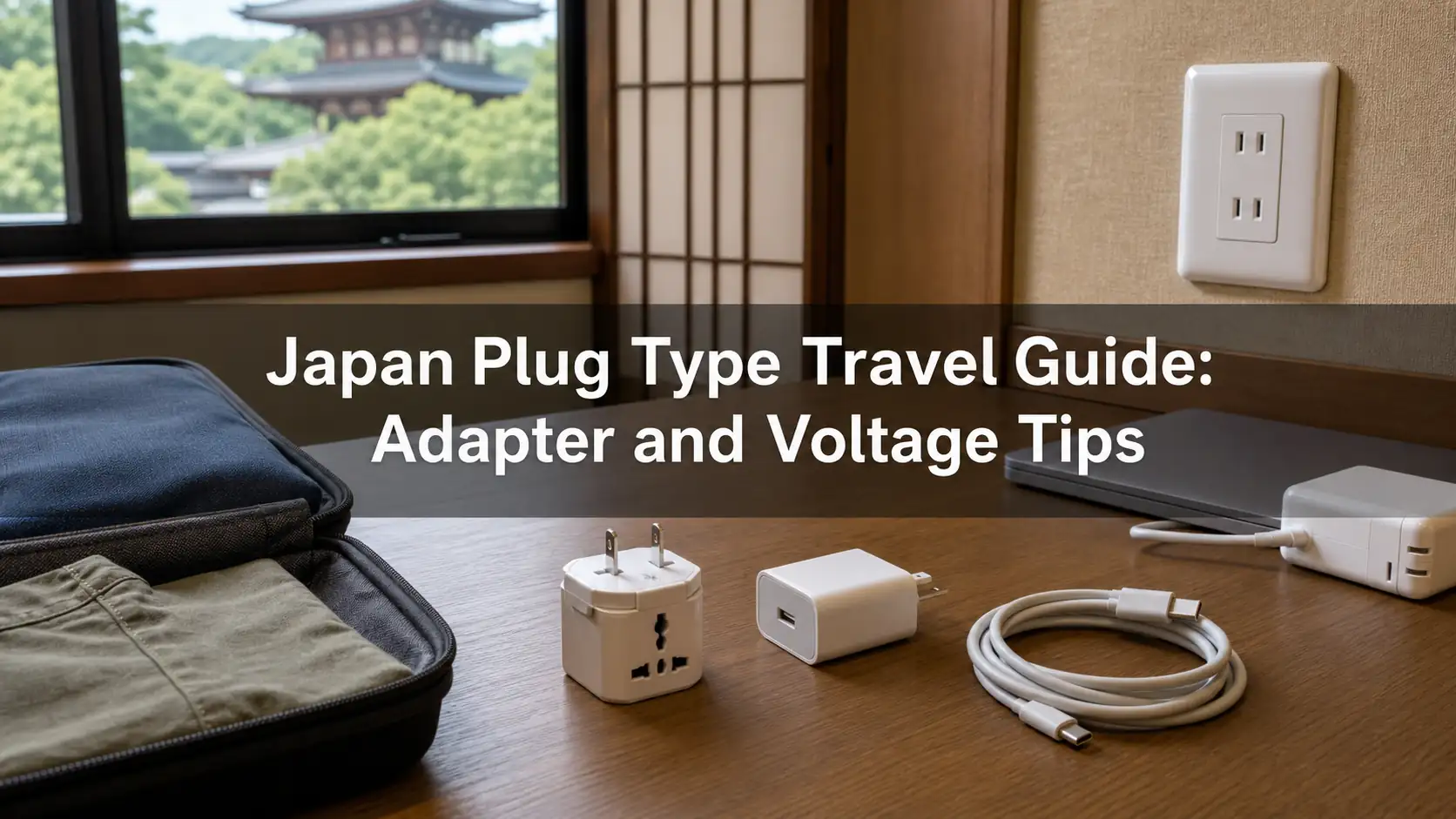
The Japan plug type is a small detail that matters the moment your phone battery runs low. Most Japanese wall outlets use two flat slots, but plug shape is only one part of the check.
Japan supplies 100V electricity and uses two frequencies: 50Hz in the east and 60Hz in the west. Many phone, camera, and laptop chargers accept both, while heat-producing or motor-driven appliances need closer attention.
Use this guide to choose the right adapter, read a charger label, and plan where to recharge during your trip.
Japan Plug Type at a Glance
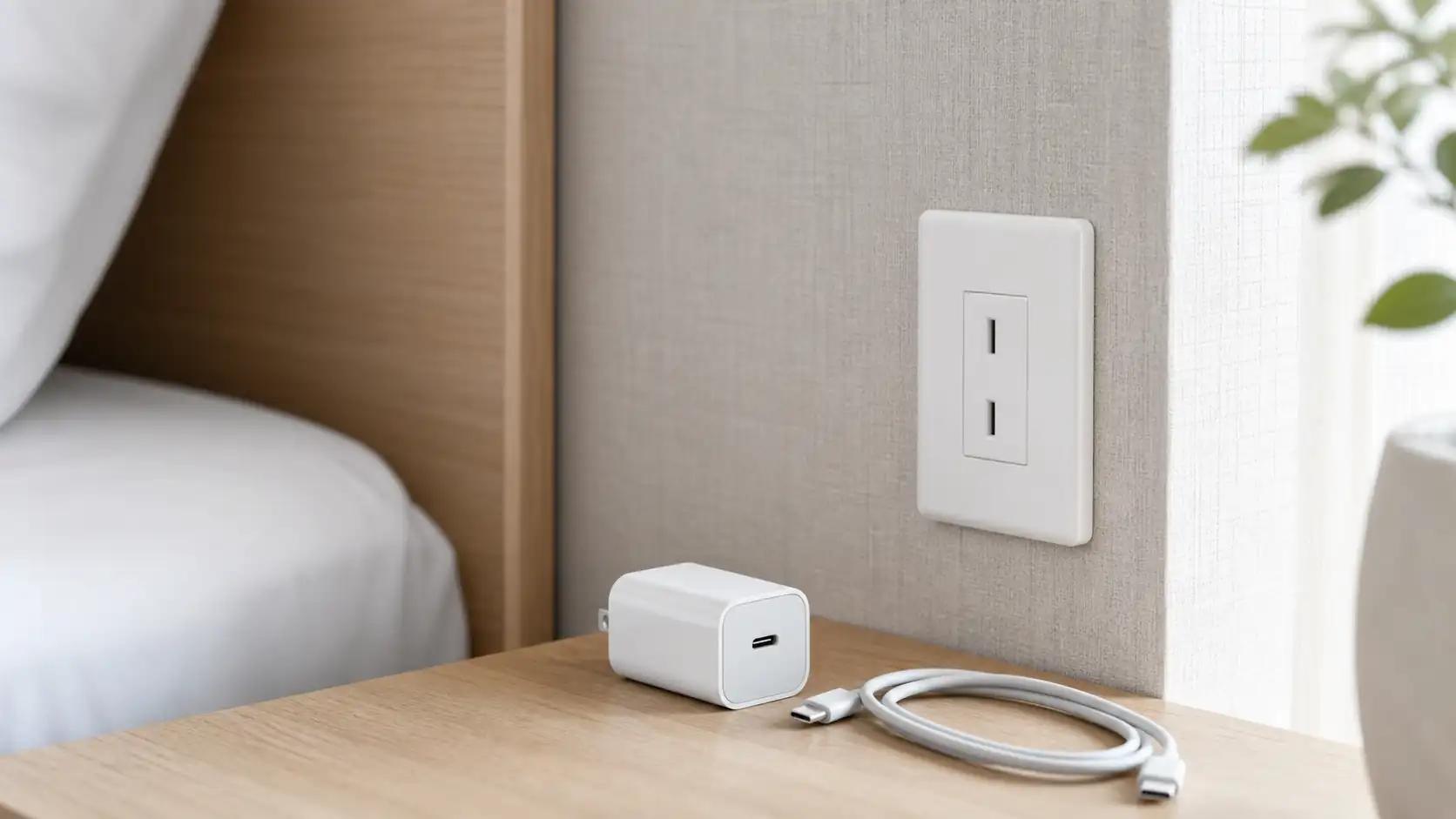
Japan mainly uses Type A outlets, which have two flat, parallel slots. A two-prong plug from the United States or Canada may fit, although an adapter can still help when pins are polarized or a socket holds them loosely.
Type B grounded outlets exist in some newer buildings, but they are not available everywhere. If your charger has three prongs, pack a suitable adapter and do not assume the wall socket will provide a ground connection.
The standard supply is 100V AC. Eastern Japan, including Tokyo, generally uses 50Hz, while western Japan, including Nagoya, Kyoto, and Osaka, uses 60Hz.
Japan Power Detail | What Travelers Should Do |
|---|---|
Plug type | Pack a Type A adapter if your plug has round pins, angled pins, or three prongs. |
Voltage | Check every charger label for 100V or a range that includes 100V. |
Frequency | Confirm that sensitive or motor-driven equipment supports the local 50Hz or 60Hz supply. |
Grounding | Bring an appropriate adapter for three-prong plugs, but expect some outlets to be ungrounded. |
If your trip includes multiple East Asian destinations, it's worth checking more than just the plug type. Voltage standards vary from country to country. For example, Japan uses 100V, while mainland China uses 220V at 50Hz. So even if both countries use flat-pin plugs, your device may not be fully compatible.
So if your trip continues from Japan to China, check a China plug guide before you travel to make sure your devices are compatible with the local voltage.
Will Your Charger Work?
Find the line marked “Input” on the charger. A label such as “100-240V, 50/60Hz” means the power supply is designed to accept Japan's voltage and either regional frequency; you may still need a Type A plug adapter.
Phone, tablet, camera, and laptop chargers often use this wide-input design, but check each item instead of relying on the device category. Older battery docks, shavers, audio equipment, and specialty chargers may have narrower limits.
Phones and tablets: Check the wall charger, not only the phone specifications.
Laptops: Read the power brick and pack an adapter if the plug is grounded or has a different shape.
Cameras and drones: Inspect every separate battery charger or charging hub.
Hair tools and irons: Use only a model whose label includes 100V, or follow the manufacturer's Japan guidance.
Medical equipment: Confirm voltage, frequency, grounding, and backup-power requirements with the manufacturer before departure.
A device marked only 220-240V may not work correctly on Japan's 100V supply without properly rated equipment. A 120V-only appliance also falls outside its stated input range, so ask the manufacturer rather than assuming the small voltage difference is harmless.
Heat-producing appliances draw substantial power and deserve extra care. A hotel-provided hair dryer or a clearly labeled dual-voltage travel tool is usually easier to manage than a heavy converter.
Choosing an Adapter
Travelers from the United Kingdom, continental Europe, Australia, New Zealand, Singapore, and other regions with different plug systems should pack a Type A adapter. Travelers from the United States and Canada may still need one for a three-prong charger.
If you have several devices, combine one reliable adapter with a compact multi-port USB charger that accepts 100V. This keeps the setup simpler than stacking adapters, and it reduces the number of wall sockets you need.
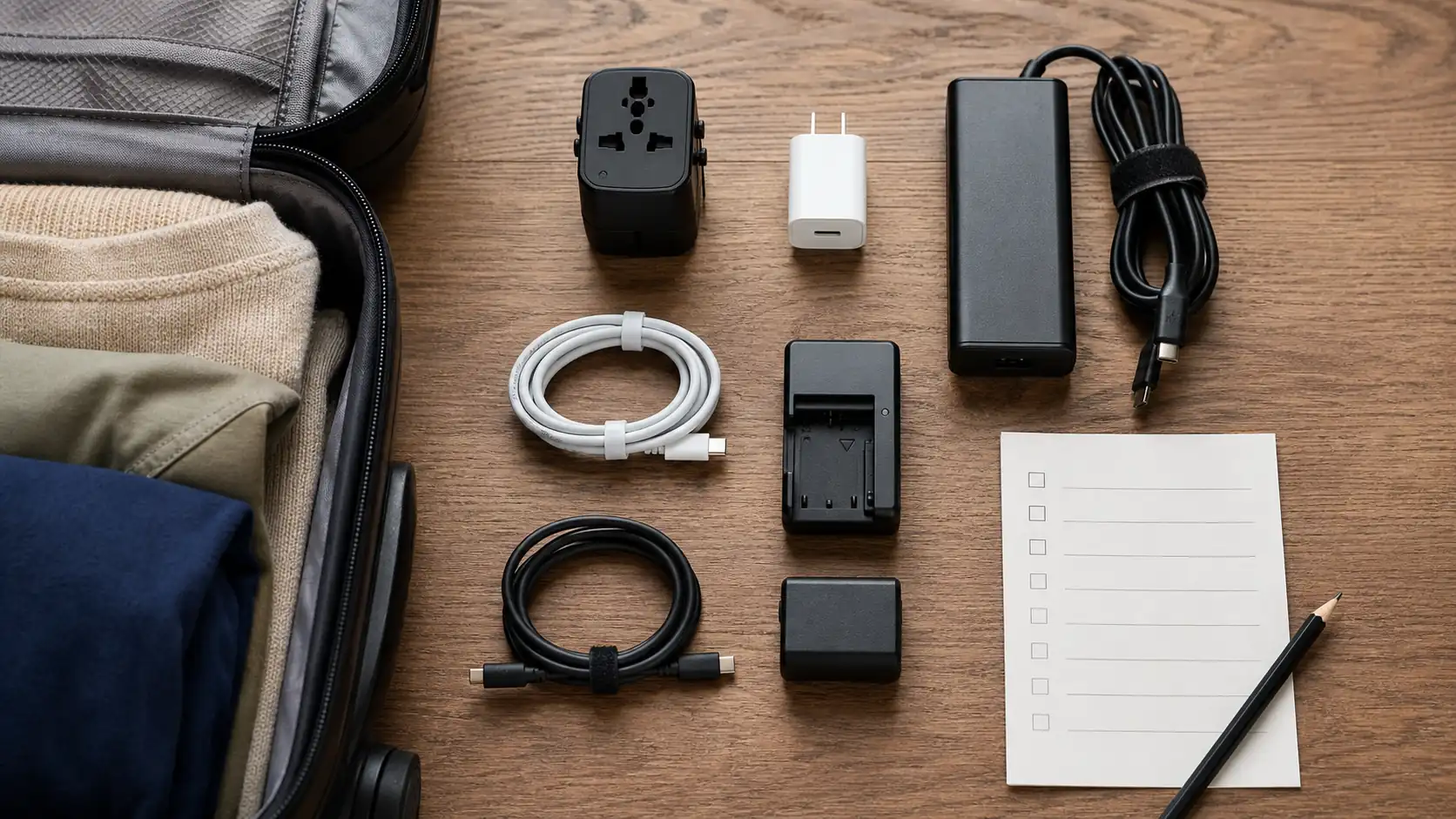
Before closing your bag, check the complete charging kit in one pass.
Lay out every device, charger, cable, and battery dock.
Read the input line on each charger or power brick.
Confirm that its voltage range includes 100V and that the frequency is suitable.
Match every plug to a Type A outlet and add an adapter where needed.
Separate heat appliances and medical equipment for a manufacturer-specific check.
Put essential chargers and a power bank in your carry-on, subject to airline battery rules.
A universal adapter can be convenient for frequent travel, but it is not automatically a voltage converter. Check its electrical rating and never connect more equipment than the adapter or wall socket is designed to handle.
Tip: If your room has one convenient outlet, charge the phone first and use a multi-port charger rather than daisy-chaining several adapters.
Where to Charge in Japan
Hotels are the most dependable place to recharge, but outlet locations and USB ports vary with the age and design of the room. Keep your wall charger accessible even when a booking photo shows a bedside USB socket.
Hotels and Ryokan
Modern hotels often place outlets near the desk or bed. Traditional inns and older rooms may have fewer easy-to-reach sockets, so a compact multi-port charger can be more useful than carrying several separate plugs.
Trains and Transfers
Many newer Shinkansen trains have power outlets, usually for window seats, but availability and placement vary by train and seat type. If you're taking a long-distance journey or making several transfers, it's best to treat onboard charging as a bonus rather than your primary way to keep your devices powered.
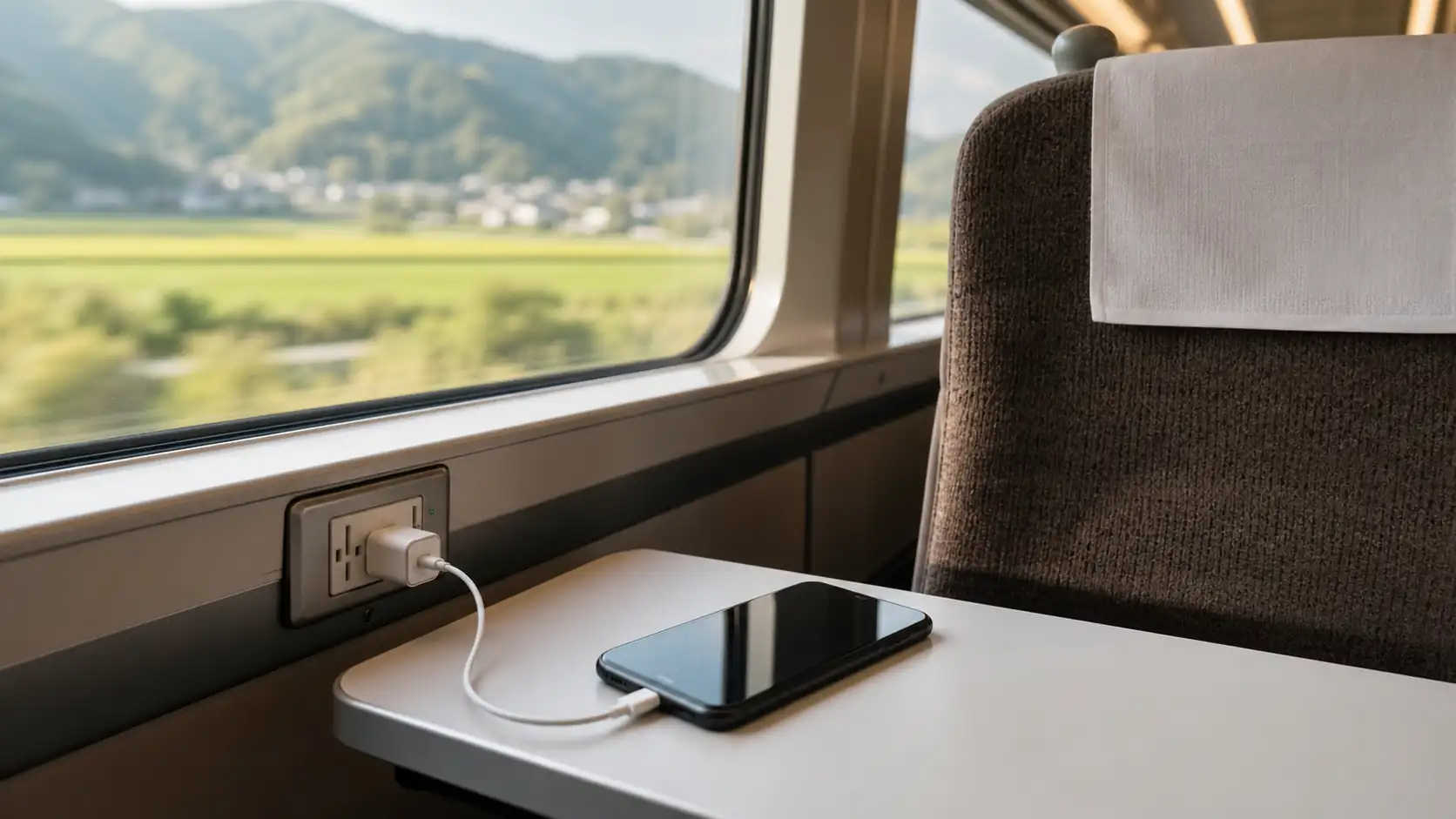
Intercity travel days usually require your phone more than regular sightseeing days. Along the way, you'll likely be checking digital tickets, platform information, transfer routes, hotel addresses, and train delay alerts multiple times. Once you arrive, you'll probably rely on maps again to find your accommodation.
If your itinerary includes cities like Tokyo, Kyoto, and Osaka, looking through a 10-day Japan itinerary before you leave can help you identify the days with the longest train journeys or the most transfers. That makes it easier to plan when to charge your devices and when you'll need a fully charged power bank.
Airports and Stations
Large airports and major stations are more likely to offer charging points or electronics shops than rural stops, but an open socket is never guaranteed. Keep enough battery for tickets, route changes, and accommodation messages.
Arrival planning also depends on the gateway you use. The guide to major airports in Japan explains which regions each airport serves, so you can judge how long the first transfer may take.
At a charging station, use your own cable and wall charger when possible. Do not leave a phone, laptop, or power bank unattended in a public area.
Charging preparation is also a natural time to arrange travel data. Installing a Japan travel eSIM before departure can keep maps, translation, and booking details available after arrival without changing the physical SIM.
Keep Your Phone Ready for the Trip
A charged phone supports navigation, digital tickets, translation, weather checks, and hotel communication. Download critical booking details before departure so one low-battery moment does not block the rest of the day.
For mobile data, you can install an iRoamly eSIM on a compatible unlocked phone before you leave, so you can get online as soon as you arrive without swapping a physical SIM card.
Keep the connectivity setup brief and practical: save the installation instructions offline, confirm when the plan's validity begins, and retain access to the purchase email or QR code.
Power and data solve different problems, but planning them together makes sense. Charge before leaving the hotel, carry a suitable power bank, and keep enough data for the route and booking tasks you expect that day.
Choosing the right plug adapter and mobile data plan is only part of preparing for your trip. Since Japan’s climate varies widely by season and region, a practical Japan seasonal packing guide can help you choose suitable layers and prepare for wind and rain.
FAQ
1.Can I use a US three-prong plug in Japan?
No, a US three-prong plug usually needs a suitable adapter, and many Japanese outlets do not provide a grounded connection.
2.Do I need a voltage converter for a laptop charger?
No, not when the charger label includes 100V and the local frequency, although a plug adapter may still be required.
3.Can I use a hair straightener in Japan?
Yes, only if its label or manufacturer confirms compatibility with Japan's 100V supply and the relevant frequency.
4.Should I pack a power bank?
Yes, a power bank is useful on long transfer and sightseeing days, provided it meets your airline's carry-on rules.
Conclusion
Japan mainly uses Type A outlets, supplies 100V electricity, and operates at 50Hz in the east and 60Hz in the west. Check all three details before plugging in a device.
Most modern travel chargers are easy to manage when their input range includes 100V and 50/60Hz. Heat appliances, motor-driven equipment, grounded plugs, and medical devices deserve a device-specific check.
Pack the correct adapter, keep essential chargers in your carry-on, and plan a backup for long days away from the hotel. With those steps done, charging in Japan becomes a routine part of the trip rather than an arrival-day surprise.