
Japan tax free shopping can save real money, especially if you plan to buy cosmetics, electronics, watches, clothes, bags, snacks, or gifts during your trip. The trick is not only finding a tax-free counter, but knowing what you must show, what you must keep unopened, and when airport customs may ask to inspect your purchases.
The rules are changing, so travel date matters. The Japan Tourism Agency explains the current tax-free procedure, while Japan Customs and the National Tax Agency outline what happens if goods are not exported properly.
This guide walks through who qualifies, what purchases count, how the store process works, what changes from November 1, 2026, and how to pack before departure so your shopping day does not turn into airport stress.
Who Can Use Japan Tax Free Shopping?
Japan tax free shopping is for eligible non-resident visitors, not for people living in Japan. In practice, most foreign tourists qualify when they enter with Temporary Visitor status and can show a passport or accepted travel document proving recent entry.
Before you start shopping, check these points because stores verify the details at the counter.
If you use an automated immigration gate or a passport without a clear entry sticker, confirm that you still have accepted entry documentation before relying on tax-free shopping. Stores may ask for a landing permission record or other proof that you entered Japan within the eligible period, and the Visit Japan Web tax-free QR code is accepted only at participating shops.
Rule | What It Means | Traveler Tip |
|---|---|---|
Eligible status | Non-residents with Temporary Visitor, Diplomat, or Official status can qualify. | Resident status, work status, or a long stay in Japan usually does not qualify. |
Recent entry | Stores check that the visitor entered Japan within the required period, commonly within six months. | Keep your passport with you on shopping days, not locked in hotel storage. |
Purchase purpose | Goods should be for personal use or gifts taken out of Japan, not business resale. | Avoid buying quantities that look hard to carry or explain at departure. |
Minimum spend | Most eligible purchases must total at least JPY5,000 before tax at the same store on the same day. | You cannot combine receipts from unrelated shops to reach the threshold. |
The table is the practical version of the rule: your passport status, shopping amount, and ability to take the goods out of Japan all matter. If any one part is missing, the store may refuse the tax-free procedure or customs may later collect the tax.
Shopping days often mean moving between different stores and relying on your phone throughout the day, so having mobile data ready in advance makes things much more convenient. A travel eSIM provider such as iRoamly Travel eSIM can provide mobile data, allowing travelers to use their own apps while comparing store locations, checking train changes, or contacting their accommodation after a long day of shopping.
What Counts as Japan Tax Free Goods?
Japan tax free shopping applies to goods purchased at licensed tax-free shops under set conditions. It does not turn every travel expense into a refund, so hotel stays, meals at restaurants, transport fares, and services should be treated separately from retail purchases.
The standard consumption tax rate is 10%, while some food and drink items fall under the reduced 8% rate. Your actual saving depends on what you buy and how the store handles the tax-free process.
If you are building a shopping list, prioritize items that are easy to keep together, easy to show at customs, and useful enough to justify the same-store threshold. A practical guide to what to buy in Japan can help you compare souvenirs, cosmetics, electronics, and food gifts before you reach the counter.
Use the system most confidently for purchases that fit a few simple patterns.
Retail goods you will personally take out of Japan.
Gifts, clothing, cosmetics, snacks, electronics, or accessories bought from eligible stores.
Items you can present with your passport and receipt if customs asks.
General Goods
General goods include items such as home electronics, bags, shoes, clothing, watches, jewelry, and crafts. Under the current system, general goods qualify when purchases at the same tax-free shop on the same day total at least JPY5,000 before tax.
You can usually use general goods in Japan after purchase, but customs can still ask you to show them at departure. For expensive items, keep boxes, receipts, warranties, and certificates together until you leave.
Consumable Goods
Consumables include food, drinks, cosmetics, medicine, and similar items. Under the current system, purchases must total at least JPY5,000 and no more than JPY500,000 before tax at the same store on the same day.
These goods are usually sealed in special packaging. Do not open the package or use the items in Japan, because customs may collect the consumption tax when you depart.
Tip: Put tax-free cosmetics and snacks in one part of your suitcase and leave the sealed bags alone, even if it feels tempting to open one item in the hotel.
How Japan Tax Free Works Until October 31, 2026
For purchases made through October 31, 2026, eligible shoppers usually receive the tax exemption at the store. Some shops remove the tax at the register, while department stores may ask you to pay first and visit a tax-free counter for the refund on the same day.
The store work is only half of the process. You still need to leave Japan with the goods and follow customs instructions at the airport or seaport.
Look for a licensed tax-free shop or ask staff before you line up.
Show your passport or accepted document at checkout, and use a Visit Japan Web tax-free QR code only where the shop supports it.
Confirm whether the store removes tax at the register or sends you to a refund counter.
Keep receipts, purchase records, sealed packages, and expensive-item documents together.
Before losing access to checked baggage, be ready to show your passport and tax-free goods if customs asks.
Store Counter Checklist
Before you leave the store, confirm the details that are hardest to fix later. This is especially useful in department stores, outlet malls, electronics chains, and shopping streets where the payment counter and tax-free desk may not be the same place.
Tax-free support: Ask whether the shop is licensed, whether the counter is in the same store or a shared department-store desk, and whether the procedure must be finished on the purchase date.
Passport or QR code: Carry your physical passport even if you created a Japan tax-free QR code through Visit Japan Web, because not every shop accepts the QR code and screenshots are not accepted for the official 2D-code procedure.
Payment record: Keep the receipt, refund slip, and payment card together until the refund is complete; some refund counters may need to match the card used for the purchase.
From April 1, 2025, separately shipping tax-free goods home by international parcel no longer proves eligibility. If customs asks to see the goods at departure, you need to have them with you.
If your shopping route crosses several neighborhoods, mobile data helps you check store hours, compare locations, and keep travel plans flexible after bags get heavy. iRoamly Japan eSIM provides mobile data for Japan travel, which is useful when you need online access throughout the day instead of relying only on shop or station Wi-Fi.
What Changes From November 1, 2026
For purchases made on or after November 1, 2026, Japan shifts to a refund method. Instead of receiving tax exemption at the store, eligible travelers buy goods at tax-inclusive prices and receive the consumption-tax equivalent after customs confirmation at departure.
This change affects how much cash or card limit you need during the trip, where customs procedures happen, and how early you should arrive at the airport.
If your trip crosses the changeover date, use the purchase date—not the flight date—to identify the procedure. An item bought on October 31, 2026 generally follows the current store-based process even if you depart in November, while an item bought on November 1 follows the new refund method. Keep the receipts from each purchase day separate so the airport procedure is easier to explain.
Point | Until October 31, 2026 | From November 1, 2026 |
|---|---|---|
Payment timing | Tax is usually removed or refunded at the store. | You pay the tax-inclusive price first. |
Refund timing | The saving is handled during the shop visit. | The refund is handled after customs confirmation at departure. |
Departure procedure | Customs may inspect goods when you leave Japan. | You must complete the tax-free procedure at a terminal or designated process within 90 days of purchase. |
Consumables | Special packaging applies, and opened packages can trigger tax collection. | Special packaging is abolished, but used or consumed goods are not eligible for refund confirmation. |
Eligible amount | General goods require at least JPY5,000; consumables have a JPY5,000 to JPY500,000 range. | Purchases totaling JPY5,000 or more before tax per store per day are eligible, with excluded items such as gold and platinum bullion. |
The biggest planning difference is cash flow. A traveler buying a camera or designer bag after the switch should expect to pay the full tax-inclusive price first, then leave enough airport time to complete the refund procedure.
If your itinerary puts major shopping near the end of the trip, leave extra card limit or cash buffer for the tax-inclusive price. This matters when your broader Japan trip cost planning already includes hotels, rail travel, luggage forwarding, meals, and airport transport.
Refunds will be provided by each tax-free shop or by a refund service provider entrusted by the shop. Since the exact refund method can vary, ask the store how the refund will be returned before you finalize a large purchase.
Common Mistakes That Can Cost the Refund
Most Japan tax free problems are preventable if you think about the store counter and airport check as one process. Japan Customs tax-free departure rules confirm why export and inspection readiness matter, so use this final check before you leave a shop, send luggage ahead, or pack goods where customs cannot inspect them.
Checking bags too early: Keep tax-free goods reachable until the departure check is complete, especially after the refund method begins.
Opening consumable packages before departure: Under the current procedure, sealed consumables can lose eligibility if they are opened or used in Japan.
Assuming shipped goods still count: Since April 1, 2025, separately mailed goods no longer prove export for tax-free eligibility, so carry the goods out of Japan yourself if customs asks.
Leaving refund details vague: From November 1, 2026, ask the store whether the refund comes from the shop or a refund service provider and how the money will be returned.
Airport Departure and Packing Tips
Airport day is where many tax-free mistakes show up. The safest habit is to finish tax-free checks before checking bags, because customs may need to see the actual goods rather than only your receipts.
At major Japanese airports, build in enough time before check-in because refund-method terminals and any required customs inspection happen before your baggage is no longer accessible.
Before Checking Luggage
Pack tax-free goods where you can reach them. If a suitcase is already checked and customs asks to inspect an item, fixing the problem can become awkward fast.
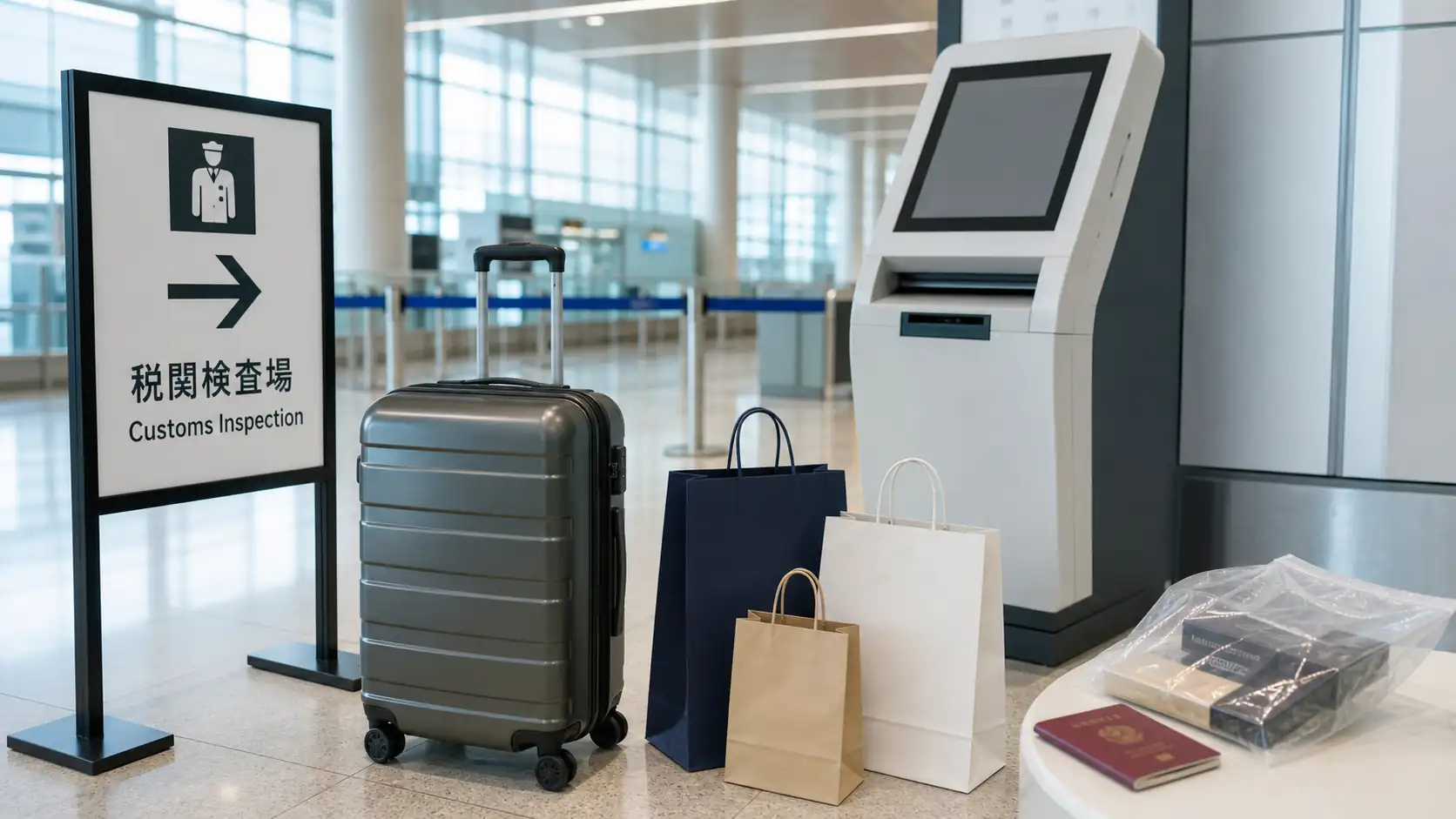
Under the refund method, major departure airports will use tax-free procedure terminals, and some airports may allow certain Visit Japan Web procedures in designated international departure-lobby areas. A green result means the terminal procedure is complete, while a red result means you need to bring the goods to the customs inspection area.
For High-Value Purchases
If you buy a high-value item, keep authenticity certificates, warranty cards, and receipts in your carry-on. Official refund-method materials note that customs may ask for supporting documents for purchases over JPY1,000,000 before tax.
When your route includes a domestic connection before your international flight, plan the tax-free procedure at the final outbound airport from Japan. Leave more time than you would for a normal departure, especially after the refund method begins.
Staying Connected While Shopping in Japan
Tax-free shopping sounds like a counter procedure, but the real travel friction often happens between counters. You may need to check a department-store floor map, confirm which branch has a tax-free desk, translate care labels, or message your hotel before you drag shopping bags across town.
Local SIM Cards
A local SIM can fit longer stays or travelers who need a local phone number, but buying one can involve store queues, language friction, device checks, and ID registration. It also adds one more errand to the arrival day.
International Roaming
Roaming is convenient for short trips or corporate plans, but the cost can climb quickly if your home carrier charges daily fees or limits high-speed data. It is worth checking the fine print before assuming roaming will cover long shopping and transport days.
Public Wi-Fi
Public Wi-Fi works as a backup in hotels, stations, and some stores. It is less reliable while walking between shops, and open networks may not be the best place to handle payment, account, or travel-document details.
Travel eSIM
A travel eSIM is usually the easiest fit when your phone supports eSIM and you want mobile data without buying a physical card. It works best for travelers who need online access across shopping districts, train stations, airport counters, and hotel check-ins.
The right choice still depends on your phone, trip length, budget, security expectations, and whether you need calls or a local number. For most short shopping-focused trips, reliable mobile data is less about luxury and more about keeping small problems small.
Japan tax free shopping rewards travelers who treat the store counter, receipts, packing, and airport process as one connected chain. If you know your purchase date, keep goods accessible, and ask the store how its procedure works, the saving is much easier to protect.
FAQ
1.Can I combine purchases from different shops to reach JPY5,000?
No, the threshold is calculated at the same store on the same day, so separate shops cannot be combined.
2.Do airport duty-free shops use the same procedure?
No, duty-free shops inside the international departure area are different from tax-free shopping at stores in town.
3.Can a foreign resident in Japan use Japan tax free shopping?
No, foreign nationals living in Japan under resident or work status generally do not qualify as non-resident visitors.
4.What if one item from a tax-free receipt is missing at customs?
If customs cannot confirm every required item in a purchase record, the whole purchase record may lose refund eligibility.
5.Does Visit Japan Web replace my passport for tax-free shopping?
No. Visit Japan Web can make the tax-free shopping procedure faster at participating shops, but you should still carry your passport because shops may need to verify your entry status and some stores do not support the tax-free QR code.
6. How early should I arrive at the airport after the refund method starts?
Arrive earlier than you would for a normal departure, especially after November 1, 2026. The tax-free procedure terminal is before baggage check-in, and a red result means you need time to show the goods at the customs inspection area.
7. Which rules apply if my trip crosses November 1, 2026?
The purchase date controls the procedure. Purchases made through October 31 generally use the current store-based system, while purchases made on or after November 1 use the refund method even when both purchases are part of the same trip.
Conclusion
Japan tax free shopping is worth using when you understand the rules before you reach the counter. Bring your passport, check that the shop is eligible, meet the same-store spending threshold, and keep tax-free goods available until departure.
The date of purchase now matters more than it used to. Purchases through October 31, 2026, generally follow the store-based exemption model, while purchases from November 1, 2026, shift to a refund method that depends on customs confirmation before you leave Japan.
Treat receipts, sealed items, high-value documents, and airport timing as part of your shopping plan. With that habit, you can enjoy Japan's retail scene, protect your refund, and leave with fewer last-minute surprises.