
Japan visa requirements depend on nationality, residence, travel purpose, intended stay, and the consular office responsible for the application.
Some short-term visitors qualify for visa exemption, while others need a tourist, business, work, study, transit, or electronic visa supported by specific documents.
This guide organizes the core paperwork, visa-type differences, and final entry preparation. A Japan eSIM can support maps, bookings, and official updates after arrival, but it does not replace any immigration requirement.
What You Need To Get a Visa for Japan
Obtaining a visa for Japan is about more than just filling in some forms—you'll need specific documentation to prove your eligibility. Here is what all applicants will want to have in hand:
Document group | What to verify |
|---|---|
Passport and photo | Validity, blank pages, and current photo specifications |
Application form | Names, dates, and signatures match supporting records |
Travel plan | Flights, accommodation, and daily itinerary are consistent |
Financial or sponsor evidence | Covers the stay and matches the applicant’s circumstances |
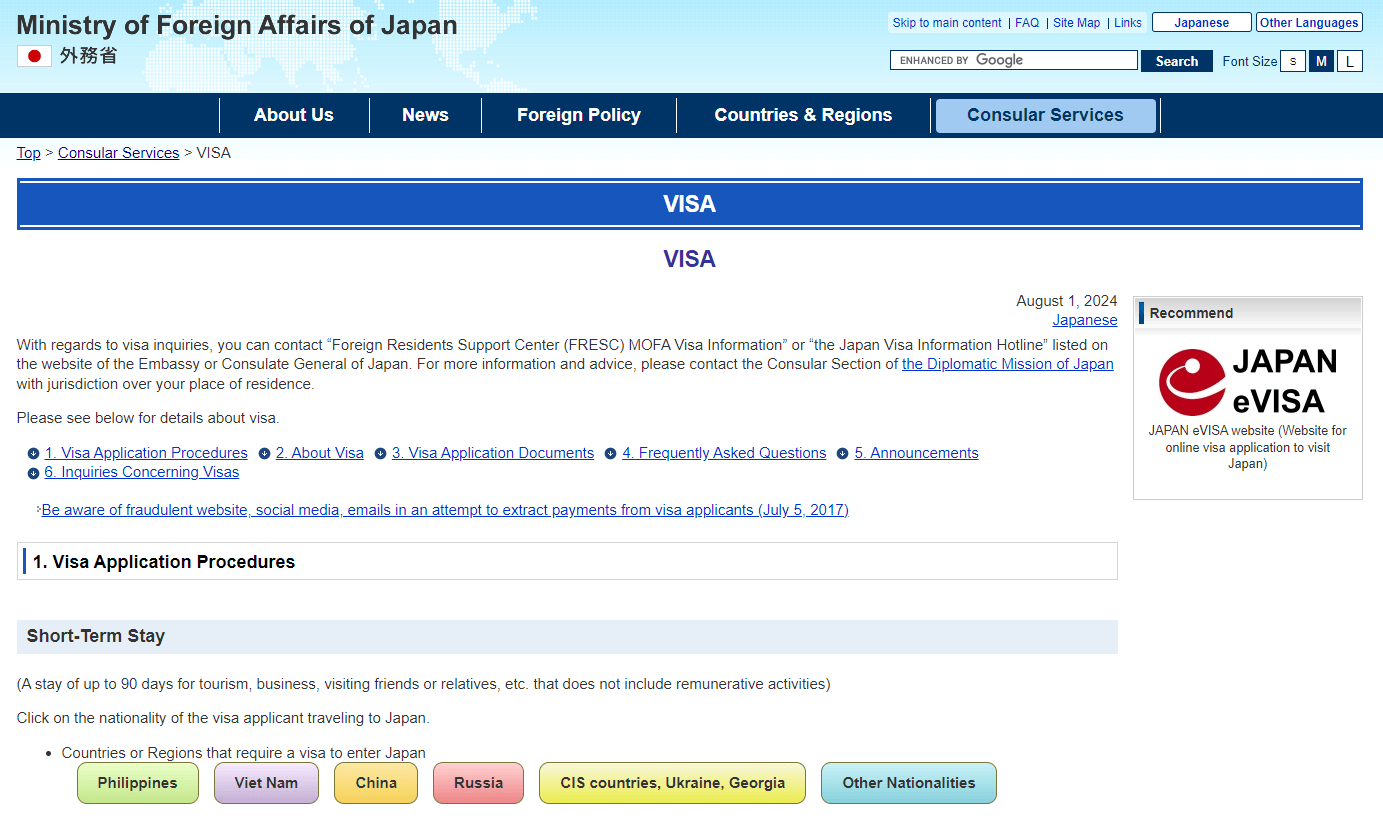
The Ministry of Foreign Affairs visa portal routes applicants to current requirements and the responsible diplomatic mission.
1. Japan Visa Application Form
Start with the visa application form, which can be downloaded from your country's Japanese embassy or consulate website. Complete every section and double-check your details before you submit.
Online version: https://www.mofa.go.jp/j_info/visit/visa/index.html
Filling the form in is just the first part. There is a second set of requirements covering the type and format of photograph that must be submitted with your application, so make sure you read all the instructions carefully.
Japan Visa Photo Requirements:
Size: Photos need to be 4.5cm x 4.5cm, or approximately 2” x 2”.
Background: The background of the photo must be white, to adequately contrast with your features.
Recent Photo:The photos should be no older than six months, to make sure they represent your current appearance.
Pose and Expression: These photos are strictly for the passport, so it needs to be a straight-on shot, eyes open and mouth closed, with a natural, neutral expression.
Name the Photo: On the back of each photo, write your full name and date of birth, just to help the authorities match your face to your application.
Number of Photos Required: You’ll need between 1-4 photos, at the discretion of the relevant Japanese Embassy or Consulate, at your intended purpose of travelling.
Before completing forms, confirm eligibility with a focused guide to Japan visa eligibility and then verify the result against the responsible consulate.
2. Your Passport
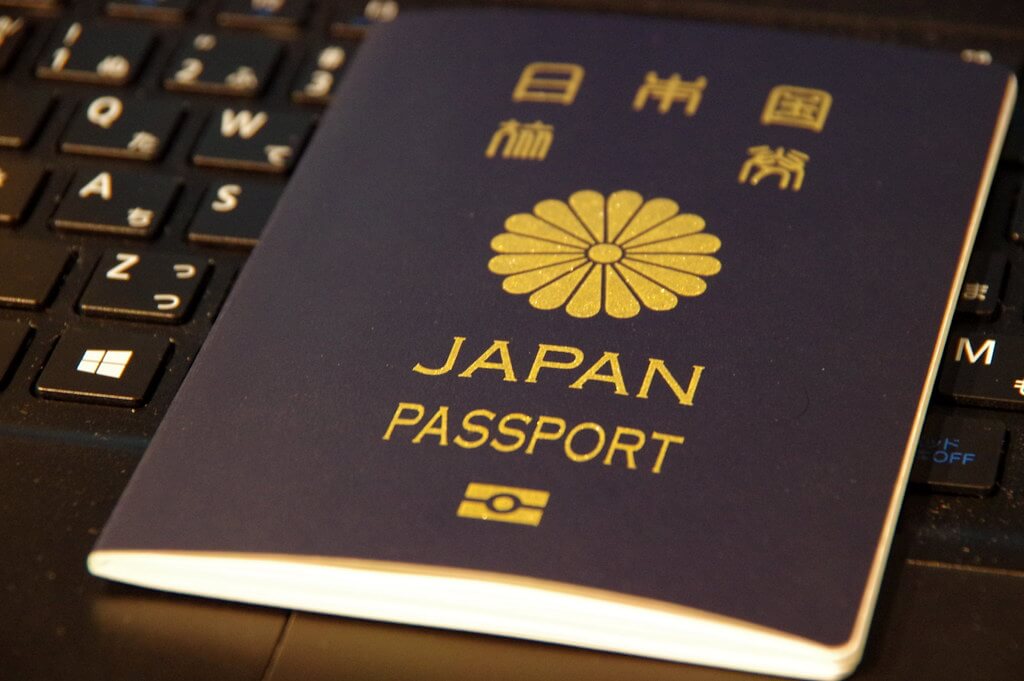
Your passport must be valid for at least six months beyond your return date, and should have at least two blank pages.
3. Passport-Size Picture
You'll need a recent photo cut to the official passport dimensions (usually 2x2 inches) and taken with a white background.
4. Flight Itinerary
For multi-city Japan routes, keep hotel details and domestic transport plans consistent with the itinerary you submit.
An itinerary should reflect a realistic gateway, and the Japan airport guide can help avoid an implausible or inefficient arrival plan.
5. Daily Itinerary
A schedule for each day can help establish your travel plans.
6. Proof of Accommodation
You will need to provide hotel bookings, Airbnb reservations, or a letter from your host confirming where you will be staying.

7. Proof of Financial Means
You will need to show that you have financial support throughout your visit, generally in the form of bank statements or a letter of financial backing.
8. Letter of Invitation
If you are visiting someone, a letter of invitation from them can help provide further detail for your application.
9. Proof of Purpose of Visit
Depending on the type of visa you are applying for, you may need supplementary documents such as conference invites or tourist vouchers to demonstrate the reason for your travel.
You can also read a more detailed introduction that introduces the visa application requirements of various visas using the following link.
What Are the Different Requirements for Different Visa Types?
An Overview of the Specific Types of Visas for Japan and What’s Needed:
Visa purpose | Typical additional evidence |
|---|---|
Tourism | Itinerary, accommodation, funds, and return or onward plans |
Business | Invitation, company details, and activity schedule |
Study or work | Certificate of Eligibility or sponsor documentation where required |
Transit | Confirmed onward travel and destination entry documents |
Having an understanding of the varying visa requirements for Japan is essential for making the application process as smooth as possible depending on the nature of your trip.
Here’s an overview of each type of visa, and how their requirements differ from the general standards.
Japan Tourist Visa Requirements:
If you are planning a holiday in Japan, visitors to Japan need the tourist visa to present a travel itinerary and accommodation details, but they are not required to produce an invitation from a host company, or details of professional activities, as they are for business and occupational visas.
After your documents are ready, plan how you will access maps, immigration emails, hotel messages, and transport apps on arrival; travel internet access is easiest to compare before departure.
Instead, you can demonstrate your tourist plans and financial stability to support your stay.
Eligible tourism applicants can verify current availability and residence-country routing through the official Japan eVISA system.
Japan Business Visa Requirements:

In order to apply for a business visa, travellers must provide documentation relating to meetings or business affairs to be undertaken in Japan. This may include an invitation from the company being visited in Japan, evidence of that company's registration, and a description of their business.
No such details are necessary for a tourist visa.
Japan Student Visa Requirements:
Anyone seeking to obtain a student visa must have a certificate by an educational institution in Japan has accepted them, that they can afford tuition fees and living expenses while in the country, through finances or scholarships.
Tourist and business visas are more concerned with short-term stays, as opposed to long-term study.
Japan Work Visa Requirements:
A work visa also requires a Certificate of Eligibility (COE) from a sponsor or employer in Japan. Work visas can be a bit more complex since tourist visas don’t require a COE, or a range of contracts or confirmation of appointment to verify that a job requiring the relevant work visa category is waiting for you.
Japan Working Holiday Visa Requirements:
The Working Holiday visa is an exception among Japanese visas, allowing a longer stay during which you can travel and work sporadically.
In presenting the same evidence of financial support expected for a tourist visa, applicants must additionally show that they have a flexible itinerary encouraging working while in Japan, while other requirements, such as age limits and that the applicant is a citizen/resident of a country Japan has a reciprocal arrangement with, are quite specific to the visa itself.
Japan Transit Visa Requirements:
Transit visas are required for passengers passing through Japan on the way to a third destination. Not needing to complicate a mere transit with more complex visas, these are often easily obtainable visas, confirming only that you are traveling on to a new location within a short window.
This is substantially less onerous than most visas, which require more detail on the traveler’s time in Japan.
For whichever category applies to your travel, remember to tailor your documentation to applying for the right level of visa.
Japan Certificate of Eligibility (COE) and Application Requirements:
For broader document and destination research, iRoamly Travel Resources can stay with your visa checklist, transport notes, and arrival planning.
While you need a visa to stay in Japan for work or study for longer periods, such as a work visa, one of the most important steps to take in advance is to gain a Certificate of Eligibility (COE).
This is an official document, issued by the Japanese Ministry of Justice, confirming that you are eligible to apply for a visa in that particular category.
This must be gained before you apply for the visa itself, and then submitted along with other required documentation.
This allows you to avoid the scenario where Japanese authorities are processing your unprocessed application, instead confirming they have already approved your stay in Japan.
Sponsor messages and appointment changes can arrive away from Wi-Fi; iRoamly travel eSIM plans keep the connection available while embassy instructions remain the only authority for the application.
After approval: entry preparation
Approval resolves only the visa application; the traveler still needs valid documents, accurate declarations, and a workable arrival plan.
Visa approval does not remove the need for ordinary precautions. Keep copies of key documents and review Japan travel safety guidance before departure so emergency contacts and arrival plans are ready.
Comparing visa-free options in East Asia
Multi-country routes require a separate eligibility decision for every border because nationality, passport type, purpose, and transit path can change the result.
Entry eligibility can differ even on one multi-country route. China visa-free rules cover a different nationality, transit, and permitted-stay framework, so travelers should verify Japan and China separately before booking onward flights.
FAQ
1. Does everyone need a visa to travel to Japan?
According to available information, four countries that generally require a visa to visit Japan are China, Vietnam, Russia, and Ukraine.
2. How much does a Japan visa cost?
Prices vary but are typically between $25 and $50 for a single-entry tourist visa.
3. Can I apply for a tourist visa for Japan online?
Applications must currently be submitted through a Japanese embassy or consulate, although some procedures can be started online.
Conclusion
A successful Japan visa application starts with the correct route for the traveler’s nationality, residence, purpose, and length of stay.
Use the responsible embassy or consulate’s checklist, keep dates consistent across documents, and avoid paying for nonrefundable plans before the application guidance supports it.
After approval, carry the required travel documents and remain ready to explain the purpose and arrangements of the trip at entry.