
Explore where the world opens up around Vietnam, a country that acts as a springboard into all the wonders of Southeast Asia. This is a guide that crosses borders, filling you in on the surrounding countries and all the wonderful things that make each of them special.
From the ancient temples in Cambodia to the lively streets of Thailand to the quiet beaches in Laos, consider this your travel companion for going out and creating epic memories. Jump right in, see things differently, and let that next place write a new story in your travel life.
To stay connected while traveling between different countries, bring an iRoamly eSIM — its wide range of plans and fast speeds make it an essential travel companion.
Now, let’s take a look at the countries around Vietnam that are worth visiting.
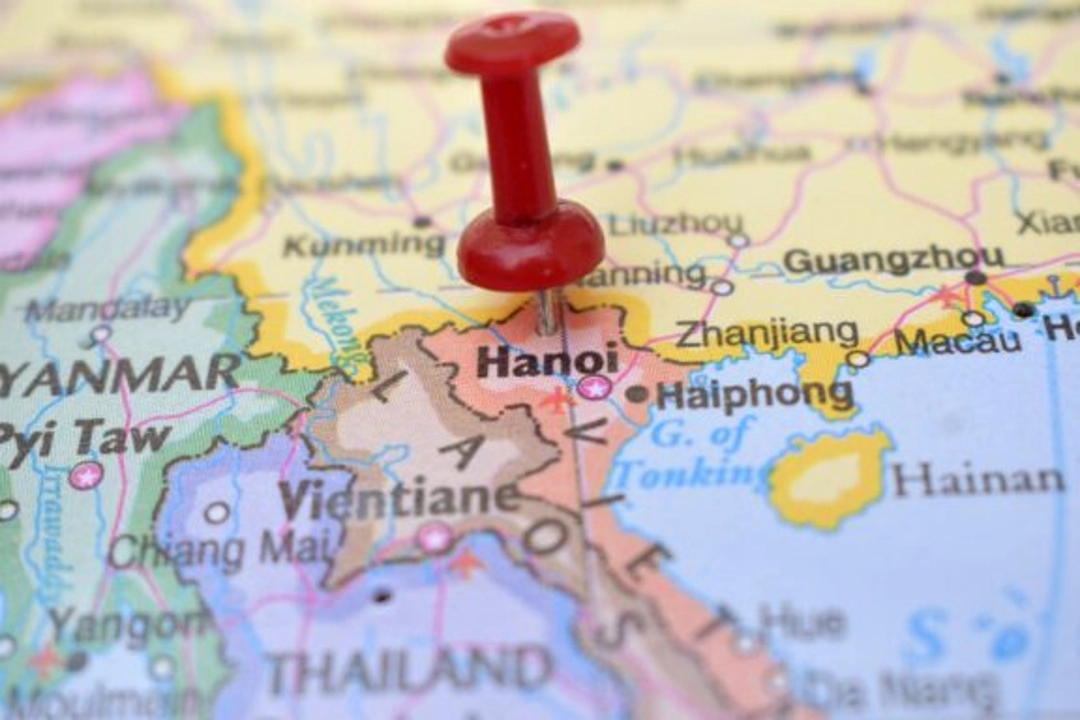
What Countries Are Near Vietnam?
Vietnam shares land borders with China, Laos, and Cambodia. For trip planning, however, travelers usually think a bit more broadly and also include nearby short-flight destinations such as Thailand, Malaysia, the Philippines, and Indonesia.
That means you can build very different add-on trips depending on what you want most after Vietnam: temples, food, beaches, mountain scenery, city breaks, or a slower cultural route.
How to Choose the Best Country to Pair With Vietnam
Before choosing your next stop, it helps to compare the nearby options by travel style rather than by geography alone. The table below makes it easier to see which country fits your route, pace, and priorities best.
Country | Best For | Pairs Best With | Suggested Pace |
|---|---|---|---|
Cambodia | Temples, history, easy overland travel | Ho Chi Minh City and the Mekong Delta | 3 to 5 days |
Laos | Slow travel, river scenery, a quieter route | Northern or central Vietnam | 3 to 5 days |
Thailand | Big-city energy, beaches, street food | Hanoi or Ho Chi Minh City | 4 to 7 days |
China | Food depth, culture, major cities, regional variety | Northern Vietnam | 4 to 7 days |
Malaysia | Food-focused city breaks and island add-ons | Southern Vietnam | 4 to 6 days |
Philippines | Island hopping, diving, beach time | Ho Chi Minh City | 5 to 7 days |
Indonesia | Volcanoes, Bali, culture-heavy island travel | Longer Vietnam trips | 5 to 8 days |
Top Countries to Visit Near Vietnam
Cambodia
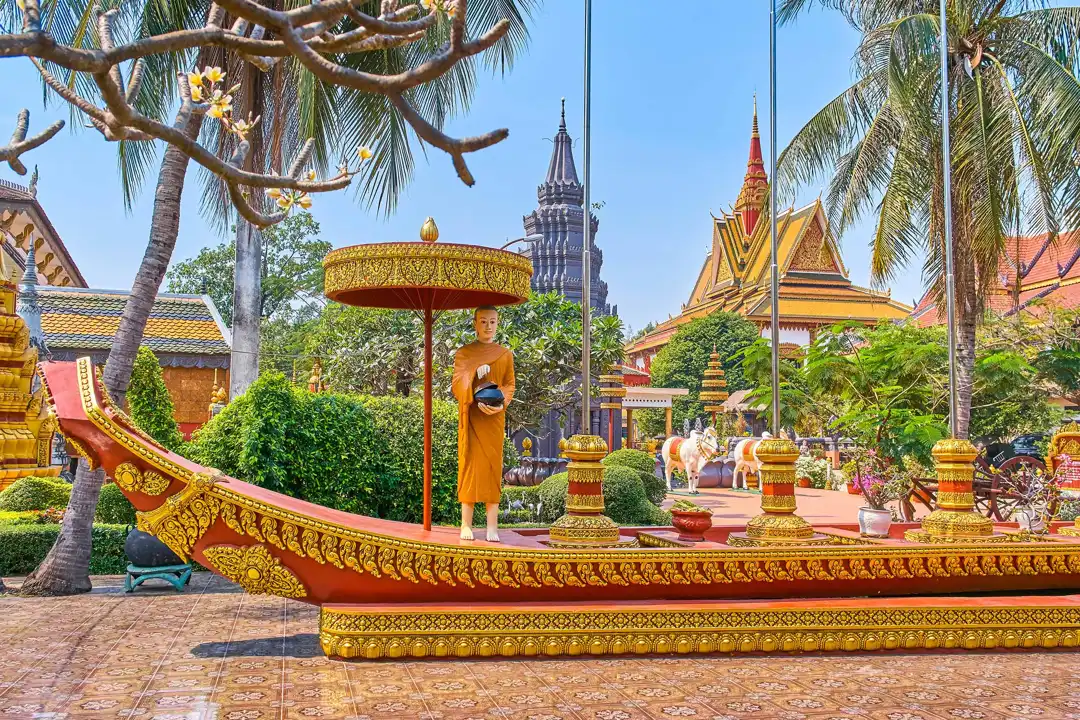
Vietnam shares its border with Cambodia, and that alone makes it one of the easiest countries to add to your trip. From southern Vietnamese cities such as Ho Chi Minh City, you can build a route that combines city energy, delta scenery, and Cambodia’s better-known historic sites without burning too much time in transit.
Why it works: Cambodia is a natural choice if you want your second country to feel different from Vietnam while still being easy to reach. Phnom Penh adds history and riverfront life, while Siem Reap gives you access to Angkor Wat and a strong food-and-culture scene.
Best for: Travelers who want an overland extension, a shorter visa run-style add-on, or a temple-heavy second stop after southern Vietnam.
Do not miss: Sunrise at Angkor Wat, a slower afternoon around Ta Prohm or Bayon, and at least one Cambodian meal built around amok or grilled freshwater fish.
Thailand
Thailand is one of the simplest nearby upgrades if you want a complete contrast to Vietnam’s rhythm. From Hanoi or Ho Chi Minh City, direct flights make Bangkok an easy next stop for markets, rooftop views, temples, and food-focused evenings.
Why it works: Thailand is flexible. You can treat it as a city break, a shopping stop, a food destination, or a beach finale. Bangkok works well for a few fast-paced days, while Phuket, Krabi, or Koh Samui make more sense if you want to end your Vietnam trip with sand and sea.
Best for: First-time Southeast Asia travelers, couples who want cities plus beaches, and anyone who values smooth transport connections.
Do not miss: A Bangkok night market, a proper bowl of tom yum or boat noodles, and at least one island or coastal stop if you have more than four days.

Laos
Laos offers the gentlest change of pace after Vietnam. If your Vietnam route has felt busy, noisy, or packed with transport days, Laos is the nearby country that lets you slow everything down.
Why it works: Luang Prabang, Vang Vieng, and riverside towns give you a more relaxed version of mainland Southeast Asia. The appeal here is not big-ticket urban intensity; it is the slower rhythm, river journeys, mountain scenery, and quieter evenings.
Best for: Travelers who want a calmer route after Hanoi or northern Vietnam, couples looking for a softer pace, and anyone drawn to river journeys and temple towns.
Do not miss: A Mekong boat trip, Luang Prabang’s temple-and-cafe rhythm, and Lao sticky rice with grilled meats or local dips. Laos also makes a strong pairing with a longer north-to-south Vietnam route if you are not trying to move too fast.

China
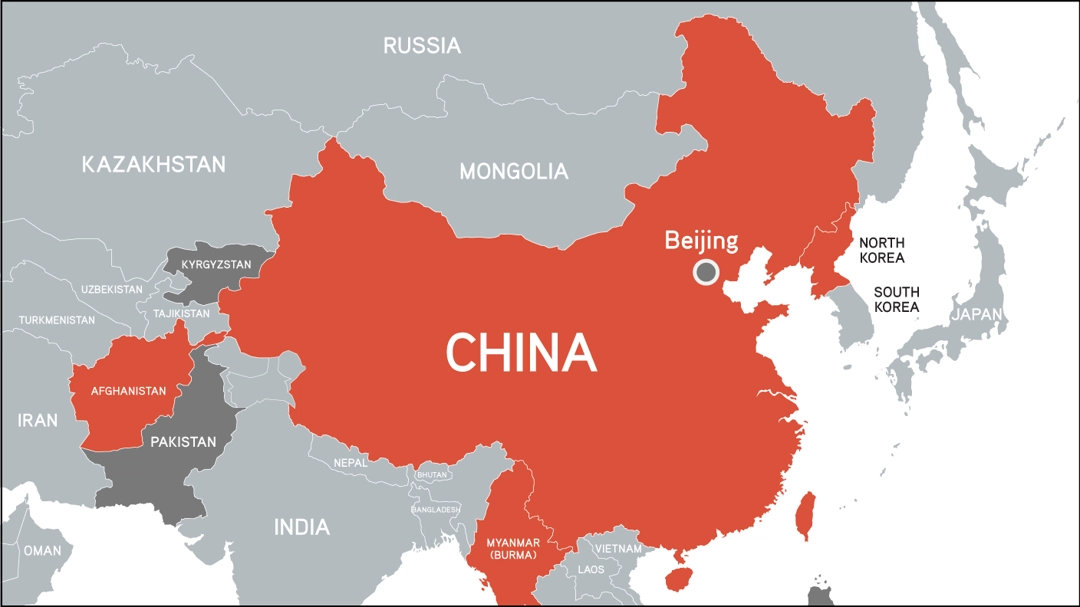
China is Vietnam’s northern land neighbor, but in travel terms it feels almost limitless because the best add-on experience depends entirely on which part of China you choose. Food lovers, city travelers, and culture-first travelers can all build a strong Vietnam-and-China route, especially if northern Vietnam is already part of the plan.
Why it works: The contrast is dramatic. You can move from Hanoi’s old streets to major Chinese urban centers, classic landscapes, or regional cuisine routes in a relatively short travel window.
Best for: Travelers who want food depth, major museums, fast trains, and a wider East Asia itinerary.
Do not miss: Regional dishes as much as landmarks. If food is part of the reason you are going, authentic Chinese food deserves its own planning time rather than being treated as a side benefit.
Malaysia
Malaysia is one of the easiest countries near Vietnam to recommend to travelers who care about food, city comfort, and easy logistics. Kuala Lumpur works well as a modern stopover city, while Penang or Langkawi turn the trip into something more culinary or coastal.
Why it works: It gives you a different blend of cultures without feeling hard to navigate. Malay, Chinese, and Indian influences shape both the food and the neighborhoods, so even a short trip feels rich and varied.
Best for: Food-first travelers, families, and anyone who wants a polished city break after Vietnam.
Do not miss: Hawker food in Penang, a skyline view in Kuala Lumpur, and at least one meal where you try Malay, Chinese, and Indian flavors side by side.

Philippines
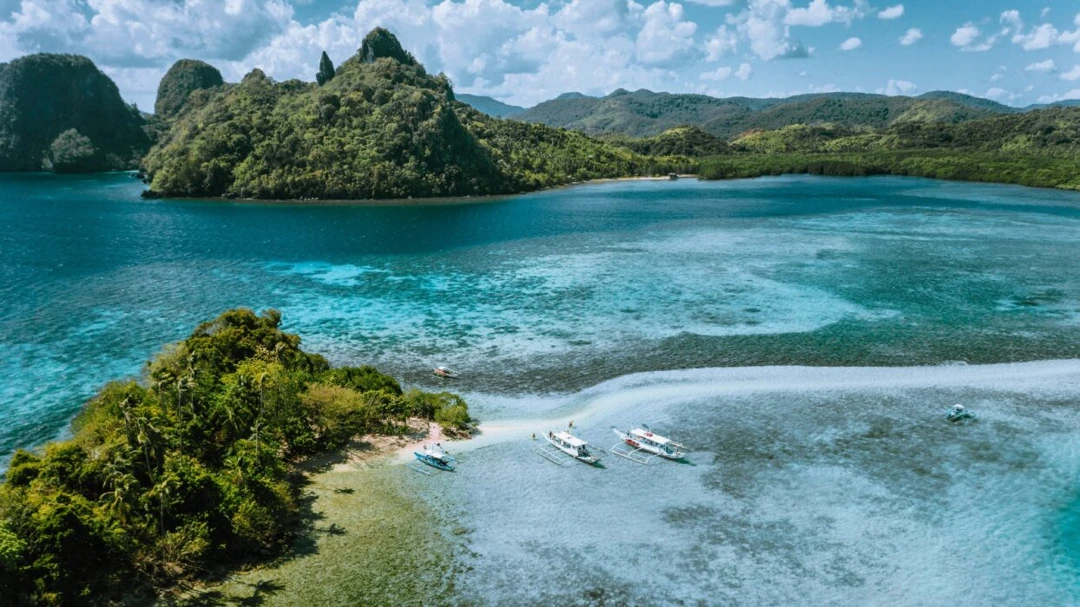
The Philippines does not share a land border with Vietnam, but it is close enough to work well as a short-flight island extension. If your Vietnam trip has been focused on cities, culture, or food, the Philippines can be the beach-and-water half of the journey.
Why it works: Palawan, Cebu, and similar island routes bring clear water, boat trips, diving, and a slower tropical finish that contrasts nicely with Vietnam’s urban centers.
Best for: Travelers who want beaches, snorkeling, diving, or a resort-style ending after a Vietnam itinerary.
Do not miss: Island scenery, fresh seafood, and a little cultural comparison as well. The contrast between Filipino and Vietnamese dress traditions is one reason the link to Vietnamese national dress feels especially interesting if you enjoy heritage and everyday culture.
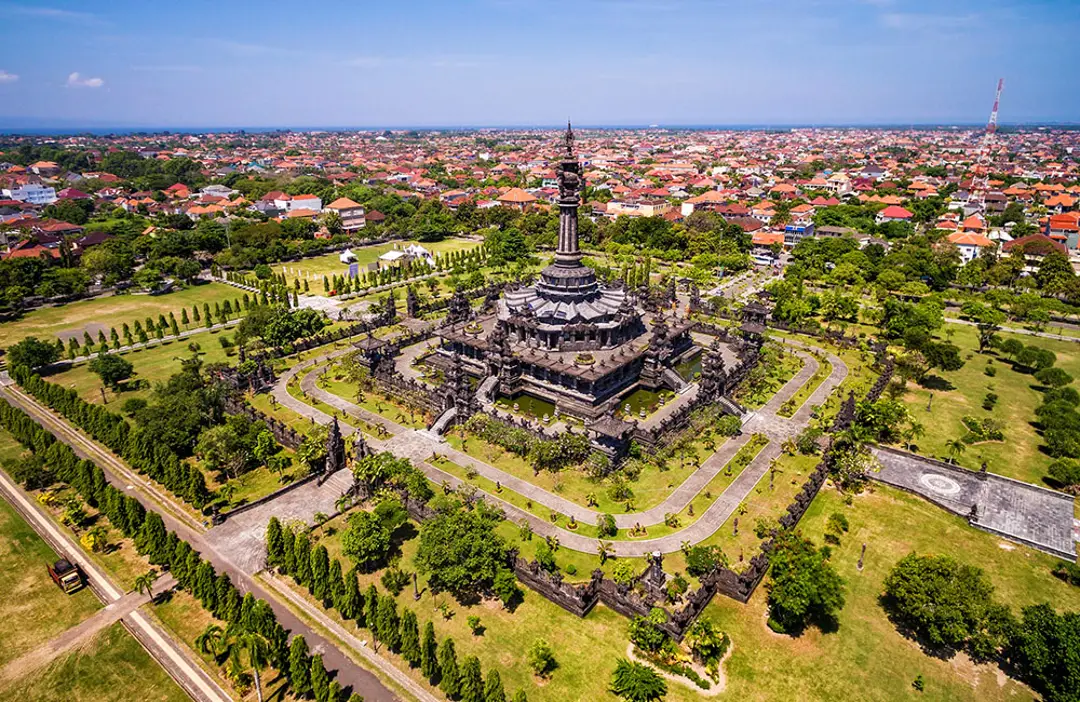
Indonesia
Indonesia sits a little farther from Vietnam than the easiest mainland add-ons, but it still makes sense if you are building a longer Southeast Asia journey. Bali is the obvious draw, yet Java, Yogyakarta, and volcano-focused routes can be even more rewarding if you want culture and landscapes together.
Why it works: Indonesia is ideal when Vietnam is only one part of a larger regional trip. It gives you temples, beaches, rice terraces, surf towns, and volcanic scenery in one destination.
Best for: Travelers with more time, return visitors to Southeast Asia, and couples building a two-country or three-country trip with a strong island component.
Do not miss: Bali beyond the beach clubs, one major cultural site such as Borobudur or Prambanan if you route through Java, and at least one proper Indonesian meal with nasi goreng or satay.
Practical Planning Tips Before You Cross Borders
The countries near Vietnam look straightforward on a map, but a smoother trip usually depends on a few planning details that people leave too late.
Choose your add-on based on your Vietnam route: Cambodia and the Mekong pair naturally with southern Vietnam, while Laos and China fit better after northern Vietnam.
Use Vietnam as the backbone of the route: A broader Vietnam planning guide helps you decide whether to place the second country before, after, or in the middle of your time in Vietnam.
Keep re-entry in mind: If Vietnam is both your starting point and your return point, re-check your passport validity, onward proof, and Vietnam visa setup before you leave the country.
Do not force too many countries into one trip: Two countries usually feels balanced; three only works well if you already know your pace and do not mind losing time to flights or border crossings.
Travel advisories matter: Conditions can change quickly in some destinations. Myanmar, in particular, needs extra caution and current official safety checks before you treat it as a realistic add-on.
Plan your connectivity before arrival: A regional or global plan is usually easier than switching SIMs every few days, especially if you are booking transport and accommodation on the move.
Think in themes, not only in distances: Beaches point you toward Thailand, the Philippines, or Indonesia; history points you toward Cambodia and China; a slower overland pace usually points you toward Laos.
FAQ
Which countries share a land border with Vietnam?
Vietnam shares land borders with China to the north, Laos to the west, and Cambodia to the southwest.
What is the easiest country to combine with a Vietnam trip?
Cambodia is usually the easiest overland add-on from southern Vietnam, while Thailand is often the easiest short-flight option from either Hanoi or Ho Chi Minh City.
Which nearby country is best if I want a slower pace after Vietnam?
Laos is often the best answer. It trades Vietnam’s traffic and density for river towns, temple stops, and a more relaxed travel rhythm.
Do I need a multi-country eSIM for this kind of trip?
If you are crossing at least one border and still relying on your phone for maps, bookings, banking, and ride-hailing, a multi-country plan is usually worth it for the convenience alone.
Conclusion
The best countries near Vietnam are not necessarily the ones physically closest on the map. They are the ones that fit the version of Southeast Asia you want next: Cambodia for temples, Laos for calm, Thailand for energy, China for scale, Malaysia for food, and the Philippines or Indonesia for island time.
Used well, Vietnam is not just a destination on its own. It is one of the best launch points in the region for building a deeper, smarter, and more varied Asia trip.