
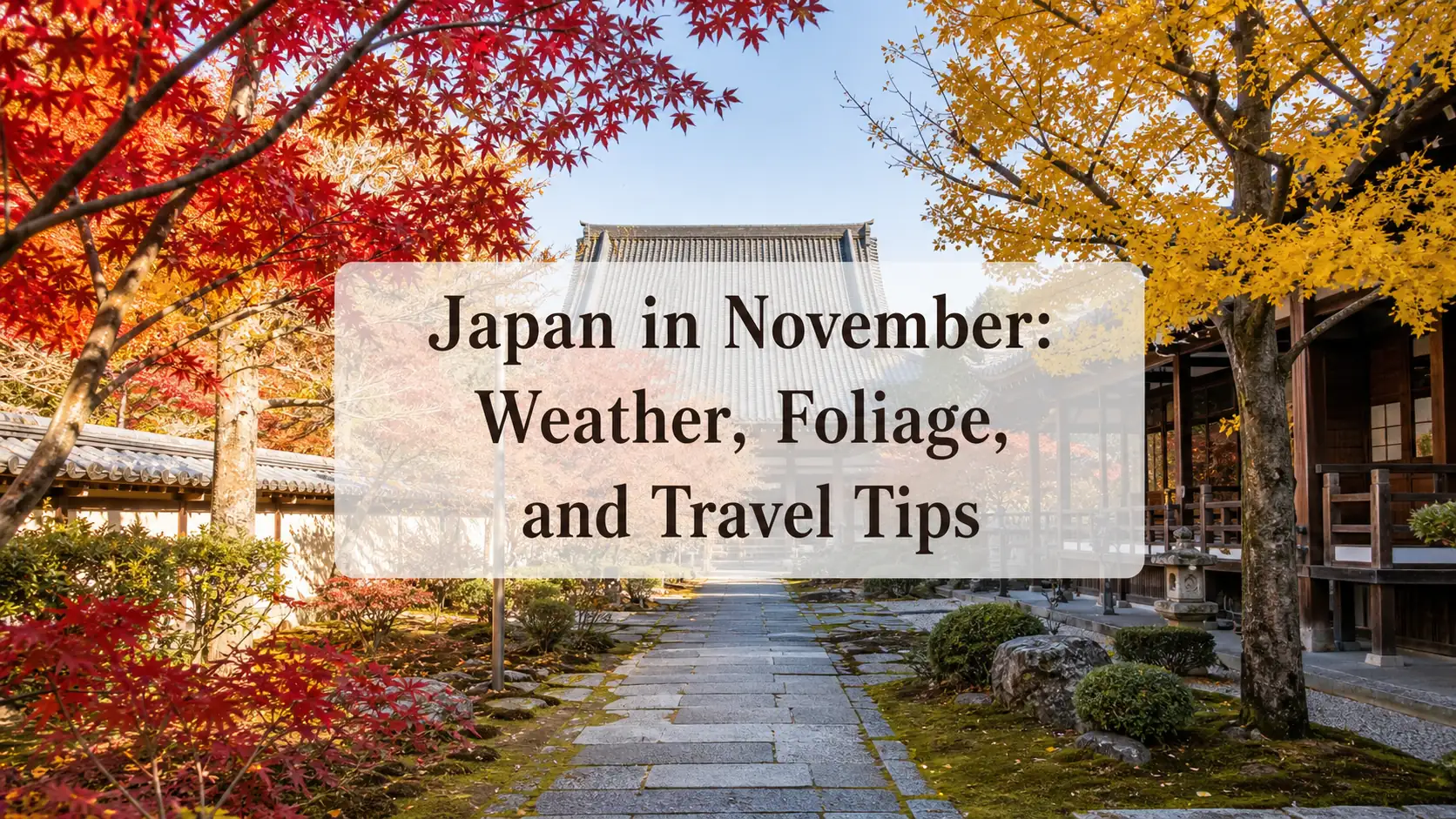
Japan in November has that lovely late-autumn feeling: bright afternoons, cool evenings, and streets that suddenly look better because the ginkgo trees have turned gold. It is one of the easiest months for walking-heavy days in Tokyo, Kyoto, Nara, Kanazawa, and many other classic stops.
The month is not the same everywhere, though. Hokkaido can feel close to winter, central Honshu is usually crisp and comfortable, and Okinawa still feels mild enough for light layers.
This guide explains what Japan in November feels like, where autumn foliage usually peaks, what to pack, how regions differ, and how to handle transport and mobile data without overplanning every hour.
What Japan in November Feels Like
November sits between the humid summer and the sharper cold of winter. You can usually plan long outdoor days without the heavy heat of August or the spring rush around cherry blossoms.
The small trick is to think in layers rather than outfits. Morning trains can feel chilly, temple steps warm up by noon, and a riverside dinner can send you reaching for a jacket again.
Mobile data becomes useful in small, ordinary moments: checking a railway app after a platform change, confirming a restaurant message, or changing plans when the weather turns. The Japan eSIM plan gives travelers mobile data access in Japan through supported local networks, so those everyday travel checks are easier to handle while moving around.
That kind of flexibility matters most in November because the best day is often the one you adjust on the spot. A temple garden may be perfect in the morning, while a nearby mountain route needs one more week of color.
November Weather by Region
Japan stretches far enough north and south that one packing list never fits the whole country. The JNTO monthly weather pages show the contrast clearly across major cities.
Use these typical November figures as a planning baseline, then check the current forecast close to departure.
City | Typical November High/Low | Monthly Rainfall | Travel Feel |
|---|---|---|---|
Sapporo | 9°C / 1°C | 104 mm | Cold, with early winter layers useful by evening. |
Tokyo | 16°C / 8°C | 93 mm | Cool and walkable, especially for parks and neighborhoods. |
Kyoto | 17°C / 8°C | 71 mm | Good for temple routes, with chilly mornings in older districts. |
Fukuoka | 18°C / 10°C | 85 mm | Mild, good for food streets and short coastal trips. |
Naha | 25°C / 20°C | 110 mm | Warm compared with mainland Japan, though not peak beach season. |
The table shows why a Tokyo and Kyoto trip can stay fairly light, while a route that adds Sapporo needs a warmer coat. Rain is not usually the main story in November, but a compact umbrella still earns its place.
If you are crossing several regions, pack for your coldest stop instead of your arrival city. It is easier to leave one warm layer in the hotel than to shop for it after a sharp evening wind arrives.
Hokkaido and Northern Japan
In Hokkaido, November feels like the handoff from autumn to winter. The best foliage may already be past its peak in many lowland areas, while cold mornings and possible early snow make footwear and outerwear more important.
Tokyo, Kyoto, and Central Honshu
Tokyo, Kyoto, Osaka, Nara, and the Fuji area are usually the sweet spot for first-time visitors. Days are cool enough for long walks, and late November often lines up well with city parks, temple gardens, and ginkgo avenues.
Kyushu and Okinawa
Kyushu tends to stay mild, and foliage can run later than Tokyo or Kyoto. Okinawa feels warmer and more relaxed, but November there is better for sightseeing, food, and coastal walks than for assuming full summer beach weather.
Autumn Foliage Timing in November
Japan's autumn color usually starts in colder northern and mountain areas, then moves south and down into city gardens. JNTO describes the wider viewing season as late September to early December, with timing changing by place, elevation, and yearly weather.
That means November is not one single foliage window. Early November suits northern Tohoku, Nagano, and higher-elevation routes, while late November is often better for Tokyo, Kyoto, Osaka, Hiroshima, and many city parks.
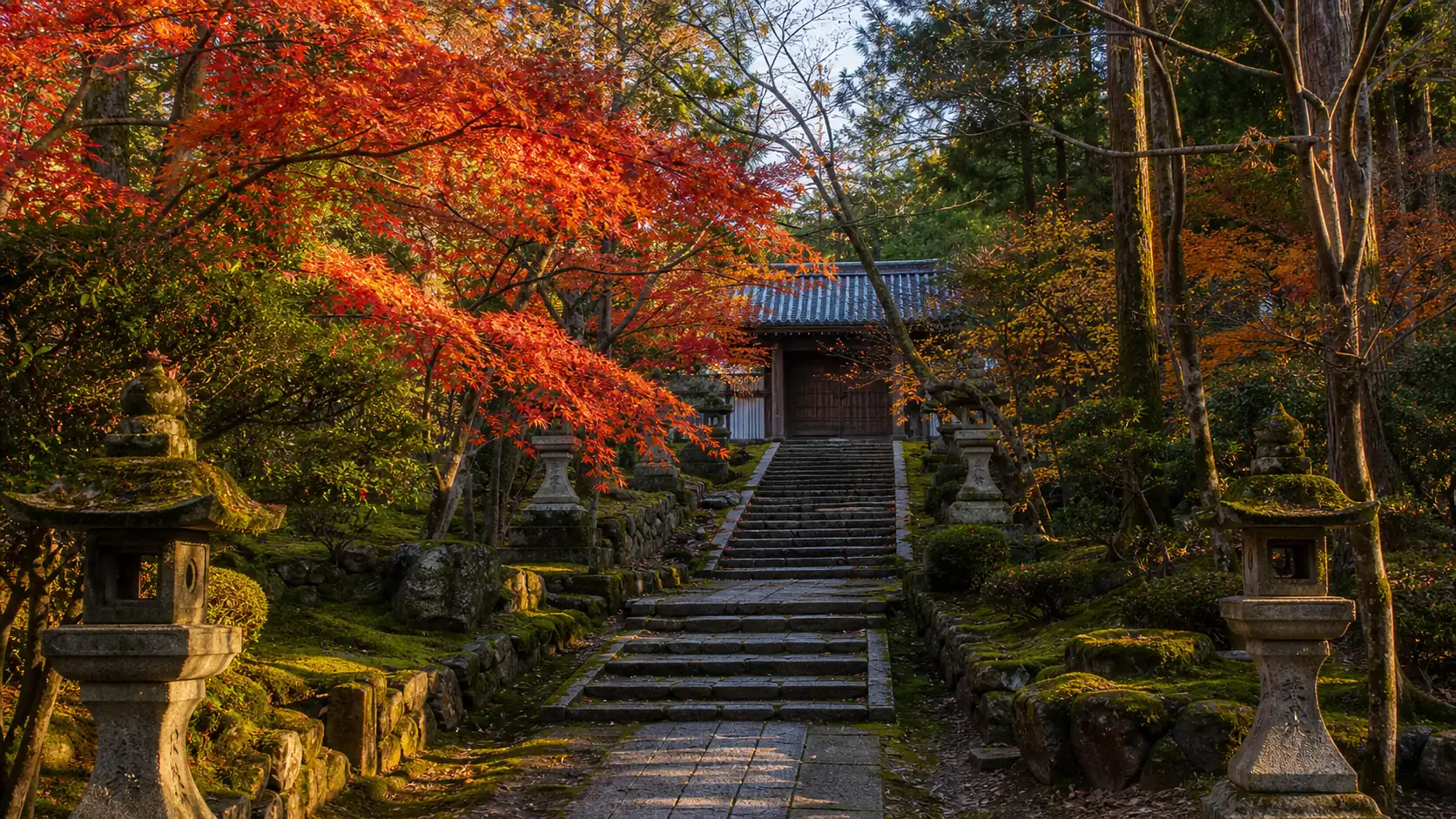
For Kyoto, the classic mistake is trying to see every famous temple on the same day. Pick one morning area, leave space for a slower lunch, then add a second garden or night illumination only if your legs still agree.
Tip: If foliage is the main reason for the trip, build your route north to south or mountain to city rather than locking every stay months ahead around one fixed peak date.
Where to Go in Japan in November
November rewards routes that mix headline places with a few quieter pauses. You do not need to chase leaves every day; a simple neighborhood walk can be just as memorable when the air is cool and the streets smell faintly of roasted sweet potato.
Start in Tokyo for parks, ginkgo avenues, food neighborhoods, and easy day trips to Nikko or Kamakura.
Move to Kyoto or Nara for temple gardens, mossy paths, deer-dotted parkland, and late-autumn evening light.
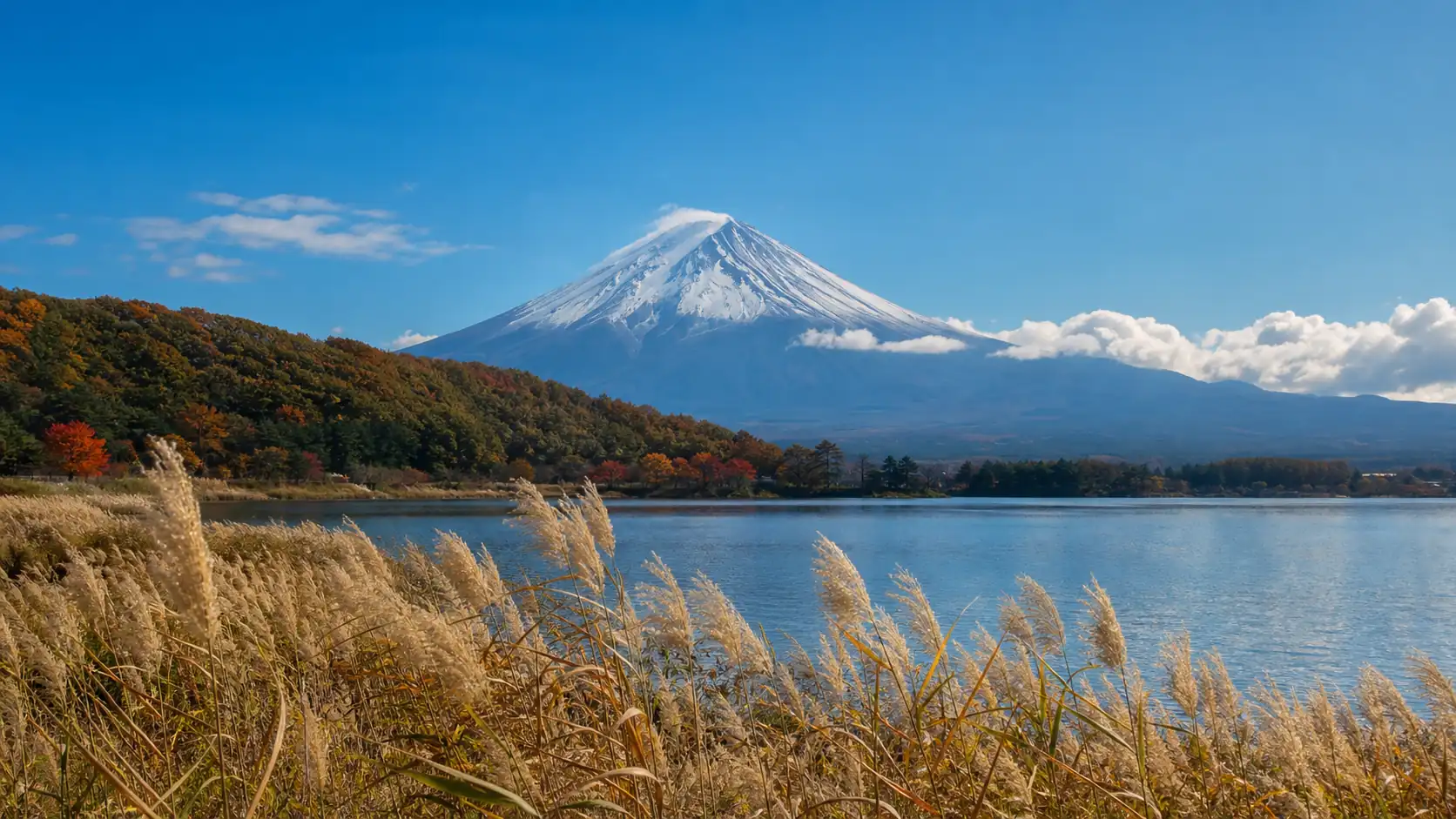
Add the Fuji Five Lakes or Hakone if you want mountain views, hot springs, and a slower day between cities.
Continue west to Hiroshima, Miyajima, Fukuoka, or Beppu if you have more than a week and prefer milder weather.
Choose Hokkaido only if you are happy with colder weather and a more winter-leaning mood.
For a first visit, Tokyo, Kyoto, and one nearby side trip are enough. Add more distance only when you have the days to enjoy the movement instead of simply changing hotels.
What to Pack for Japan in November
Pack as if your trip includes both outdoor walking and warm indoor trains. The goal is not a huge suitcase; it is a few pieces that work together when the temperature drops after sunset.
This packing guide works best for Tokyo, Kyoto, Osaka, Nara, Hiroshima, and similar mainland routes.
Item | Why It Helps | Best Fit |
|---|---|---|
Light insulated jacket | Handles cool evenings without taking over your bag. | Tokyo, Kyoto, Osaka, Fukuoka. |
Warmer coat | Useful when your route includes Hokkaido or mountain towns. | Sapporo, Nagano, alpine routes. |
Comfortable walking shoes | Temple paths, station transfers, and garden walks add up fast. | Every itinerary. |
Compact umbrella | Good insurance for short showers without carrying rain gear all day. | City travel and day trips. |
Small day bag | Holds a layer, water, tickets, and small purchases during long walks. | Foliage routes and rail days. |
For Hokkaido, mountain areas, or late-night photography, upgrade the jacket and add gloves. For Okinawa, keep the layers lighter and bring sun protection for daytime walks.
Coin lockers and luggage forwarding can make a multi-city November trip feel much lighter. When you plan a rail day, pack the day bag separately so you are not opening your suitcase in a station corner.
Tip: Wear shoes that already feel good after a full day at home, because Japan in November often turns into more walking than the itinerary admits.
November Route Timing and Crowd Checks
November is comfortable, but foliage weekends can still make trains, temple paths, and hotel prices feel busy. If you are deciding between late autumn and other seasons, best Japan travel timing helps compare November with spring, summer, and winter tradeoffs.
Plan Kyoto, Nikko, Nara, Kanazawa, and Tokyo gardens with early starts on weekends. On weekdays, leave bigger gardens and temple districts for the morning, then use museums, food streets, or shopping areas when the popular leaf spots are busiest.
Late November can also overlap with early snow in northern Japan. A broader winter in Japan plan is useful if you want to combine foliage in central Honshu with Hokkaido, Tohoku, or Nagano winter scenery.
Staying Connected During Your November Trip
November is one of the best times to visit Japan for autumn foliage, city walks, and scenic rail journeys, but late autumn travel can also be unpredictable. Popular gardens and temples may become unexpectedly crowded, mountain weather can change quickly, and train schedules, bus services, or restaurant reservations sometimes need to be checked at short notice.
Reliable mobile data makes those last-minute changes much easier to handle. Whether you're checking the latest autumn foliage reports, confirming train connections, looking up the weather, contacting your accommodation, or adjusting your itinerary on the go, staying connected helps everything run more smoothly.
If you'd rather have your mobile data ready before you leave, the iRoamly Official eSIM Site offers Japan eSIM plans for different travel needs, making it easy to choose an option that fits your device, itinerary, and budget.
If you're planning to visit Kyoto, Nara, Nikko, Hakone, the Fuji Five Lakes, or the Tohoku region, it's worth downloading offline maps in advance and leaving some flexibility in your schedule. Whenever possible, visit popular autumn foliage spots on weekday mornings, when they're usually much quieter than on weekends or around midday.
Practical Travel Tips for November
November is popular because it is comfortable, scenic, and easier to manage than the hottest months. A little planning helps without making the trip feel locked down.
Book Kyoto, Nikko, Hakone, and Fuji-area stays early if you are traveling in the second half of the month.
Start popular temple and garden days early, then keep afternoons flexible for cafes, shops, or a quieter neighborhood.
Check closing times, because daylight fades earlier than many travelers expect.
Use luggage forwarding when your route includes several train transfers or a mountain stop.
Keep one indoor plan ready for rain, such as a museum, department-store food hall, bathhouse, or covered market.
November rewards travelers who match the region to the timing, dress for cool mornings, and leave room for small changes. With a warm layer, a checked forecast, and dependable mobile data, the month becomes easy to enjoy rather than hard to manage.
FAQ
1.Is November a good month for a first trip to Japan?
Yes, November is a strong first-trip month because the weather is usually comfortable, the foliage is memorable, and major city routes are easy to combine.
2.Is late November better than early November?
It depends on your route, because early November is better for northern or mountain areas while late November often suits Tokyo, Kyoto, Osaka, and many city gardens.
3.Can I see both autumn leaves and snow in November?
Yes, it is possible if you include northern Japan or high elevations, though snow conditions vary and should be checked close to travel.
4.Can I visit Japan in November without renting a car?
Yes, major city and rail routes work well without a car, though some rural foliage spots may require buses, taxis, or careful timetable checks.
5.Where should I go for late November foliage in Japan?
Kyoto, Nara, Tokyo gardens, Nikko, Kanazawa, and lower-elevation temple areas often work well in late November, though exact color depends on temperature and elevation.
6.Is November too cold for walking around Japan?
No, most central routes are comfortable for walking with layers, but mornings, evenings, mountains, and northern regions can feel cold enough for a warmer jacket.
Conclusion
Japan in November is one of those months where the trip often feels easier than expected. The air is cool, the scenery has color, and the main cities are pleasant for long days outside.
The best plan depends on geography. Aim north or into the mountains earlier in the month, save Tokyo and Kyoto city foliage for later, and pack warmer layers if Hokkaido or alpine areas are part of the route.
Give yourself a few flexible pockets in the schedule, check local conditions as you travel, and let November do what it does best: turn ordinary walks, train rides, and quiet garden stops into the moments you remember later.