
Cherry blossoms bloom in Japan over a long, moving season: the first displays can appear in Okinawa in January, while Hokkaido may not peak until late April or early May.
For Tokyo, Kyoto, and Osaka, the most familiar window is usually late March to early April, but the exact dates shift each year with the weather.
The best plan is to choose a region that fits your travel dates, then monitor local forecasts as departure approaches. Flexible bookings help when spring arrives early or late, while an iRoamly eSIM service keeps forecasts, park notices, and route changes accessible on the move.
This guide explains the bloom sequence, the difference between first bloom and full bloom, where to go from winter through late spring, how to choose festivals and viewing spots, and what to do when the forecast changes.

When Do Cherry Blossoms Bloom in Japan?
There is no single national cherry blossom date. Japan stretches across several climate zones, so the season advances from warmer southern areas toward colder northern regions and higher elevations.
In a typical year, travelers see the most widely planted Somei-yoshino trees across much of Kyushu, Shikoku, and Honshu from late March into April, followed by Tohoku and Hokkaido.
Region | Typical planning window | Best for |
|---|---|---|
Okinawa | Mid-January to early February | Deep-pink Kanhi-zakura and an early start to the season |
Kawazu and southern Izu | February to early March | Early-blooming Kawazu-zakura within reach of Tokyo |
Tokyo, Kyoto, Osaka, Hiroshima | Late March to early April | Classic city parks, canals, temples, and castles |
Japan Alps and Tohoku | Early to late April | Later blooms, mountain scenery, and less compressed city routes |
Hokkaido | Late April to early May | The final major stage of the northbound bloom front |
How the Blossom Front Moves
Temperature drives the season, but elevation, exposure, local microclimates, and tree variety can shift a display away from a nearby city's date.
Okinawa's dark, bell-shaped Kanhi-zakura flowers first; Kawazu-zakura follows before the mainstream Somei-yoshino season; colder northern and mountain areas extend viewing into April and May.
First Bloom, Full Bloom, and Falling Petals
Forecasts distinguish kaika, or first bloom, from mankai, or full bloom several days later. Peak commonly lasts about a week, while buds, open flowers, and falling petals create a longer local experience.
Warmth accelerates the sequence; wind and heavy rain shorten it. After peak, hanafubuki describes petals drifting like a flurry.
How to Check the Latest Forecast
Use the official cherry blossom forecast to compare cities close to departure, then confirm individual park notices because local events and opening hours may change independently.
Check whether a date refers to first bloom, full bloom, or a best-viewing range before adjusting a hotel or train booking.
Practical rule: use seasonal averages to choose your region, a current forecast to refine your route, and same-week park updates to choose the exact viewing day.
Choose Your Dates by Region
Once you have a rough travel window, choosing a region helps you shape the rest of your trip. Beyond flowering dates, each area offers a different setting—from subtropical hillsides to city gardens and northern castle towns.

Cherry Blossom Season in Okinawa
Okinawa suits travelers visiting Japan in winter, with its main cherry blossom season usually falling between mid-January and early February.
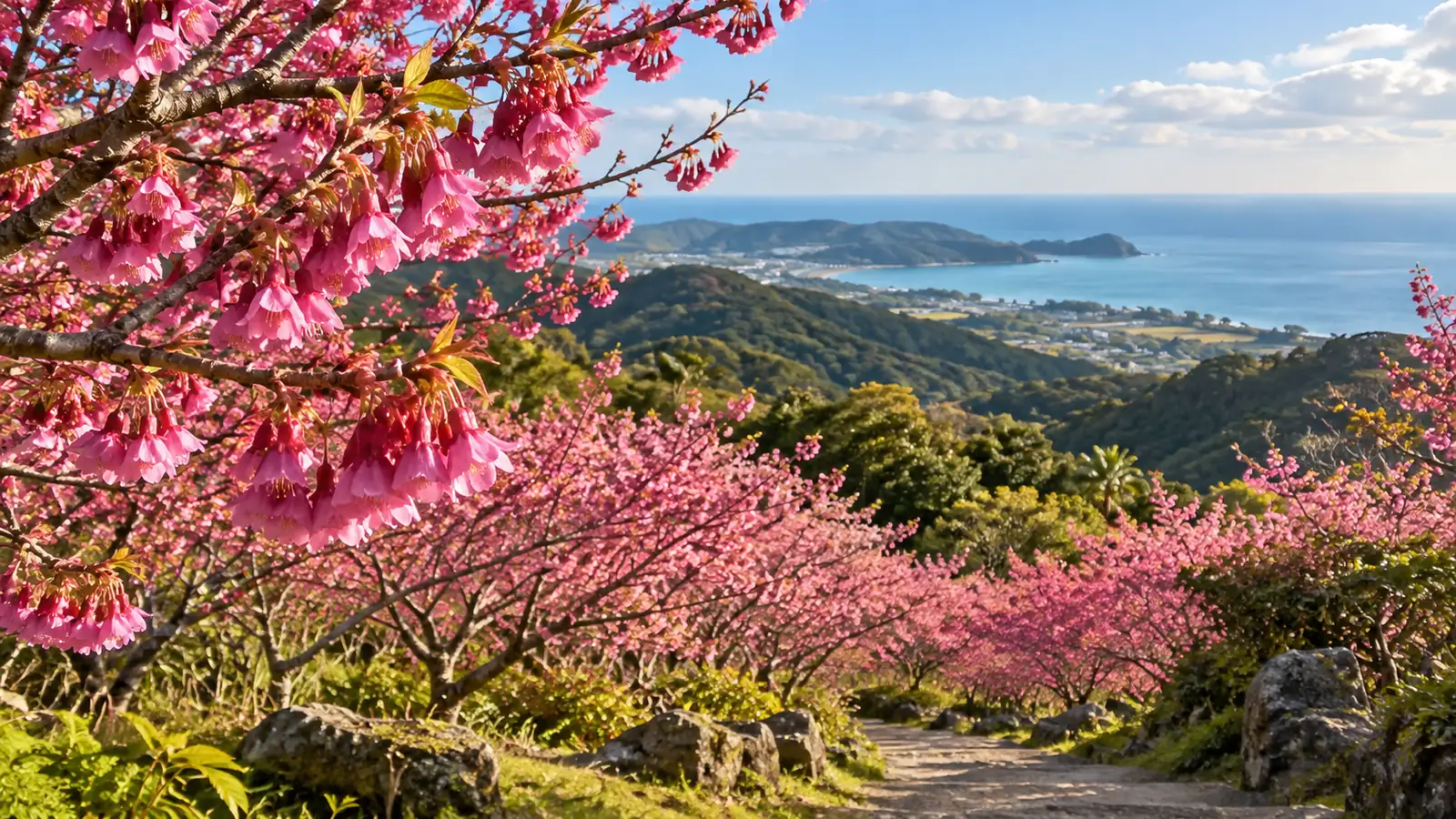
The local Kanhi-zakura produces deep-pink, bell-shaped flowers, giving the landscape a different appearance from the pale blossoms associated with mainland Japan.
Here, cherry blossom viewing works well as part of a wider island holiday. You can combine flowering hillsides with coastal scenery and local culture, rather than planning the entire trip around traditional springtime hanami.
Cherry Blossoms in Kawazu and Izu
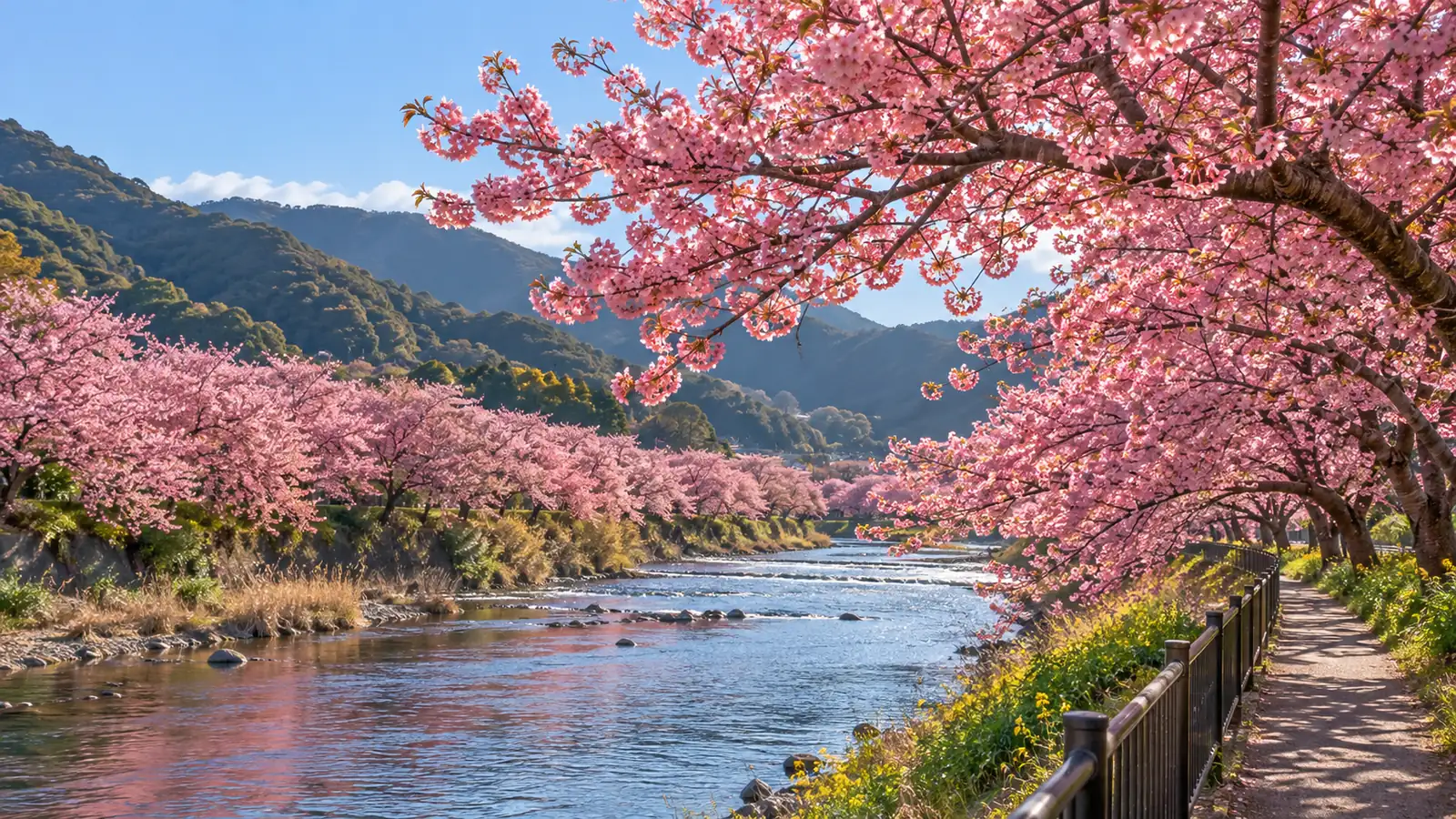
Kawazu is a useful choice for travelers arriving before the main Honshu season. Its early-blooming cherry trees usually flower from February into early March, with rich pink blossoms that tend to remain attractive longer than Somei-yoshino.
The area can fit into a Tokyo-based itinerary as an excursion or a short stay on the Izu Peninsula.
Staying overnight leaves more time to combine riverside walks with hot springs and coastal sightseeing. Check Kawazu-specific updates, as Tokyo’s flowering forecast does not describe this early-blooming variety.
Tokyo Kyoto Osaka and Hiroshima
These cities are well suited to travelers who want to combine classic spring blossoms with a first visit to Japan.
From late March to early April, cherry trees brighten parks, riversides, temple grounds, and castle surroundings, making it easy to include hanami in a broader sightseeing itinerary.
Their typical flowering periods are close together, so moving between all four cities does not necessarily give you more chances to catch peak bloom.
One or two bases usually allow a more relaxed trip, with nearby alternatives if individual locations flower earlier or later.
Tokyo offers considerable variety within the city, while Kyoto pairs blossoms with historic streets and temples. Osaka and Hiroshima also make it easy to combine flower viewing with major landmarks. Choose according to the places you want to explore beyond the blossoms, including other Tokyo things to do.
Japan Alps and Tohoku Cherry Blossoms
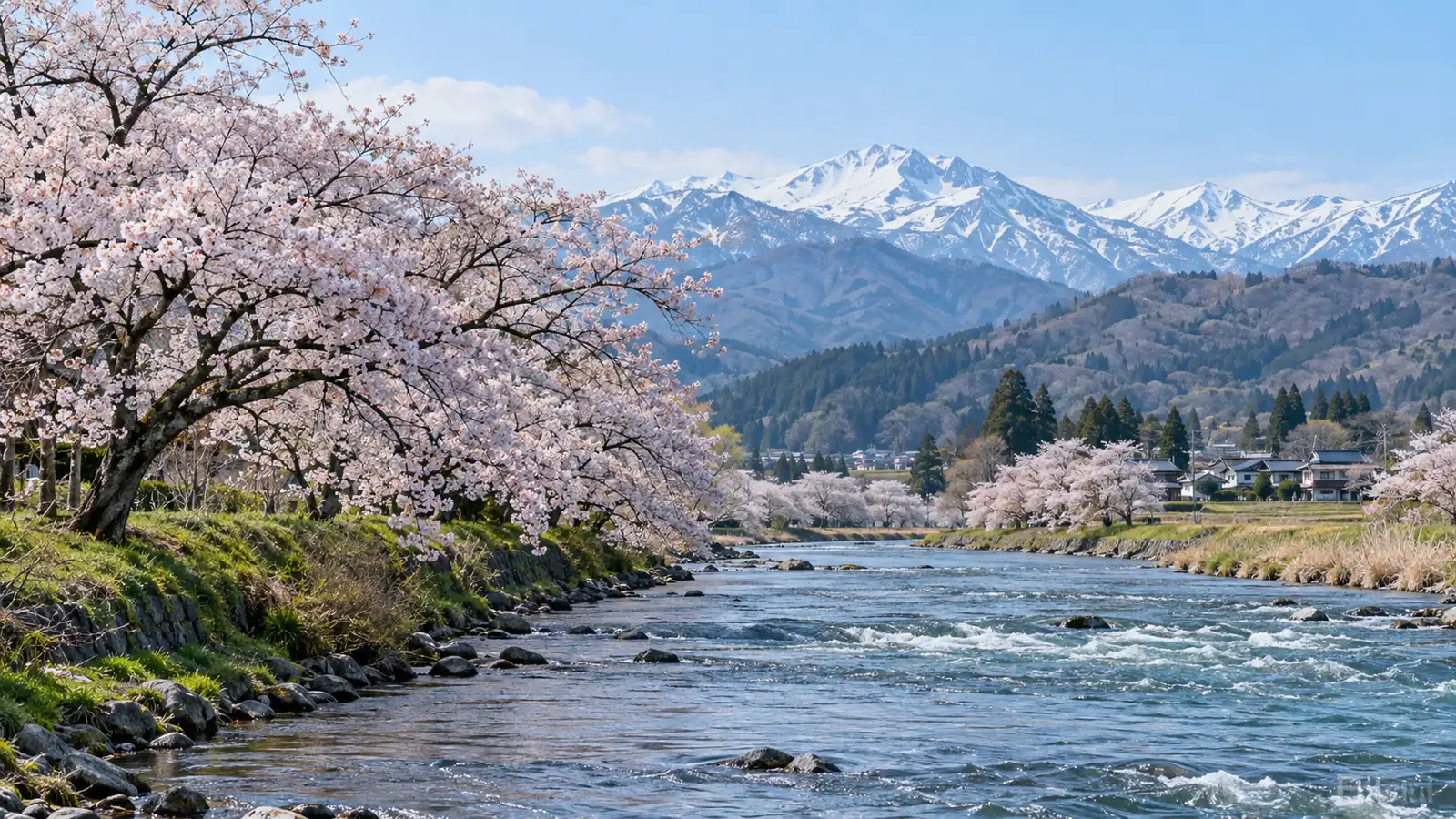
The Japan Alps and Tohoku are worth considering if your trip falls later in April or you prefer mountain scenery and smaller cities. Higher elevations and cooler northern conditions generally bring later flowering than the main Tokyo–Kyoto season.
However, this is a broad area with substantial local differences. A lower valley may already be losing petals while a nearby mountain location is still approaching full bloom.
Across Tohoku, southern destinations such as Fukushima and Sendai generally lead into later displays farther north.
Choose a manageable part of the region and check each destination separately. This approach gives you room to enjoy rivers, historic towns, and mountain landscapes without assuming that every stop will bloom at the same time.
Cherry Blossom Season in Hokkaido
Hokkaido is a natural choice for travelers visiting in late April or early May, after blossoms in many central Japanese cities have faded. Cooler conditions bring a later spring, with viewing opportunities spread across different parts of the island.
Hakodate often flowers before Sapporo, while eastern areas may follow later. The distances between destinations make it more practical to focus on one area than to chase every stage of the season across Hokkaido.
Late-season viewing can be combined with city sightseeing and open park landscapes, but it does not always mean a quiet trip. The flowering period may overlap with Golden Week, so consider the holiday dates when deciding where to stay and how far to travel.
Best Cherry Blossom Spots by Season
The strongest viewing plan mixes one headline destination with nearby alternatives. The ten places below cover early, classic, and late windows, as well as city parks, castles, mountains, and quieter landscapes.
Early-Season Viewing
1. Kawazu, Shizuoka
Typical window: February to early March
Why choose it: Kawazu-zakura brings rich pink color before the main Honshu season. Trees line the river near the coast, so the visit combines an easy walking route with an early-bloom variety that tends to remain attractive longer than Somei-yoshino.
2. Okinawa's Northern Parks
Typical window: Mid-January to early February
Why choose it: Mount Yae and the Nago area offer one of Japan's earliest blossom journeys. Choose Okinawa for winter timing and vivid Kanhi-zakura, not as a substitute for a traditional Tokyo or Kyoto spring scene.
Classic Late-March and Early-April Parks
3. Tokyo – Shinjuku Gyoen
Typical window: Late March to mid-April, depending on variety
Address: 11 Naitomachi, Shinjuku City, Tokyo
Fee: Yes
Why choose it: The spacious garden contains many cherry varieties, which can extend the local viewing window. It suits travelers who prefer landscaped lawns and controlled entry to the louder picnic atmosphere of Ueno or Yoyogi.

4. Kyoto – Maruyama Park
Typical window: Late March to early April
Address: Maruyamacho, Higashiyama Ward, Kyoto
Fee: No
Why choose it: Kyoto's oldest public park is known for its large weeping cherry and evening illumination. Food stalls and nearby temples create a lively introduction to hanami. For a walking alternative, pair it with the Philosopher's Path rather than crossing the city repeatedly.
5. Osaka – Osaka Castle Park
Typical window: Late March to early April
Address: 1-1 Osakajo, Chuo Ward, Osaka
Fee: Park free; castle and some garden areas charge admission
Why choose it: Blossoms frame the castle walls and moats, while Nishinomaru Garden offers a denser display. It is easy to reach and works well for travelers who want a major landmark and hanami in the same half-day.

6. Hiroshima – Peace Memorial Park
Typical window: Late March to early April
Address: 1 Nakajimacho, Naka Ward, Hiroshima
Fee: Park free
Why choose it: Around 300 cherry trees line the river and soften the urban memorial landscape. Visit respectfully, keep picnic activity away from solemn areas, and combine the blossoms with time to understand the park's historical significance.
7. Nara – Mount Yoshino
Typical window: Early to mid-April
Why choose it: Thousands of trees cover different elevations, so the mountain changes color in stages from lower to upper slopes. It offers a broader window than one flat city park, but steep paths, transport queues, and crowds make an early start important.
8. Hyogo – Himeji Castle
Typical window: Late March to early April
Why choose it: Pale blossoms contrast with the white castle and broad defensive grounds. The free outer lawns work for a relaxed view, while entering the castle adds history but also requires more time and may involve queues.
Late-Season Escapes
9. Aomori – Hirosaki Park
Typical window: Mid- to late April
Why choose it: The park is celebrated for blossom tunnels, castle views, evening lights, and petals collecting on the moat. It is a strong choice after the major Honshu cities fade, but festival accommodation should be booked well ahead.

10. Hokkaido – Goryokaku and Moerenuma Park
Typical window: Late April to early May
Why choose them: Goryokaku in Hakodate offers a dramatic star-shaped fort surrounded by blossoms, while Sapporo's Moerenuma Park pairs late flowers with Isamu Noguchi's sculptural landscape. Choose Goryokaku for an iconic overhead pattern and Moerenuma for open space and a quieter design-led setting.
Cherry Blossom Festivals in Japan
Sakura matsuri range from neighborhood gatherings to major castle festivals. They often add lanterns, food stalls, performances, boat rides, or evening viewing, but dates may be announced before organizers know the exact peak. Treat the festival calendar and the bloom forecast as related but separate schedules.
What Happens at a Sakura Festival
Hanami is a traditional Japanese custom that means flower viewing. Friends, families, and colleagues may picnic beneath the trees, while formal festival areas add vendors, stage events, tea ceremonies, or nighttime illuminations.
Spring stalls frequently sell seasonal snacks and limited-edition goods. If shopping is part of the day, a Japan souvenir guide helps distinguish durable regional crafts from fragile food gifts. Buy perishable items late in the trip and check storage requirements before a long train journey.

Five Seasonal Events to Consider
1. Hirosaki Cherry Blossom Festival
Hirosaki Park in Aomori surrounds its castle and moats with thousands of trees. Lantern-lit evenings, rental boats, and petal-filled water make it one of the strongest late-April options. Confirm the year's event dates and local bloom status separately.
2. Takada Castle Site Park Festival
Joetsu in Niigata is known for nighttime viewing, when rows of lanterns illuminate the park around the castle site. It suits travelers who want a later Honshu stop and a festival atmosphere after dark.

3. Mount Yoshino Seasonal Events
Mount Yoshino in Nara celebrates a landscape where trees bloom progressively up the slopes.
The experience is more dispersed than a single fenced festival ground, so plan for hiking, shuttle arrangements, and longer transit queues during peak days.
4. Ueno Sakura Matsuri
Ueno Park in Tokyo delivers the classic urban festival scene: a long blossom avenue, dense crowds, food stalls, and nearby museums.
Arrive early on a weekday for photography, or visit in the evening when the social atmosphere matters more than an unobstructed view.
5. Miyako Odori in Kyoto
Miyako Odori is not a cherry blossom festival; it is an annual spring dance performance by Kyoto's geiko and maiko.
Its April timing and seasonal staging make it a complementary cultural event, but tickets and performance schedules should be checked independently of blossom forecasts.
Plan for a Changing Forecast
A cherry blossom trip succeeds when the itinerary can absorb a few days of movement.
The goal is not to predict one perfect afternoon months in advance; it is to create several realistic chances to see buds, full bloom, or falling petals without turning the holiday into a costly race across Japan.
Book the Parts That Need Flexibility
Reserve high-demand stays early: book major city and festival accommodation before peak forecasts are released, but choose changeable rates when the price difference is reasonable.
Delay fragile day plans: keep weather-sensitive gardens, boat rides, and open-air viewpoints adjustable until the short-range forecast is clearer.
Read fare conditions: do not assume every rail ticket, tour, or domestic flight can be moved without a fee.
Build a Regional Backup Route
Choose two or three places within the same transport area: a low-elevation city park, a garden with multiple varieties, and a slightly later mountain or northern option.
If Tokyo peaks early, a traveler might switch from a central Somei-yoshino avenue to later varieties at Shinjuku Gyoen or consider a cooler day trip instead of immediately flying to Hokkaido.
Keep the main itinerary regional so a change does not require an expensive cross-country transfer.
Across East Asia, spring timing depends on latitude, elevation, and temperature; a Beijing spring weather comparison illustrates why city-level conditions are more useful than a country name alone.
Prepare for Crowds, Rain, and Price Spikes
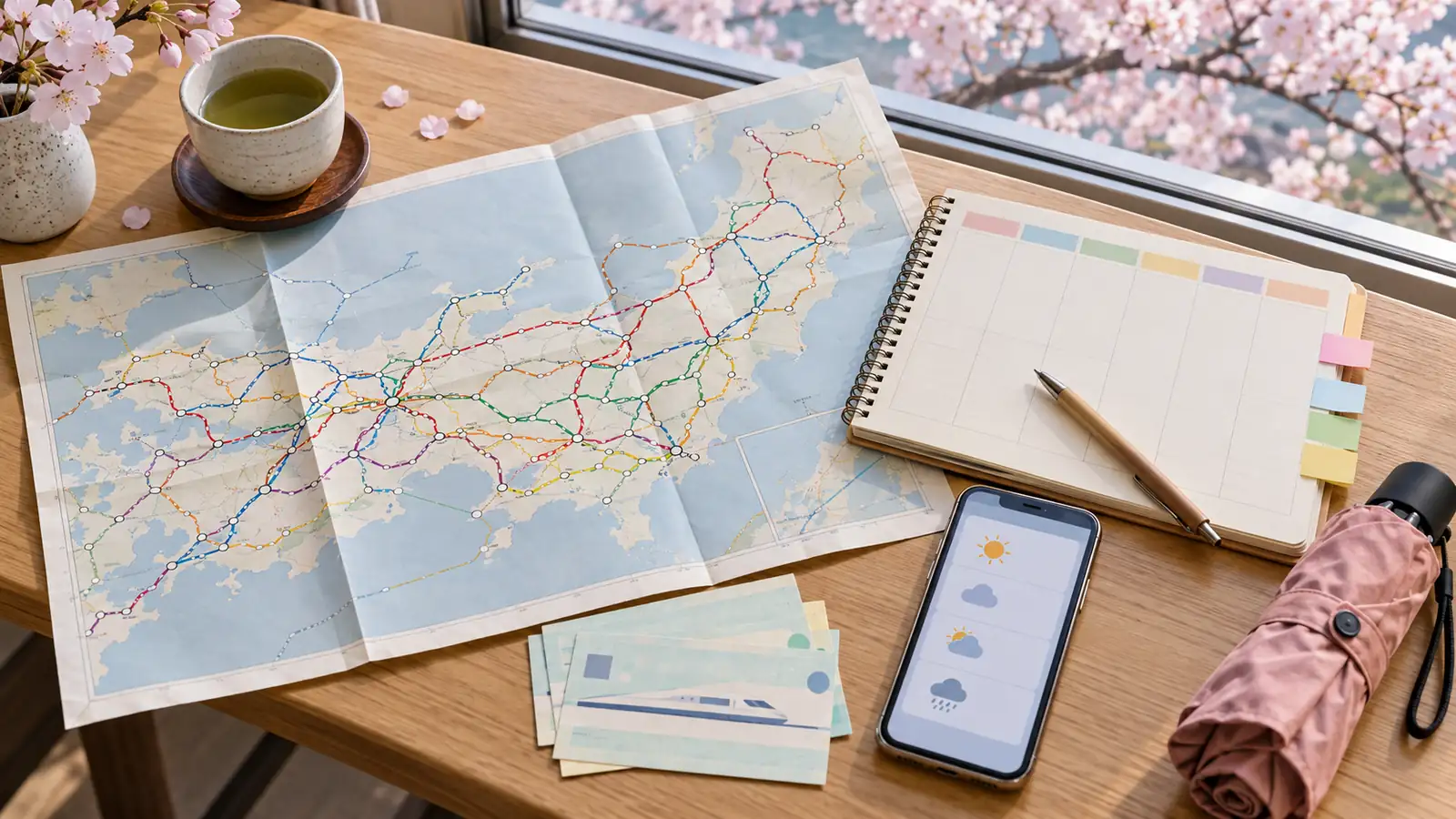
Visit famous parks early on weekdays and pair outdoor stops with nearby indoor options. After a storm, seek sheltered gardens, later varieties, and riversides where fallen petals remain part of the view.
Peak bloom brings high demand in central Japan, while Hokkaido's late season can overlap Golden Week. A quieter neighborhood park may deliver a better hanami experience than a headline location.
Hanami Etiquette and Packing
Hanami is relaxed, but popular parks work only when visitors protect the trees and share limited space. Rules differ by venue, so check whether picnics, alcohol, mats, tripods, pets, or evening access are permitted before arriving.
Respect Park Rules and Shared Space
Do not touch, shake, climb, or bend branches for a photograph.
Keep mats in designated areas without blocking paths, entrances, or tactile paving.
Use only the space your group needs and keep voices low.
Take all rubbish away when bins are full, and follow local rules for food, alcohol, and smoking.
What to Bring to Hanami
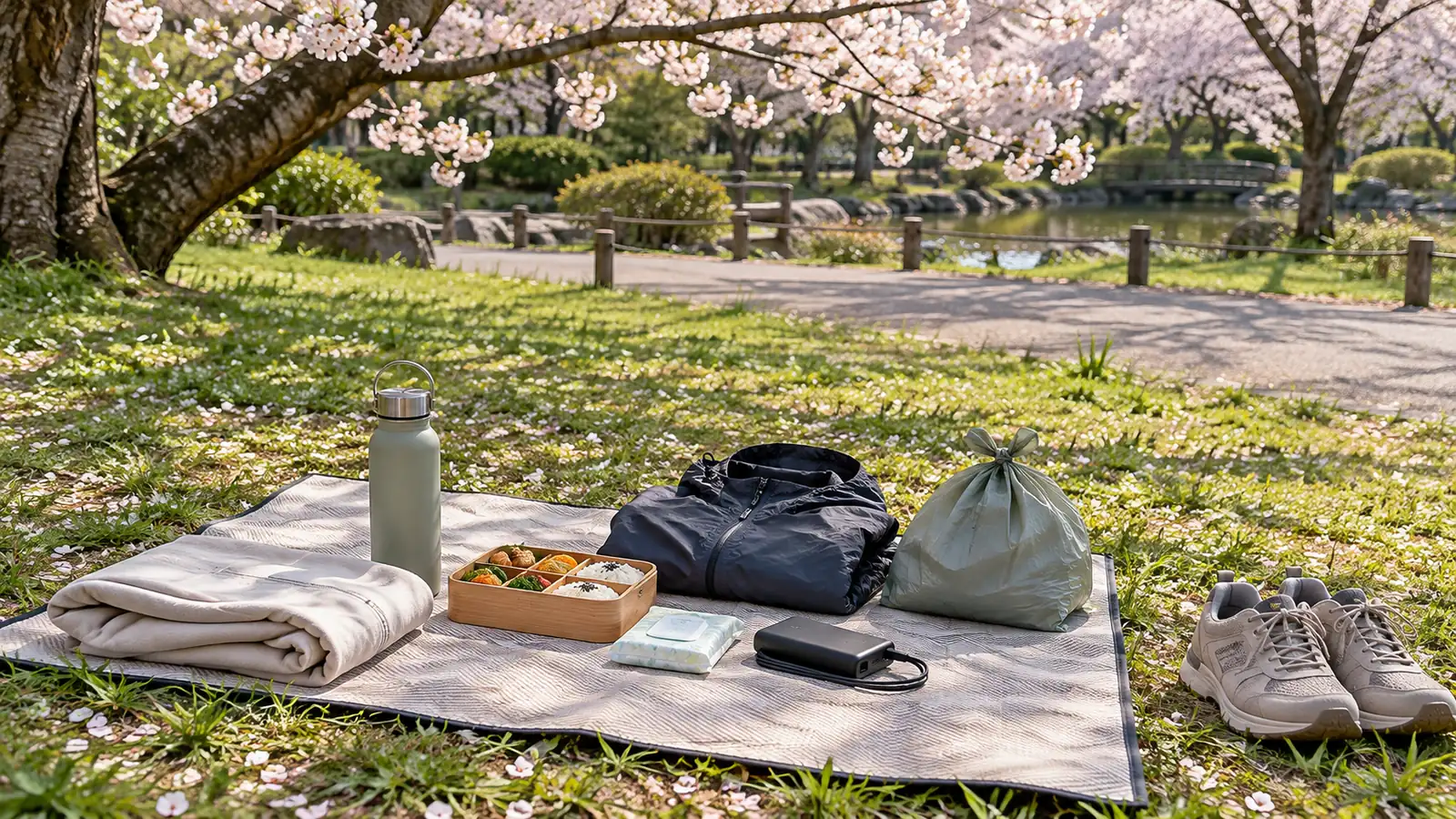
Carry layers for cool evenings, a compact ground sheet where allowed, a small rubbish bag, water, tissues, and a portable battery. Comfortable shoes matter at castle grounds and mountain routes, while a light rain layer keeps a passing shower from ending the visit.
Prepare a Japan eSIM for live navigation and route changes, and save the Japanese name or address of less famous parks before leaving the hotel.
Travelers who cannot sit on the ground can choose bench-lined rivers, accessible gardens, short walking routes, or café views instead of forcing a picnic.
FAQ
1. Can I see cherry blossoms in Japan outside March and April?
Yes. Okinawa can bloom from mid-January, Kawazu-zakura often flowers in February, Hokkaido may peak around late April or early May, and a few varieties bloom in autumn. The display, color, and cultural atmosphere differ from the main Somei-yoshino season.
2. What to wear to a cherry blossom festival?
Wear comfortable walking shoes and layers, such as a sweater and light jacket. Bring a rain layer and something warmer for evening viewing, especially in northern Japan.
3. Is hanami still worthwhile in the rain?
Light rain can reduce crowds and deepen the color of wet branches, but wind and heavy rain may damage blossoms. Choose sheltered gardens, short routes, or museum-and-park combinations, and avoid spreading a mat on saturated ground.
4. Are nighttime cherry blossom illuminations free?
Many public river and park illuminations are free, while gardens, castles, temples, and special evening events may charge admission or require timed entry. Confirm the venue's current schedule because lighting dates may not match peak bloom exactly.
5. Do I need to picnic to enjoy hanami?
No. A riverside walk, garden visit, boat ride, castle viewpoint, or evening illumination is also hanami. Choose a format that matches mobility, weather, crowd tolerance, and the rules of the site.
Conclusion
The best time to see cherry blossoms in Japan depends on where you travel. Use typical flowering periods to choose your region, then check local forecasts as your departure approaches.
Keep a few nearby viewing options open rather than planning every stop around peak bloom. Early flowers, blossom-filled branches, and drifting petals can each make the visit memorable.
Whether you choose a lively city park or a quiet riverside walk, take time to enjoy the setting and respect the trees. A little flexibility will help you make the most of Japan’s fleeting cherry blossom season.