
Average height in Japan depends on age, sex, survey method, and the year measured, so one headline number should not be treated as universal.
Official school-health data are useful for growth trends, while adult estimates often come from different samples. An iRoamly connectivity plans keeps maps, translations, and travel information available during a visit.
This guide explains the data limits, age differences, international comparisons, and the genetic, nutritional, and health factors associated with height.

2021 Average Height Differences Between Ages in Japan
Japan’s Ministry of Education runs the School Health Statistics Survey, which tracks student growth and health. Adult estimates should not be mixed with school-age figures without noting the dataset and age range.
Age Group | Female Height (cm) | Male Height (cm) |
15-24 | 158.7 | 171.2 |
25-34 | 157.3 | 170.3 |
35-44 | 156.5 | 169.3 |
45-54 | 155.0 | 167.4 |
55-64 | 153.9 | 166.3 |
65+ | 152.6 | 165.3 |
Source: Ministry of Health, Labour and Welfare, Japan (Data as of September 2021)
Comparing Average Heights: Japan and Other Countries
In 2019, the average height of adult men in Japan is around 170.8 cm (about 5 feet 7 inches), and for women it's 159.5 cm (almost 5 feet 2 inches).
This may sound rather short for a Western country. As shown in the table, the average height of adult men in the United States is about 177 cm (around 5 feet 8 inches), and the average US women’s average height is about 163 cm (around 5 feet 3 inches).
But it's roughly on a par with much of East and Southeast Asia, and a little shorter than national averages in a few places, such as Singapore or China.
A mix of genetics, nutrition, overall health, and the socioeconomic status of a given population all contribute to how tall its people tend to get.
The following is a comparison of Japanese national average height against that of a few other countries:
Country | Men | Women |
Japan | 170.8 cm (5 feet 7 inches) | 159.5 cm (5 feet 2 inches) |
USA | 177 cm (5 feet 8 inches) | 163 cm (5 feet 3 inches) |
Austria | 178 cm (5 feet 8 inches) | 166 cm (5 feet 4 inches) |
England | 178 cm (5 feet 8 inches) | 164 cm (5 feet 3 inches) |
Germany | 180 cm (5 feet 9 inches) | 166 cm (5 feet 4 inches) |
France | 178 cm (5 feet 8 inches) | 164 cm (5 feet 3 inches) |
Canada | 178 cm (5 feet 8 inches) | 165 cm (5 feet 4 inches) |
Sweden | 180 cm (5 feet 9 inches) | 167 cm (5 feet 4 inches) |
Belgium | 179 cm (5 feet 8 inches) | 164 cm (5 feet 3 inches) |
Norway | 180 cm (5 feet 9 inches) | 166 cm (5 feet 4 inches) |
Malaysia | 168 cm (5 feet 6 inches) | 157 cm (5 feet 3 inches) |
Singapore | 173 cm (5 feet 8 inches) | 161 cm (5 feet 3 inches) |
Iran | 175 cm (5 feet 8 inches) | 161 cm (5 feet 3 inches) |
India | 166 cm (5 feet 5 inches) | 155 cm (5 feet 1 inches) |
China | 175 cm (5 feet 8 inches) | 163 cm (5 feet 4 inches) |
Source: Wikipedia (data as of 2019)
Factors Affecting Japan's Average Height
Japan experienced substantial height gains across earlier generations as childhood nutrition, sanitation, and healthcare improved. Recent cohorts show much smaller changes, so the long-term trend should be described as slowing or plateauing rather than continuously rising.
Research from Japanese universities such as the World Health Organisation points to these advances, combined with genetic factors, as being responsible for influencing the nation's height, offering an intriguing insight into how quality of life and healthcare changes can manifest in physical appearance.
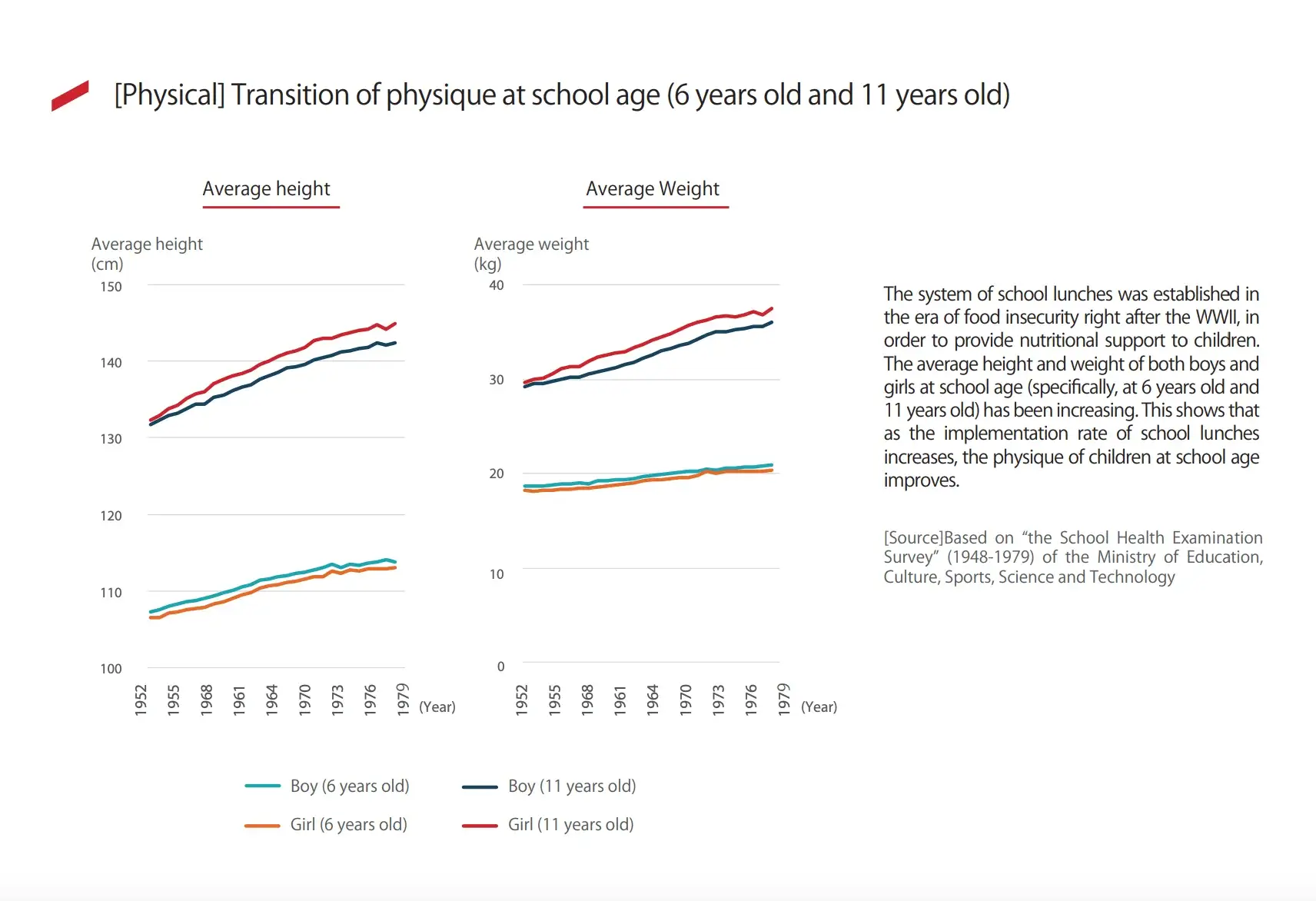
Nutrition: The biggest influence can be seen in the diet, with a protein-, calcium-, and vitamin-rich diet having a positive effect on growth from when an individual is a child through to adolescence.

Healthcare: Access to complete medical care ensures growth-related problems are identified early, and puts more emphasis on preventative healthcare and checking child development.

Genetics: The upper limits of height are determined by genetic factors, with the interaction of genes and environment deciding what the final result is, explaining height differences between different peoples of the world.
Socioeconomic Status: Generally, the more wealth an individual has and the economic level of a region can affect access to a well-rounded diet and healthcare, thus impacting physical growth. Factors like average salary in Japan also play a role, influencing living standards and access to essential resources for healthy development.
Physical Activity: Regular exercise during childhood and adolescence can influence growth and development, potentially leading to a higher average height. Today, baseball, tennis, basketball, and other well loved sports in Japan play a role in shaping the height of Japanese people.
Environmental Factors: Living in an urban or rural location can affect overall health and growth, with different diets, pollution, and social habits playing a role.
Additionally, the legal drinking age in Japan being set at 20 can influence social behaviors among teenagers, potentially affecting their health and development during critical growth years.

Public Health Policies: National programs to increase child nutrition and health can eventually lead to a shift in the physical development of its population.
Collectively, perturbations in the balance of these factors can result in the changes in physical development expressed earlier from Japan's past to present.
FAQ
1. What is the average height in Japan?
Published estimates vary by age, sex, year, and dataset, so the source definition matters as much as the number.
2. Are younger Japanese adults still getting taller?
Large gains occurred across earlier generations, while recent cohorts show much smaller changes and possible plateauing.
3. What factors influence height?
Genetics, childhood nutrition, disease burden, sleep, hormones, and living conditions all contribute.
4. Can country averages predict an individual’s height?
No. National averages describe populations and do not determine any individual person’s height.
5. Which official source tracks Japanese children’s growth?
Japan’s Ministry of Education publishes the School Health Statistics Survey for students.
Conclusion
Japan’s average-height figures are best read as population statistics with clear age, sex, year, and sampling limits.
Earlier generations experienced major gains, while recent changes are smaller and should not be overstated.
Use consistent datasets for comparisons and avoid turning national averages into assumptions about individuals.