
A beach day can reveal a different side of Japan, whether you’re taking a break from city sightseeing or spending a few days by the sea. Along its varied coastline, you’ll find places for active adventures and others that invite you to slow down.
This guide introduces 21 beaches in Japan, with details to help you choose where to go, when to visit, and what to expect. You can plan a short coastal escape or make the beach a larger part of your holiday.
As you travel, an iRoamly eSIM makes it easier to find directions, check ferry and bus schedules, and stay updated on the weather.
How to Choose a Beach in Japan
A beach visit can be a short break from city sightseeing or the focus of an island holiday. Start with your travel route, then consider what you want to do and how much time you can spend by the sea.
Choose a Region for Your Trip
The most convenient beach depends on where you are already traveling. Some coastal areas fit easily into a city itinerary, while others are better planned as a separate part of your holiday.
Travel Base or Route | Coastal Areas to Consider | Suitable Trip |
|---|---|---|
Tokyo | Kamakura, Zushi, Chiba, and the Izu Peninsula | A beach day from the city or an overnight coastal stay |
Osaka, Kyoto, or Kobe | Suma and Shirahama in Wakayama | A short urban beach visit or a beach-and-onsen getaway |
Western Japan | Kagawa, Kochi, Hagi, and Karatsu | Coastal stops combined with historic towns and regional sightseeing |
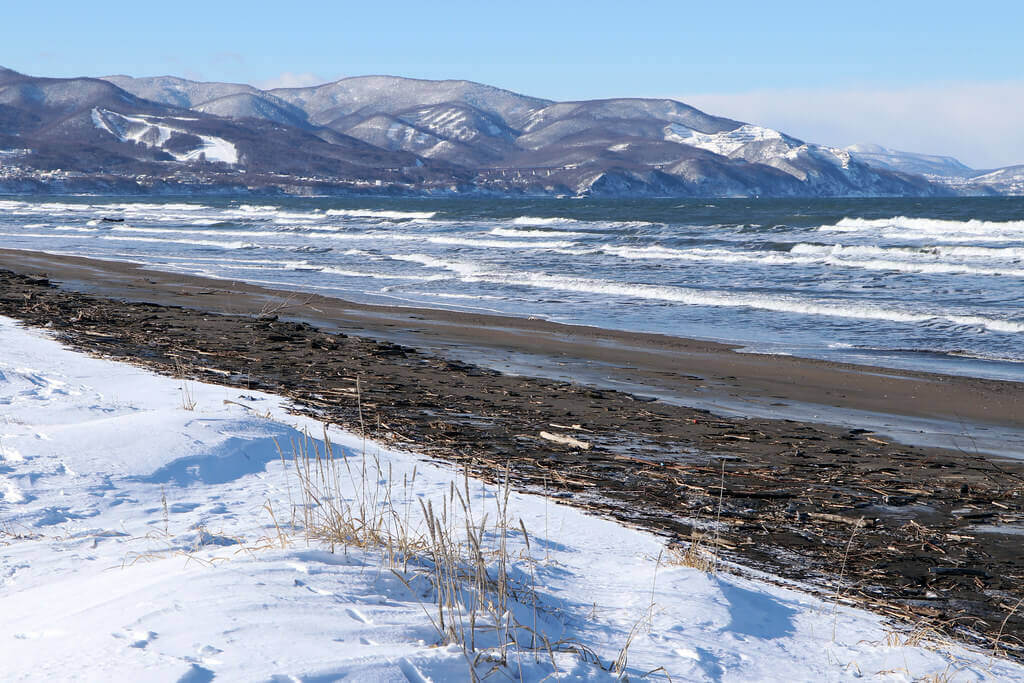
Hokkaido or Tohoku | Otaru, Shakotan, and Jodogahama | A summer beach visit or a scenic coastal journey |
Okinawa and the Southern Islands | Okinawa Main Island, Miyako, Zamami, Yoron, and Hateruma | A holiday centered on beaches and island exploration |
Match the Beach to Your Activities
Choose a beach for the experience you want, rather than its appearance alone. A dramatic shoreline may be ideal for photography but unsuitable for swimming.
Activity | Beaches to Consider | Why Choose Them |
|---|---|---|
A casual city beach visit | Yuigahama, Zushi, Suma, Naminoue | Convenient access and nearby sightseeing |
Family swimming | Emerald, Zushi, Jodogahama | Managed seasonal swimming areas and relatively sheltered settings |
Snorkeling | Furuzamami, Nishihama | Clear water and marine scenery |
Surfing | Kujukuri, Shirahama in Izu | Established surf destinations with open-water waves |
Photography and coastal walks | Miho no Matsubara, Chichibugahama, Katsurahama | Mount Fuji views, tidal reflections, or dramatic coastal landscapes |
Swimming and snorkeling depend on local conditions and permitted areas. Katsurahama is a sightseeing coast where swimming is prohibited, while Chichibugahama’s famous reflections require suitable tides and calm wind.
Decide How Long to Stay
Allow enough time to enjoy the beach after getting there. Nearby city beaches work well for short visits, while coastal towns and ferry-dependent islands benefit from a slower itinerary.
Time Available | Suitable Destinations | Planning Approach |
|---|---|---|
A few hours | Suma from Kobe; Naminoue from Naha | Combine a short beach visit with nearby city sights |
A full day | Yuigahama or Zushi from Tokyo | Leave time for the return journey and a meal or local sightseeing |
An overnight stay | Izu or Shirahama in Wakayama | Combine the beach with hot springs, coastal walks, and an evening in town |
Several days | Miyako, Zamami, Yoron, or Hateruma | Explore at a relaxed pace and allow flexibility for flights, ferries, and weather |
For tide-dependent places such as Yurigahama, plan around the excursion time rather than a standard beach-day schedule. Staying nearby gives you more room to adjust if conditions change.
With your preferred region and activities in mind, explore the 21 beaches below to find the ones that fit your itinerary.
Hokkaido and Tohoku Beaches
Northern Japan offers dramatic scenery and a shorter swimming window than the south. These beaches work best for travelers who value clear water, rocky landscapes, and quieter coastal towns as much as sunbathing.
1. Shimamui Coast, Shakotan
The coast is known for vivid blue water, rugged cliffs, and a small cove reached on foot, making it a stronger scenic and snorkeling-oriented stop than a conventional resort beach.
Best for: clear-water views and a Shakotan road trip.
Access: public transport from Sapporo typically involves Otaru and a regional bus, so a car is simpler.
Plan for: steep paths, limited services, and checking whether sea conditions are suitable before approaching the water.
2. Otaru Dream Beach, Hokkaido
Otaru Dream Beach is one of the more convenient summer beaches for travelers based around Sapporo or Otaru. Its broad sand and seasonal facilities make it a practical beach-day choice in a region better known for cool-weather travel.
Best for: a straightforward northern swimming day.
Access: use the Hakodate Line toward Zenibako and confirm the seasonal last-mile connection.
Plan for: swimming only in the officially opened, monitored area; outside that period, enjoy the coast rather than treating it as a supervised beach.
3. Jodogahama Beach, Iwate
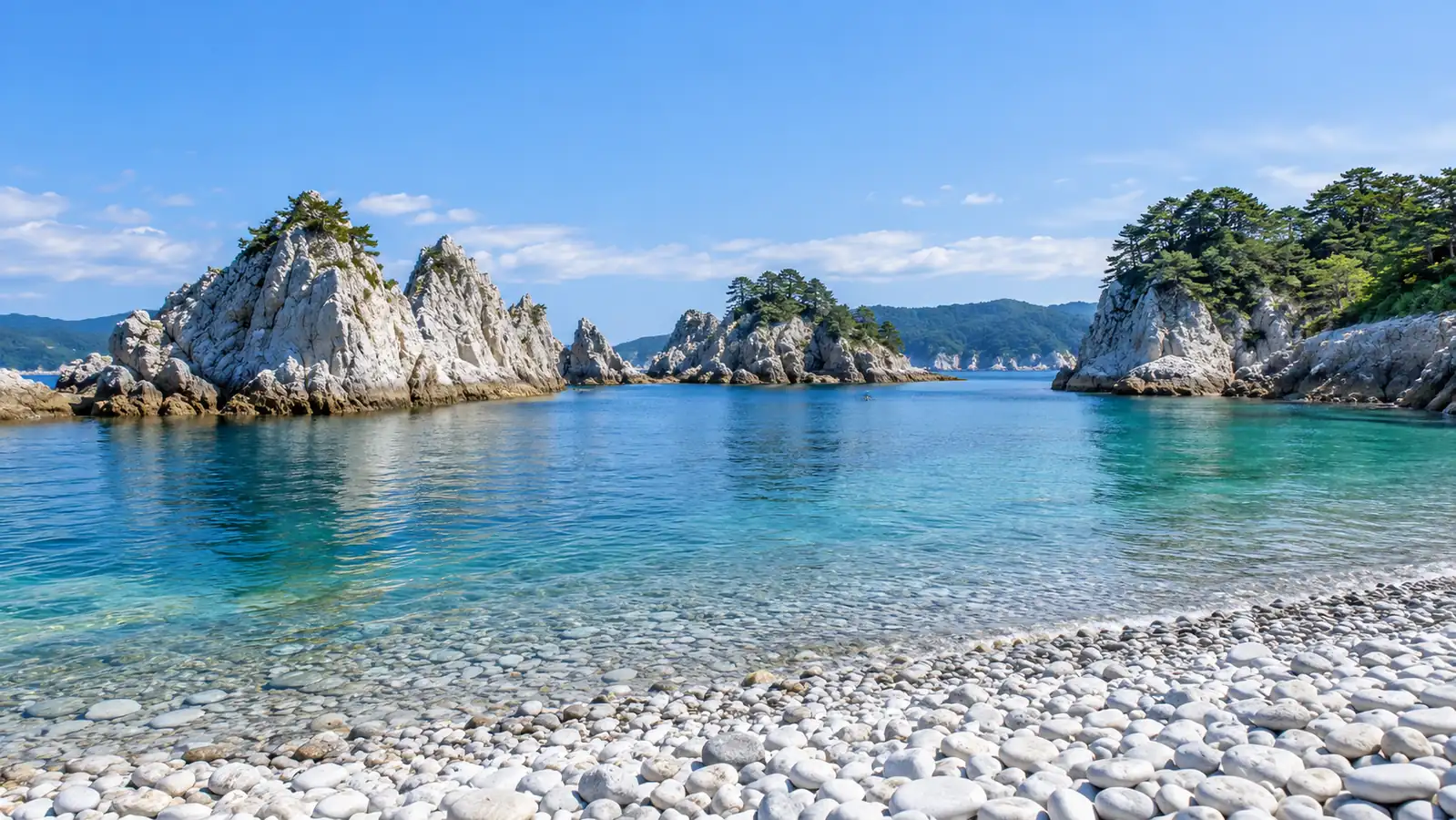
White pebbles, pine-topped rock formations, and a sheltered blue inlet give Jodogahama a landscape unlike the long sandy beaches farther south.
Its calm setting supports summer swimming, while walking trails and short sightseeing cruises keep the visit worthwhile even when the water is too cool.
Best for: scenery, gentle-water swimming, and a full coastal day.
Access: buses run from Miyako Station to the beach area.
Plan for: water shoes or sturdy sandals because this is a pebble shore, plus time for the visitor center or coastal trails.
Beaches Near Tokyo and Chubu
The Kanto and Chubu coasts are the easiest way to add a beach to a first-time Japan route. The trade-off is that popular summer beaches can be busy, while the most photogenic coastlines are not always the best places to swim.
4. Yuigahama Beach, Kamakura
Yuigahama combines a lively summer shore with Kamakura’s temples, cafés, and historic streets.
The broad beach suits casual swimming and beginner surf sessions when the official beach is open, and seasonal beach houses add food, rentals, and changing facilities.
Best for: a culture-and-coast day from Tokyo.
Access: walk from Kamakura Station or use the Enoden line for a shorter approach.
Plan for: crowds on hot weekends and enough time to change before continuing to Kamakura’s inland sights.
5. Zushi Beach, Kanagawa
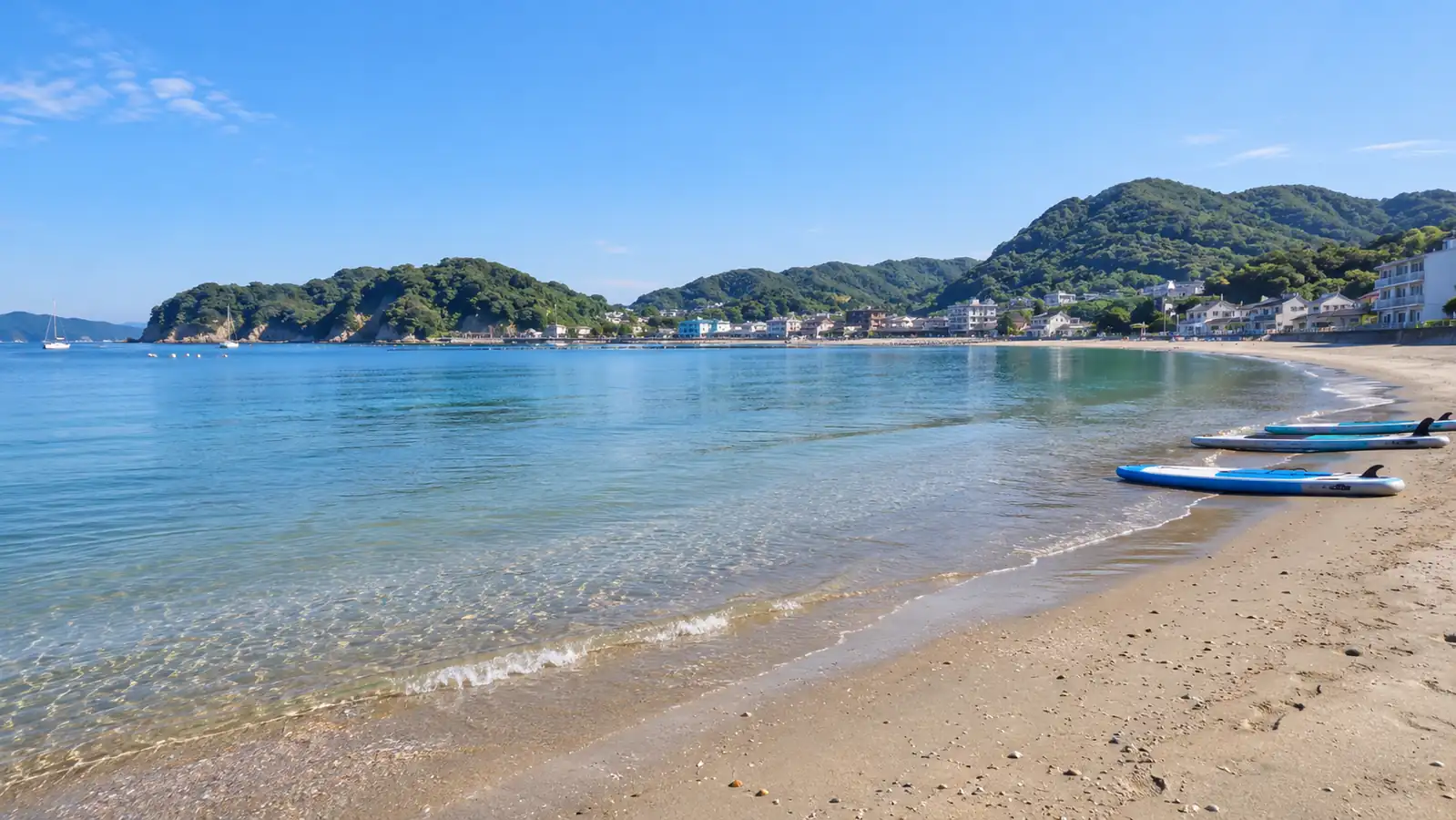
Zushi is a compact city beach with shallow water, water-sports schools, and a relaxed local atmosphere.
It is less about tropical scenery and more about convenience, making it useful for families or travelers who want a beach without committing a whole trip day.
Best for: families, paddle sports, and an easy Tokyo escape.
Access: take the train to Zushi and continue by foot or local bus.
Plan for: summer beach-house rules, crowded weekends, and limited views when the weather is hazy.
6. Kujukuri Beach, Chiba
Kujukuri is a long, open Pacific coast rather than one single managed swimming area. Its exposed waves attract surfers, while individual beach sections serve swimmers and families during their local operating seasons.
Best for: surfing and travelers exploring Chiba by car.
Access: choose a specific beach section before leaving Tokyo because rail journeys usually end with a bus or taxi.
Plan for: stronger surf than a sheltered bay and swimming only where the local zone is open and supervised.
7. Shirahama Beach, Izu
Shirahama in Shizuoka has bright sand, blue water, and reliable surf culture near Shimoda. It is different from Shirarahama in Wakayama, so checking the prefecture matters when booking trains and accommodation.
Best for: a beach weekend from Tokyo and confident surfers.
Access: take the train to Izukyu-Shimoda, then a local bus.
Plan for: busy midsummer weekends; nearby coves may feel calmer, but their swimming rules and transport need separate checks.
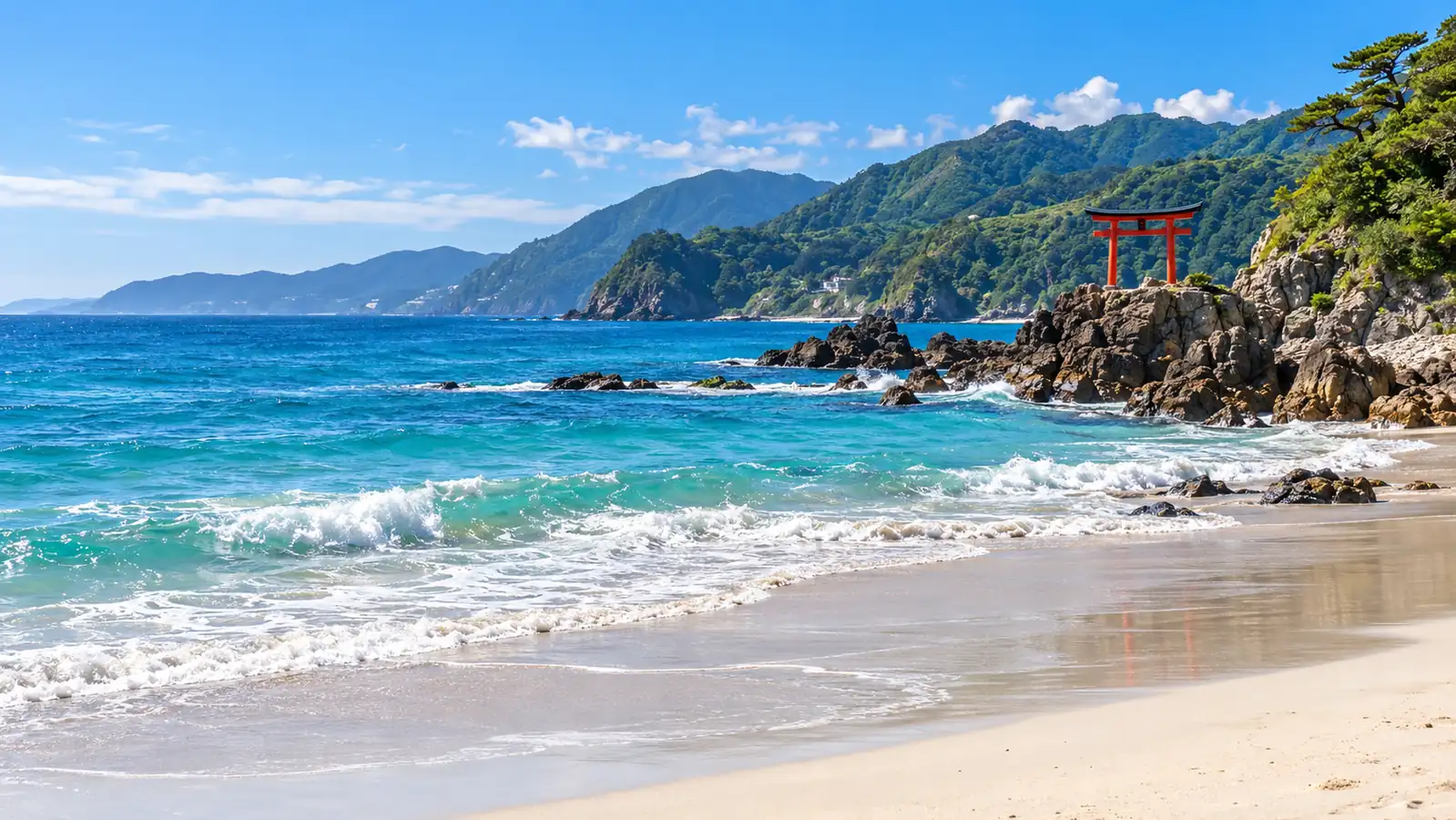
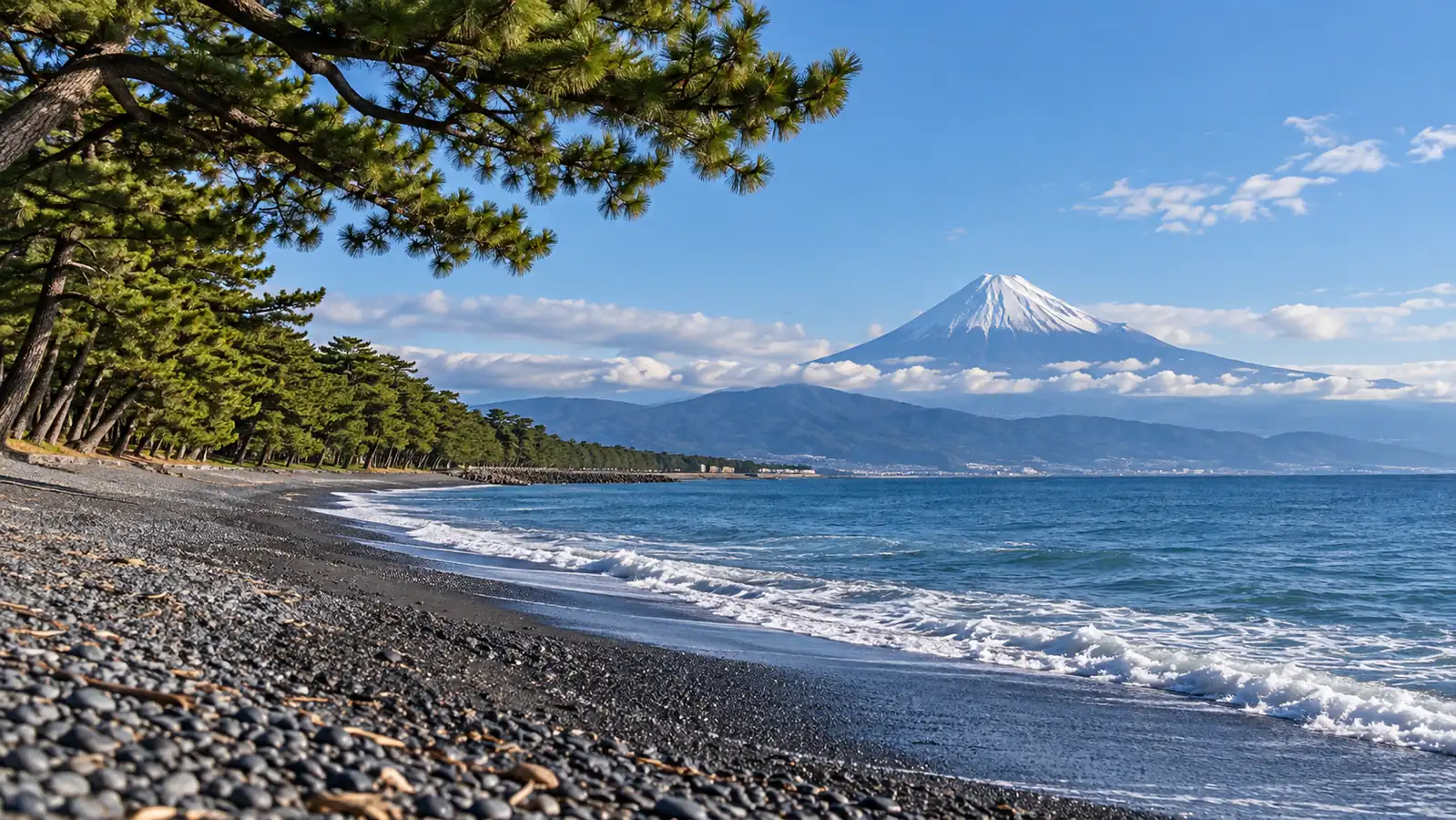
8. Miho no Matsubara, Shizuoka
Miho no Matsubara is a pine-lined, pebbly shore celebrated for views of Mount Fuji across Suruga Bay. It belongs in a national beach guide because of its landscape and cultural importance, but it should not be confused with a soft-sand resort.
Best for: photography, walking, and cycling.
Access: continue by bus from Shimizu Station.
Plan for: clear weather if Fuji is the priority, footwear for stones, and using designated nearby areas if swimming is part of the day.
Kansai and Setouchi Beaches
Western Honshu offers three very different beach experiences: an urban shore beside Kobe, a full resort town in Wakayama, and a tidal landscape in Kagawa that is best planned around sunset rather than swimming alone.
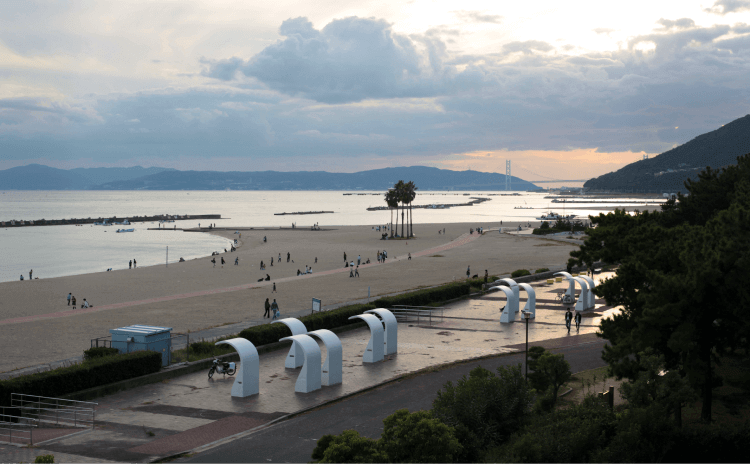
9. Suma Beach, Kobe
Suma is a rare urban beach where rail access, restaurants, and the sea sit close together. It is a practical stop for travelers who want a few hours by the water without leaving the Kobe area.
Best for: a quick Kansai beach break.
Access: trains stop close to the waterfront.
Plan for: seasonal facilities and event-day crowds, and keep valuables secure when the beach is busy.
10. Shirarahama Beach, Wakayama
Shirarahama is the white-sand centerpiece of Shirahama, a resort town where a beach day can be paired with coastal viewpoints and hot springs. The developed setting makes it easier to find meals and accommodation than at a remote cove.
Best for: an overnight beach-and-onsen trip from Osaka or Kyoto.
Access: take the limited express to Shirahama and connect by local bus.
Plan for: peak-season demand and enough time to enjoy the town instead of attempting a rushed out-and-back journey.
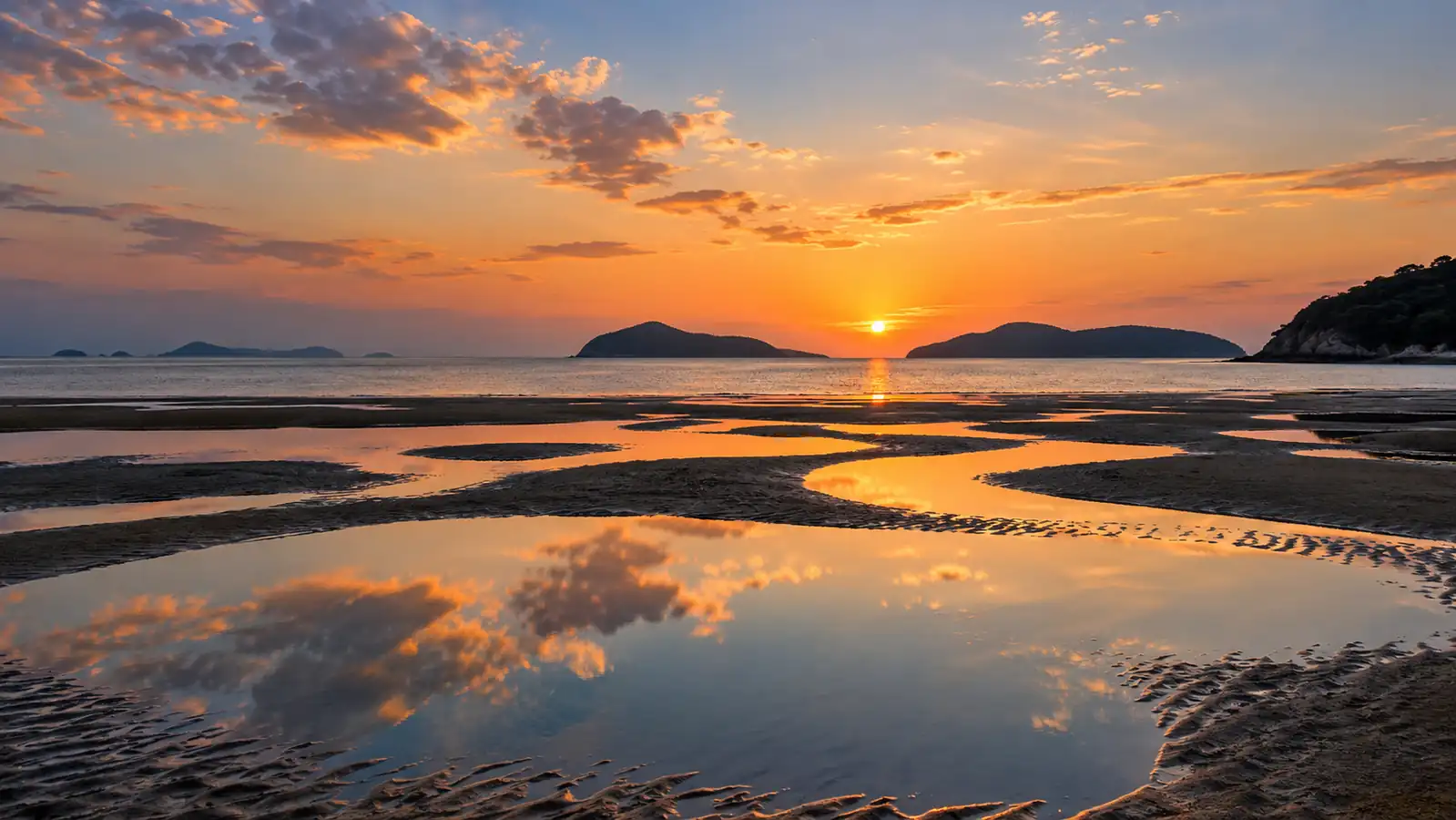
11. Chichibugahama Beach, Kagawa
At low tide, shallow pools spread across Chichibugahama and can reflect the evening sky when the wind is calm. The celebrated mirror effect depends on timing, so it is a planning-led photography stop rather than a sight that appears all day.
Best for: sunset photography and a Setouchi road trip.
Access: continue from Takuma Station by bus or taxi.
Plan for: checking the tide and sunset tables, arriving early, and bringing sandals plus a towel for the wet flats.
Shikoku, Chugoku, and Kyushu Beaches
These western regions reward travelers who look beyond the major-city circuit. The choices below deliberately include both swimming beaches and a famous no-swimming coast so that scenery is not mistaken for safe water access.
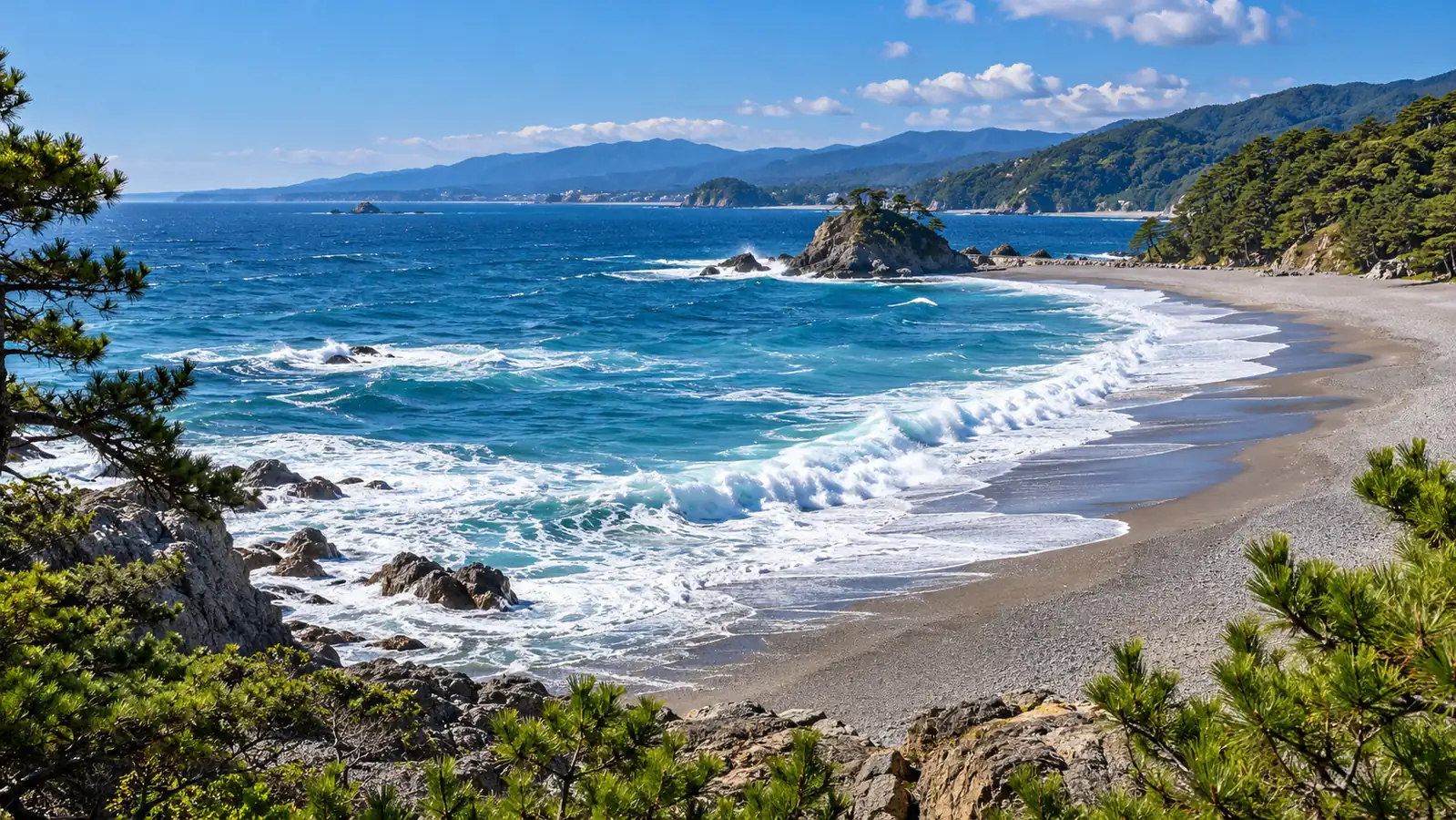
12. Katsurahama Beach, Kochi
Katsurahama curves beneath pine-covered hills near Kochi and is valued for its dramatic Pacific view and connection to local history. Strong currents make swimming prohibited, so this is a walking and sightseeing coast, not a place to enter the water.
Best for: coastal scenery and a Kochi culture day.
Access: local buses connect central Kochi with the beach area.
Plan for: staying behind barriers and combining the shore with nearby viewpoints or museums.
13. Kikugahama Beach, Hagi
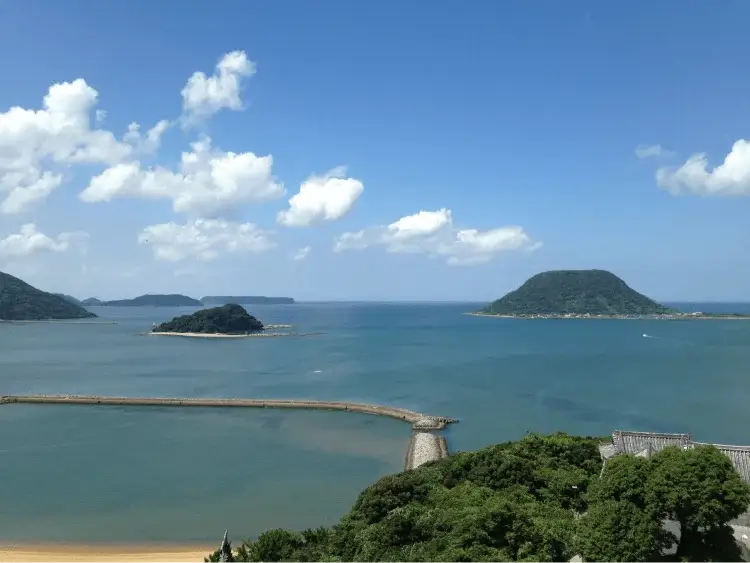
The sandy bay lies close to Hagi Castle Town, with views toward Mount Shizuki and small volcanic islands, so travelers can combine a seasonal swim with cycling or historic streets.
Best for: a quiet swim-and-history day.
Access: walk or cycle from central Hagi.
Plan for: the official summer period if lifeguards and beach facilities matter; outside it, sunset walking is the better use of the shore.
14. Nijinomatsubara and Karatsu Bay, Saga
Karatsu’s coastal appeal is best understood through the sandy shore by Nijinomatsubara, a long black-pine forest facing Karatsu Bay. The beach is easy to pair with Karatsu Castle, seafood, and a walk or cycle beneath the pines.
Best for: a coast-and-culture day from Fukuoka.
Access: the JR Chikuhi Line runs toward Karatsu, followed by local transport or a planned walk.
Plan for: seasonal swimming information. The Karatsu Kunchi festival takes place in the city in early November in Japan; it is a separate cultural reason to visit, not a beach event.
Okinawa’s Best Island Beaches
Okinawa and the southern islands offer Japan’s most convincing tropical beach holiday, but access ranges from a city walk to multiple flights and ferries. Coral, currents, weather-related cancellations, and tide timing matter as much as sand color.
15. Naminoue Beach, Naha
Naminoue is the simplest beach to add to a stay in Naha. Its compact swimming area sits close to the city and Naminoue Shrine, making it useful for a short dip rather than a remote-island escape.
Best for: travelers with limited time in Okinawa.
Access: walk, take a bus, or use a short taxi ride from central Naha.
Plan for: an urban setting, seasonal rules, and pairing the beach with the shrine or nearby waterfront.
16. Sunayama Beach, Miyako Island
Sunayama is known for pale sand, a short path over a dune, and a natural rock arch near the water. The cove is especially photogenic near sunset, but appearance should not be mistaken for guaranteed safe swimming conditions.
Best for: scenery and a short Miyako Island stop.
Access: a rental car or taxi is the practical choice from central Miyako.
Plan for: limited shade and services, posted warnings, and carrying a stable Japanese eSIM so you can confirm weather and timing before setting out.
17. Furuzamami Beach, Zamami Island
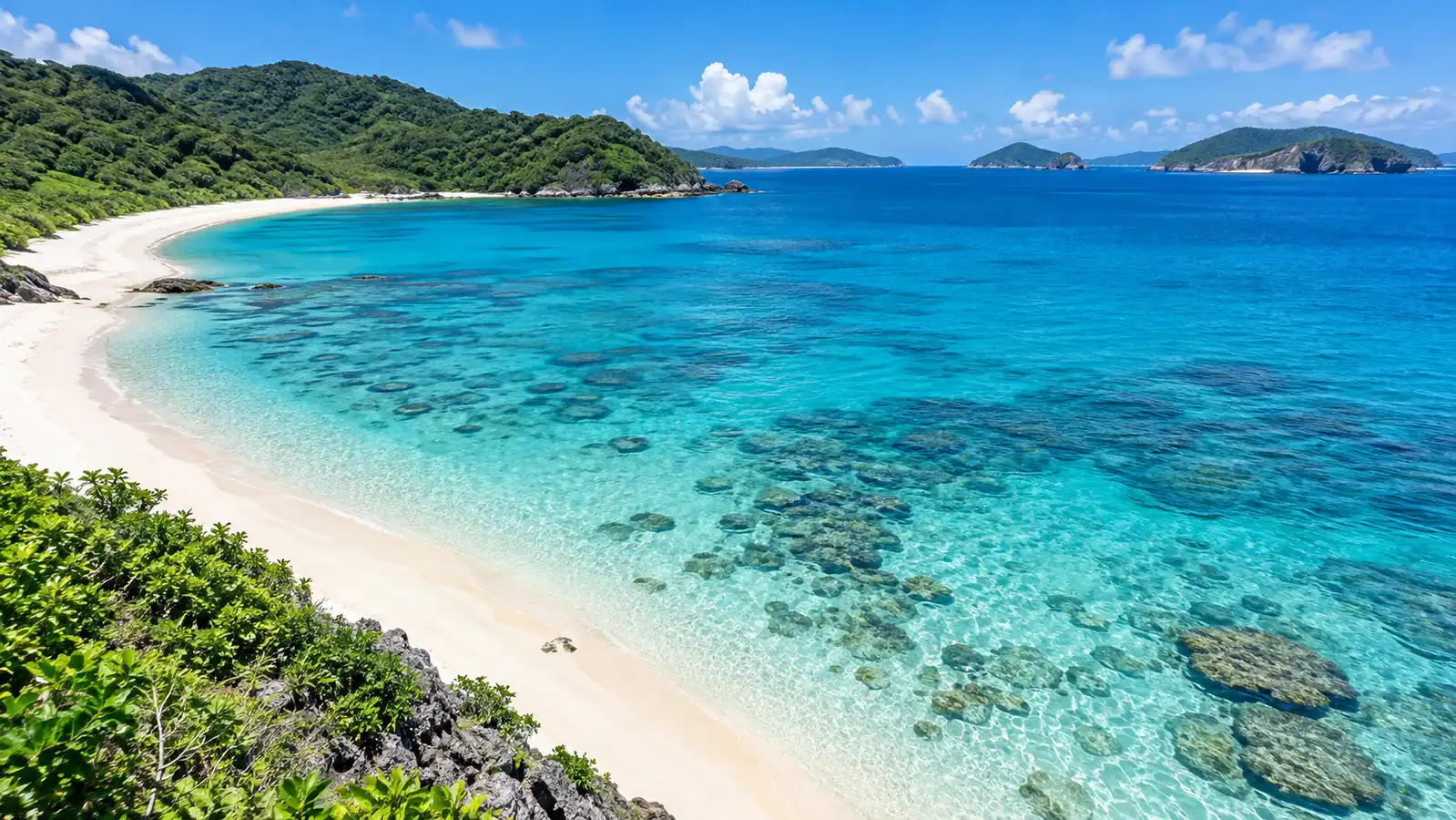
Furuzamami’s clear water drops away relatively quickly, revealing coral and tropical fish close to shore. It offers a strong snorkeling experience within the Kerama Islands, yet the depth and reef environment demand more care than a shallow family lagoon.
Best for: confident swimmers and guided snorkeling.
Access: take the ferry from Naha to Zamami, then a local bus or taxi.
Plan for: ferry reservations in busy periods, buoy boundaries, coral protection, and local guidance when conditions are uncertain.
18. Yonaha Maehama Beach, Miyako Island
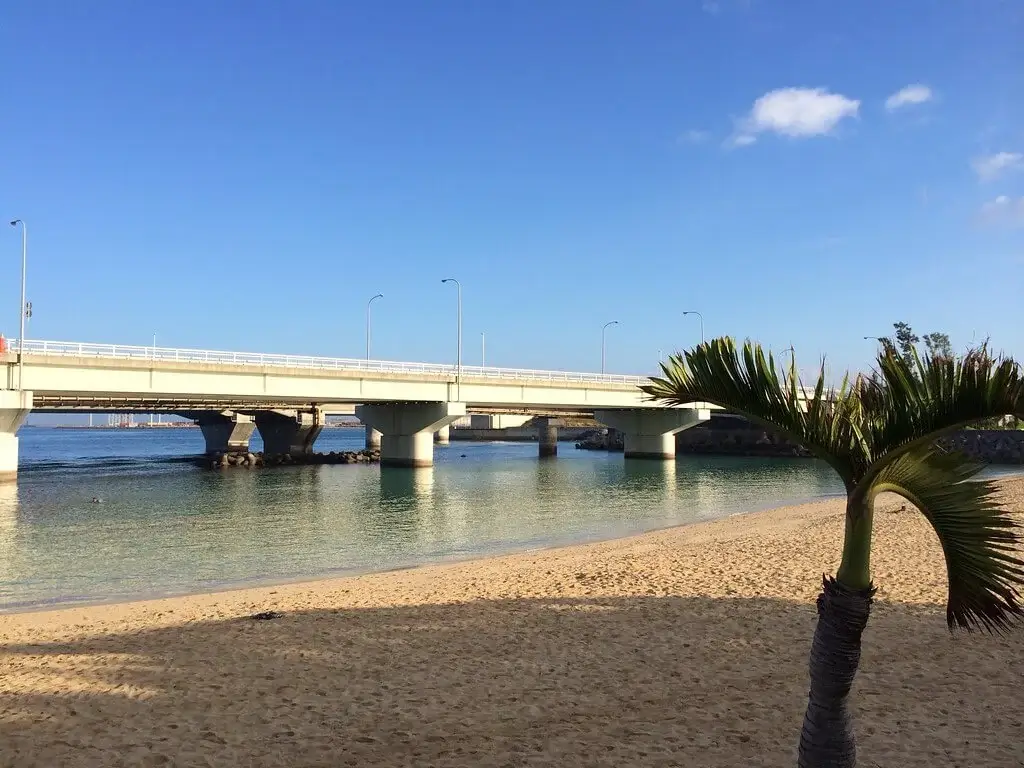
Yonaha Maehama pairs a long ribbon of fine sand with broad turquoise water and views toward Kurima Bridge.
Its scale makes it feel spacious, while the relatively developed setting supports swimming, water sports, and an unhurried sunset.
Best for: a classic Miyako beach day and couples.
Access: drive or take a taxi from Miyako Airport.
Plan for: sun exposure, activity operators’ conditions, and arriving outside the busiest part of the day when possible.
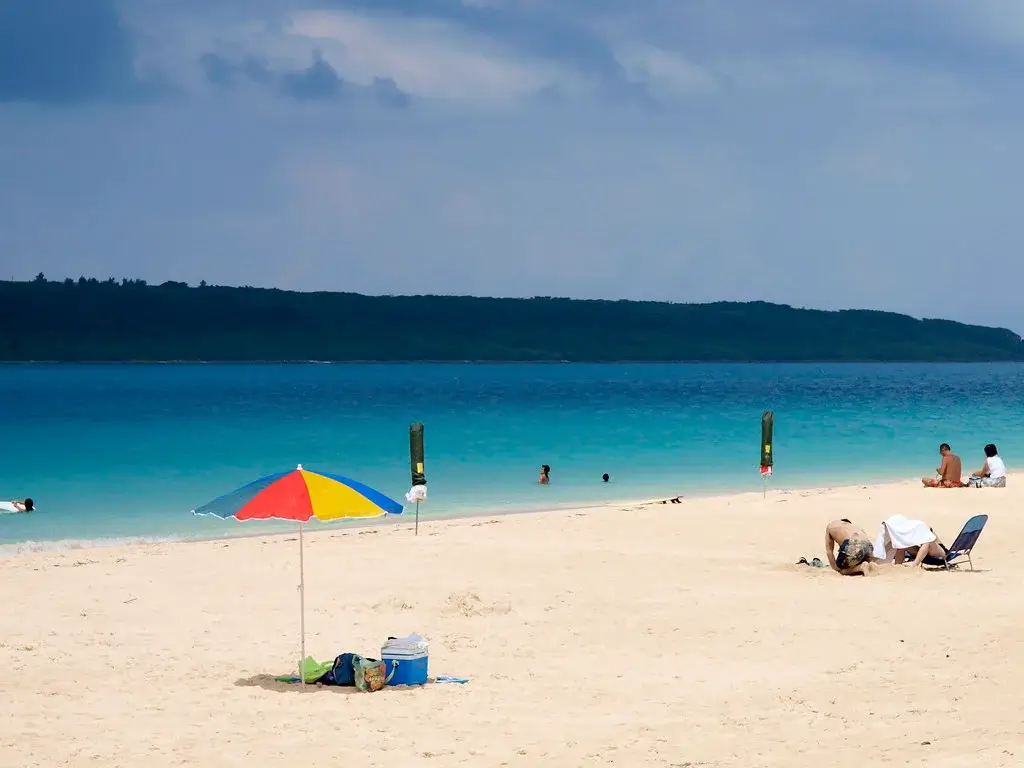
19. Emerald Beach, Okinawa Main Island
Emerald Beach sits inside Ocean Expo Park and is divided into managed areas for different ways of enjoying the shore. The planned setting, facilities, and nearby attractions make it easier for families than a remote, unsupervised cove.
Best for: families and a northern Okinawa sightseeing day.
Access: use a direct highway bus, local bus, or rental car from Naha.
Plan for: the park’s current swimming hours and enough time for nearby attractions without rushing the return journey.
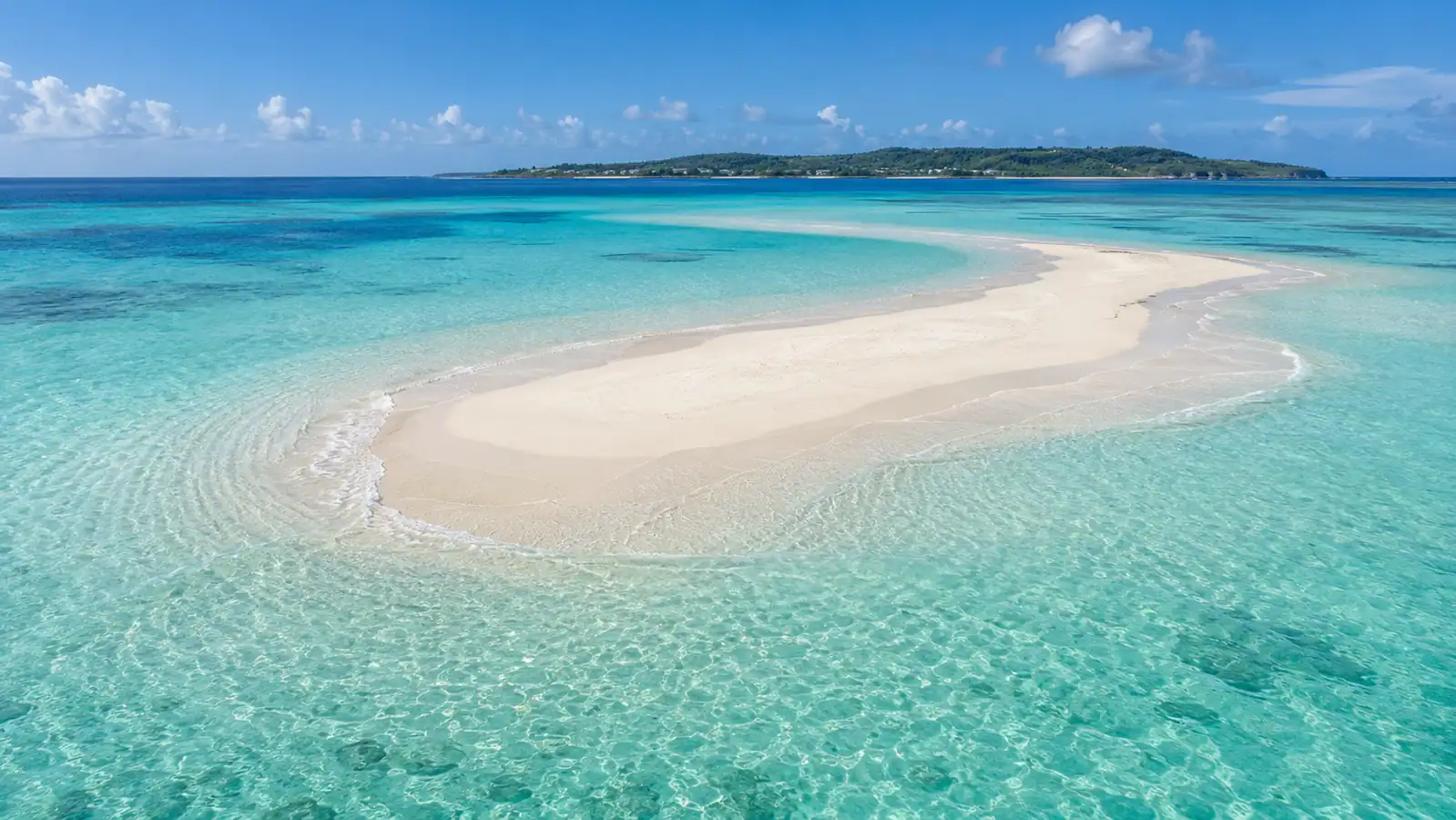
20. Yurigahama, Yoron Island
Yurigahama is a pale offshore sandbar that appears only under suitable low-tide conditions. Visitors reach it by boat from Yoron Island, so the experience depends on the tide, wind, and operator rather than a fixed daily opening time.
Best for: a distinctive sandbar excursion and shallow-water photography.
Access: fly or sail to Yoron, then join a local boat trip.
Plan for: checking an appearance forecast, accepting weather cancellations, and carrying only what can safely get wet.
21. Nishihama Beach, Hateruma Island
Nishihama sits on Hateruma, one of Japan’s southernmost inhabited islands, and rewards the extra journey with bright white sand and layered blue water. Its remoteness is part of the appeal, but it also means fewer backup options when transport changes.
Best for: island travelers willing to plan around ferries.
Access: travel from Ishigaki to Hateruma by high-speed ferry, then continue by bicycle or local transport.
Plan for: rough-sea cancellations, limited services, and returning to the port with a generous time buffer.
When to Visit Beaches in Japan
Japan’s beach season varies by region, so the right dates depend on which coast you plan to visit. It also helps to distinguish a swimming holiday from a trip focused on coastal scenery.
Swimming Seasons Across Mainland Japan
Many managed beaches on Honshu, Shikoku, Kyushu, and Hokkaido provide lifeguards and seasonal facilities around July and August.
Opening dates vary by beach and year, with northern locations generally offering a shorter swimming window. Check the local schedule before booking a trip centered on swimming.
June can bring rain to much of Japan, while late summer may bring storms and strong swell. Outside the official swimming season, coastal walks and photography remain worthwhile.
Visiting Japan in winter can reveal quieter shores, although beach houses and changing facilities may be closed.
Beach Seasons in Okinawa and Nearby Islands
Okinawa’s subtropical climate supports a longer beach season, with many managed beaches operating from spring into autumn.
Summer offers warmer conditions for spending time in the water, while spring and autumn can suit travelers seeking a quieter stay. Water temperatures and opening periods still differ by location.
For trips to smaller islands, allow flexibility around boat journeys.
Typhoons and rough seas can disrupt ferries even when your accommodation is open, so check forecasts close to departure and keep an alternative activity available if a crossing is canceled.
Beach Safety and Etiquette in Japan
A little preparation makes a beach day more comfortable and helps you enjoy the coast responsibly. Check the signs when you arrive, understand the swimming boundaries, and consider what facilities are available before settling in.
Swimming Safely at Japanese Beaches
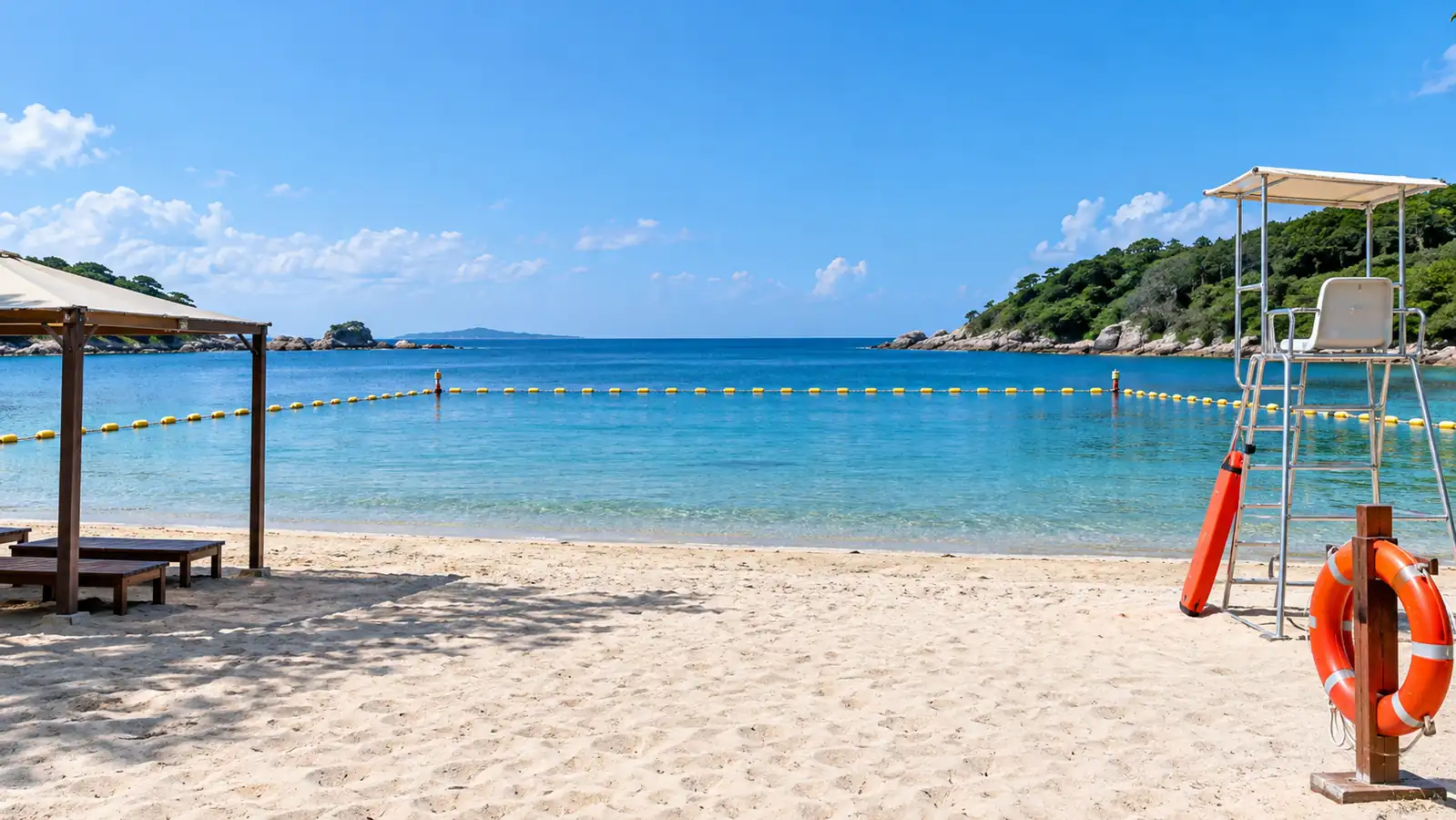
Choose designated swimming areas with lifeguards or patrol staff, stay inside buoy lines, and follow posted warnings. Flag meanings can differ between locations, so ask staff if a signal is unclear. Never enter a beach where swimming is prohibited.
Calm-looking water can still hide strong currents or sudden changes in depth.
Avoid swimming during strong winds or high waves, and do not enter the water after drinking alcohol. Keep children under close, continuous supervision; inflatable rings and toys do not replace supervision or suitable flotation equipment.
Before entering, identify the lifeguard station and your nearest exit from the water. If conditions worsen or you become tired, end the swim rather than trying to make the most of your remaining time.
Snorkeling and Protecting Marine Life
Snorkel with a companion and choose an area suited to your swimming ability. The Japan Coast Guard recommends a mask, snorkel, fins, and a life jacket or suitable flotation device. A guided outing is a useful option if you are unfamiliar with the location or equipment.
Stay within permitted snorkeling areas and leave enough energy for the return to shore. Clear water can make distances and depth harder to judge, so avoid following fish farther out than planned.
Keep your fins and feet away from coral, and never stand on the reef. Observe turtles and other marine animals from a distance without touching, feeding, chasing, or blocking their movement.
Packing for a Comfortable Beach Day
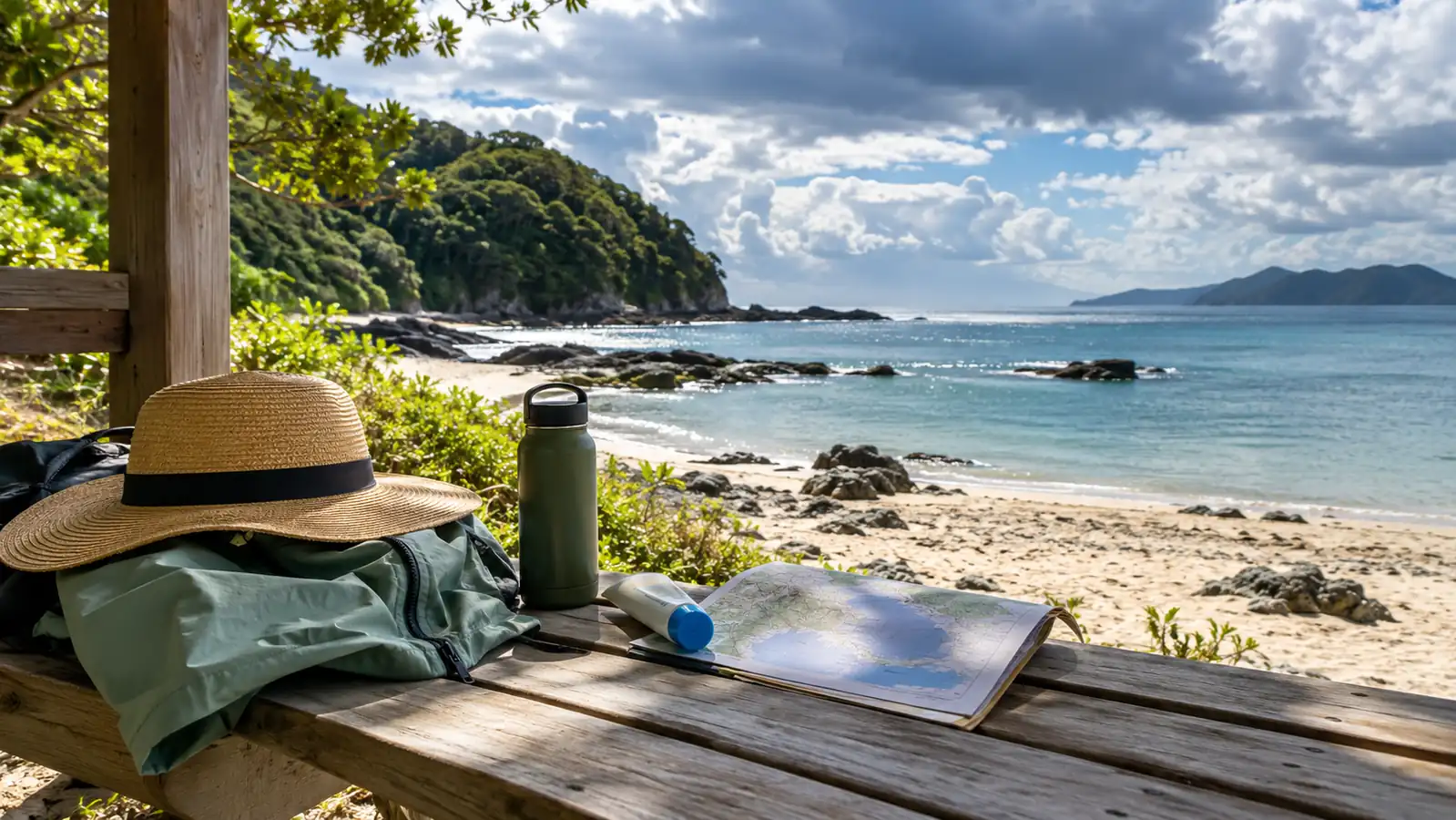
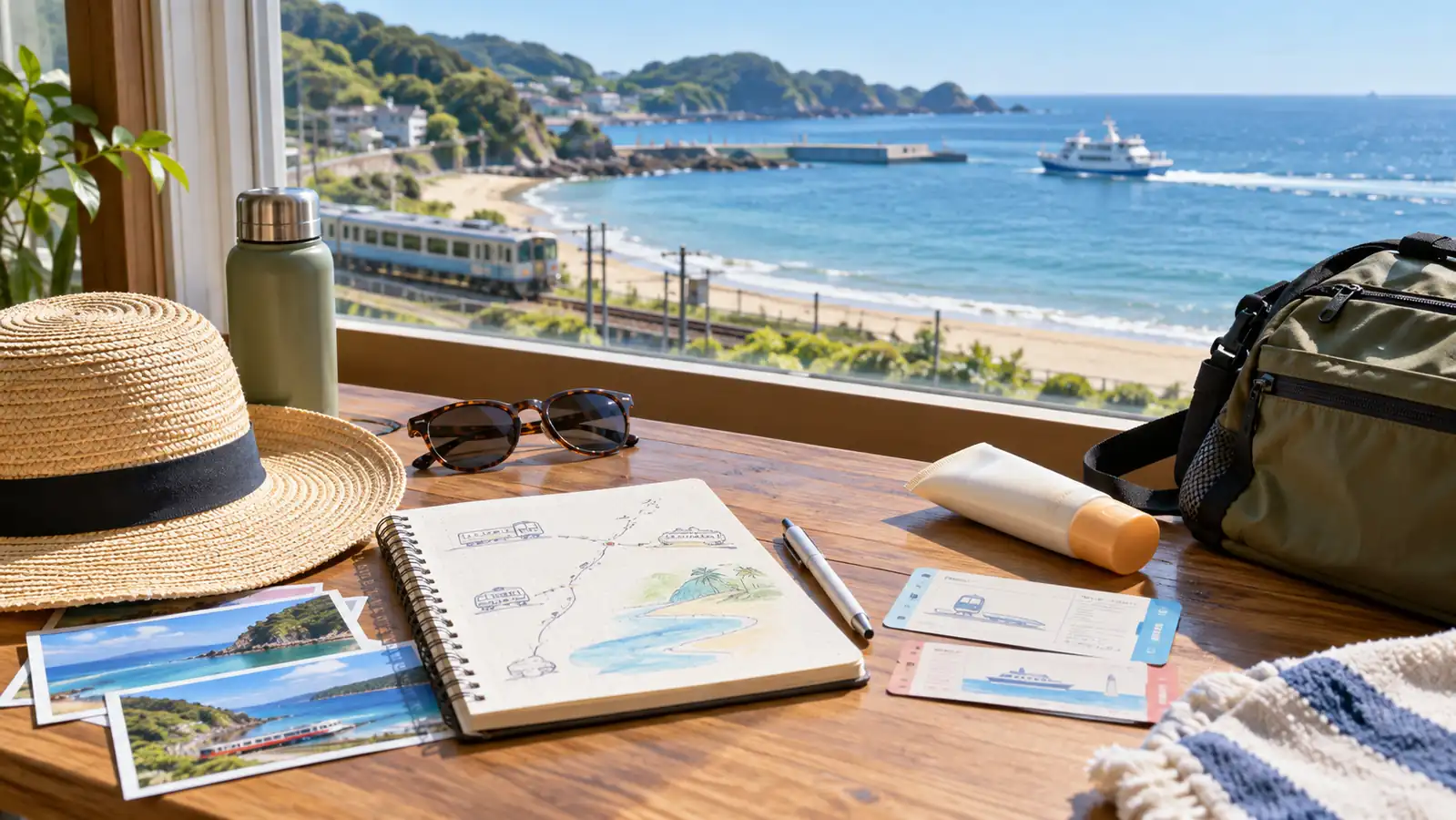
Facilities vary considerably. Popular seasonal beaches may offer showers, lockers, changing rooms, rentals, and food stalls, while remote coves may have few or none. Check what is available and bring what you will need.
Useful items include:
Drinking water, sunscreen, a hat, and sun-protective clothing.
A towel, swimwear, and dry clothes for the journey back.
Water shoes or suitable sandals for pebbles, rocks, and hot sand.
A waterproof phone pouch and a small bag for rubbish.
Cash for local services that may not accept cards.
Take regular breaks in the shade and keep drinking water accessible. Save maps, return transport details, and your accommodation address offline before heading to a remote beach.
Respecting Local Beach Rules
Check the rules for smoking, alcohol, barbecues, camping, tents, and music before setting up. Permissions vary by beach, and activities allowed at one location may be restricted at another.
Keep paths, entrances, and access to safety equipment clear. Use designated smoking areas where provided, keep music at a considerate volume, and avoid photographing other visitors without their permission.
Shake sand off before using shared changing facilities and follow instructions for showers and lockers. Take your rubbish away when bins are unavailable or full, including food packaging and cigarette ends.
Leave shells, coral, and other natural features where they belong.
FAQ
1. Can I visit Japan’s beaches outside swimming season?
Yes. Many beaches remain open for walking, photography, and coastal sightseeing, but lifeguards, beach houses, and changing facilities may be unavailable. Treat posted closures and no-swimming notices as final.
2. Are public beaches in Japan free?
Many public beaches have no admission fee, but parking, showers, lockers, rentals, boat trips, and resort-managed facilities may cost extra. Check the specific beach rather than assuming every service is included.
3. Do I need a car for a Japan beach trip?
Not always. Yuigahama, Zushi, Suma, Naminoue, and several resort beaches work by train or bus. A car becomes more useful for remote peninsulas, multiple stops in one day, and islands with limited local transport.
4. Should I reserve island ferries in advance?
Reserve when the operator allows it, especially for weekends and holidays. Arrive early, check same-day weather notices, and avoid building an inflexible onward connection around the last ferry.
5. Are water shoes useful on Japanese beaches?
They are useful at pebble shores such as Jodogahama, around rocky entries, and on hot sand. For snorkeling, choose footwear and fins that suit the site without stepping on coral.
Conclusion
Japan’s beaches offer everything from an easy escape near the city to a slower island holiday. Choose a coast that fits your route and the activities you enjoy, whether that means swimming, snorkeling, or simply watching the sunset.
Check local opening dates and conditions before visiting, and leave room to adjust for weather or transport changes. A little preparation helps you spend more time enjoying the shore and less time reorganizing your day.
Wherever you go, respect local rules and protect the coastal environment. Take time to explore beyond the sand, too—the surrounding towns, food, and landscapes can make the visit just as memorable as the beach itself.