
Temple University, Japan Campus (TUJ) offers an unusual combination: an American university curriculum taught in Japan, with daily life shaped by Tokyo or Kyoto rather than a self-contained U.S. residential campus.
That combination can suit students who want an English-medium degree, international classmates, and direct exposure to Japan. It also demands careful decisions about the exact program location, tuition, housing rules, visa sponsorship, and the kind of campus experience you expect.
This guide separates stable facts from details that change by intake. Use it to build a shortlist of questions, then confirm deadlines, fees, programs, and immigration steps directly with TUJ before applying or paying.

Temple University Japan at a Glance
TUJ is part of Temple University and awards U.S. degrees in Japan. English is the common language for undergraduate classes and administrative activities, while Japanese study and daily immersion remain available outside and within the curriculum.
| Question | Practical answer | What to verify |
|---|---|---|
| Where can students study? | Tokyo and Kyoto, depending on program and plan | Your major’s full path at the chosen location |
| What degree system applies? | Temple University’s American degree system | Degree, major, transfer, and graduation requirements |
| Is Japanese required? | Not for general undergraduate admission to the English-medium campus | Language expectations for internships, work, and specific goals |
| Who needs visa planning? | Students who require TUJ-sponsored status in Japan | COE, advance payment, arrival, enrollment, and housing rules |
New students depend on maps, school portals, translation, and family contact from arrival day. A Japan eSIM can cover temporary mobile-data needs, but it is not a substitute for the long-term phone, identity, banking, or address arrangements students may need after settling in.
Programs and Degree Paths
TUJ lists undergraduate majors across fields such as art, Asian studies, communication, computing, economics, international affairs, international business, Japanese language, political science, psychology, and tourism-related study. Graduate and non-degree offerings include education, law, academic English, continuing education, and other specialized programs.

Offerings and launch dates can change, and not every degree path is identical at Tokyo and Kyoto. Compare the current major, degree type, location, prerequisites, and course sequence on the official TUJ programs page.
Tip: Ask admissions to map your entire intended degree—not just the first semester—including courses offered only at another location, internship timing, transfer-credit limits, and the semesters when required classes run.
Tokyo and Kyoto Campus Differences
The Tokyo campus is in Taishido, Setagaya, on the grounds of Showa Women’s University and near the Sangenjaya area. This corrects older or inaccurate descriptions that place the main campus in Minato Ward.
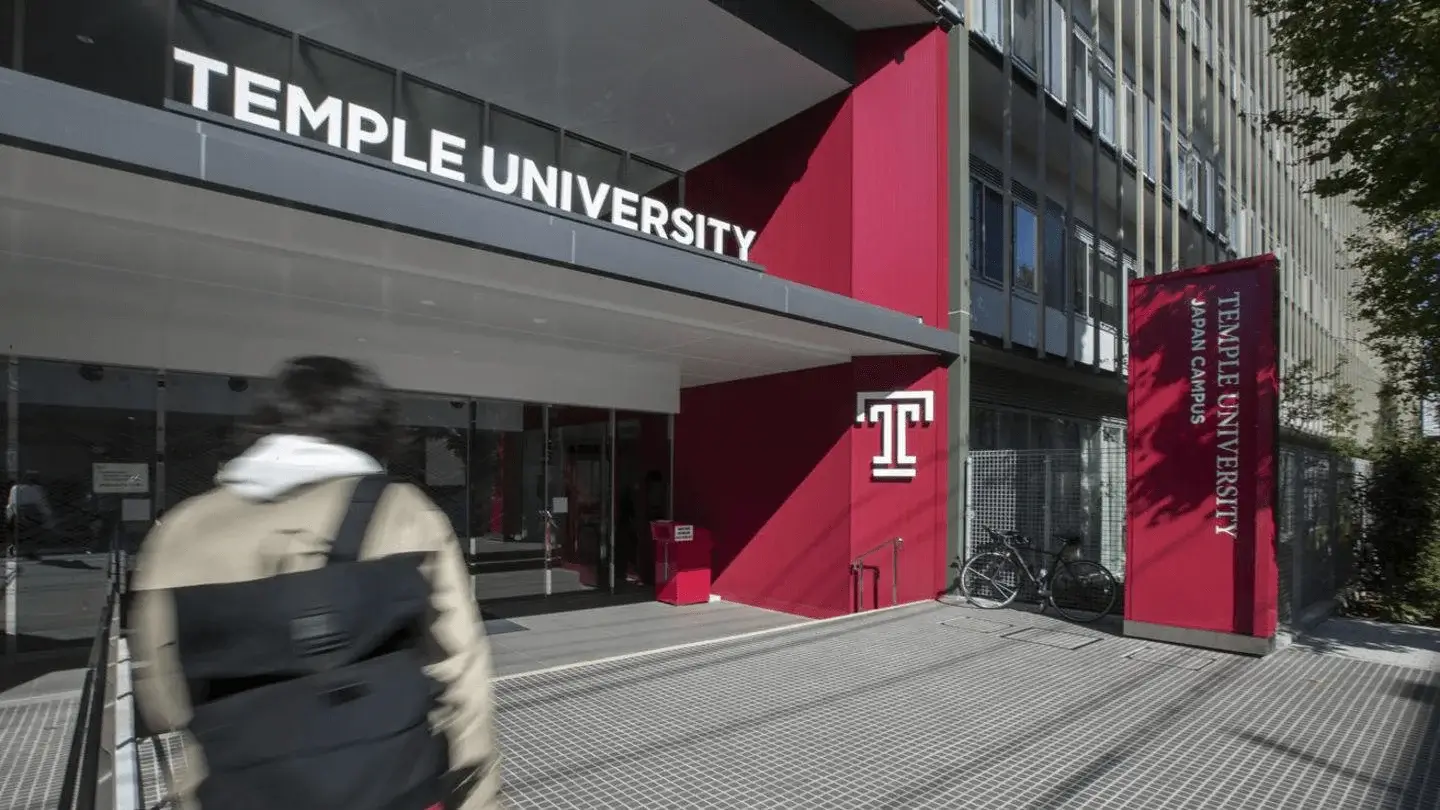
TUJ also operates in Kyoto—not Osaka. Kyoto can support a complete International Business degree and selected other paths, while some students may begin general education there and later move to Tokyo or another Temple location. Confirm the exact current options through the official TUJ Kyoto campus page.
| Decision factor | Tokyo | Kyoto |
|---|---|---|
| Urban setting | Large metropolitan network and broad internship access | Smaller-city rhythm with deep cultural context |
| Program choice | Broader established range | Location-specific and expanding; verify full degree path |
| Daily travel | Commute depends heavily on rail line and neighborhood | Housing and campus route need separate Kyoto planning |
| Best question to ask | Can every required course be completed here on schedule? | When would a location change be required, if at all? |
Undergraduate Admission Requirements
Applicants generally need an accredited high-school diploma or recognized equivalent and a record showing readiness for university study. TUJ is test-optional for native English speakers, while non-native English speakers usually need an accepted proficiency score unless a waiver applies.
| Application item | What to prepare | Common mistake |
|---|---|---|
| Academic record | Official records from all required institutions | Submitting an unofficial copy when an official record is required |
| English evidence | Accepted test score or confirmed waiver basis | Using an unsupported test version or expired result |
| Standardized tests | SAT or ACT only when helpful or required for a specific purpose | Assuming optional means useful for every applicant |
| Application timing | Program, intake, visa, and housing deadlines | Following an academic deadline but missing an earlier visa step |
Applicants below direct-entry English thresholds may be considered for the Bridge Program, which combines academic-language development with credit-bearing study. Because score rules and waivers change, rely on TUJ’s current undergraduate eligibility requirements, not third-party summaries.
Tuition, Fees, and Financial Aid
Undergraduate tuition is charged according to the number of credits, and full-time study falls within a defined credit band. A complete budget can also include matriculation and orientation charges, books, housing and food, transport, health coverage, personal spending, and visa-related advance payments.
| Budget layer | What belongs in it | Where to confirm |
|---|---|---|
| Direct university costs | Tuition, enrollment, orientation, and program-specific fees | Official tuition and billing pages |
| Visa-linked upfront costs | Advance payment, housing, and application-related items | Your TUJ visa instructions and invoice |
| Living costs | Housing, food, transport, phone, insurance, and personal needs | Official estimated cost of attendance plus your own plan |
| Funding | Scholarships, loans, aid, benefits, family funds, and currency risk | TUJ financial aid office and funding provider |
Do not copy an old ranking or a single tuition figure into a final decision. Review the intake-specific amounts, refund rules, and what is excluded on the official TUJ tuition and fees page, then keep a currency and emergency buffer.
Housing, Visa Planning, and Tokyo Living Costs
Housing is not simply a matter of choosing a cheap apartment. New students receiving TUJ-sponsored visas may face TUJ housing requirements that vary by campus, start term, visa situation, and approved waiver or homestay route.

Build the housing plan around commute time, total move-in cost, utilities, furnishings, guarantor or contract conditions, and the date you must leave arranged housing. The broader guide to the cost of living in Japan can help identify budget categories, but TUJ’s current estimate and your actual housing offer should control the final numbers.
Tip: Put every visa, COE, advance-payment, housing-plan, arrival, orientation, and course-registration deadline in one calendar. A missed administrative date can matter more than a small difference in monthly rent.
Academic and Campus Life
TUJ’s urban campus experience differs from a large residential university with stadiums, extensive dormitory life, and a self-contained campus district. Student services, clubs, events, counseling, advising, and city-based activities create community, but students need to participate actively.

Classes and general administration use English, yet Japanese ability can improve internships, part-time work options, daily errands, and relationships beyond campus. A practical Japanese language guide is a starting point, while sustained courses and real conversation matter more over a degree.
Before committing, ask how advising works for your major, how students obtain internships, what clubs meet regularly, which career services support international students, and what happens if a required course conflicts with work or commuting.
Daily Life, Connectivity, and Cultural Participation
Tokyo and Kyoto reward students who build routines beyond tourist highlights: local supermarkets, neighborhood clinics, ward-office procedures, commuter routes, libraries, and low-cost places to study. Campus orientation helps, but independent preparation still matters.
| First-month task | Why it matters | Prepare before arrival |
|---|---|---|
| Connectivity | Maps, school messages, authentication, and family contact | Temporary data plan and unlocked compatible phone |
| Commuting | Travel time affects class, work, and sleep | Test realistic door-to-door routes |
| Health and safety | Insurance and local care differ from home | Medication records and emergency contacts |
| Community | Urban campuses require active social effort | List clubs, events, language exchanges, and interests |
The iRoamly travel eSIM homepage is useful when comparing short-term arrival connectivity across destinations. For a multi-year degree, switch the comparison to student-appropriate local service, contract length, phone-number needs, and cancellation terms.
Respectful Cultural Learning Beyond Campus
Living in Japan creates access to festivals, museums, temples, theater, crafts, local volunteering, and neighborhood events. Participation is most valuable when it is approached with curiosity, permission, and attention to the rules of working religious and community spaces.
| Opportunity | Better approach | Avoid |
|---|---|---|
| Shrines and temples | Read etiquette and follow on-site signs | Blocking worship or restricted areas for photos |
| Festivals | Observe first and join only where invited | Assuming every ritual is a visitor activity |
| Traditional arts | Use reputable teachers and credit the tradition | Treating practice as a costume shortcut |
| Neighborhood life | Learn waste, noise, bicycle, and shared-space rules | Applying tourist behavior to a residential routine |
The guide to Japanese traditional culture can suggest experiences, but long-term students gain more by returning, learning context, and building relationships than by collecting one-off activities.
Comparing TUJ With Another Overseas Study Location
Temple also has international study options beyond Japan, so compare academic fit before choosing a city. The right question is not whether Tokyo, Kyoto, Rome, or Philadelphia is “best,” but where your program, budget, language goals, support needs, and career plans align.
| Comparison question | Japan-campus evidence | Other-location evidence |
|---|---|---|
| Can I complete my intended degree? | Program chart and advisor confirmation | Program catalog and transfer plan |
| What will one full year cost? | Official TUJ attendance estimate | Official university budget plus local housing |
| What language will daily life require? | English campus, Japanese city environment | Campus language and local-language demands |
| What support fits my status? | TUJ visa, housing, advising, and student services | Equivalent services at the other location |
If Rome is part of the comparison, a general cost of living in Italy guide can reveal budget categories, but official university figures and your housing offer should remain the deciding evidence.
Application and Arrival Tips
Treat admission, immigration, housing, and course registration as one connected project. A deadline that looks administrative may control whether a visa document, room assignment, or class schedule can be completed on time.
| Stage | Action | Proof to keep |
|---|---|---|
| Before applying | Confirm program, location, intake, and eligibility | Saved official page and admissions reply |
| After admission | Review deposit, visa, housing, and refund terms | Offer, invoice, receipts, and deadline calendar |
| Before travel | Arrange arrival data, documents, medication, and route | Offline copies plus emergency contacts |
| First week | Complete orientation, registration, and local procedures | Enrollment and appointment confirmations |
Tip: Send specific questions with your applicant ID and intended intake, then save the written answer. Policies can differ by student status, campus, and semester.
Frequently Asked Questions
1. Is Temple University Japan a Japanese university?
No. It is a Japan campus of Temple University and follows an American university degree system while operating in Japan.
2. Are undergraduate classes taught in English?
English is the common language for undergraduate classes and general administration. Japanese proficiency can still matter greatly for daily life, internships, and employment.
3. Does TUJ have an Osaka campus?
No current official campus should be described that way. TUJ operates in Tokyo and Kyoto, and students must verify which programs are available at each location.
4. Are SAT or ACT scores required?
TUJ is test-optional for native English-speaking undergraduate applicants, though scores may still support an application or placement. Non-native English speakers should check current proficiency-test rules and waiver criteria.
5. Must international students live in TUJ housing?
Some newly accepted students using TUJ visa sponsorship face housing requirements. The exact rule depends on campus, intake, visa status, and any approved waiver or homestay option.
6. Is TUJ a good fit for every study-abroad student?
No. It fits students who value an English-medium American curriculum in Japan and can manage urban-campus independence, but degree path, cost, support, and career goals must be checked individually.
Conclusion
Temple University Japan can offer a genuine American degree path in Tokyo or Kyoto, with English-medium academics and daily immersion in Japan. Its strongest appeal is the combination, not a promise that language, housing, or cultural adjustment will be effortless.
The original page’s outdated Minato and Osaka campus claims, fixed ranking, and oversimplified admission and housing statements are not safe decision tools. Current official program, admissions, tuition, visa, and campus pages should anchor every application choice.
Before paying, obtain a written plan for your intended degree location, total first-year budget, housing obligation, visa timeline, and support needs. That preparation will tell you far more about fit than any headline ranking.