
A Japanese temple visit is not just a pause between train rides. It can slow a Japan trip down in the best way: cedar gates, stone paths, incense smoke, garden views, and a quiet sense that the city outside can wait for a while.
Temple days also involve small practical choices, from checking train transfers to finding a side street after sunset. For travelers who want mobile data without buying a local SIM after landing, the iRoamly Japan eSIM provides data service across Japan so they can use their own travel apps throughout the trip.
This guide helps you choose a Japanese temple route with Kyoto, Tokyo, and Nara highlights, basic etiquette, itinerary ideas, and the travel details that make a temple day feel calm rather than rushed.
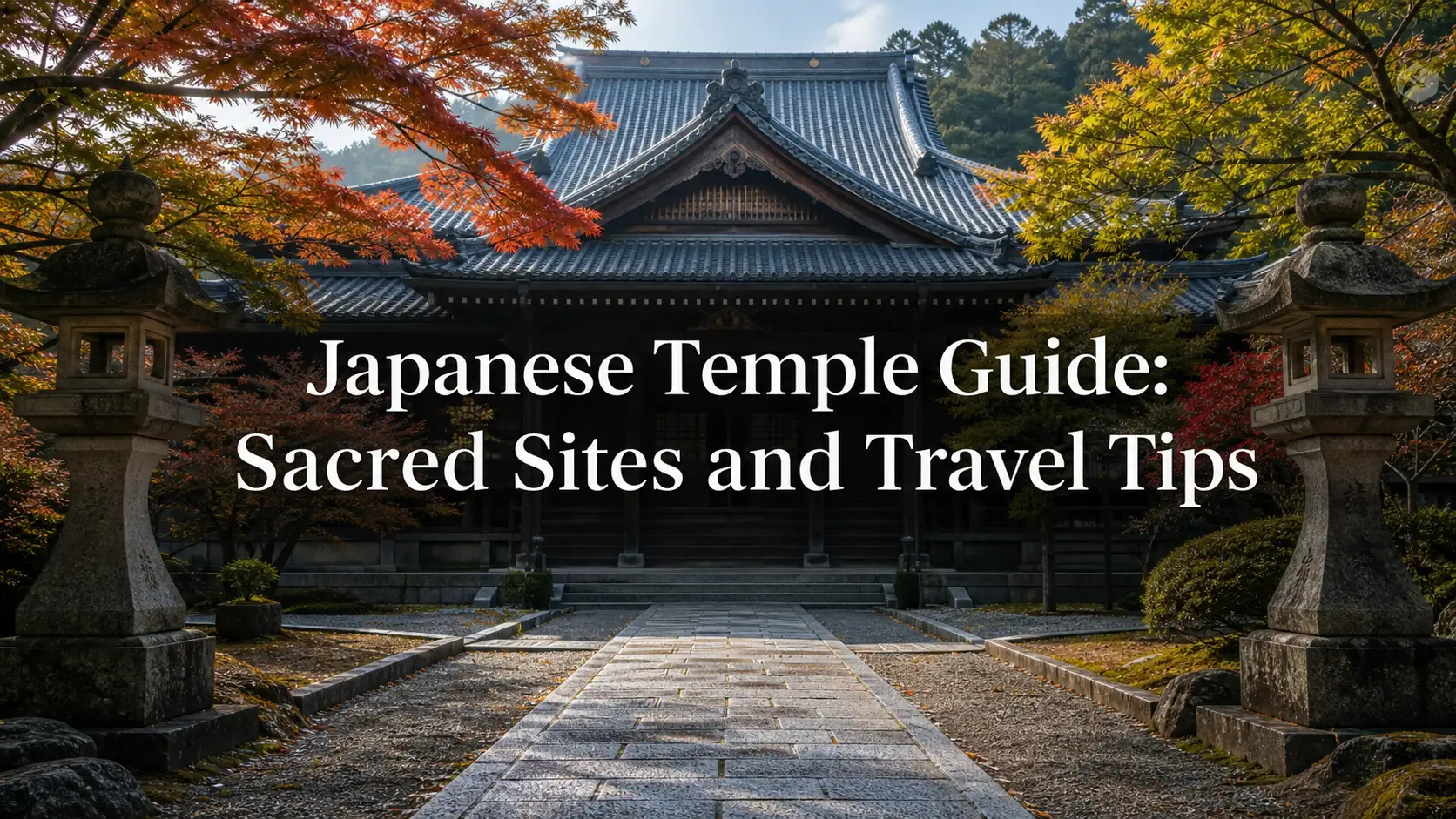
Why Visit a Japanese Temple?
Japanese temples are Buddhist places of worship, but many also work as art galleries, garden walks, neighborhood landmarks, and quiet viewpoints. Some are grand and crowded, while others feel almost hidden behind a lane or grove.
The best temple visits happen when you treat them as part of the rhythm of a trip, not just as photo stops. A gate, a main hall, a garden path, and a short rest on a bench can tell you more about the place than a rushed checklist.
Architecture: Wooden halls, tiled roofs, pagodas, gates, and verandas show different eras of Japanese craft.
Gardens: Ponds, moss, stones, and clipped pines create a slower mood than busy shopping streets.
Ritual details: Incense, offering boxes, bells, and temple stamps give travelers a close look at living customs.
Seasonal beauty: Cherry blossoms, fresh green maple leaves, autumn colors, and winter light can change the same temple completely.
Because the experience changes so much by city and season, it helps to choose temples with different moods instead of visiting five similar sites in a row.
Japanese Temple vs Shrine: Quick Difference
Many Japan itineraries mix Buddhist temples and Shinto shrines, and both can be peaceful, historic, and photogenic. The easiest way to avoid confusion is to look at the entrance and the ritual style before you copy what another visitor is doing.
Place | Tradition | Common Entrance Sign | Visitor Cue |
|---|---|---|---|
Temple | Buddhist | A sanmon gate, incense burner, main hall, pagoda, or Buddhist images. | Bow, offer quietly, join your hands, and generally do not clap. |
Shrine | Shinto | A torii gate, purification basin, shrine buildings, or sacred ropes. | Bow and clap according to the shrine custom, then step aside for others. |
The distinction matters most for etiquette. At a Buddhist temple, a small offering, a bow, and silent prayer are usually enough; at a Shinto shrine, clapping is more common. If a site combines temple and shrine spaces, follow posted signs and the behavior of local visitors at that specific spot.
Must-Visit Japanese Temples
If this is your first temple-focused Japan trip, start with a balanced mix: one hillside Kyoto temple, one city temple in Tokyo, one Nara heritage site, and one quieter architectural stop when time allows. If temples are only part of your sightseeing plan, treat them as one layer of the route rather than a race through sacred sites only.
Temple | Area | Why Go | Best Fit |
|---|---|---|---|
Kiyomizudera | Kyoto | Hillside views, wooden stage, and Higashiyama streets. | First Kyoto temple day. |
Sensoji | Tokyo | Historic temple grounds inside a lively old Tokyo district. | Short city itinerary. |
Todaiji | Nara | A huge wooden hall and one of Japan's most famous Buddhist images. | Day trip from Kyoto or Osaka. |
Kinkakuji | Kyoto | Golden Pavilion views across a pond. | Classic Kyoto photography. |
Horyuji | Nara | Ancient wooden architecture and a deep heritage setting. | Travelers who like older, quieter sites. |
Ryoanji | Kyoto | A compact Zen rock-garden experience with a slower viewing rhythm. | Garden design and quiet reflection. |
Byodoin | Uji | Phoenix Hall, Buddhist art, and an easy pairing with Uji. | Architecture without another full Kyoto day. |
Kongobuji | Koyasan | Mountain-temple atmosphere and the center of Shingon Buddhism. | A deeper or overnight temple experience. |
This table works best as a starting point, not a ranking. The right temple for you depends on where you are staying, how early you can start, and whether you prefer iconic views or slower cultural detail.
Kiyomizudera in Kyoto
Kyoto's Kiyomizudera temple in Japan is a strong first choice because it gives you temple architecture, hillside views, and the texture of Higashiyama in one walk. The approach streets can feel busy, but the shift from shops to temple grounds is part of the experience.
Go early if you want softer light and a calmer path up the hill. After the main hall, leave time for the smaller lanes nearby instead of rushing straight back to the station.
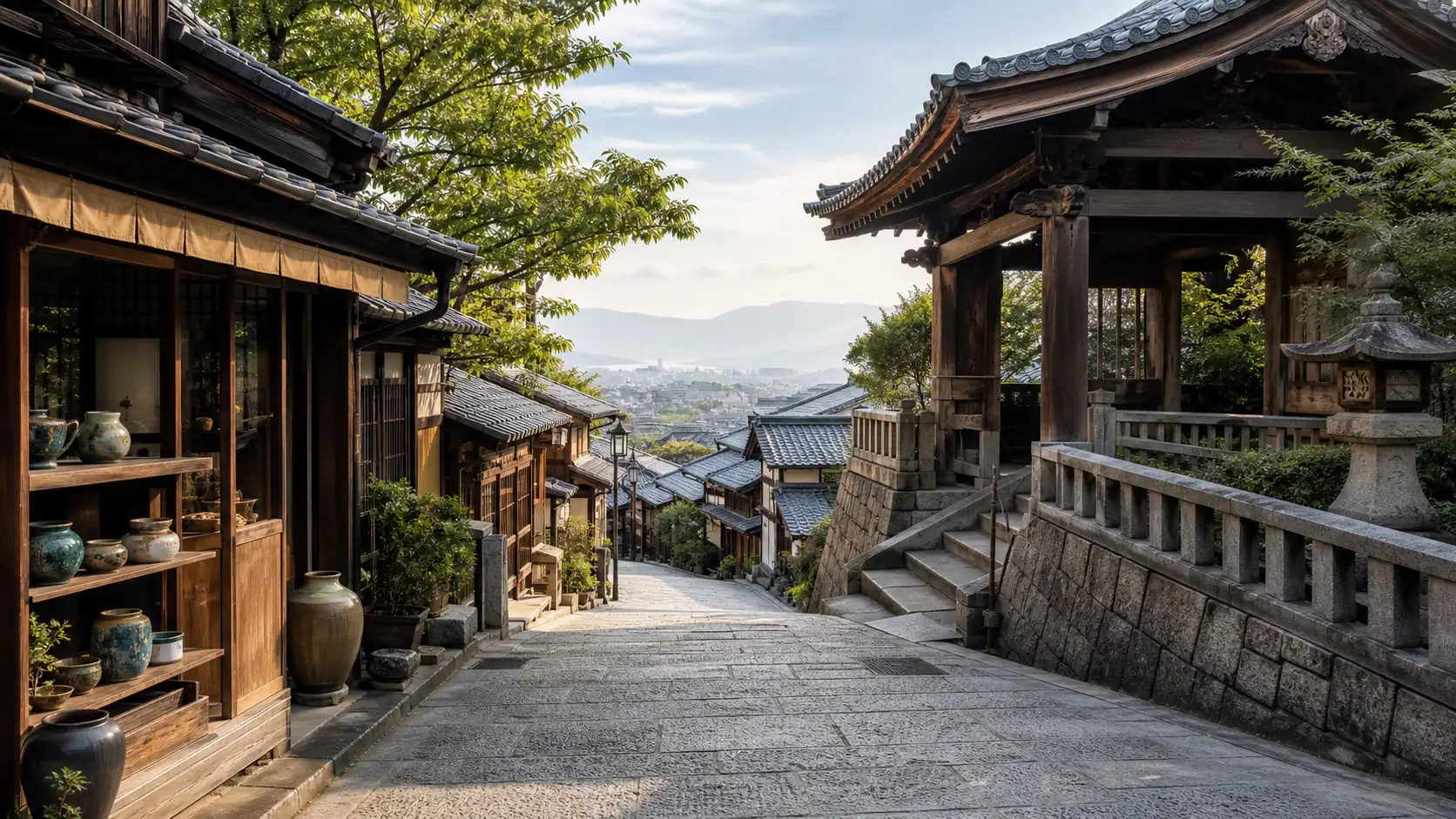
The reward at Kiyomizudera goes beyond the famous view. The whole area encourages a slower pace, especially if you step away from the busiest souvenir stretches.
Best timing: Early morning is best for calmer approach streets; late afternoon can be beautiful, but check closing times before building the whole day around sunset.
Route feel: Expect slopes, stairs, and narrow lanes, so this stop works better before you are tired from shopping or station transfers.
Recommended pace: Plan enough time for the temple grounds and Higashiyama lanes together, not just the main hall viewpoint.
Sensoji in Tokyo
Sensoji temple in Japan is the easiest major Japanese temple to fit into a Tokyo stay. It sits in Asakusa, close to subway access, casual food, old shopping streets, and riverside walks.
The temple itself is lively rather than silent, so do not expect the same mood as a mountain monastery. Visit early for cleaner photos, or go near dusk when the red gates and lanterns feel especially atmospheric.
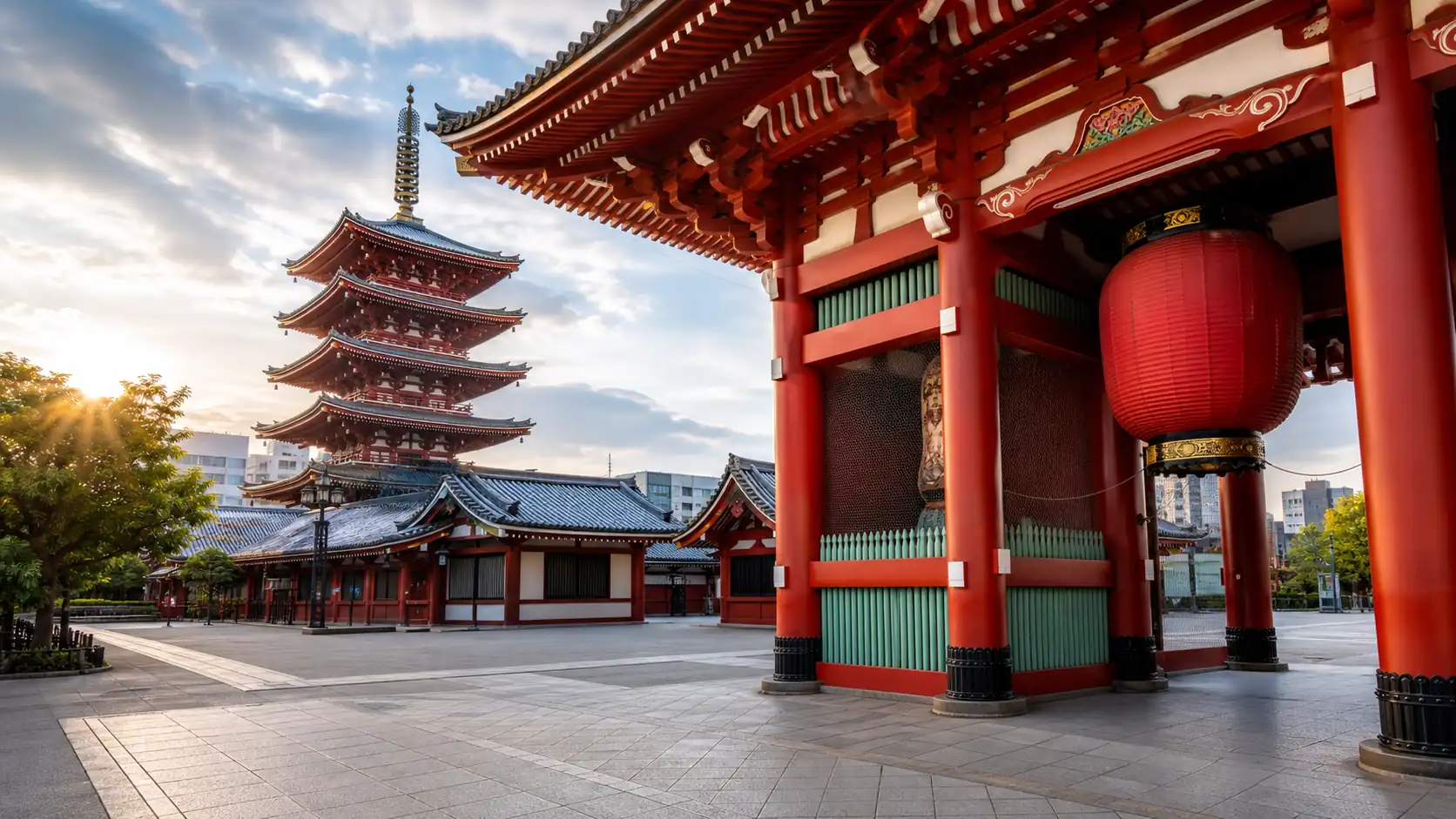
Sensoji is a good reminder that a temple can sit at the center of everyday city life. You can pair it with Ueno, the Sumida River, or a quiet coffee stop in Asakusa without turning the day into a long transfer exercise.
Best timing: Go early for the quietest photos around Kaminarimon and the main approach, or visit after dark for lanterns and a different city mood.
Route feel: This is the easiest major temple in the guide for a short Tokyo stay because Asakusa has strong subway access and food nearby.
Recommended pace: Give yourself time for the side streets; the temple is more rewarding when it is not treated as one quick photo stop.
Todaiji and Nara's Older Temple Mood
Todaiji temple in Japan gives Nara its strongest first impression: a vast temple hall, broad grounds, and a sense of scale that feels different from Kyoto's more intimate lanes. It is an easy day trip from Kyoto or Osaka, especially if you begin before late morning.
Nara is better when you do not overpack it. Give Todaiji enough time, then choose one or two nearby stops instead of trying to cover every temple and shrine around the park.
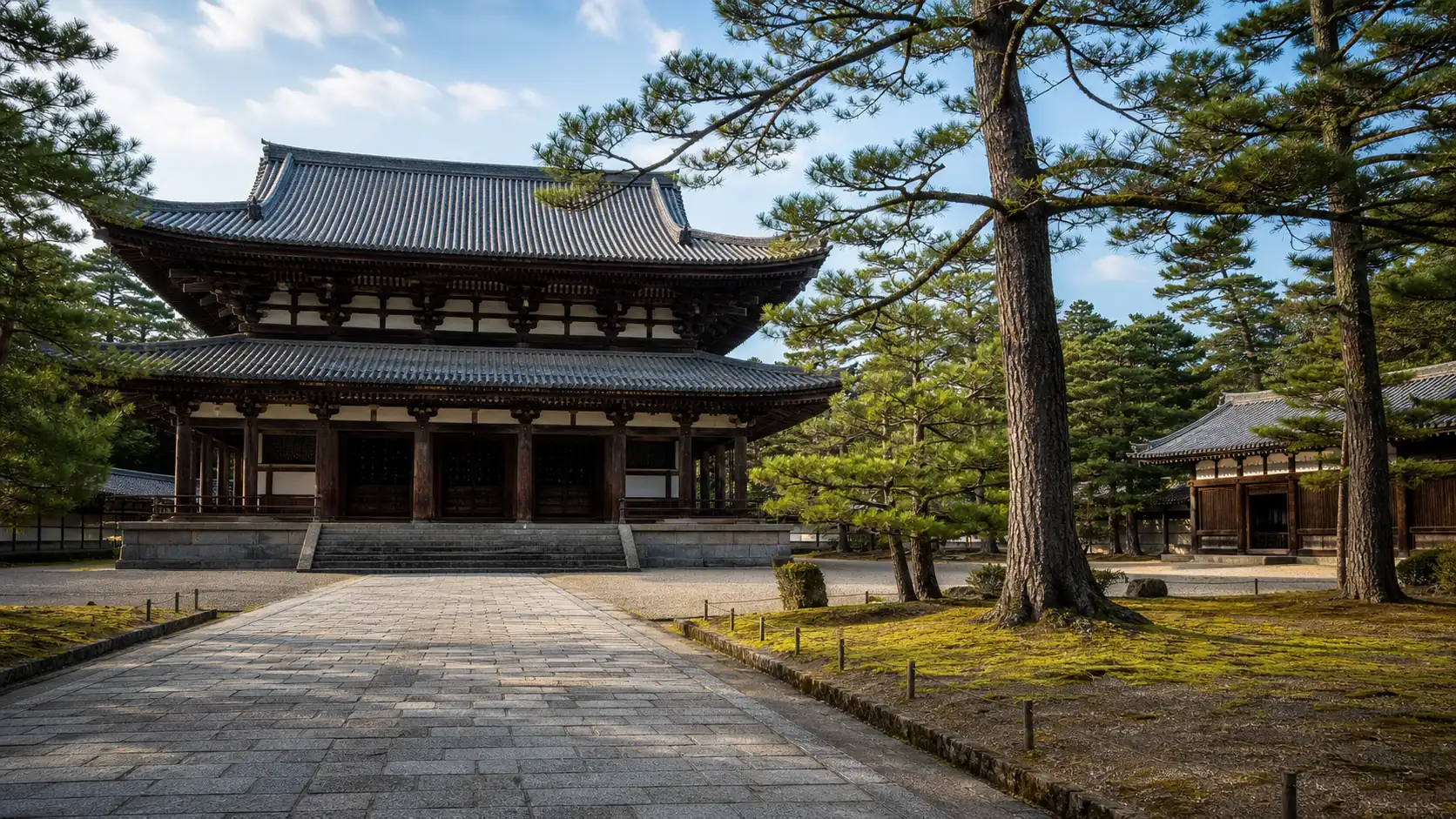
That slower pace also helps you notice the older side of Japanese Buddhism. Nara's temple areas often feel more open and spacious than Kyoto's lanes, which makes them easier to enjoy without chasing one photo after another.
Best timing: Start before late morning if you are coming from Kyoto or Osaka, because the park area becomes busier as day-trippers arrive.
Route feel: Todaiji works best as the anchor of a Nara day, with nearby stops chosen after you see your energy and the weather.
Recommended pace: Leave room for walking between the station, park, gates, and hall; the distance is part of the experience.
Kinkakuji and Horyuji
Kinkakuji is the kind of temple many travelers picture before arriving in Japan: a golden pavilion reflected across a pond, best enjoyed with patience rather than a rushed selfie stop. It is popular, so build in extra time for buses and lines around the viewing path.
Horyuji, near Nara, suits travelers who care more about age, timber, and cultural depth than a quick postcard view. It takes more planning than Sensoji or Kiyomizudera, but it rewards people who like quieter heritage days.
Kinkakuji route tip: Put it with northern Kyoto stops instead of crossing the city several times in one day; buses and queues can make the visit feel longer than the map suggests.
Horyuji route tip: Choose it when you want older architecture and a quieter setting, not when your Nara day is already packed with Todaiji, parks, and central sights.
Who should choose them: Kinkakuji fits classic Kyoto photography, while Horyuji fits travelers who enjoy slower heritage sites and do not mind extra transit planning.
Beyond the Classic Japanese Temple Route
Kyoto, Tokyo, and Nara cover the most convenient first-trip temples, but they do not show the full range of Japanese Buddhist travel. The options below add a Zen garden, a compact Uji heritage stop, and a mountain temple town without turning the article into an unranked list.
Ryoanji and Byodoin for Two Different Temple Styles
Ryoanji Temple is useful when you want to understand why Japanese temple travel is not only about grand halls. Its famous rock garden rewards sitting still and looking from more than one position, so it fits better into a northern Kyoto route than into a fast checklist across the city.
Byodoin in Uji offers a different experience: Phoenix Hall, Buddhist sculpture, and a museum visit in a compact riverside town. JNTO notes that the temple is reachable from Kyoto by rail and a walk from Uji Station, which makes it a practical half-day alternative when central Kyoto feels crowded.
Choose Ryoanji for: Zen garden design, a quieter seated visit, and a northern Kyoto pairing with Kinkakuji.
Choose Byodoin for: Heian-period architecture, museum context, and a slower Uji day built around tea and the river.
Planning difference: Ryoanji is easiest as part of a Kyoto city route, while Byodoin deserves enough time for the rail journey and the surrounding Uji streets.
Kongobuji and a Koyasan Temple Stay
Kongobuji Temple at Koyasan broadens the route beyond the Tokyo-Kyoto-Nara corridor. It is the head temple of Shingon Buddhism, and the journey by train, cable car, and local bus is part of the mountain experience rather than a quick urban transfer.
Koyasan works best when you can stay overnight or give it a full day. A shukubo temple lodging may include simple Japanese-style rooms, Buddhist vegetarian meals, and an optional morning service, but facilities, payment methods, and participation rules vary by property.
Best fit: Travelers who want a slower spiritual setting and can trade one city sightseeing day for a mountain stay.
Before booking: Confirm bathroom arrangements, meal requirements, check-in time, payment method, luggage plans, and whether services are offered in a language you understand.
Do not rush it: An overnight stay is more rewarding than trying to squeeze Koyasan between long-distance trains on the same day.
Recommended Japanese Temple Itinerary
A good temple itinerary gives each city a clear role. Kyoto brings classic lanes and gardens, Tokyo adds an urban temple atmosphere, and Nara brings older Buddhist scale. If these temple days sit inside a one-week Japan route, keep the temple portion compact so you still have space for food, transport, and rest days.
3-Day Itinerary
Day 1 in Tokyo: Visit Sensoji in the morning, then keep the afternoon flexible for Ueno, the Sumida River, or a rest before dinner.
Day 2 in Kyoto: Start at Kiyomizudera, walk through Higashiyama, and add one quieter temple or garden if your energy holds.
Day 3 in Nara: Visit Todaiji first, then choose nearby temple, shrine, or garden stops based on the weather and your pace.
5-Day Itinerary
With five days, resist the urge to simply add more famous names. Use the extra time to visit temples at better hours and to recover from long walking days.
Day 1: Begin in Tokyo with Sensoji and Asakusa, keeping the evening simple.
Day 2: Travel to Kyoto and walk a shorter temple route rather than starting with the biggest sightseeing day.
Day 3: Visit Kiyomizudera early, then continue through Higashiyama at a relaxed pace.
Day 4: Add Kinkakuji or another northern Kyoto temple, then leave room for a garden or tea stop.
Day 5: Take a Nara day trip for Todaiji and, if you like older architecture, consider Horyuji instead of a second packed Kyoto day.
This kind of route feels calmer because each day has one main temple anchor. The rest of the day can flex around meals, weather, and how much walking you actually want.
Best Seasons for Japanese Temple Visits
Season changes the same Japanese temple more than many first-time visitors expect. JNTO's Japan autumn guide highlights Kyoto temples such as Kiyomizudera as major autumn leaf settings, but spring, summer, and winter each suit different temple routes too.
Season |
Best Temple Mood |
Planning Tip |
|---|---|---|
Spring |
Cherry blossoms, fresh green maples, and soft garden views. |
Start early at famous Kyoto temples and keep a backup route for crowded blossom weekends. |
Summer and rainy season |
Moss gardens, hydrangeas, shaded paths, and quieter morning visits. |
Plan shorter walking loops, carry water, and check indoor halls or gardens for heat breaks. |
Autumn |
Maple and ginkgo colors around temple gates, ponds, and hillside paths. |
Book lodging early and avoid stacking several famous Kyoto temples on the same peak-color day. |
Winter |
Clearer architecture, quieter gardens, and occasional snow scenes in Kyoto or Nara. |
Check closing times, dress for exposed temple grounds, and be careful on stone steps after rain or snow. |
Use the season to narrow the route instead of adding more stops. A spring or autumn day often needs fewer famous temples because crowds and photo stops slow the pace, while winter can suit a more architecture-focused route with shorter queues.
If temple scenery is one factor in deciding when to visit Japan, compare peak foliage and blossom periods with the quieter weeks around them. A slightly less dramatic date can produce a calmer visit and more flexible lodging choices.
Temple Etiquette and Cultural Notes
JNTO's guide to Japan shrine and temple traditions notes that temple prayer rituals are usually less strict than shrine rituals, but calm and respectful behavior still matters. That is the simplest rule to remember when you are unsure what to do.
At many temples, you may see a purification basin, incense burner, offering box, bell rope, or areas where shoes must come off. Follow posted signs, watch how local visitors move, and keep your voice low around halls and prayer spaces.
Do not photograph interiors, statues, or ceremonies when signs say photos are not allowed.
Carry a small amount of cash for entry fees, offerings, temple stamps, lockers, or local buses.
Wear shoes that are easy to remove if you plan to enter halls or temple lodging areas.
Step aside before checking your phone so you do not block gates, stairs, or narrow paths.
Small gestures make a big difference at temple sites. A quiet voice, a pause before taking photos, and a little patience in narrow spaces help you enjoy the setting without feeling like you are always in someone's way.
What to Do at the Main Hall
Step out of the main walking flow before preparing your coin or camera.
Place a small offering quietly if you want to pray.
Bow, join your hands, and pray silently without clapping unless local instructions say otherwise.
Move away from the front of the hall before checking photos, maps, or messages.
You do not need to perform every ritual perfectly. Respectful movement, quiet behavior, and attention to signs matter more than trying to copy a ceremony you do not understand.
Tip: If you collect goshuin temple stamps, bring a dedicated stamp book and check the temple's posted rules before handing it over.
Goshuin and Temple-Stay Planning
A goshuin is a calligraphed seal that records a visit to a temple or shrine, not simply a tourist stamp. Todaiji's goshuin guidance shows why collection desks can have their own locations and service times, so arriving before the grounds close does not guarantee that every seal will still be available.
At the temple: Worship first, keep a dedicated goshuin book ready, follow photography rules at the desk, and avoid asking staff to rush the calligraphy.
Timing: Check the temple's official page for reception hours and special-event changes; the office may close before the wider grounds.
Payment: Carry small-denomination yen because temples, stamp offices, lockers, and local buses may not all accept cards.
For an overnight experience, JNTO's overview of temple stays in Japan explains that shukubo vary in room facilities, meals, payment methods, and optional religious activities. Confirm dietary needs and house rules before booking rather than assuming every stay is a hotel with meditation added.
Practical Travel Tips for Japanese Temple Days
Japanese temple days are usually walking-heavy, even when the transport looks simple on a map. Plan for stairs, gravel, hills, station transfers, and weather changes. A few basic Japanese phrases also help when you need to ask about photos, shoes, tickets, buses, or closing times near smaller temples.
Timing and Crowds
Arrive early for famous temples, especially in Kyoto and Nara. The first hour often feels more relaxed, and you are less likely to spend the visit moving at the pace of a tour group.
Late afternoon can be beautiful too, but check closing times before you commit. Some gardens, halls, and museum rooms close earlier than the wider grounds.
Admission, local buses, goshuin, lockers, and tea stops can add up across several temple days. Set a small daily cash allowance and place it inside your broader Japan trip budget instead of treating every temple stop as free.
Transport and IC Cards
For city travel, Japan IC travel cards can make trains, buses, lockers, and small purchases easier, though acceptance still varies by area and transport type. Keep some cash for temple buses, rural stops, and smaller shops around older districts.
Kyoto temple routes often involve buses, walking, and transfers, while Nara is easier if you choose a compact route around one area. Tokyo's Sensoji is simpler because Asakusa has strong subway access and plenty to do nearby.
Stay Connected Around Japan's Temples
Japan's temples are spread across cities, mountains, and rural areas, and reaching many of them often involves a mix of trains, buses, and walking.
If you're visiting several temples in one day, it's common to adjust your plans on the go. Train delays, changing weather, large crowds, or a nearby garden, shrine, or historic district may all affect your route.
Staying connected makes it easier to check maps, transit routes, opening hours, and translation tools. It also helps when you need to contact your accommodation or confirm a reservation without relying on public Wi-Fi.
Many shops and restaurants near temples, especially in rural or mountainous areas, keep relatively short opening hours. If you arrive too late, your dining options may be limited.
With mobile data, you can check business hours in advance, look for alternative routes, or change your return journey at short notice. For travelers who prefer a flexible itinerary rather than a fixed schedule, this can make temple-hopping much less stressful.
Travelers who want mobile data configured before departure can compare travel-data options on the iRoamly Travel eSIM site. With a connection set up in advance, the same map, transit, translation, and messaging apps remain available after landing in Japan.
That makes it easier to move between temples and cities, and to handle last-minute changes along the way.
Nearby Destinations to Pair With Temple Visits
Temple visits are easier to enjoy when the nearby stops match the same mood. Pairing a quiet temple with a noisy shopping street can be fun, but it helps to know that contrast is coming. If your broader list of Japan landmarks also includes towers, castles, gardens, or shopping districts, keep temple days slower so the route does not feel overloaded.
Kiyomizudera: Pair it with Higashiyama lanes, Ninenzaka, Sannenzaka, or a slower walk toward Gion.
Sensoji: Add Asakusa side streets, the Sumida River, Ueno, or a casual food stop nearby.
Todaiji: Combine it with Nara Park, Isuien Garden, Kofukuji, or a quieter museum visit if the weather turns.
Kinkakuji: Build extra travel time into the day, then add one nearby northern Kyoto stop instead of crossing the whole city.
Horyuji: Treat it as a slower heritage trip rather than a quick add-on to an already packed Nara day.
A good Japanese temple route leaves space for silence, small detours, and imperfect weather. Choose a few strong anchors, check the practical details, and let the slower parts of the day do some of the work.
FAQ
1. Should I visit Japanese temples in the morning or afternoon?
Morning is usually better for famous temples because light is softer and paths are calmer, while late afternoon can work well for smaller sites.
2. Can I take photos inside Japanese temples?
Yes, but only where photography is allowed, and signs near halls, statues, gardens, or ceremonies should always guide your choice.
3. Do I need cash for Japanese temple visits?
Yes, carrying cash is wise because some temples, lockers, buses, stamp offices, and small local shops may not accept cards.
4. Is a temple stay suitable for first-time visitors?
Yes. It can suit first-time visitors who are comfortable with quiet rules, simple rooms, shared facilities at some properties, early schedules, and vegetarian temple meals. Check payment, bathroom, dietary, and participation details before booking.
5. What is the difference between a Japanese temple and a shrine?
A temple is Buddhist and often has a sanmon gate, incense, a main hall, and Buddhist images. A shrine is Shinto and usually has a torii gate, shrine buildings, and different prayer customs.
6. How many Japanese temples should I visit in one day?
For a calmer trip, choose one major temple anchor and one or two nearby secondary stops. Visiting too many temples in one day can make the details blur together, especially in Kyoto.
Conclusion
A Japanese temple trip works best when you choose variety over volume. Kyoto gives you hillside lanes and refined garden scenes, Tokyo adds a lively city temple, and Nara brings older Buddhist scale and a gentler pace.
Plan the day around one or two strong temple anchors, then leave room for walking, meals, transport delays, and the quiet details that make temples memorable. Etiquette is mostly a matter of slowing down, reading signs, and behaving with care.
With the right route, a little cash, comfortable shoes, and reliable mobile data when you need it, Japanese temple travel can feel less like sightseeing and more like a calm thread running through the whole journey.