
Four days is enough for a focused first taste of Lyon and Paris when the route uses fast rail, just two hotel bases, and a realistic transfer morning.
This itinerary starts with Lyon's food culture, riverfront, and Fourvière views, then spends the remaining days on Paris landmarks, museums, and neighborhoods.
You will find a day-by-day plan, current 2026 transport and ticket notes, booking priorities, food ideas, and options for shortening or extending the trip.

1. Considerations When Planning Your France Travel Route
A France eSIM can keep train tickets, maps, and booking messages available as you move between Lyon and Paris without replacing your physical SIM.
When planning your trip to France, settle the arrival airport, transfer day, hotel areas, and must-book sights before adding optional stops.
Documents and Trip Constraints
Budget: Decide your budget up front, as it will dictate where you stay, what you eat, and what you do. France has everything from budget hostels to super high end hotels, and dining options that ice your wallet or you eat like a king.
Accommodation Options: Your wallet, and how far you want to commute, are everything. Staying close to the action – Le Marais the downtown museums, the top tourist sights – shaves hours off your day.
Time of Year: Concentrate on experiences you will enjoy, whether visiting museums, exploring historical sites, or just dining.
Interests and Activities: Focus on activities that match what you like, whether it's visiting museums, exploring historical sites, or enjoying French cuisine.
Health and Safety: Double check visa details and when your passport expires. Read about any travel restrictions or advisories here.
Travel Restrictions and Visas: Please review France’s visa requirements in advance, confirm passport validity, and check official advisories for your nationality and trip purpose.
2. Detailed 4-Day France Itinerary
The table gives the current route skeleton, while the daily sections explain booking order, transfer time, neighborhood sequencing, and realistic food stops.
This itinerary through Lyon and Paris offers a rich tapestry of experiences, balancing historical insights, cultural encounters, and culinary delights to provide a comprehensive glimpse into French life and heritage.
4-Day France Itinerary Table
Day | Destination | Recommended Activities/Route |
1 | Lyon | Food plan: Halles de Lyon Paul Bocuse, then a reserved bouchon dinner. Route: Presqu'ile and Place Bellecour, Saône riverfront, Vieux Lyon, and Fourvière Hill. |
2 | Paris | Transfer: Morning train from Lyon, hotel bag drop, and a flexible lunch after arrival. Route: Arc de Triomphe, Champs-Élysées, Eiffel Tower, and a Seine river walk. |
3 | Paris | Food plan: Choose lunch around Palais-Royal or Opéra according to the museum timing. Route: Louvre, Tuileries Garden, and Printemps Haussmann or another nearby cultural stop. |
4 | Paris | Food plan: Keep the final meal close to the hotel or departure route. Route: Montmartre, Sacré-Cœur, Moulin Rouge exterior, then optional Marais shopping. |
Day 1: Lyon Food, Old Town, and Fourvière
Arrive early enough to give Lyon a real day. The food market and Presqu'ile work before the old town, while Fourvière is best saved for clear weather and the broader city view.
Begin your journey in Lyon, a city famed for its history and, far more importantly, its food. Then go to the mix of old-world charm and modern France that best encapsulates the spirit of the trip.
Activities:
Halles de Lyon Paul Bocuse: Start at the indoor food market for cheeses, charcuterie, pastries, and Lyonnais specialties. The Bocuse d'Or itself is a biennial competition, not a daily visitor attraction; use the Lyon Tourist Office market guide for current visitor information.
Presqu'ile and Place Bellecour: Walk through central Lyon toward Place Bellecour, using the square as a landmark rather than assuming a permanent market is operating there.
Saône River: Meander along the Saône River for a pleasant, picturesque walk. It’s a refreshing escape with some great views in a city of hills, letting you take in the city from a new angle.
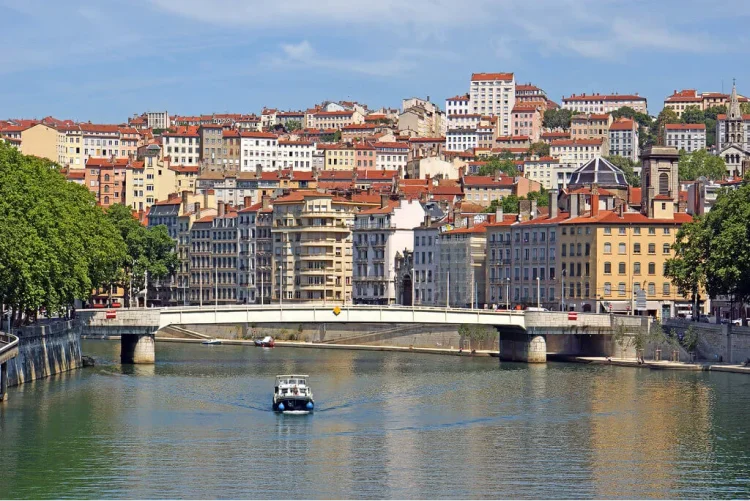
Fourvière Hill: Head up Fourvière Hill for a fantastic view of Lyon. The grand Basilica of Notre-Dame de Fourvière is unmissable, and an insight into both the city’s spiritual and architectural heritage.
Dinner in a bouchon: Finish with a traditional Lyonnais meal. Confirm opening days, menu style, and reservations rather than building the route around an unverified restaurant name.
Accommodation:
Opt for a place near Bellecour Square in Lyon, offering easy access to both historic sites and culinary hotspots.
Day 2: Train to Paris and West Paris Landmarks
Reserve the train first and avoid a timed Paris booking immediately after arrival. Station transfer, luggage storage, and hotel check-in can turn a two-hour train into a four-hour hotel-to-hotel move.
Take a morning train from Lyon Part-Dieu or Perrache to Paris Gare de Lyon, leave bags at the hotel, and begin sightseeing after lunch. SNCF Connect currently shows direct journeys as fast as about 1h43, with average schedules closer to 2h15.
Keep a short list of substitute sights in the same part of Paris in case weather, closures, or sold-out tickets change the afternoon.
Let’s begin with the architectural wonders that have amazed the world.
Activities:
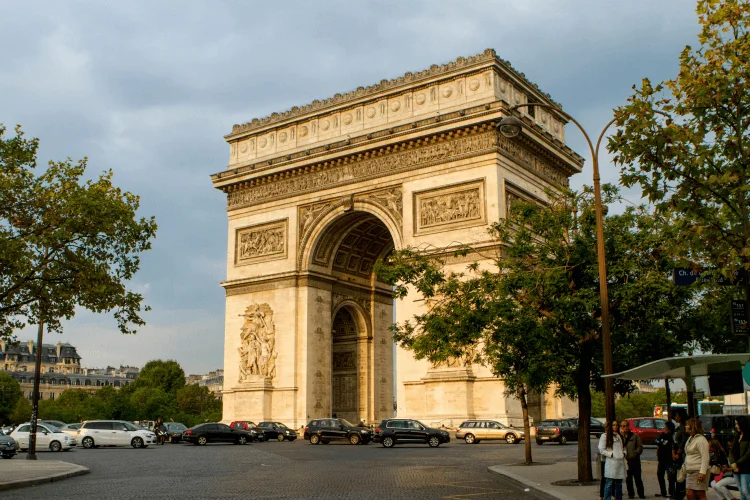
Arc de Triomphe: At the western end of the Champs-Élysées, the Arc de Triomphe stands as a massive monument honoring France’s military past, and the war dead of the Revolutionary and Napoleonic conflicts.
You can climb 284 steps to the top, offering unparalleled views of the 12 radiating avenues of Paris, perfect for panoramic pictures of the city.
Champs-Élysées: Widely regarded as one of the most beautiful avenues in the world, the Champs-Élysées is nothing short of the height of Parisian elegance.
The avenue runs from Place de la Concorde to the Arc de Triomphe, and is lined with luxury shops, charming cafés, and theaters.
Perfect for a leisurely walk, a spot of luxury shopping, or to relax with a coffee and people-watch the day away.
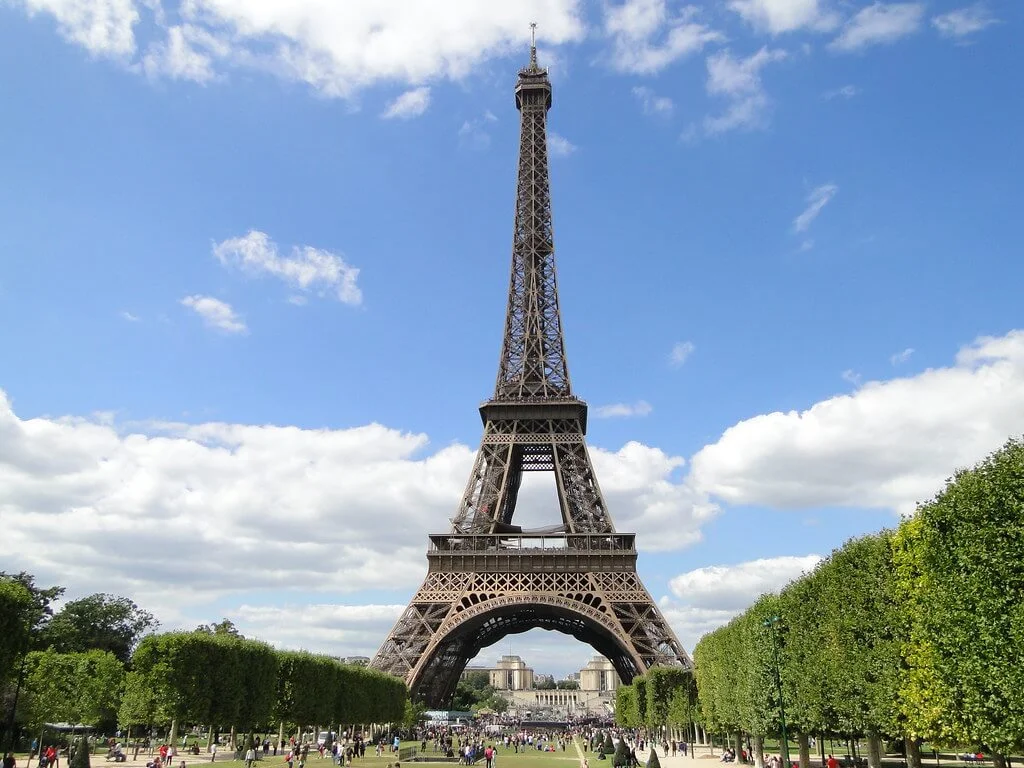
Eiffel Tower: The most famous iron structure on Earth is not to be missed.
Choose a second-floor or summit ticket if you want to go up, or stay on the Champ de Mars for exterior views. Official elevator tickets are generally released up to 60 days ahead, and access can change with weather or operating conditions.
Seine River Walk: A serene end to your day, a walk along the Seine river brings the city’s historic past to the fore, with picturesque riverbanks, ancient buildings, and charming bridges flanking its course. The ideal spot to soak up some of the romance of the city, this route offers quiet but stunning snapshots of the city by night.
Accommodation:
Stay near a useful Metro connection rather than moving hotels for a landmark view; the 1st, 4th, 5th, 9th, and 11th arrondissements can all work depending on budget and departure station.
Day 3: Louvre, Tuileries, and Central Paris
Use the Tuileries as a pause after the museum, then decide between shopping and another cultural stop. Trying to do both Palais Garnier and a large department store thoroughly can make the afternoon feel rushed.
Spend the day taking in some of the world’s most famous art museums and strolling in the lush greenery that sits between them.
Activities:
Louvre Museum: Pick a few galleries instead of trying to cover the entire museum. The official Louvre ticket service states that reservations are required for most visitors from July 1 to August 31, 2026.
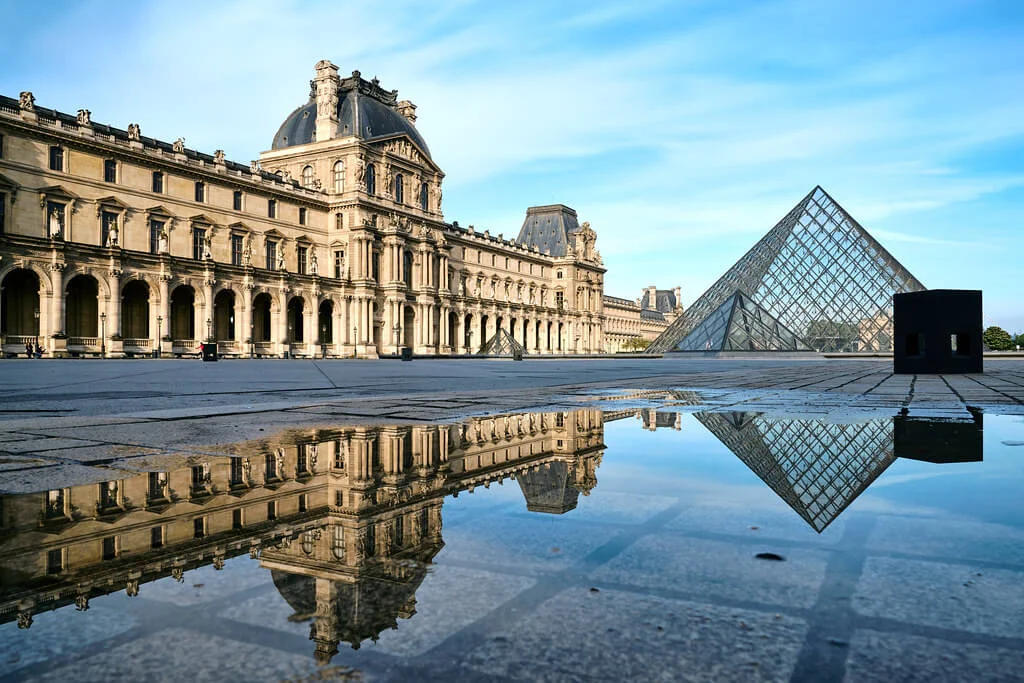
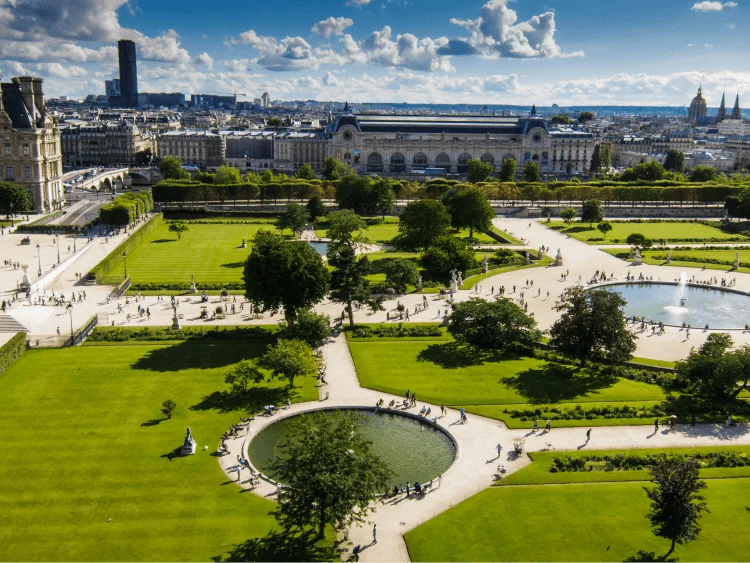
Tuileries Garden: For all its undeniability, the Louvre can make even the hardiest museum vet a bit stir crazy. Luckily, the Tuileries Garden sits just outside its doors, offering hectares of beautifully crafted green space to wander in.
Printemps Haussmann: The original “France Spring” wording appears to refer to Printemps, the historic department store on Boulevard Haussmann. Check current services and opening hours directly before visiting.
Dinner nearby: Choose dinner around the Opéra, Palais-Royal, or the Marais according to the evening route; verify recent opening hours and reservations rather than relying on a single restaurant name.
Accommodation:
Consider staying near the Louvre or in the 1st arrondissement, which will keep you close to museums, gardens, and upscale shopping areas.
Day 4: Montmartre, Marais, and Departure
Montmartre is the priority because it has the steepest terrain and strongest sense of place. The Marais should remain optional unless the departure is late or another Paris night is available.
Start in Montmartre, then choose between the Marais and a direct airport or station transfer. With an early departure, keep only Sacré-Cœur and a short neighborhood walk.
Activities:
Montmartre: This neighborhood’s reputation for bohemian living, plus historic associations with artists such as Picasso and Van Gogh, have become well-established. Wander the whimsical streets, pop into artist studios, and take in the city panorama from Sacré-Cœur Basilica.
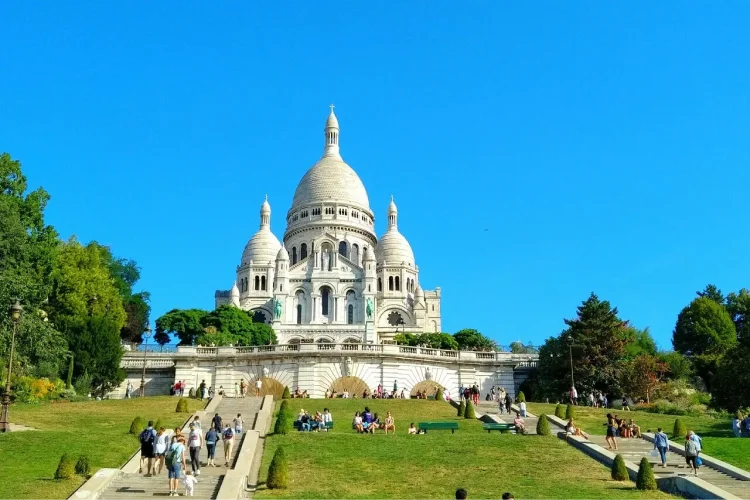
Sacré-Cœur Basilica: Perched on the summit of Montmartre, the basilica serves up some of the best views of the city. White domed and decorated with elaborate mosaics, it is also a site of pilgrimage.
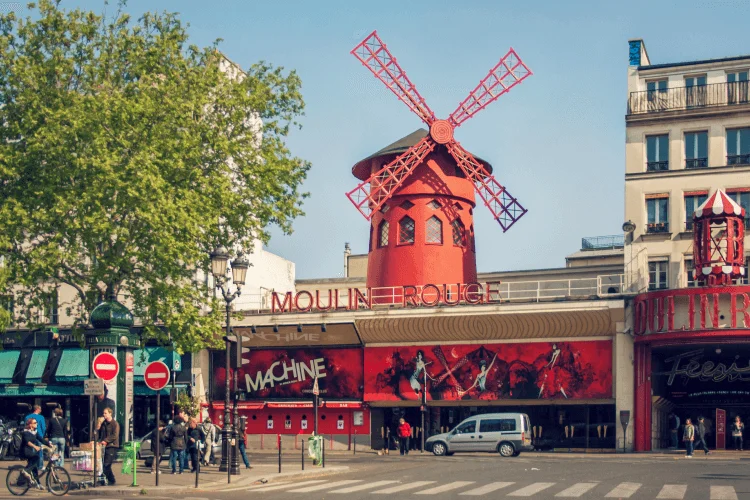
Moulin Rouge: No bookings are included for a flouncy dance spectacle and only slightly less stiff drinks, but no visit to the French capital is complete without at least pausing for a photo in front of this iconic cabaret venue.
Marais Shopping: Two feet of walking off your meal and you arrive in the Marais, a former swamp drained in the 13th century and now home to some eateries that should not be missed, and some that should. It's also one of the city's most architecturally intact areas pre-Revolution, and famed for its shopping, from the unique designer boutiques to the sweet scent of the patisseries.
Final meal: If the schedule includes another night, book a well-reviewed restaurant near the hotel or final neighborhood. Otherwise, keep the last meal flexible around the departure transfer.
Accommodation:
Keep the same Paris hotel through departure. Changing neighborhoods for the final night usually costs more time than it saves on a four-day route.
Take your time to explore each area, soaking in the unique atmosphere.
Wear comfortable shoes for walking and exploring the cobblestone streets.
Tips for Shortening/Extending the 4-Day Route
If one day disappears, remove Lyon rather than keeping a token arrival and immediate departure. If one day is added, spend it in Lyon or Paris instead of introducing a third hotel base.
If you need to shorten your trip, focus on key attractions like the Eiffel Tower and Louvre.
For an extended trip, compare this route with an 8-day France itinerary, or add Versailles, Giverny, or more time in Lyon.
3. Top 10 French Food and Drink
Lyon is the better place for bouchon cooking and hearty regional dishes; Paris makes pastries, bread, desserts, and a broad range of regional food easy to sample without another trip.
The food and drink of France is renowned worldwide for its rich flavor profiles and expert cooking techniques.
Use this guide to French dishes to choose a few specialties that fit Lyon and Paris rather than treating all ten as a checklist.
1. Croissant:
Buy it in the morning when turnover is highest and compare a plain butter croissant before choosing filled versions.
The French breakfast favorite is served throughout the day in its native land. Enjoy the soft, flaky pastry with a coffee or hot chocolate.

2. Baguette:
A fresh baguette supports an inexpensive picnic and is most satisfying within hours of baking, before the crust softens.
Another classic French treat, the loaf's crusty outer and fluffy inner make it a perfect sandwich bread or side to cheese and charcuterie.
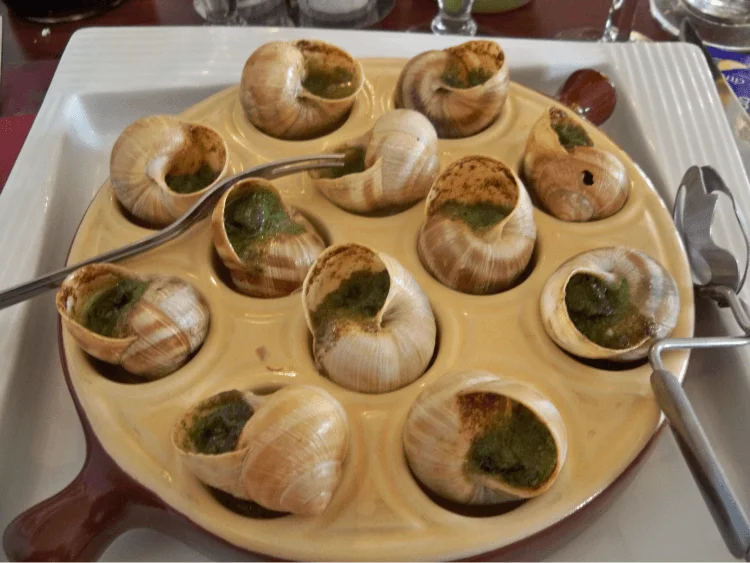
3. Escargot:
Order a shared starter if you are curious; garlic-parsley butter and bread make the dish more approachable for first-time diners.
Snails in garlic and herb butter may not be to all tastes, but the signature gastropod dish remains a French staple, enjoyed as an appetizer.
4. Coq au Vin:
This slow-cooked dish suits a relaxed dinner in cooler weather and should not be scheduled before a tight evening reservation.
Another hearty plate, this chicken stew slow-cooked with wine and lardons, mushrooms, and at times garlic, perfectly captures the depth of slow-cooked flavors.
5. Quiche Lorraine:
A slice with salad works well for a quick museum-day lunch, while a whole quiche is better for a market or apartment meal.
The eggy treat hails from the north-eastern region of Lorraine, and usually features bacon and cream bound in a pastry crust. A versatile dish, it can be served hot or cold, at any meal.

6. Ratatouille:
It fits the warmer-season side of the trip and may appear as an accompaniment rather than a standalone restaurant main.
The vegetable stew is one of the most famous dishes hailing from Provence, and is typically made up of eggplant, zucchini, bell peppers, and ripe tomatoes, flavored with Herbes de Provence, and served as a side dish.
7. Crème Brûlée:
Look for a freshly caramelized top that cracks cleanly; it is common enough to choose by restaurant quality rather than fame.
A creamy custard topped with caramelized sugar, providing a sweet snap to its smooth texture.

8. Boeuf Bourguignon:
The rich Burgundy stew is a substantial main course, so pair it with a lighter starter and leave time for a slower meal.
Originating from the Burgundy region, this beef stew cooked in red wine with the likes of carrots, onions, and a bouquet garni, before being garnished with mushrooms and lardons, is a worldwide favorite that almost defines French comfort food.
9. Soupe à l'Oignon:
French onion soup is especially comforting in cold weather, but the cheese and bread make it heavier than a simple broth.
The rich onion soup typically comes floating with croutons and melted cheese or a large piece of crusty bread. A hearty dish, popular in colder months.
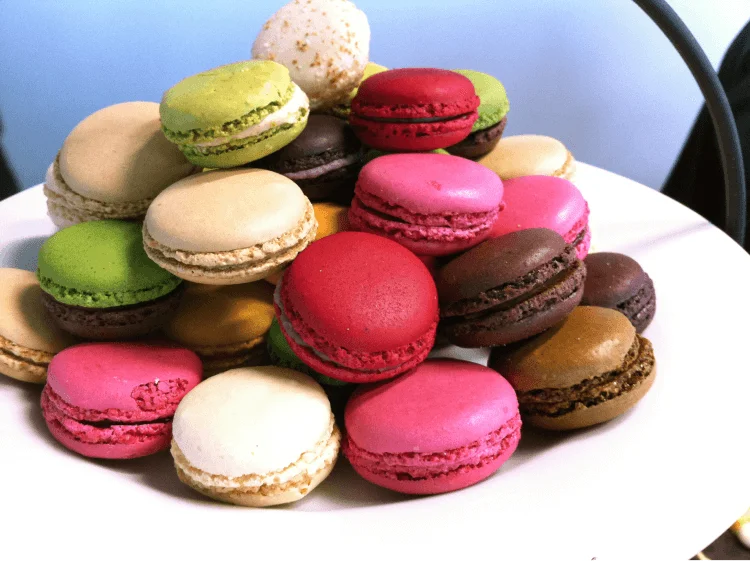
10. Macarons:
A small box is easy to share and carry, though heat and pressure can damage the delicate shells during travel.
French macarons pair two smooth almond-meringue shells with ganache, buttercream, or jam. A small mixed box works as a shared tasting or gift, but it should be protected from heat and pressure.
4. Practical Tips for Traveling in France
For only four days, preparation should remove friction rather than add options: keep tickets offline, choose one Paris hotel, and protect the Lyon–Paris transfer from tight reservations.
Paris Backup Choices
A practical guide to Paris helps you choose a nearby substitute if a timed attraction sells out without rebuilding the whole day.
Language Support at Major Attractions
Visitors who need service in Japanese should verify current language support directly with the museum, department store, or tour provider rather than assuming it is always available.
Compare a Four-Day Italy Route
A four-day Italy itinerary compresses Venice, Florence with Pisa, Rome, and Vatican City into more transfers than this two-base France route. Compare hotel changes and rail time before copying that faster pace.
These final checks cover packing, payments, mobile data, etiquette, transport, driving, and language for the two-city route.
Packing Essentials
For the summer months, load up on as light and breathable clothing as possible, but prepare for chillier winter temperatures with a couple of layers.
No matter the season, you'll be doing a lot of walking, so make sure you have a pair of sturdy, comfortable shoes to pound the pavement.
If you plan on bringing electrical appliances, pack an adapter.
Cash and Local Apps
While cards are widely used for bigger transactions, it's essential to have cash available (especially for smaller purchases at markets or in some rural areas).
Use your own bank or wallet app and confirm foreign-transaction fees; do not assume a local peer-to-peer payment service is available to short-term visitors.
If you will be in a massive metropolitan tangle, Citymapper is a cracking app for negotiating public transport and fares. It's also likely to be easier than paper tickets.
An iRoamly travel eSIM can provide mobile data on arrival for tickets, maps, and translation; available networks and performance depend on the selected plan and location.
Local Etiquette and Customs
Learn some basic French greetings – “bonjour” (hello) and “merci” (thank you) will get you a long way – and use them every day. When in any shop, even if it's just a supermarket, always say “bonjour” as you enter, and “au revoir” (goodbye) as you leave.
Dress modestly if you'll be visiting any churches or religious sites. Politeness and respect are very important to the French.
Transport Options
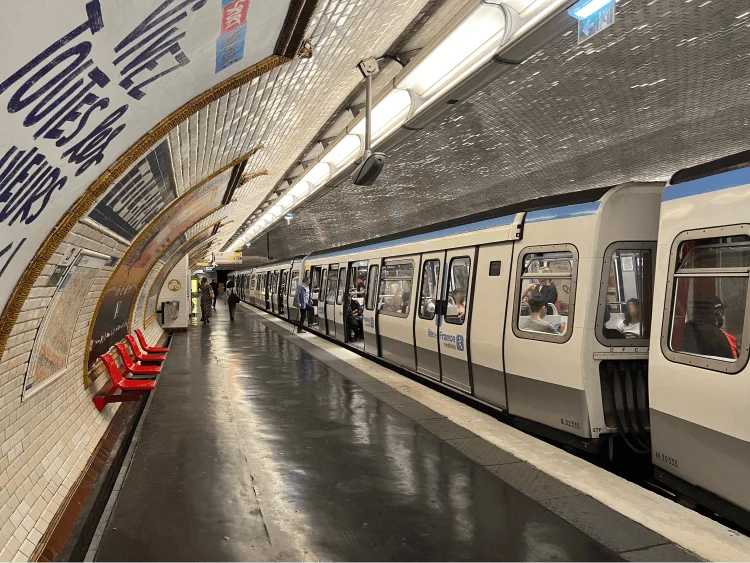
Use Lyon's local network for Day 1 and compare Paris single tickets, airport tickets, and passes against the journeys you will actually make. The official 2026 Île-de-France fares page lists current Metro–Train–RER, Bus–Tram, airport, and pass products.
Renting a Car or Scooter
If you want to head out into the countryside for day trips beyond the city, it may be worth looking into renting a car.
Avoid renting a scooter or moped unless your license category, insurance, protective equipment, and confidence in dense city traffic are all confirmed.
For car rental, verify whether your license needs an official translation or international driving permit and review toll, parking, and low-emission-zone rules.
Communication: Language Tips
A little French goes a long way—'please' ('s'il vous plaît') and 'where is…?' ('où est…?') will see you right.
Even if it's just a few words, an attempt with the language is more appreciated than you'll ever know.
For the brave, invest in a phrasebook or a translation app.
FAQ
1. Is Four Days Enough for Lyon and Paris?
Yes, for a brisk highlights trip with one night in Lyon and the remaining nights in Paris. Choose a single city if you want slow meals, multiple museums, or more flexible mornings.
2. What Is the Best Way to Travel From Lyon to Paris?
A direct high-speed train is usually the simplest city-center option. Fastest current schedules are about 1h43, but the complete hotel-to-hotel transfer takes longer.
3. Where Should You Stay?
In Lyon, stay near Presqu'ile, Vieux Lyon, or a convenient transit line. In Paris, prioritize a useful Metro connection and keep one hotel for the rest of the trip.
4. Which Attractions Need Advance Booking?
Prioritize the Lyon–Paris train, Louvre timed entry, and Eiffel Tower access. Recheck official hours and closures shortly before the visit.
5. Can You Do This Route as a Paris Round Trip?
Yes, but it adds backtracking and can consume much of a day. An open-jaw arrival in Lyon and departure from Paris is more efficient when flight options and price allow.
Conclusion
This four-day route gives Lyon a focused first day and protects the remaining time for Paris by making the intercity transfer explicit.
Book the train and high-demand attractions first, keep neighborhood walks flexible, and reduce the list whenever a late arrival or early departure changes the available hours.
With two hotel bases, current ticket checks, and realistic daily clusters, the trip can feel energetic without becoming a race between disconnected landmarks.