
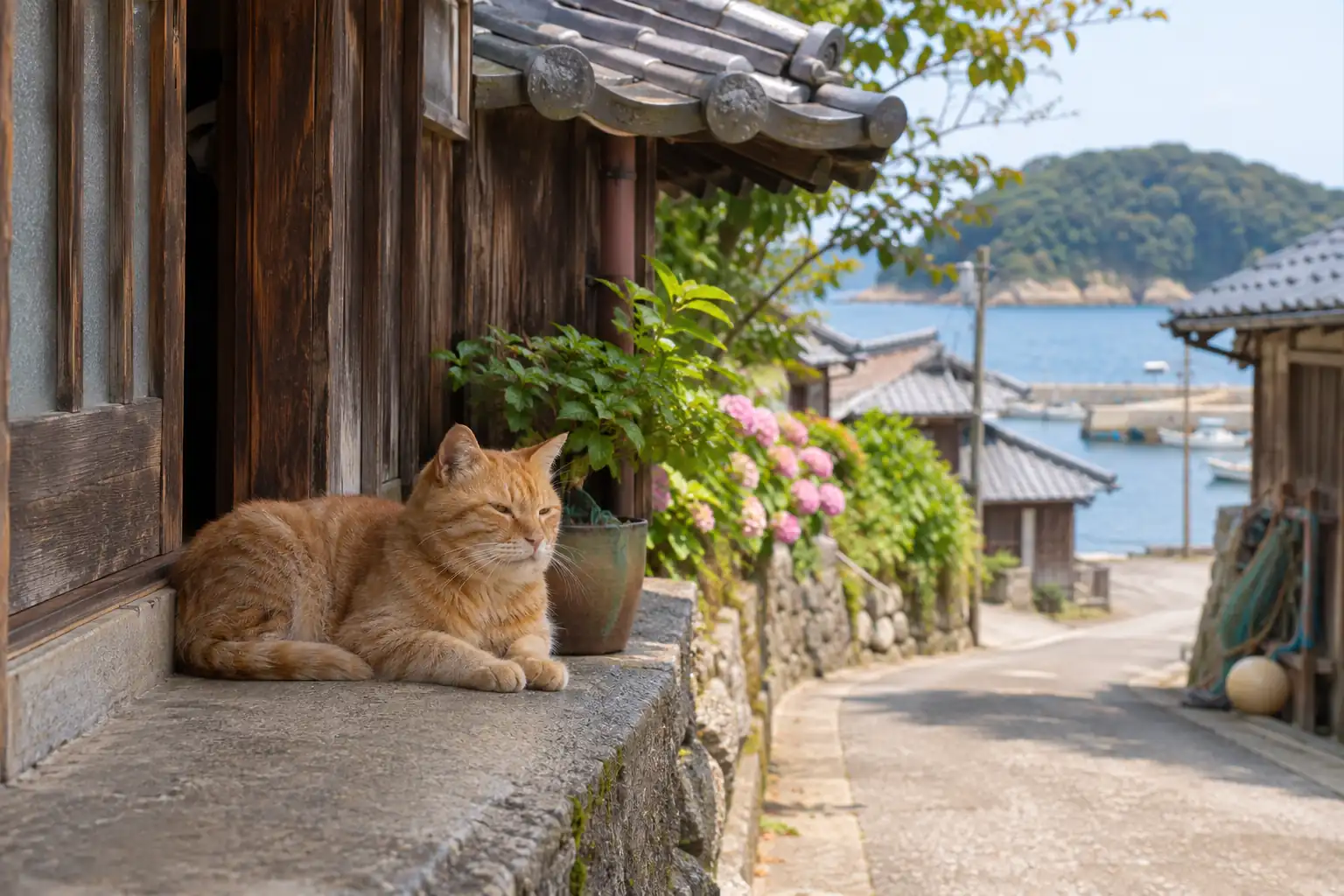
Japan’s cat islands offer a quieter side of travel. Cats rest beside fishing boats, with village lanes to explore and peaceful sea views.
Tashirojima combines cat watching with a forest shrine. Aoshima centers on a small harbor, while Ainoshima is an easy option from Fukuoka. Your choice depends on your route and the ferry timetable.
This guide compares the islands, explains how to reach them, and shares tips for a respectful visit. Find the one that fits your trip and take time to enjoy it.
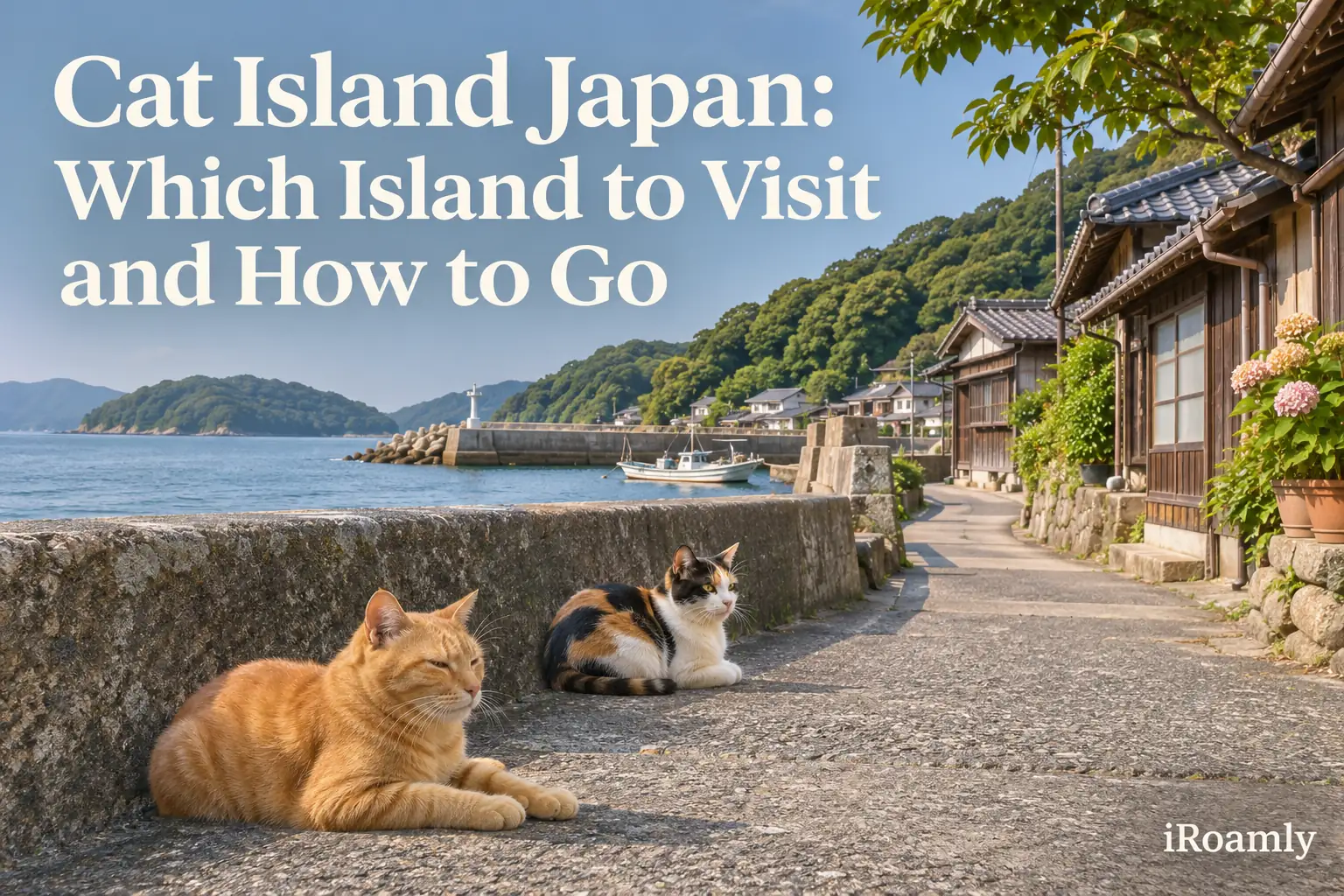
Which Cat Island in Japan Should You Visit?
Choose by the region you are already visiting. Tashirojima fits a Sendai or wider Tohoku trip. Aoshima fits an Ehime stay, while Ainoshima is a practical choice from Fukuoka.
All three are inhabited islands with working harbors, rather than enclosed animal attractions. This comparison focuses on what you can do and the effort involved. The number of cats you encounter will vary.
Island and base | Reasons to choose it | Main tradeoff |
|---|---|---|
Tashirojima, Miyagi | Cats, Cat Shrine, wooded paths and seasonal cabins | A longer mainland approach and a limited ferry timetable |
Aoshima, Ehime | A small harbor and time watching cats | Very limited services, daily boarding limits and potentially a long wait to return |
Ainoshima, Fukuoka | A short sea crossing, harbor cats and optional island walks | You still need to coordinate the train, port transfer and return boat |
A short first trip may focus on Tokyo, Kyoto and Osaka. A distant cat island can consume a disproportionate amount of travel time. Add one when it fits the wider journey. Avoid a difficult detour solely to recreate a photograph.
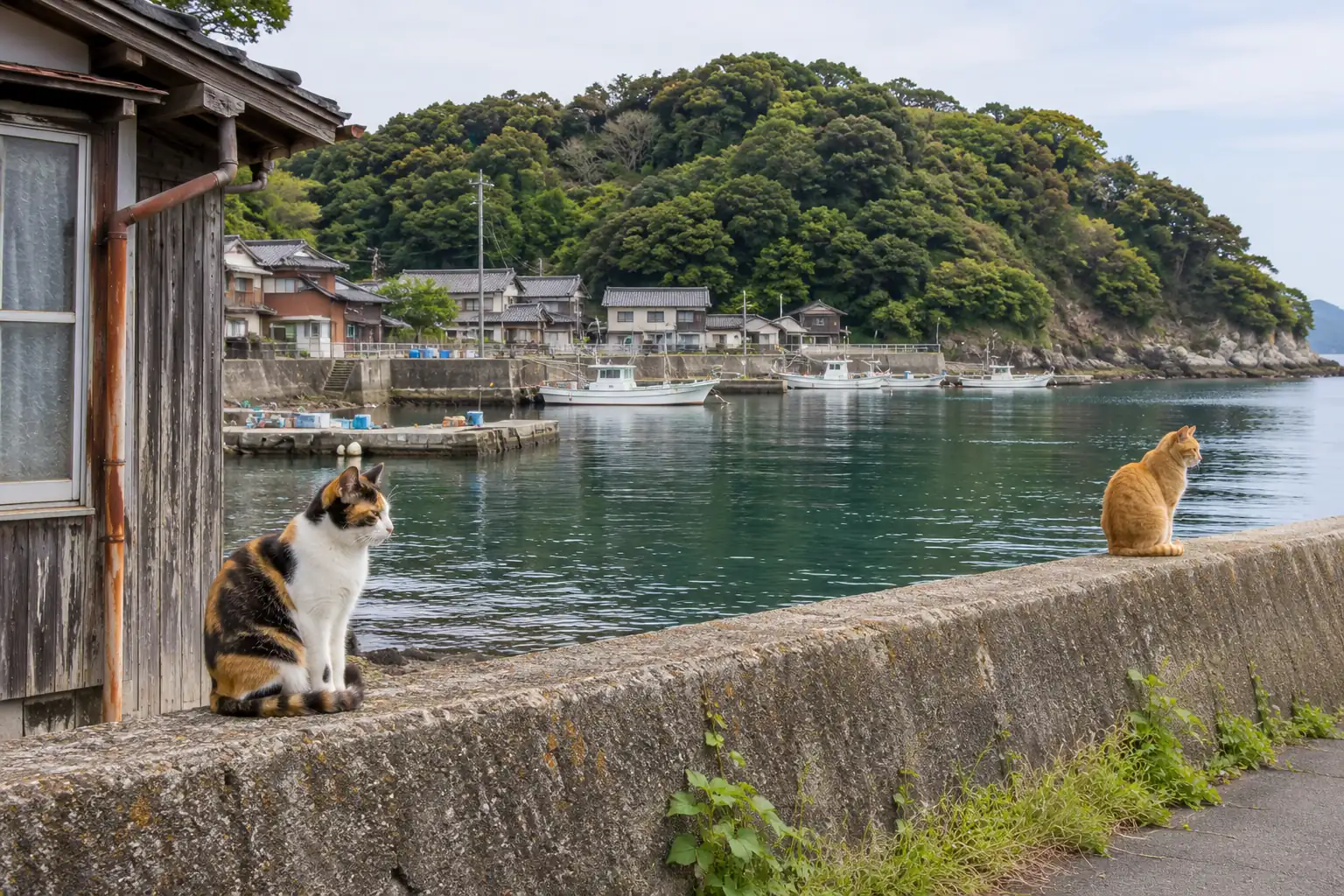
Tashirojima: Cats, a Shrine and Coastal Walks
Tashirojima is a good choice if you want an island walk as well as time with cats. Its two port villages, forested interior and small Cat Shrine give the day a natural route. The walk remains rewarding even when cats are sleeping out of sight.
Getting to Tashirojima
Travel to Ishinomaki in Miyagi Prefecture, usually via Sendai. Then continue to the Ajishima Line ferry terminal.
The Chuo terminal is within walking distance of Ishinomaki Station. Check your sailing’s departure terminal carefully: Ishinomaki also has a Kadonowaki stop.
Boats serve Odomari and Nitoda on Tashirojima. The crossing generally takes around 45–60 minutes, depending on your terminal and port. Nitoda is the more convenient arrival for the main village. Odomari can work for a longer walk across the island.
The published adult fare from Ishinomaki to either Tashirojima port is ¥1,250 one way. Ajishima Line accepts cash only. Passenger tickets are sold on the day without reservations.
Check the current Ajishima Line timetable for both directions and the exact island port. Seasonal schedules and sea conditions can change the calls.
Stay in Ishinomaki the night before if reaching an early sailing would be tight. A mainland overnight also makes it easier to leave large luggage behind.
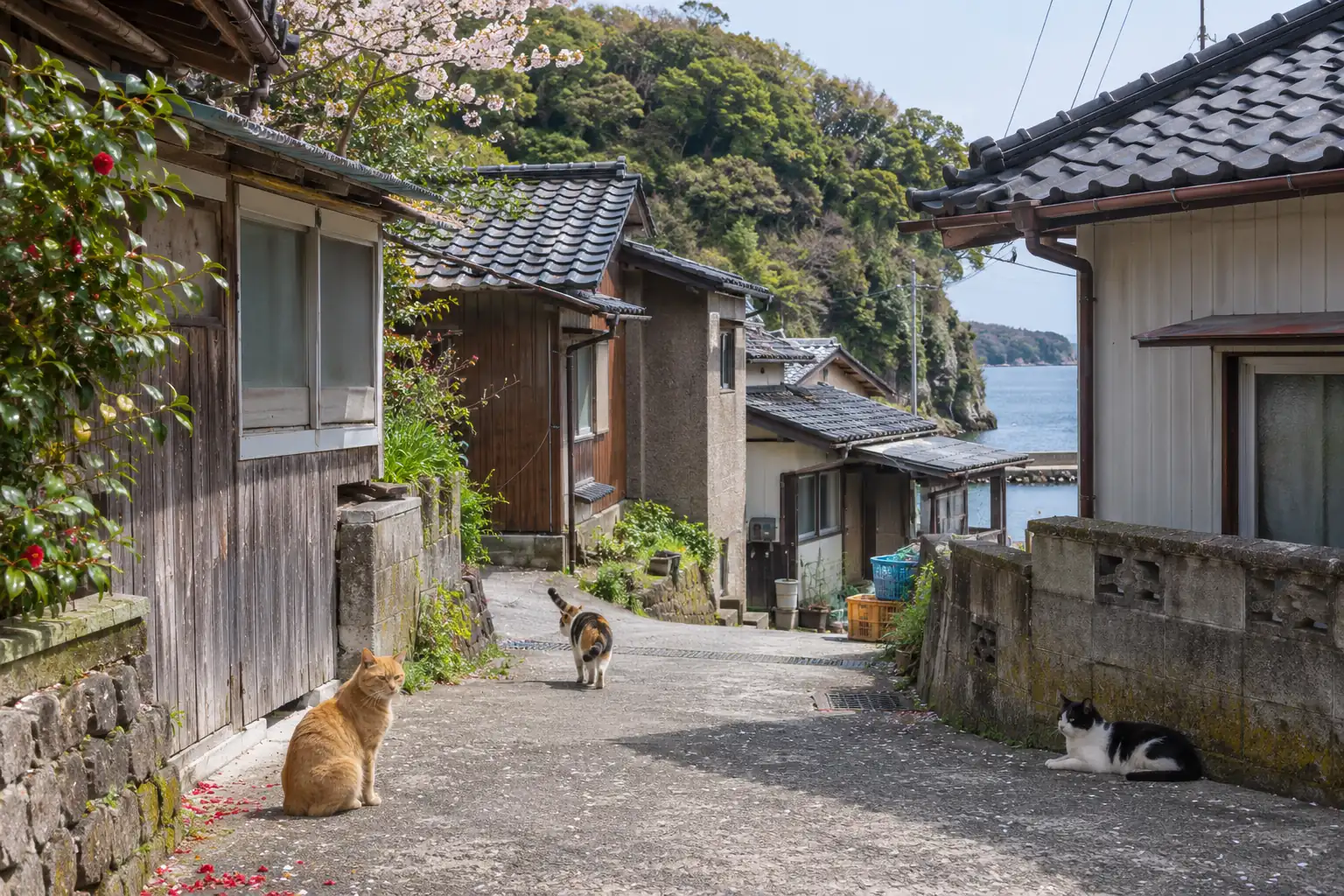
Walking between the village and Cat Shrine
Begin around Nitoda’s public lanes and harbor, where cats may be resting near houses or sea walls. Walk slowly and leave room for residents, deliveries and fishing work. A cat on a doorstep is not an invitation to enter the property.
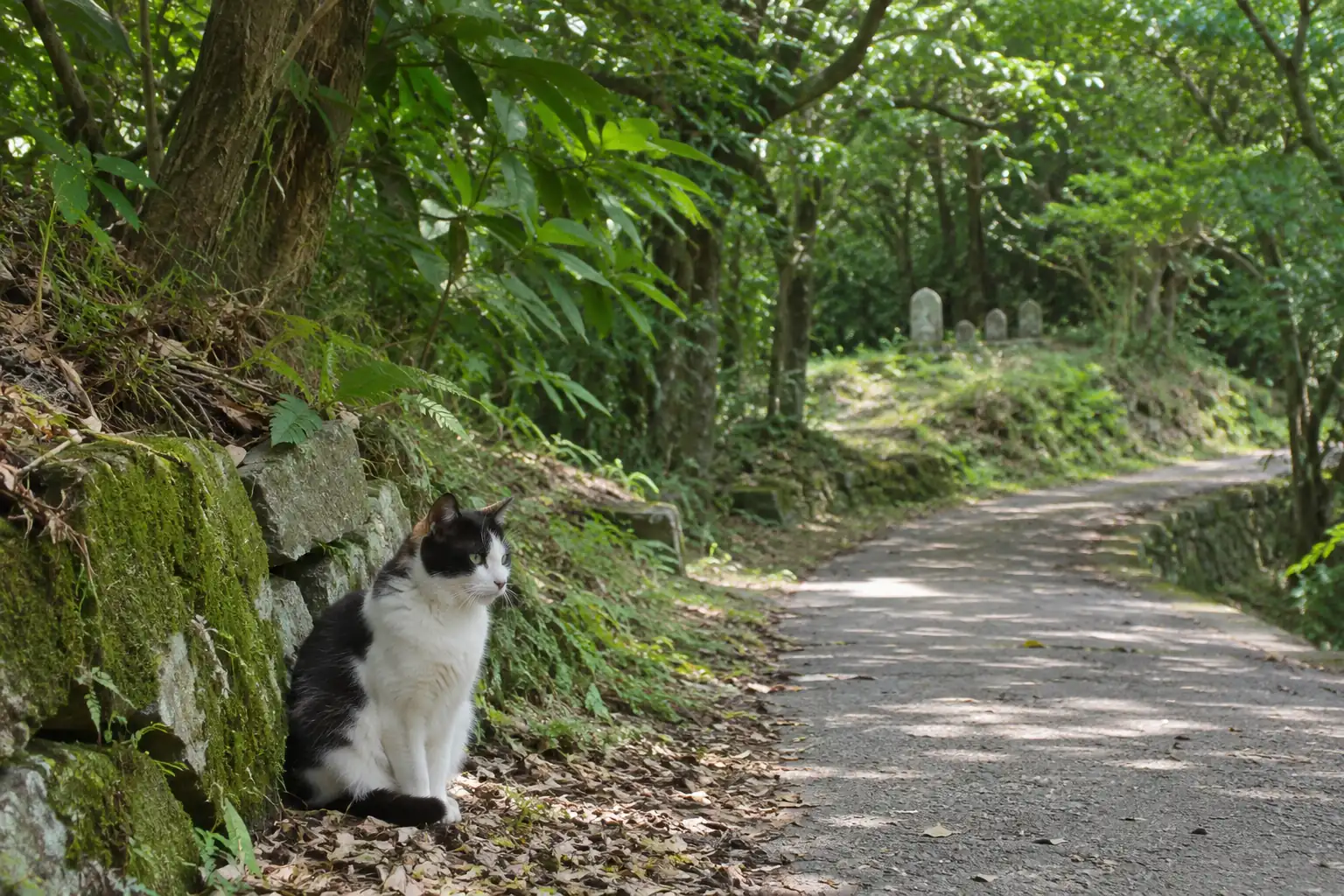
The Cat Shrine, also called Neko-jinja, lies inland among trees. It reflects the island’s longstanding association between cats and good fishing fortune. Make it a quiet stop on your walk. Do not expect a large shrine complex or a gathering of cats.
Odomari adds a second village and more coastal scenery if your ferry window allows it. Distances look short on a map, but the route includes hills. With frequent stops, crossing the island can easily take several hours.
Food, breaks and overnight stays
Tashirojima has some small cafes and guesthouses. Descriptions claiming there is nowhere to eat or sleep are misleading. Opening days and availability are limited. Carry lunch and water unless you have confirmed a meal stop.
Manga Island is known for its cat-shaped cabins. Accommodation is seasonal and needs advance arrangements. Only plan an overnight after confirming an actual booking. Missing the last ferry is not a reliable way to find somewhere to stay.
Aoshima: A Quiet Visit from Ehime
Aoshima in Ehime is the island behind many famous harbor-cat images. Its appeal is simple: watching cats around a small fishing settlement. You can spend time beside the Seto Inland Sea, with very little tourist infrastructure.
That simplicity makes it better suited to patient travelers already exploring Ehime. Old images and cat-to-human ratios are poor measures of what you will see today. A long visit can feel restrictive if you expect shops, organized activities or extensive sightseeing.
Reaching the correct Aoshima
Head to Nagahama Port in Ozu City, not the Aoshima in Miyazaki. From Matsuyama, take a JR train via Nagahama to Iyo-Nagahama Station. Confirm that your chosen train uses the coastal route, then walk to the ferry landing.
The boat crossing takes about 35 minutes, and the published adult return fare is ¥1,400. Tickets are sold on board on a first-come basis, with residents given priority. Across the two outbound services, Ozu City lists a combined daily capacity of 34.
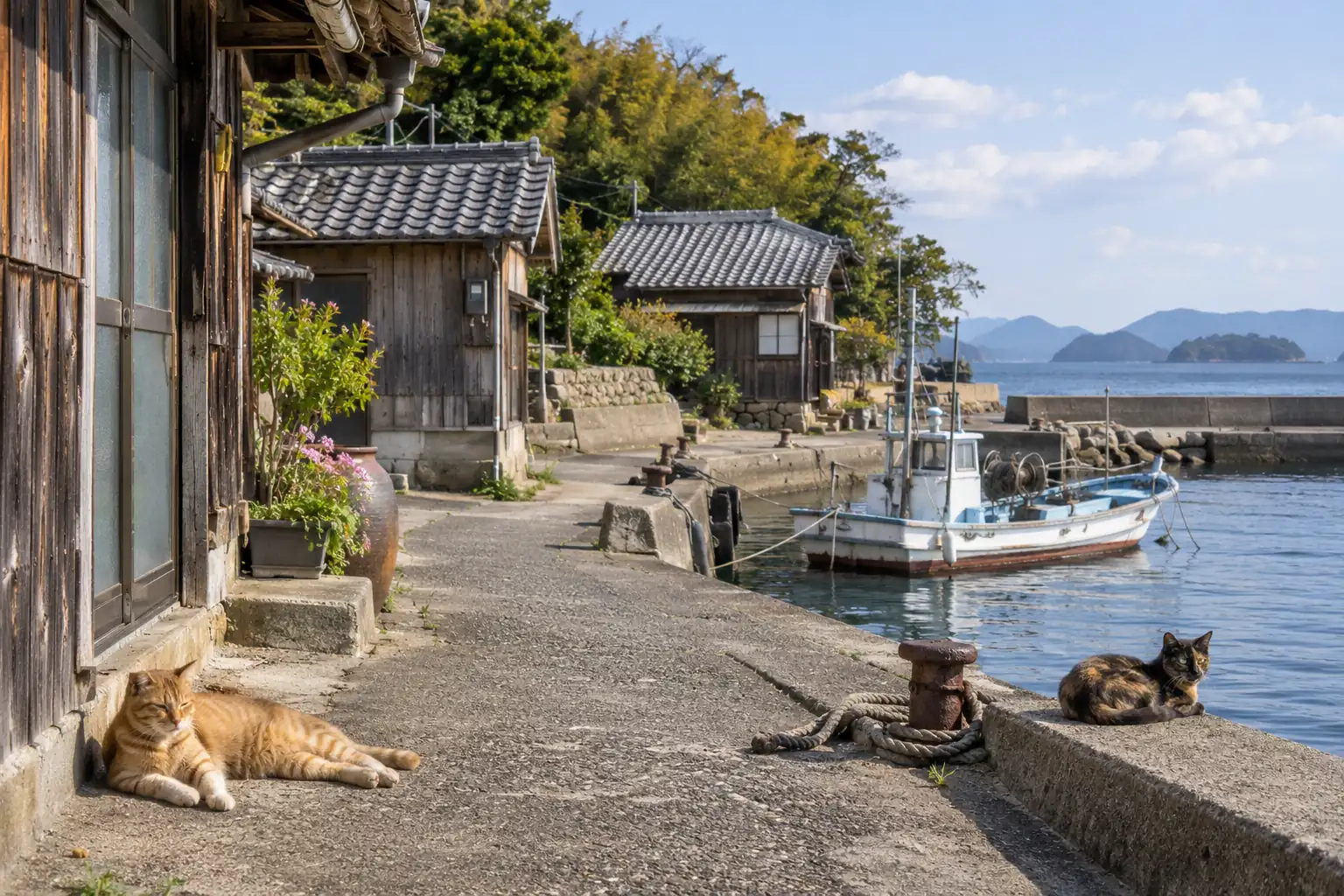
Choosing a short or long visit
The published departures from Nagahama are 08:00 and 14:30, with returns from Aoshima at 08:45 and 16:15. The morning return leaves only ten minutes after the first arrival. A meaningful morning visit normally means staying until the afternoon boat.
The afternoon option gives you roughly an hour ashore, if capacity and weather permit. Decide which duration you would actually enjoy. Verify the Ozu City ferry information before traveling to the port.
Bring food, enough drinking water and sun or rain protection, as there are no shops or vending machines. Stay within open public areas. Return to the landing early rather than exploring farther as departure approaches.
Ainoshima: A Day Trip from Fukuoka
Ainoshima in Shingu offers a relatively short ferry crossing and works well as an outing from Fukuoka. Around the harbor, you can watch cats and fishing boats without committing to a full island walk.
Getting from Fukuoka to the island
Use JR Fukkodai-mae Station or Nishitetsu Shingu Station. Then connect by the local community bus or taxi to Shingu Port. Check the town’s train-and-bus connections before choosing a departure. Arriving at a nearby station does not put you at the ferry landing.
The municipal ferry takes approximately 20 minutes, with a published adult fare of ¥480 one way. Make sure your map shows Ainoshima, Shingu (相島). Similarly named islands elsewhere in Fukuoka use different ports.
From March through October, the standard timetable has six mainland departures daily. From November through February, it has five. The final boat toward the island is not a day-trip option, because the last sailing back leaves Ainoshima earlier.
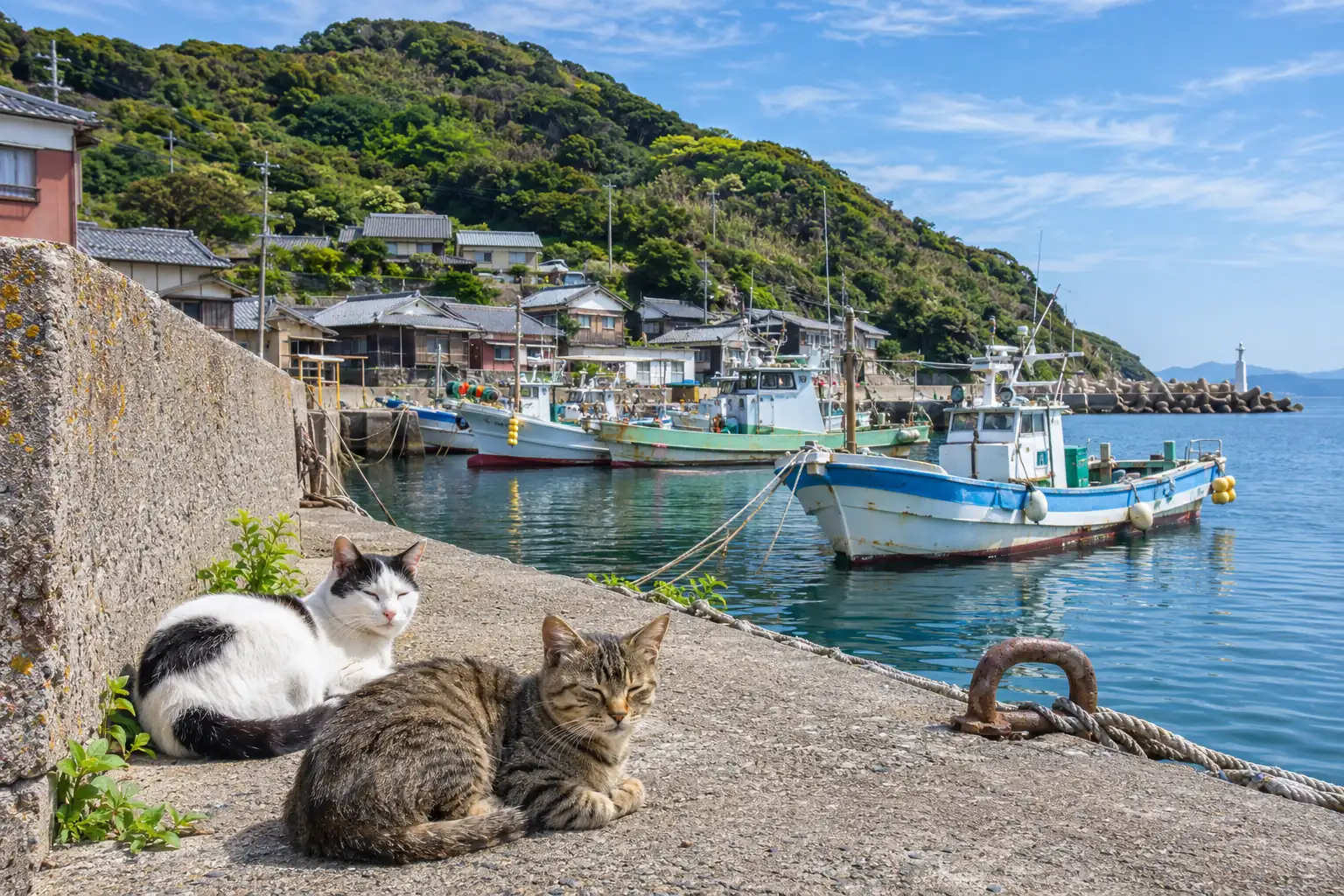
What to do beyond the harbor
Keep a short visit around the public harbor lanes, allowing cats to approach or leave as they choose. If you want more walking, the island also has the Ainoshima Stone Tumuli. There are also views toward Hanagurise, the offshore rock arch often called Megane-iwa.
Those stops require more time than a harbor stroll, and some routes are exposed to sun and wind. For a first visit, choose either a relaxed harbor outing or a longer walk before setting out. Use your return boat as the fixed endpoint.
The island has some dining and shop facilities, but individual businesses may be closed when you visit. Carry a snack and water even if you hope to buy lunch, especially when traveling with children.
When to Visit Japan’s Cat Islands
For comfortable walking, spring and autumn are sensible first choices. Mild conditions make it easier to enjoy the lanes and hills. No season guarantees calm seas, an operating ferry or cats waiting in view.
In summer, exposed harbors can be hot and cats may rest in shade during the middle of the day. Carry water and a hat, and take breaks. Accept a quieter cat-watching experience instead of following animals into sheltered private spaces.
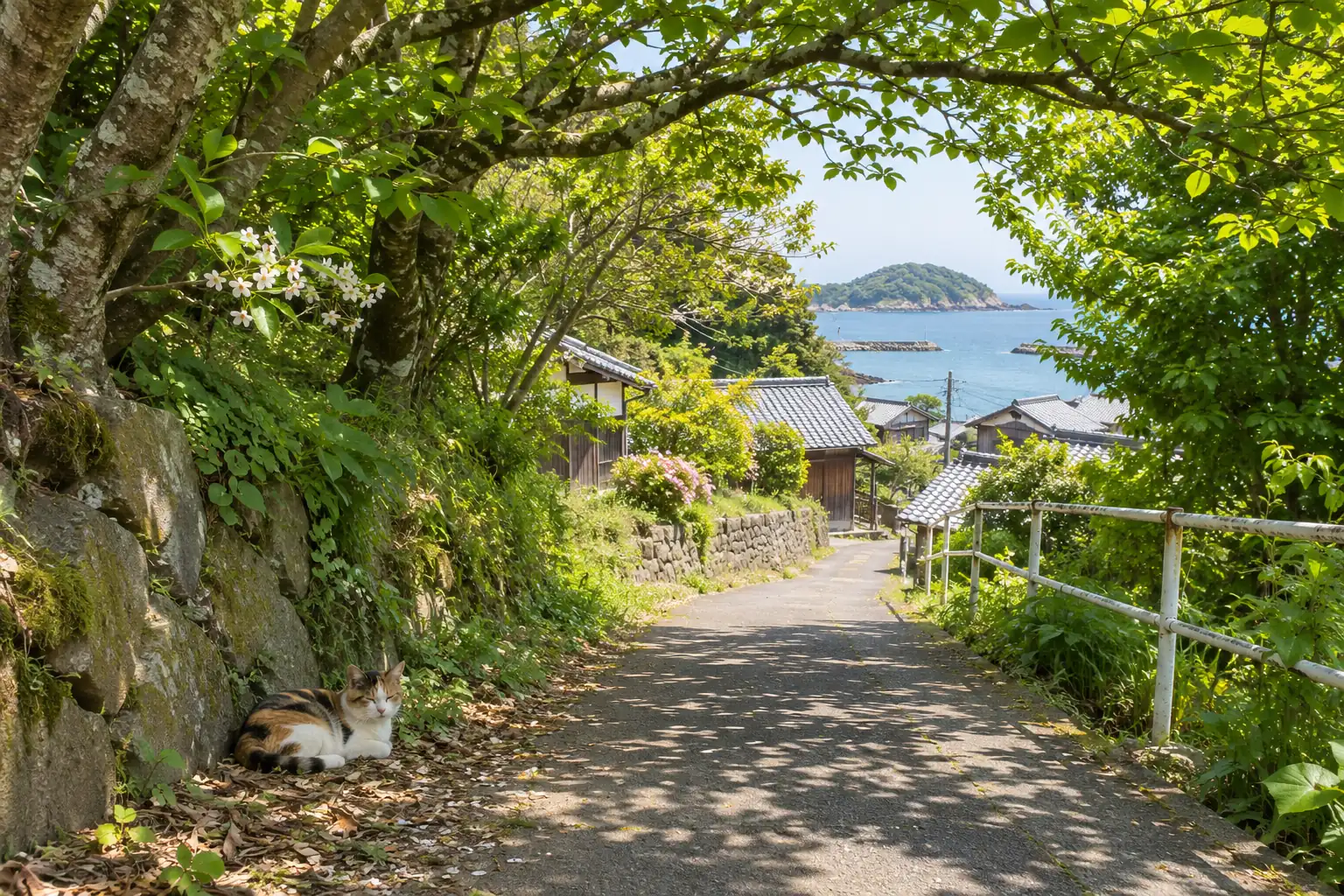
Winter brings colder waits at the quay and, on Ainoshima, fewer scheduled departures. Tashirojima’s seasonal accommodation may also be unavailable. Check arrangements before treating an overnight as part of the plan.
Whatever the month, keep the island day away from a nonrefundable flight or another essential connection. Wind and rough seas can cancel a sailing even when the weather on land looks suitable for a walk.
What to Bring and How to Visit Respectfully
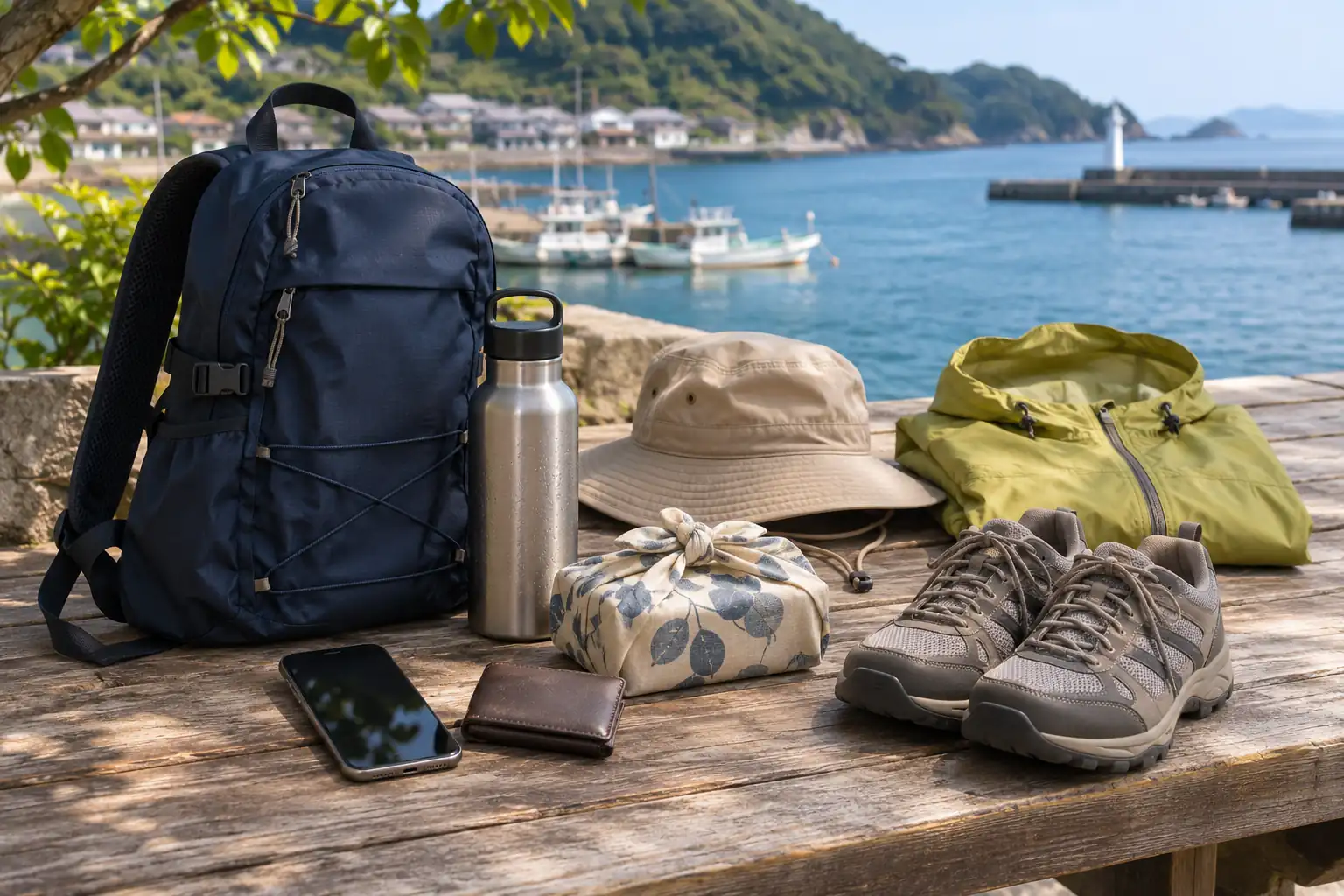
A small day bag is more useful than a suitcase on village lanes and ferry boarding steps. Prepare for the time you might spend waiting as well as the time you expect to spend walking.
Carry cash for ferries and small purchases, plus food, drinking water and a bag for all your rubbish.
Wear comfortable shoes with grip, and bring suitable sun, rain and wind protection.
Save the ferry timetable and return port to your phone before departure. Save the walking route and mainland transport details too.
Keep your phone charged, with a power bank if needed. Wash your hands after touching cats and before eating.
Visitors should not feed cats on Tashirojima or Ainoshima; local carers manage their meals.
On Aoshima, follow current signs and local instructions about designated feeding areas. Never assume food can be offered around the landing or houses.
Do not chase, pick up or wake cats for photographs, and avoid using food or catnip to draw a crowd. Leave fishing gear, boats, closed paths and abandoned buildings alone, even if a cat wanders into them.
These are people’s homes. Keep voices low near houses and leave routes clear. Take every item of rubbish back to the mainland.
Mobile data can help you translate port notices, check service updates and coordinate onward transport.
An iRoamly Japan eSIM is one option for a compatible phone. Keep essential information offline too, since reception at sea and in rural areas can vary.
FAQ
1. Can you visit a cat island on a day trip from Tokyo?
Tashirojima is possible from Tokyo with careful connections. The trains, port transfer and limited boats make it a demanding day. An overnight in Ishinomaki gives you more room to enjoy the island. You can also visit during a wider Tohoku trip.
2. Can you pet the cats?
Some cats are comfortable approaching visitors, while others prefer distance. Let the cat choose the interaction, follow local signs and stop if it moves away. Do not expect every cat to behave like a house pet.
3. Do you need an island admission ticket?
A general visit to the public village areas is not an attraction with a single entry ticket. Your main transport expense is the ferry. Meals, accommodation and other services are separate. A ferry ticket does not give access to private land.
4. Are cat islands suitable for children or travelers with limited mobility?
Children who enjoy quiet animal watching may like a short visit. They need to be able to manage the ferry and respect the cats.
Travelers needing step-free access should ask the operator about boarding. Confirm the exact walking route too: hills, uneven surfaces and limited facilities can affect the day.
Conclusion
Japan’s cat islands offer more than encounters with cats. Fishing harbors, quiet villages, and coastal views can make the visit worthwhile. This is true even when you do not find a large gathering of animals.
Prioritize an island that fits your existing itinerary, then choose the experience you prefer. You may prefer a walk across Tashirojima or a short outing to Ainoshima. Alternatively, choose a longer stay on Aoshima.
Confirm your return ferry in advance so you can enjoy your time ashore without rushing. Once there, explore at your own pace and let the cats approach or leave as they please. Respect residents’ daily lives and pause to enjoy the scenery. Give the island time to leave its own impression.