
Jade has been part of Chinese culture for thousands of years, valued not only for its beauty but also for its connections to virtue, status, and protection.
In China, “jade” can refer to different minerals, while yu (玉) has historically had a broader meaning. This distinction helps explain its many varieties, traditions, and values.
This guide explores Chinese jade, from its history and regional varieties to quality and care. An iRoamly China travel eSIM can also help with maps, translations, and travel information while exploring jade markets and museums.

Understanding Chinese Jade
The word “jade” is often used as though it identifies a single stone, but the reality is more nuanced.
Gemologists distinguish materials by mineral composition and treatment, while Chinese culture has long grouped beautiful, workable stones according to tradition, origin, and craftsmanship.
Nephrite and Jadeite Explained
The two best-known gem materials called jade are nephrite and jadeite. Nephrite usually has a soft, waxy luster and an interlocking fibrous structure that makes it exceptionally tough.
Its colors include creamy white, celadon, spinach green, gray, yellow, and near-black. It was the principal jade of early China and remains central to the Hetian tradition.
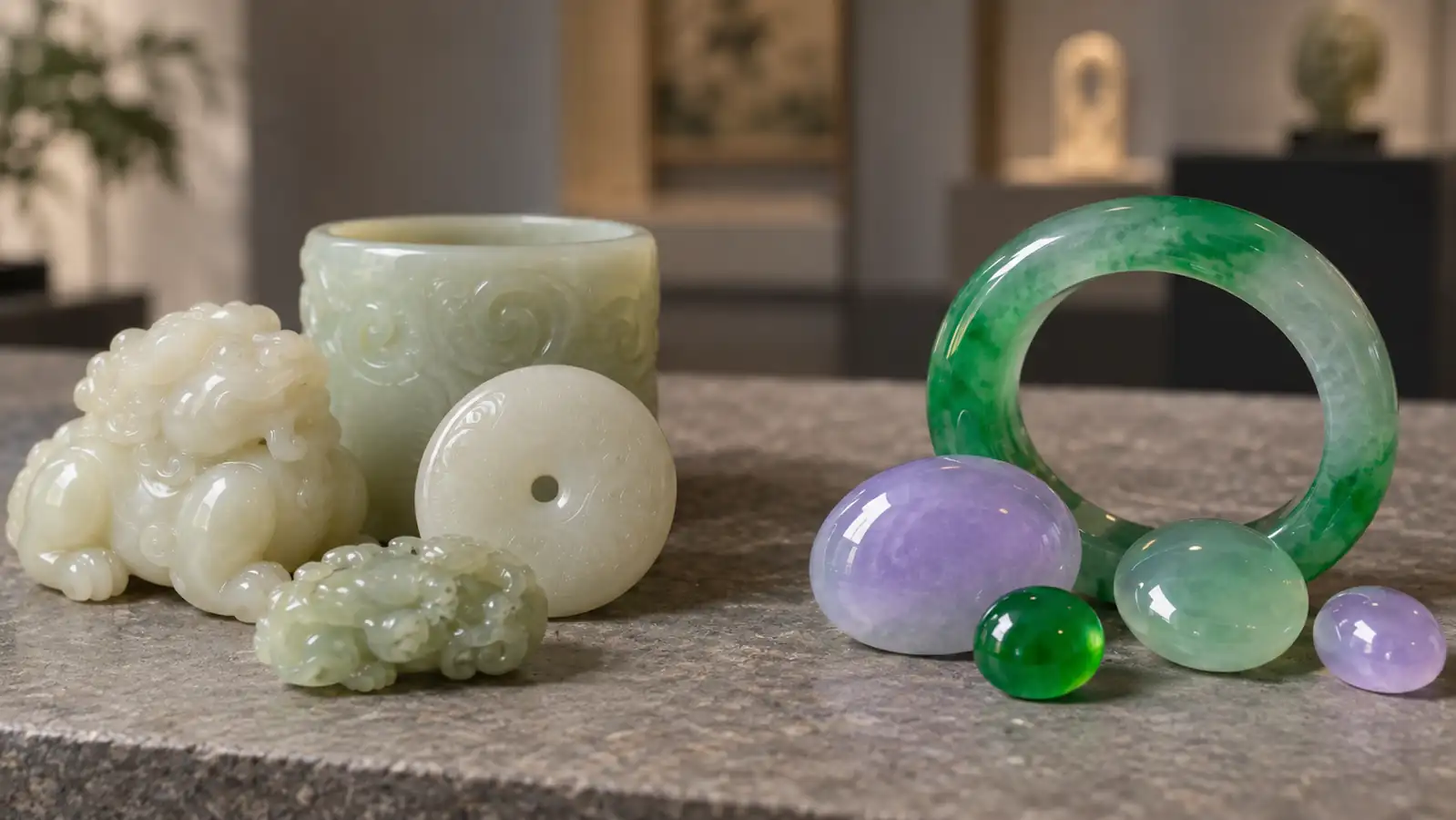
Jadeite has a more granular structure and often takes a brighter, glassier polish. It can appear green, white, lavender, yellow, orange, red, or black.
Although jadeite is strongly associated with Chinese jewelry today, substantial imports from Myanmar reached China much later than the ancient nephrite tradition, becoming especially influential during the Qing dynasty.
Jadeite is slightly harder, but nephrite is remarkably resistant to breaking because of its fibrous structure. Hardness and toughness are different qualities, so neither stone should be treated as indestructible.
What “Yu” Means in China
In Chinese, yu (玉) carries a wider cultural meaning than the strict modern gemological use of “jade.” It can suggest beauty, preciousness, moral refinement, and stones suitable for fine carving.
This helps explain why celebrated regional materials may be called jade in Chinese tradition even when their mineral composition is not nephrite or jadeite.
That broader usage is culturally meaningful, but it also matters when buying. Ask what the material actually is, whether it has been treated, and which laboratory or authority identified it.
A traditional name can describe heritage and appearance without serving as a scientific identification.
The History of Jade in China
China’s jade tradition reaches back to Neolithic communities, long before jade became a luxury jewelry material.
Its history is best understood as a changing relationship among ritual, political authority, craftsmanship, personal adornment, and everyday appreciation.
Neolithic Ritual Foundations
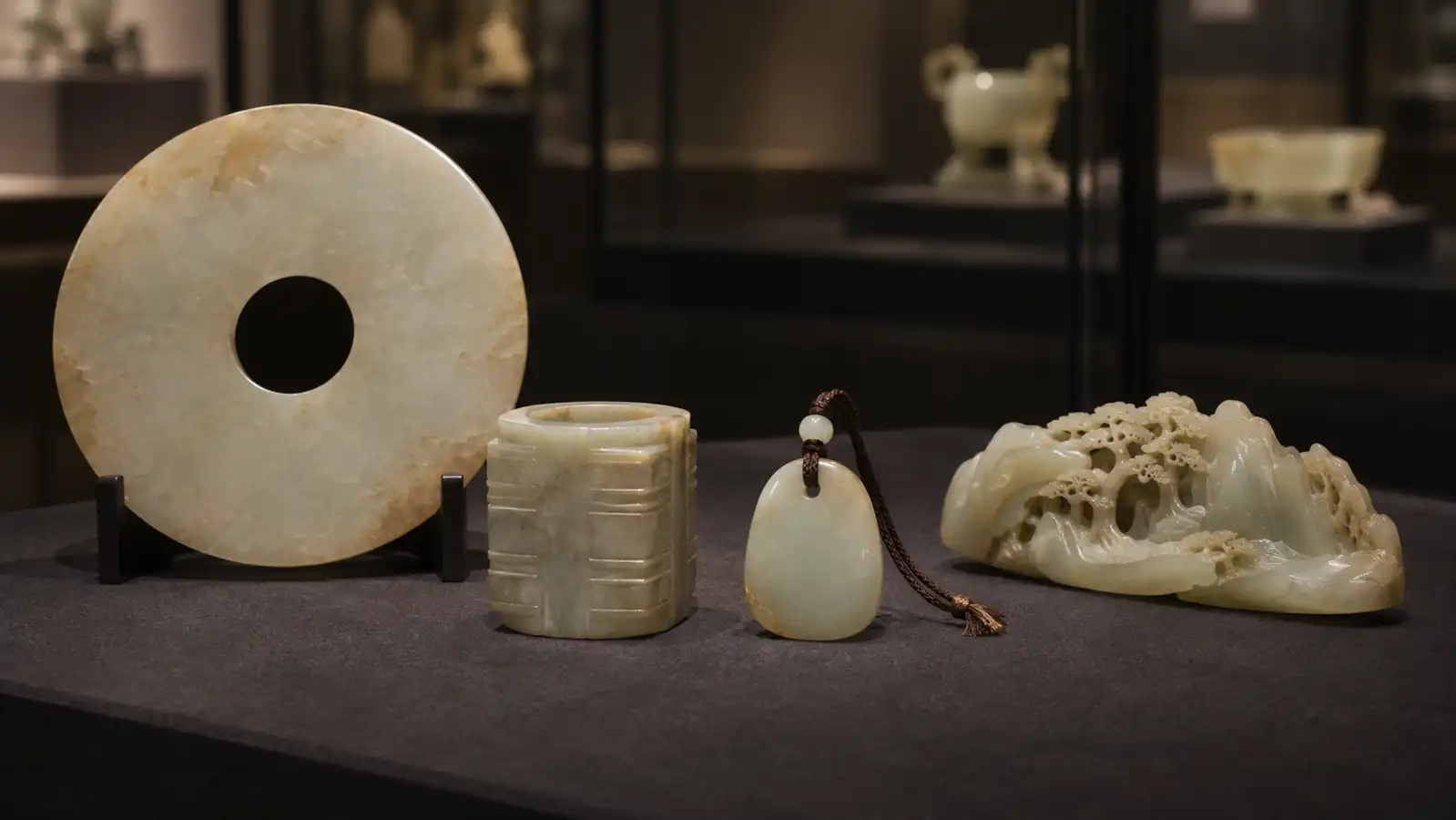
Early jade workers shaped tough stone by sawing, drilling, grinding, and polishing with abrasive materials. In cultures such as Hongshan and Liangzhu, jade appeared as pendants, animal forms, disks, tubes, and ceremonial objects.
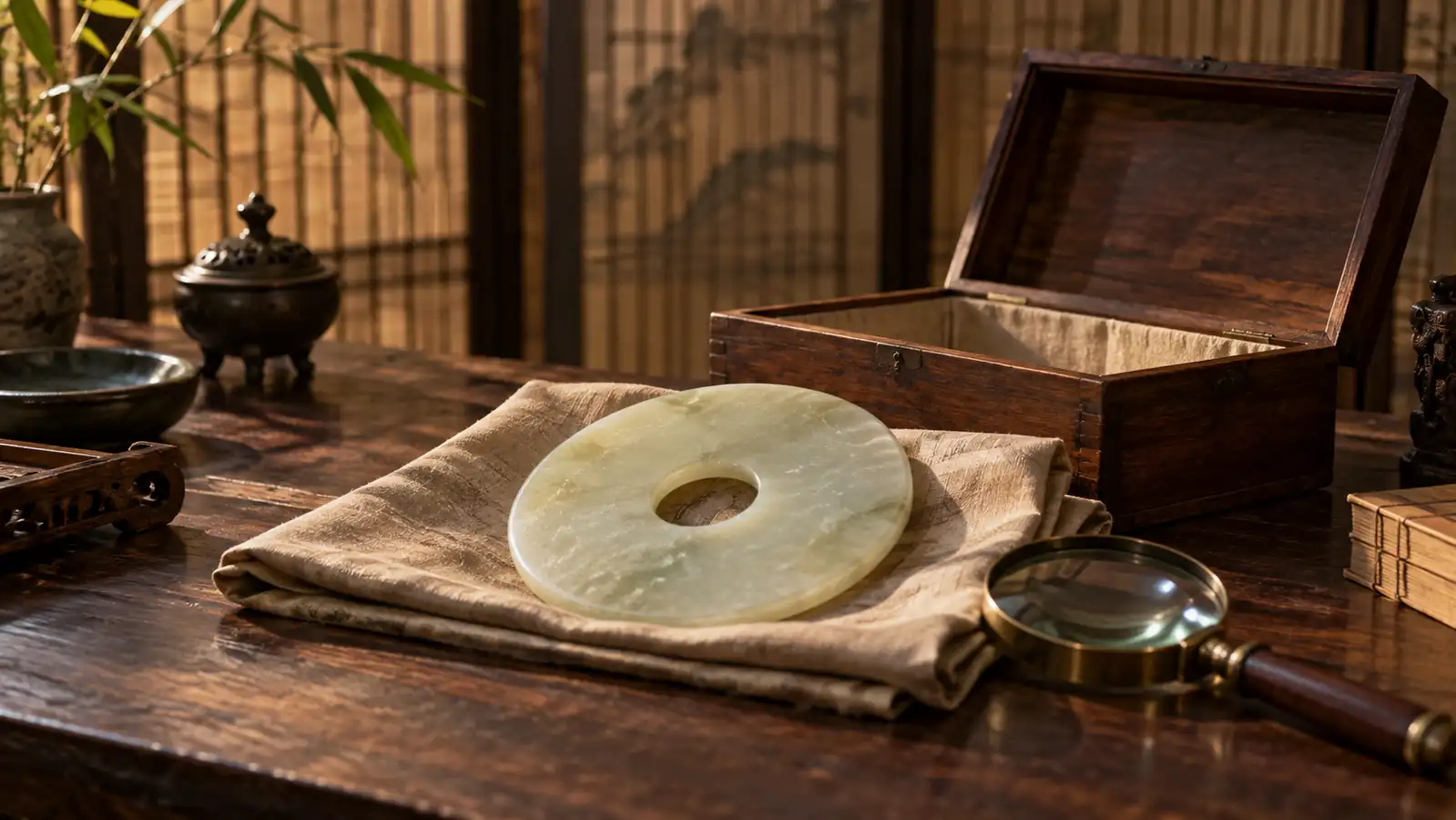
Two of the most recognizable forms are the circular bi disk and the squared cong tube, later associated with heaven, earth, rank, and ritual order.
These objects were not simply decorative. Their labor-intensive production and presence in elite burials indicate that jade communicated authority and spiritual significance.
Its durability, smoothness, and quiet luster made it an apt material for ideas about continuity between the living, ancestors, and the cosmos.

Imperial Craft and Modern Continuity
During the Shang, Zhou, and Han periods, jade served in ritual objects, ornaments, weapons, rank emblems, and burials.
Han jade burial suits are among the most striking examples of the belief that jade could protect the body and express status after death.
Later dynasties developed increasingly sophisticated carvings, scholar’s objects, vessels, jewelry, and naturalistic animal and plant forms.
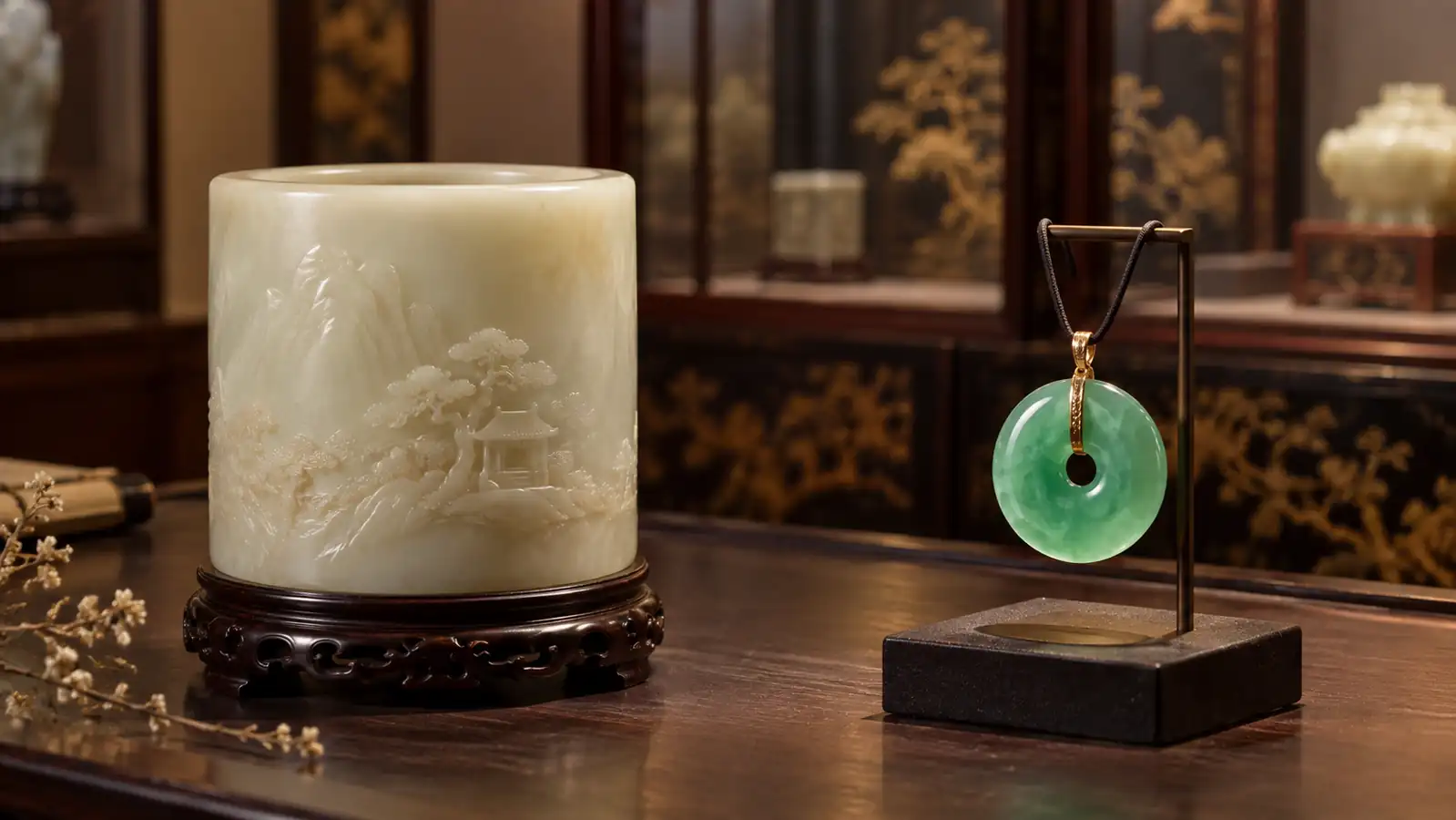
Nephrite from the Khotan and Hetian region became deeply tied to court culture and the Silk Road. Jadeite from Myanmar entered Chinese taste much later and brought vivid colors that transformed Qing and modern jewelry.
Today, jade still moves between museum object, family heirloom, personal ornament, artistic medium, and luxury collectible.
The Four Famous Jades of China
The “Four Famous Jades” are a traditional regional grouping rather than four varieties of one mineral. They are valued for different colors, textures, carving behavior, and cultural histories. Their identities should be understood through both heritage and accurate material disclosure.
1. Hetian Jade
Hetian jade is China’s most celebrated nephrite tradition. It is associated with Xinjiang and the Kunlun mountain region, where river-worn pebbles and mined material have supplied carvers for centuries. Its dense structure, smooth polish, and restrained colors made it a favored material for ritual objects, ornaments, scholar’s pieces, and imperial works.
Typical appearance:
Creamy white, pale green, celadon, yellow, gray, or black tones.
A soft, oily or waxy luster rather than a glassy shine.
Fine texture and excellent toughness suited to detailed carving.
Fine white “mutton-fat” nephrite is especially admired, but color alone does not establish authenticity or value. Texture, evenness, condition, workmanship, size, and documented origin all matter.
For travelers, Hetian jade can be one of the most meaningful souvenirs to buy in China, provided the seller gives a clear material description and reliable documentation.

2. Lantian Jade
Lantian jade is associated with Lantian County in Shaanxi, an area linked to jade use since ancient times. The traditional name covers material appreciated for its historical connection, gentle colors, and suitability for decorative carving.
Typical appearance:
White, yellow-green, pale blue-green, or mixed tones.
A softer, waxy-looking surface with natural patterning.
Common use in ornaments, decorative objects, and culturally themed carvings.
Lantian jade is generally more accessible than top-quality Hetian nephrite or fine jadeite, but prices cannot be reduced to a dependable rate per gram. Buyers should consider the identified material, craftsmanship, condition, and supporting certificate together.

3. Dushan Jade
Dushan jade, also called Nanyang jade, comes from the Mount Dushan area in Henan. It is a multicolored carving stone with a mineral composition distinct from nephrite and jadeite. Its bold color combinations allow carvers to use natural bands and patches as part of a design.
Typical appearance:
Green, white, purple, red, yellow, gray, or several colors in one piece.
A fine-grained surface that can take a smooth polish.
Frequent use in decorative sculpture and complex pictorial carving.
For Dushan jade, visual balance and the carver’s response to the stone can be more important than any single color. Large or intricate work may command more than plain material, but a high asking price is not evidence of quality by itself.

4. Xiuyan Jade
Xiuyan jade comes from Xiuyan County in Liaoning, one of China’s major jade-carving regions.
The name is commonly associated with serpentine-rich material that is softer than nephrite or jadeite, making it suitable for larger ornaments and finely worked decorative pieces.
Typical appearance:
Light green, yellow-green, white, gray, or translucent mixed tones.
A smooth surface and colors that work well in large carvings.
Greater vulnerability to scratching and wear than tougher nephrite.
Xiuyan jade can be attractive and culturally important without being as expensive as fine jadeite or Hetian nephrite. Its value depends on the quality of the material, scale, design, finish, and condition—not on the prestige of the word “jade” alone.

Why Jade Matters in China
Jade became powerful in Chinese culture because physical qualities and social ideas reinforced one another.
Its luster suggested refinement, its toughness suggested endurance, and the labor required to shape it made finished objects suitable symbols of discipline, rank, and cultivated taste.
Virtue, Status, and Protection
Confucian thinkers compared jade’s qualities with human virtues such as benevolence, wisdom, justice, sincerity, and propriety. Wearing jade could therefore express an ideal of moral character as well as wealth.
At court, jade seals, pendants, belt fittings, weapon ornaments, and ceremonial objects also marked authority and access to skilled labor.
Protective beliefs gave jade another layer of meaning. Amulets were worn for good fortune, and burial objects reflected hopes for preservation, continuity, or safe passage after death.
These are cultural and spiritual meanings, not scientific claims about the stone’s effect on health or fate.
Jade Forms and Their Meanings
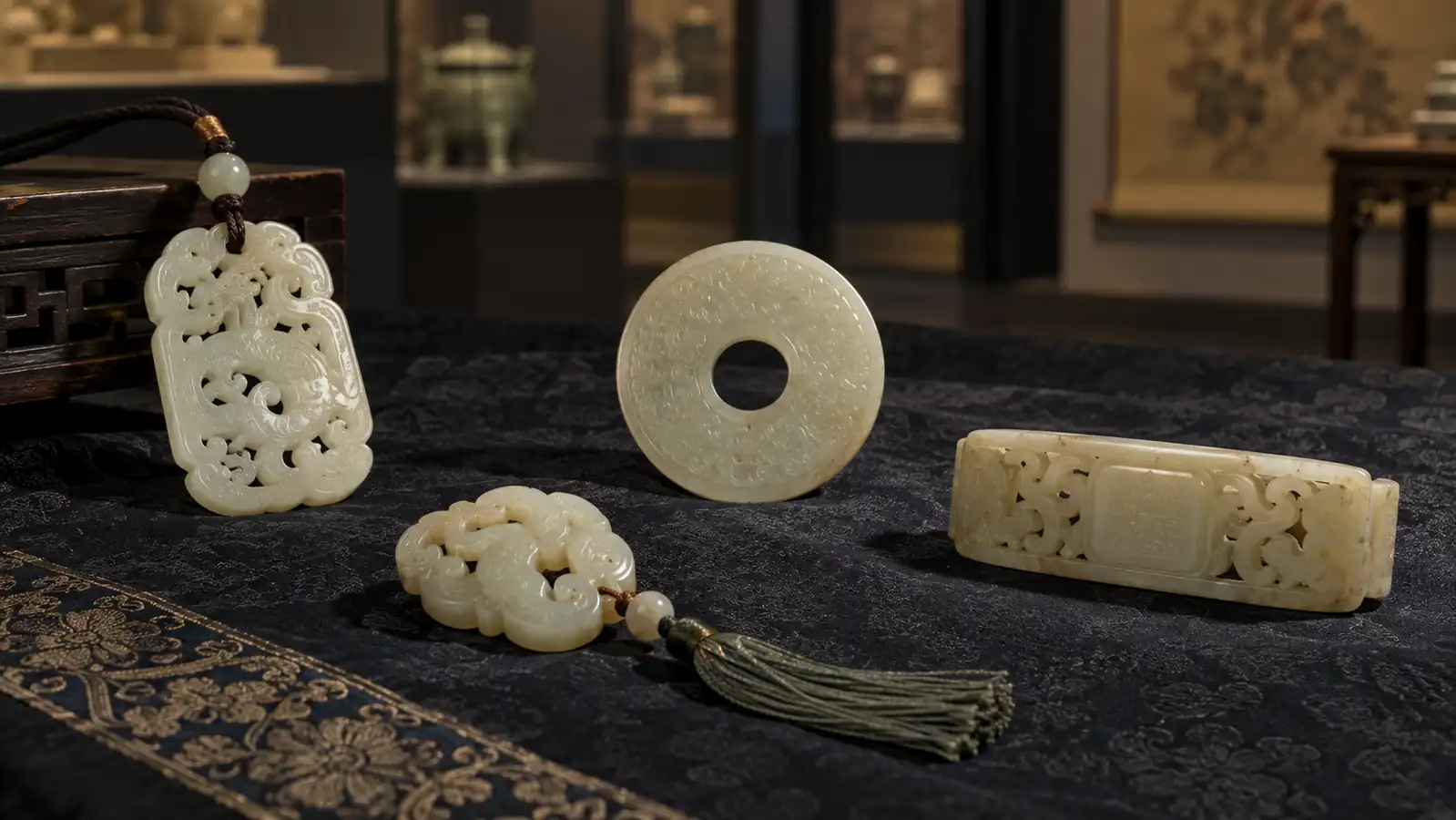
Chinese jade carvings often use a form as a compact visual message. Meanings can change with period and context, but several motifs remain widely recognized:
Dragon: authority, power, auspicious energy, and protection.
Phoenix: harmony, renewal, grace, and favorable change.
Pi Xiu: a protective creature commonly associated with guarding wealth.
Lotus: purity, integrity, and spiritual growth.
Bat: good fortune, based on a Chinese-language wordplay between “bat” and “blessing.”
Peach: longevity and immortality.
Bi disk: heaven, ritual order, continuity, and protection in different historical contexts.

Jade in Language and Legend
The character 玉 appears in names, idioms, and expressions connected with beauty or noble character. This linguistic presence shows how jade moved beyond material culture into everyday ways of describing people and ideas.
One famous cycle of stories concerns Bian He and the He Shi Bi, an unrecognized stone eventually revealed as precious jade.
In later tradition, the jade disk became connected with political legitimacy and the ideal of something valuable being recognized and returned intact.
Such stories made jade a vehicle for lessons about integrity, discernment, sacrifice, and rightful authority.
How to Judge and Buy Jade
No single color, sound test, price, or seller’s claim can establish that a piece is genuine or valuable. A sound buying decision combines visible quality, accurate identification, treatment disclosure, craftsmanship, condition, and documentation.
Compare Quality, Not Price Alone
For jadeite, recognized quality factors include color, transparency, texture, workmanship, condition, and size. Even green color should be judged for hue, saturation, tone, and distribution.
Semi-transparent material with a fine, even texture may be highly desirable, while cracks, weak polish, poor proportions, or careless carving can reduce value.
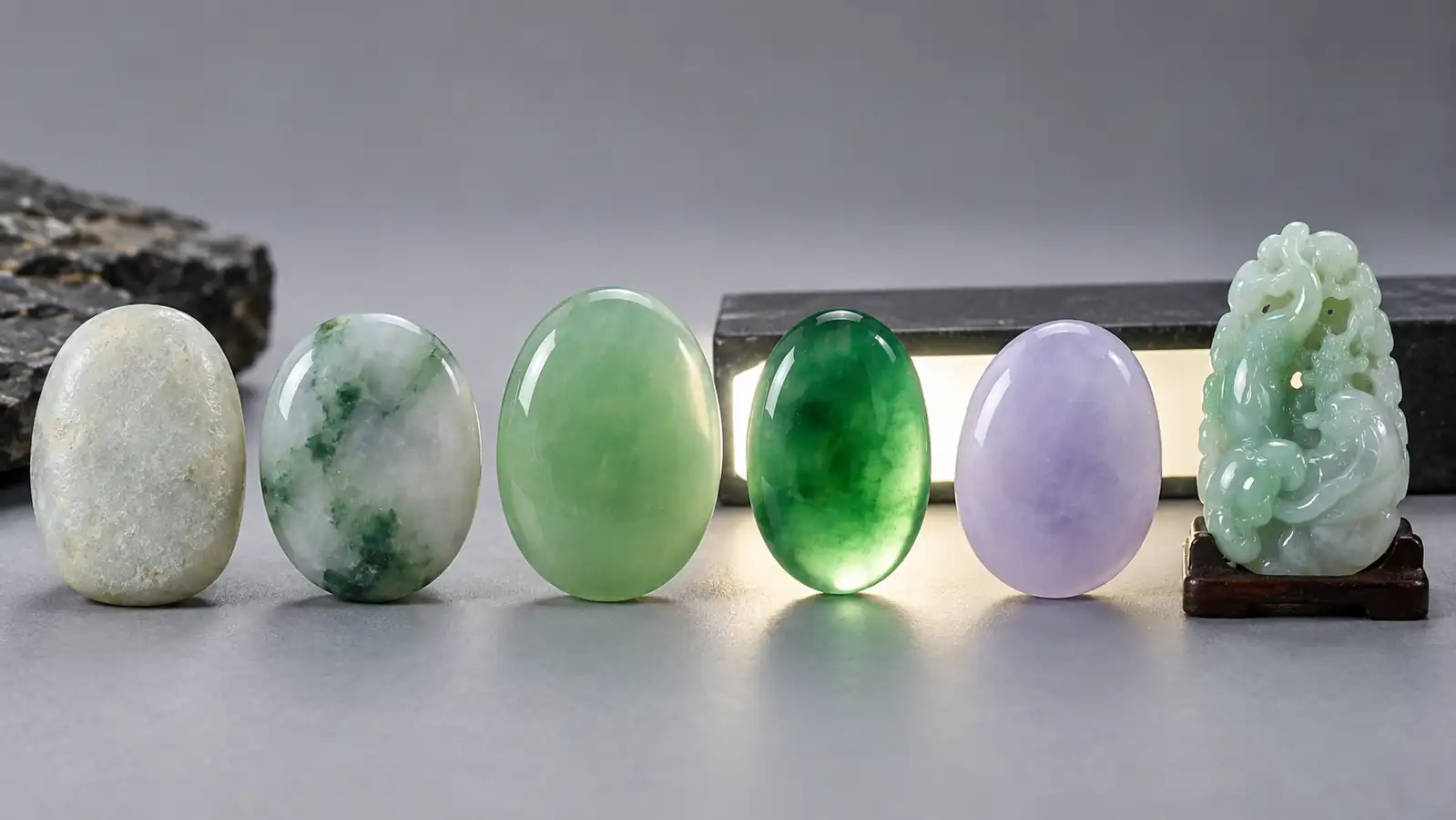
Nephrite has its own appeal: fine texture, even color, pleasing translucency, a smooth waxy luster, and strong workmanship.
Regional carving stones such as Dushan or Xiuyan jade should be assessed according to their actual material and artistic use. Because finished jade is commonly sold by the piece, universal per-gram prices can mislead buyers.
Understand Treatments and Certificates
In the jadeite trade, Type A generally describes natural jadeite that has not been subjected to color or clarity alteration beyond traditional surface waxing.
Type B refers to material bleached with acid and impregnated with polymer, while Type C is dyed. A piece can also receive combined treatments.
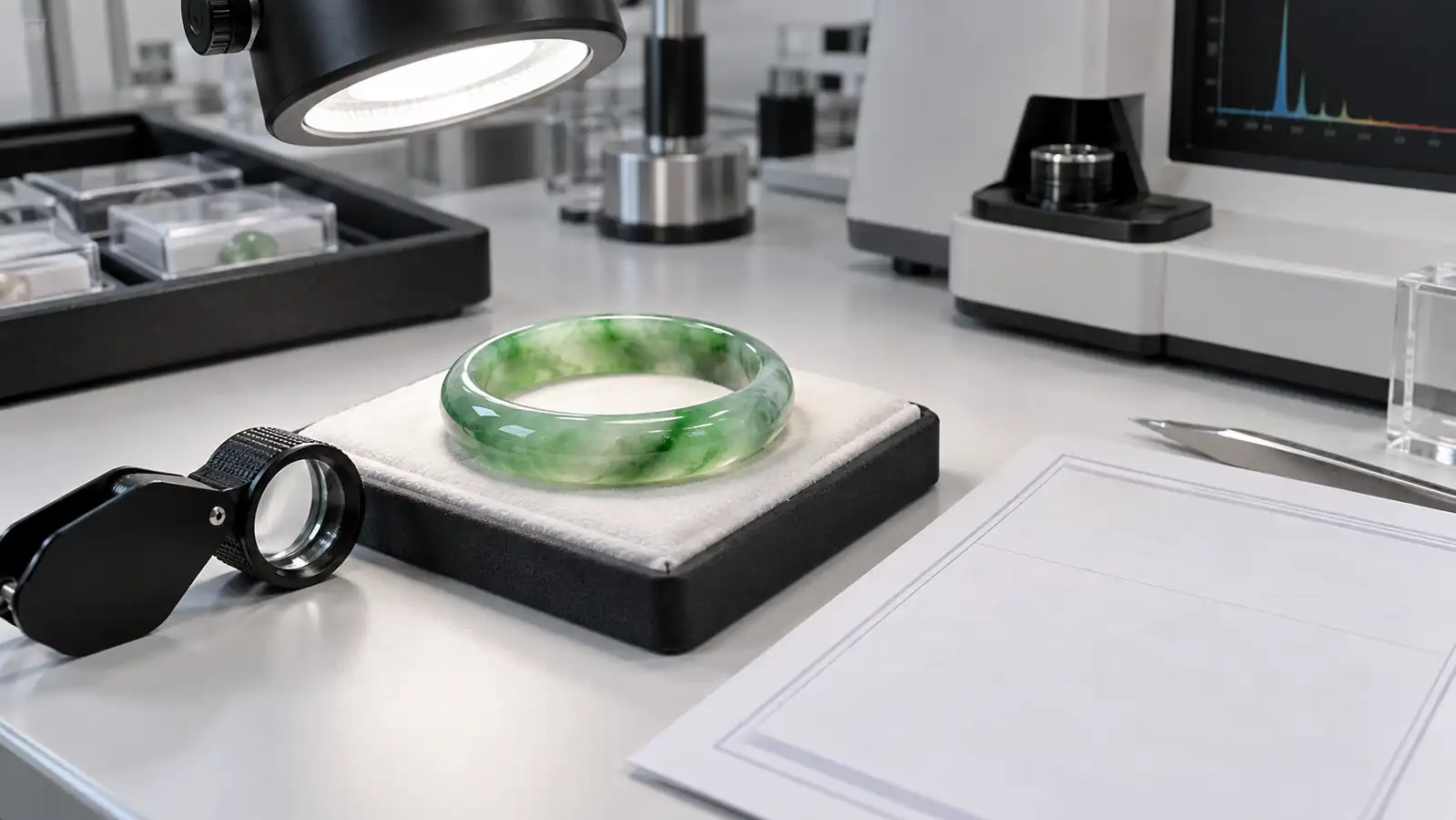
These labels concern treatment, not overall beauty or craftsmanship. Visual inspection alone may not reliably detect every treatment, so request a report from an independent gemological laboratory for a significant purchase.
Check that the report number, measurements, material identity, and treatment comments match the object being sold.
Use a Safer Buying Checklist
Ask for the exact material name rather than accepting “real jade” as a complete description.
Request written disclosure of dyes, bleaching, impregnation, filling, or other treatments.
Compare color, transparency, texture, polish, carving, and condition under neutral light.
Inspect bangles and carvings for cracks, repairs, glued components, and weak edges.
Use an independent laboratory report for expensive pieces instead of relying on home tests.
Get an itemized receipt and understand the return policy before paying.
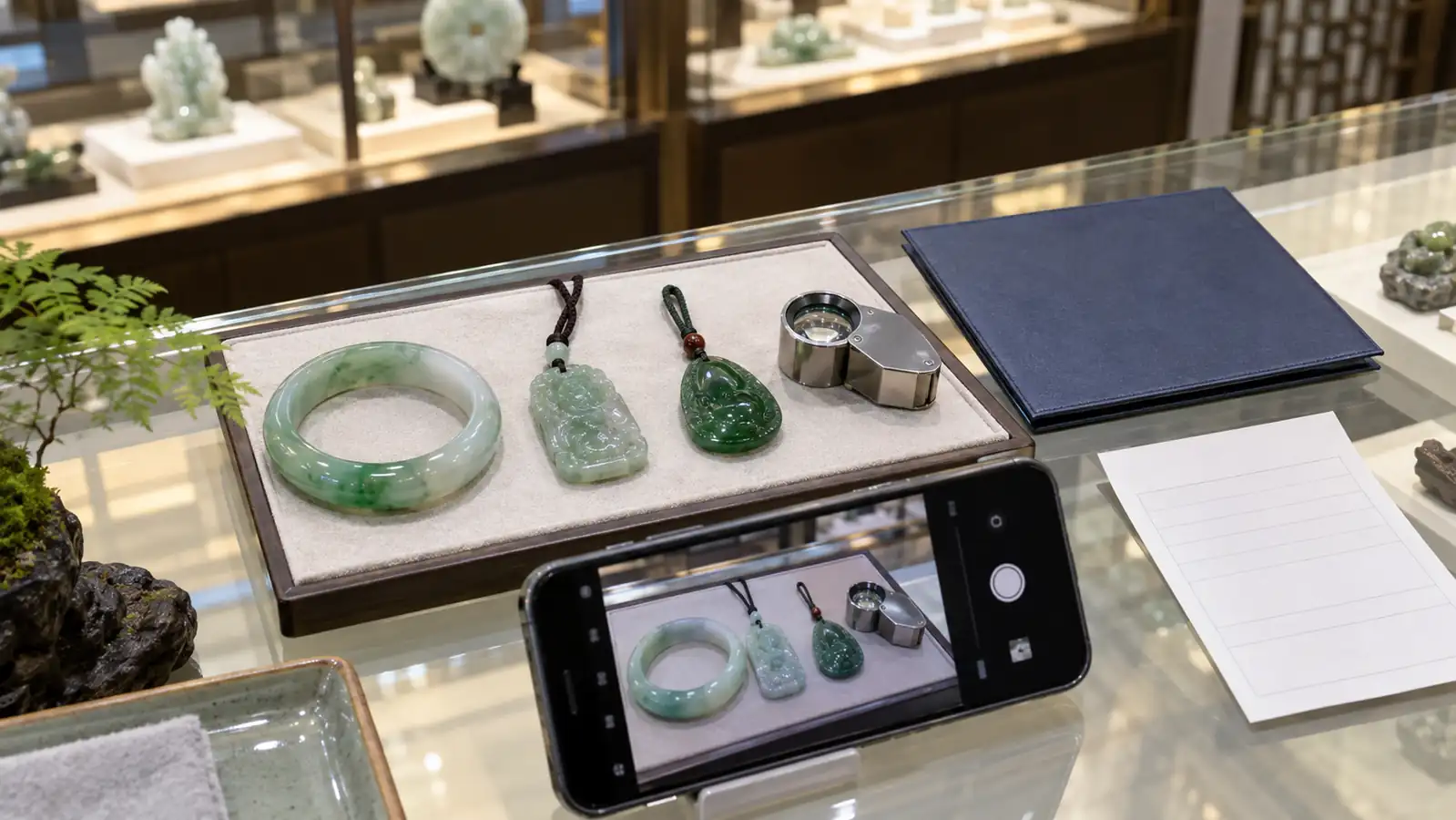
Avoid rushed purchases during a tour stop. Photograph the certificate and receipt, confirm that the item and report match, and compare at least one other seller before making a high-value decision.
How to Care for Your Jade
Jadeite and nephrite are exceptionally tough, but their polished surfaces can still scratch and a strong impact can crack a bangle or thin carving. Other regional materials sold as jade may require even gentler handling.
Clean Jade Gently
Use lukewarm water with a small amount of mild soap, then wipe the piece with a soft cloth and dry it thoroughly. Avoid abrasive powders, stiff brushes, bleach, acids, and harsh jewelry cleaners.
If the piece includes metal, adhesive, or another gemstone, follow the care requirements of the most delicate component.
Store and Wear It Safely
Store jade separately in a soft pouch or lined compartment so it does not rub against diamonds, metal edges, or other hard objects.
Remove it before impact-heavy activity, household cleaning, swimming, or applying perfume and cosmetics. Avoid sudden temperature changes and prolonged high heat.

Handle Damage Professionally
Do not polish a valuable piece with household abrasives or glue a crack yourself.
A specialist can assess whether cleaning, restringing, a metal repair, or another conservation method is appropriate. Repair may stabilize a piece, but it can affect appearance and market value, so document the work.
FAQ
1. Is Chinese jade always mined in China?
No. China has important nephrite and regional carving-stone traditions, but much of the jadeite used in Chinese jewelry historically came from Myanmar. “Chinese jade” can describe cultural use, carving, style, or trade as well as geological origin.
2. Can jade be worn every day?
Yes, well-made jade jewelry can suit daily wear, especially because jadeite and nephrite are very tough. Protect it from hard impacts, chemicals, abrasive surfaces, and insecure settings, and check bangles or clasps regularly.
3. Does wearing jade improve its quality?
Regular handling may change the surface appearance as oils and fine wear affect its luster, but it does not turn lower-quality or treated material into higher-quality jade. Intrinsic color, texture, transparency, treatments, and craftsmanship remain the main factors.
4. Can broken jade be repaired?
Sometimes. Clean breaks may be joined or reinforced, and bangles are sometimes repaired with metal fittings. Ask a qualified restorer to assess the piece because an unsuitable repair can cause further damage or reduce value.
Conclusion
Chinese jade is valued for more than its color or price. Its significance comes from the craftsmanship, history, traditions, and meanings built around it over centuries.
For buyers, understanding the material, treatments, workmanship, and condition helps make a more informed choice. For visitors, these details also reveal why jade holds such an important place in Chinese culture.
Once you understand its story, jade becomes more than a beautiful stone—it becomes a lasting link between China’s ancient craftsmanship and living culture.