
Dim sum is one of the most social ways to experience Cantonese food. Small dishes arrive in rounds, tea keeps flowing, and everyone at the table can share and try something different.
For first-time visitors, the challenge is usually knowing what to order and how much is enough. A little preparation makes the experience much easier and more enjoyable.
This guide covers dim sum culture, 17 popular dishes, regional differences, and practical ordering tips. With iRoamly China mobile data, you can also translate menus, check restaurant hours, and look up unfamiliar dishes as you eat.
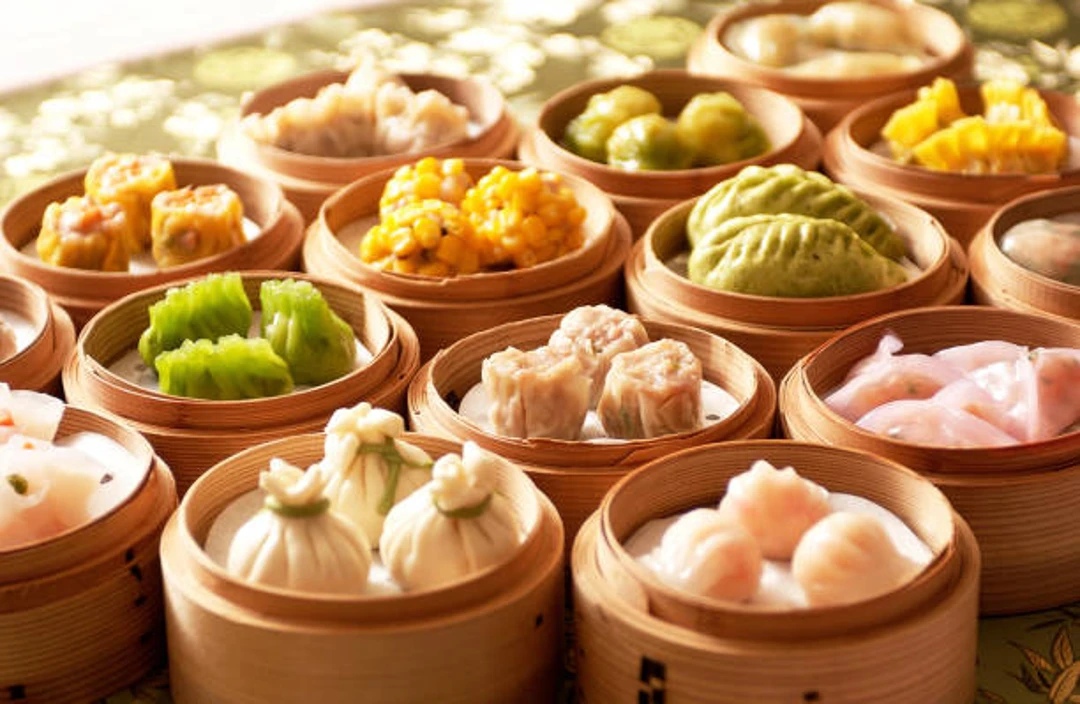
The Culture Behind Dim Sum
Dim sum is a Cantonese style of eating built around tea and small, shareable dishes.
The phrase is often translated as “touch the heart,” while yum cha means “drink tea.” In everyday use, yum cha describes the whole outing: gathering around a table, pouring tea, and ordering dim sum over a leisurely meal.
The tradition developed in southern China, especially Guangdong, and became central to food culture in Hong Kong as well. It is usually associated with breakfast, brunch, or lunch rather than a formal evening meal.
The room may be lively, the dishes may arrive in no fixed order, and sharing a table or sitting close to other groups can be part of the atmosphere.
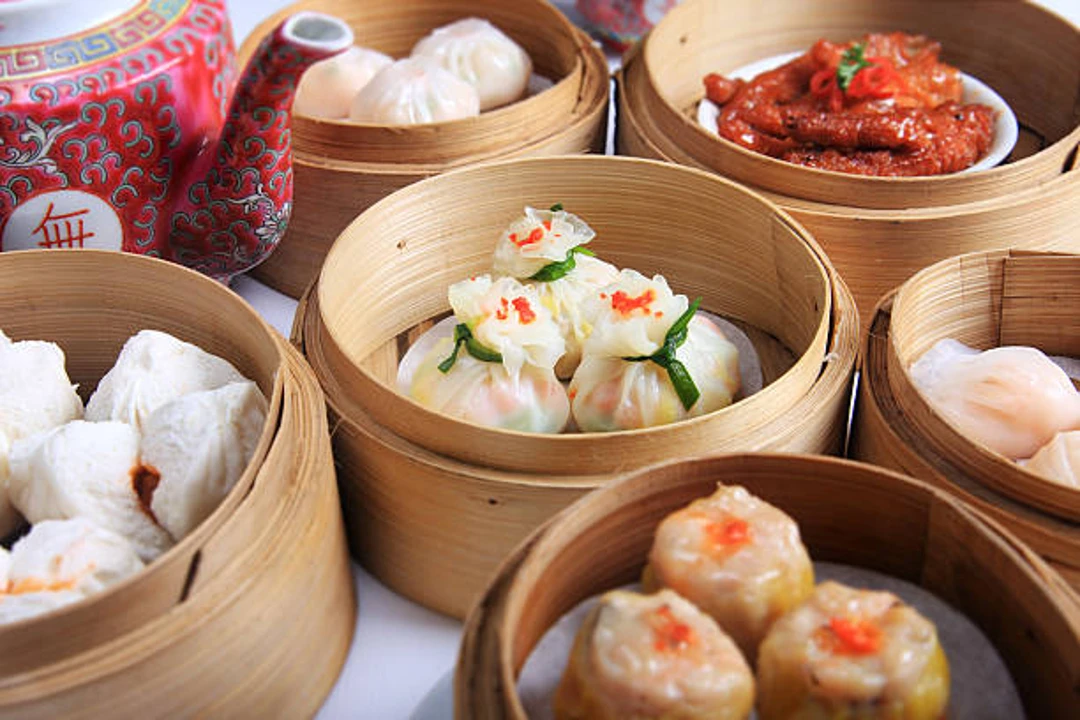
The point is variety rather than one main course. A good table moves among delicate dumplings, soft buns, crisp pastries, rice or noodle dishes, vegetables, and sweets.
Tea resets the palate between richer bites, and ordering in rounds keeps the food hot and the pace relaxed.
How to Order Dim Sum
Cart, Checklist, or QR Code
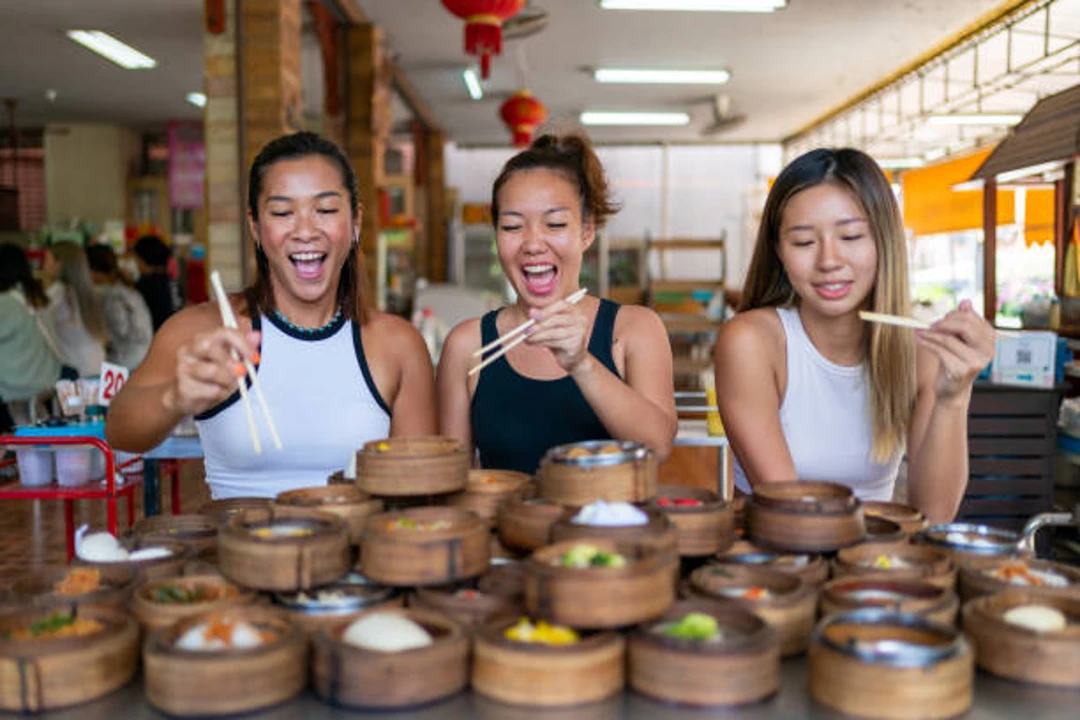
Traditional cart service lets you inspect dishes as servers move through the room. Point to what you want, and the server marks a card that is totaled later.
The advantage is spontaneity; the drawback is that a favorite item may pass another aisle first or sell out before reaching you.
Paper checklists and QR menus give you more control. You select dishes, submit the order, and receive them as the kitchen finishes each batch.
Photos and translation tools help, but ask a server when a filling or cooking method is unclear rather than guessing from the image.
Build a Balanced First Order
For a small group, begin with roughly two dishes per person, then add another round if everyone is still hungry.
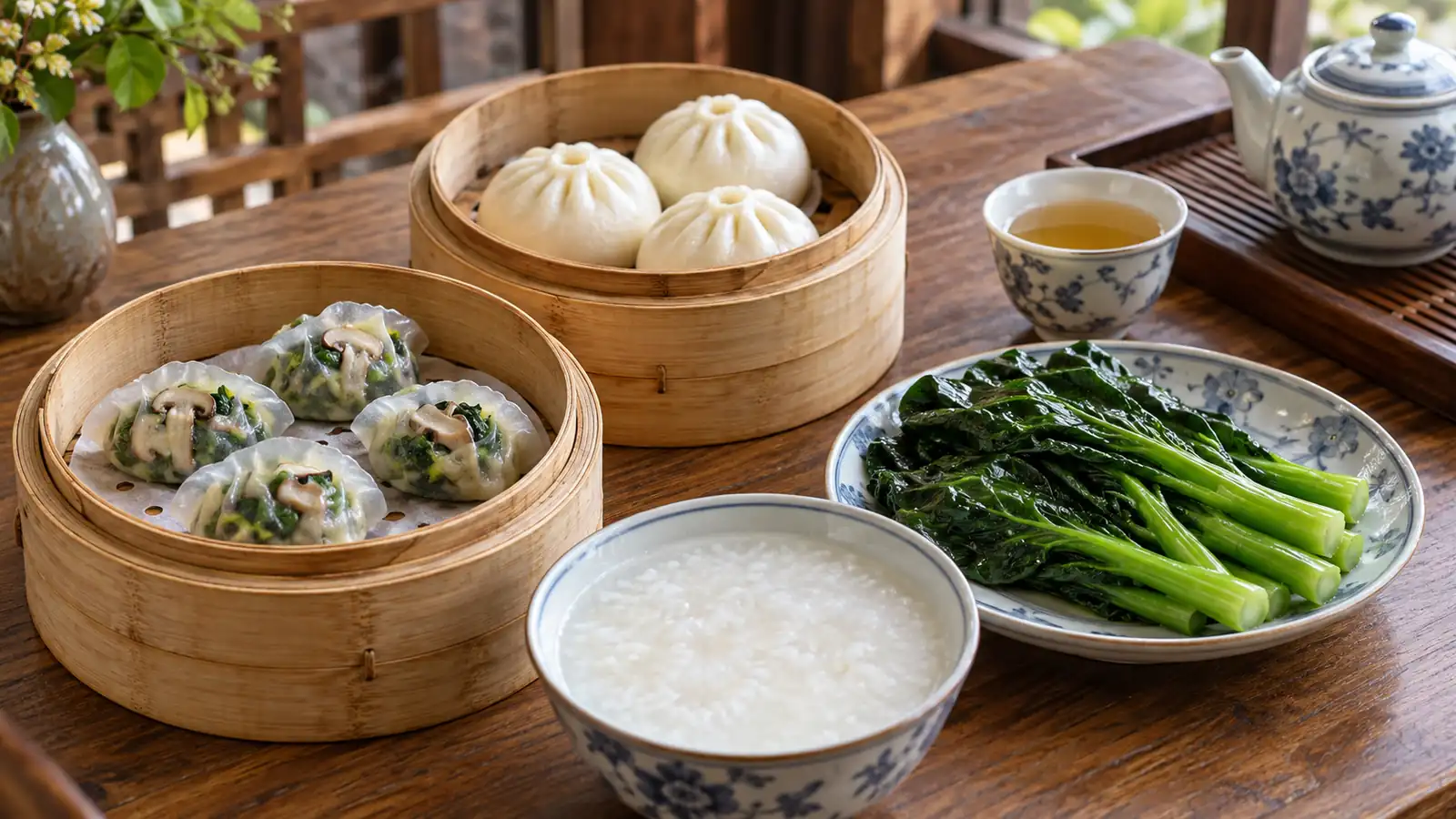
Choose different cooking methods and textures: har gow or siu mai, a bun, cheung fun, a crisp item, and a vegetable. Add a filling rice dish only if the group wants it.
A basket often contains three or four pieces, but portions vary. Check the menu before ordering several baskets of the same dish.
Pace the Meal in Rounds
Dim sum is better hot than abundant. Let the first round arrive, taste everything, and then reorder favorites or add a more adventurous dish.
This approach limits waste, leaves room for sweets, and prevents delicate dumplings from cooling under a stack of untouched steamers.
Must-Try Dim Sum Dishes
If this is your first meal, build contrast into the order. Choose at least one steamed dumpling, one bun or rice-roll dish, one crisp or pan-seared item, one vegetable, and one sweet.
The table below is a quick starting point; the profiles that follow explain 17 dishes you may see in China.
Dish | What It Is | Why Order It |
|---|---|---|
Har gow | Translucent shrimp dumplings | A benchmark for wrapper skill and shrimp texture |
Siu mai | Open-topped pork and shrimp dumplings | A savory, beginner-friendly staple |
Char siu bao | Steamed or baked barbecue-pork buns | A soft, sweet-savory contrast |
Cheung fun | Silky rice-noodle rolls with sauce | A lighter texture between richer dishes |
Turnip cake | Daikon-and-rice-flour cake, pan-seared | Crisp edges with a soft savory center |
Gai lan | Chinese broccoli, often with oyster sauce | A fresh vegetable counterpoint |
Wu gok | Crisp taro dumplings with savory filling | One of the menu's most distinctive textures |
Egg tart | Flaky pastry with egg custard | A classic finish that is easy to share |
Steamed Classics Worth Ordering
Steamed dishes reveal the precision of a dim sum kitchen. Eat them soon after they arrive, before delicate wrappers tighten and soft buns cool.
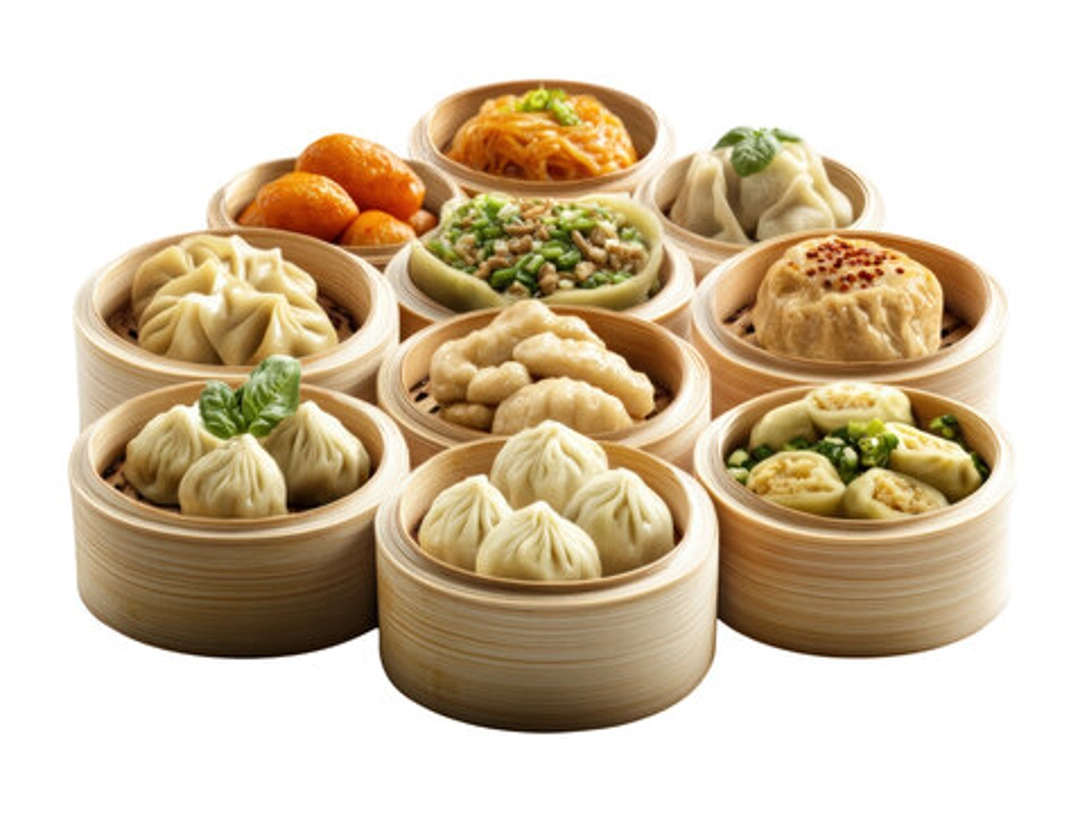
1. Har Gow
Har gow are shrimp dumplings wrapped in a thin, translucent wheat-starch skin. A well-made wrapper is tender and slightly chewy without tearing when lifted. The filling is usually kept simple so the shrimp remains the focus.
2. Siu Mai
Siu mai are open-topped dumplings commonly filled with pork and shrimp, sometimes with mushrooms or water chestnuts. They are richer than har gow and make a useful reference point for the kitchen's seasoning and meat texture.
3. Char Siu Bao
Char siu bao enclose sweet-savory barbecue pork in a soft bun. The steamed version is pale and fluffy, while the baked version has a golden, lightly glazed exterior. Ordering one style is enough for a small table; trying both turns the choice into a texture comparison.
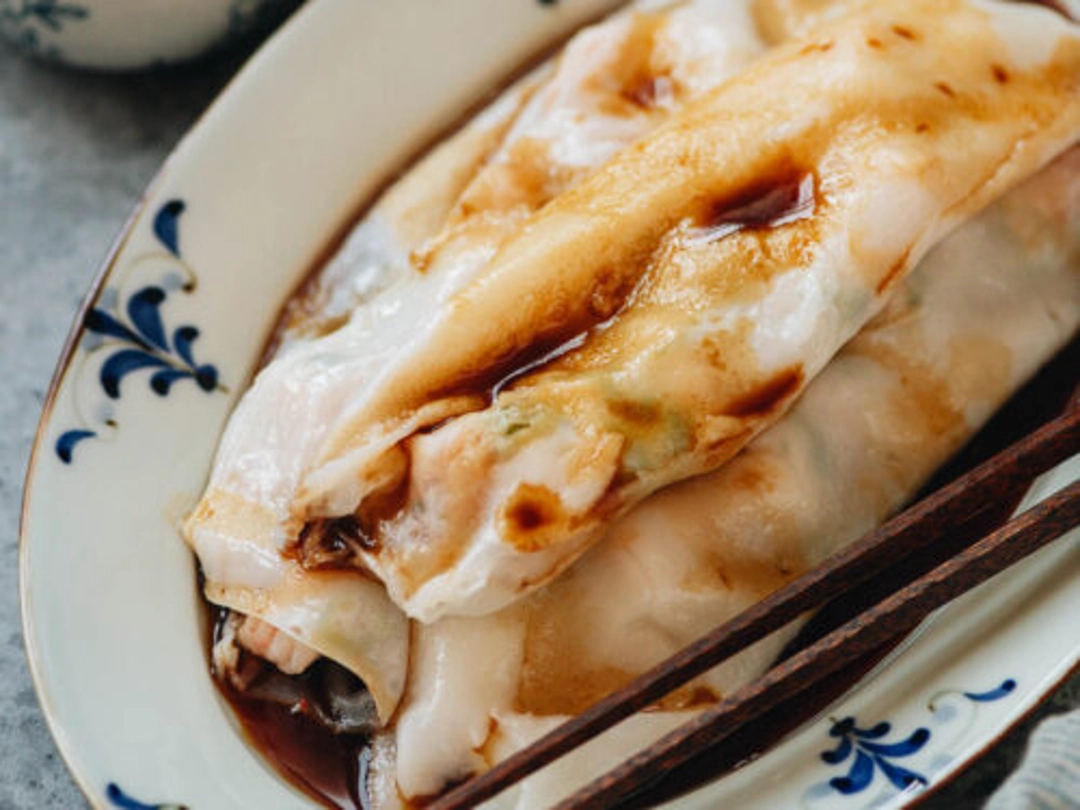
4. Cheung Fun
Cheung fun are broad sheets of steamed rice batter rolled around shrimp, beef, char siu, vegetables, or sometimes fried dough. They arrive under a light soy-based sauce and are especially good for balancing crisp or heavily seasoned plates.
5. Steamed Spare Ribs
Small pieces of pork rib are steamed with fermented black beans, garlic, and seasonings until tender. The dish is bold, salty, and more substantial than a dumpling basket. Eat carefully because the bones remain in the pieces.
6. Braised Chicken Feet
Often called phoenix claws, chicken feet are fried, braised, and steamed until the skin and tendons become soft and gelatinous. They are a classic choice for adventurous eaters, but they contain many small bones and are best approached slowly.
Crisp and Baked Favorites
One crisp plate prevents a first order from becoming a parade of soft wrappers. These dishes are most satisfying when they arrive hot, so add them after the first steamed round rather than crowding the table at once.
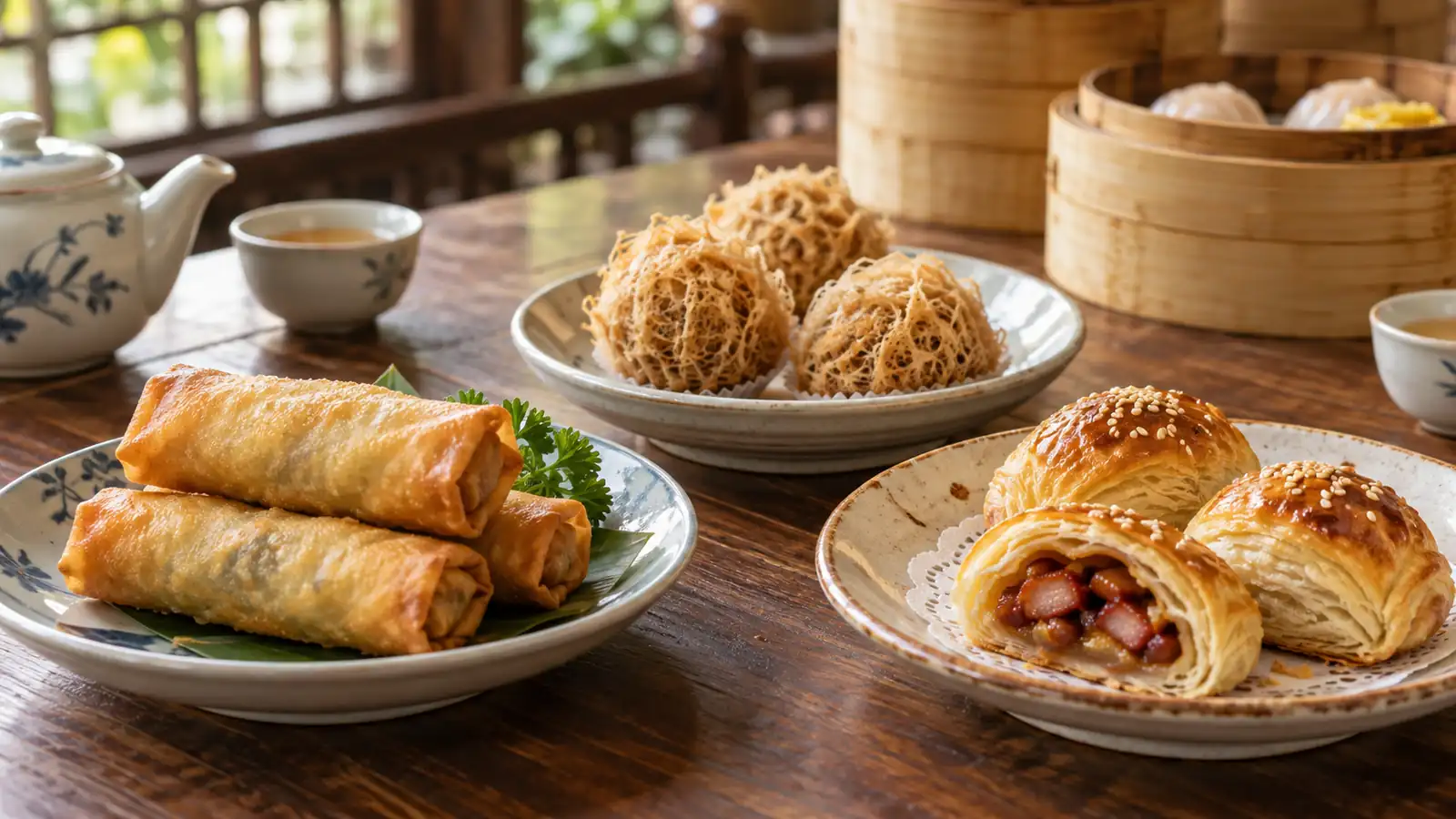
7. Spring Rolls
Cantonese spring rolls use thin wrappers that fry into a light shell around vegetables and, depending on the kitchen, pork or shrimp. Ask about the filling rather than assuming a vegetable-labeled roll is vegetarian.
8. Wu Gok
Wu gok are taro dumplings with a delicate honeycomb-like exterior and a savory filling that often includes pork and mushrooms. Their airy crispness and creamy taro layer make them unlike any steamed dumpling on the table.
9. Char Siu Sou
Char siu sou pairs barbecue pork with flaky baked pastry. It is richer and more crumbly than char siu bao, so one order shared across the table usually provides enough contrast without overwhelming the meal.
Rice, Noodles, and Savory Sides
These dishes broaden the meal beyond dumplings. They also tend to be more filling, so order one or two for the table instead of treating each as an individual portion.
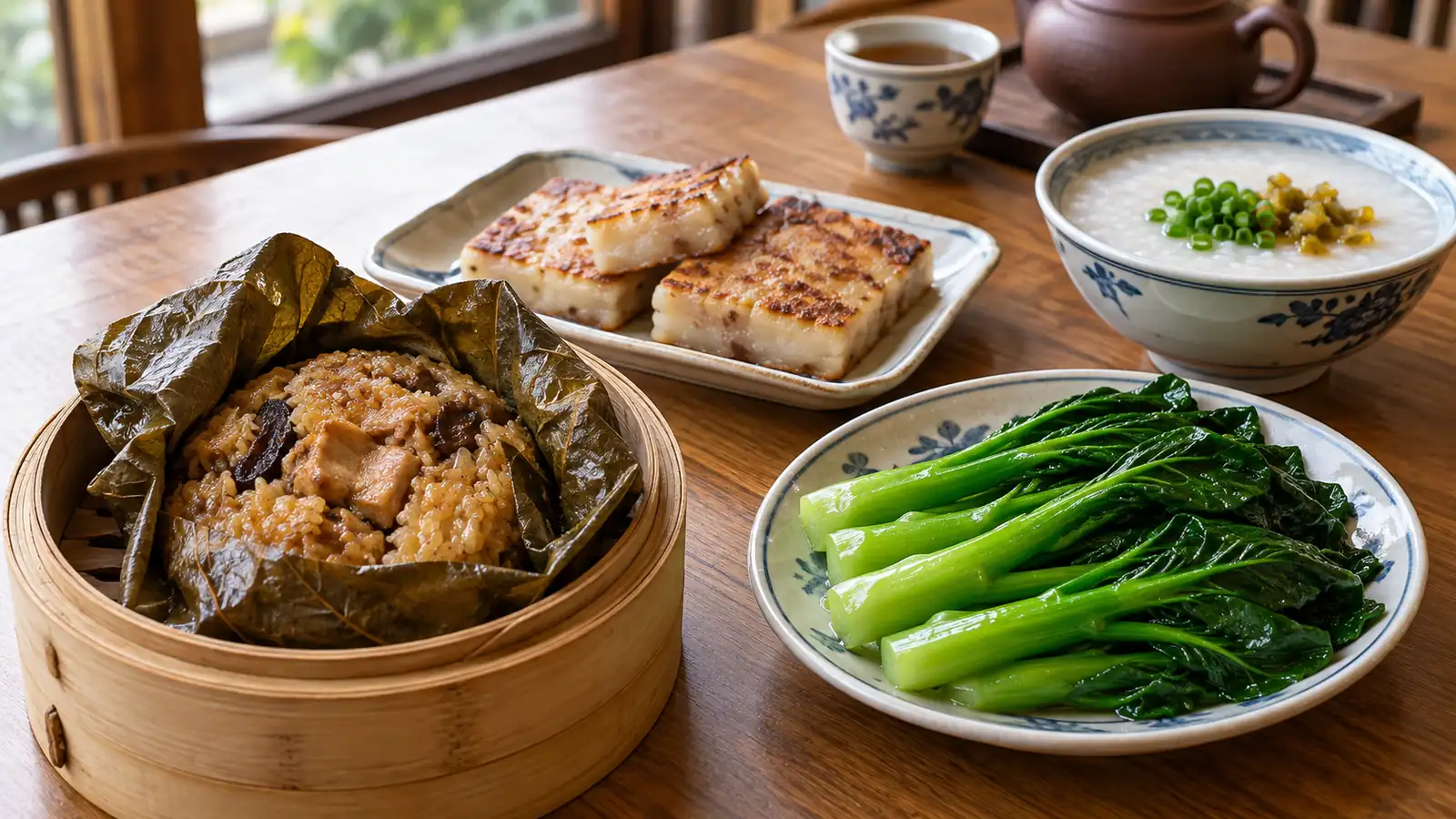
10. Lo Mai Gai
Lo mai gai is sticky rice steamed in a lotus leaf with ingredients such as chicken, mushrooms, Chinese sausage, and salted egg yolk. The rice absorbs the leaf's fragrance and the filling's seasoning; one parcel can be enough for several people to sample.
11. Turnip Cake
Despite the English name, lo bak go is usually made with daikon radish and rice flour. It may also contain dried shrimp or Chinese sausage. Slices are pan-seared so the outside browns while the center stays soft and savory.
12. Gai Lan
Blanched or steamed Chinese broccoli brings freshness to a table of dumplings and pastry. It is often finished with oyster sauce, so vegetarians should ask for a meat-free sauce rather than relying on the vegetable alone.
13. Congee
Congee is a mild rice porridge served with toppings such as pork, preserved egg, scallions, or fried dough. It works well for anyone who wants a warm, gentle dish, but the toppings can turn a plain-looking bowl into a meat-based order.
Sweet Finishes Worth Sharing
Dim sum sweets are usually ordered with the rest of the meal rather than as a formal dessert course. If a popular item is made in batches, ordering it early can prevent disappointment later.
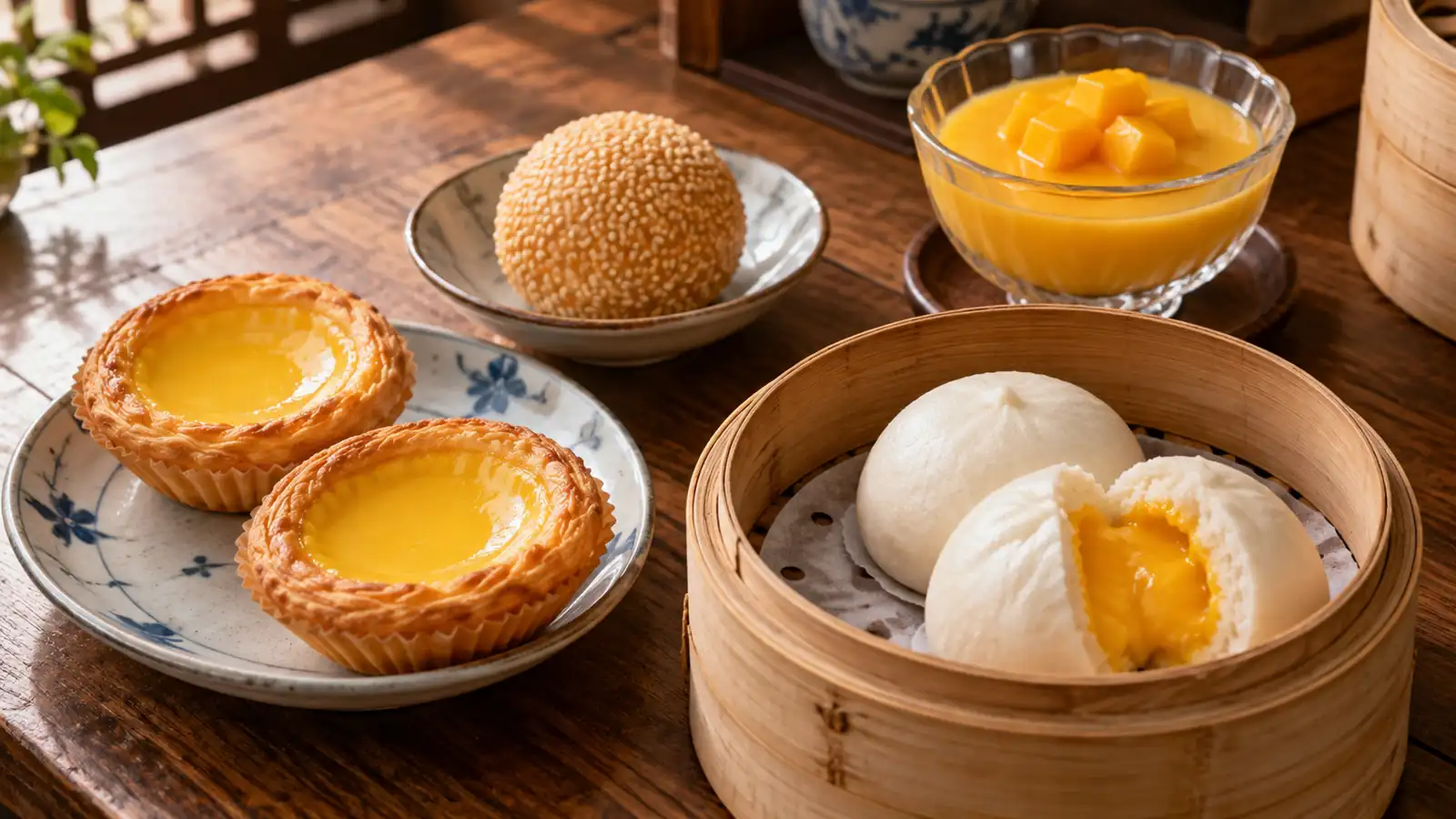
14. Egg Tarts
Egg tarts combine a flaky or short pastry shell with a soft custard center. They are best while still warm, when the shell remains crisp and the filling has just set.
15. Sesame Balls
Sesame balls have a sesame-coated exterior, a chewy glutinous-rice layer, and a sweet bean-paste filling. Their crisp-chewy contrast earns them a place even when the table has already ordered buns.
16. Steamed Custard Buns
Custard buns are fluffy steamed buns filled with a sweet egg custard; some versions use salted egg yolk for a richer, flowing center. Take the first bite carefully because the filling can be very hot.
17. Mango Pudding
Mango pudding is a cool, smooth finish after a table of hot steamers and fried dishes. Recipes vary and may include dairy or setting agents, so diners with dietary restrictions should confirm the ingredients.
Best Cities for Dim Sum
Guangzhou: Teahouse Tradition at Its Source
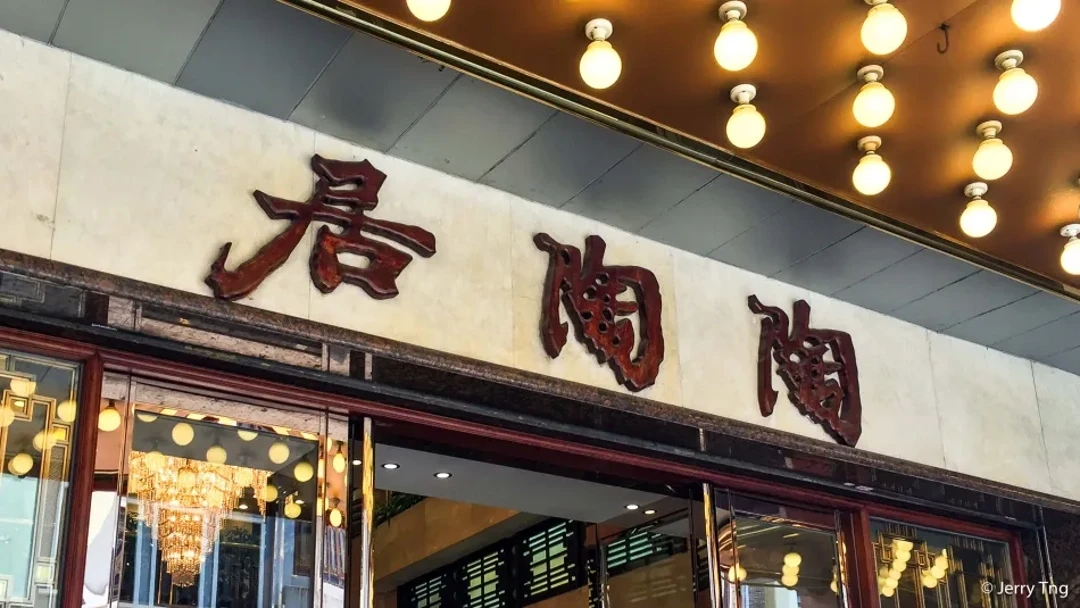
For travelers who want the deepest connection to the Cantonese teahouse tradition, Guangzhou, China, is the natural starting point.
Long-established restaurants and neighborhood tea houses make morning tea part of everyday life, and the menu often extends well beyond the best-known dumplings.
Choose Guangzhou for a local, unhurried atmosphere and broad regional selection. Earlier service can be especially rewarding, while large weekend crowds show how strongly the meal remains tied to family routines.
Hong Kong: Everyday Range and Polish
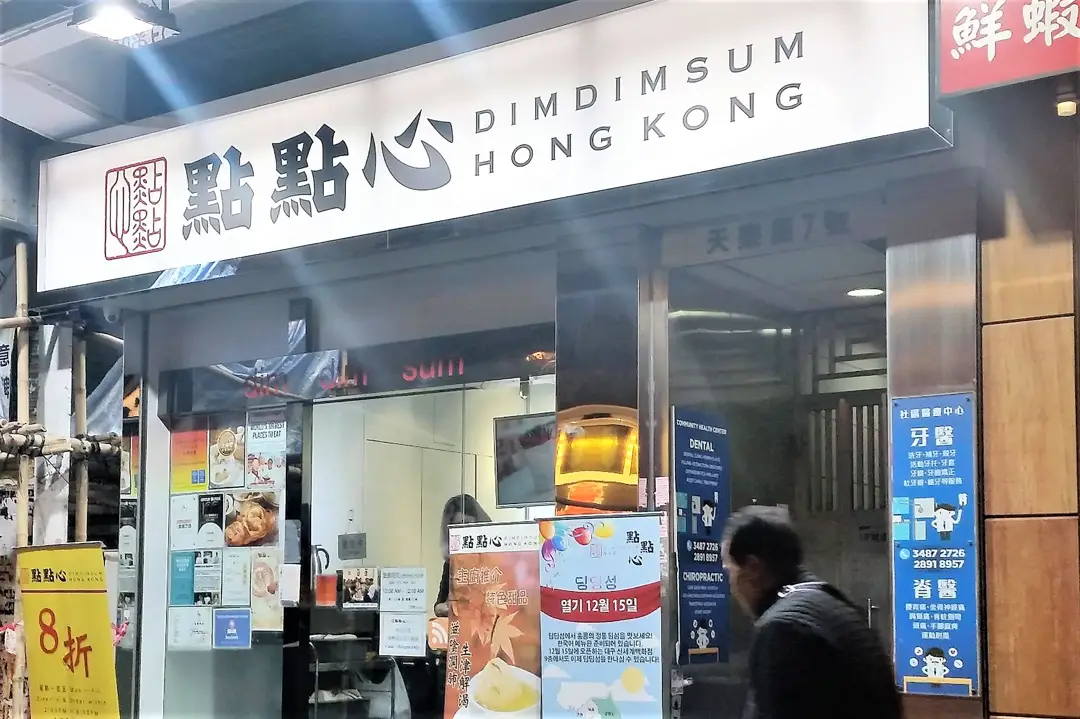
Hong Kong offers the widest range of settings, from neighborhood dining rooms to refined hotel restaurants.
A casual tea house emphasizes speed, familiarity, and everyday ritual; a high-end dining room emphasizes delicate technique, specialty ingredients, and polished service.
Choose Hong Kong if you want to compare styles in one city. Popular restaurants may use timed reservations or electronic queues, so check the current system before traveling across town for a specific meal.
Shanghai and Beijing: Cantonese Dining Elsewhere
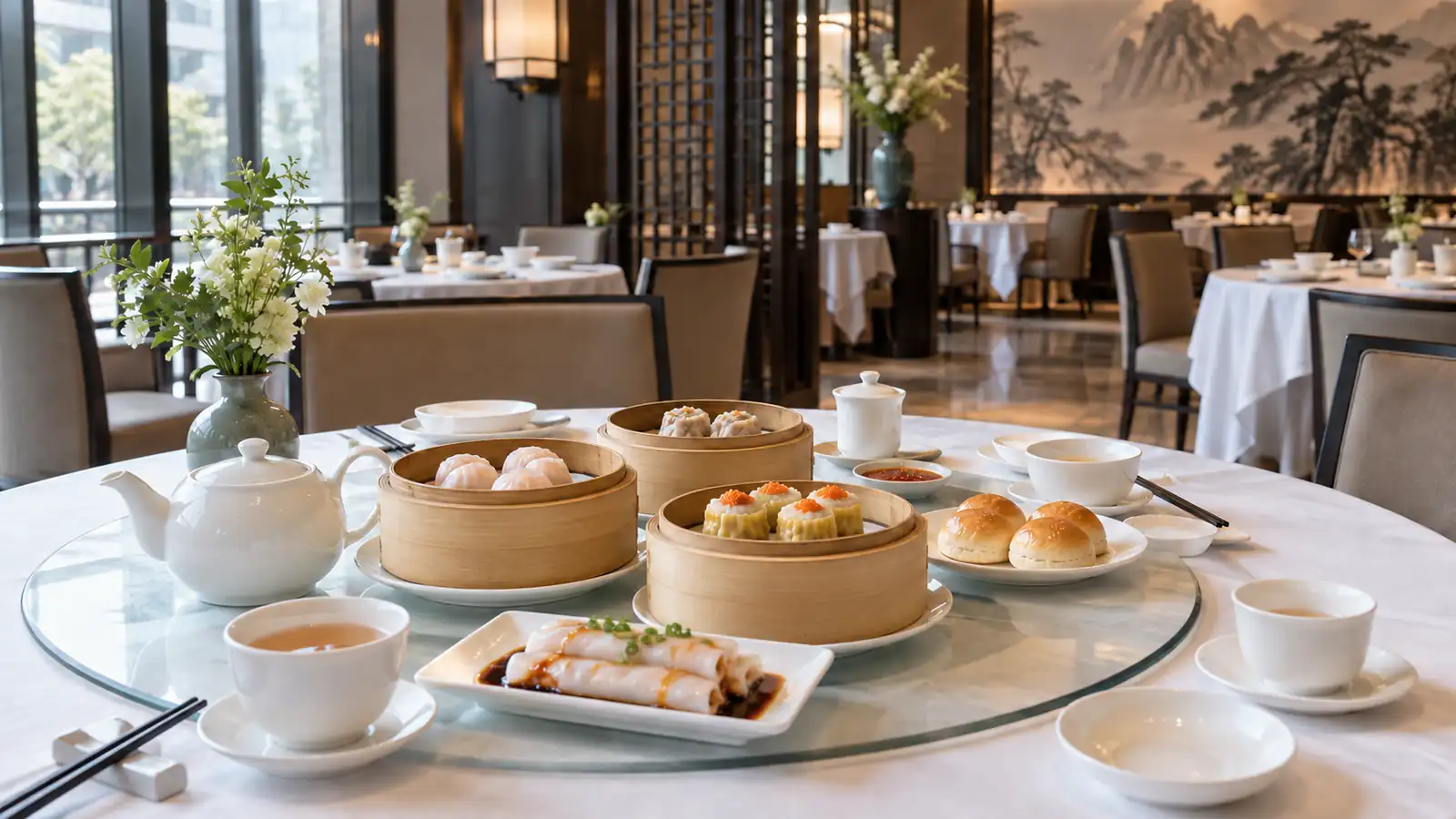
Shanghai and Beijing have excellent Cantonese restaurants, including elegant dining rooms and branches of well-known regional groups.
The experience can be convenient and highly polished, but dim sum is less embedded in everyday local food culture than it is in Guangzhou or Hong Kong.
Choose these cities when they are already part of your route, or when your group prefers reservations, formal service, and a bilingual menu. For the strongest sense of yum cha as a living regional tradition, prioritize southern China.
Dim Sum Etiquette and Tea
Choose Your Tea First
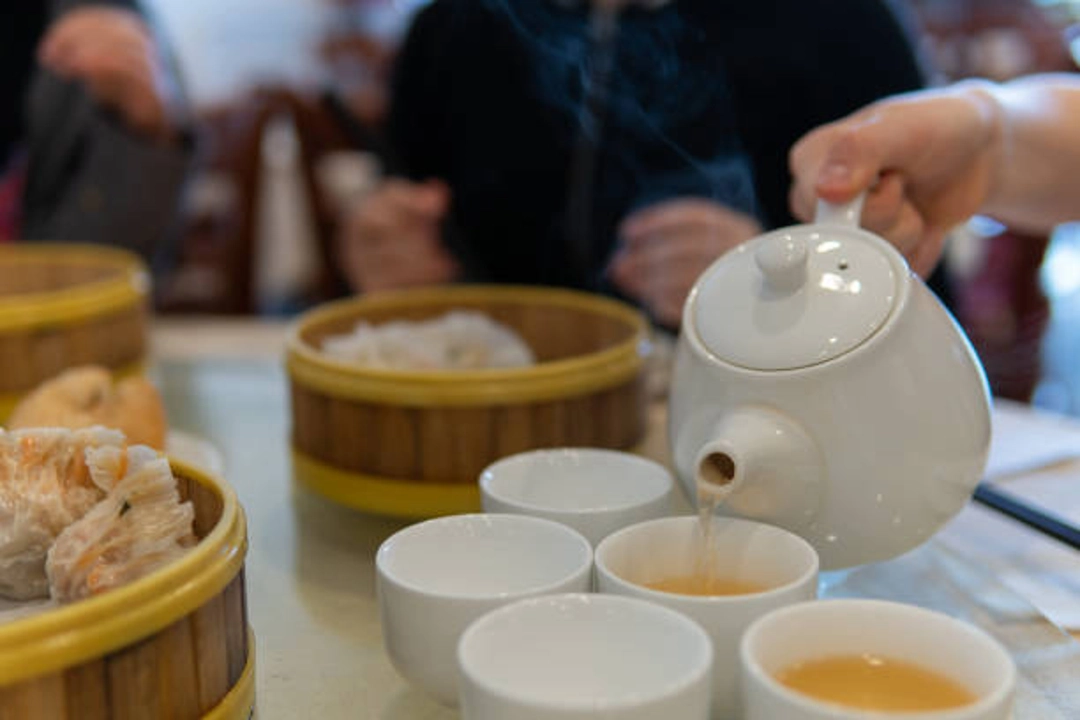
Tea is normally selected soon after you sit down.
Pu'er is earthy and handles richer dishes well; jasmine is floral; chrysanthemum is light and aromatic; and oolong sits between fragrance and depth. If the list is unfamiliar, asking for the house tea is completely acceptable.
Share Dishes with Consideration
Pour tea for others before filling your own cup. Move food from a shared plate to your own dish before eating it, using serving utensils when they are provided. If one piece remains, offer it around the table before taking it.
Read Common Table Signals
A light two-finger tap on the table is a customary thank-you when someone pours tea. At many restaurants, setting the teapot lid slightly ajar signals that it needs refilling, although practices vary.
Rest chopsticks across a holder or plate rather than standing them upright in a bowl.
Timing, Queues, and Reservations
Choose the Right Service Window
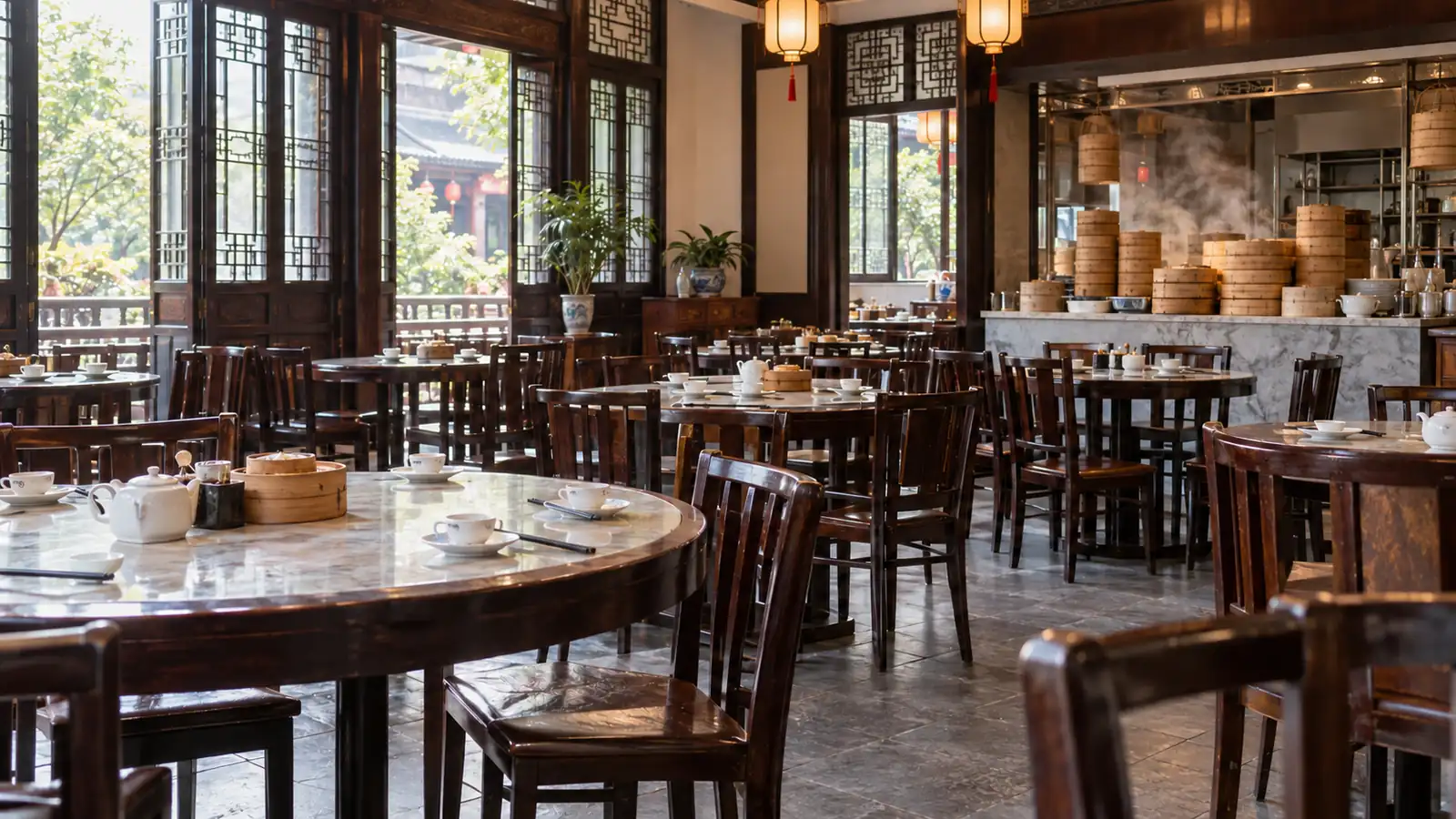
Morning through early afternoon is the most traditional window, but exact service hours differ by restaurant. Arriving earlier usually means a calmer room and a fuller selection.
Weekdays are easier for first-timers who want time to ask questions; weekends deliver the liveliest family atmosphere but often the longest wait.
Plan for Queues and Bookings
Check same-day opening hours and the restaurant's current queue or reservation method before leaving your hotel. Some famous venues accept bookings, while traditional tea houses may seat guests only in arrival order.
Electronic queue systems may require a local number or app, so ask your hotel to help when the process is unclear.
Order Before Favorites Sell Out
Some pastries and fried dishes are produced in batches, and specialty items can disappear before the end of service. If a must-try dish appears on the menu, include it in the first order. You can still pace the rest of the meal in later rounds.
Dim Sum Costs and Payment
What Changes the Final Bill
Prices vary more by city, venue, and ingredients than by the number of bamboo baskets alone.
A neighborhood tea house may be inexpensive, a historic restaurant may charge more for reputation and location, and a hotel or fine-dining room may add premium seafood, polished service, or a tea charge.
Local tea house: best for everyday atmosphere and gradual ordering.
Well-known traditional restaurant: expect queues, a broad menu, and moderate-to-premium pricing.
Hotel or fine dining: best for reservations, formal service, and specialty dishes, usually at the highest price level.
Order in rounds and check whether tea, service, or premium dishes are priced separately. This gives you more control than trying to estimate the total from basket count alone.
Paying on the Chinese Mainland
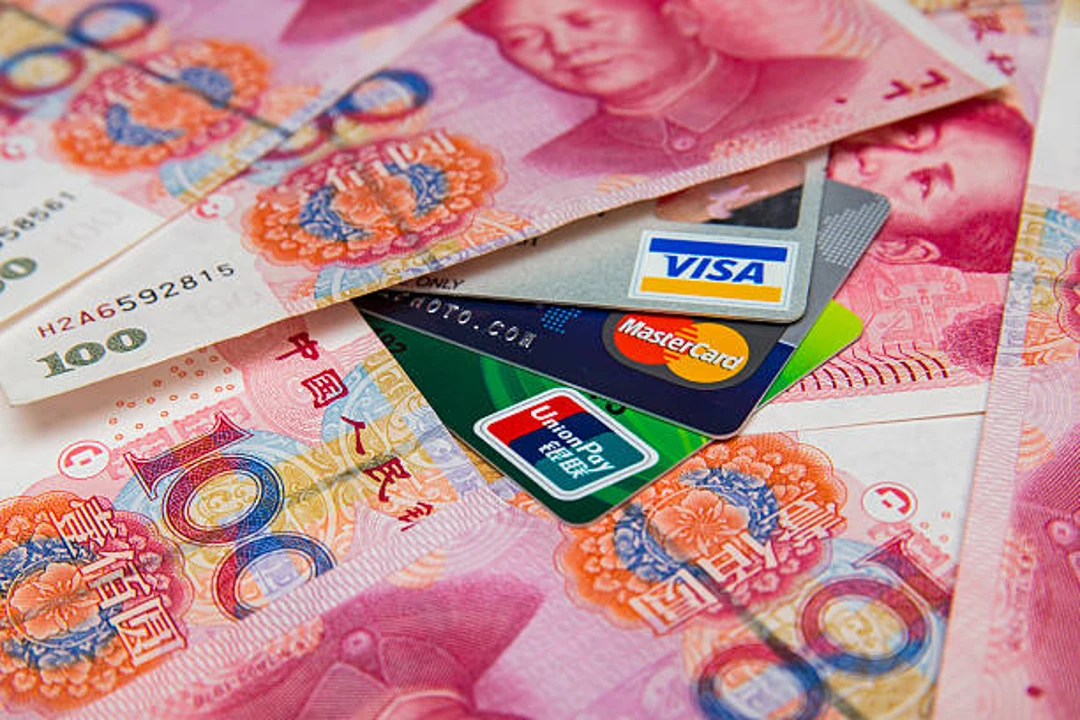
Mobile payment is widely used, and overseas visitors can link eligible international cards to services such as Alipay or Weixin Pay.
Bank cards work where the relevant network logo is displayed, and RMB cash remains an option.
Set up a mobile method before the meal, but carry some cash as a backup rather than assuming every small restaurant will accept a foreign card.
Review the currency of China before your trip if you are unfamiliar with renminbi denominations.
Paying in Hong Kong
Hong Kong restaurants may accept cash, cards, stored-value systems, or mobile payment in different combinations.
Check the entrance, menu, or cashier before ordering if you have only one payment method. Small neighborhood venues are the most important places to confirm.
FAQ
1. Are Xiaolongbao a Cantonese Dim Sum Classic?
Not traditionally. Xiaolongbao are Shanghainese soup dumplings, although restaurants outside China often place them on broader dim sum menus. Enjoy them if they are available, but do not use them as the main measure of a Cantonese kitchen.
2. Can Solo Travelers Enjoy Dim Sum?
Yes. Choose a restaurant with half portions or a broad single-item menu, order two or three dishes plus tea, and add more only if needed. Shared tables can make solo dining easier in traditional tea houses.
3. Do I Have to Use Chopsticks?
No. Ask for a fork if that is more comfortable, and use a spoon for slippery rice rolls or dumplings with hot liquid. Good manners matter more than perfect chopstick technique.
4. Is Dim Sum Suitable for Children?
It can be a good family meal because everyone can sample small portions. Let hot fillings cool, check for allergens, and remove bones from dishes such as spare ribs or chicken feet before sharing them with a child.
Conclusion
Dim sum becomes much less intimidating once you stop treating the menu as a test. Start with a few contrasting dishes, let tea set the pace, and give the table room to discover a favorite together.
Guangzhou and Hong Kong offer the strongest connection to the tradition, but the same principle travels well: order gradually, pay attention to texture, and respect the shared rhythm of the meal.
Knowing how carts, tea, timing, and dietary questions work lets you focus on the pleasure rather than the procedure.
The best first dim sum meal is not the one with the most baskets. It is the one that leaves everyone reaching across the table for one last taste and already planning what to order next time.