
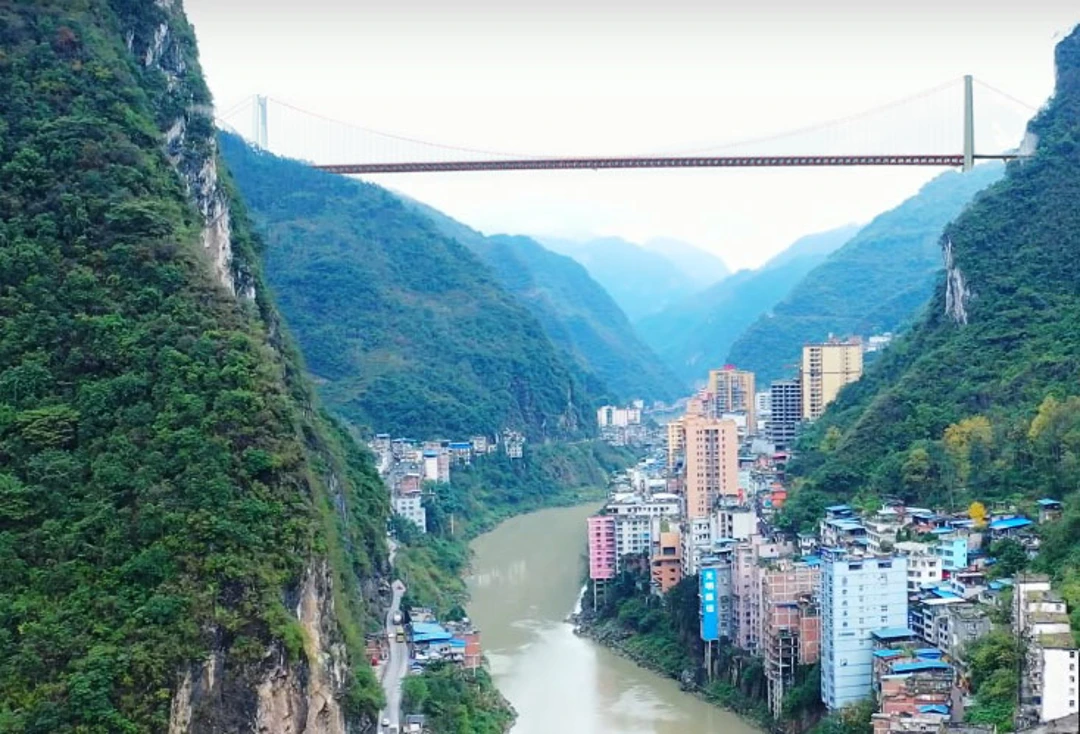
Yanjin, China, is a striking city squeezed between steep mountains and a winding river in northeast Yunnan. Its narrow urban landscape has made it famous for dramatic aerial views.
But there is more to Yanjin than its unusual geography. Beyond the urban center, the area offers historic sites, local food, and mountain scenery worth exploring.
This guide covers what to see, eat, and know before visiting Yanjin. An iRoamly China travel eSIM can also keep maps, translation, and travel information within easy reach.
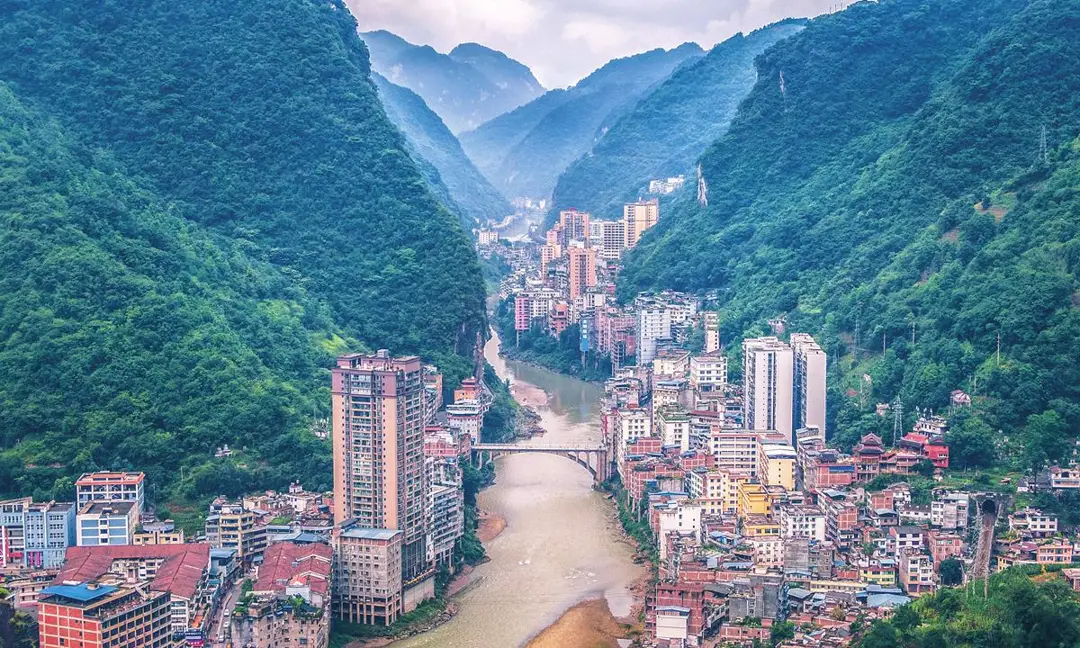
Unique Geography: The Narrowest City in the World
Location
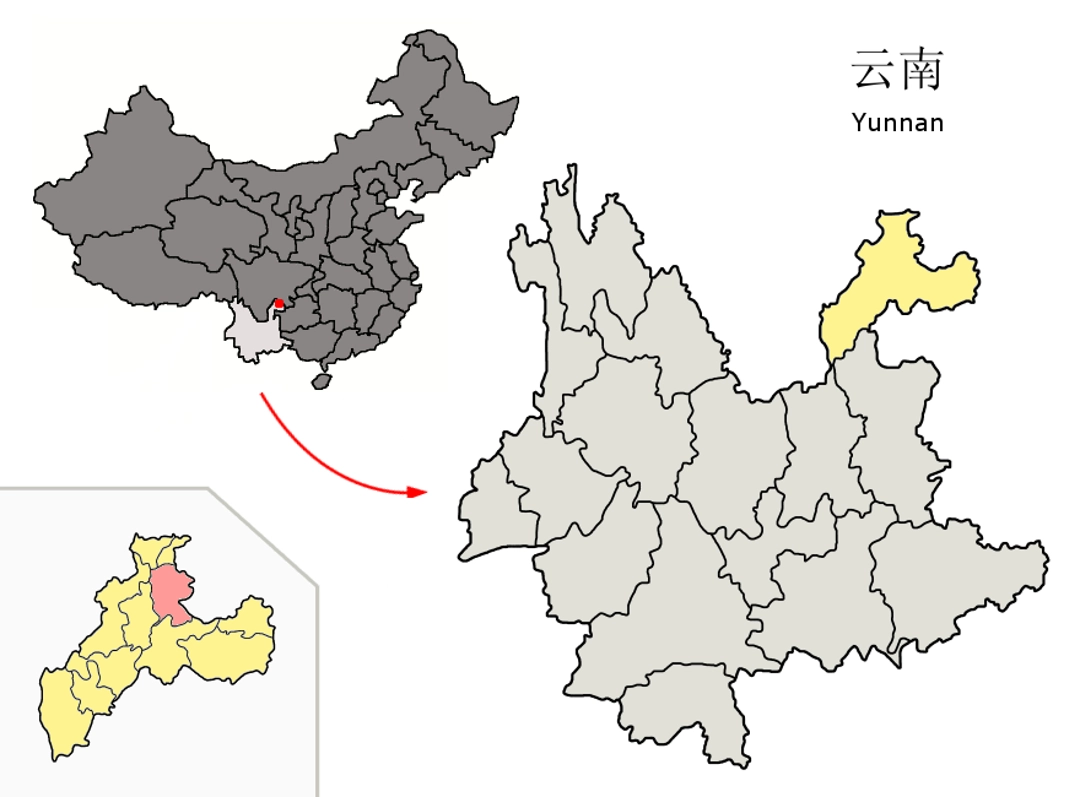
1. Location in Yunnan Province
Yanjin is located in Zhaotong, in the northeast of Yunnan Province near the border with Sichuan. Its position among steep mountains has historically made the area a natural passage between Yunnan and neighboring regions.
It is also worth distinguishing Yanjin County from the narrow urban area seen in viral photos.
The county covers a much larger mountainous region, while the famous ribbon-like settlement is the built-up county seat around Yanjing Town.
2. Nestled Between the Mountains
Yanjin’s unusual appearance comes from its location inside a deep river gorge. With steep mountains rising on both sides and very little flat land available, the urban area has developed in a long, narrow strip along the valley.
This geography explains why Yanjin is often described online as one of the narrowest cities in the world.
Figures such as 30 meters at the narrowest point and around 300 meters at the widest generally refer to sections of the developed urban corridor rather than the entire county.
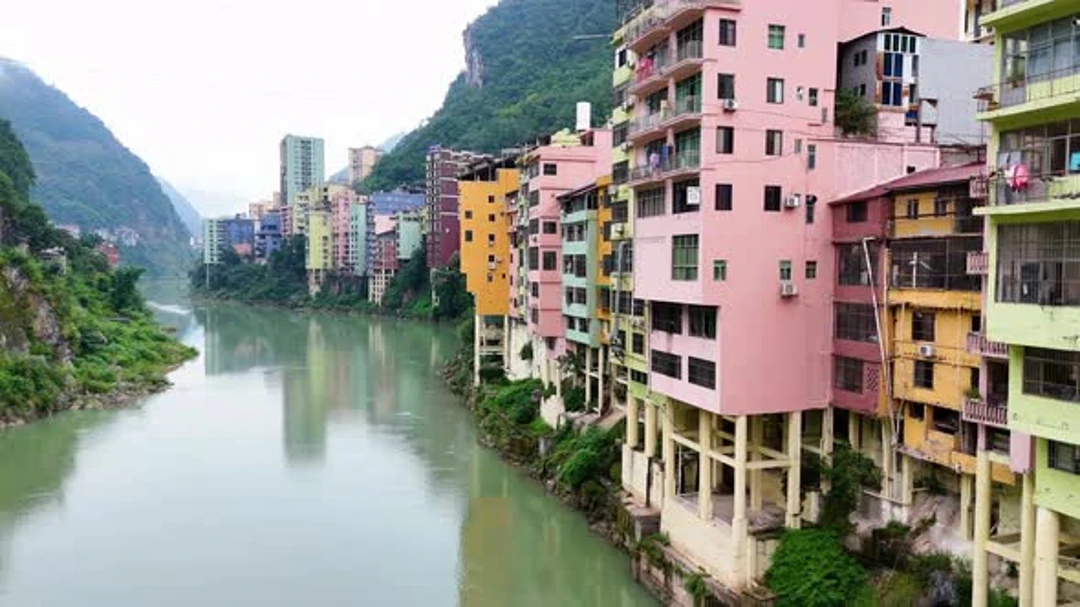
3. Built Along the Guan River
The river running through central Yanjin is generally identified as the Guan River, also rendered as the Heng River or Hengjiang. It forms part of the upper Yangtze River drainage system.
Some online descriptions call it the Nanxi River, but that name is more commonly associated with a different river in southern Yunnan.
For Yanjin, the river has long shaped settlement and movement through the mountains.
Today, it remains the visual center of the town, with buildings, roads, bridges, and railway infrastructure squeezed between the water and surrounding cliffs.
Latitude and Longitude
Yanjin is positioned at approximately:
Latitude: 28.2° N
Longitude: 104.2° E
Its location in northeast Yunnan combines deep valleys with substantial elevation differences across the surrounding mountains. These geographical contrasts contribute to changing weather and vegetation across the county.
Proximity to Major Cities
Yanjin feels remote because of its mountain setting, but several larger cities can serve as useful reference points or transport gateways when planning a trip.
1. Kunming
Kunming, the capital of Yunnan Province, is the region’s main transportation hub, with extensive flight and rail connections to destinations across China.
It is well southwest of Yanjin, so travelers arriving through Kunming should expect an additional rail or road journey to reach the county.
For international visitors or travelers exploring several parts of Yunnan, Kunming is often the most practical starting point.

2. Zhaotong
Zhaotong is the main regional city associated with Yanjin and offers a wider range of transportation, accommodation, and everyday services.
Its location within the same prefecture also makes it a useful connection point for travelers heading toward Yanjin.
If your itinerary focuses on northeast Yunnan rather than the province as a whole, Zhaotong can be more convenient than traveling through Kunming.
3. Chongqing
Chongqing lies northeast of Yanjin and is one of the major transportation centers in southwest China. Its extensive high-speed rail and flight network makes it another useful gateway when combining Yanjin with destinations outside Yunnan.
The city can be particularly relevant for a broader southwest China itinerary that continues through Chongqing, Sichuan, or northern Yunnan.
Terrain Environment
1. A Landscape of Extreme Elevation Changes
Yanjin is surrounded by steep mountains, but the county seat itself is much lower than the 800–1,200-meter elevation sometimes quoted online.
Central Yanjin is commonly placed at around 450 meters above sea level, while the wider county extends from deep valleys to mountains above 2,000 meters.
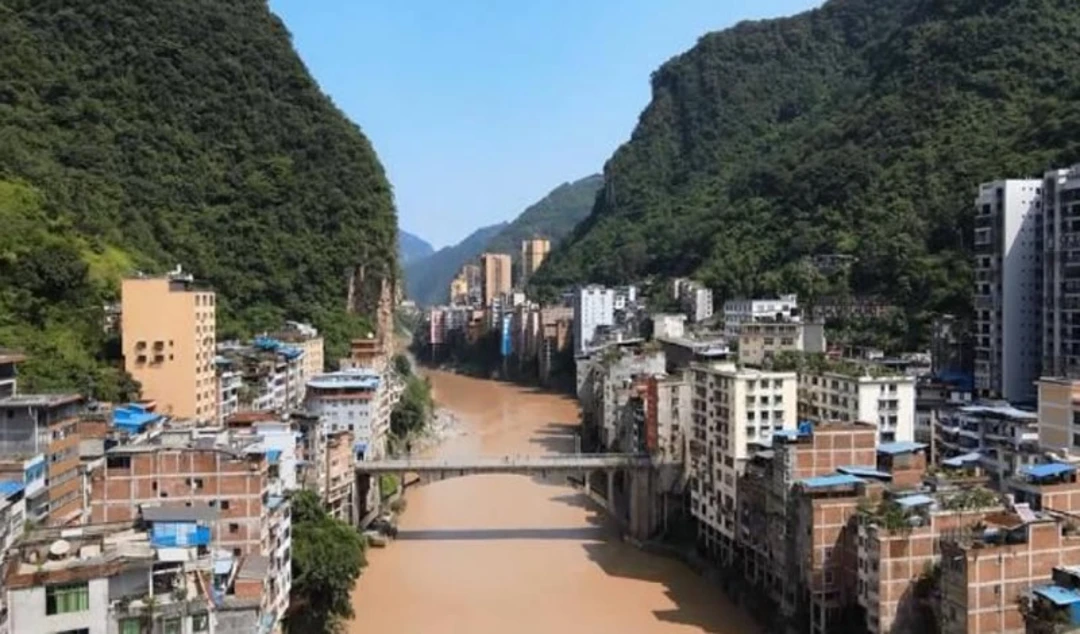
With so little level ground beside the river, development has expanded both lengthwise and vertically.
Multistory buildings crowd the narrow banks, and some stand on reinforced-concrete columns to make better use of the limited space.
2. Ecological Environment
Beyond the dense riverfront center, Yanjin is surrounded by green mountains, forested slopes, valleys, and waterways. The sharp changes in elevation create varied natural environments within a relatively compact area.
The river system also supports local agriculture and vegetation, making the surrounding landscape an important part of Yanjin’s character beyond its famous narrow-city views.
History Shaped by the Gorge
A Salt Ford and Trade Passage
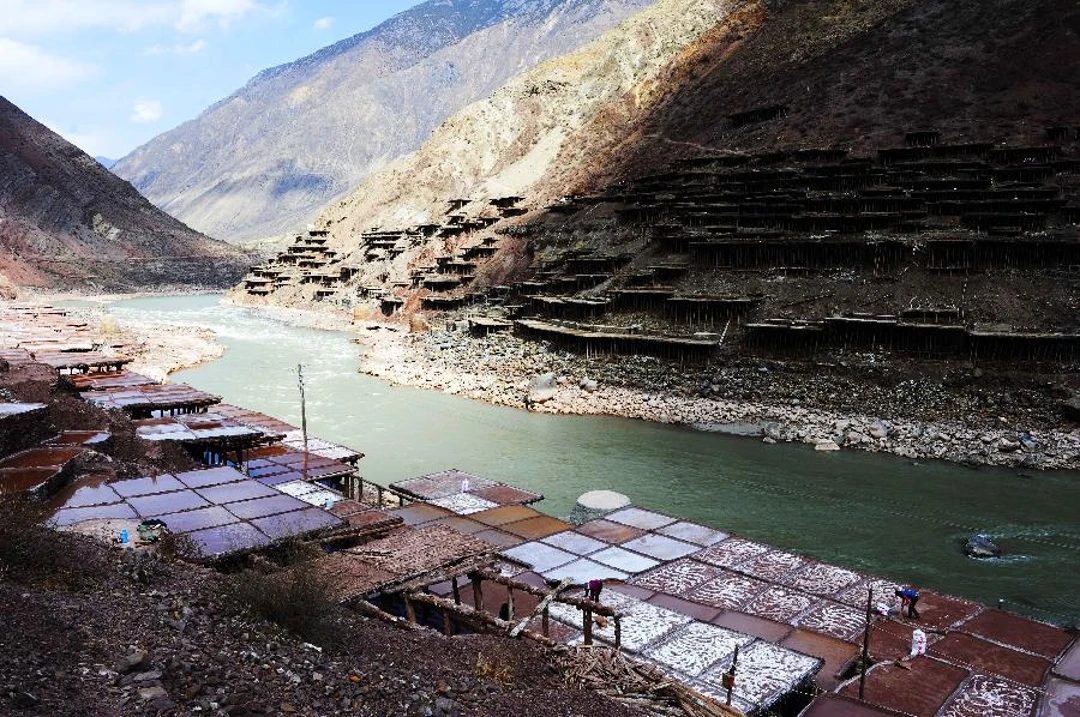
The name Yanjin can be understood as “salt ford,” reflecting the area's connection with salt production, river crossings, and trade. Salt, tea, copper, and other goods moved between Sichuan and Yunnan through this difficult terrain.
Rather than imagining a modern tourist attraction at every old salt well, view the town's salt story as part of a larger transport history.
The Southern Silk Road
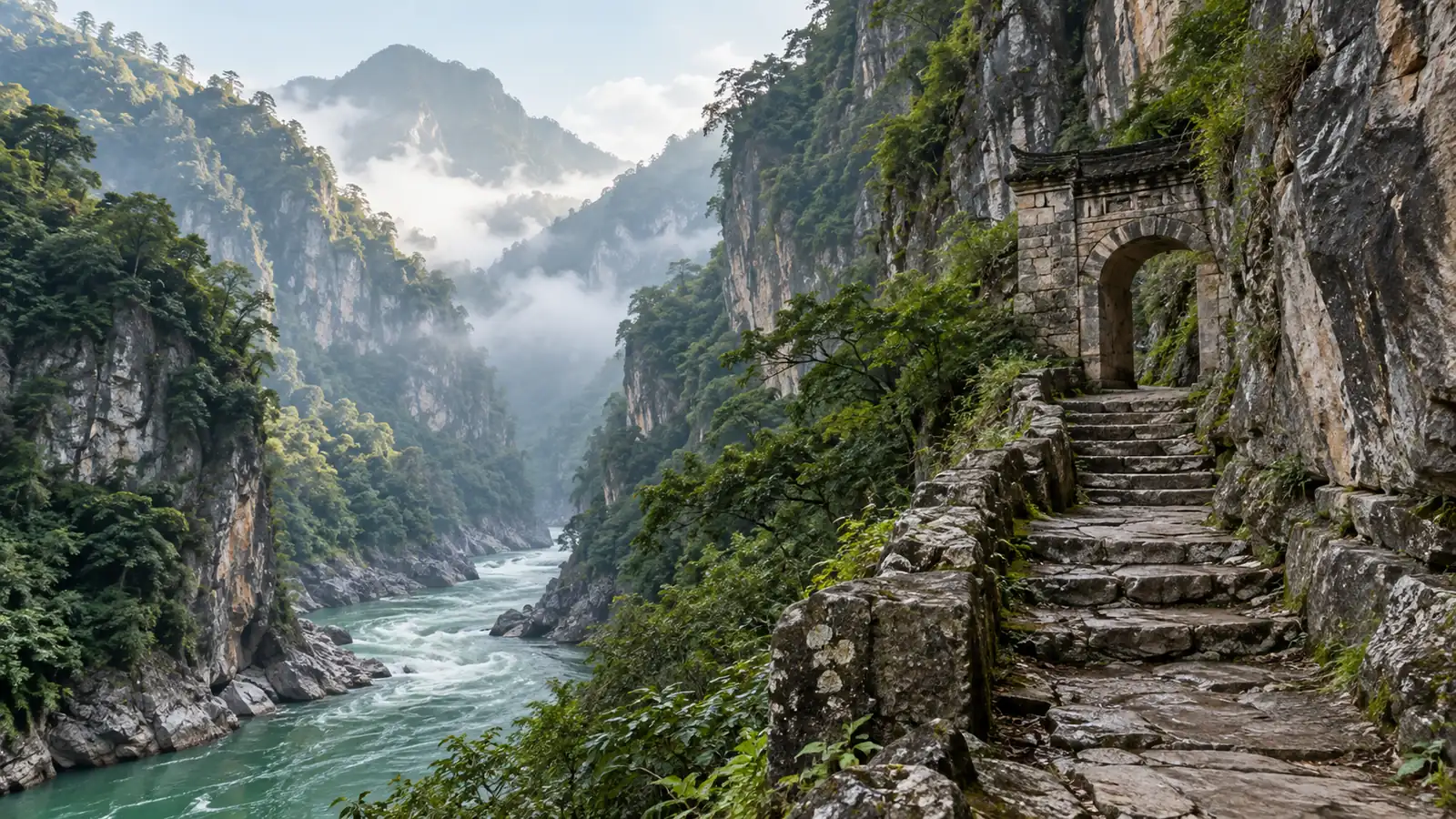
Southwest of the county seat, Doushaguan guarded a strategic passage between Sichuan and Yunnan. Wuchi Road formed part of an early official route later associated with the Southern Silk Road.
Stone paving, the Tang-era Yuanzi inscription, and newer transport layers show why people settled here: the gorge was a corridor, not an impossible obstacle.
Bo Heritage and Hanging Coffins
The region was historically associated with the Bo people. Coffins placed high in cliff recesses around Doushaguan are among the most distinctive archaeological remains linked with that past.
View them from designated areas, avoid speculative stories presented as fact, and treat the site as a burial landscape rather than a novelty.
Best Things to Do in Yanjin
Yanjin's urban center is the main visual attraction, while the strongest historical sights are roughly 20–25 kilometers away around Dousha.
A private car or locally arranged taxi makes the combination easier than trying to improvise several small transfers.
1. Walk the Riverfront and Bridges
Start with a slow walk along both sides of the Guan River. Bridges provide the clearest perspective on the vertical buildings, road, railway, and steep valley walls.
The experience is about observing an inhabited city—shops below, apartments above, deliveries, school traffic, and neighbors meeting in narrow public spaces.
Allow: 1–2 hours. Pavements can be tight and traffic close, so use marked crossings and step aside before taking photographs. Do not assume sightseeing boats operate; reliable current visitor service is not established.
2. Explore Old Streets and Markets
The older lanes and market streets reveal more than a panoramic photo. Look for small restaurants, produce stalls, repair shops, stairways, and buildings adapted to sharply sloping plots.
This is an ordinary working town, so shops and markets are more dependable than a single branded “old street” attraction.
Allow: 1–2 hours around a meal. Ask before photographing people or private interiors, and keep entrances clear.
3. Find the Qidaguai Viewpoint
Travel platforms identify the Yanjin Qidaguai Observation Deck as a useful elevated look at the county seat. From above, the city's one-line form becomes easier to understand than it is at street level.
Allow: 1–2 hours including the uphill transfer. Confirm the current access point with your hotel or driver; English map labels and road conditions may differ.
4. Visit Dousha Old Town
Dousha Old Town and Doushaguan Pass sit about 22 kilometers southwest of central Yanjin.
The small settlement is a practical base for understanding the historic Sichuan–Yunnan gateway, with old-town fabric, gorge scenery, and several heritage sites close together.
Half a day when combined with Wuchi Road and the hanging coffins. Verify opening arrangements locally instead of relying on old ticket prices.
5. Walk Part of Wuchi Road
Surviving stone sections of Wuchi Road climb through the Doushaguan landscape.
The road, cliff pass, Yuanzi inscription, and overlapping transport routes make this the most substantial excursion in the county for travelers interested in history.
Allow: 2–3 hours. Wear shoes with grip, keep away from unprotected edges, and avoid slick stone after heavy rain.
6. View the Bo Hanging Coffins
Cliffside coffin sites near Doushaguan can be seen from designated viewpoints. Their height and placement are visually arresting, but their value is archaeological and cultural.
A local guide or an interpretive display can help distinguish documented history from legends.
Allow: About an hour as part of the Dousha route. A camera zoom is more respectful and safer than trying to approach the cliff.
What to Eat in Yanjin
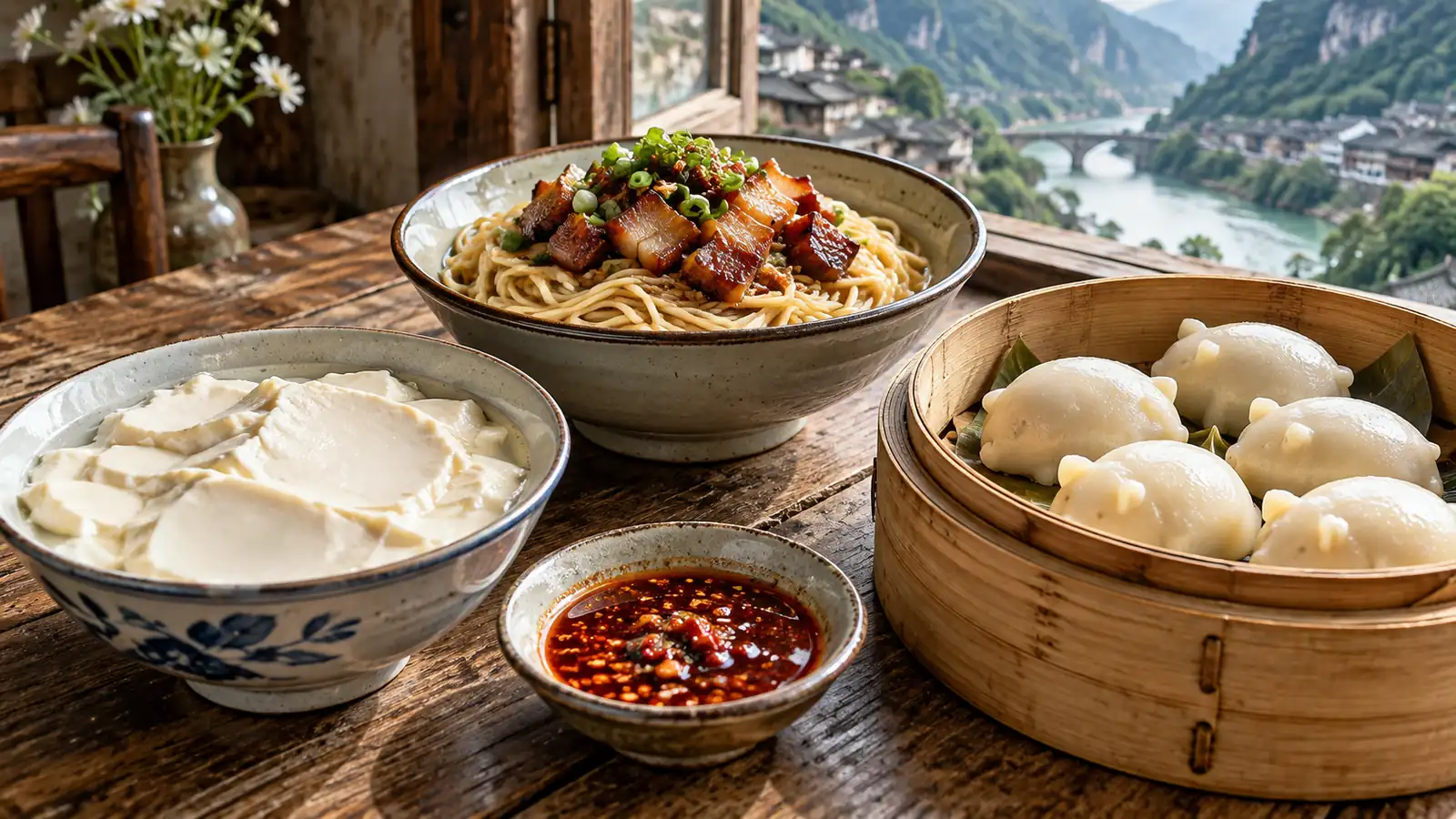
Yanjin sits close to Sichuan, so meals often favor chili, preserved ingredients, tofu, and hearty noodles. The most useful approach is to look for busy local restaurants and ask what is prepared that day rather than expecting a tourist menu.
1. Yanjin Douhua
Douhua is very soft tofu served with a savory, often spicy dipping sauce. Yanjin's version is treated as a local home-style specialty, with the clean soybean flavor balancing a strong condiment.
2. Piglet Cake
Known for a smooth pale shape that resembles a small piglet, this steamed cake may contain sugar, pork fat, candied citrus peel, sesame, osmanthus, or rose-flavored sugar. Recipes vary, so ask about the filling if you have dietary restrictions.
3. Smoked Pork Noodles
The defining feature is the topping: diced pork is fried and then braised before being spooned over noodles. The result is smoky, savory, and substantial enough for a simple lunch.
4. Yunnan Rice Noodles
Rice noodles are a dependable broader Yunnan choice when local specialties are unavailable. They may arrive in broth or mixed with vegetables, meat, pickles, and chili.
They are among the most popular Chinese dishes associated with Yunnan, but toppings and preparation differ by shop.

How to Get to Yanjin
Conventional Train
Yanjin has no high-speed rail. Limited conventional service has linked Neijiang in Sichuan with Zhaotong, stopping at Yanjin and Yanjinbei; Yanjinbei is generally closer to the famous urban center.
Check a current Chinese rail platform before building the trip around a specific train.
If the station name appears only in Chinese, verify both 盐津 (Yanjin) and 盐津北 (Yanjinbei) and compare their location with your accommodation.
Road From Zhaotong or Yibin
Road travel is often the most flexible option. Zhaotong is the main regional hub to the south, while Yibin in Sichuan can work from the northeast. Ask a hotel to confirm the bus station, departure, and destination in Chinese.
A prearranged car costs more but makes Doushaguan easier to combine with the county seat.
Flights and Onward Transfers
Kunming Changshui International Airport has the widest flight network in Yunnan, but it is far from Yanjin. It works better as a major gateway than as the closest airport.
Zhaotong Airport is nearer, though flights are more limited and schedules can change. Yibin is another option depending on your wider travel route.

Compare the complete door-to-door journey instead of choosing the cheapest flight. The last leg through the mountains may take longer than the map suggests.
Getting Around the County
Central Yanjin is walkable in distance but not uniformly accessible: expect stairs, slopes, narrow pavements, and close traffic.
Taxis or locally arranged cars are useful for Qidaguai and essential for an efficient Dousha heritage excursion.
Best Time to Visit Yanjin
Autumn for Clearer Conditions
September to November is often the easiest window for a first visit, with less intense summer rain and generally clearer views. Temperatures still vary by elevation, so check both the county-seat forecast and conditions around Doushaguan.
Spring for Green Scenery
March to May can be lush and mild, though showers and fog are possible. Spring suits travelers who can keep their schedule flexible and do not need guaranteed distant views.
Summer Needs a Rain Backup
June through August is warm, humid, and rain-prone. Heavy rain can raise river levels, trigger road delays, reduce visibility, and make stone paths slippery.
Do not enter closed riverside or cliff areas, and avoid framing high water as a sightseeing opportunity.
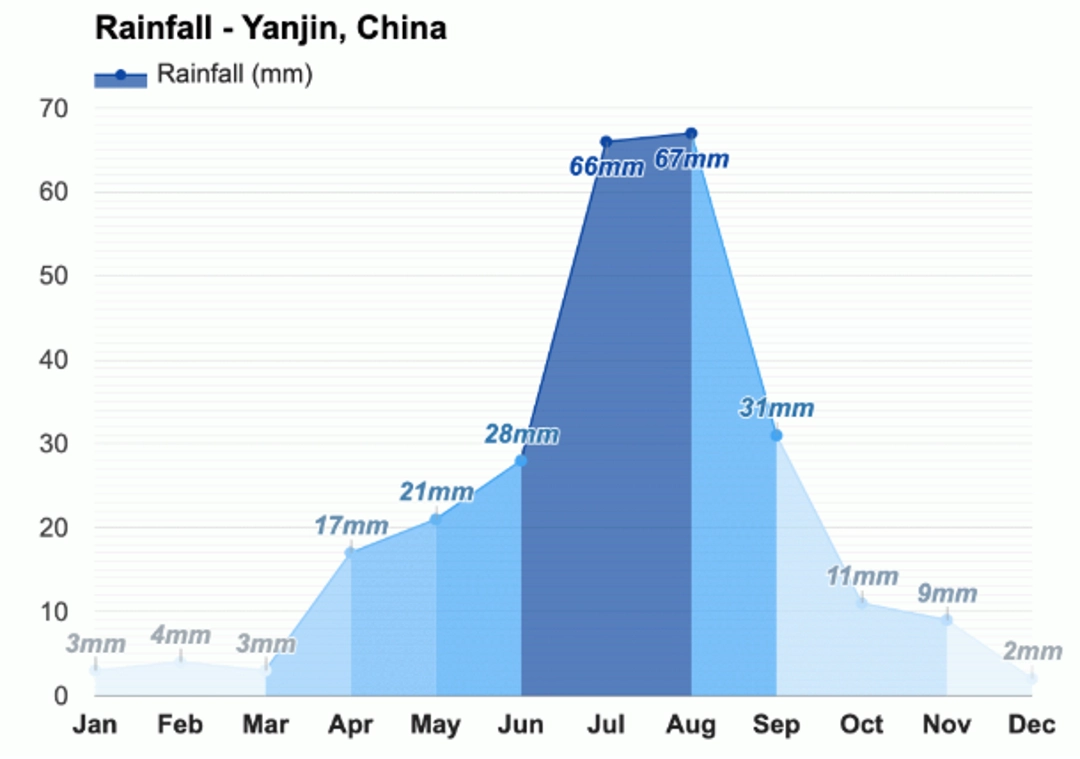
Winter Is Quieter but Cool
Winter is generally drier in the valley, but rooms can feel cold and mountain roads may be affected by fog or occasional ice at higher elevations. Confirm heating expectations with your accommodation.
How to Plan Your Stay
One Day or Two?
One day: Focus on the county-seat riverfront, bridges, old streets, local food, and one elevated viewpoint. This suits travelers passing between Zhaotong and Sichuan.
Two days: Add Dousha Old Town, Doushaguan Pass, Wuchi Road, and the Bo hanging-coffin viewpoint. This is the better choice if history matters as much as the famous city view.
A longer stay is reasonable for county exploration, but most first-time visitors gain more from two well-planned days than from padding the trip with weakly documented attractions.
Where to Stay
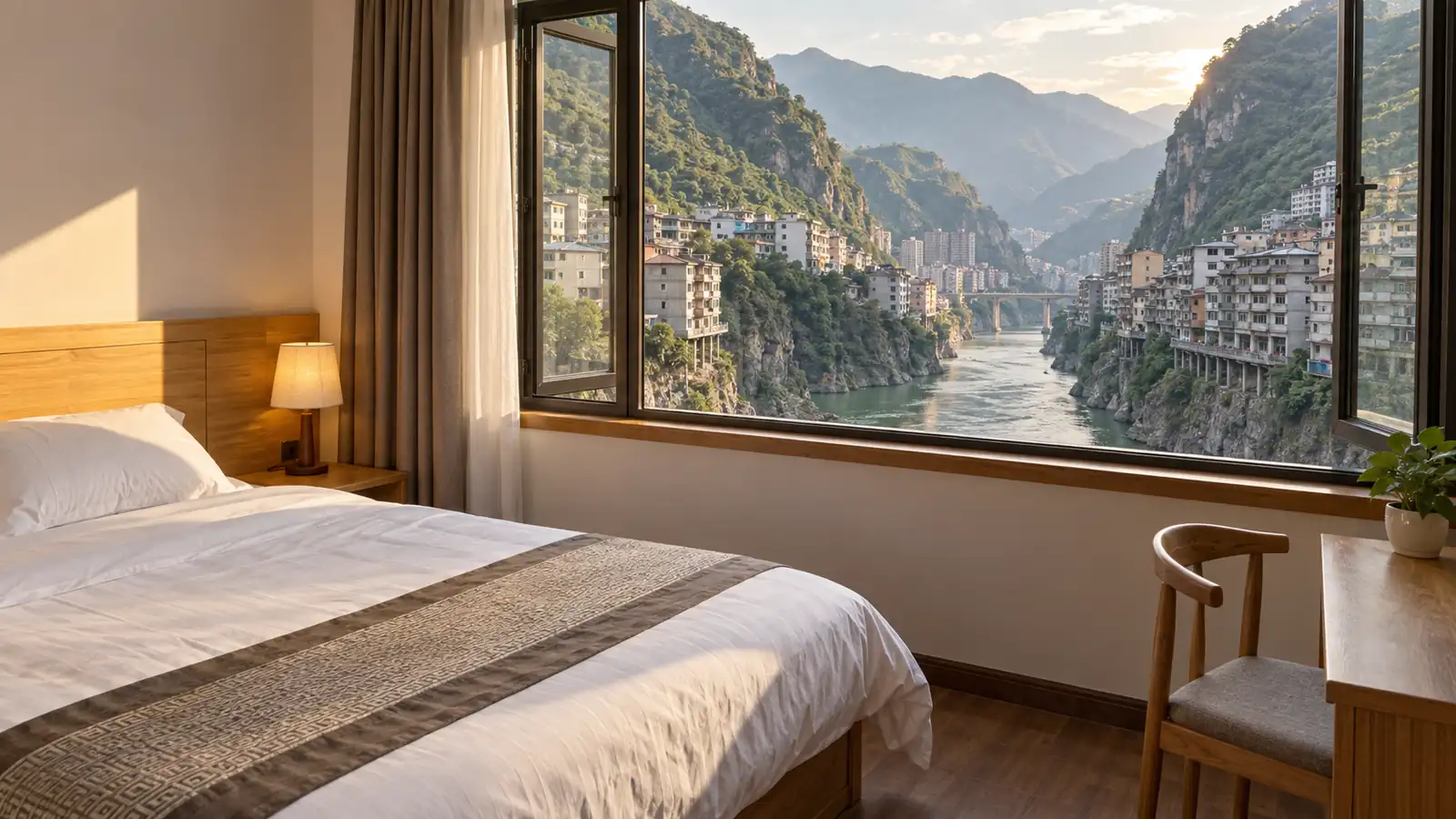
Accommodation is mostly practical local hotels and guesthouses rather than destination resorts. Staying in the county seat makes evening and early-morning walks easy; staying near Dousha is useful only if your priority is the heritage area.
Confirm that the property accepts foreign guests, can register a passport, and is reachable from your station or bus stop.
Practical Checklist
Save your hotel name, station, and Doushaguan destination in Chinese.
Carry your passport and offline copies of bookings.
Bring shoes with reliable grip and pack light for stairs.
Set up a mobile-payment option where possible and keep some cash for small local services.
Download offline maps and translation before entering weak-signal valleys.
Check rain, road, and rail conditions again on the morning of travel.
FAQ
1. Why is Yanjin called the world's narrowest city?
The county seat occupies a very tight river gorge and is widely reported to narrow to about 30 meters in places. The label is a popular description, not a formal worldwide municipal ranking, and it does not describe the width of Yanjin County as a whole.
2. Are there hotels or guesthouses in Yanjin?
Yanjin does have budget guesthouses and riverside inns for a comfortable stay.
3. Is Yanjin safe for tourists?
Yanjin is safe to visit as a traveler. The locals are friendly and the town is pretty laid back.
4. Can I explore Yanjin on foot?
Yes, Yanjin’s small enough to navigate by foot.
5. Out of all the towns in China, what makes Yanjin so different?
Yanjin’s narrow alleyways, history as a salt-trading center, and riverside landscape combine to create a unique place.
Conclusion
Yanjin's appeal is not that a city was built in an impossible place. The gorge has long been a route between regions, and today's vertical streetscape is the latest layer in a history of river crossings, trade, rail, and mountain roads.
The central panorama delivers the image that draws most visitors, but Doushaguan and Wuchi Road give the trip its depth. Plan one day for the urban core or two for the historical landscape, and leave enough flexibility for transport and weather.
Approached with accurate expectations, Yanjin becomes more than a viral aerial view: it is a compact lesson in how geography can shape movement, memory, and everyday urban life.