
Mount Fuji is Japan’s highest mountain at 3,776 meters and a major cultural landmark spanning Yamanashi and Shizuoka prefectures.
Travelers can view the mountain from lakes, pagodas, towns, and transport routes, while summit attempts require separate planning for season, trail, weather, altitude, and mountain-hut access.
This guide covers Fuji’s height, viewpoints, cultural facts, official climbing rules, and trail choices. A Japan eSIM can keep route updates and weather information available, but climbers should also save essential details offline.
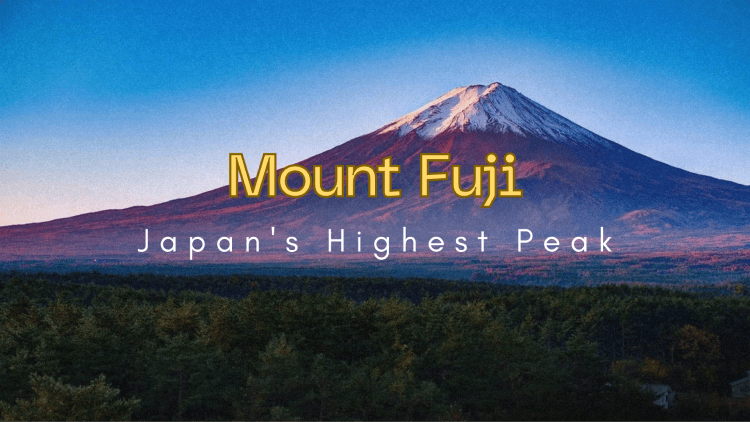
What is the highest mountain in Japan?
Sitting at the top spot is Mount Fuji – Japan’s highest mountain at 3,776 meters (12,389 feet). Although Mount Fuji is not as tall as the highest peak in the U.S., this iconic active volcano not only has a postcard-perfect symmetrical shape but also holds significant cultural and spiritual meaning.
Fact | Detail |
|---|---|
Elevation | 3,776 meters |
Location | Yamanashi and Shizuoka prefectures |
Mountain type | Active stratovolcano |
Heritage significance | Part of a UNESCO cultural World Heritage property |
Sitting on Honshu Island, on a clear day Fuji can be seen all the way from Tokyo, and each year hundreds of thousands flock to its slopes.
Its near-perfect cone, formed from its history of eruptions, has proven a beloved subject in art and photography, symbolizing beauty and strength in Japanese iconography. Just because it looks peaceful doesn’t mean it is, with its last major eruption in 1707.
Why is it called Mt. Fuji?
As for the name “Fuji”, it’s believed to originate from the Ainu language, where it means “everlasting life”. Impressive stuff, right? It’s a mountain rich with spiritual importance, with pilgrims visiting for centuries – it’s easy to find peace and serenity (no pun intended) at the shrines surrounding the base.
JNTO’s overview of Fujisan’s World Heritage significance explains why the cultural property includes worship sites and artistic inspiration rather than only the summit.
Best Spots to Enjoy the View
1. Lake Kawaguchi
Calm waters provide a mirror reflection of Mt. Fuji, surrounded by red and gold leaves in autumn and crisp snow in winter.
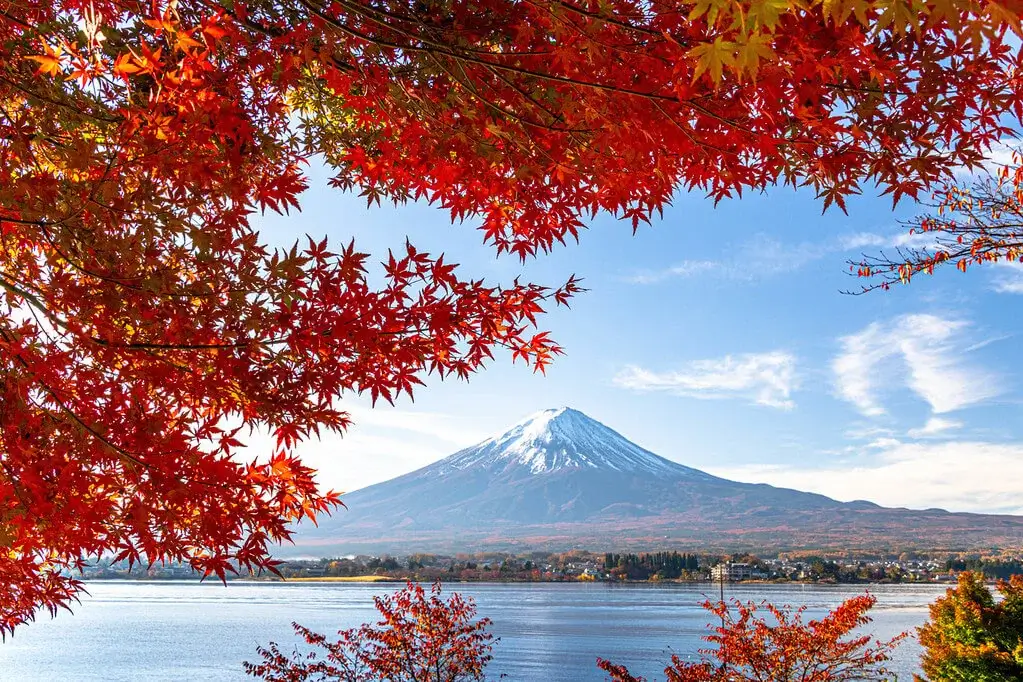
Location: Fujikawaguchiko, Yamanashi Prefecture.
Top tip: Time your visit for the best reflections in autumn, or head out early for a glassy surface. No entry fee.
Clearer seasonal visibility and crowd patterns are part of choosing the best time to visit Japan for a Fuji-centered route.
2. Chureito Pagoda
The five-storey pagoda is a classic shot of Mt. Fuji, especially when flanked by cherry blossoms or fiery autumn leaves.
Location: Arakurayama Sengen Park, Fujiyoshida City.
Top tip: Climb up at sunrise for fewer tourists and beautiful lighting, though cherry blossom and autumn foliage viewing is particularly busy. Free to visit.
3. Oshino Hakkai
Eight crystal-clear ponds in an idyllic village setting make for a more rural Mt. Fuji experience, with traditional thatched buildings and verdant gardens completing the picture.
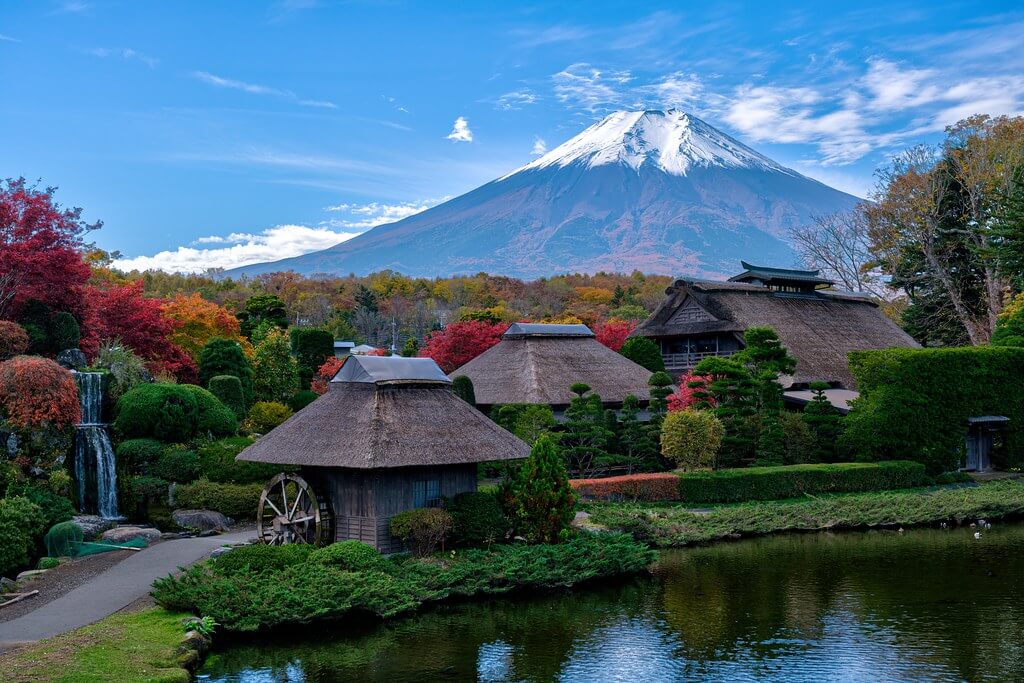
Location: Oshino, Yamanashi Prefecture.
Top tip: Take your time exploring the village, sampling local produce, and browsing for unique souvenirs from Japan in between soaking in the views. No entry fee.
4. Gotemba Premium Outlets
Shop at the foot of Mt. Fuji, where designer labels are set against the backdrop of the great mountain, visible from the spacious food court or numerous shops.
Location: Gotemba City, Shizuoka Prefecture.
Top tip: Best visited on a clear day for the best views, though the shopping and dining opportunities are plentiful too. It’s also a great spot to explore what you can buy in Japan while enjoying the scenery. No fee for the view.
5. Fuji Shibazakura Festival
The spectacular sight of pink, carpet-like shibazakura flowers meets Mt. Fuji’s gaze at this lively spring festival.
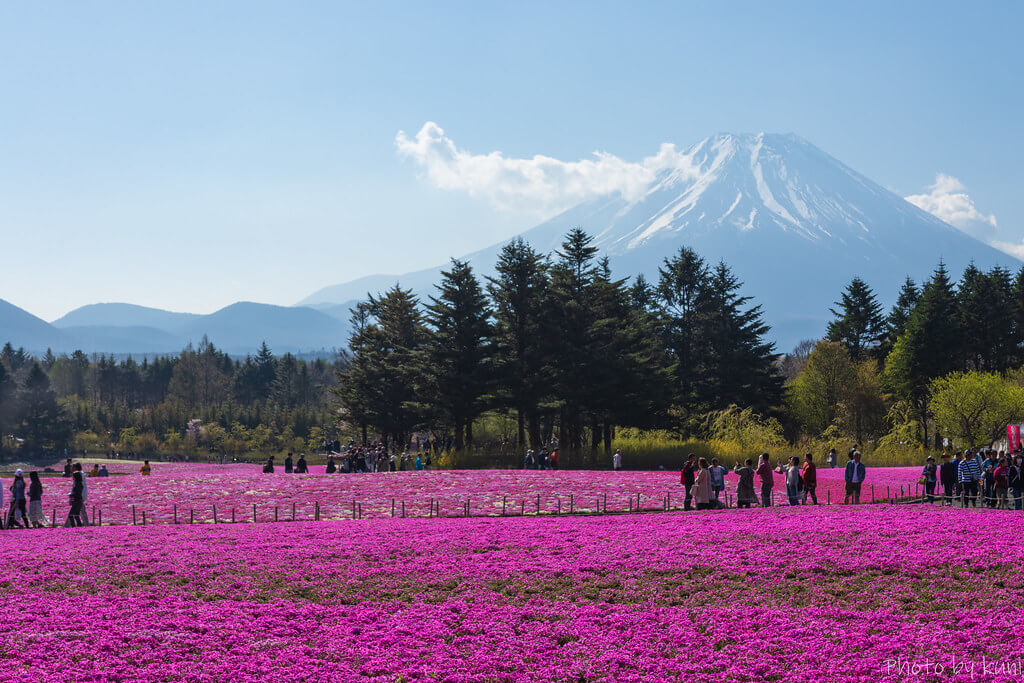
Location: Held at Fuji Motosuko Resort, near Lake Motosu.
Top tip: Time your visit for peak blooms, which usually run from mid-April to the end of May. Entry is charged for this annual event.
Five facts you need to know about Mt. Fuji
Mount Fuji is a complete composite volcano, and its beautifully symmetrical cone makes it one of Japan’s icons. Here are a handful of specifics about the mountain.
Type: Stratovolcano, characterised by explosive eruptions and pyroclastic flows.
History: The base upon which Mt. Fuji is predominantly settled began forming some 10,000 years ago. The most recent layer built up in an eruption from Komitake, a lateral crater, in 1707, during the Edo period.
Gender Bar: Women were not permitted to climb Mount Fuji until 1868. In 1867, Fanny Parkes, a Welsh travel journalist, became the first woman to climb the mountain. The government lifted the ban in 1872.

First Ascent: A monk is generally considered to have been the first person to scale the mountain, in 663 AD.
Climbing Season: The official climbing season is from early July to mid-September, when the weather is at its most stable and snowfall is lowest.
Fuji’s national profile is also reflected in lists of Japan landmarks, where its cultural role matters as much as its elevation.
How Fuji compares with other national high points
Elevation alone does not determine whether a mountain fits an ordinary trip; approach time, permits, transport, and technical difficulty matter just as much.
National high points differ as much in access as in elevation. Mount Fuji is lower than the highest U.S. mountain, but Fuji’s compact access from major cities makes a view-focused day trip more practical; Japan is the stronger choice when travelers want a national high point integrated into a broader rail itinerary.
Climbing Mt. Fuji
2026 rule | Practical meaning |
|---|---|
Designated climbing season | Use the official trail calendar; dates can vary by trail and conditions |
Hiking fee | ¥4,000 on the official 2026 system |
Restricted entry hours | Generally 2 p.m. to 3 a.m. without qualifying mountain-hut arrangements |
Registration | Complete the official process and reserve huts separately when needed |
A summit plan should be built around the official trail calendar, a realistic pace, suitable equipment, and a safe descent rather than sunrise timing alone.
The official Mount Fuji climbing rules covers fees, registration, trail colors, access, and restricted entry hours.
What's it like up there?
Climbing Mt. Fuji is an experience of several environments as you ascend. From a forested base to approaching the lunar fields around the fifth station (Fujisan-gogome), the situation is changing. Vegetation becomes almost nonexistent, and the terrain is largely composed of volcanic rock and ash. Climbing becomes tougher the higher you get, physically and psychologically.
Above the fifth station, the environment becomes more challenging and inhospitable, with the air both thinner and colder. Conditions can be erratic, with sudden drops in temperature and gusty winds surprising the unwary or unprepared, even in the height of summer. Snow can linger on Mt.
Fuji until August, and temperatures may drop below freezing, while local towns are balmy.
Altitude, fatigue, and rapidly changing weather make broader Japan travel safety preparation relevant before a summit attempt.
Mt. Fuji Hiking Course
Climbing the mountain is regarded as a pilgrimage, with dozens of known paths making the climb accessible to various skill levels. The following are the most common routes, scaling the mountain from different cardinal directions, offering different outlooks, and taking varying amounts of time:
1. Yoshida Trail
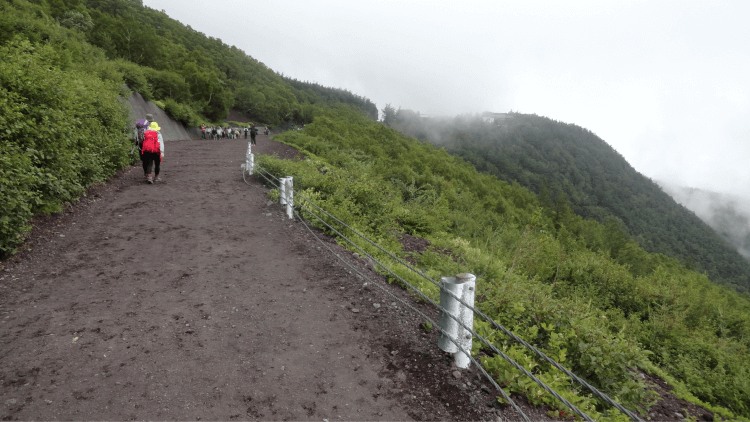
Starting Point: Fuji-Subaru Line 5th Station
Required Time: Approximately 6-8 hours to ascend, 3-5 hours to descend
Features: The most frequently traveled path, notable for the large number of huts along the way and the quality of the trails. Hikers gain a beautiful sunrise view and the option for night climbing, making this the most popular trail.
2. Subashiri Trail
Starting Point: Subashiri 5th Station
Required Time: About 6-8 hours to ascend, 3-5 hours to descend
Features: Merges with the Yoshida Trail at the 8th station. Offers a forested hike on approach, providing some shade and stunning foliage in the early season.
3. Gotemba Trail
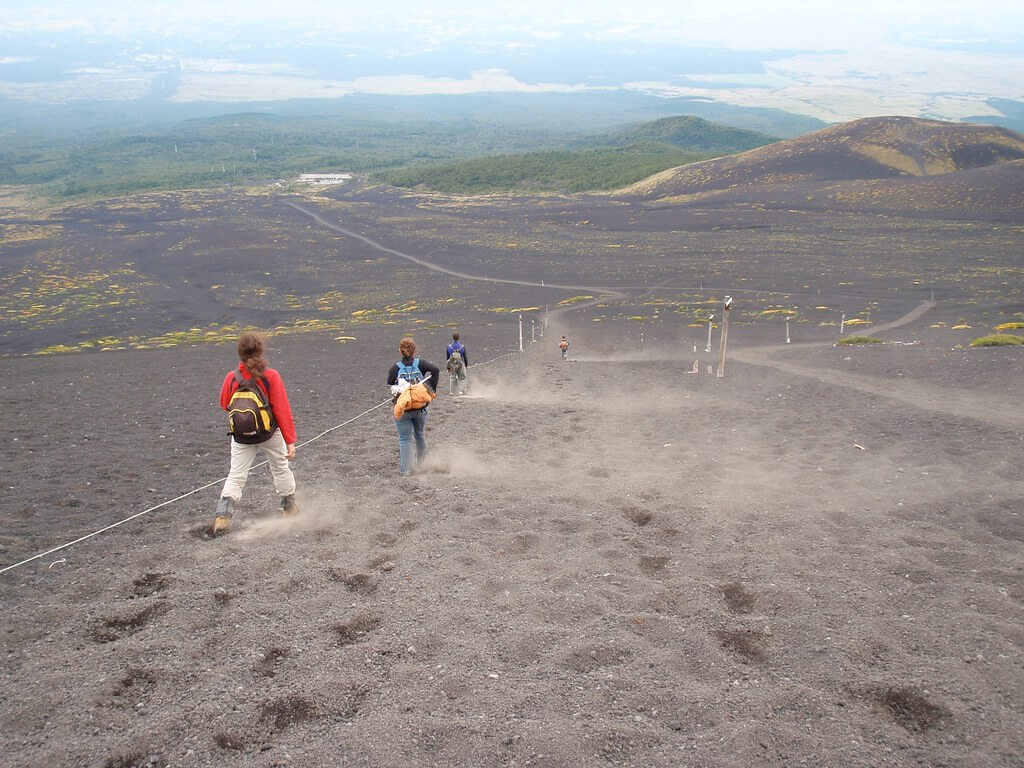
Starting Point: Gotemba 5th Station
Required Time: The longest path at 7-10 hours to ascend, 3-6 to return.
Characteristics: Starting from the lowest 5th station, the ash-covered trail is not maintained as the others, so can be loose underfoot. It requires a longer climb, but offers great views at the 9th station, from where you can also attempt a challenging hike to Hakusan from.
4. Fujinomiya Trail
Starting Point: Fujinomiya 5th Station
Required Time: Approximately 5-7 hours to ascend, 2-4 hours to descend
Features: The shortest, and steepest trail to the peak. The top third of the trail gives you a nice view of a sea of clouds below you. It also tends to have slightly fewer people, but is generally cleaner as a result.
Hiking tips
Taking a seasonal mountain hiking tour or climbing can be done by dressing for the walk, but however you’re planning to go, wear sturdy footwear, dress in layers (it’s going to get cold the nearer you get to the summit), and make sure you have plenty of water.
A walking stick is useful for navigating the particularly taxing incline and loose rocks.
Getting to the summit can take around six hours, and another three to get back down, so start your trip early to avoid coming down in the dark.
Since some routes pass through areas with weak or limited signal, it is recommended to prepare a reliable Japanese mobile network before setting out, so you can check routes, weather changes, and emergency information at any time.
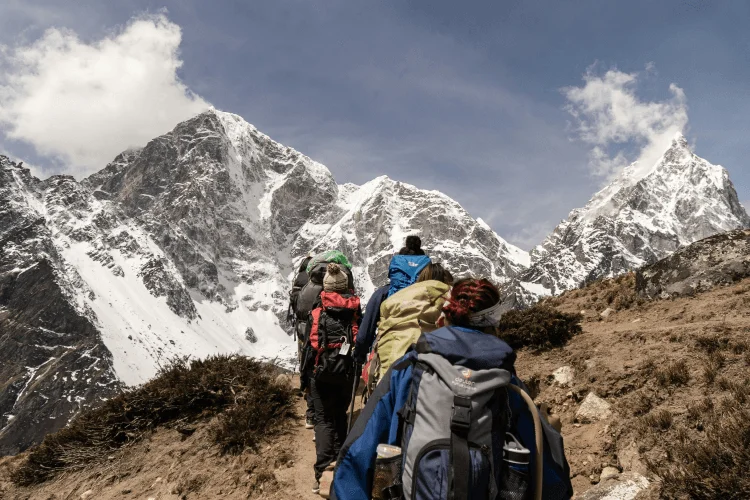
But also... try to remember that it’s not a race. Enjoy the view!
Trail status and return transport can change, and iRoamly eSIM plans can support live checks while saved maps and emergency details remain available offline.
FAQ
1. Why is Mt. Fuji famous?
It’s that iconic shape and its overall cultural significance.
2. Is Japan all mountains?
No, Japan is not all mountains, but it is predominantly mountainous.
3. Is Mt. Fuji an active volcano?
Yes.
4. When was Mt. Fuji’s last eruption?
In December 1707 during the Hoei eruption.
Conclusion
Mount Fuji can be a viewpoint trip, a cultural stop, or a demanding climb, and each version needs different timing and preparation.
Choose a viewing base for weather flexibility, or use the official climbing season and trail rules for a summit plan.
Respect access restrictions, altitude, changing conditions, and local communities so the trip remains safe and sustainable.