
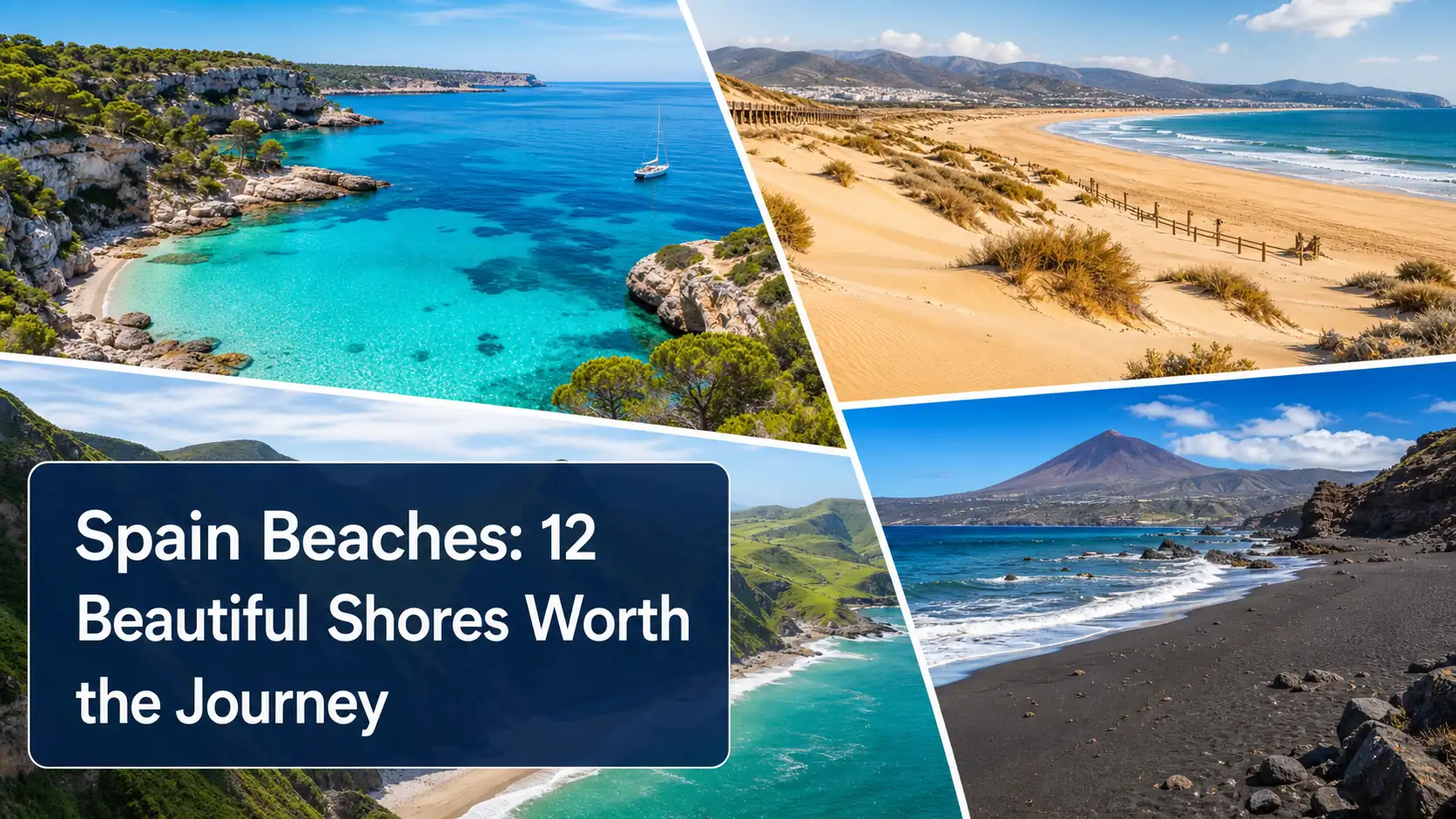
Spain beaches are far more varied than a single image of golden Mediterranean sand. The country offers pine-framed island coves, broad Atlantic dunes, green northern bays, city beaches, and black volcanic shores.
The right choice depends on more than beauty. Water conditions, access, summer crowd levels, wind, tides, and the distance from your accommodation all shape how enjoyable a beach day feels.
This guide compares 12 standout shores across the mainland and islands, with practical advice on timing, transport, safety, and who each beach suits. It is designed to help you choose a coast first and a specific beach second.
Choose the Right Spanish Coast
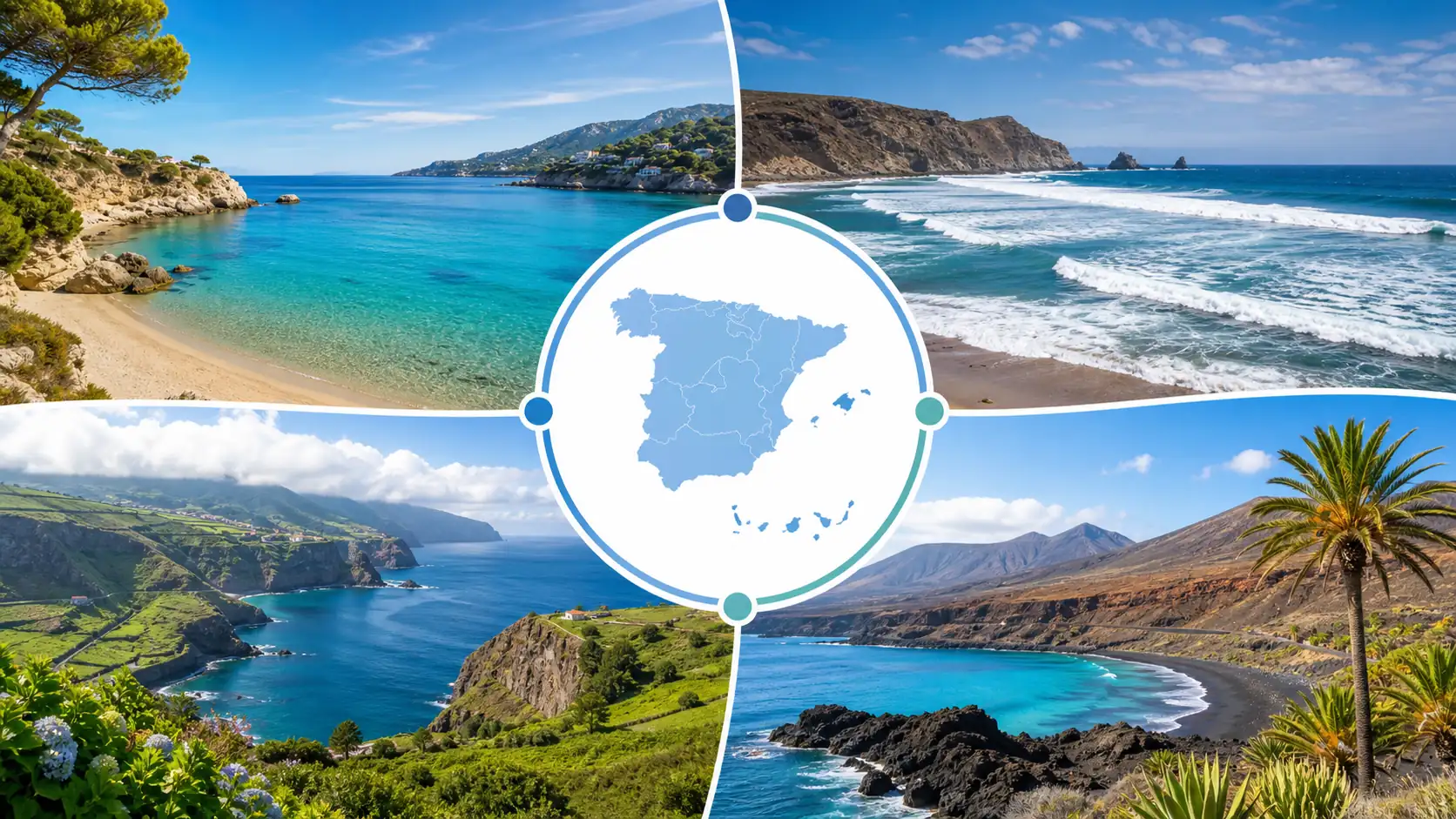
Spain has nearly 8,000 kilometers of coastline according to the country's official tourism portal. The Mediterranean, Atlantic, Cantabrian, Balearic, and Canary settings offer distinct experiences.
1. Mediterranean mainland
Long sandy beaches, developed promenades, and warmer summer water make the Mediterranean coast convenient for families and first-time visitors. Costa Brava adds rocky coves, while Costa Blanca and Costa del Sol provide extensive resort infrastructure.
2. Atlantic and northern mainland
Galicia, Asturias, Cantabria, and the Basque Country are greener and often wilder. Expect stronger surf, changeable weather, dramatic cliffs, and tidal beaches that look completely different several hours apart.
3. Balearic and Canary Islands
The Balearics excel at clear coves and pale limestone scenery. The Canaries bring volcanic landscapes, broad climatic variety, and viable coastal breaks outside the mainland summer.
Best for easy resort logistics: Mediterranean mainland.
Best for green scenery and surf: Northern Atlantic coast.
Best for turquoise coves: Balearic Islands.
Best for winter sun: Canary Islands.
Mediterranean and Balearic Classics
These four beaches combine accessible swimming, distinctive scenery, and nearby destinations worth exploring beyond the sand.
1. Ses Illetes, Formentera
A narrow ribbon of pale sand and transparent water gives Ses Illetes an almost lagoon-like appearance. The shallow edges suit relaxed swimming, while views across both sides of the peninsula create an unusual sense of openness.
Best time: Arrive early in late spring or early autumn for warm conditions with fewer peak-summer visitors. Access controls and parking pressure make cycling or local transport attractive.
2. Cala Macarella, Menorca
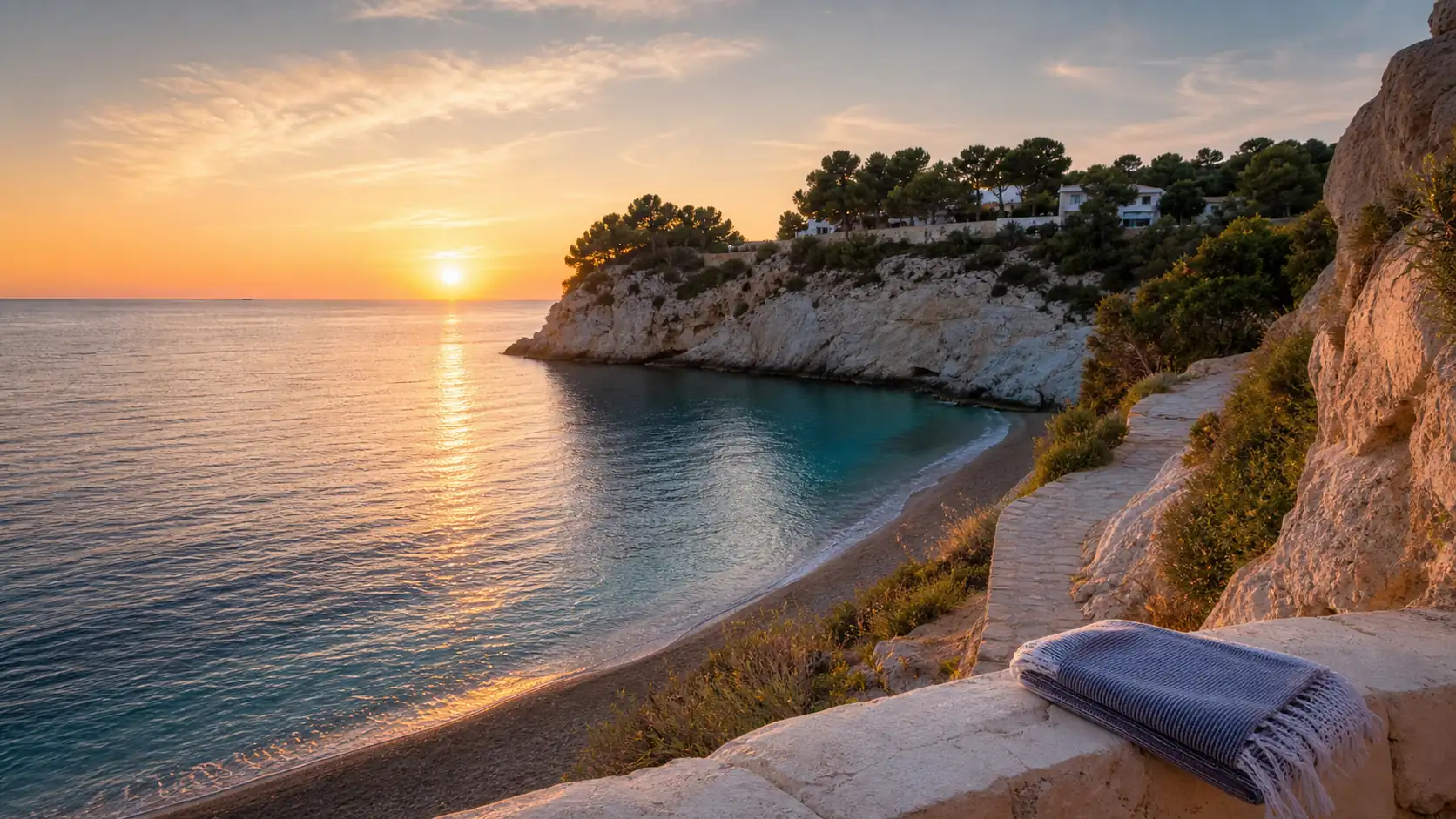
White limestone, pine forest, and intense blue water make Cala Macarella one of Menorca's signature landscapes. The experience depends on seasonal access arrangements, so confirm the island's current bus and parking rules before setting out.
Bring: Water, sturdy sandals for paths, and sun protection. Nearby Macarelleta is smaller and can feel crowded quickly.
3. Platja Gran, Tossa de Mar
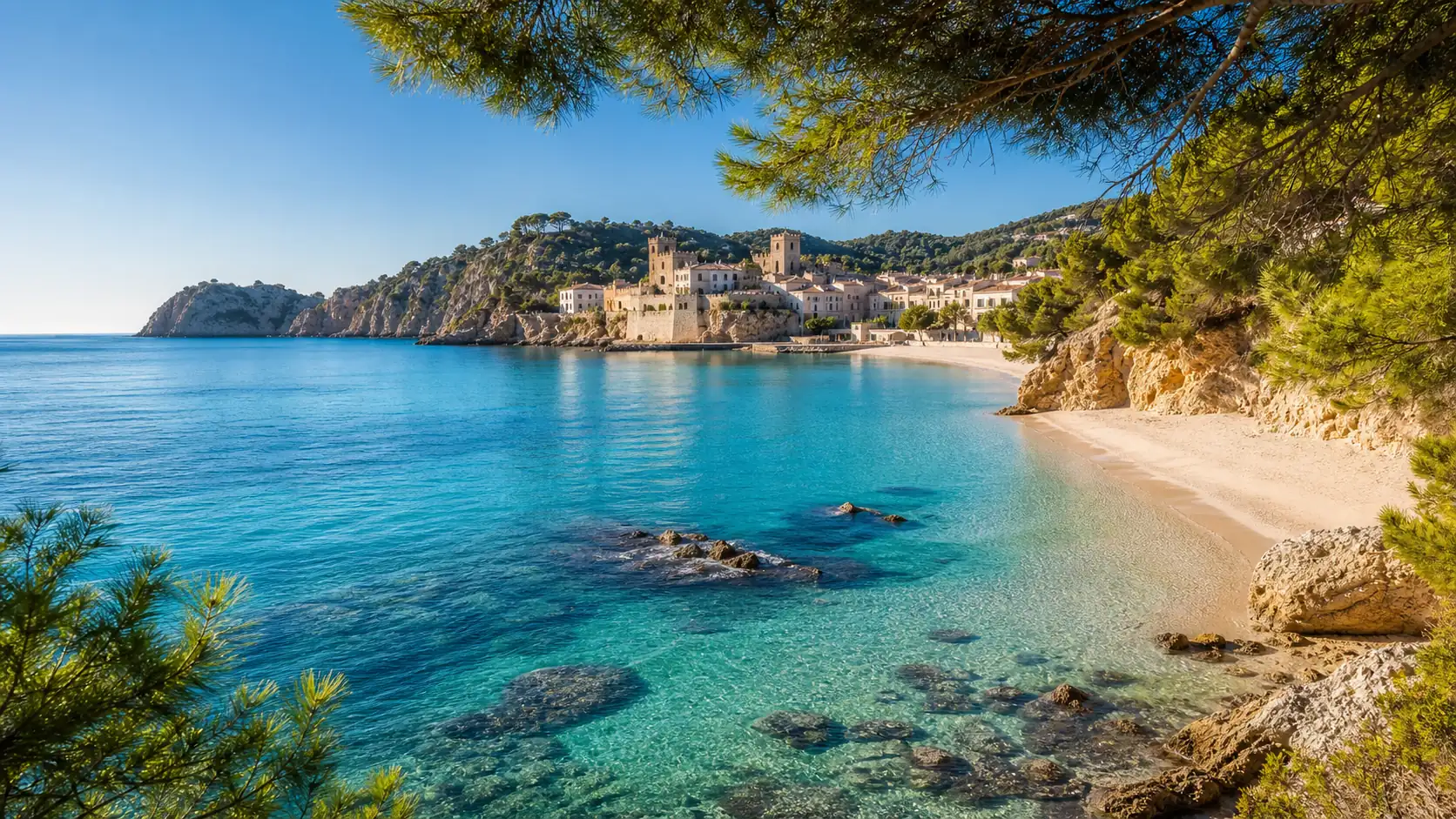
This Costa Brava beach stands out because the medieval walls of Vila Vella rise directly beside the bay. It works well for travelers who want a beach morning, historic walk, and restaurant lunch without changing destinations.
Photography tip: Walk toward the castle side in the morning for a balanced view across the curve of the bay.
4. La Malvarrosa, Valencia
La Malvarrosa offers broad sand, a long promenade, urban transport, and abundant dining. It is not a secluded cove, but it is practical for city travelers who want a straightforward half-day by the sea.
Who it suits: Families, groups, and visitors combining culture, food, and beach time in one city break.
Atlantic and Northern Shores
Northern beaches reward flexible travelers. A cloudy morning can turn bright, while tide and swell matter more than they do in a sheltered Mediterranean cove.
1. As Catedrais, Galicia
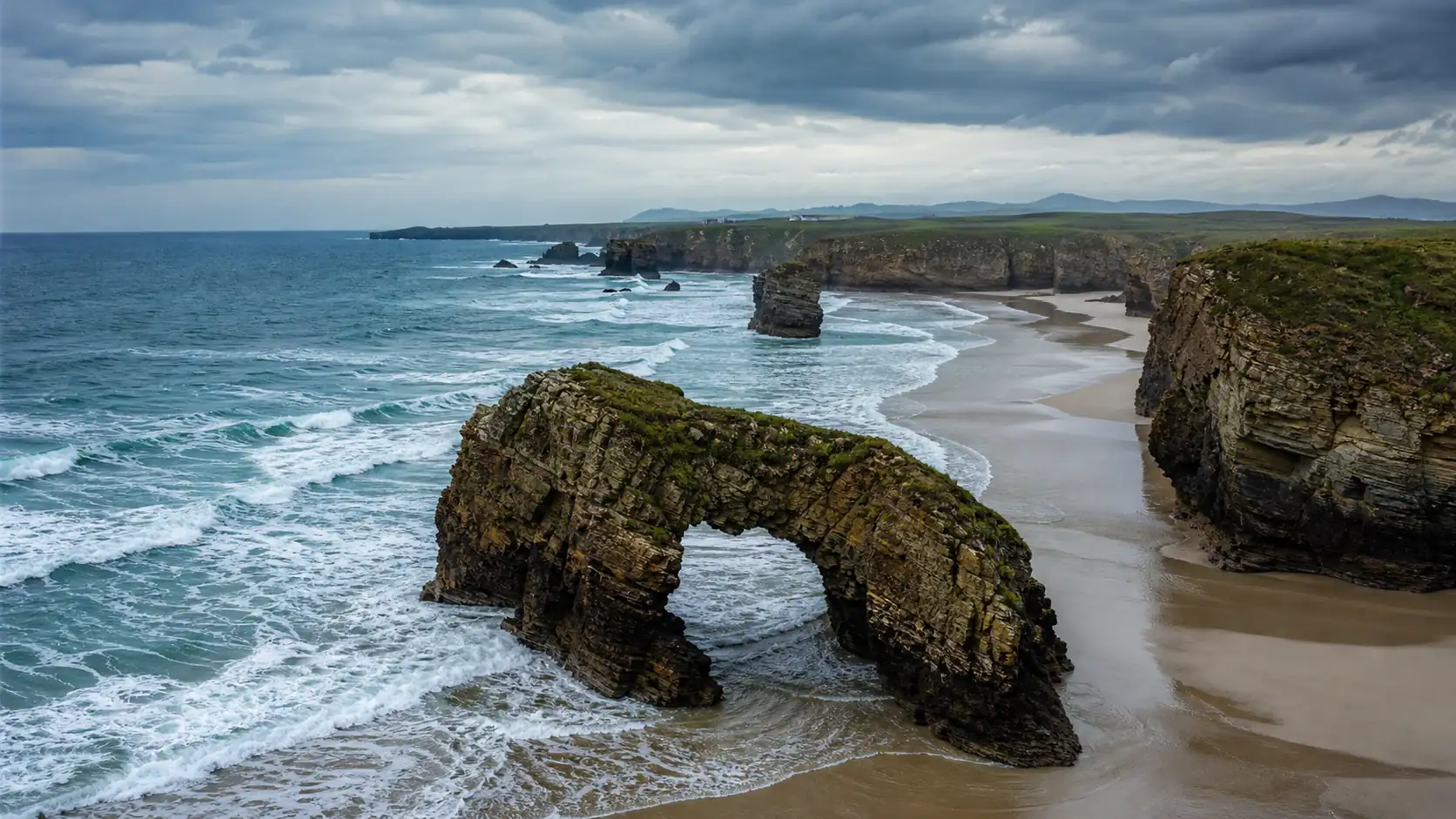
At low tide, monumental rock arches create corridors along the sand. At high tide, much of that walking area disappears, so the visit must be planned around official access rules, sea conditions, and the tide table.
Safety reminder: Do not linger beneath unstable cliffs or attempt the route when access is closed. This is primarily a landscape visit rather than a conventional swimming beach.
2. Rodas, Cíes Islands
Rodas links two of the Cíes Islands with white sand and clear Atlantic water. The protected setting feels remote despite its proximity to Vigo, but ferry capacity and seasonal visitor controls require advance planning.
Ideal day: Pair the beach with a marked island walk and carry back all waste.
3. La Concha, San Sebastián
La Concha curves around a sheltered urban bay with an elegant promenade and direct access to San Sebastián's old town. Calm visual conditions do not eliminate tides, but the setting is generally more approachable than exposed surf beaches nearby.
Nearby plan: Swim or walk in the morning, then cross into the old town for pintxos after changing.
4. Torimbia, Asturias
Torimbia is a broad crescent beneath green hills, reached by a downhill approach that creates its secluded feel. The walk back is the price of the scenery, and services are more limited than at an urban beach.
Pack wisely: Carry enough water, take supportive footwear, and leave extra energy for the return climb.
Volcanic Beaches of the Canary Islands
The Canaries prove that a beach does not need white sand to be beautiful. Volcanic geology produces black shores, sculptural cliffs, and dramatic color contrast.
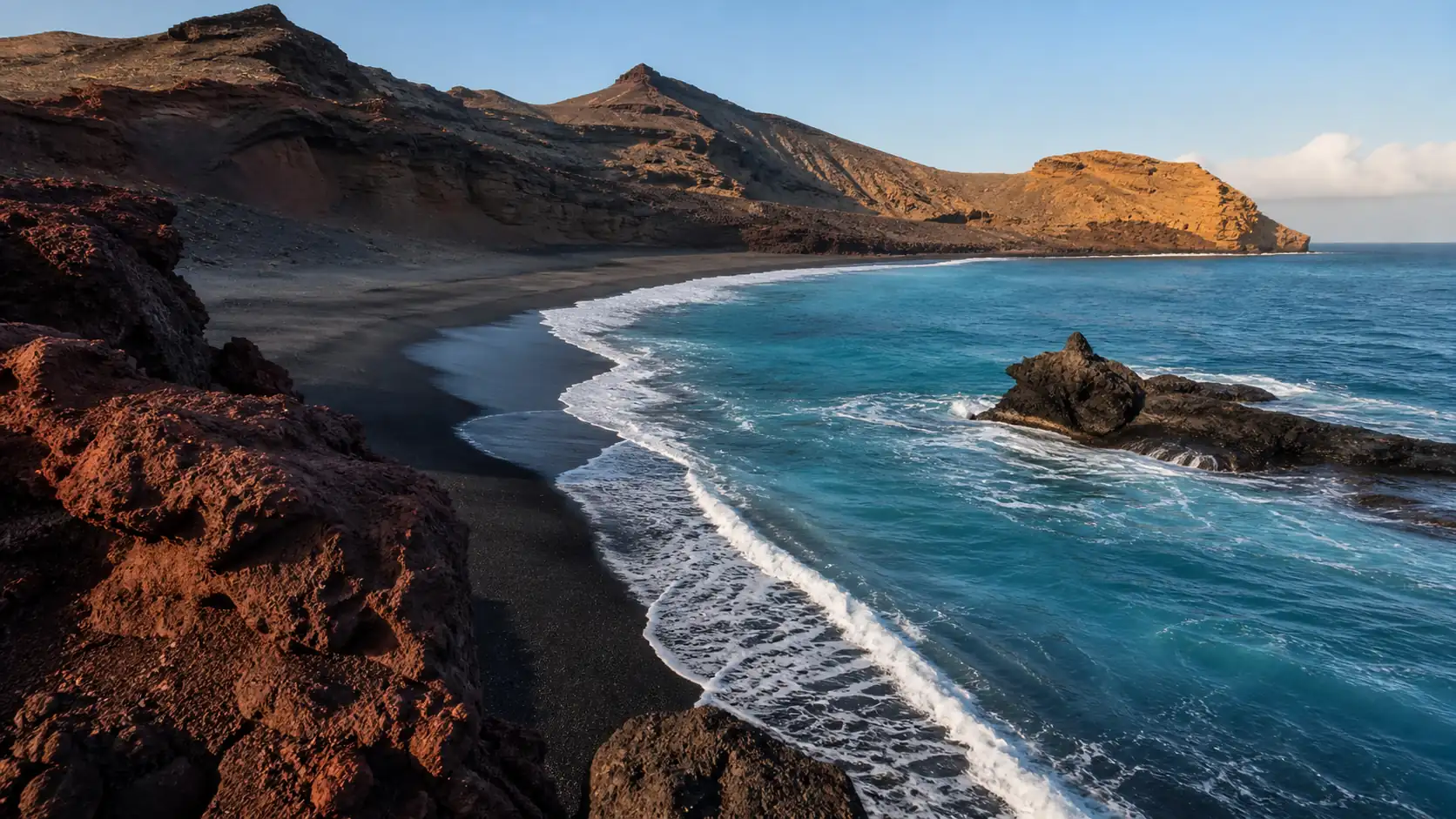
1. Cofete, Fuerteventura
Cofete is vast, remote, and backed by the Jandía mountains. Its power lies in scale rather than easy swimming: wind, waves, and currents can be severe, while access involves a long rough road or limited public transport.
Best for: Scenery, solitude, and photography. Treat ocean entry cautiously and follow all local warnings.
2. Las Canteras, Gran Canaria
Las Canteras is one of Spain's strongest urban-beach choices, running along Las Palmas with restaurants, a promenade, and year-round city life. A natural reef shelters sections of the water, though conditions vary along the beach.
Traveler advantage: You can reach it without renting a car and combine swimming with museums, markets, and evening dining.
3. Benijo, Tenerife
Benijo frames volcanic sand with offshore rock stacks beneath the Anaga mountains. The steep access and energetic sea create a dramatic sunset location, but swimming conditions can be demanding.
Timing tip: Arrive well before sunset to park safely and descend without rushing; begin the return before the path becomes dark.
4. Papagayo, Lanzarote
Papagayo is a cluster of pale-gold coves protected by low volcanic headlands. The contrast is gentler than at Cofete or Benijo, making it appealing for swimmers when the sea is calm.
Practical note: Road access can be rough and services limited. Carry water, shade, and footwear suitable for hot, uneven ground.
Plan a Safe and Comfortable Beach Day
Beach quality is only one part of the decision. Access, exposure, connectivity, and basic preparation determine whether the day feels relaxed.
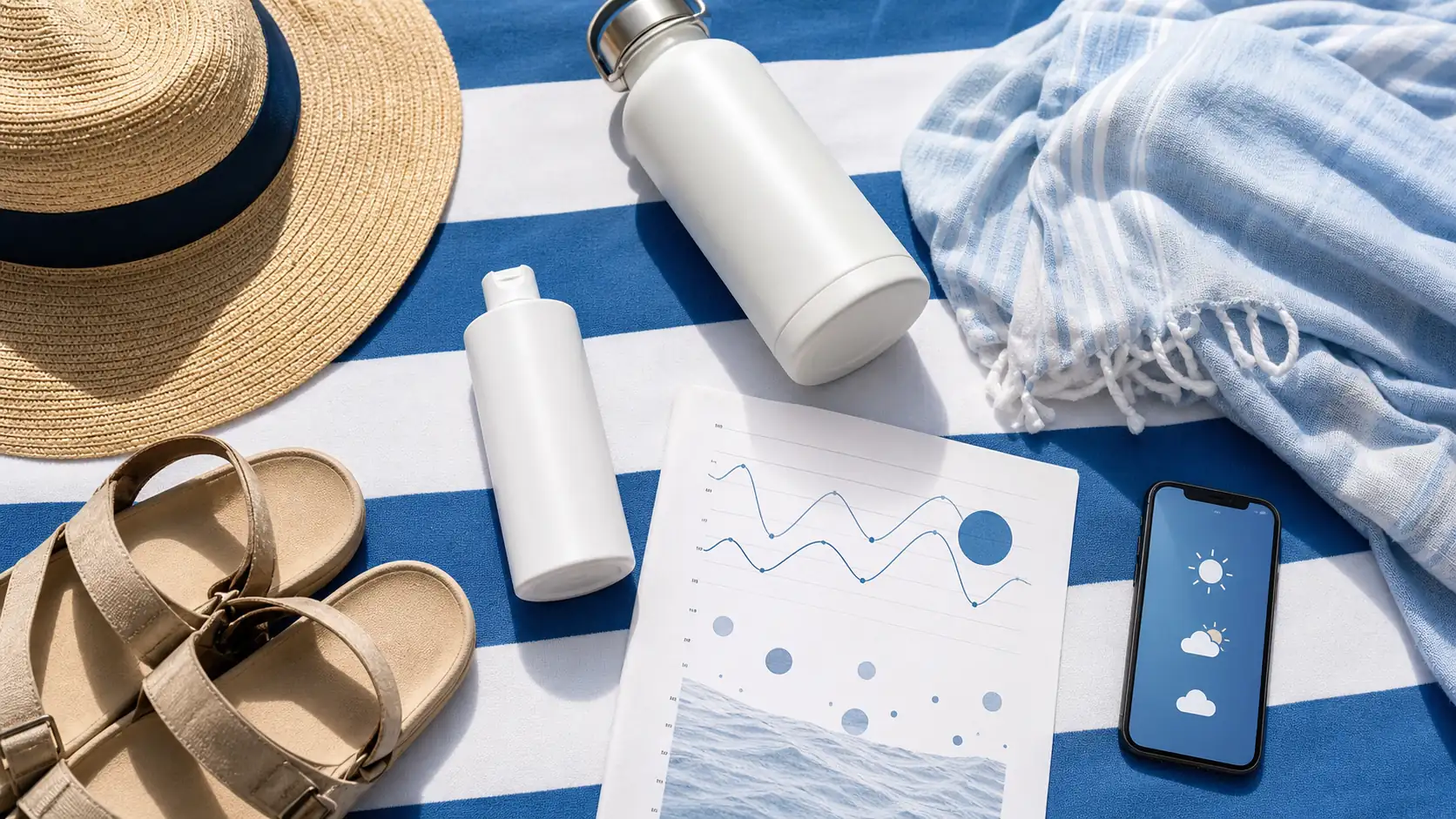
1. Match season and time of day
July and August bring heat, high demand, and difficult parking across many Mediterranean and island beaches. June and September often balance warm water with more manageable crowds, while the northern coast remains more weather-dependent.
Arrive early for famous coves and leave exposed sand during the strongest midday sun. Check the UV index even on breezy or cloudy days.
2. Check access and sea conditions
Research parking, shuttle buses, ferry reservations, trail length, and accessibility before departure. At tidal or surf-facing beaches, read local warnings and never infer safety from how calm the water looks near shore.
3. Stay connected without depending on signal
Mobile data helps with ferry changes, tide tables, weather alerts, and return transport. A compatible phone using an iRoamly travel eSIM can keep those tools available, but remote coves may still have weak coverage, so save the route and tickets offline.
Spain Beaches FAQ
These answers cover the practical choices that often separate a good beach day from a frustrating one.

1. Which part of Spain has the warmest beach weather?
The Canary Islands generally offer the most dependable winter beach climate. In summer, the Mediterranean mainland and Balearics provide warm, sunny conditions, though heat and crowds are greater.
2. Are Spanish beaches free?
Public beach access is generally free, but visitors may pay for parking, ferries, shuttles, loungers, or entry to protected areas with controlled access. Verify the specific destination rather than assuming every cost applies to the sand itself.
3. Do I need a car for the best beaches?
No. La Concha, Las Canteras, La Malvarrosa, and many resort beaches have good urban transport. A car increases choice in remote areas but can create parking problems at famous coves.
4. Are northern beaches too cold for swimming?
They are cooler and more variable than Mediterranean beaches, but many people swim during settled summer weather. Sea state and lifeguard advice matter more than air temperature alone.
5. Which beach is best for families?
Choose a supervised beach with easy access, nearby toilets, food, shade options, and calmer water rather than selecting only by appearance. Urban beaches and sheltered Mediterranean bays often meet these needs.
For no-car trips: Prioritize city beaches.
For solitude: Accept a longer walk and fewer services.
For children: Choose supervision and simple access over remoteness.
Conclusion
The best Spain beaches are not interchangeable. A Balearic cove suits a different day from a Galician rock arch, a Basque city bay, or a volcanic Canary shore.
Choose the coastal region that matches your season and travel style, then compare access, tides, services, and sea conditions for the individual beach. That sequence leads to better decisions than selecting a location from photographs alone.
Whether you want easy urban swimming, a family-friendly promenade, an island day trip, or a wild landscape, Spain has a shore that fits—provided you plan for the coast as it really is.