
China’s mountains range from sacred peaks and misty cliffs to alpine valleys and dramatic rock formations, offering experiences for every kind of traveler.
From Huangshan and Zhangjiajie to Mount Tai and Everest, each destination offers a different mix of scenery, culture, and adventure.
This guide explores the most memorable China mountains, comparing their scenery, culture, difficulty, and accessibility.
An iRoamly China travel eSIM can also help you stay connected for weather checks, transport updates, and reservations along the way.
The Beauty and Significance of China’s Mountains
Mountains in China are both physical landscapes and cultural landmarks. The Five Great Mountains are associated with imperial ritual and Taoist tradition, while Wutai, Emei, Jiuhua, and Putuo form the Four Sacred Buddhist Mountains.
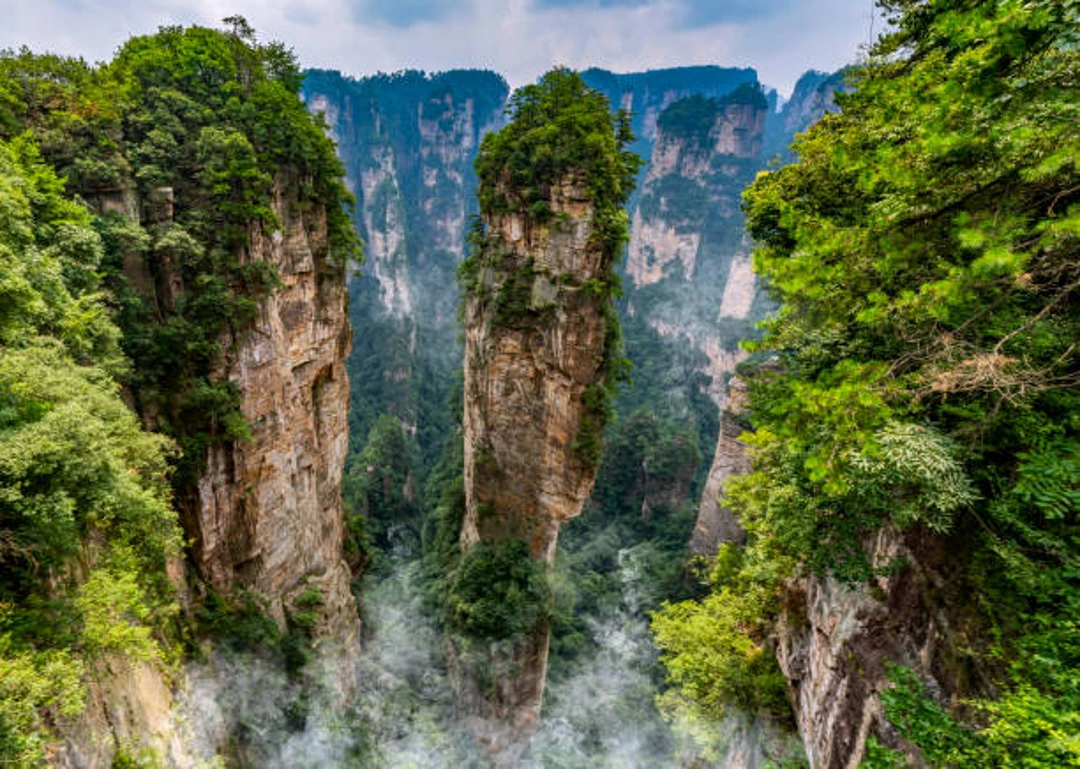
Elsewhere, distinctive geology shapes the experience: Huangshan is known for granite pinnacles and pines, Zhangjiajie for quartz-sandstone pillars, Changbai for a volcanic crater lake, and Wuyi for forested river gorges.
Choose first by the experience you want, then check how the mountain fits your route. A famous peak that requires a flight, a long road transfer, and altitude adjustment may be less rewarding on a short itinerary than a lower mountain near your existing base city.
Conditions also vary sharply by elevation, so seasonal access, cloud, rain, snow, and cable-car maintenance can matter more than a broad “best month” recommendation.
Travel goal | Strong choices | Planning reality |
|---|---|---|
Classic scenery with established facilities | Huangshan, Zhangjiajie, Mount Tai | Good first choices, but popular viewpoints and transport can be crowded during holidays. |
Spiritual culture | Wutai, Emei, Jiuhua, Putuo, Song, Kailash | Temple etiquette matters; Kailash also requires far more time, altitude preparation, and advance arrangements. |
Dramatic views with less hiking | Tianmen, Jade Dragon Snow Mountain, Changbai | Cable cars or shuttle systems reduce walking, but weather can still limit visibility or close upper areas. |
Active hiking | Mount Hua, Siguniang, Daocheng Yading | Match the route to your fitness and experience; high-elevation valleys need a slower pace. |
Culture plus gentler landscapes | Wuyi, Putuo, Mount Song | These combine scenery with tea, temples, villages, or historic sites rather than focusing only on summits. |
The Five Great Mountains (Wuyue)
To understand China’s mountain culture, the Five Great Mountains are an important place to start.
They were not chosen simply for their height or scenery, but for their long-standing importance in Chinese history, imperial rituals, and religious traditions.
Known as the Wuyue, they are Mount Tai in the east, Mount Hua in the west, Mount Heng in the south, Mount Heng in the north, and Mount Song in the center.
Each combines a distinct landscape with centuries of cultural significance.
1. Mount Tai (Tai Shan)
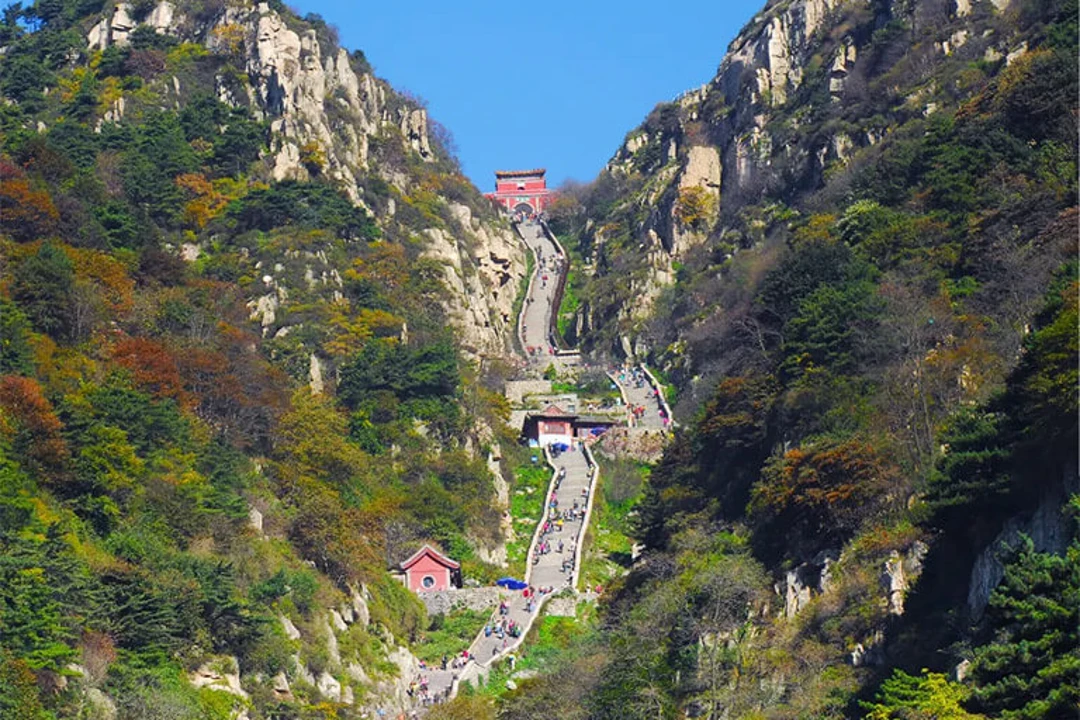
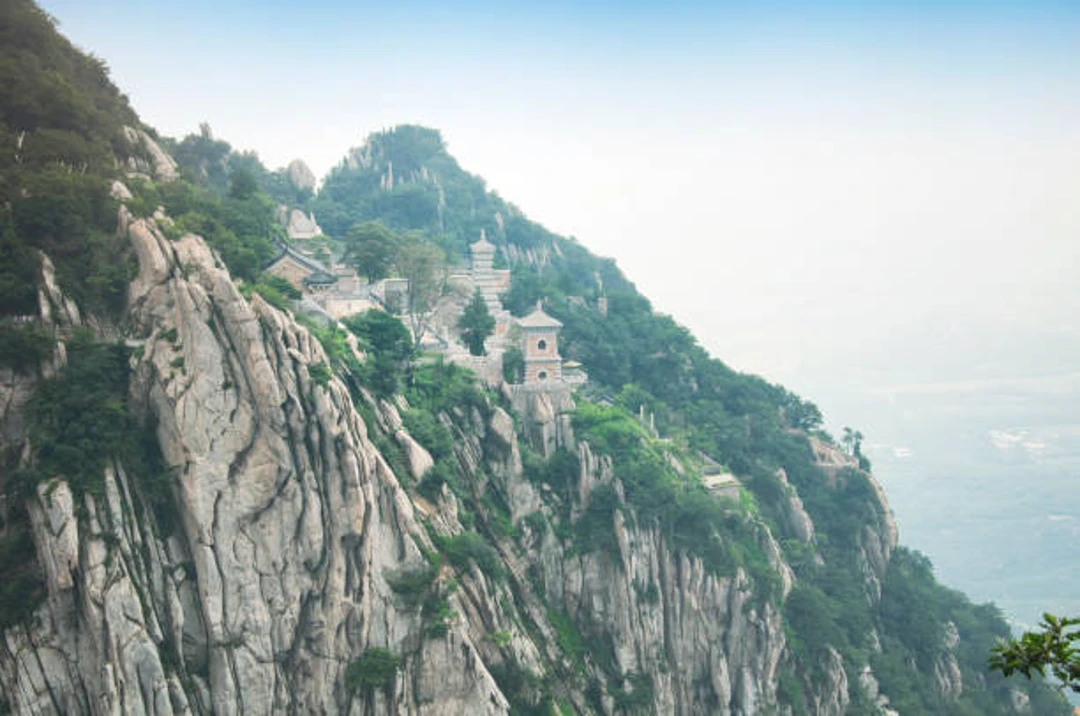
Mount Tai in Shandong is the eastern and traditionally foremost member of the Five Great Mountains. Its long ceremonial history, stone inscriptions, temples, and sunrise views make it as much a cultural ascent as a scenic one.
The classic stair route passes historic gates and monuments before reaching the summit area.
Base yourself in Tai’an and allow a full day for a cable-car-assisted visit or longer if you want to climb a substantial part of the historic route and stay for sunrise.
Spring and autumn usually offer comfortable walking conditions, but summit weather can be cooler and more changeable than the city below.
2. Mount Hua (Hua Shan)
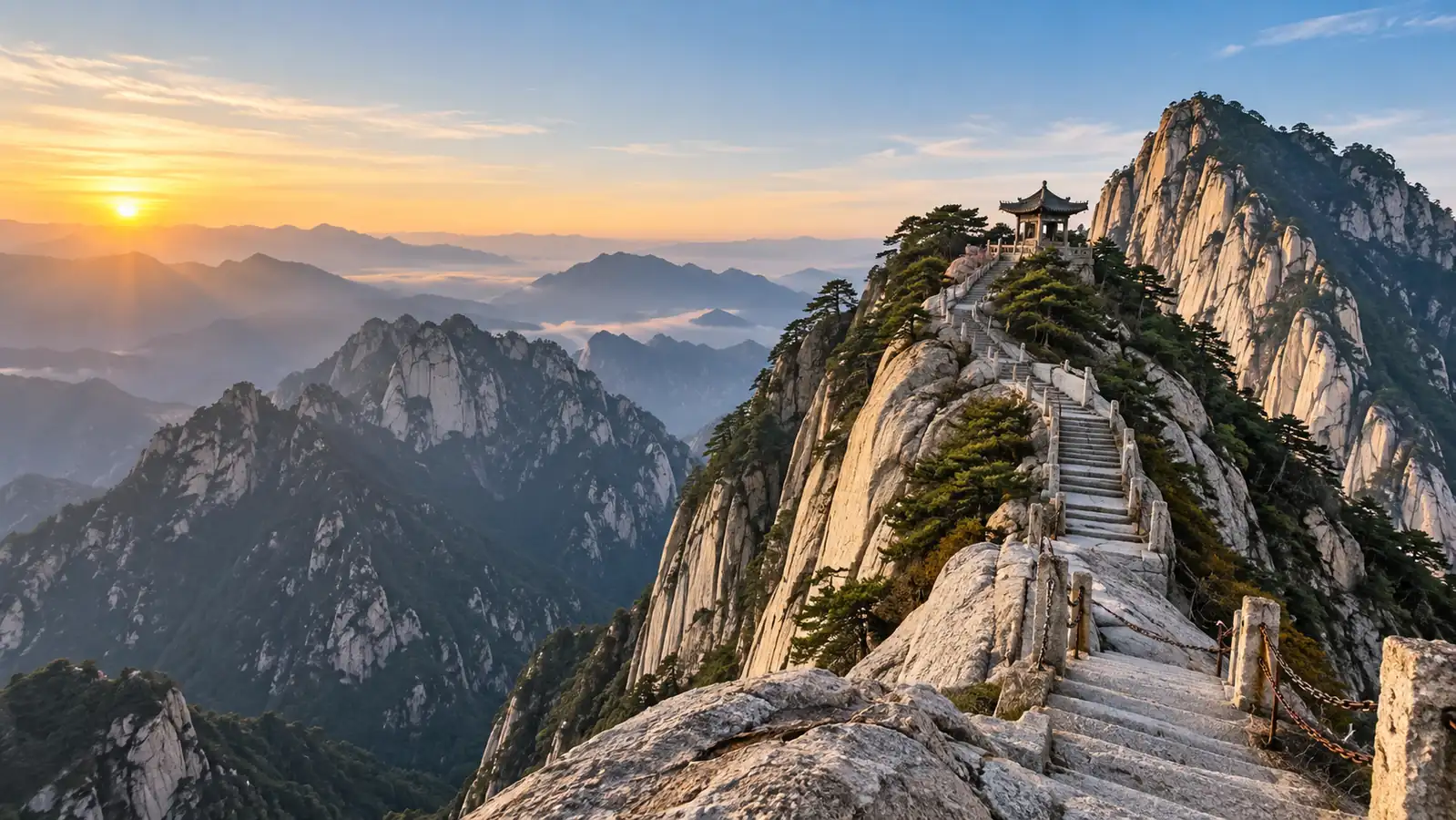
Mount Hua rises east of Xi’an in a compact granite massif of steep ridges and five principal peaks.
It suits travelers who want dramatic exposure and a strenuous feel, but the mountain is not limited to its famous plank walk: cable cars and several route combinations make the main viewpoints accessible without completing the most intimidating optional section.
A long day trip is possible from Xi’an, although an overnight stay near Huayin gives you more flexibility. Choose a cable-car circuit according to your fitness, start early, and do not treat exposed attractions as mandatory.
Conditions are generally most comfortable in spring and autumn; rain, ice, or strong wind can change what is safe or open.
3. Mount Heng (Heng Shan, Shanxi)
Northern Mount Heng near Datong combines mountain scenery with frontier history and religious sites. Many visitors pair the scenic area with the Hanging Temple, which is built against a cliff nearby, rather than approaching the trip as a summit-only hike.
Allow a full day from Datong for the mountain and temple area, with extra time if you prefer a slower pace.
Spring through autumn is the usual visiting window, but the exposed northern climate can be windy and cold. Confirm local transport and ticket arrangements before leaving Datong because the sites are spread out.
4. Mount Heng (Heng Shan, Hunan)
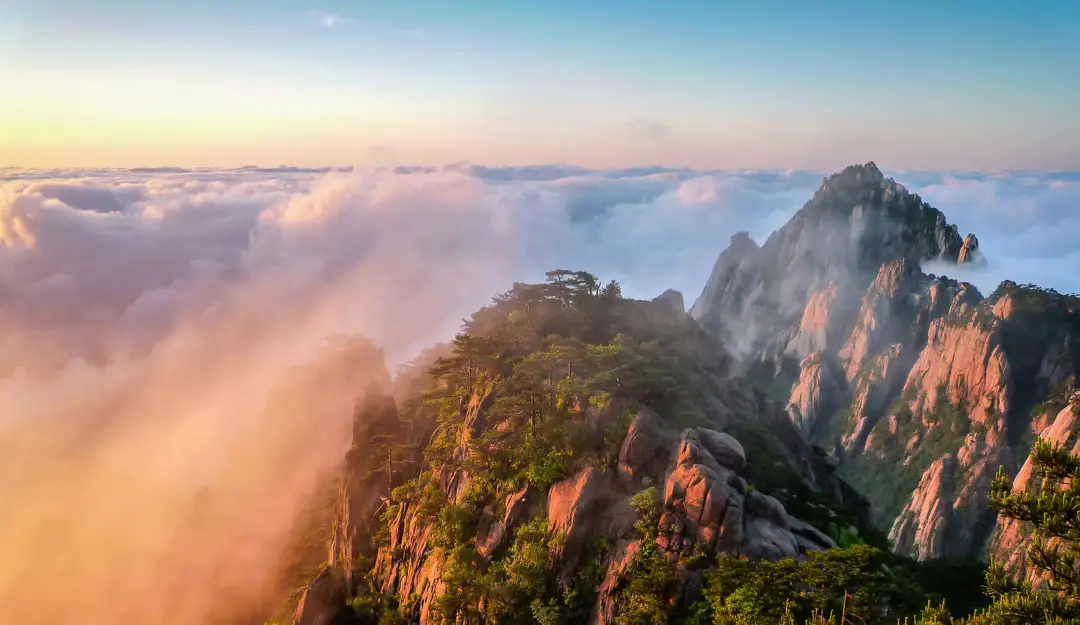
Southern Mount Heng, usually reached through Hengyang or Hengshan West, is known for forested slopes, Nanyue Temple, and the route toward Zhurong Peak.
The atmosphere is greener and gentler than Mount Hua, and the mix of Buddhist and Taoist sites makes it a good choice for travelers who want culture with a moderate mountain day.
Plan one full day for the principal temple and summit area, or stay overnight in Nanyue for an easier start. Shuttles shorten the ascent, while walking sections still include many steps.
Mild spring and autumn days are comfortable, and winter can bring rime or snow but also colder, less predictable access.
5. Mount Song (Song Shan)
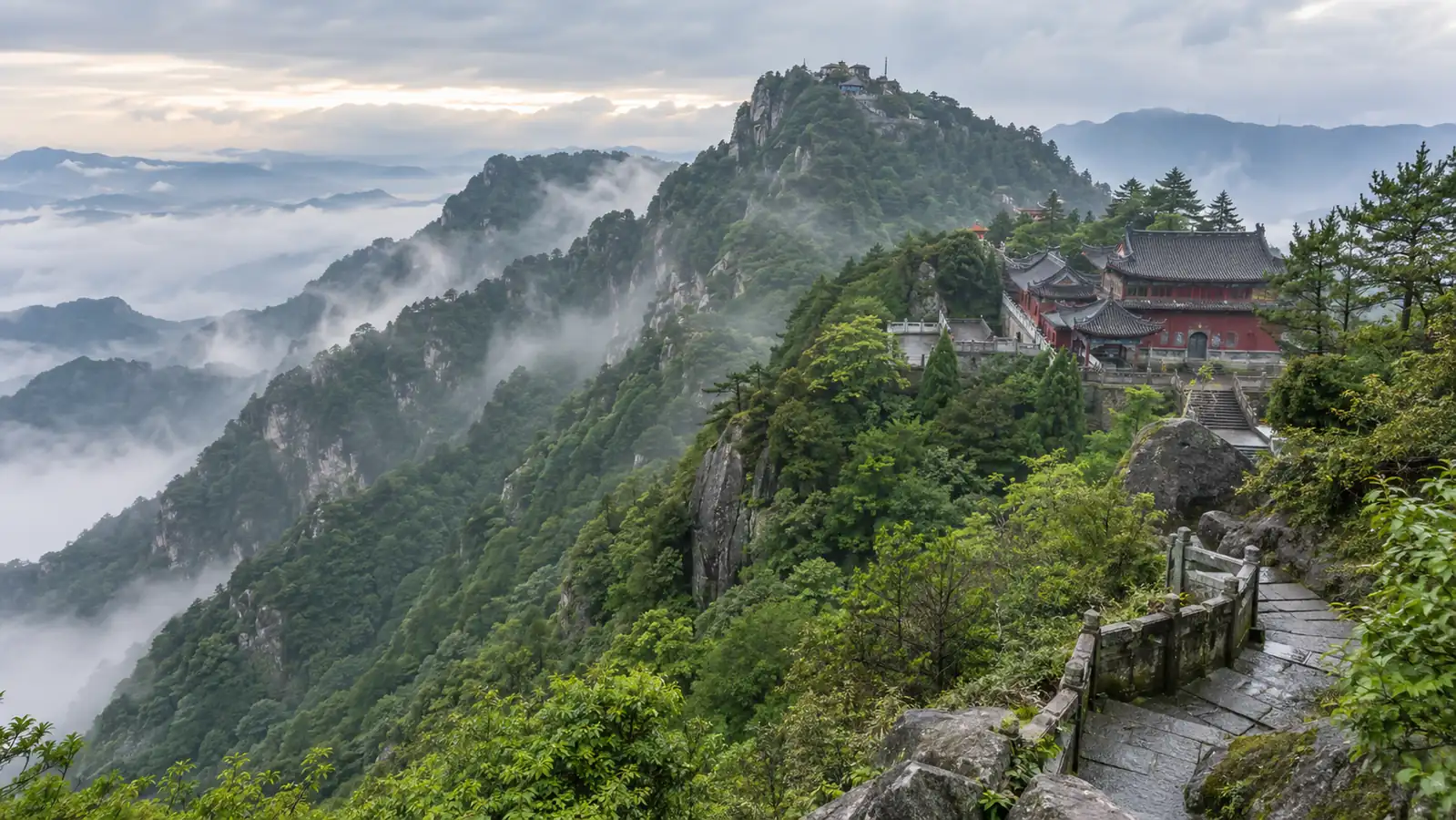
Mount Song in Henan is the central Great Mountain and a broad cultural landscape rather than a single must-climb summit.
The Shaolin Temple and Pagoda Forest sit in the Shaoshi area, while Songyang Academy and other historic sites lie around the Taishi side. Trying to see both sides quickly can turn the day into a series of transfers.
Choose one side for a focused day or allow two days for both the Shaolin heritage and a mountain walk. Dengfeng is the practical base, reached from Zhengzhou or Luoyang.
Spring and autumn are pleasant for hiking, while year-round temple visits remain possible when you dress for the weather and check trail access.
The Four Sacred Buddhist Mountains
6. Mount Wutai (Wutai Shan)
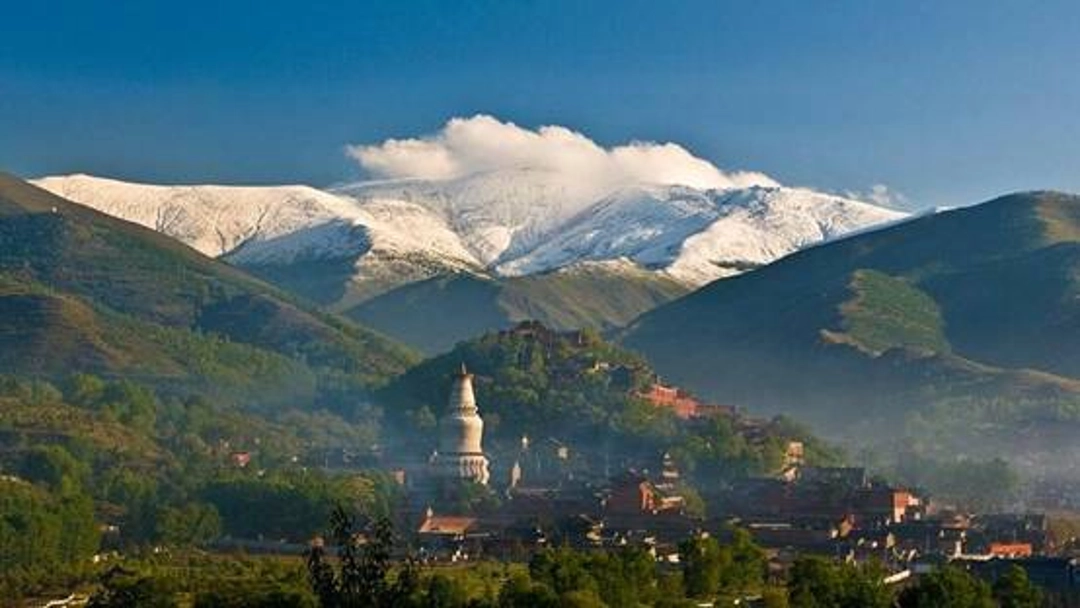
Mount Wutai in Shanxi is a high plateau of five rounded peaks and an important center of Manjushri worship.
Its temples, monastic life, and open landscapes make it more rewarding as a pilgrimage region than as a single summit photo stop.
Use Taihuai village as the base and allow at least one full day for the central temples; visiting the outer peaks needs more time and transport planning. The elevation keeps summers comparatively cool, while winter can be severe.
Dress modestly, keep voices low inside religious compounds, and ask before photographing worshippers.
7. Mount Emei (Emei Shan)
Mount Emei rises from subtropical forest to the Golden Summit, linking waterfalls, temples, wildlife, and expansive cloud views.
It is also commonly paired with the Leshan Giant Buddha, so travelers should decide whether they want a quick summit visit or a slower temple-and-trail experience.
One long day can cover a transport-assisted Golden Summit visit, but two or three days are more realistic for walking between temples or adding Leshan. Weather differs greatly between the foot and summit, and paths can be wet.
Keep food secured around monkeys and follow local guidance rather than approaching or feeding them.
8. Mount Jiuhua (Jiuhua Shan)
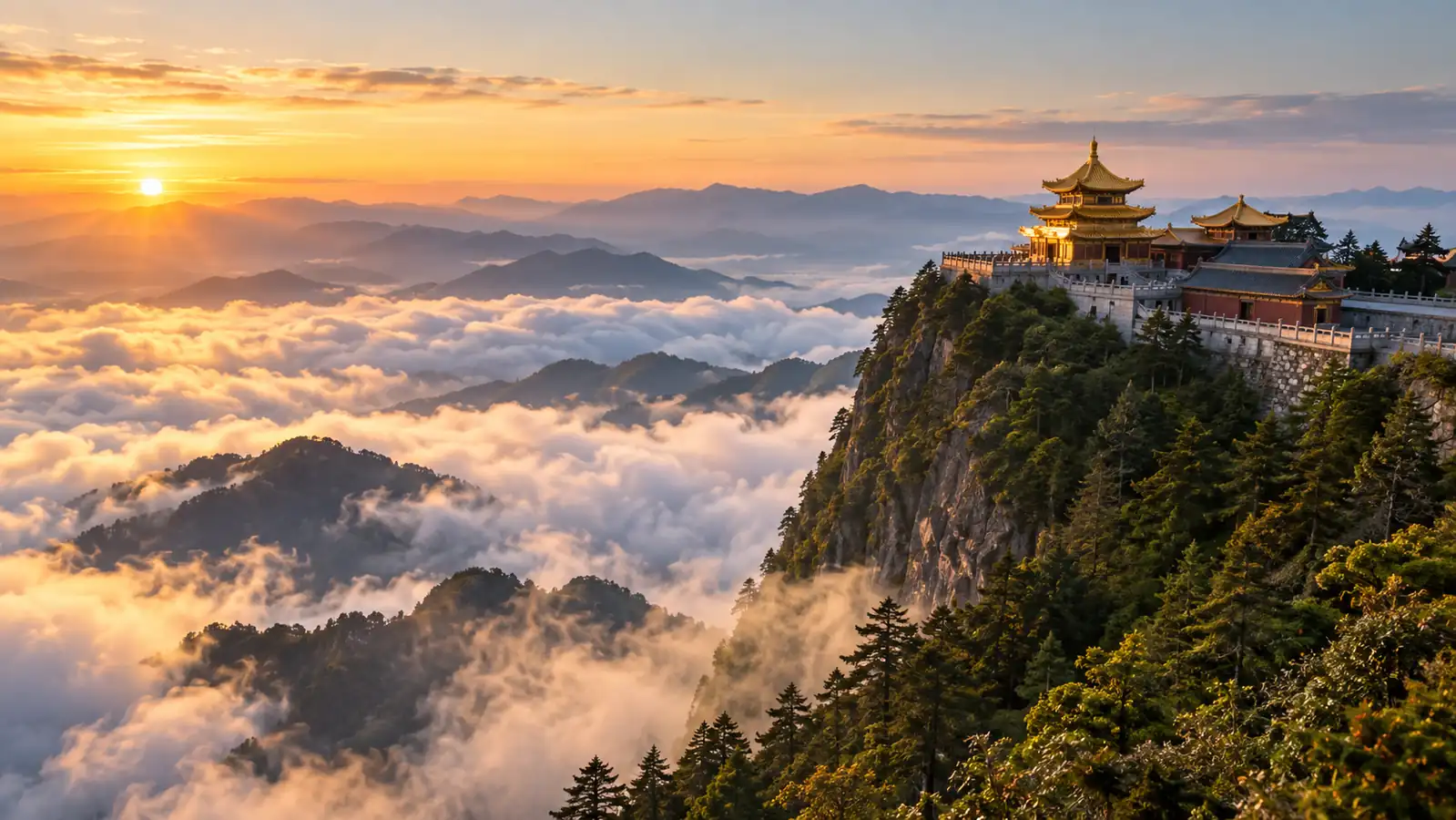
Mount Jiuhua in Anhui is associated with Ksitigarbha and combines wooded peaks with an active temple landscape.
Its appeal lies in moving slowly between religious sites, villages, and viewpoints rather than pursuing one dramatic summit.
Allow a full day for the main scenic area and preferably an overnight stay if you want quieter early hours. Local shuttles and cable cars can reduce climbing, but stone steps remain.
Spring and autumn offer comfortable conditions; during major Buddhist festivals or public holidays, book transport and accommodation well ahead.
9. Mount Putuo (Putuo Shan)
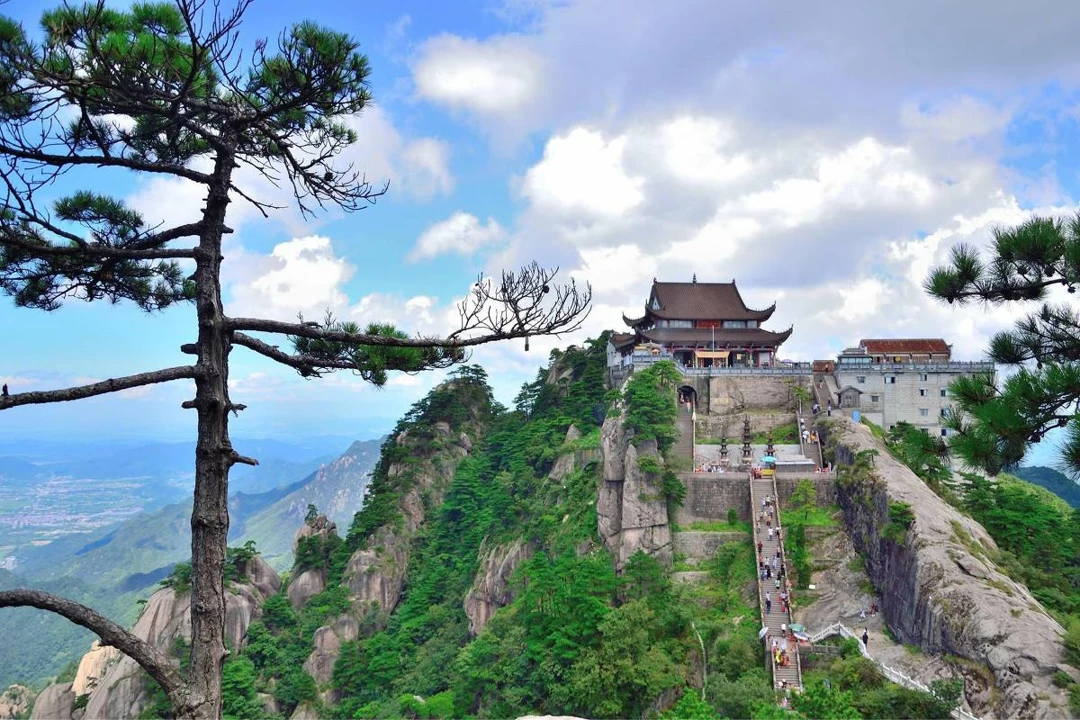
Putuo is a small island mountain in the Zhoushan archipelago and a major center of Guanyin worship.
Temples, coastal paths, forest, and beaches create a very different experience from China’s high inland peaks, making it a strong choice for travelers who prefer a reflective pilgrimage with sea views.
Most visitors arrive by ferry and spend one or two days walking between Puji Temple, Fayu Temple, and coastal sites. Build buffer time around ferry connections, especially in poor weather or holiday periods.
The terrain is lower and less strenuous than many mountains in this guide, although humid summers and repeated steps still reward light, breathable layers.
Other Spectacular Mountains for Adventure and Scenery
10. Yellow Mountain (Huang Shan)
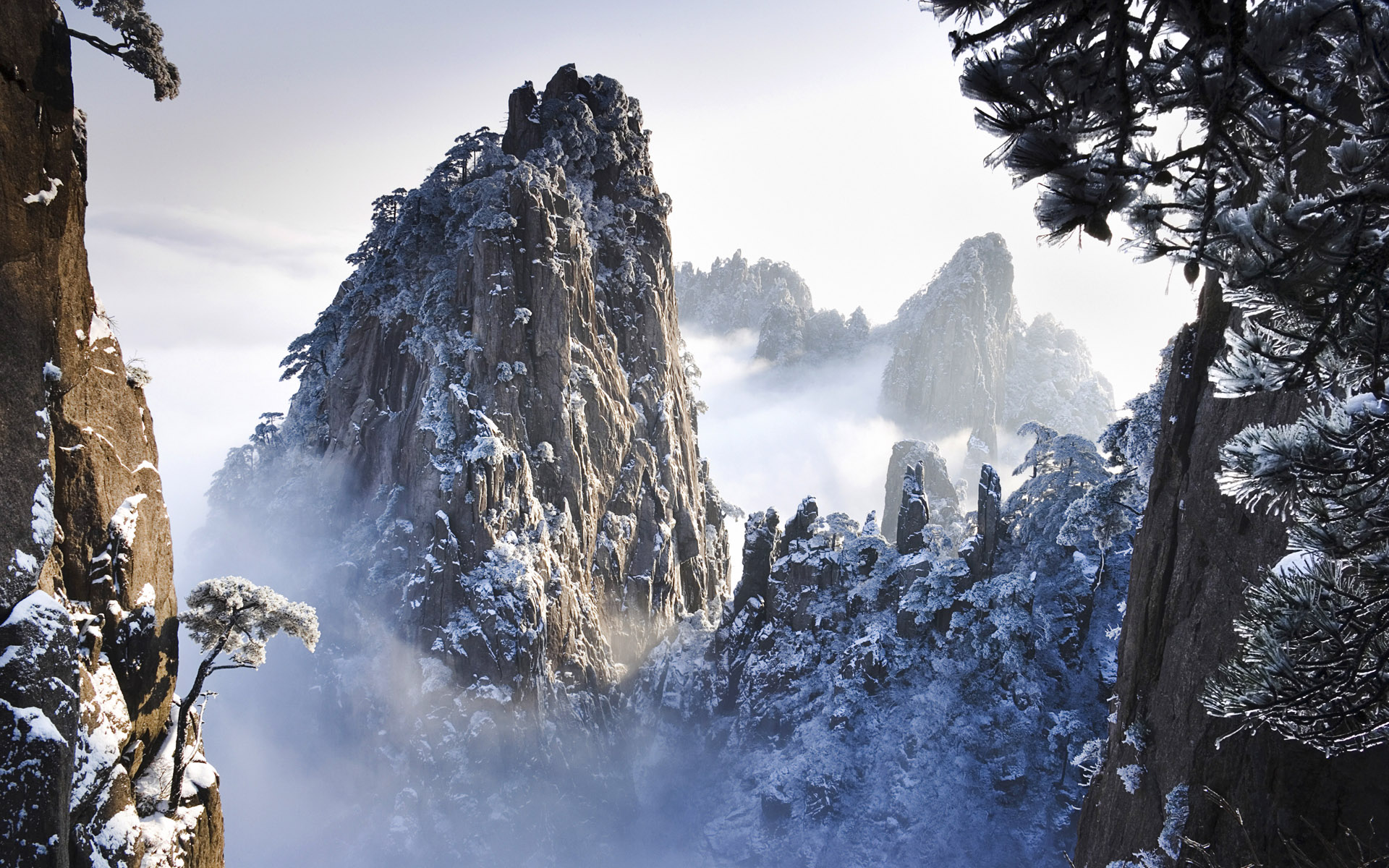
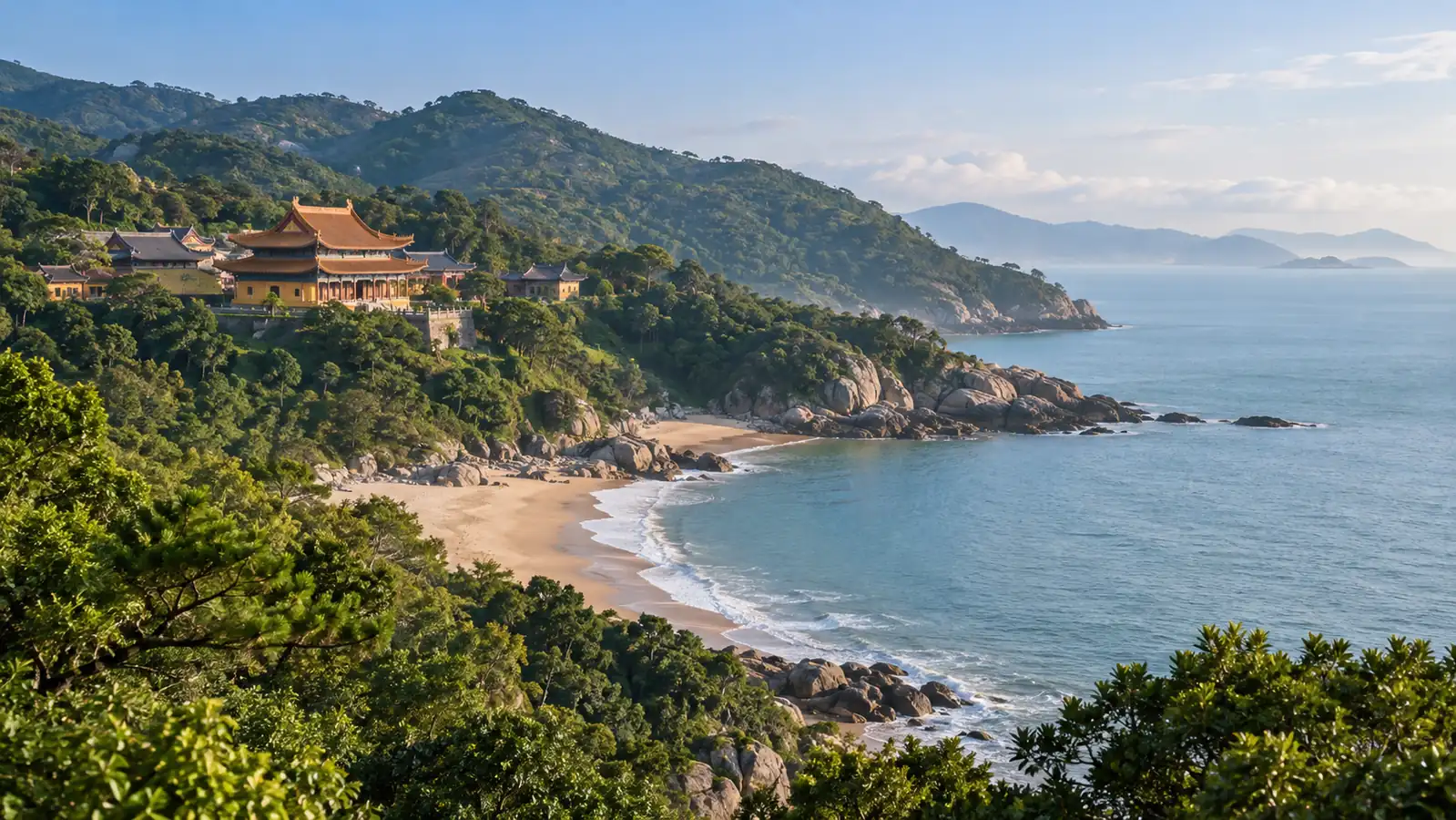
Huangshan in Anhui is the classic image of Chinese mountain scenery: granite pinnacles, wind-shaped pines, cloud seas, and deep valleys.
It rewards both photographers and walkers, but its stair-heavy paths can be demanding even when cable cars remove the largest ascent.
A day trip shows the principal viewpoints, while an overnight stay on the mountain gives a better chance of seeing sunrise, sunset, or changing cloud conditions.
Base yourself in Huangshan City or near the south gate, check which cable cars and trails are operating, and expect spring and autumn holidays to be busy.
11. Zhangjiajie National Forest Park
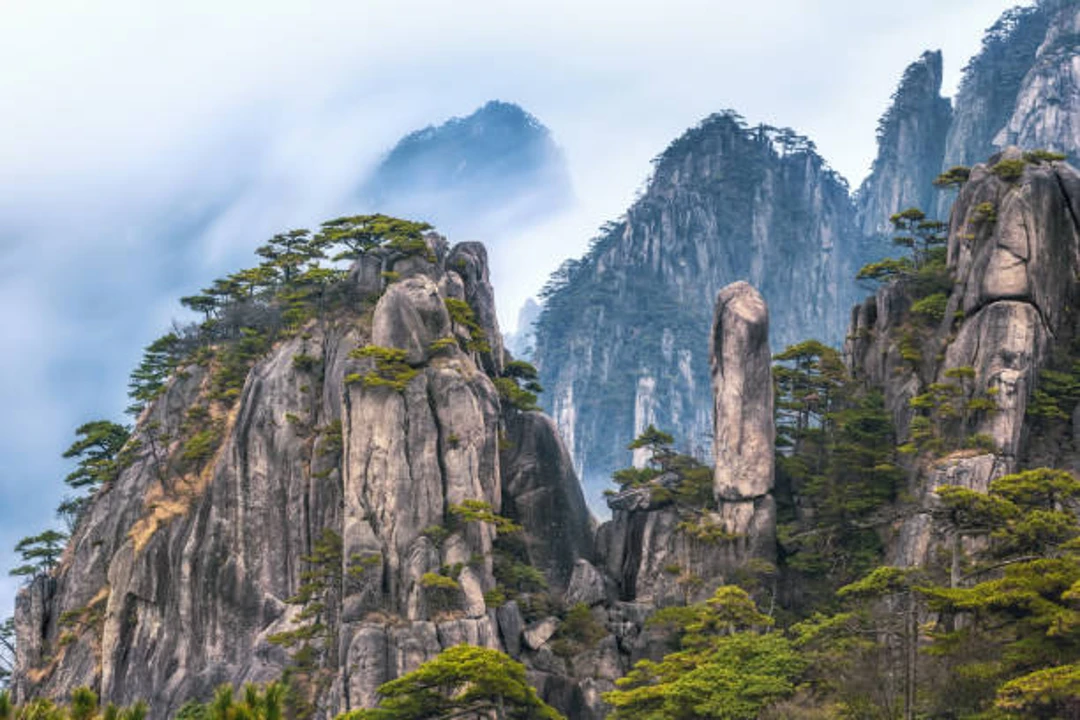
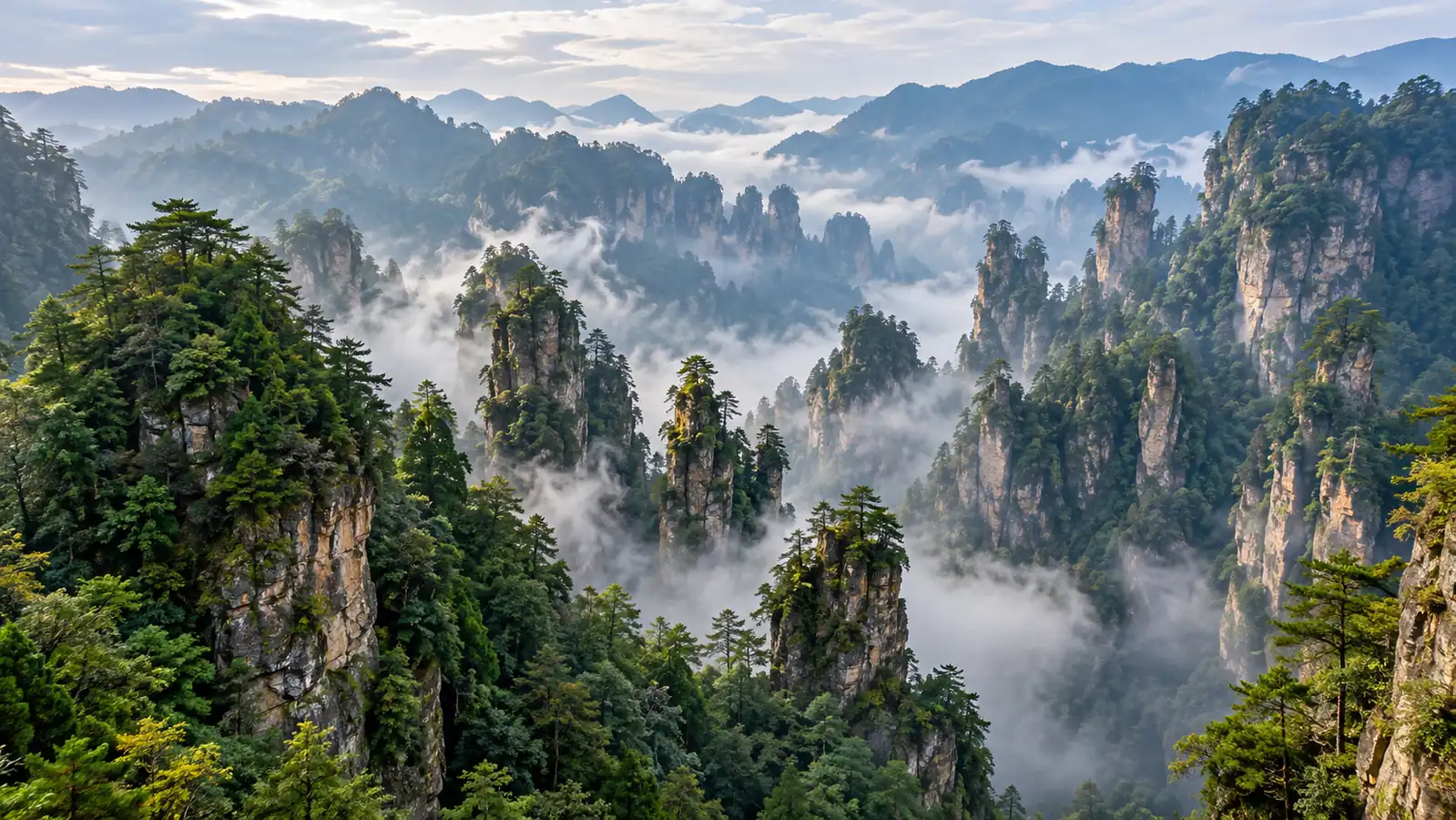
Zhangjiajie National Forest Park is a must-visit attraction in Hunan, famous for thousands of quartz-sandstone pillars rising through forest and mist.
Yuanjiajie, Tianzi Mountain, and Golden Whip Stream occupy different parts of the wider Wulingyuan area, so the park is much larger than one viewpoint.
Allow at least two full days for the forest park and a third if you also want the Grand Canyon area.
Stay in Wulingyuan for efficient access, start early, and plan routes around shuttle buses, elevators, and cable cars instead of crisscrossing the park.
Spring and autumn balance hiking weather and visibility, while rain can create atmospheric mist but obscure distant views.
12. Mount Everest (Qomolangma)
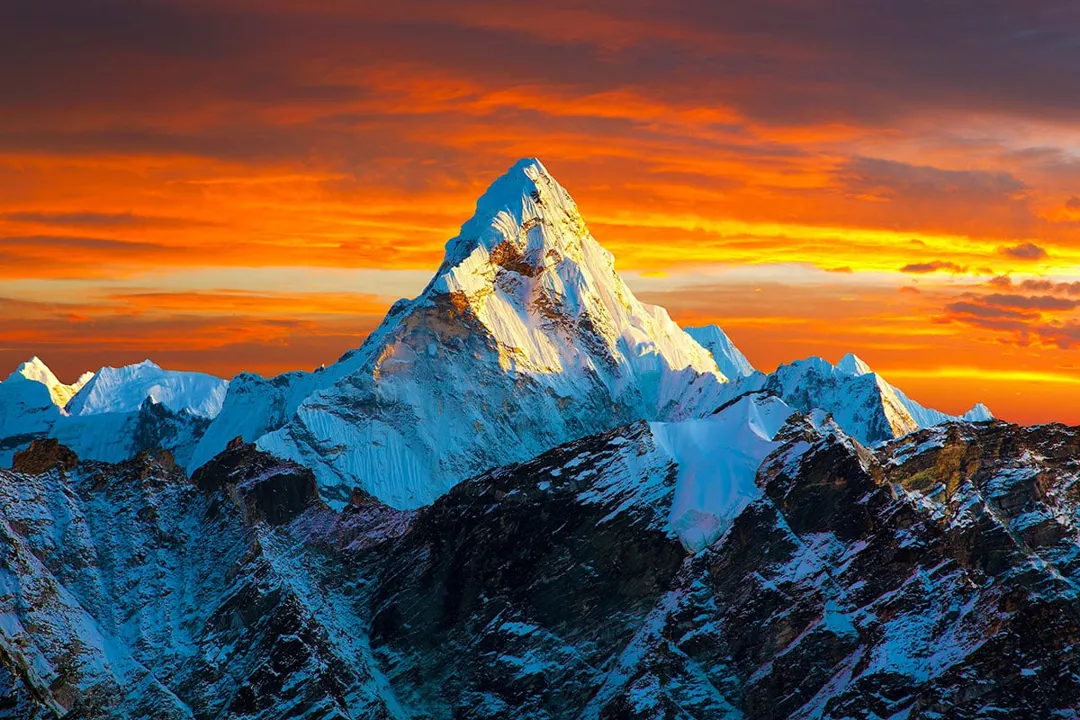
On the Tibetan side, Everest is primarily a high-altitude sightseeing and cultural journey for ordinary travelers, not a casual climbing objective.
The long road across the plateau, views of the north face, and Rongbuk Monastery are the core experience. Commercial climbing belongs to a completely different level of preparation, permission, cost, and risk.
Plan Everest as part of a multi-day Tibet itinerary with gradual acclimatization and authorized arrangements, not as an isolated day trip. Weather windows, permits, road conditions, and individual response to altitude shape the plan.
Travelers should follow current local rules, avoid rushing the ascent, and seek medical advice before high-altitude travel when they have relevant health concerns.
13. Mount Siguniang (Four Sisters Mountain)
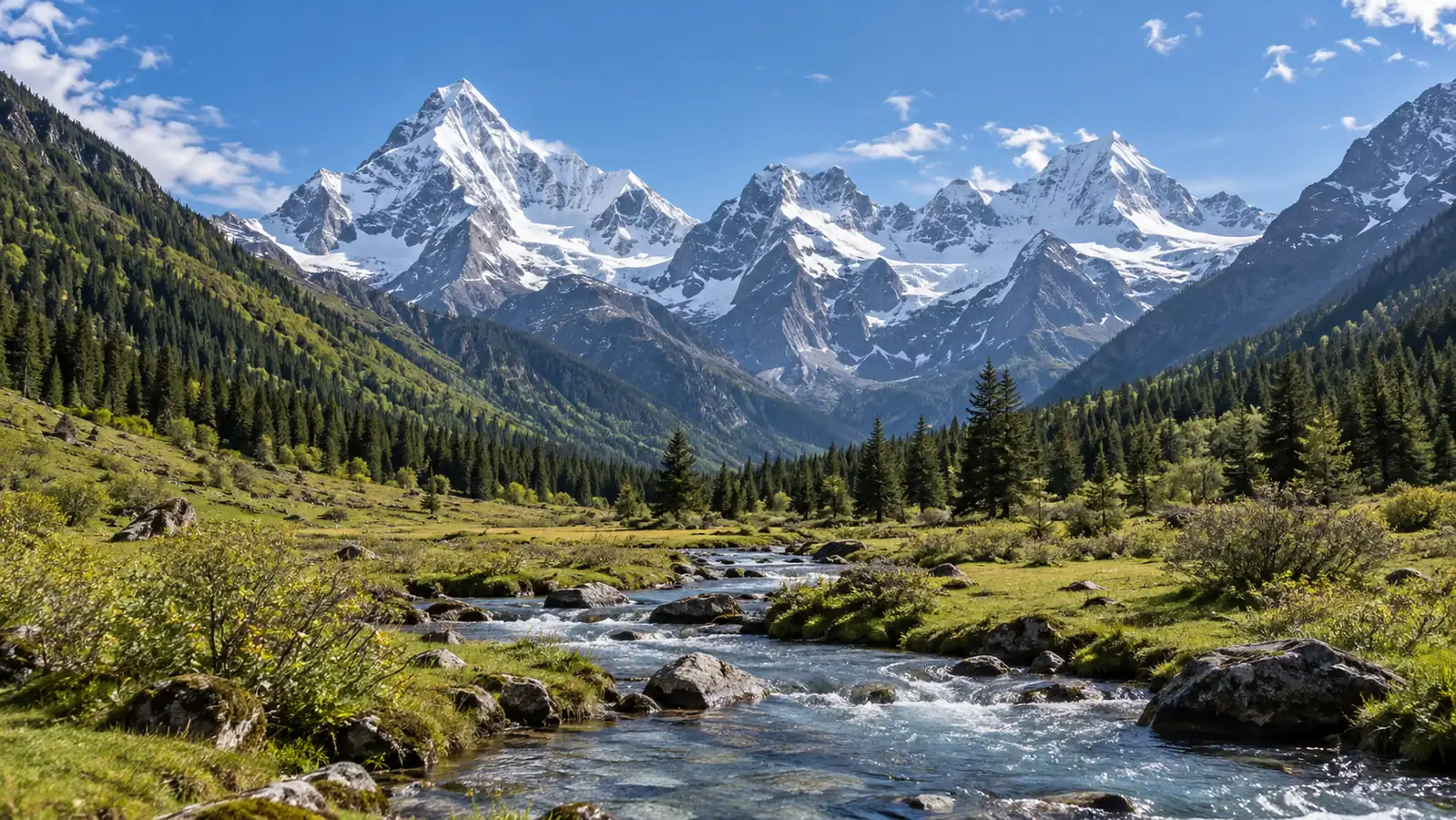
Mount Siguniang in western Sichuan combines four snow peaks with three main valleys.
Shuangqiao Valley offers the easiest sightseeing with shuttle access, while Changping and Haizi valleys appeal to walkers who want longer routes and broader alpine views.
Allow two or three days from Chengdu so the road transfer and elevation do not compress the experience. Even non-climbers are traveling at significant altitude, so begin gently, hydrate, and avoid planning the hardest walk for arrival day.
Late spring through autumn is popular, but mountain weather can change quickly in any season.
14. Jade Dragon Snow Mountain
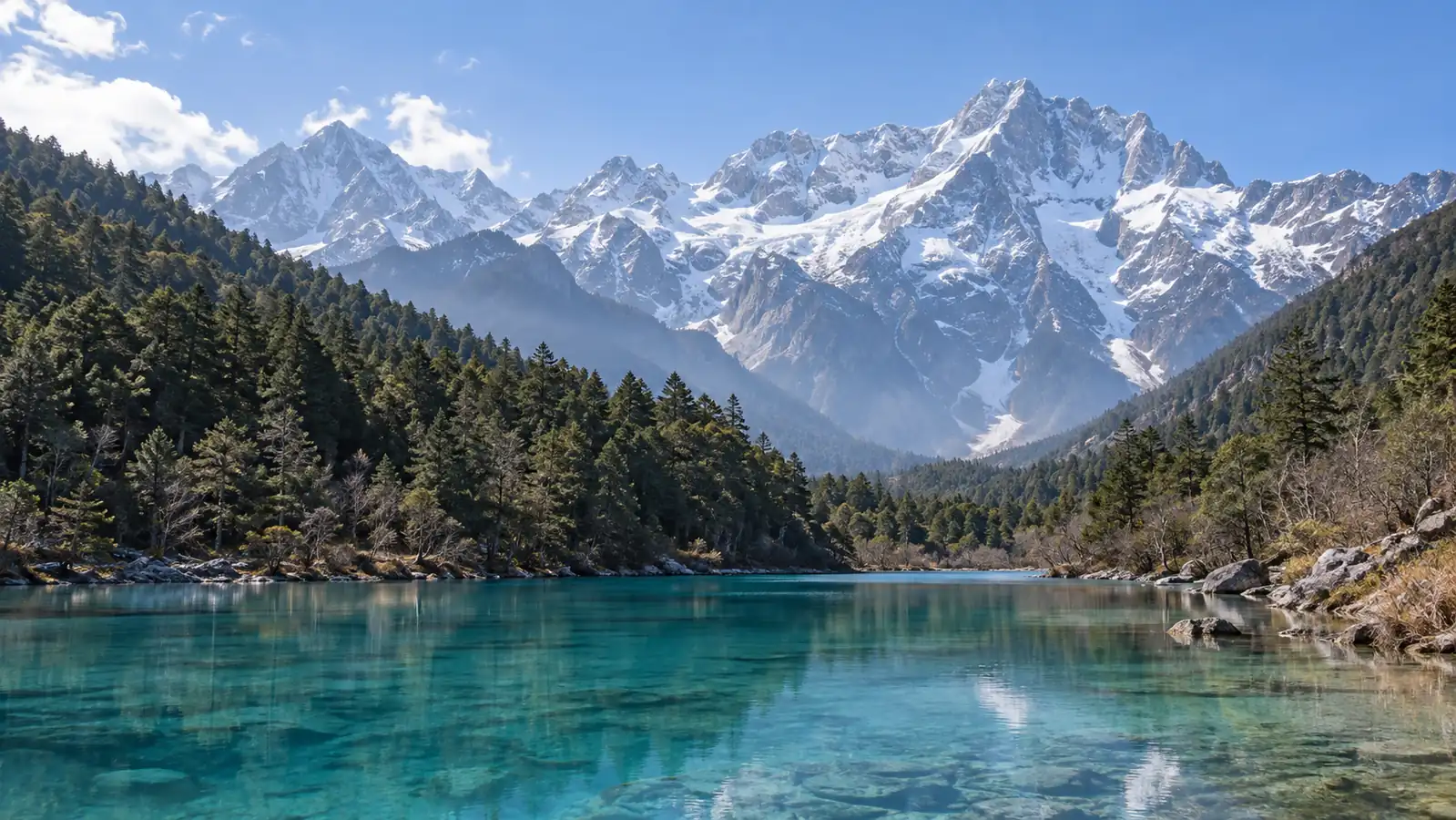
Jade Dragon Snow Mountain rises directly above Lijiang, pairing alpine scenery with Blue Moon Valley, meadows, and Naxi cultural landscapes.
Cable-car access makes it more approachable than remote Himalayan destinations, but the upper visitor area is still high enough for altitude symptoms to affect some people.
Reserve a full day from Lijiang and confirm the specific cable-car route you want, because different lifts serve different elevations and landscapes.
Start slowly, keep the day flexible if visibility is poor, and consider lower sites such as Blue Moon Valley or Spruce Meadow if a very high ascent does not suit you.
15. Mount Fanjing
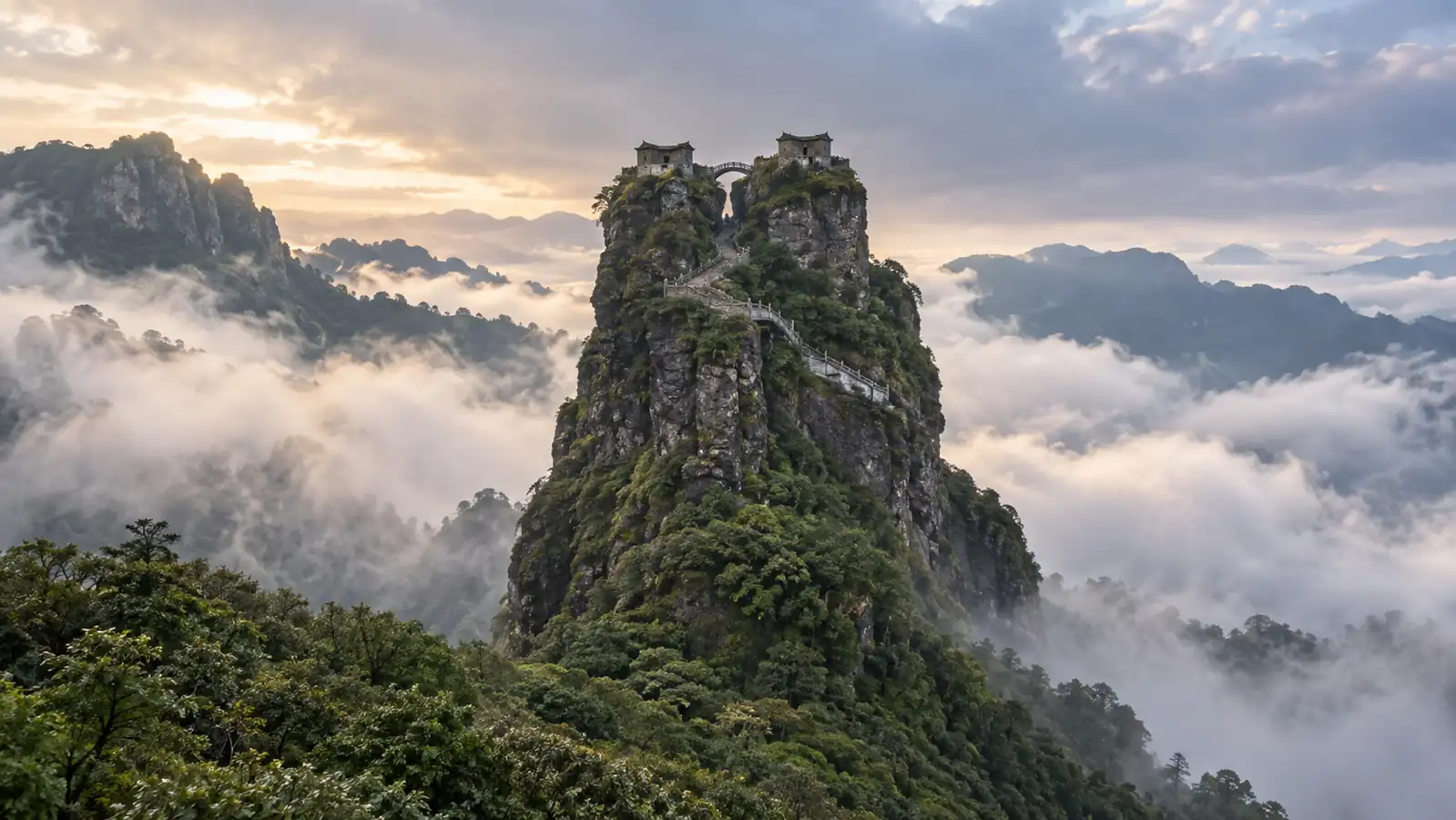
Fanjingshan in Guizhou is known for isolated rock formations, cloud forest, Mushroom Stone, and the twin temples on Red Clouds Golden Summit.
The final stairs toward the summit are steep and exposed, so the mountain’s most photographed feature is not the right objective for every visitor.
Use Jiangkou or accommodation near the scenic entrance as your base and allow a full day. A cable car shortens the ascent, but substantial steps remain.
Tickets and transport can sell out during busy periods, and mist is common; treat a clear summit view as a bonus rather than the only measure of a successful visit.
16. Tianmen Mountain
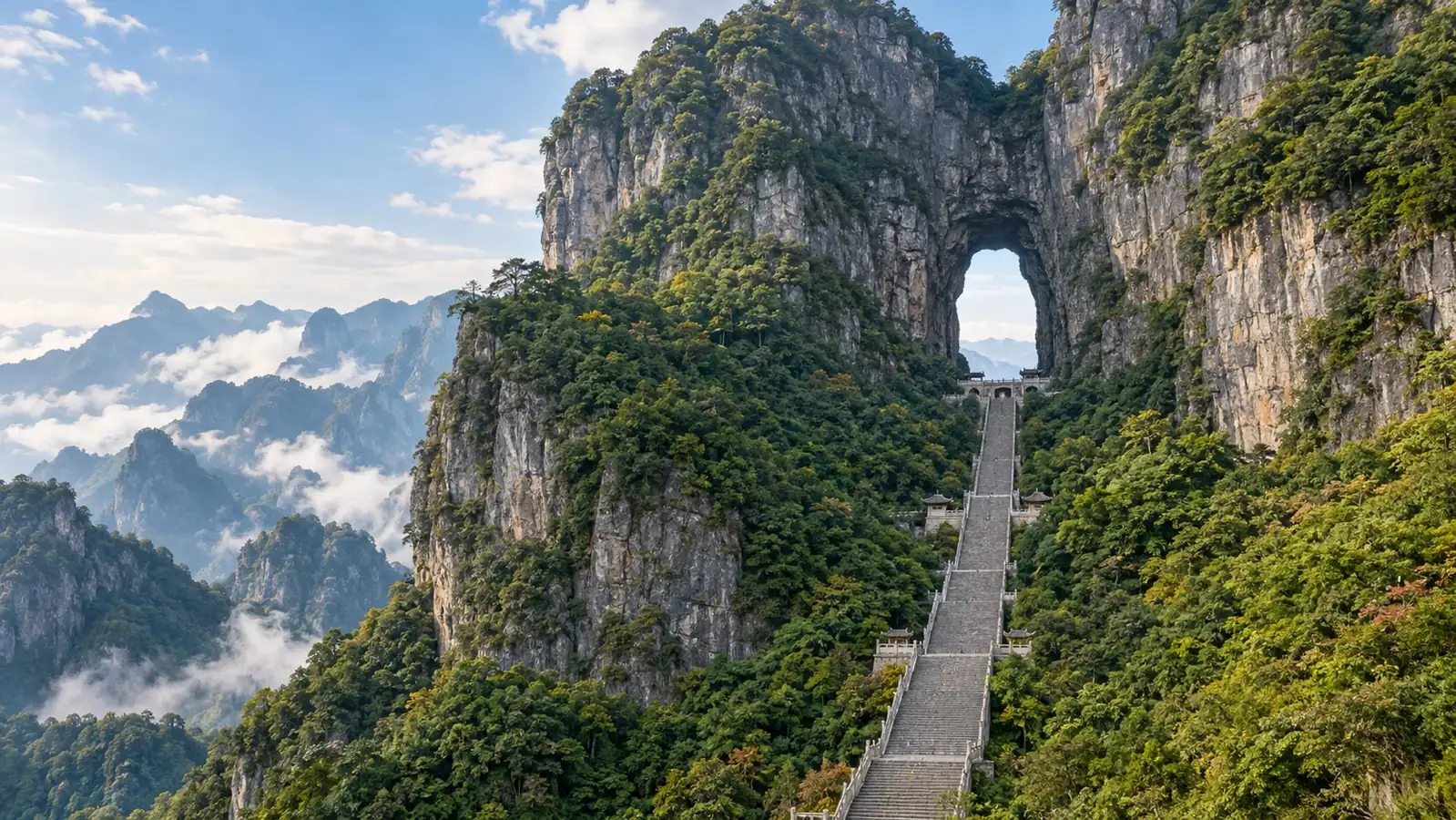
Tianmen Mountain stands close to Zhangjiajie city and is a separate experience from the sandstone pillars of Wulingyuan.
Its long cable-car journey, cliff paths, glass walkways, and the great natural arch of Tianmen Cave make it a high-impact day with relatively little conventional hiking.
Allow most of a day and follow the assigned route system, which may combine cable car, shuttle bus, escalators, and stairs.
It suits travelers who want dramatic engineering and cliff scenery, but those uncomfortable with heights should choose viewpoints selectively. Wind, fog, and maintenance can affect which attractions operate.
17. Wuyi Mountains
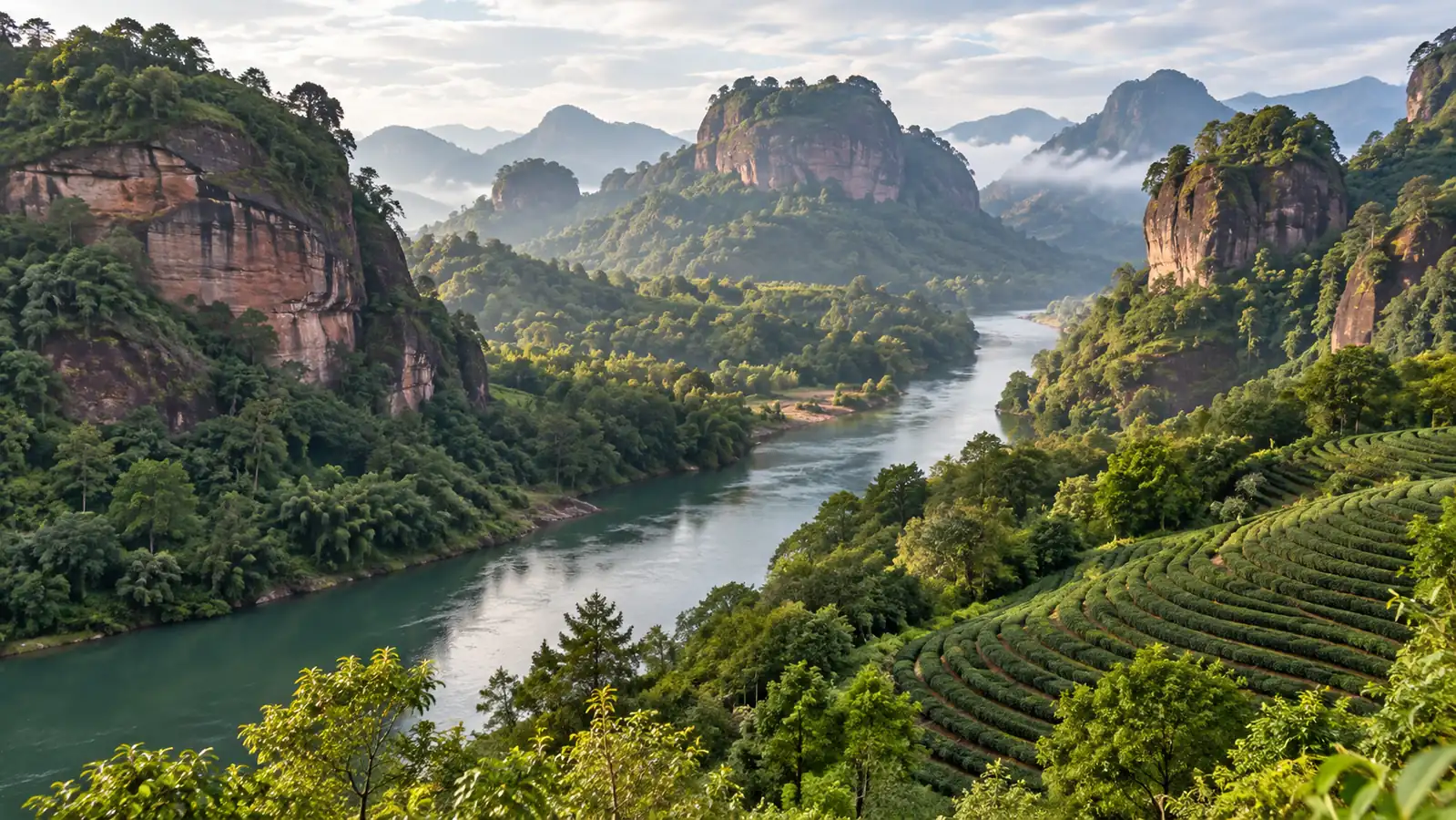
The Wuyi Mountains in Fujian offer forested sandstone peaks, the Nine-Bend River, tea gardens, and a long cultural association with Wuyi rock tea.
The experience is lower, greener, and less summit-focused than Huangshan or Hua, which makes it a useful contrast in a multi-stop China journey.
Spend two days if you want both a river experience and walking routes such as Tianyou Peak or the tea-growing valleys.
Wuyishan is the practical base. Warm, humid conditions and rain are common, so carry light waterproof protection and footwear with reliable grip.
18. Changbai Mountain
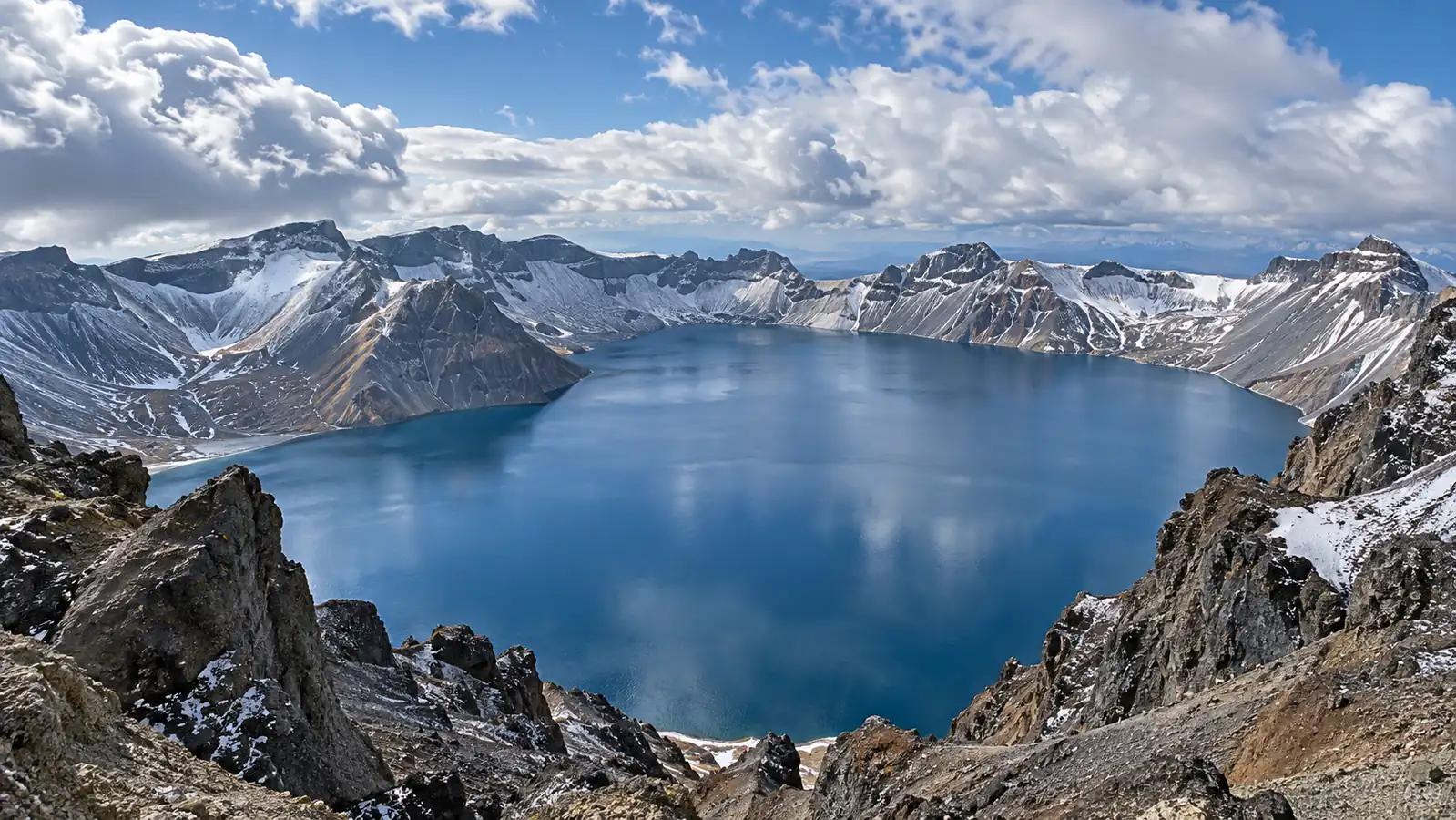
Changbai Mountain on China’s northeastern border is a volcanic landscape centered on Tianchi, or Heaven Lake. Waterfalls, forests, and seasonal snow make it distinct from the temple mountains and granite peaks elsewhere in the country.
Choose the north or west scenic approach according to transport and the viewpoints you value; they are not interchangeable entrances.
The upper lake can disappear behind cloud even when conditions are clear below, and wind or snow may close high areas. Build flexibility into a trip from the nearest gateway town and prepare for temperatures well below those at lower elevation.
19. Daocheng Yading
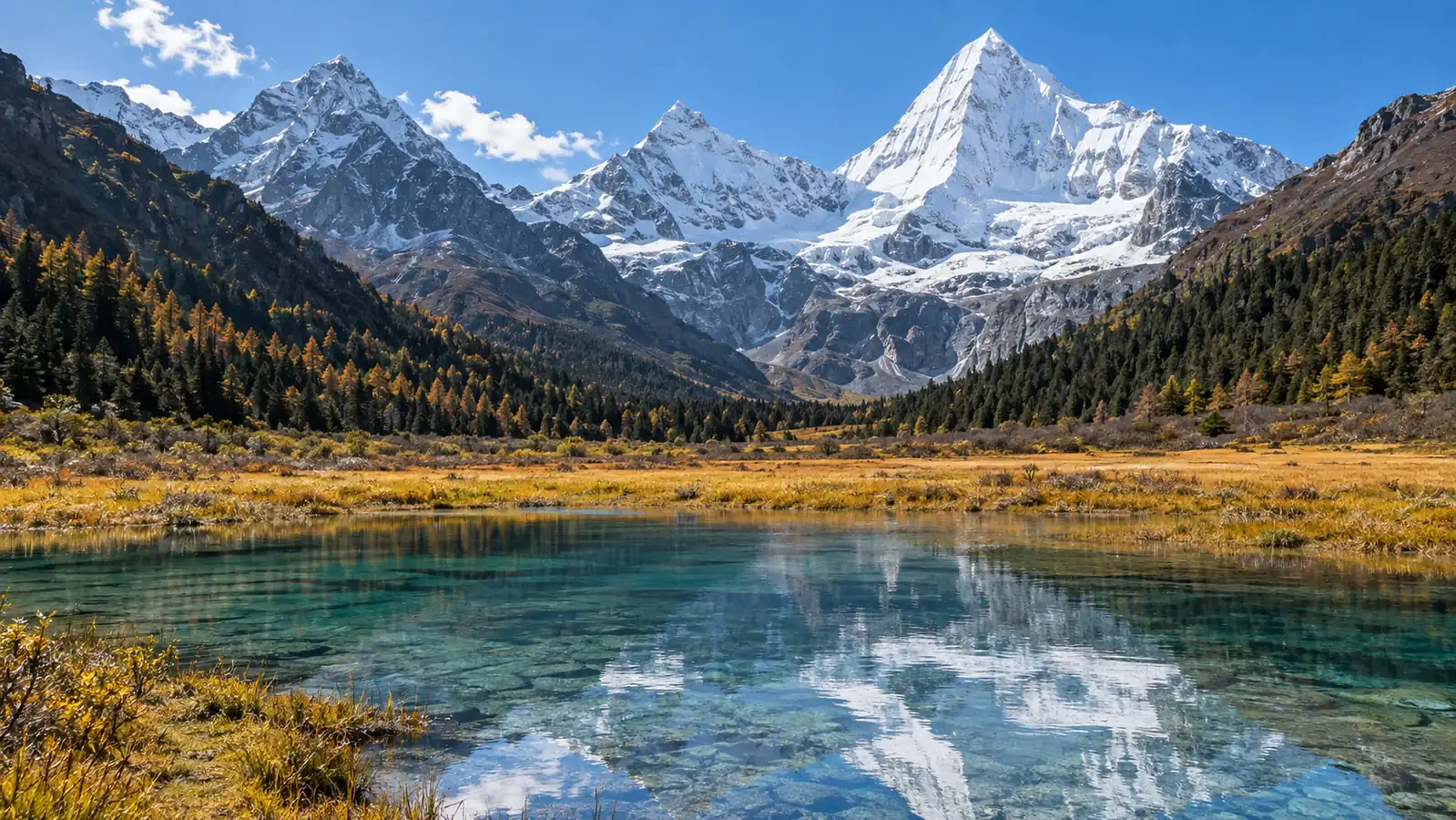
Daocheng Yading in western Sichuan is an alpine reserve of three sacred snow peaks, high meadows, forests, and glacial lakes.
Its beauty comes with sustained elevation: even routes that use scenic buses involve walking at heights that can feel much harder than their distance suggests.
Allow several days for the road or flight connections, acclimatization, and at least one gentle first day. Do not combine arrival with the longest lake route, and turn back if altitude symptoms worsen.
Autumn is famous for color and clear air, but every season brings cold nights and rapidly changing mountain weather.
20. Mount Kailash
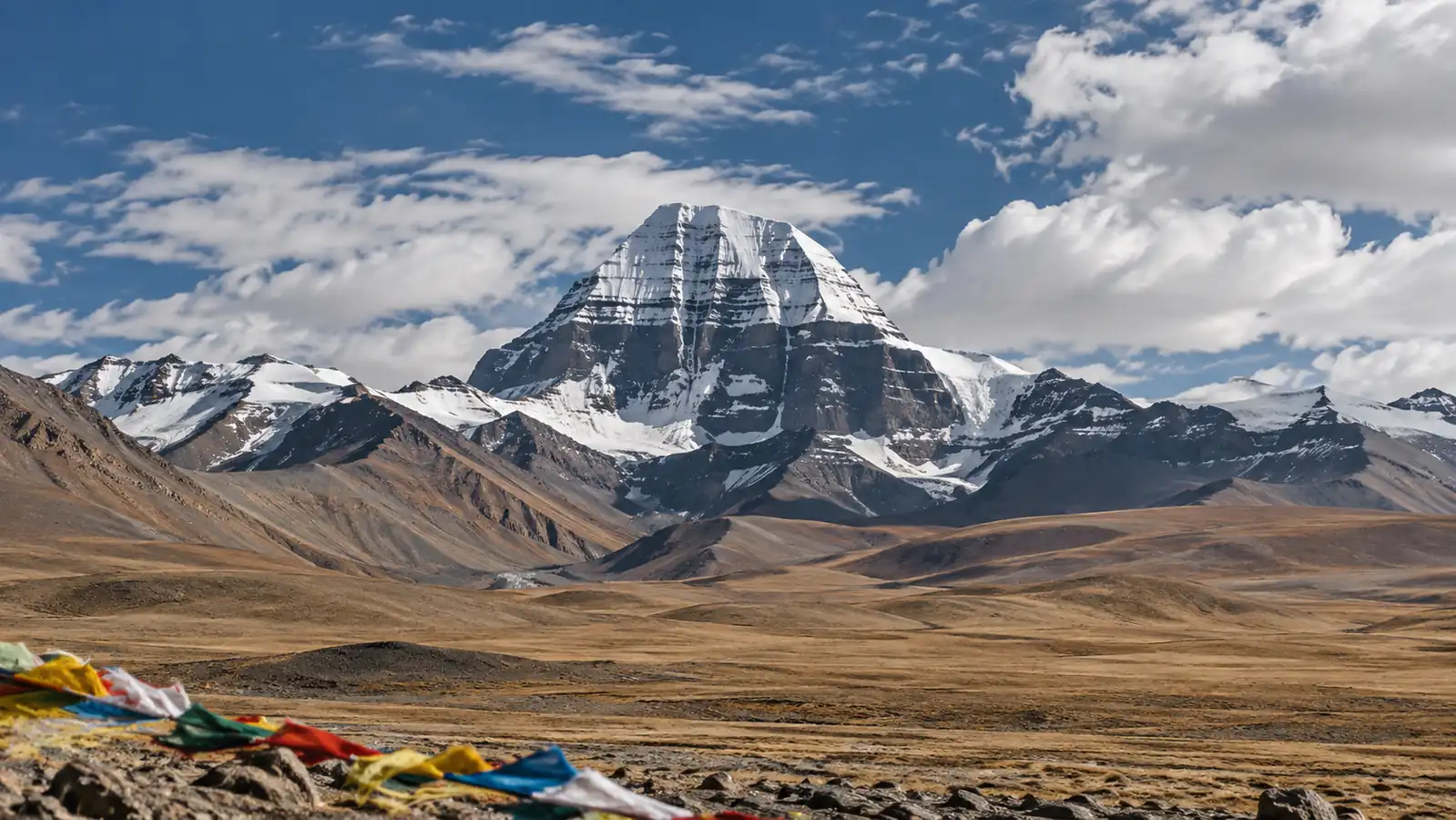
Mount Kailash in western Tibet is sacred to several religious traditions and is approached primarily as a pilgrimage landscape.
Visitors do not climb the peak; the defining journey is the high-altitude kora around it, undertaken with respect for pilgrims and local customs.
This is one of the most logistically demanding choices in the guide. The remote transfer, very high passes, weather, permits, and authorized travel arrangements require a longer itinerary and careful acclimatization.
Travelers should verify current rules with a qualified operator and consider a viewing-focused visit if the full circuit exceeds their health, time, or experience.
Travel Tips for Exploring China’s Mountains
Build the Route Around a Base City
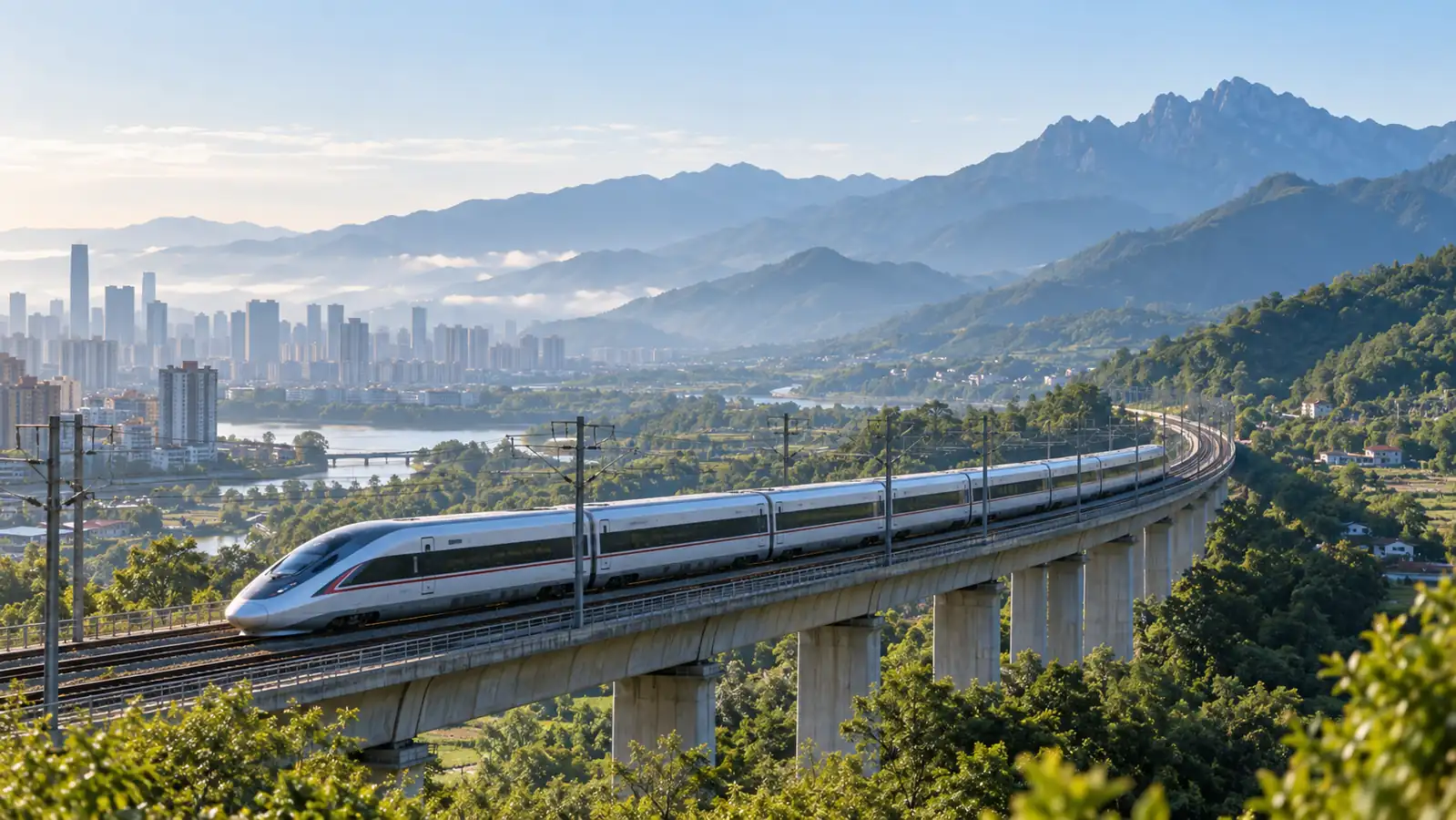
China’s mountain areas are widely separated, so a successful trip usually pairs one or two mountains with nearby cities rather than linking famous peaks across the country.
Xi’an works with Mount Hua, Datong with northern Mount Heng, Chengdu with Emei or Siguniang, Lijiang with Jade Dragon, and Zhangjiajie city or Wulingyuan with Tianmen and the national forest park.
Check the last transport segment as carefully as the long-distance train or flight.
Scenic areas may require a shuttle, local bus, taxi, ferry, or reserved time slot after you reach the gateway city. Leave transfer buffers instead of assuming an evening arrival will support a dawn start.
Reserve Busy and Restricted Trips Early
Popular cable cars, scenic-area tickets, summit accommodation, and holiday transport can sell out.
Reserve the components that control the day first, then build meals and optional viewpoints around them. Public holidays often change crowd levels more than the month alone.
Tibet-linked journeys require special planning, and rules can change. Confirm the current permit, guide, and entry requirements before paying for nonrefundable travel.
Do not rely on an old blog post for Everest or Kailash arrangements, and separate ordinary sightseeing plans from mountaineering permissions.
Match Elevation and Effort to Your Body
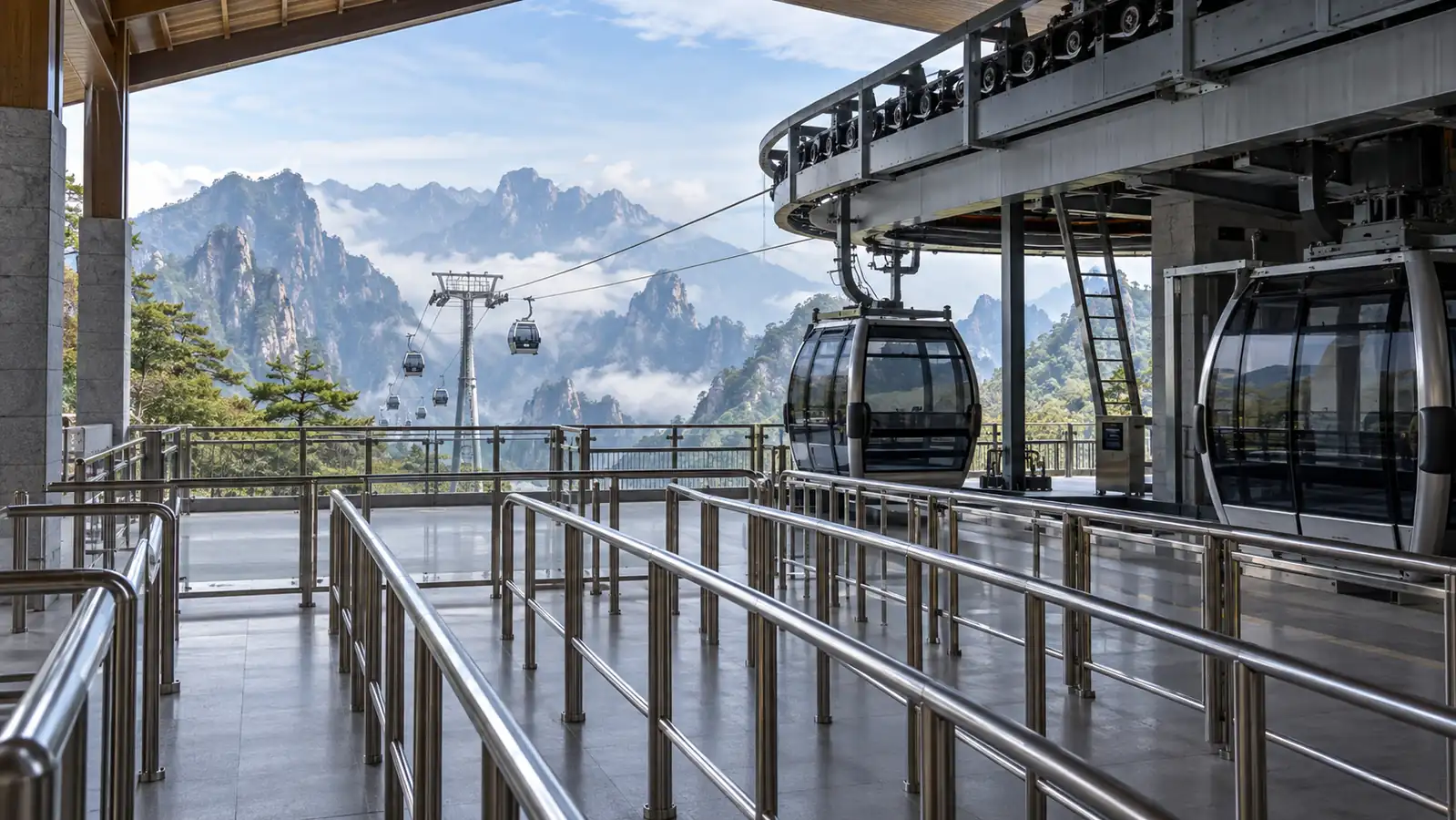
Cable-car access does not remove altitude risk. Jade Dragon, Daocheng Yading, Everest-region viewpoints, and Kailash can bring travelers quickly to elevations where headache, nausea, unusual fatigue, or poor sleep are warning signs.
Ascend gradually when possible, keep the first day light, and descend or seek help if symptoms become severe or continue to worsen.
Stair-heavy lower mountains create a different challenge. Huangshan, Mount Tai, Hua, Emei, and Fanjing can strain knees even without technical hiking.
Compare the walking time, descent, and transfer plan—not just the headline elevation—and use shuttle or cable-car sections when they make the day safer and more enjoyable.
Pack for Weather and Respect Sacred Sites
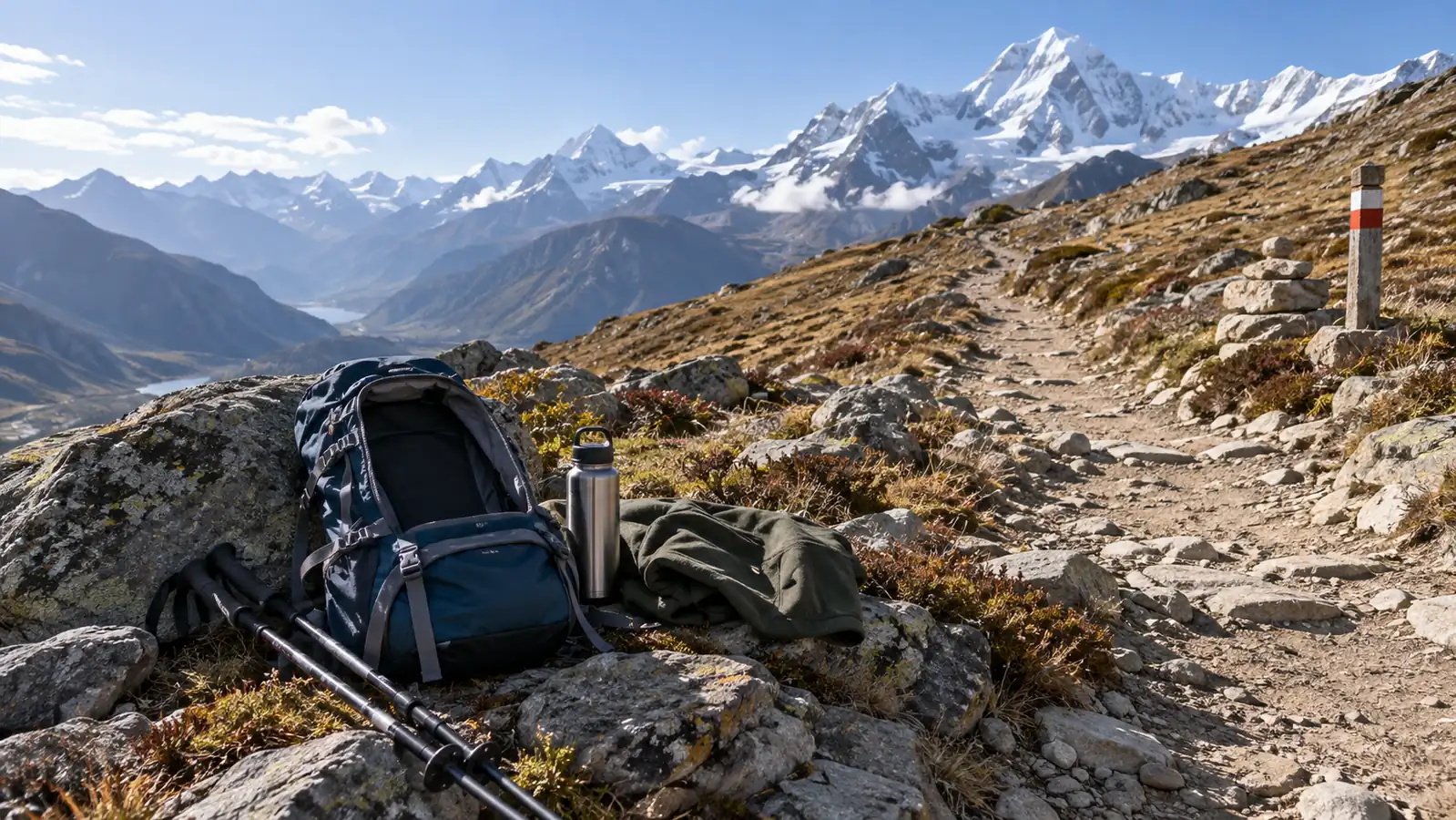
Review China weather conditions for every region on a multi-province trip. Carry layers, rain protection, sun protection, water, and footwear with good grip.
In the China snow seasons, confirm trail, road, and cable-car status instead of assuming a winter view guarantees normal access.

Stay on marked routes, obey closures, and avoid shortcuts. At temples and pilgrimage sites, dress modestly, speak quietly, follow posted photography rules, and give worshippers space. A mountain may be a scenic attraction to one visitor and a living sacred landscape to another.
FAQ
Which mountain is best for a first trip?
Huangshan is a strong all-round choice for classic scenery and established facilities. Zhangjiajie suits travelers who prefer shuttle- and elevator-assisted viewpoints, while Mount Tai is especially rewarding if cultural history matters as much as the landscape.
Can I visit China’s mountains in winter?
Yes, and snow or rime can be beautiful, but winter access is not uniform. Upper trails, roads, boats, or cable cars may close because of ice, wind, or maintenance. Check the specific scenic area shortly before travel and carry proper cold-weather footwear and layers.
Do I need special preparation for Tibet or high-altitude mountains?
Yes. Build in acclimatization time, keep the first days light, and verify current permit and travel-arrangement rules before booking. Anyone with relevant heart, lung, pregnancy, or altitude-related concerns should seek individualized medical advice before a high-elevation itinerary.
Conclusion
China’s mountains offer very different experiences, from peaceful temple trails to dramatic peaks and high-altitude landscapes.
Choose a destination that matches your route, fitness level, and travel style, while allowing extra time for weather and transport changes.
With the right preparation, exploring China’s mountains can become one of the most memorable parts of your journey.