
Hunan combines dramatic mountain scenery, historic towns, regional culture, and some of China’s boldest cuisine. From Zhangjiajie’s famous peaks to the lively streets of Changsha, the province offers much more than a single type of travel experience.
This guide covers the best places to visit in Hunan, along with local food, cultural experiences, and practical tips for planning your route.
Because distances and mountain transfers can take time, plan your stops carefully and leave some flexibility for weather changes. An iRoamly China travel eSIM can keep you connected for maps, train information, translations, and ride-hailing along the way.

Eight Places to Visit in Hunan
The best place to visit depends on whether your priority is mountains, history, food, or a slower rural stay.
Changsha is the easiest gateway and cultural base; Zhangjiajie needs the most time for outdoor sightseeing; Fenghuang and western Hunan combine well; and Yueyang, Hengyang, Shaoshan, or Chenzhou work better as deliberate extensions than as hurried detours.
1. Changsha: The Dynamic Capital
Changsha is more than an arrival point. The provincial capital brings Hunan's history, food culture, riverside public spaces, and nightlife together, so it works especially well at the beginning of a first trip.
Stay at least one full day if you want to see the museum and one major outdoor area without racing between them.
Yuelu Mountain
Yuelu Mountain is an accessible green escape on the west side of the Xiang River. Its wooded paths connect historic sites such as Yuelu Academy and Aiwan Pavilion, allowing a walk to combine scenery with the city's scholarly heritage.
Duration: 3-4 hours
Tips: Choose one main route rather than trying to cover every path. Autumn foliage is attractive, but weekends and public holidays can be busy.
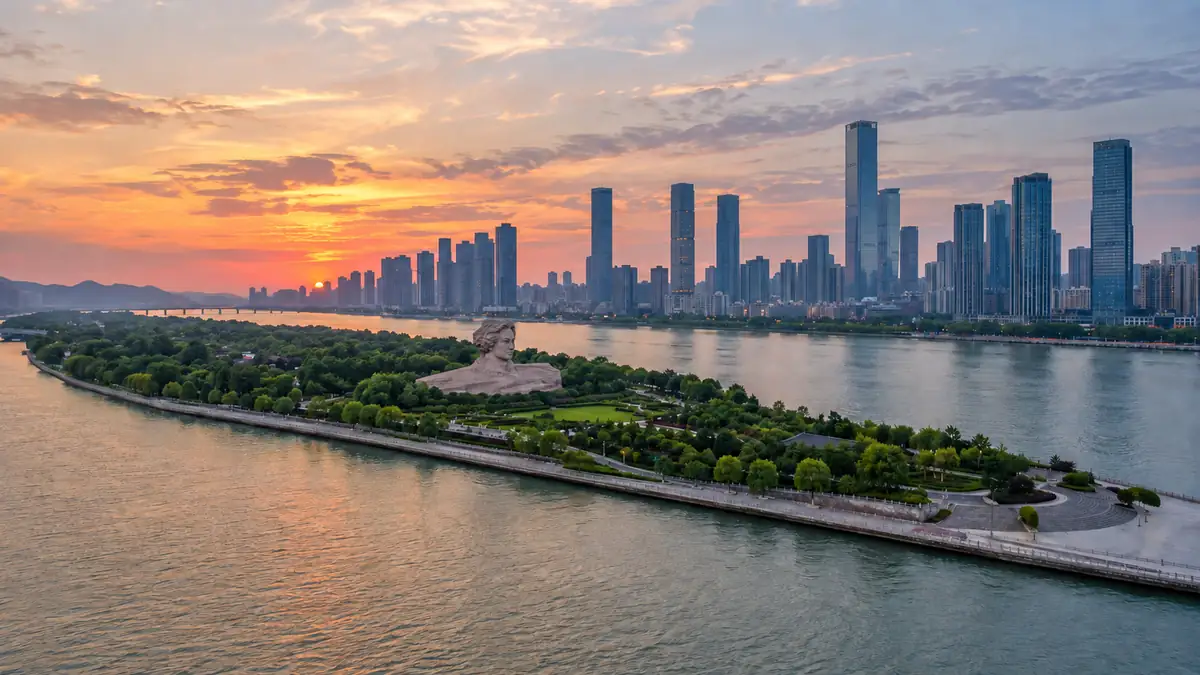
Orange Island
This long river island is best for an easy walk, skyline views, and a look at one of Changsha's best-known public landmarks.
The young Mao Zedong sculpture is the focal point, while the open riverside setting makes the island feel very different from the city's dense commercial districts.
Duration: 2-3 hours
Tips: Check current access and shuttle arrangements before leaving. Evening can be atmospheric, but special light or firework displays should never be assumed without an official announcement.
Hunan Museum
Hunan Museum is essential for understanding the province rather than simply seeing its landscapes.
The Mawangdui Han tomb collection is the highlight, with remarkably preserved objects that reveal daily life, beliefs, clothing, and craftsmanship more than two thousand years ago.
Duration: 2-3 hours
Reserve through the museum's official channel and check the current real-name identification rules. Admission procedures and release times can change, and popular dates may fill well ahead.
2. Zhangjiajie: Nature’s Wonderland
Zhangjiajie is the province's signature nature destination, but its three famous experiences are not in one compact park.
Wulingyuan's pillar landscape, Tianmen Mountain near the city, and the Grand Canyon lie in separate areas. Give the region two or three full days if scenery is a main reason for your trip.
Zhangjiajie National Forest Park
Part of the wider Wulingyuan scenic area, the park is known for thousands of narrow quartz-sandstone pillars rising above forested ravines.
Viewpoints, lifts, shuttle buses, and hiking paths create several possible circuits, so a clear daily route is more useful than a long list of isolated stops.
Duration: 1-2 days
Tips: Start early, carry rain protection, and keep one viewpoint flexible in case low cloud hides the higher peaks. Cableways and elevators save time but do not remove all walking or queues.
Tianmen Mountain
Tianmen Mountain rises immediately south of Zhangjiajie city and is a separate day from Wulingyuan.
The long cableway, cliff paths, glass walkways, natural rock arch, and steep stairway create a high-altitude circuit with very different views from the national forest park.
Duration: 5-6 hours
Tips: Ticket routes can control the order of cableways and road transfers. Confirm the route when booking, and prepare for rapid weather changes at the summit.

Zhangjiajie Grand Canyon
The Grand Canyon is best known for its glass bridge, but the wider visit may also include stairs and a walk through the canyon below.
It is a separate ticketed attraction from the national forest park, so it makes sense only if the bridge and canyon experience are priorities.
Duration: 3-4 hours, plus transfers
Wear shoes with good grip and check weather or temporary operating notices before departure. Rain, wind, or poor visibility can change the experience.
3. Fenghuang: A Step Back in Time
Fenghuang Ancient Town sits along the Tuo River in western Hunan. Its stilted houses, alleys, bridges, gates, and Miao and Tujia cultural context make it most rewarding when treated as an overnight stop rather than a quick photo break.
Fenghuang Ancient Town
Walk both sides of the river, then move away from the busiest waterfront to find old lanes, courtyards, local shops, and quieter views of the wooden houses.
Daylight reveals architectural details, while the illuminated riverfront gives the town a more theatrical atmosphere after dark.
Duration: 4-5 hours, or one night
Tips: Sleep within walking distance rather than directly above a lively bar street if quiet matters. Verify which individual attractions require tickets instead of assuming one pass covers everything.

Hongqiao Bridge
Hongqiao, also called the Rainbow Bridge, is both a crossing and a recognizable part of Fenghuang's riverfront. Its upper and lower spaces offer changing views along the water and help orient a walking circuit through the old town.
Duration: 30-60 minutes
Tips: Visit early for a calmer view, then return after dusk if you want to compare the daylight architecture with the illuminated waterfront.
Southern Great Wall
The Southern Great Wall, also called the Miaojiang Great Wall, is a historic defensive system outside central Fenghuang rather than a wall encircling the old town.
Visitor access focuses on restored sections, which offer a different perspective on regional history and the relationship between imperial administration and local communities.
Duration: 2-3 hours, plus road transfer
Check transport and the currently open section before setting out. Uneven steps make sturdy shoes more important than the wall's moderate distance suggests.
4. Western Hunan Beyond Fenghuang
Travelers with another two days can follow the western corridor beyond Fenghuang.
Furong Town is the easiest scenic addition, Dehang offers a village-and-canyon setting near Jishou, and Laosicheng adds the history of the regional Tusi political system.
They are different experiences, so choose by interest rather than trying to force all three into one day.
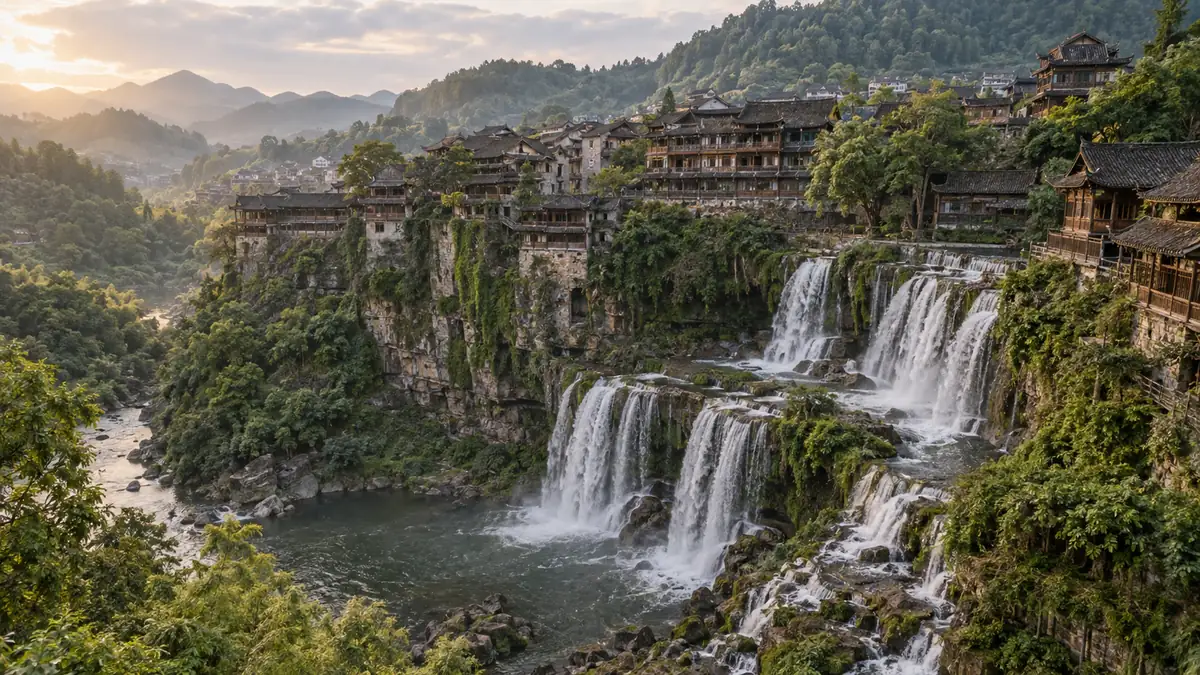
Furong Ancient Town
Furong is a two-thousand-year-old town built above and around a broad waterfall.
Stone lanes, Tujia architecture, cliffside viewpoints, and the former Tusi palace area make it a visually strong stop between Zhangjiajie and Fenghuang, especially for travelers who stay until the evening lights appear.
Duration: 3-5 hours, or one night
Tips: The high-speed rail station is outside the old town, so include the final road transfer in your schedule. Paths near the waterfall can be damp and slippery.
Dehang Miao Village
About 20 kilometers west of Jishou, Dehang combines a Miao village of stilted wooden houses with a steep karst canyon.
The surrounding trails and waterfalls make it a better fit for travelers interested in landscape and village life than for anyone seeking a staged cultural stop alone.
Duration: Half to one full day
Tips: Performances and trail conditions vary, so treat them as optional rather than guaranteed. Ask before photographing residents or ceremonies.
Laosicheng Tusi Site
Laosicheng is the archaeological center of a former Tusi domain and part of the UNESCO-listed Tusi Sites.
Its old street system, administrative remains, tombs, and mountain-river setting explain an important form of regional governance that is easy to miss in a scenery-only itinerary.
Duration: 3-4 hours, plus road transfer
Tips: This is a specialist history stop with less convenient access. Pair it with an overnight base in Yongshun or Furong instead of attempting it as a rushed detour from Changsha.
5. Shaoshan: Modern Chinese History
Shaoshan is associated with Mao Zedong's early life and is one of Hunan's most important modern-history destinations.
It is commonly visited from Changsha, but access controls and internal transport can take time. Travelers should approach the sites as places of historical memory rather than as simple photo stops.
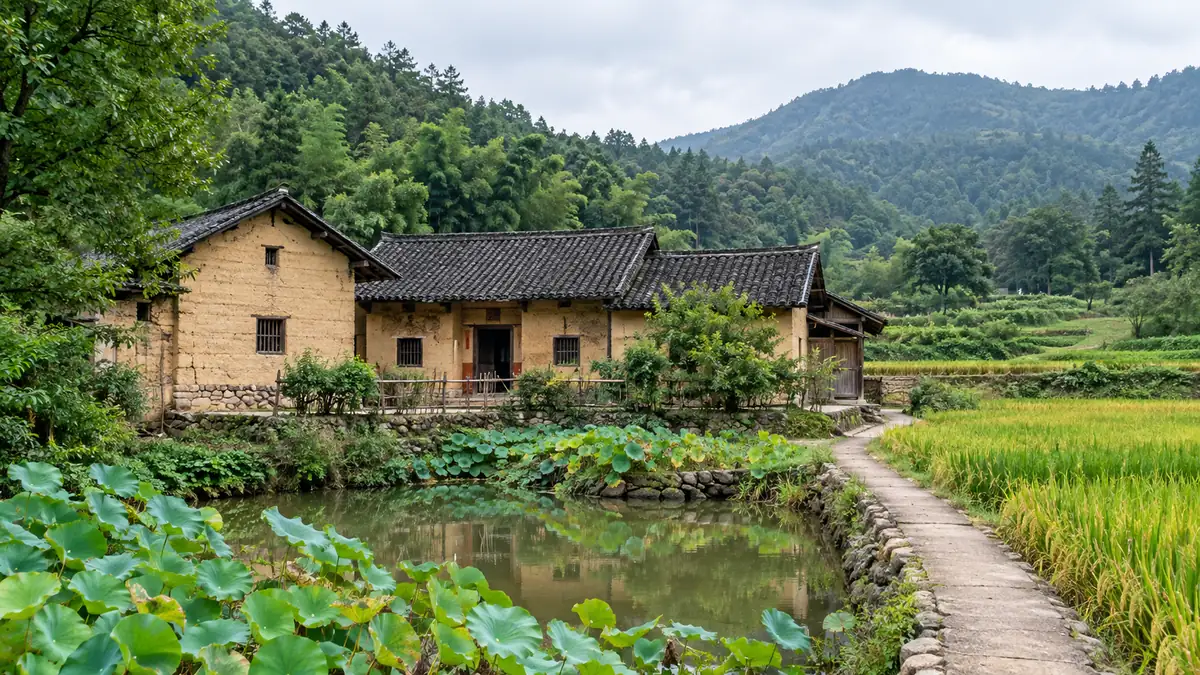
Mao Zedong's Former Residence
The modest rural house and surrounding fields place Mao's childhood in its local landscape.
Nearby displays and commemorative sites provide context, but current entry and identification procedures should be checked through official channels before travel.
Duration: 1-2 hours
Tips: Arrive early on busy dates and carry the identification used for any reservation. Expect walking or shuttle transfers within the scenic area.
Mao Zedong Square
The large commemorative square is a central gathering point in Shaoshan and is often combined with the former residence and nearby exhibition venues. Its formal scale contrasts with the agricultural setting of the childhood home.
Duration: 30-60 minutes
Tips: A half-day visit from Changsha is possible with efficient transport, but allow a full day if you want to read the exhibitions rather than only see the principal landmarks.
6. Yueyang: Gateway to Dongting Lake
Yueyang combines a celebrated historic tower with the changing wetland landscape of Dongting Lake. It is a useful northern extension from Changsha for travelers who prefer literature, architecture, and open water to another mountain destination.
Yueyang Tower
One of China's renowned historic towers, Yueyang Tower is closely connected with Fan Zhongyan's famous essay and offers broad views toward Dongting Lake.
The visit is as much about literary memory and traditional architecture as it is about the panorama.
Duration: 1-2 hours
Tips: Visibility across the lake changes with weather. Read a short introduction to the tower's literary history before visiting to make the site more meaningful.

Dongting Lake
Dongting is a vast seasonal lake and wetland system whose shoreline and water level change through the year.
Riverside walks, wetland scenery, and birdlife can be rewarding, but the lake should not be treated as a single compact attraction with one guaranteed boat route.
Duration: 2-3 hours for a waterfront visit
Choose the exact lake area first, then verify current boat, wetland, and weather conditions locally. Do not build the day around an unconfirmed sunset cruise.
Junshan Island
Junshan Island is known for lake scenery, legends, historic sites, and tea associations. It suits travelers who have more than a few hours in Yueyang and want a quieter complement to the tower.
Duration: 3-4 hours
Tips: Seasonal water levels can affect access and the visual experience. Check the day's transport before combining the island with other lake stops.
7. Hengyang: A Blend of Nature and Culture
Hengyang is the gateway to Mount Heng, or Nanyue Hengshan, one of China's Five Great Mountains. Its temples and pilgrimage history give the area a spiritual and architectural layer that distinguishes it from Zhangjiajie's geological spectacle.
Mount Heng
Wooded trails, temples, viewpoints, and religious traditions make Mount Heng one of the famous peaks of China.
The mountain is associated with both Buddhist and Daoist practice, and the most satisfying visit leaves time for more than a summit photo.
Duration: 5-7 hours
Tips: Start early, wear layers, and choose between a fuller hike and a route using scenic transport. Fog, heat, or rain can change the effort and the views.

Nanyue Temple
Nanyue Temple stands near the mountain's base and is one of southern China's largest traditional temple complexes.
Its courtyards, halls, incense rituals, and long religious history make it worth visiting even for travelers who are not completing a mountain hike.
Duration: 1-2 hours
Tips: Dress respectfully, move quietly through active worship areas, and avoid planning around a festival unless you specifically want large crowds.
Xiangjiang River Scenic Belt
Hengyang's riverfront is a low-effort place for an evening walk after a mountain day. It offers city views and local daily life rather than a major standalone attraction.
Duration: 1-2 hours
Use this as a flexible arrival- or departure-day activity instead of sacrificing time at Mount Heng to fit it into a packed schedule.
8. Chenzhou: Lakes and Southern Mountains
Chenzhou in southern Hunan is best for travelers who have already seen the western highlights or who enter the province from Guangdong.
Dongjiang Lake offers gentle waterside scenery, while Mangshan is a more demanding forest-and-mountain excursion near Yizhang.
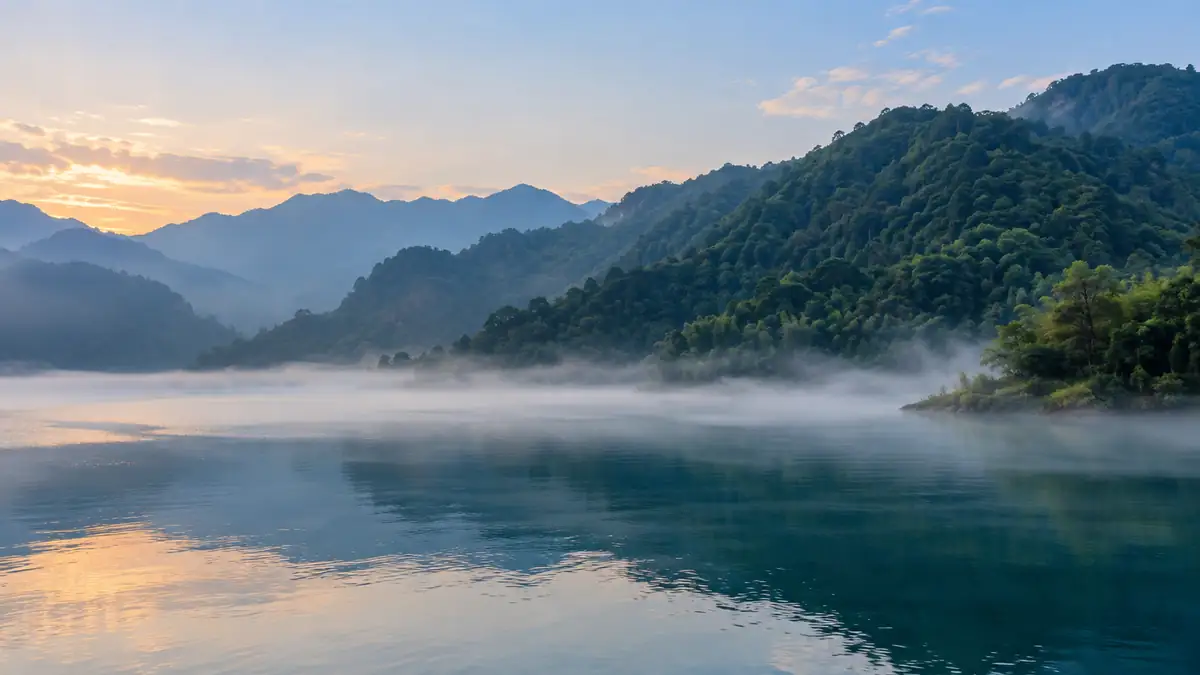
Dongjiang Lake
Dongjiang Lake is known for the mist that forms over the river below the dam, most often from spring into autumn around the cooler hours near sunrise and sunset.
The wider scenic area also includes lake views and waterside landscapes, so it can fill more than a single photo stop.
Duration: Half to one full day
Tips: Mist is a natural condition, not a guaranteed performance. Stay nearby if the early atmosphere is a priority and keep an alternative lake walk for poor visibility.
Mangshan National Forest Park
Mangshan protects dense forest, granite peaks, and deep valleys along Hunan's southern edge.
The Wuzhifeng area has cableways, elevators, and barrier-free paths on selected routes, making some high viewpoints more accessible than many mountain parks, although conditions and operating sections should still be confirmed.
Duration: One full day
Tips: Mangshan is not a casual add-on to Changsha or Zhangjiajie. Base the visit around Chenzhou or Yizhang, and allow substantial road-transfer time.
Hunan Food Worth Trying
Hunan cuisine, or Xiang cuisine, builds flavor with fresh and dried chilies, pickled ingredients, smoke, garlic, ginger, vinegar, and fermentation.
Its heat is often sharp, sour, or smoky rather than dominated by the numbing Sichuan peppercorn sensation associated with many Sichuan dishes.
Ask for less chili if needed, but remember that spice is often part of the cooking base rather than a garnish that can simply be removed.
1. Dong'an Chicken
Dong'an Chicken balances tender chicken with ginger, chili, garlic, and vinegar. The sour edge keeps the dish lively instead of merely hot, making it a useful introduction to Hunan's layered seasoning.
Where to Try: Dong'an County in Yongzhou for its place of origin, or established Hunan restaurants in Changsha.

2. Chairman Mao’s Red Braised Pork
This Hunan-style red-braised pork uses pork belly, aromatics, soy-based seasoning, and caramelized sugar to create glossy, tender pieces with a rich sweet-savory flavor. It is associated with Mao Zedong and is especially prominent in Shaoshan.
Where to Try: Shaoshan or traditional Hunan restaurants in Changsha; order it with vegetables and rice because it is intentionally rich.
3. Stinky Tofu
Changsha's dark stinky tofu is fried until crisp outside, then dressed with chili, garlic, and a savory broth or sauce.
The fermentation aroma is stronger than the flavor, while the contrast between the crust and soft center explains its enduring popularity.
Where to Try: Busy specialist stalls around central Changsha, including the Taiping Street and Pozi Street areas, where high turnover is easy to observe.

4. Steamed Fish Head with Chopped Chili
A large fish head is steamed under a generous layer of chopped salted chilies, aromatics, and fermented seasonings.
The flesh absorbs a salty, spicy, and deeply savory sauce, and noodles are sometimes added afterward to make use of the remaining juices.
Where to Try: Full-service Hunan restaurants in Changsha or Yueyang. It is designed for sharing, so confirm the size before ordering.
5. Spicy Crayfish
Kouwei xia is a social late-night dish: crayfish cooked with chili, garlic, spices, and a strongly flavored sauce. Eating it is slow and messy by design, which makes it better for a relaxed evening than a rushed meal between attractions.
Where to Try: Popular evening restaurant districts in Changsha during the warmer months. Choose a busy venue and check the market price before ordering.
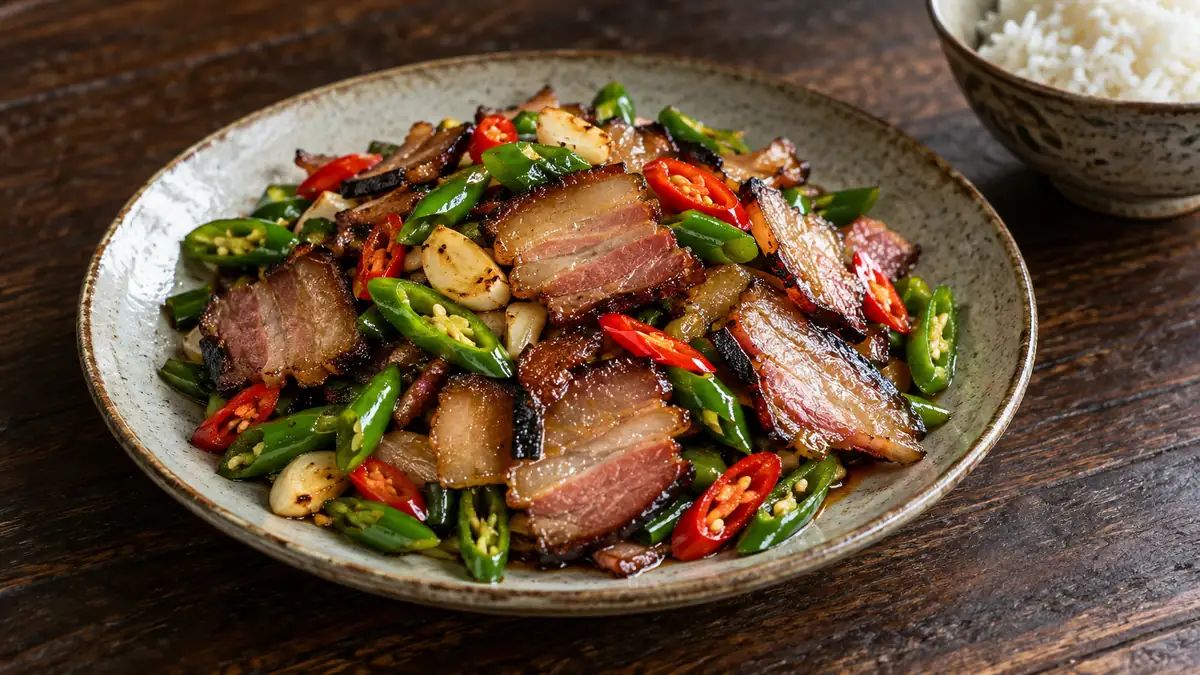
6. Smoked Pork with Chili
Western Hunan's cured and smoked pork develops a firm texture and deep wood-smoke flavor before it is sliced and stir-fried with fresh or dried chilies.
Compared with red-braised pork, it is saltier, drier, and more rustic, expressing the preservation traditions of mountain communities.
Where to Try: Xiangxi, Zhangjiajie, or restaurants specializing in Tujia and western Hunan cooking. Pair it with plain rice and a vegetable dish to balance the salt and smoke.
Hunan Culture Worth Experiencing
Hunan's cultural identity is not limited to monuments. Performance, embroidery, tea, festivals, foodways, and the traditions of Tujia and Miao communities all change how the province feels from one region to another.
Look for experiences with local context and clear etiquette instead of treating costumes or ceremonies as props.
1. Attending the Tujia Hand-Waving Dance
The Tujia hand-waving dance is a communal form associated with celebration, storytelling, work, and ritual memory.
Group formations and repeated gestures can represent activities from hunting to farming, making an explained performance far more meaningful than an unexplained stage show.
Tips: Look for programs in Zhangjiajie or western Hunan that introduce the movements and their context. Festival schedules vary by community and calendar.

2. Experiencing the Huagu Opera
Hunan flower-drum opera combines local speech, folk melodies, movement, and comic storytelling.
Even without understanding every line, visitors can follow changes in character and mood through the vocal style and physical performance.
Tips: Check theater and cultural-center programs in Changsha rather than expecting a performance every night. A short synopsis or translated introduction helps first-time viewers.
3. Experiencing the Dragon Boat Festival on Dongting Lake
Dragon boat racing brings synchronized paddling, drums, crowds, and seasonal ritual to lake and river communities.
Around Dongting Lake, the scale of the water gives races a distinctive setting, but dates, viewing areas, and programs differ each year.
Tips: The festival follows the lunar calendar, so verify the exact date and local program. Arrive early, protect yourself from sun or rain, and use only designated viewing areas.

4. Joining a Tea Ceremony in Anhua
Anhua is a major center for dark tea, or hei cha, whose processing, compressed forms, and aging traditions differ from green tea.
A guided tasting can explain how to rinse, steep, and compare the tea without reducing the experience to a shopping stop.
As one of the origins of popular Chinese products, Anhua dark tea also connects Hunan with historic trade routes and long-distance exchange.
Arrange a visit with a reputable tea house, producer, or museum, and ask whether the experience is primarily educational or tied to a sales presentation.
5. Exploring the Miao Ethnic Villages in Xiangxi
Miao communities in Xiangxi are known for stilted wooden architecture, silverwork, textiles, drum traditions, festivals, and distinctive local food. Dehang is one accessible example, but daily life continues beyond the visitor program.
Tips: Ask permission before photographing people, homes, or ceremonies. If clothing rental is offered, treat it respectfully and avoid presenting staged portraits as documentary evidence of local life.

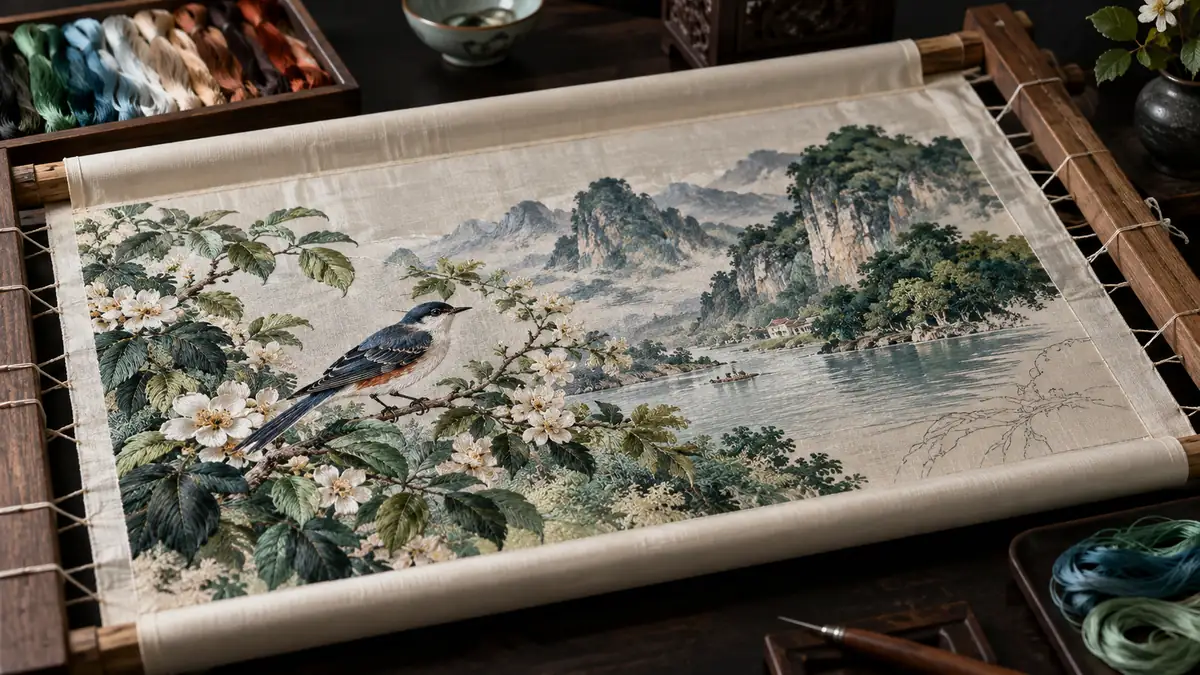
6. Discovering Xiang Embroidery
Xiang embroidery is one of Hunan's signature decorative arts. It is known for fine silk threads, controlled shading, and vivid animal, landscape, and portrait designs that can resemble brush painting from a distance.
Tips: Museums, workshops, and specialist shops in Changsha offer more context than a generic souvenir market.
Look closely at both sides of a piece, ask about the maker and technique, and do not assume every embroidered product is locally handmade.
How to Plan a Hunan Trip
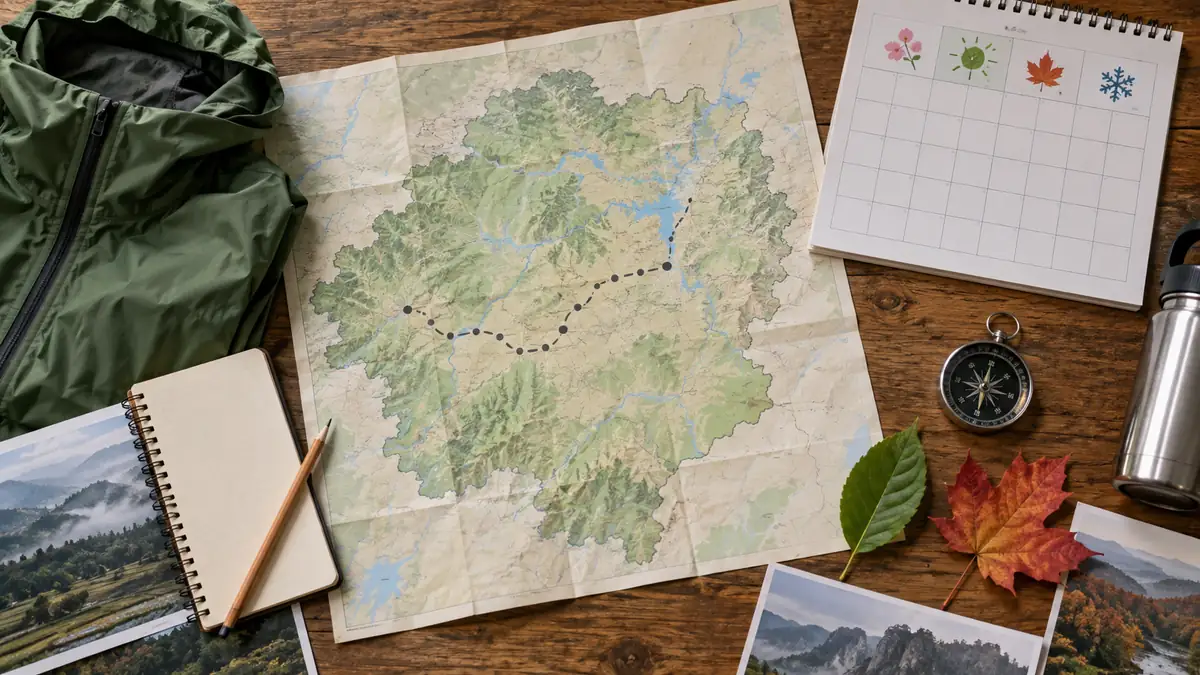
Hunan is easier to explore when you focus on a few well-connected destinations rather than trying to cover the entire province. Changsha works well as a main gateway, while Zhangjiajie, Furong Ancient Town, and Fenghuang can be combined into a convenient western Hunan route.
How Many Days in Hunan
For a first trip, 7–8 days gives you enough time to combine Changsha with the main destinations in western Hunan without rushing.
With 5 days, focus on two areas. Changsha and Zhangjiajie are a good choice for a mix of culture, food, and mountain scenery. Another option is to spend most of the trip in western Hunan, combining Zhangjiajie with Furong Ancient Town and Fenghuang.
With 7–8 days, you can spend 1–2 days in Changsha, 2–3 days around Zhangjiajie, stop at Furong Ancient Town, and stay overnight in Fenghuang.
If you have 10 days or more, consider adding one extra destination based on your interests, such as Shaoshan for modern history, Yueyang for Dongting Lake, Hengyang for Mount Heng, or Chenzhou for lakes and mountain scenery.
Getting Around Hunan
Changsha is the most convenient transport hub for most Hunan trips, with extensive high-speed rail connections and a major airport. Zhangjiajie also has an airport, which can be useful if western Hunan is the main focus of your trip.
High-speed trains make it relatively easy to travel between Changsha, Zhangjiajie, Furong Ancient Town, and Fenghuang.
However, train stations are not always close to the main attractions, so allow extra time for buses, taxis, or ride-hailing after arrival.

Mountain destinations also require more local travel than city stops.
In Zhangjiajie, for example, the city center, Wulingyuan, Tianmen Mountain, and the Grand Canyon are in different areas, so choose your hotel according to the attractions you plan to visit the next day.
When to Visit Hunan
Spring and autumn generally offer the most comfortable conditions for traveling around Hunan, especially if your itinerary includes hiking and outdoor sightseeing. Temperatures are usually milder, although rain and fog can still affect mountain areas.
Summer is hot, humid, and rainy, with larger crowds during the school holiday period. Winter is quieter but colder, with shorter daylight hours and a greater chance of weather affecting mountain transport or attraction operations.
Whatever the season, keep some flexibility in your itinerary if you plan to visit Zhangjiajie or other mountain areas.
During Chinese public holidays, book popular trains and hotels early, as major destinations can become significantly busier.
FAQ
1. Do I need to speak Mandarin in Hunan?
Mandarin is the most useful common language, while local varieties and minority languages are also spoken. English support is limited outside major hotels and attractions, so save addresses in Chinese, use a translation app, and show the written destination rather than relying on pronunciation.
2. What Kind of Food Is Hunan?
Hunan cuisine, also called Xiang cuisine, is known for bold, spicy, sour, smoky, and savory flavors. Fresh chilies, pickled ingredients, smoked meats, garlic, and fermented seasonings are commonly used.
3. What Is Hunan Famous For?
Hunan is famous for Zhangjiajie’s sandstone peaks, spicy Xiang cuisine, historic towns, Dongting Lake, Mount Heng, and its important role in modern Chinese history.
4. Are There Muslims in Hunan, China?
Yes. Hunan has Muslim communities, including Hui residents, though they make up a small share of the province’s population. Mosques and halal food are easier to find in larger cities.
5. Is Hunan Near Shanghai?
Not especially. Hunan is in south-central China, while Shanghai is on the eastern coast. High-speed rail and flights connect them, but they are not neighboring regions.
6. Why Is Hunan Called Xiang?
Xiang is Hunan’s traditional abbreviation, taken from the Xiang River, which flows through much of the province. The name also appears in terms such as Xiang cuisine and Xiang embroidery.
Conclusion
Hunan brings together dramatic landscapes, historic towns, regional culture, and distinctive Xiang cuisine, making it one of China’s most varied destinations for both nature and cultural travel.
A rewarding trip does not need to cover the entire province. Focus on a few destinations that match your interests, allow enough time for mountain areas, and keep some flexibility for weather and transfers.
With a well-planned route and time to enjoy local food and everyday experiences, you can discover a side of Hunan that goes far beyond its famous scenery.