
A Great Wall trip can feel completely different depending on where you go.
Some sections are easy to reach and designed for relaxed sightseeing, while others offer quieter ridges, longer hikes, and more rugged terrain. Choosing the right section is the first step to planning a good visit.
This guide compares the main Great Wall sections near Beijing, including Badaling, Mutianyu, Jinshanling, and Simatai. You’ll also find practical advice on how long to spend, when to visit, transportation from Beijing, tour costs, and what to pack.
Reliable mobile data is useful throughout the trip for maps, weather updates, reservations, translation, and return transport. An iRoamly China travel eSIM can help you stay connected during your Great Wall visit.
Choose the Right Wall Section
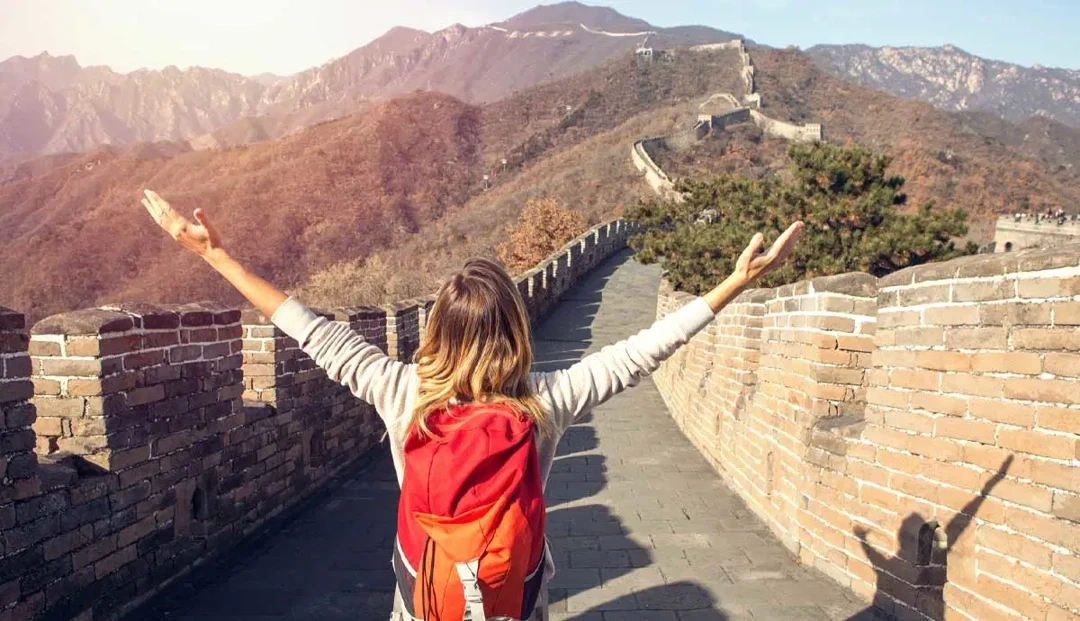
The Wall is a network of fortifications rather than one continuous visitor route, and the sections around Beijing deliver very different days out.
Start with the comparison below, then use the profiles to understand the tradeoff behind each quick label.
Section | Best for | Typical visit | Main tradeoff |
|---|---|---|---|
Badaling | Simple logistics, strong facilities, limited mobility | Half day | Usually the busiest major section |
Mutianyu | First visits, families, balanced scenery and comfort | Half day to most of a day | Popular and more commercial at the entrance |
Juyongguan | Shorter transfers and fortress architecture | Half day | Steep circuits and less of the long-ridge feeling |
Jinshanling | Hikers, photographers, restored-to-rugged scenery | Full day | Longer transfer and more physical effort |
Simatai | Steeper views, night visits, an overnight pairing | Full day or overnight | Often tied to Gubei Water Town logistics |
Huanghuacheng | Lakeside scenery and a quieter outing | Full day | Less direct public transport |
Gubeikou | Experienced hikers seeking a rugged landscape | Full day | Limited facilities and more route planning |
Jiankou | Expert hikers with authorized local guidance | Specialist hike only | Unrestored, exposed, and not a routine tourist visit |
Restored Sections for Easier Visits
Badaling
Badaling makes the most sense when logistics and visitor facilities matter more than solitude.
It has developed entrances, signed walking areas, ascent options, and comparatively straightforward public-transport connections, so it can work for a first visit or a tighter Beijing schedule.
The compromise is crowd pressure. Arriving early on a weekday is generally calmer than arriving with the mid-morning tour-bus wave, but no timing strategy can make a major holiday feel quiet.
Travelers who care more about scenery and breathing room than the easiest journey will usually prefer Mutianyu or Jinshanling.
Mutianyu
Mutianyu remains the strongest all-round choice for many international visitors.
Forested ridges, a long restored walking area, and several ways to ascend or descend let families, casual walkers, and more energetic visitors shape different routes from the same entrance.
Do not confuse lift access with a step-free visit: the Wall itself still has uneven surfaces, inclines, and stairs.
Decide before arrival whether you want the cable car, chairlift, or toboggan option, because these products may use different stations and can change the most logical walking direction.
Juyongguan
Juyongguan is one of the closest managed sections to central Beijing and feels more like a fortified mountain pass than an endless ridge walk.
Its gate towers, valley setting, and compact layout make it useful when transfer time is limited or when military architecture is the main interest.
The circular climbs can still be steep, and the experience is less expansive than Jinshanling or Mutianyu. Choose it for proximity and fortress character, not because it is automatically an effortless walk.
Before committing to any section, look at the Great Wall on the map. The distance between sites explains why a place that looks like a small change of plan can add hours of road travel.
Quieter Routes and Wilder Terrain
Jinshanling
Jinshanling rewards travelers who want a proper walk rather than a short photo stop.
Restored watchtowers transition into rougher-looking stretches, the ridge views open in several directions, and the longer transfer discourages some of the day-trip crowds found closer to Beijing.
Allow a full day so the drive does not squeeze the hike. Agree on the entrance, exit, and pickup point before starting, especially if you plan a one-way route rather than returning to the same gate.
Simatai
Simatai is steep, visually dramatic, and closely connected with Gubei Water Town. It suits travelers who want a managed night-view experience or an overnight stay that makes the Wall feel less like a rushed Beijing excursion.
Night access is controlled and does not mean every tower or path is open after dark.
Check the current official operating area and cable-car arrangement, then build the evening around that approved route rather than assuming a daytime hike can simply continue after sunset.
Huanghuacheng
Huanghuacheng stands apart because the Wall meets a reservoir landscape, creating lakeside views that none of the better-known restored sections reproduce.
It can suit repeat visitors, photographers, and families who want scenery beyond a conventional tower-to-tower walk.
The area mixes managed visitor zones with rougher terrain, so use the signed scenic-area routes and confirm how you will return.
It is a poor place to improvise a cross-country shortcut simply because another section of wall is visible across the hills.
Gubeikou
Gubeikou has a rugged, lightly developed character and far fewer services than a major ticketed attraction.
Its appeal lies in weathered masonry, broad mountain views, and walking that feels removed from souvenir streets and lift stations.
That lack of development also changes the risk calculation. A first-time visitor should arrange a guide or a carefully verified route, carry enough water and food, and know exactly where the legal path ends and the pickup begins.
Jiankou
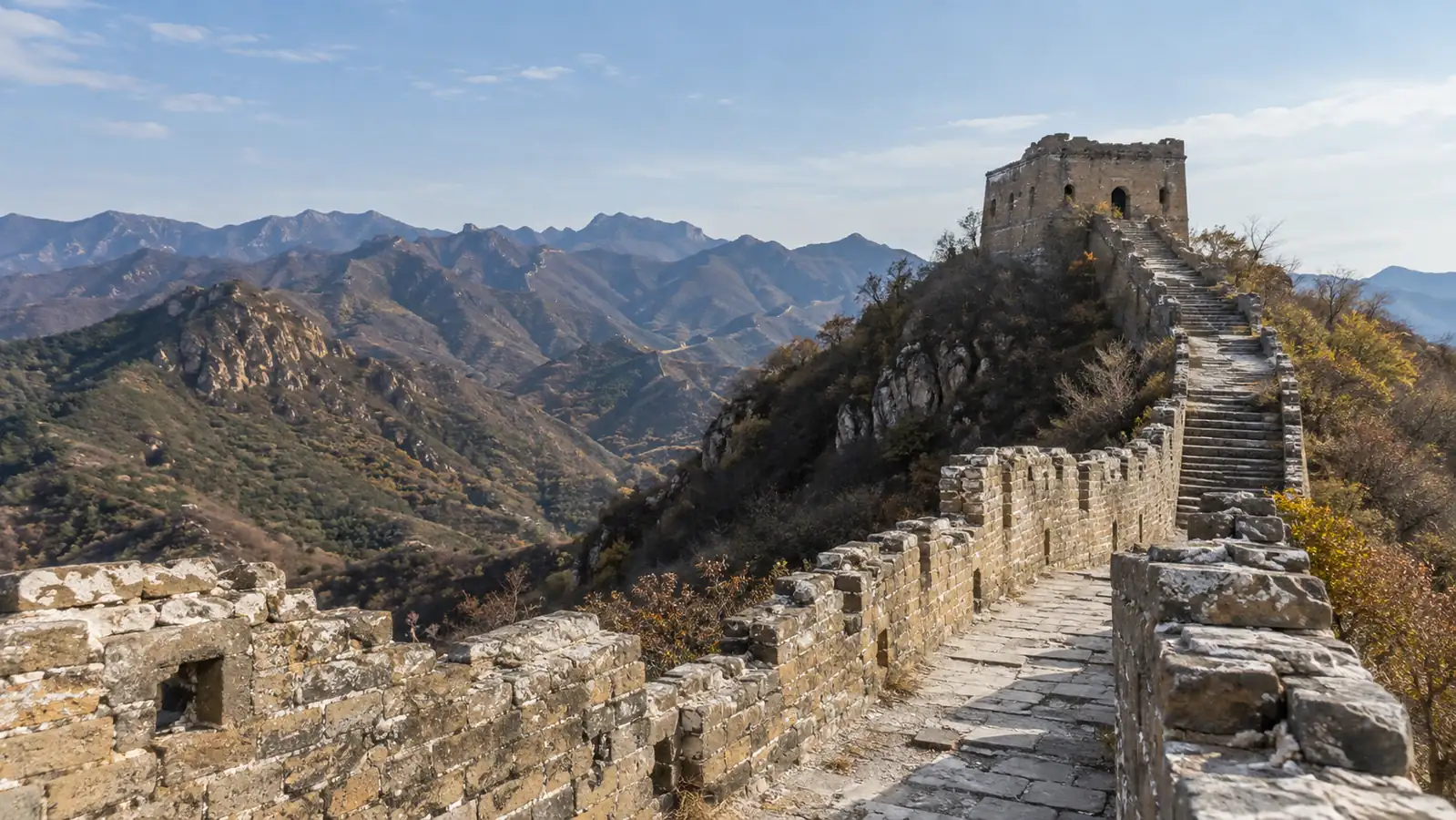
Jiankou is famous for sharp ridges, crumbling steps, and powerful photography, but those qualities are warnings as much as attractions.
It is unrestored and should not be treated as an ordinary scenic area for a spontaneous self-guided outing.
Do not enter closed or unapproved stretches, and do not copy a route from an old blog without checking current access.
If an experienced local operator cannot confirm a legal, appropriate plan for your ability and conditions, choose Jinshanling for rugged scenery with a clearer visitor framework.
How Long Should You Visit?
There is no single correct Great Wall tour length. Transfer time, the section's terrain, and whether you want a viewpoint or a sustained walk matter more than a generic day count.
Half-Day Highlights
A half-day works best at Badaling, Mutianyu, or Juyongguan when you use an efficient transfer and keep the goal focused.
You can reach the Wall, use an ascent aid if desired, walk between several towers, and return to Beijing without turning the visit into an endurance test.
This plan leaves little room for delays or a second major Beijing attraction. Treat “half day” as one Great Wall experience with a clear turnaround time, not as permission to add multiple sections.
Full-Day Walks
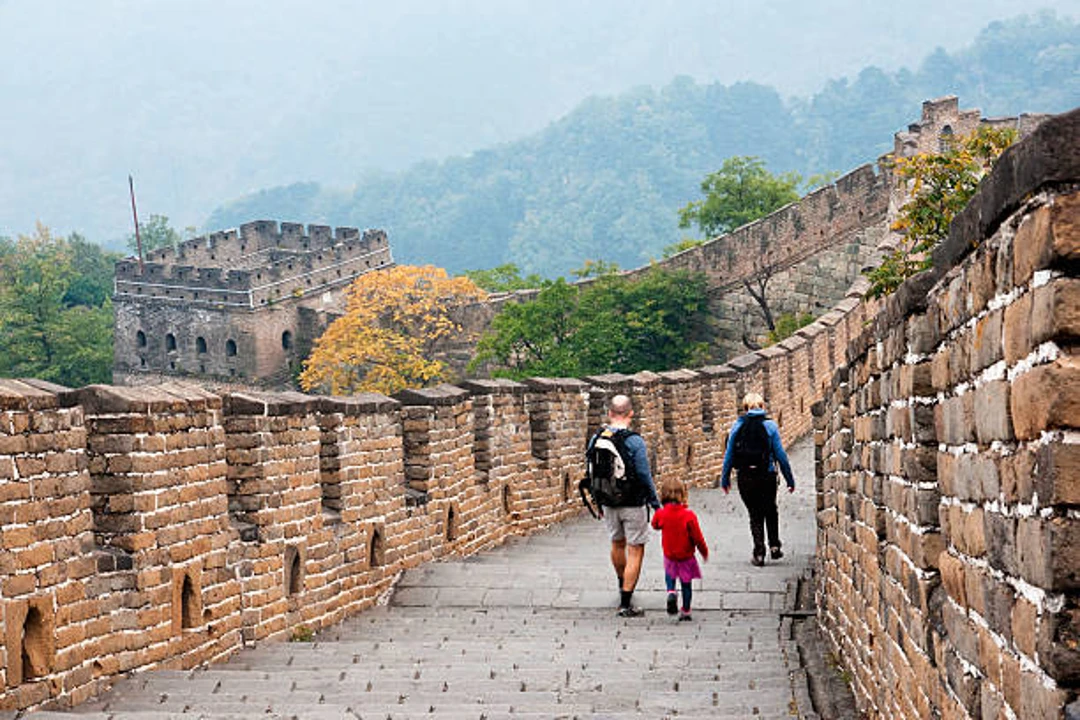
Choose a full day for Jinshanling, Huanghuacheng, Gubeikou, or any visit built around photography and a longer walk. The extra hours absorb the transfer, ticket and shuttle steps, rest stops, and a route that goes beyond the first viewpoint.
A full day is also sensible at Mutianyu if you prefer a slow pace or want to explore both sides of the main access area. Fix the pickup time and decide which watchtower or pass marks your turnaround before you set off.
Overnight Wall Experience
An overnight stay can make sense around Simatai and Gubei Water Town or near Mutianyu when early or late access is the main appeal.
It reduces the pressure to race Beijing traffic and creates room for evening scenery or a quieter morning visit.
The tradeoff is an extra hotel move and a higher total cost. Choose this format for the atmosphere, not because one night lets you combine distant sections efficiently; the Wall's geography still favors one well-planned area at a time.

When to Visit the Great Wall
Best Weather Windows
Spring and autumn are usually the most comfortable seasons for a Great Wall tour.
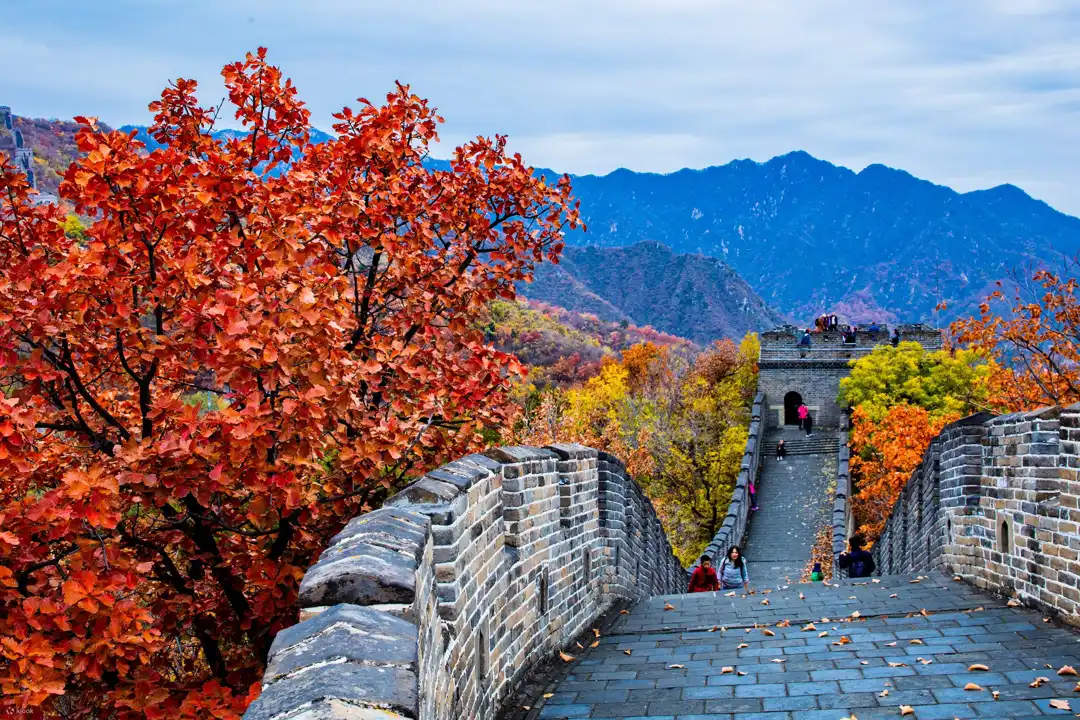
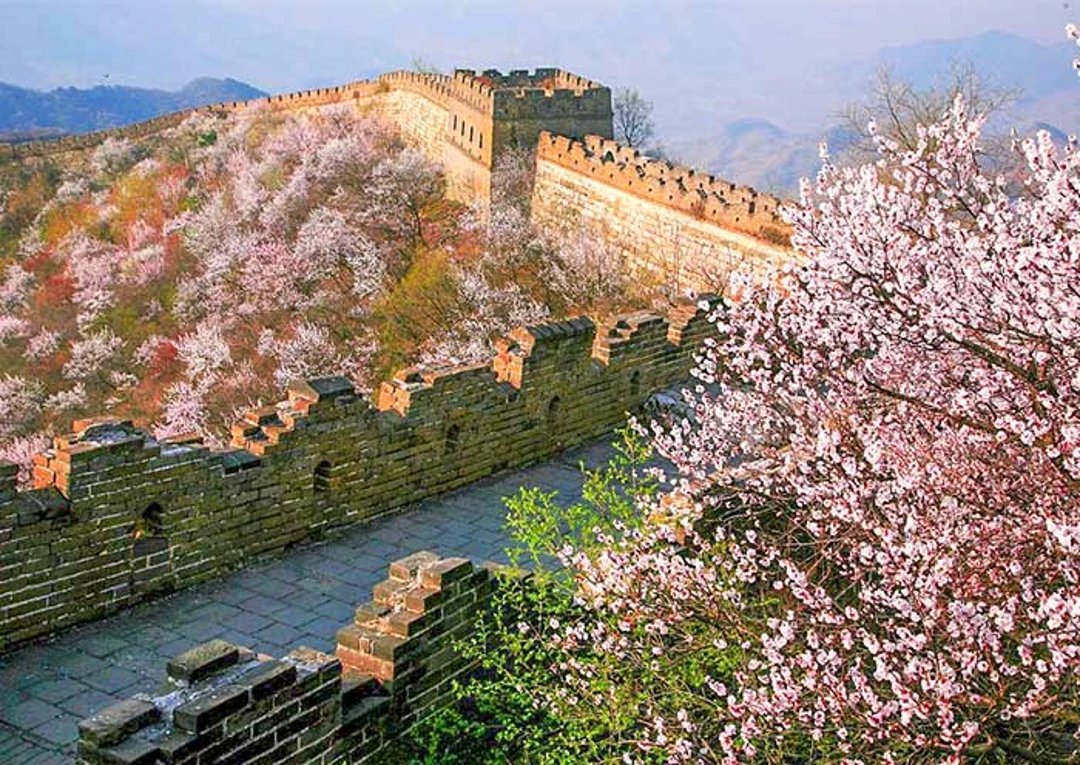
Temperatures are milder, mountain views are often clearer, and climbing feels easier than in summer heat or winter wind. Autumn brings foliage and crisp air, while spring brings fresh green hillsides and blossoms.
Season | Advantages | Plan for |
|---|---|---|
Spring | Mild walking weather and fresh scenery | Wind, temperature swings, and occasional rain |
Summer | Green mountains and longer daylight | Heat, humidity, storms, and heavier crowds |
Autumn | Cooler walks, clearer views, and colorful hills | National Day crowds and popular foliage weekends |
Winter | Fewer visitors and possible snow scenery | Cold wind, ice, shorter daylight, and service changes |
For a wider trip, align your Great Wall day with the best time to visit China, especially if your route also includes cities with very different climates.
Crowds and Seasonal Hazards
Avoid treating a pleasant seasonal average as a forecast.
Check the selected scenic area's official notice and the mountain weather shortly before departure; thunderstorms, high winds, ice, maintenance, or special events can affect paths, lifts, and evening access.
Major Chinese public holidays can overwhelm the most accessible sections. If your dates are fixed, an early departure, a less famous managed section, and prearranged return transport will help more than simply hoping the crowd thins later.
Choose Your Transport from Beijing
Your transport should match the section, not just the price. Badaling has the simplest independent connections, Mutianyu is manageable with several organized options, and the more remote hiking sections need tighter control over the outbound route and the return pickup.
Public Transport
Public transport is most practical when the route is direct, the timetable is current, and you are comfortable finding the correct station and final local connection.
Badaling is usually the easiest candidate; Mutianyu can also work, but the last leg may involve a tourist bus or transfer.
Check the current outbound and final return services rather than relying on an old screenshot. Build a time buffer for security checks, station navigation, and the shuttle between a transport stop and the scenic entrance.
Guided Group Tours
A group tour suits visitors who want one pickup plan, help with tickets, and historical context.
It can be good value when transport, admission, and a guide are genuinely included, but the fixed schedule may limit how far you walk or how long you wait for photography.
Read the itinerary for shopping stops, meal detours, and optional-fee language.
A very low headline price can become poor value if prime Wall time is replaced by compulsory retail visits or if the return leaves before you can complete the advertised route.
Private Drivers
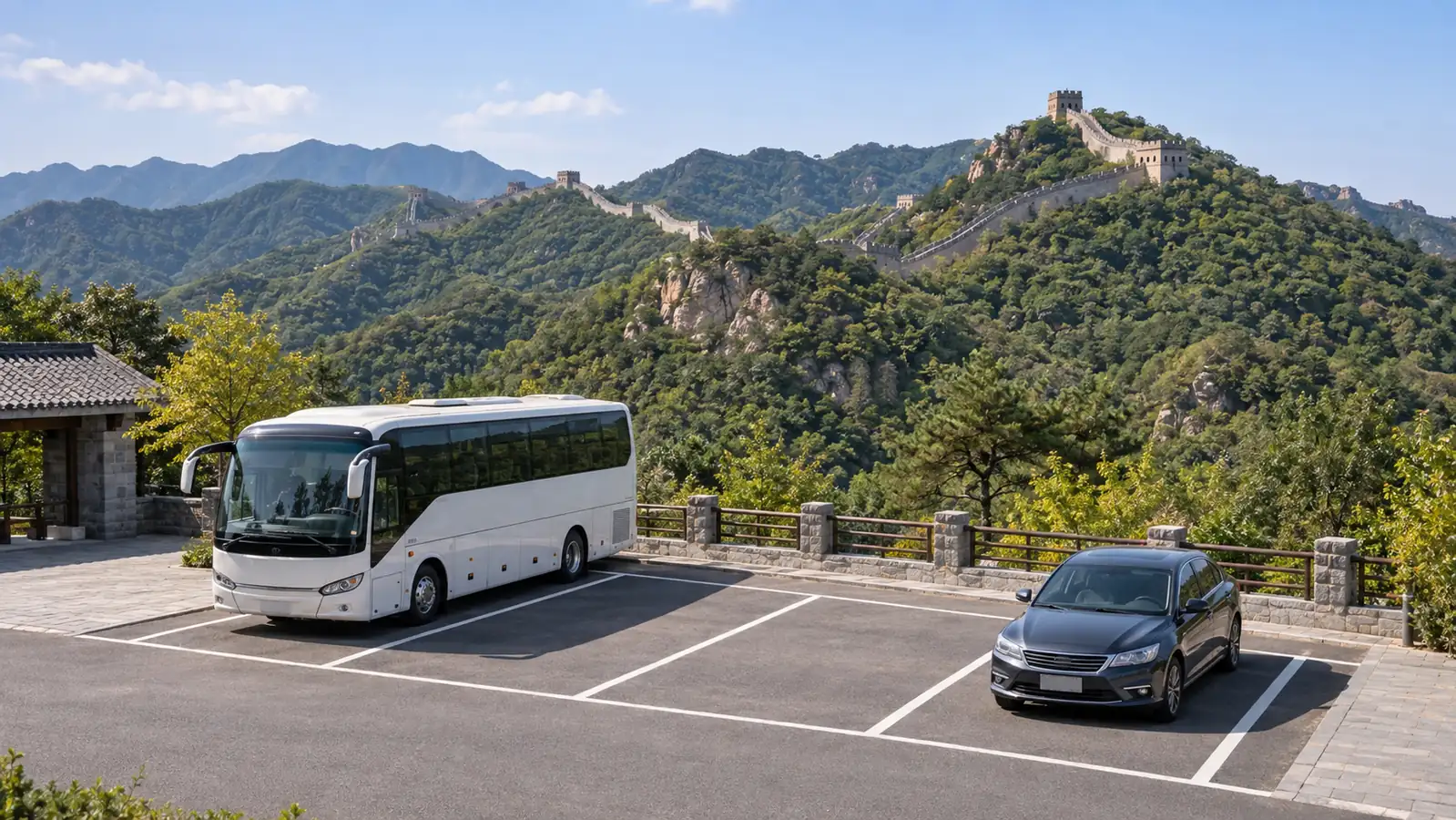
A private driver is useful for families, photographers, and remote sections because it gives control over departure and pickup.
A driver and a guide are not the same service: confirm whether the person accompanies you on the Wall, speaks your preferred language, and can change the meeting point for a one-way hike.
If the Great Wall day is part of a larger capital stay, a Beijing travel guide can help you avoid pairing the Wall with city sights that demand more time than the day realistically holds.
Budget and Book Your Tour
The cheapest advertised option is not always the cheapest complete day. Compare the same components across independent travel, group tours, and private arrangements before deciding.
Independent Visit Costs
A do-it-yourself budget can include Beijing transport, scenic-area admission, an internal shuttle, a cable car or chairlift, a toboggan ticket, food, and the return journey. These are often sold separately, so admission alone is not a realistic total.
Price the route you actually intend to use. Walking both ways may reduce ticket cost but consume energy and time; paying for an ascent can preserve more of the day for the Wall itself.
Tour Inclusions and Red Flags
For an organized tour, confirm the exact section, group size, pickup point, entrance ticket, internal shuttle, ascent/descent tickets, guide language, meal, and cancellation policy.
Ask whether the advertised walking time begins at the Beijing pickup or at the Wall entrance.
Be cautious with vague “all-inclusive” wording and prices that depend on unlisted optional purchases.
A written no-shopping commitment, a named return time, and a clear description of the guide's role are more useful than a long list of generic highlights.
Tickets and Add-On Charges
Each managed section sets its own opening, reservation, and identity rules.
Use the selected scenic area's current official channel or a reputable authorized seller, enter traveler details exactly as requested, and carry the original passport used for the booking.
Check whether the order covers only admission or also the shuttle and ascent/descent product you want. Reconfirm opening notices shortly before travel because weather, maintenance, and special programs can change the usable route.
Pack for the Wall Safely
Footwear, Water, and Layers
Wear shoes with grip. Even restored sections have steep steps, polished stone, uneven risers, and long climbs. Carry water, sun protection, a light layer, and enough battery for photos, maps, reservations, and transport apps.

Pack for the section and season rather than for downtown Beijing.
A short restored visit needs less gear than a remote ridge walk, but wind and temperature can still feel different on exposed stone. A broader China packing checklist can help coordinate the Wall day with the rest of your trip.
Facilities and Food
Major restored entrances usually have toilets, food, and drink before or after the climb, but services become sparse once you are on the Wall. Carry what you need for the planned route instead of assuming the next watchtower has a shop.
Remote areas may have only basic village services and no quick exit when weather or fatigue changes the plan. Bring enough food and water to return safely, then take all packaging back with you.
Wild-Wall Safety Rules
Stay on open, designated routes and respect closure signs. Loose bricks, broken stairs, exposed ridges, vegetation, and limited phone coverage make unrestored terrain less forgiving than a managed scenic area.

Tell someone the route, set a turnaround time, and download the booking and transport details before leaving Beijing. If the weather worsens or current access is unclear, choose a restored section or a qualified local guide instead of improvising on a remote path.
FAQ
1. Do I need my passport at the Great Wall?
Carry the original passport used for your reservation. Identity and ticket-check procedures vary by scenic area, and a photo or copied number may not be accepted in every situation.
2. Are there toilets on the Great Wall?
Managed sections have toilets around the entrance and service areas, but facilities are limited or absent along longer and remote routes. Use them before climbing and plan accordingly.
3. Should I carry cash?
Mobile payment is common, but a physical bank card and a small cash backup are sensible when a foreign wallet, signal, or smaller vendor does not cooperate. Do not rely on a single payment method.
4. How long is the Great Wall?
The complete historic defense system extends for more than 20,000 kilometers across walls, branches, passes, and natural barriers. A tourist visit covers only a tiny managed or hikeable segment, and the time to walk Great Wall routes changes sharply with distance, terrain, weather, and restoration.
5. Will my phone work on the Wall?
Developed entrances and popular sections commonly have service, but reception can weaken along remote ridges. Save tickets, pickup details, essential Chinese addresses, and an offline map before starting the walk.
Conclusion
The best Great Wall trip starts with choosing the section that matches your time, fitness, and travel style.
Give remote sections enough time, plan transport carefully, and check weather and access conditions before you go.
Whether you walk a few towers or spend a full day on the Wall, a well-paced visit will be far more rewarding than trying to cover too much.