
Shanghai’s weather changes noticeably throughout the year, from hot, rainy summers to cool winters and milder spring and autumn days.
Choosing the right season can make outdoor sightseeing, day trips, and walking around the city much more comfortable.
This guide covers Shanghai weather by month and season, with practical tips for planning and packing. An iRoamly China travel eSIM can help you stay connected for forecasts, maps, and transport updates along the way.
When Is the Best Time to Visit Shanghai?
There is no single perfect month for every trip. Weather, crowds, prices, seasonal events, and your tolerance for rain or heat all matter, so the most useful answer is to choose a window that matches your priorities.
Best Overall: Mid-October to November
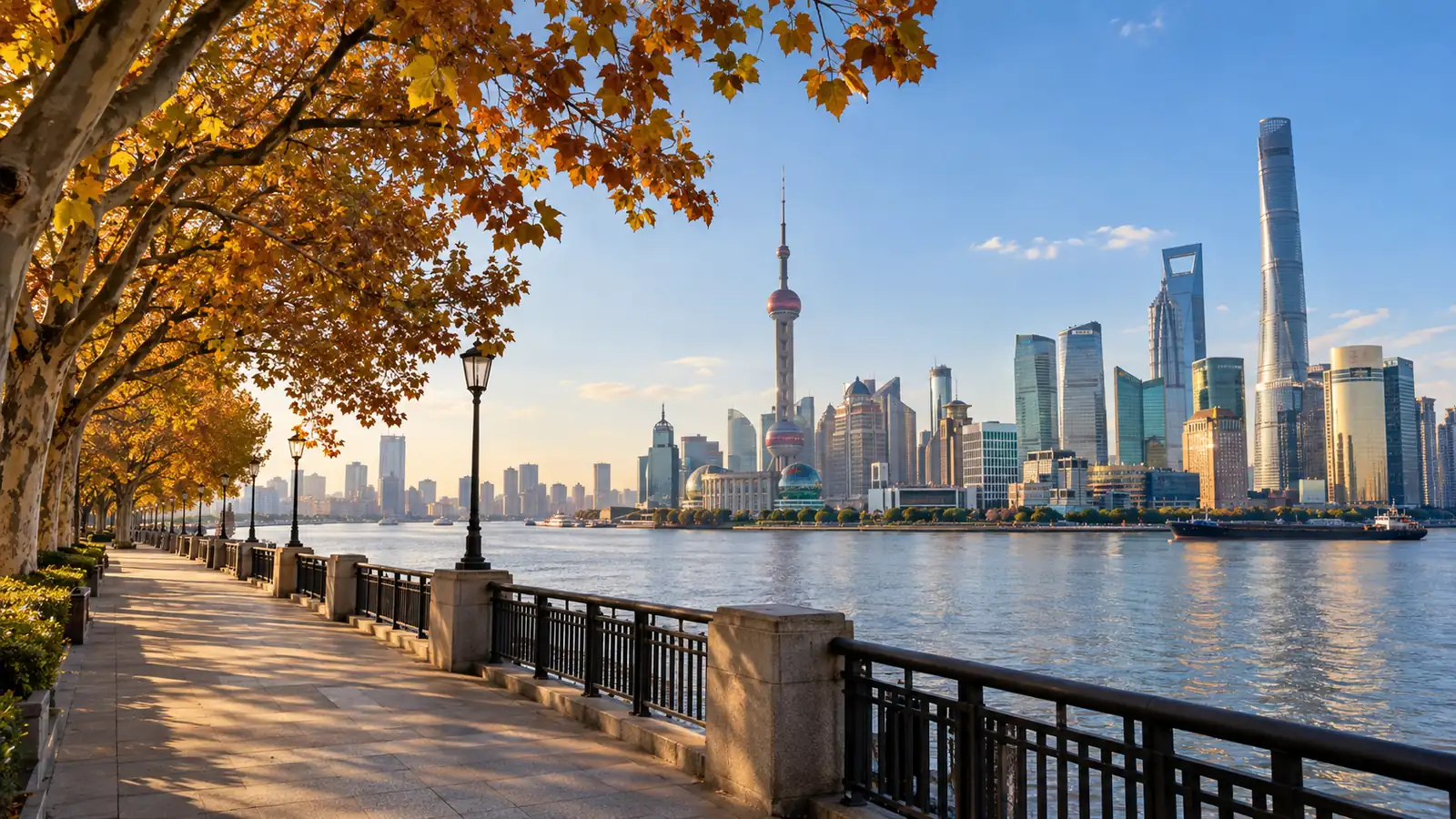
Mid-October through November usually offers Shanghai’s most dependable balance of comfortable temperatures, lower humidity, and relatively modest rainfall. Days are well suited to long walks along the Bund, the Former French Concession, and riverside promenades, while evenings are cool enough for a light jacket.
The important exception is the National Day holiday period at the beginning of October. Pleasant weather does not cancel out heavy domestic travel, so trains, hotels, and major attractions can become much busier. If your dates are flexible, arrive after that early-October rush.
Best Spring Alternative: April to May
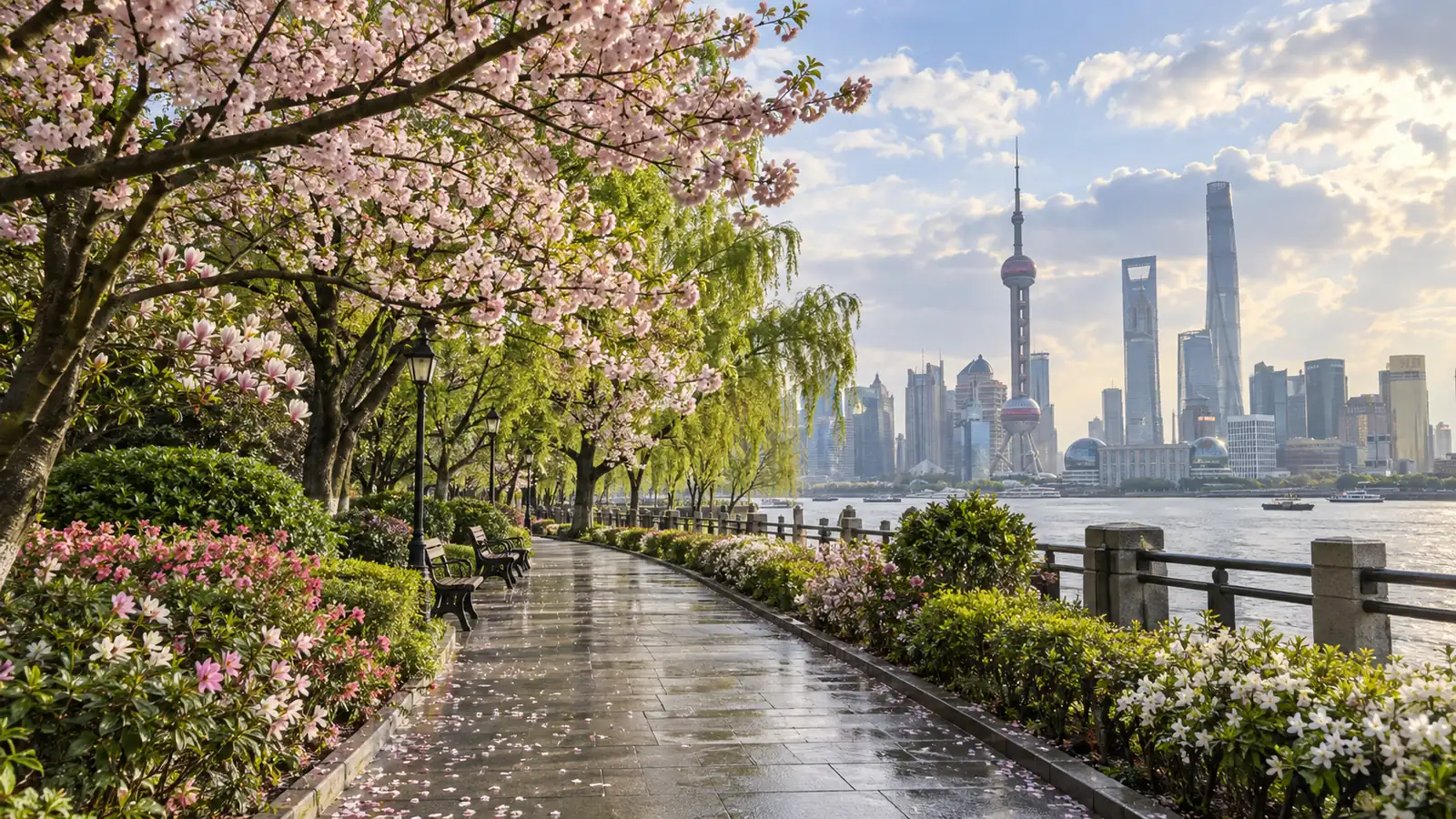
April and much of May are attractive for gardens, blossoms, and outdoor sightseeing. Temperatures are generally mild to warm, but spring can shift quickly between sun, cool breezes, and showers, so layers and a compact rain shell are more useful than a single heavy outfit.
Avoid treating the entire season as equally quiet. The Qingming period in early April and the Labor Day holiday at the start of May can increase visitor numbers, transport demand, and accommodation prices. Later May becomes warmer and more humid as summer approaches.
Travel priority | Strongest window | Main trade-off |
|---|---|---|
Best all-round weather | Mid-October to early November | Pack a light layer; avoid the early-October holiday rush |
Spring flowers and gardens | April to mid-May | Changeable rain and busy public-holiday dates |
Lower prices and lighter crowds | December to February, outside Lunar New Year | Cold, damp weather and shorter outdoor days |
Festivals and seasonal atmosphere | Dates vary by lunar and annual calendar | Closures, sold-out transport, and larger crowds are possible |
Summer-only travel dates | June or early September | Keep indoor alternatives for rain, heat, or storm warnings |
Shanghai Weather by Month
Monthly averages are best used for choosing travel dates, not predicting a specific week.
The figures below are rounded planning ranges based on long-term climate patterns; a live forecast may differ, especially during spring transitions, plum-rain weeks, heat waves, and tropical systems.
Monthly Climate at a Glance
Month | Typical high / low | What it usually feels like | Planning note |
|---|---|---|---|
January | 8°C / 2°C (47°F / 36°F) | Cold, damp, and sometimes windy | Use museums, cafés, and galleries as warm breaks |
February | 10°C / 4°C (50°F / 39°F) | Cool with variable drizzle | Check Lunar New Year dates and business hours |
March | 14°C / 7°C (57°F / 45°F) | Changeable early spring | Carry layers for large day-to-night swings |
April | 20°C / 12°C (68°F / 54°F) | Mild, green, and occasionally wet | Excellent for gardens and neighborhood walks |
May | 25°C / 18°C (77°F / 64°F) | Warm with rising humidity | Avoid the Labor Day rush when possible |
June | 28°C / 22°C (82°F / 72°F) | Warm, humid, and often rainy | Build flexibility around the variable plum-rain period |
July | 32°C / 26°C (90°F / 79°F) | Very hot with warm nights | Reserve midday for air-conditioned attractions |
August | 32°C / 26°C (90°F / 79°F) | Hot, humid, and storm-prone | Keep bookings flexible if warnings are issued |
September | 28°C / 22°C (82°F / 72°F) | Summer-like early, milder later | Do not assume the whole month feels like autumn |
October | 23°C / 17°C (73°F / 63°F) | Mild with lower humidity | Come after the early-month holiday for easier sightseeing |
November | 18°C / 11°C (64°F / 52°F) | Cool, crisp, and comparatively dry | Bring layers for cooler evenings |
December | 11°C / 4°C (52°F / 39°F) | Chilly and often grey | A practical budget month if cold does not bother you |
How to Read the Averages
A climate average describes what is typical across many years; it cannot tell you whether one Tuesday will be sunny.
Use the table to choose a month, then check a seven- to ten-day forecast for packing and a same-day forecast for exposed activities such as river walks, observation decks, Disneyland, or a water-town excursion.
Shanghai is large enough for showers to vary by district, and summer storms can change quickly. Give weather-sensitive plans more than one possible time slot instead of committing every outdoor highlight to a single day.
Shanghai Weather by Season
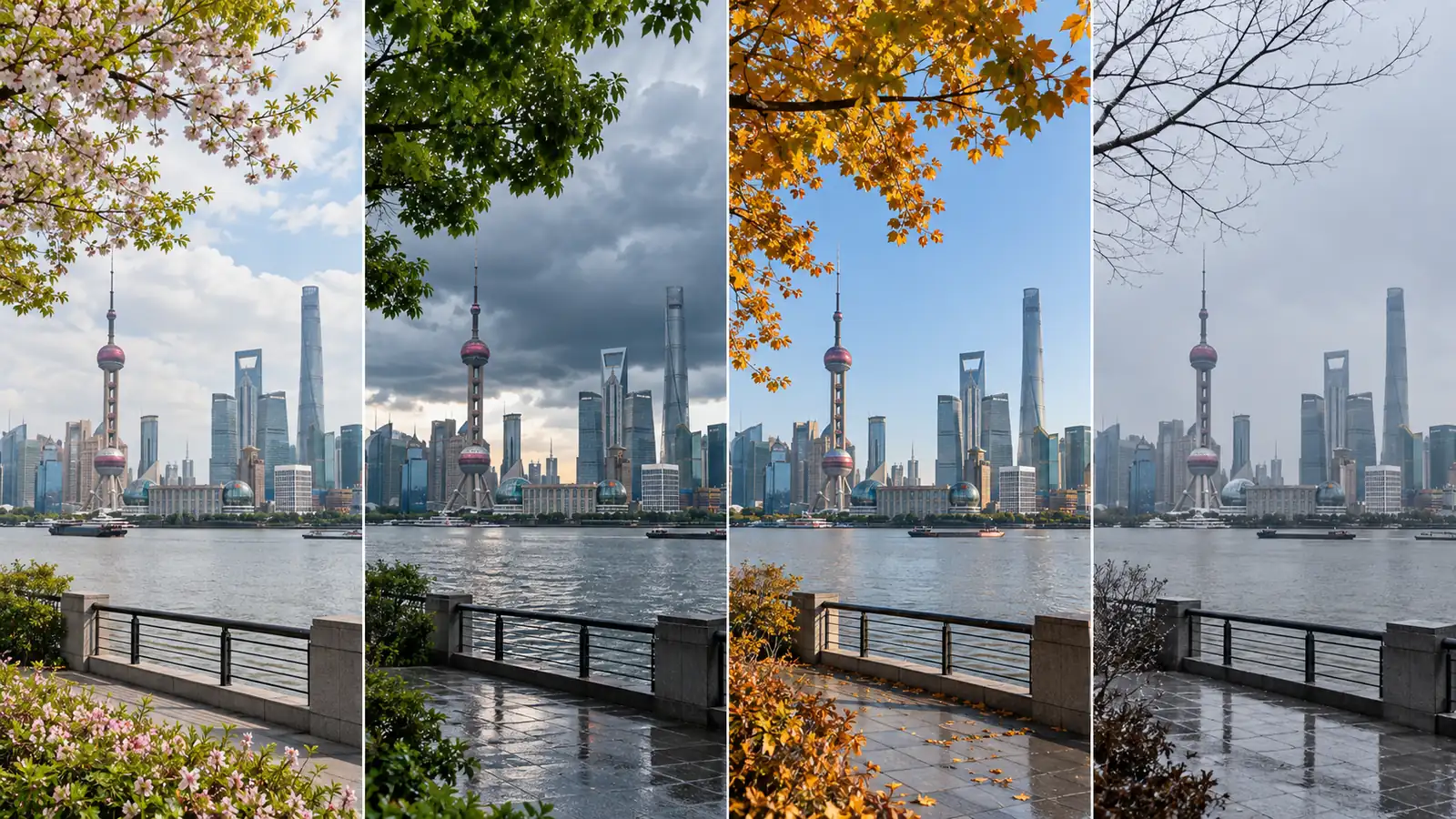
Shanghai has four distinct seasons, but the boundaries are not perfectly neat. March and September are transition months, so the same month can feel very different at its beginning and end.
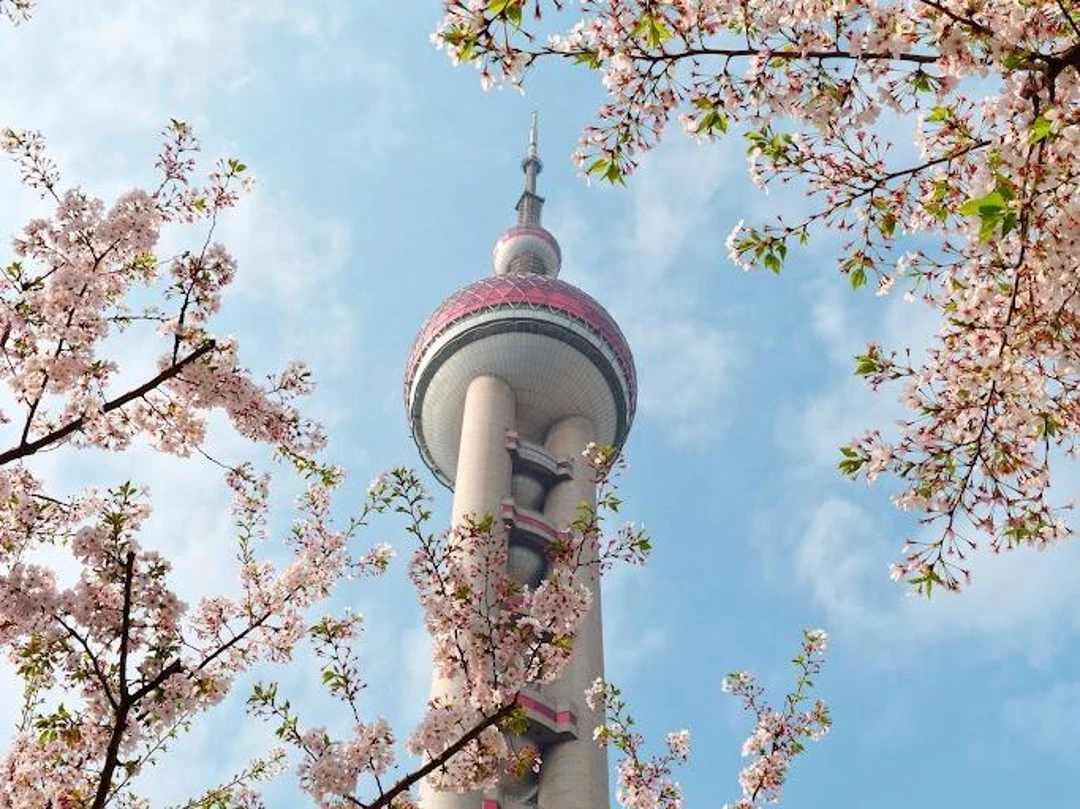
Spring (March to May): Mild and Changeable
Spring moves quickly from cool early-March days to warm, increasingly humid weather in May. April is usually the easiest month for outdoor exploration, while March demands more layers and late May can already feel close to summer.
There are plenty of things to do in Shanghai during spring. Walk the Bund in comfortable temperatures, visit Yuyuan Garden, or plan a flower-focused outing to Gucun Park or a botanical garden when blooms are in season.
Pack: light layers, a water-resistant jacket or compact umbrella, and comfortable shoes that handle wet pavement.
Plan: reserve the clearest morning for a long outdoor walk and keep a museum nearby for a sudden shower.
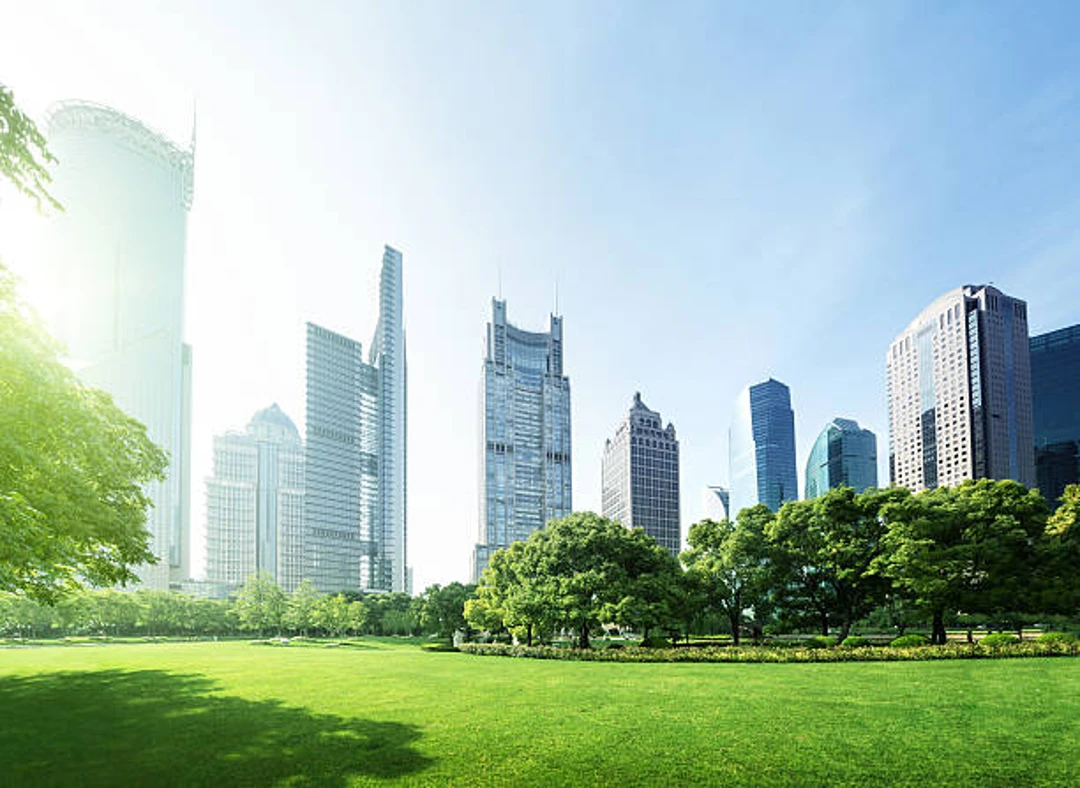
Summer (June to August): Hot, Humid, and Wet
June begins the main summer pattern and often overlaps with the variable meiyu, or plum-rain, period.
July and August bring the most demanding combination of heat, humidity, warm nights, sudden downpours, and occasional tropical-weather disruption.
Outdoor sightseeing is most comfortable early in the morning or after the strongest afternoon heat. A Huangpu River cruise or evening skyline walk can work well, but only when the live forecast and operator notice are favorable.
Shanghai’s film festival generally belongs to June rather than spring, while other summer performances and events vary by year.
Pack: breathable clothing, sun protection, a refillable water bottle, a compact rain layer, and shoes that dry quickly.
Plan: pair one outdoor goal with one air-conditioned alternative instead of filling the whole day with exposed attractions.
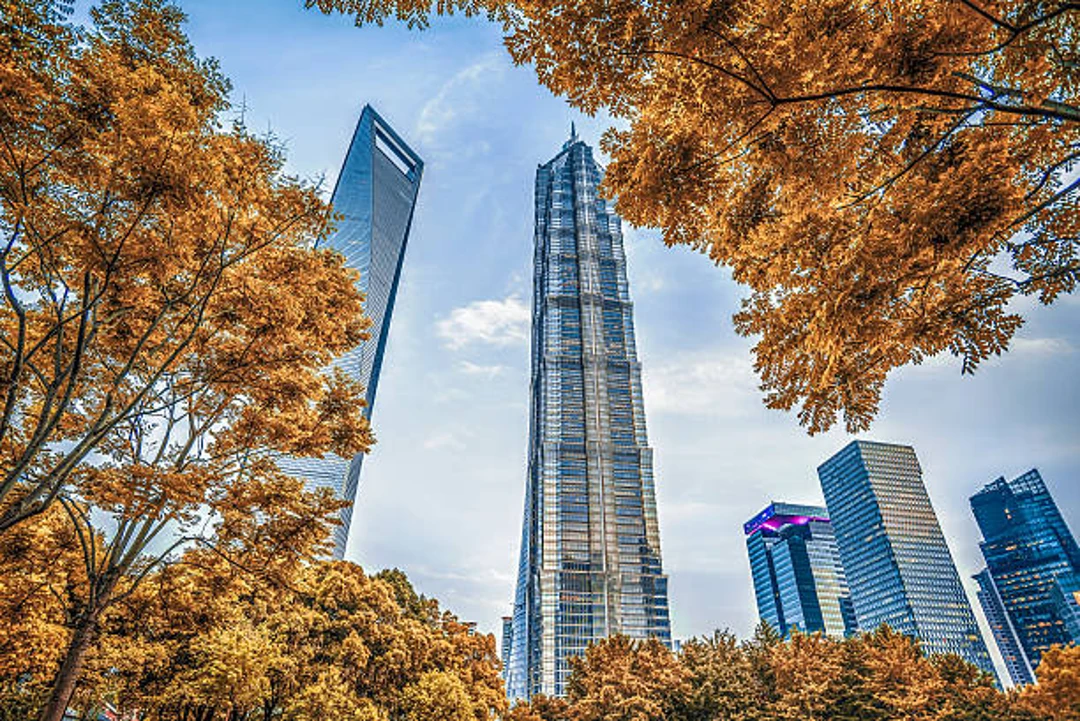
Autumn (September to November): Comfortable After the Heat
Autumn is the most comfortable season for many visitors, but early September can still feel distinctly summery.
Conditions usually become milder later in September, while October and November bring cooler air and better walking weather.
Use pleasant days for Zhujiajiao Water Town, tree-lined streets, and long riverside routes. Hairy crab season commonly falls across autumn, and cultural events may add atmosphere, but dates change from year to year.
The first week of October is a poor choice for travelers who prioritize low crowds, even when the weather is excellent.
Pack: light clothing for warmer afternoons, a sweater or jacket for evenings, and comfortable walking shoes.
Plan: book popular attractions and intercity transport early if your trip overlaps a major holiday.
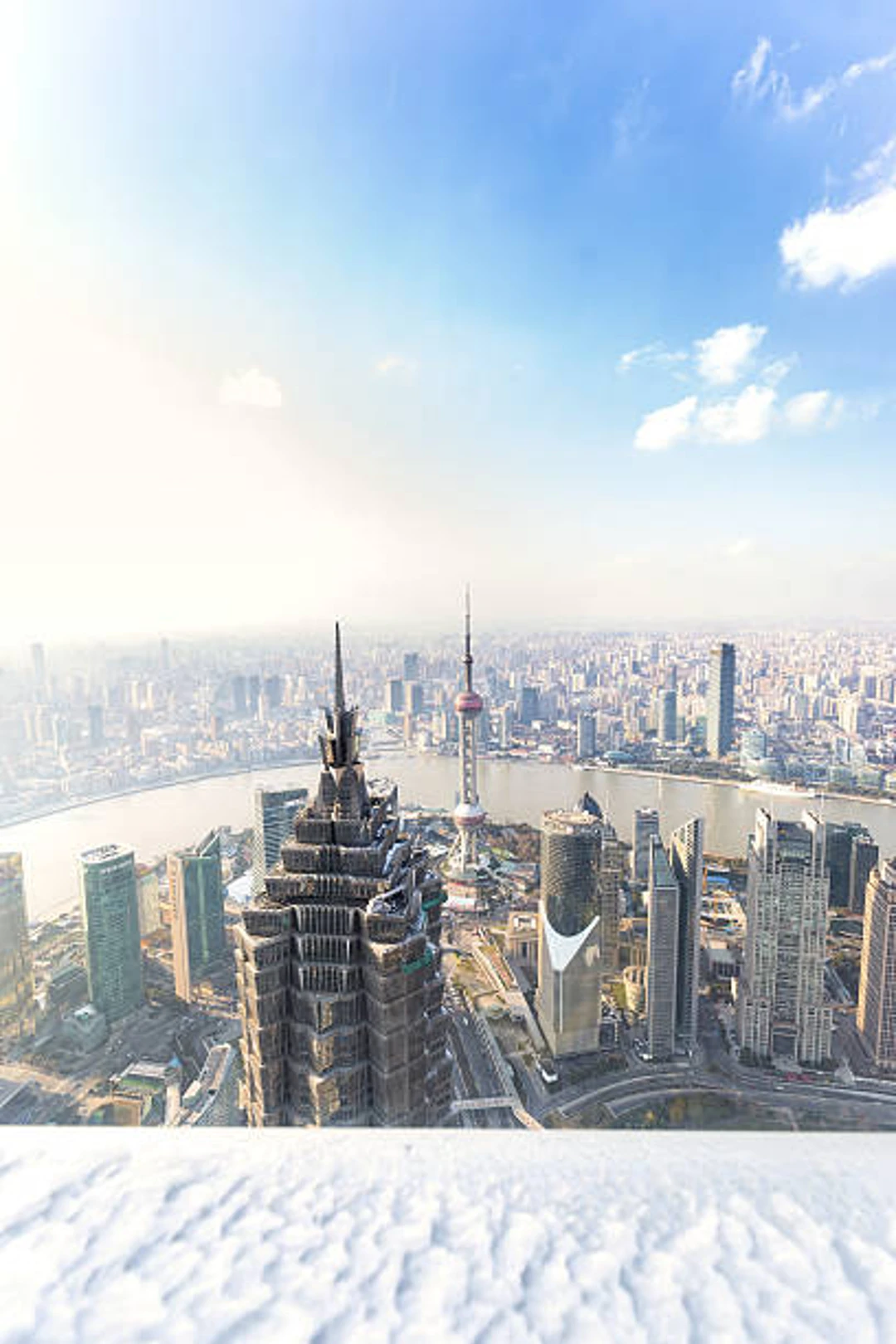
Winter (December to February): Cold and Damp
Winter temperatures are moderate compared with northern China, but humidity and wind can make Shanghai feel colder than the thermometer suggests.
Rain is more common than lasting snow, and long outdoor sessions can become uncomfortable without warm, wind-resistant layers.
Balance short outdoor visits with the Shanghai Museum, galleries, cafés, shopping areas, and warming meals such as hotpot.
Lunar New Year and the Lantern Festival can be memorable, but dates follow the lunar calendar and may also bring closures or heavy travel demand. They are an important holiday in China, so check the current year’s schedule before booking.
Pack: a warm coat, insulating layers, a scarf and gloves, plus water-resistant shoes for wet days.
Plan: keep exposed waterfront time short and place a warm indoor stop immediately before or after it.
Weather Challenges in Shanghai
Shanghai’s most disruptive weather is not limited to one simple rainy season. The city can face prolonged humid rain, intense summer heat, thunderstorms, and tropical systems, and each pattern calls for a different response.
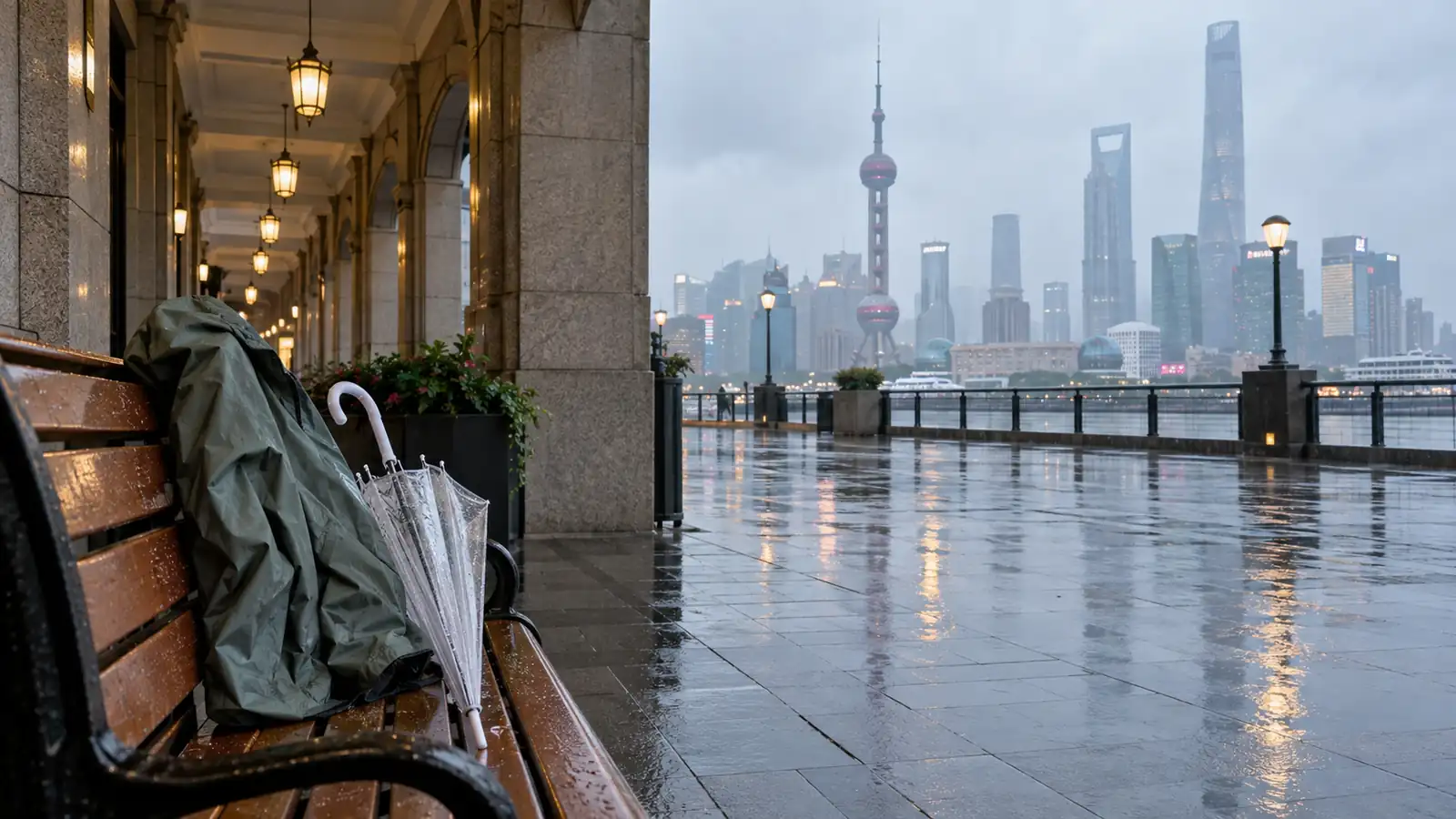
Meiyu Rain in June and July
The plum-rain period usually affects the lower Yangtze region around early summer, but its exact start, finish, and intensity vary each year. It can bring sticky air, repeated showers, and occasional heavy rain rather than one continuous all-day downpour.
Keep electronics and documents in a dry pouch, choose shoes that tolerate wet pavement, and avoid building tight connections around an exposed activity.
If the forecast shows several wet hours, move a museum or shopping district into that block and save the Bund or a garden for the clearest window.
Peak Heat in July and August
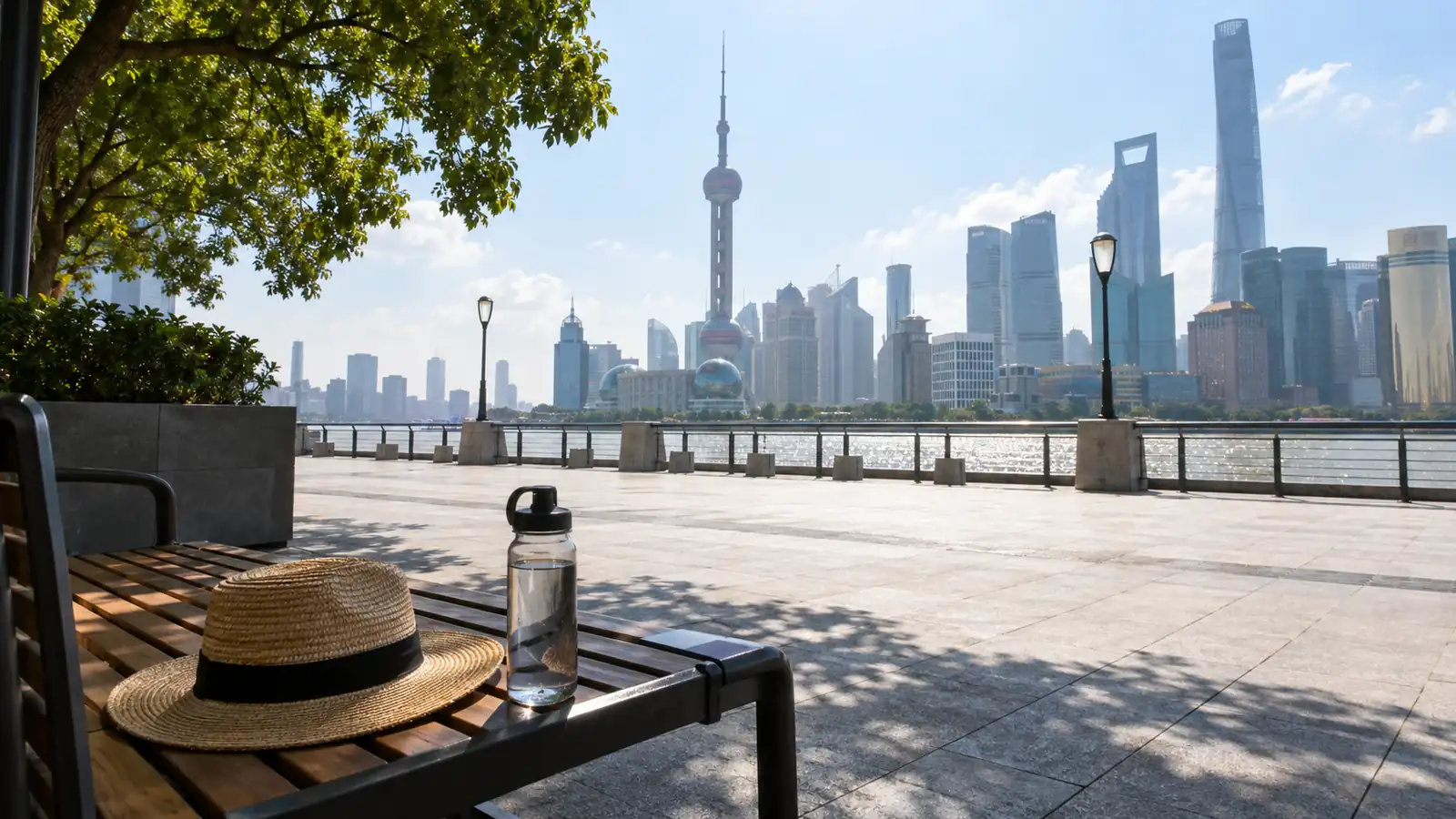
In the hottest weeks, daytime highs can reach the mid-30s Celsius, and high humidity reduces the relief you might expect after sunset.
Heat affects pace as much as comfort, so a route that looks short on a map may feel demanding when shade is limited.
Start earlier, schedule a long indoor lunch or museum visit at midday, and return outside later. Carry water, use sun protection, and reduce the number of distant outdoor stops rather than racing across the city.
Typhoon Risk from Summer into Early Autumn
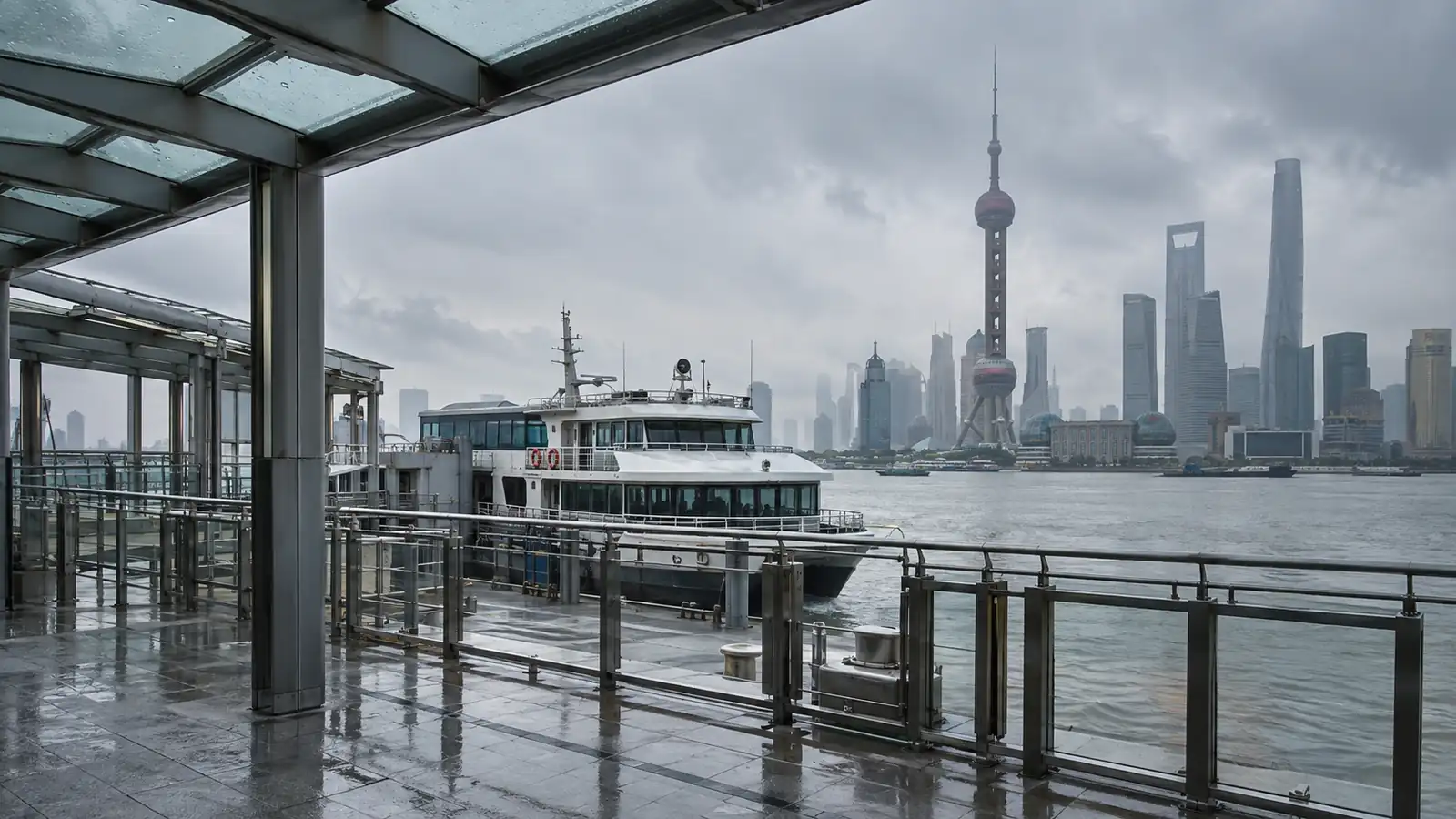
Tropical systems can influence Shanghai from summer into early autumn even when the storm does not make a direct landfall in the city.
Heavy rain, strong wind, flight changes, ferry suspensions, or attraction closures are possible, and the track can change faster than a long-range itinerary.
Check current official warnings and then check the named operator for the decision that affects you. A weather warning, airline status, railway notice, cruise update, and attraction closure are related but not interchangeable.
Keep one low-commitment indoor day available if you travel during a higher-risk period.
Plan a Comfortable Day in Any Season
The best Shanghai itinerary is flexible at the daily level. Use the forecast to order your activities, then rely on the metro and mobile tools to adjust without losing the whole day.
Time Outdoor Sightseeing
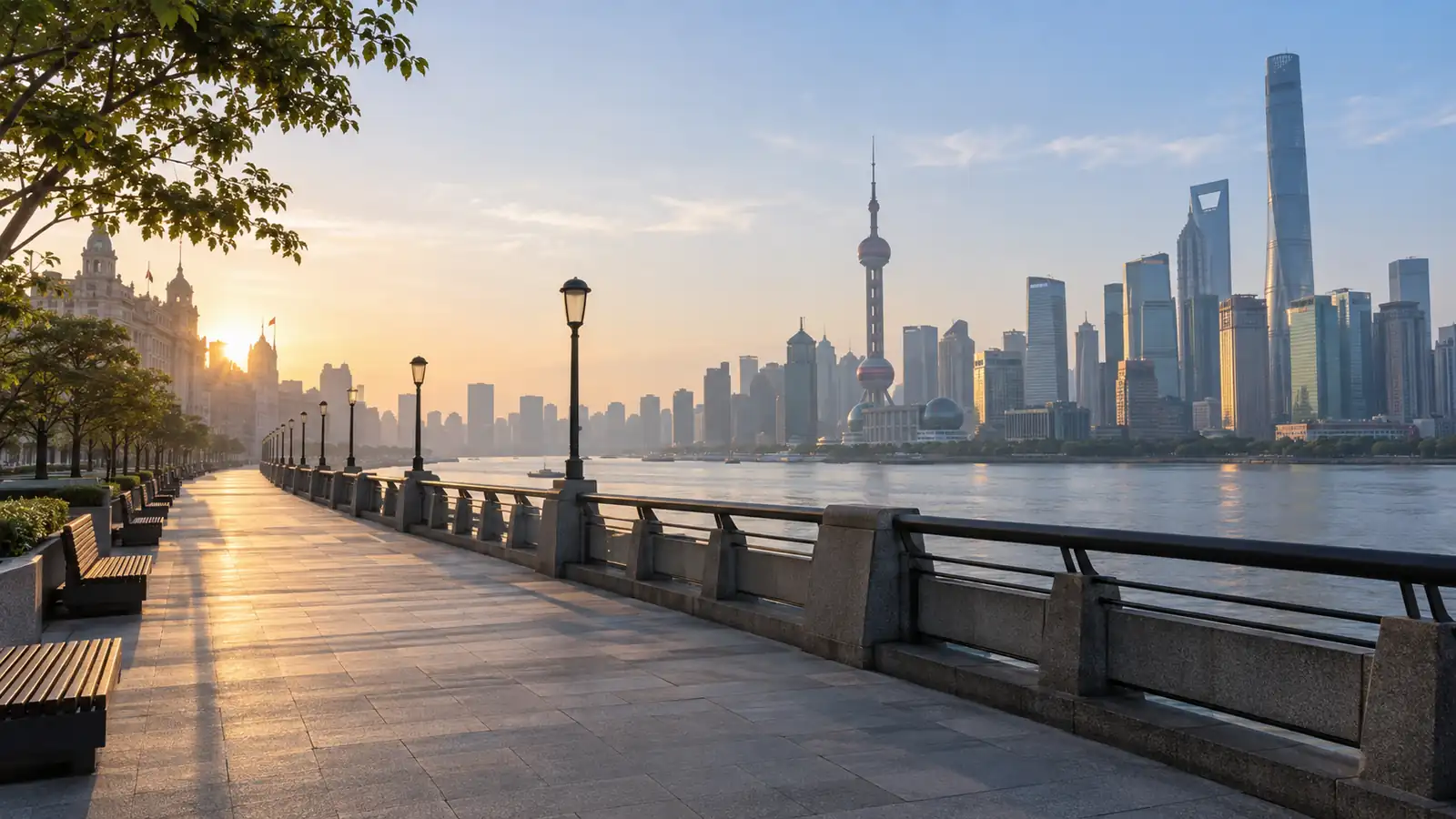
In spring and autumn, place long walks during the mildest, clearest block of the day.
In summer, use early morning for the Bund, gardens, or neighborhood streets; move indoors at midday; and return outside in the evening if heat or storm warnings allow. In winter, alternate short exposed stops with warm interiors.
Popular places such as the Bund and Yuyuan Garden are also easier at opening time or later in the day. Weather and crowds are separate constraints, so a pleasant forecast still benefits from advance tickets and an early start.
Use Metro and Mobile Tools
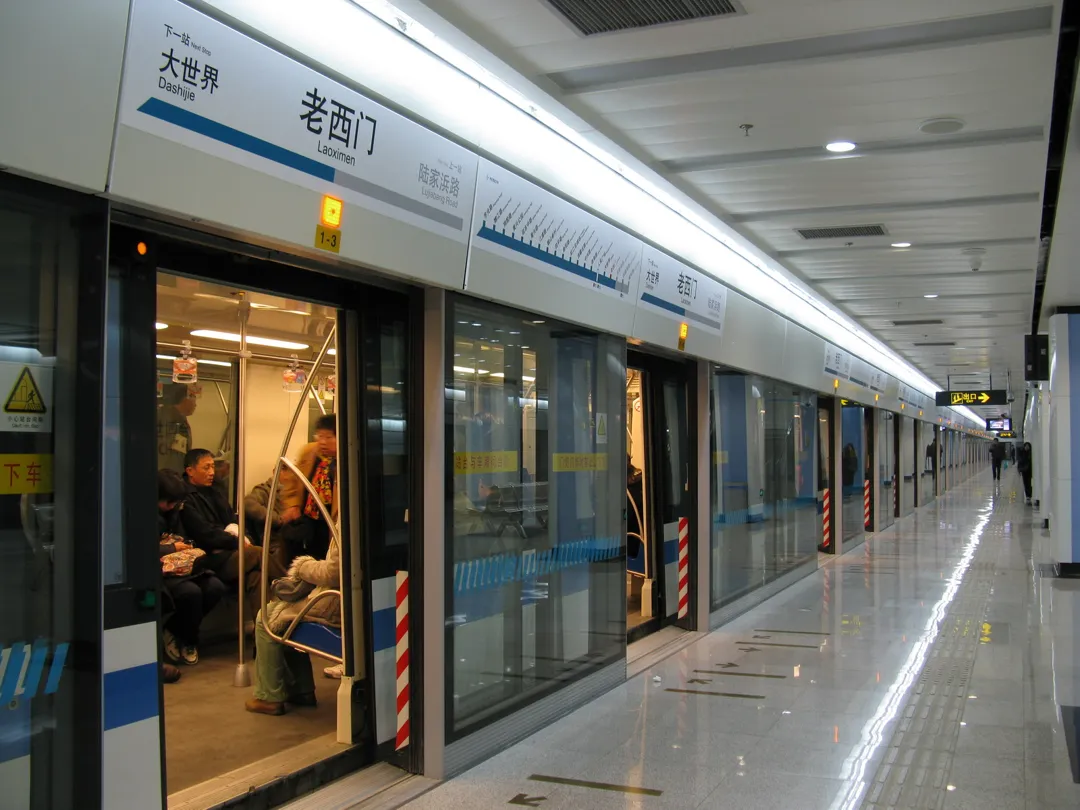
Shanghai’s metro is usually the most predictable way to cross the city in rain or traffic.
A Shanghai Public Transportation Card can simplify local travel, while QR-based payments through supported mobile apps may also work for metro and bus rides.
Taxis and DiDi are useful in bad weather, but demand and journey times can rise sharply during rush hour or heavy rain.
Keep a map app, ride-hailing app, translation tool, and current weather source available on your phone. Connectivity also helps you confirm whether a river cruise, outdoor performance, observation deck, or day-trip train is operating as planned.
Pack for the Forecast
For spring: light layers, a compact rain layer, and shoes suitable for long walks.
For summer: breathable clothes, sun protection, water, quick-drying footwear, and a dry pouch.
For autumn: comfortable daytime clothing plus a light jacket for evenings.
For winter: a warm wind-resistant outer layer, scarf, gloves, and water-resistant shoes.

Before leaving each morning: check the hourly forecast, any active warning, and the operating notice for your most weather-sensitive booking. Then keep one nearby indoor alternative rather than improvising from the other side of the city.
FAQs
1. Does it snow in Shanghai?
Snow is possible but uncommon, and significant accumulation is rarer still. Most winter visitors should prepare for cold rain, wind, and damp conditions rather than plan a trip around seeing a snowy Bund.
2. Does Shanghai have central heating in winter?
Shanghai does not use the same universal municipal central-heating system common in much of northern China. Hotels, malls, museums, and many modern buildings have heating, but indoor comfort can vary, so removable layers remain useful.
3. Can the weather differ between Pudong Airport and downtown?
Yes. Pudong Airport sits well east of the city center, and rain, wind, visibility, or storm timing can differ across the municipality. Check the forecast and any transport notice for the specific district or airport instead of relying on one citywide weather icon.
Conclusion
Shanghai can be enjoyed year-round, but spring and autumn generally offer the most comfortable weather for sightseeing and exploring the city on foot.
Summer brings heat and heavier rain, while winter can feel cold and damp. Whatever season you choose, checking the forecast and packing accordingly will make it easier to adjust your plans.
With the right timing and a little flexibility, you can enjoy Shanghai comfortably in any season.