
Australian passport holders can usually arrive in mainland France for a short holiday, business trip, family visit, or transit without first obtaining a visa.
That makes a Paris café morning, a Provençal market, or a rail journey toward the Alps easier to reach, but visa-free does not mean rule-free. The 90 days apply across the whole Schengen Area, while work, residence, and longer stays follow different French procedures.
Before departure, it is worth understanding how EES records the journey, when ETIAS will matter, which border documents to carry, and what changes if the trip lasts more than 90 days.
Do Australians Need a Visa for France?
For a normal short stay in mainland France, an Australian citizen using an ordinary valid passport generally does not need a visa. Arranging a France eSIM before departure can keep accommodation details, maps, and rail bookings available after arrival.
The answer changes when the trip involves paid work, residence, a stay over 90 days, or a French overseas territory. Those cases require a check for the correct French visa or authorization, and the cumulative Schengen limit still applies to ordinary short visits.
EES and ETIAS Timing
ETIAS is not operating as of August 2026, so travelers cannot apply yet. The EU expects it to start in the last quarter of 2026 and says no action is currently required; use the ETIAS launch timeline rather than an unofficial application site.

Once active, ETIAS will be a travel authorization rather than a visa. It will not extend the 90-day allowance or permit work and residence.
How the 90/180-Day Rule and EES Affect Australians
The 90-day limit covers all Schengen countries together, not 90 days in France plus another allowance elsewhere. Both arrival and departure days count when calculating the stay.
This table shows how common itineraries use the allowance.
Travel pattern |
How days count |
|---|---|
30 days in France |
30 Schengen days |
30 days in France and 20 in Italy |
50 Schengen days |
Leave and re-enter after a short break |
Earlier days still remain in the rolling calculation |
The Entry/Exit System records short-stay entries and exits electronically and is fully operational. The current France advice for Australians also explains biometric registration and entry conditions.
Leaving the Schengen area does not reset the allowance. Count every visit within the previous 180 days and leave a buffer for flight disruption.
Staying in France for More Than 90 Days
A stay over 90 days normally needs a French long-stay visa selected for the actual purpose. Apply before departure and follow the personalized checklist produced by France-Visas.
Common categories include the following.
Student: For an eligible course or program, with enrollment and financial evidence.
Employee or worker: For authorized employment, often with employer documentation.
Visitor: For a longer stay without professional activity, subject to funds, insurance, and accommodation evidence.
Family: For eligible family-related residence circumstances.
Au pair: For an approved placement that meets the category conditions.
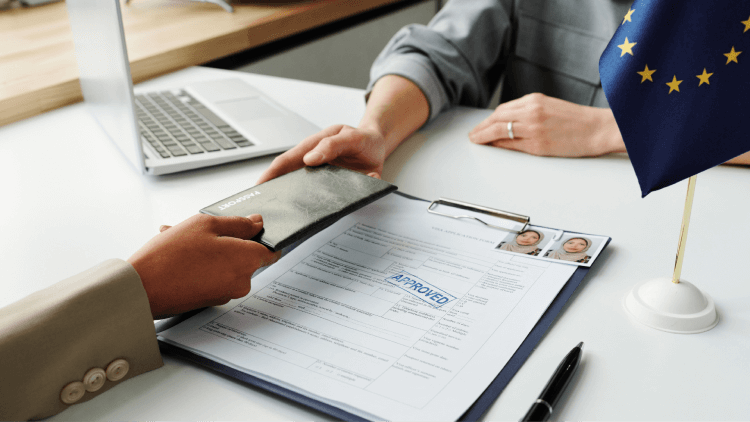
The step-by-step French visa application explains the portal, appointment, biometrics, current fees, and tracking process.
Requirements differ by category, so do not reuse a tourist checklist for work, study, or residence. Apply with evidence that matches the selected purpose.

Working Holiday Option for Young Australians
Australians aged 18 to 35 may have a purpose-built alternative to an ordinary visitor or work route. France's working holiday visa allows an eligible traveler to stay for up to one year, with tourism and cultural discovery as the main purpose and temporary work used to supplement funds.
The official working holiday conditions confirm that Australians may apply up to the day before their 36th birthday. The visa is not a general substitute for every employment, study, au pair, or permanent-residence plan.
Applicants still need to satisfy the country-specific financial, insurance, health, and supporting-document rules. Check the current personalized checklist rather than relying on an older working-holiday blog or assuming the Australian program matches another nationality's conditions.
Where Australians Submit a Visa Application
Ordinary visa applications lodged in Australia are received through the designated VFS Global centers and decided by the Consulate General of France in Sydney. Diplomatic and service passport procedures are different and are handled through the French Embassy in Canberra.
France-Visas currently advises lodging Australian applications between three weeks and six months before departure or arrival, depending on the category. That range does not guarantee an appointment, so travelers should check availability before committing to inflexible flights.
Documents Australians May Need at the French Border
Visa-free does not mean document-free, and border admission is never automatic. Carry records that show the purpose, duration, and funding of the trip.
Passport: Issued within the previous 10 years and valid for at least three months after the planned Schengen departure.
Accommodation: Hotel reservations or appropriate host documentation for the stay.
Onward travel: A return or onward ticket, or evidence that one can be obtained.
Funds: Evidence of sufficient means for the planned duration and accommodation arrangement.
Insurance: Travel insurance appropriate to medical, cancellation, and repatriation risks.
Australians are not generally eligible for a European Health Insurance Card simply because they are visiting Europe. Buy suitable travel insurance and confirm how pre-existing conditions and repatriation are covered.
Check passport dates and the exact French territory before booking. New Caledonia, French Polynesia, and other overseas destinations can use rules different from mainland France.
Special Cases Australians Often Miss
The ordinary visa-free answer covers a short visit to mainland France, but several details can change the border process or the correct application route. Resolve these before counting days or choosing flights.
Situation | What changes | Practical action |
|---|---|---|
Dual Australian and EU nationality | EES and future ETIAS treatment may depend on the passport used | Travel with the valid EU passport or identity document where applicable and keep passport use consistent |
Transit through the United Kingdom or Ireland | These countries are outside Schengen and use separate entry systems | Check each transit country's rules and do not count that time as Schengen stay |
French overseas territory | A Schengen permission may not cover the territory | Run the France-Visas check for the exact island or territory |
Previous Schengen travel | Days from earlier trips may remain inside the rolling 180-day window | Count the earlier entries before fixing the new departure date |
Bilateral-waiver assumption | Australia has separate agreements with some Schengen countries, but France is not on Smartraveller's current list | Do not plan extra time in France beyond the normal Schengen allowance without written official confirmation |
The table matters most for longer European routes. A traveler can be compliant on arrival yet overstay later if earlier Schengen days, another passport, or a territory change was handled incorrectly.
Do Not Treat Bilateral Waivers as a Schengen Reset
Australia has older visa-waiver arrangements with several individual Schengen countries, but their use is complex and country-specific. Smartraveller says only one bilateral arrangement may be used in addition to the ordinary 90-day Schengen stay and advises travelers to inform the border guard when first entering.
France does not appear in Smartraveller's current bilateral-waiver list. For a longer stay in France, the safer route is the appropriate French long-stay visa rather than an itinerary built around an assumed extra 90 days.
Use One Passport Consistently
Dual nationals should check which passport establishes their right to enter and whether EES or ETIAS applies. Booking details, future authorization, and border presentation should use the same travel document wherever the rules require it.
If a passport changes before ETIAS begins, a future authorization linked to the old document will not simply transfer. Recheck the official process after renewal instead of carrying only the expired authorization details.
Practical Tips for Australians in France
Keep digital and offline copies of your passport details, insurance policy, accommodation, transport, and emergency contacts. An iRoamly travel eSIM can provide mobile access to those records on a compatible unlocked phone, while offline copies remain the essential backup.
Payments, Medication, and Emergency Cover
France uses the euro. Knowing France's currency and payments helps you plan cards, cash, and backup access without carrying unnecessary valuables.
Take enough prescription medication for the trip, keep it in original packaging, and carry the prescription or a doctor's letter when appropriate. Check French restrictions for controlled medicines before departure.

The European emergency number is 112. Medical treatment can be expensive, and emergency care is not automatically free for Australian visitors.
Planning the Trip After Entry Checks
Once the entry position is clear, build an itinerary that fits the available Schengen days and leaves enough time between long transfers.
The major destinations offer different travel rhythms.
Travel focus |
Possible base |
|---|---|
Museums and landmarks |
Paris |
Food and historic neighborhoods |
Lyon |
Mediterranean coast |
Nice or Marseille |
Wine regions and Atlantic access |
Bordeaux |
A route among several French cities uses the same Schengen allowance, so choose stops for transport logic rather than trying to reset the visa-free period.
Book flexible arrangements when entry systems or transport plans may change, and recheck official travel advice near departure.
France and Italy on One Schengen Trip
France and Italy share the Schengen short-stay calculation, which makes them a practical pairing for Australian travelers. Days in both countries count toward the same 90-day limit.
For a visa-free Australian holiday, the main difference is practical evidence and border routing rather than a separate short-stay visa for each country. Longer stays remain country-specific.
If Italy becomes the main destination or the trip changes purpose, the relevant Italy entry visa rules should be checked independently instead of assuming every French long-stay condition transfers.
Question |
France and Italy treatment |
|---|---|
Short visa-free days |
Combined within one 90/180-day Schengen calculation |
Long stay |
Use the national visa rules of the destination |
External border check |
Usually completed where the traveler first enters Schengen |
This comparison helps prevent two common mistakes: counting separate 90-day allowances and using one country's long-stay process for another.
FAQ
1. Do Australians need a visa for a two-week trip to France?
No, an ordinary Australian passport holder can generally visit visa-free when the trip fits permitted short-stay activities and the Schengen day limit.
2. Is ETIAS required for Australians now?
No. As of July 2026, ETIAS is not operating, and the EU says travelers do not need to apply yet.
3. Does leaving Schengen reset the 90 days?
No. The limit is calculated on a rolling 180-day period, so earlier Schengen days continue to count.
4. Can an Australian work in France visa-free?
Visa-free visitor status does not provide a general right to work; obtain the authorization required for the planned activity.
5. How can travelers keep bookings accessible?
A travel eSIM can provide mobile access to maps, reservations, travel advice, and emergency contacts on a compatible unlocked phone. Keep offline copies of essential records in case mobile service is unavailable.
Conclusion
Australians can generally visit mainland France without a visa for permitted short stays, provided all Schengen travel remains within 90 days in any 180-day period.
ETIAS is not yet operating, while EES already records short-stay border movements. Long stays, work, residence, and some overseas territories need separate checks.
Confirm passport validity, carry supporting documents and suitable insurance, count every Schengen day, and review official advice again close to departure.