
Japanese names carry information through character choice, pronunciation, family history, and social context. The same written name can sometimes have more than one valid reading.
For travelers, the practical questions are simpler: which part is the family name, how should someone be addressed, and when is an honorific appropriate?
This guide explains those basics without turning naming customs into rigid rules. A Japan eSIM can also keep reservations, translated addresses, and contact details available while you travel.
How Japanese Names Are Structured
In Japanese usage, the family name normally comes before the given name. 山田太郎 is therefore Yamada Tarō: Yamada is the family name and Tarō is the given name.
English-language documents and international settings have not always followed the same order. Since 2020, Japan’s government has encouraged family-name-first order when Japanese names are written in Roman letters in official contexts. The Agency for Cultural Affairs provides the official policy background in Japanese.
Context | Typical display | Traveler tip |
|---|---|---|
Japanese text | Family name + given name | Do not assume the final element is the surname |
Passport or airline record | Follow document fields | Copy spelling and order exactly |
International conversation | Either order may appear | Ask politely if uncertain |
Kanji, Readings, and Name Meanings
Many Japanese names are written in kanji. Each character has meanings and one or more possible readings, but a name’s meaning is not simply a dictionary definition. Parents may choose characters for sound, imagery, family connection, stroke balance, or personal preference.
Because identical kanji can be read differently, pronunciation should not be guessed with confidence. Hiragana or katakana readings—called furigana when printed beside kanji—often remove ambiguity. The relationship becomes clearer once you understand the three scripts in a broader Japanese language guide.

Common Family Names and Given Names
Sato, Suzuki, Takahashi, Tanaka, and Watanabe are widely encountered family names, but frequency varies by region. Given-name trends change by generation and can have multiple spellings, so a fixed “top names” list quickly becomes dated.
Example | Type | Reading note |
|---|---|---|
佐藤 | Family name | Usually Satō |
鈴木 | Family name | Usually Suzuki |
陽翔 | Given name | May have more than one reading |
結愛 | Given name | Reading depends on the person |
Lists are useful for recognition, not for assigning personality or social background. Names also appear in art, ceremonies, and family records, forming one small part of wider Japanese traditions.
How to Address People Respectfully
In many workplaces, schools, and first meetings, the family name plus an honorific is safer than using a given name alone. The common suffix -san is polite and broadly useful. Titles such as sensei may stand alone or follow a family name for teachers, doctors, and recognized experts.
Form | Typical use | Avoid |
|---|---|---|
Yamada-san | Polite, neutral address | Using -san for yourself |
Yamada-sensei | Teacher, doctor, or expert | Combining titles unnecessarily |
Tarō | Friends or when invited | Assuming immediate familiarity |
Service staff usually guide the interaction, so travelers do not need perfect honorific grammar. Courtesy, attentive listening, and calm correction matter more than performance. Similar practical etiquette applies at counters and restaurants; a Japanese sushi guide covers dining-specific customs.
Choosing or Using a Japanese Name
Visitors do not need to adopt a Japanese name. Your real name, written in Latin letters or approximated in katakana, is normally appropriate. Katakana represents pronunciation rather than translating the name’s meaning.
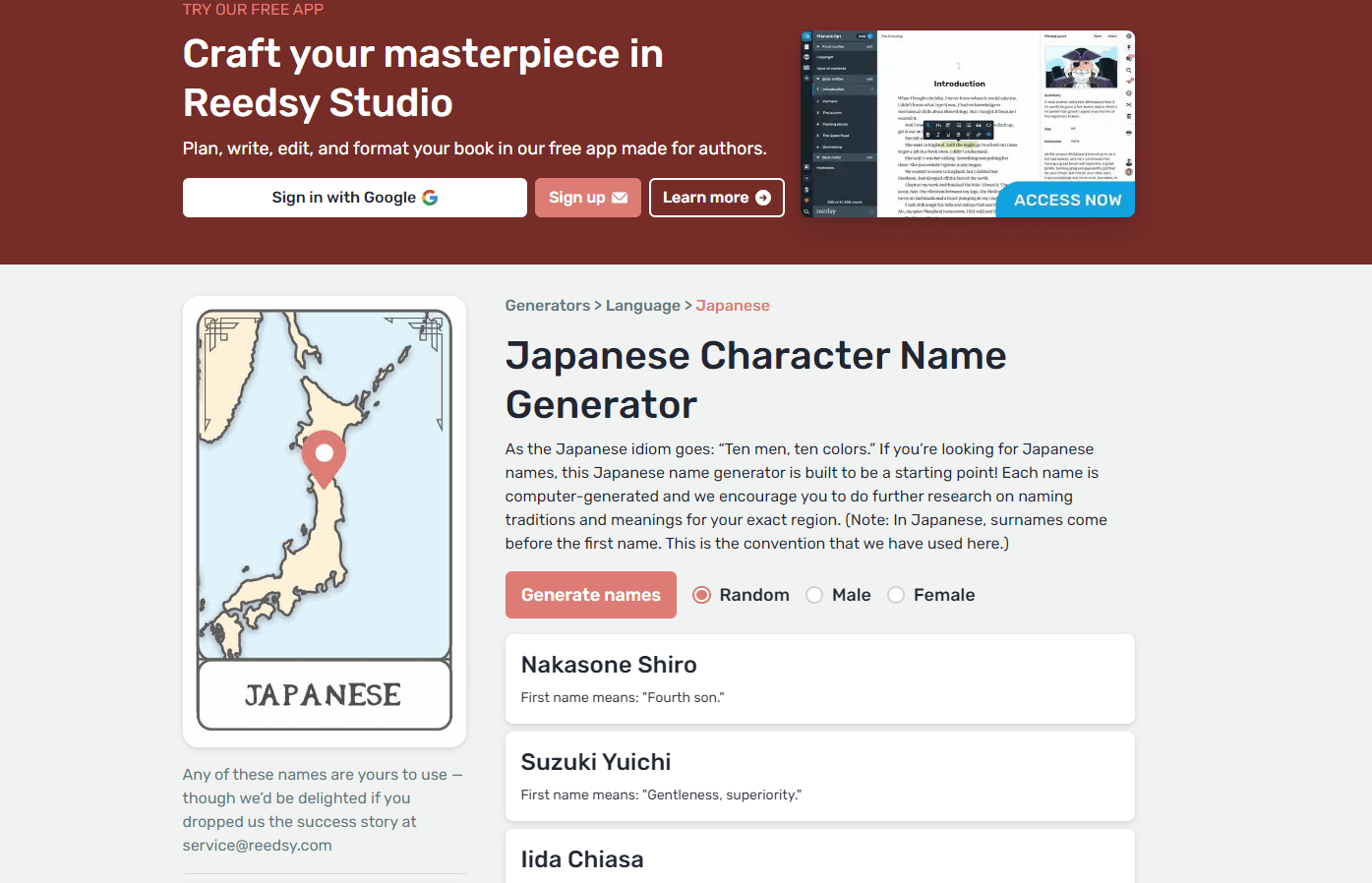
Name generators can be entertaining, but they may produce unnatural readings, misleading meanings, or combinations that do not resemble real naming practice. Treat the result as a creative exercise, not a new legal or cultural identity.
If you need a katakana form for a booking, ask a fluent speaker or the organization receiving the form to confirm it. Keep the same spelling across hotel, rail, and ticket records; iRoamly travel connectivity can help you retrieve the original confirmation when checking in.
FAQ
1. Does the family name come first in Japan?
Usually yes in Japanese usage, though international documents may use labeled fields or a different display order.
2. Why can one Japanese name have different readings?
Kanji often have multiple readings, and personal-name readings can depend on the individual.
3. Should travelers use -san?
Family name plus -san is a safe polite default, but follow the person’s own introduction and local context.
4. Can I translate my name into Japanese?
Foreign names are normally transliterated by sound into katakana rather than translated by meaning.
5. Are Japanese name generators accurate?
They can be fun, but they should not be trusted for natural readings, legal use, or cultural authenticity.
Conclusion
Japanese names usually place the family name first and may combine meaningful kanji with readings that are not obvious from the characters alone.
Travelers can avoid most mistakes by copying official records exactly, listening to how people introduce themselves, and using family name plus -san when a polite default is needed.
Respectful curiosity works better than guessing: ask for pronunciation, accept corrections easily, and treat every person’s chosen name and reading as authoritative.