
Rolling a large suitcase through a busy Japanese station can turn a simple transfer into the hardest part of the day. Luggage forwarding in Japan lets you send bags ahead and travel with just what you need.
The service is especially handy on city-to-city trips, but it works best when you can confirm an address, reception hours, and delivery timing as plans change. Mobile data from a travel eSIM provider such as iRoamly Travel eSIM Plans helps you use your chosen booking, map, and messaging apps while you coordinate those details.
This guide explains the main forwarding routes, the handoff process, airport and hotel considerations, packing restrictions, and the timing checks that prevent an awkward night without your belongings.
Why Use Luggage Forwarding in Japan?
Japan's rail system makes multi-city travel easy, yet station stairs, narrow platforms, and busy transfers are much less forgiving with a full-size case. Sending a bag ahead can make room for a relaxed lunch stop or a short side trip between check-ins.
Reliable mobile data also helps when a hotel asks for an updated arrival time or when you need to check the delivery status away from Wi-Fi. The mobile data in Japan provides mobile data on supported Japanese networks throughout the journey.
The system is commonly described as Hands-Free Travel. Japan's national tourism organization explains that participating counters can handle delivery or temporary storage, while many hotels can arrange onward shipping from the front desk.
Main Luggage Forwarding Options in Japan
The right handoff point depends less on the brand name and more on where you are sleeping, when the next reception desk is open, and how early you can release the bag.
Hotel-to-Hotel Forwarding
This is the easiest route when both properties have staffed reception desks. Ask the sending hotel whether it accepts outgoing luggage and confirm that the next hotel will receive and hold a delivery in your name.
Write the reservation name exactly as the receiving property has it, add the destination address and phone number, and keep the waybill receipt until the suitcase is in your room.
Airport-to-Hotel Delivery
Major airports have delivery counters where arriving travellers can send suitcases to eligible destinations. Same-day coverage can be limited by the counter, cutoff time, and hotel area, so treat it as a specific service rather than a nationwide promise.
Before leaving the counter, confirm the expected delivery date and pack medicines, chargers, valuables, and the first night's clothing in the bag that stays with you.
Hotel-to-Airport Delivery
Sending a case to the airport can make the final train ride much easier. Allow a comfortable buffer, use the correct terminal and pickup counter, and keep flight documents, medicines, and a change of clothes with you.
Airport deadlines are often earlier than ordinary hotel delivery cutoffs. Let the accepting counter calculate the latest safe handoff date rather than assuming next-day arrival.
Service Counters and Convenience Stores
Certified Hands-Free Travel counters appear at some airports, stations, hotels, and commercial facilities. Certain convenience stores also accept eligible parcels, although service availability, language support, and cutoff times vary by location.
Not every branch accepts luggage. Carry the destination details in Japanese or show the booking confirmation, arrive before the day's shipping cutoff, and ask for the tracking number before leaving.
This quick comparison helps match the route to a real travel day.
Route | Best Fit | Confirm First |
|---|---|---|
Hotel to hotel | Multi-city stays with staffed accommodation | Receiving name, booking dates, and front-desk acceptance |
Airport to hotel | Sightseeing soon after arrival | Delivery area, cutoff time, and expected arrival |
Hotel to airport | A lighter final transfer | Terminal, pickup counter, and delivery deadline |
Counter or convenience store | Stays without outgoing hotel service | Accepted size, payment method, and destination eligibility |
Hotel-to-hotel is usually the most straightforward arrangement, while airport routes demand the most careful timing. A counter or store can fill the gap when accommodation cannot dispatch a bag.
How to Forward Luggage Step by Step
The handoff itself is simple, but a correct destination record matters more than speed at the counter. Have the accommodation details ready before you start filling in the form.
Ask the receiving hotel whether it accepts luggage deliveries for guests and confirm the reservation name.
Choose a hotel desk, certified service counter, carrier office, or participating store that accepts your bag and route.
Show the destination address in Japanese if possible, plus the hotel phone number and your check-in date.
Complete the waybill, select an available delivery window, and pay the quoted fee.
Photograph or keep the receipt and tracking number until the bag is safely collected.
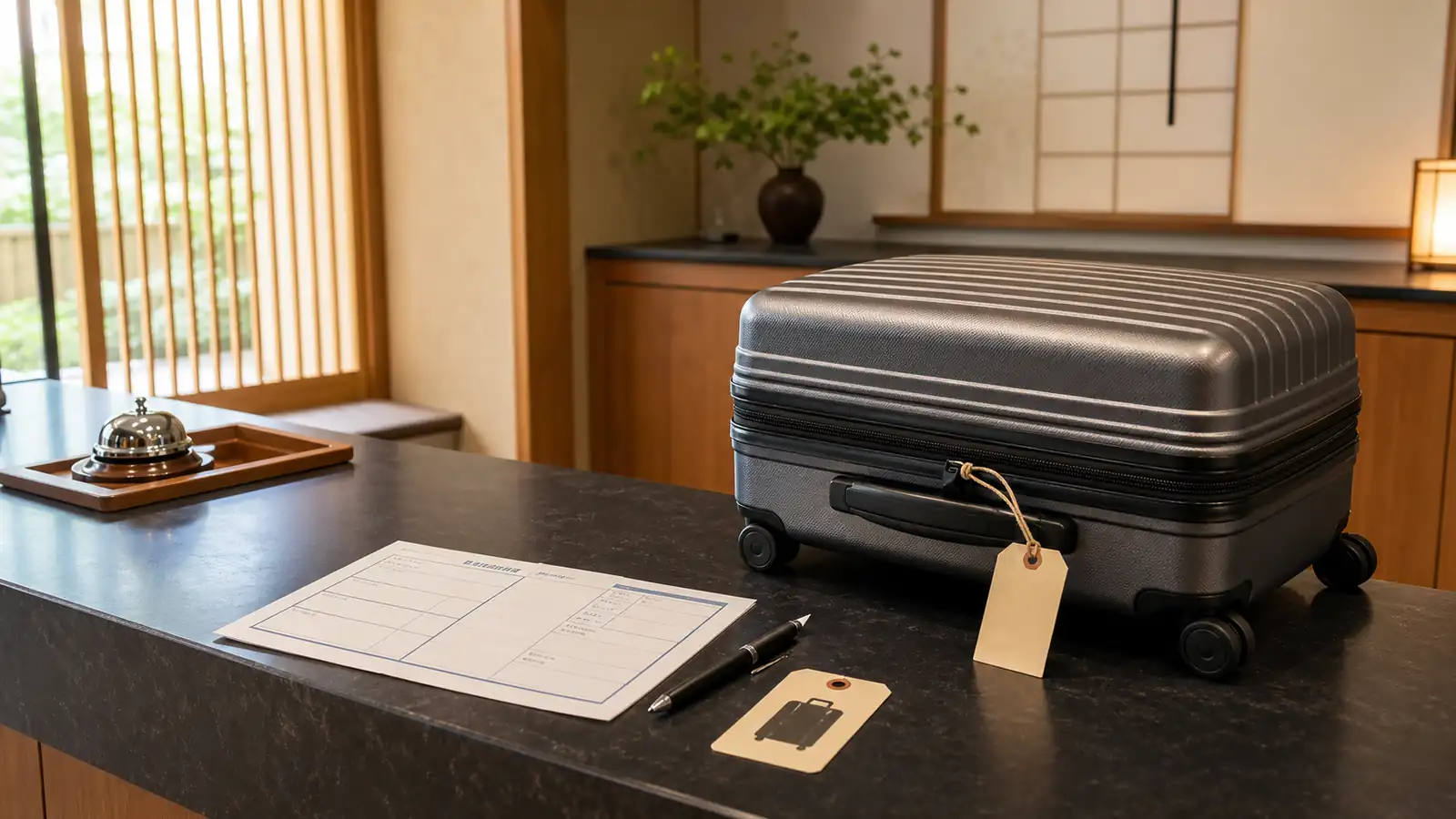
At a hotel desk, staff can often help check the address and write the form. That small review is worth taking, especially when two properties have similar English names.
Planning Airport Luggage Delivery
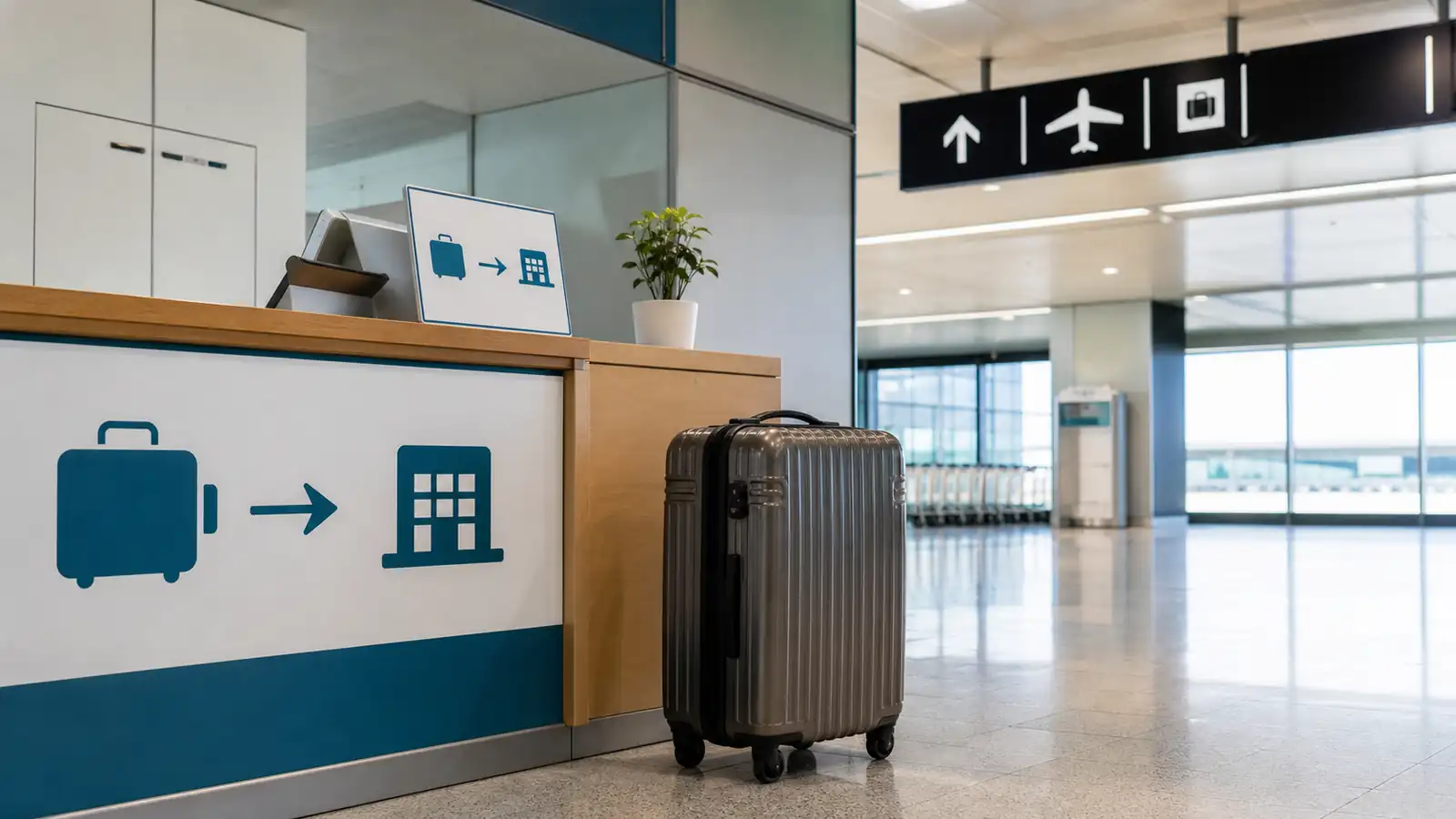
Airport delivery is convenient, but the phrase covers two different jobs: sending a bag after arrival and collecting a bag before departure. The counter, terminal, operating hours, and eligible service area may differ for each direction, so confirm the layout and onward transport at Japan's major airports before choosing a handoff point.
At Haneda, for example, the airport's official service listings show delivery and pickup counters across its terminals. Check the latest Haneda delivery counter details before relying on a particular desk or opening time.
For a departure shipment, schedule the bag to arrive well before your flight rather than on the tightest possible margin. Keep anything needed during the final hotel night in a small carry-on.
Luggage Limits, Packing Rules, and Costs
Forwarding fees usually depend on the bag's dimensions, route, and service point. Published limits also differ, so measure the case and add the confirmed fee to your Japan trip budget before sealing it.
Japan's tourism guidance notes that common restrictions can cover size, weight, declared value, and contents. The following items are safer in your day bag or may be refused:
Passports, cash, jewellery, and other valuables
Medicine and items needed before the delivery date
Fragile objects that are not packed for parcel transport
Fresh food, liquids, dangerous goods, and restricted materials
Electronics or batteries that the accepting counter cannot handle
Rules can change by carrier and location. The official luggage guidance is a useful starting point, but the accepting counter makes the final decision.
Tip: Pack one overnight set of clothes in your day bag whenever a shipment crosses regions or must meet an airport deadline.
Timing a Multi-City Trip Without Your Suitcase
Build the itinerary around the bag rather than assuming it will follow every same-day move. Remote destinations, islands, weather disruption, and late drop-offs can extend the schedule.
A practical pattern is to forward the large case two nights ahead and carry a small overnight bag for an intermediate stop. It works especially well on a seven-day Japan route with a ryokan stay, a hiking town, or a one-night detour where a full suitcase adds little value.
Before releasing the bag, check these details:
The destination accepts unattended luggage for your exact booking
The sender name matches the accommodation reservation
The delivery date falls within your stay
Your day bag covers delays and the next day's basic needs
Once the case is on its way, rail transfers feel noticeably lighter and station lockers become optional rather than a last-minute hunt. Keep the tracking number available offline; reliable Japan travel internet also makes it easier to contact hotels or check the shipment while moving between cities.
Luggage forwarding is most useful when the receiving address, travel dates, and delivery buffer are settled before handoff. Keep irreplaceable items with you, save the tracking receipt, and let the carrier or counter confirm the current fee and acceptance rules.
FAQ
1.How are vacation-rental deliveries handled?
It depends on whether the property has a staffed reception or another approved way to receive the bag, so confirm directly before sending.
2.What should I do if the suitcase arrives first?
A staffed hotel will often hold an accepted delivery for the named guest, but you should confirm its policy in advance.
3.Can I forward skis or other oversized gear?
Yes, some counters accept special or oversized items, but size limits, packaging, routes, and fees must be checked with the carrier.
4.How does compensation for loss or damage work?
Compensation conditions vary by service and declared value, so read the carrier's current terms and keep the receipt.
5.How far ahead should I forward luggage in Japan?
Let the accepting counter confirm the route-specific estimate and add extra time for airports, islands, remote regions, holidays, or severe weather. Yamato also allows a requested delivery date within seven days of handoff for eligible services, as described in its delivery-date guidance.
6.What should never go in a forwarded suitcase?
Keep passports, cash, jewellery, medicines, fragile essentials, valuables, and anything needed before delivery with you. The carrier may also refuse dangerous goods, restricted batteries, liquids, or improperly packed items.
Conclusion
Luggage forwarding in Japan can turn a difficult station transfer into an easy travel day, especially when a large case is moving between staffed hotels.
The best results come from confirming acceptance at both ends, allowing a sensible delivery buffer, and keeping documents, medicine, electronics, and overnight basics close at hand.
Plan the suitcase route alongside the accommodation schedule, verify the latest counter rules, and enjoy Japan's trains and city streets with a much lighter load.