
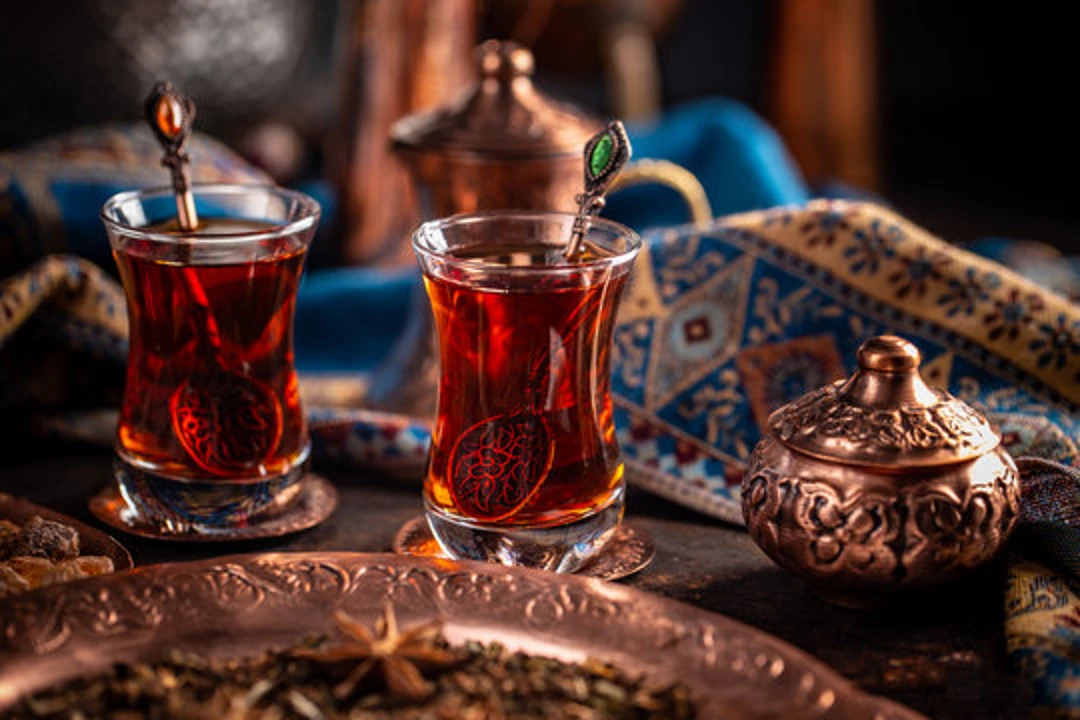
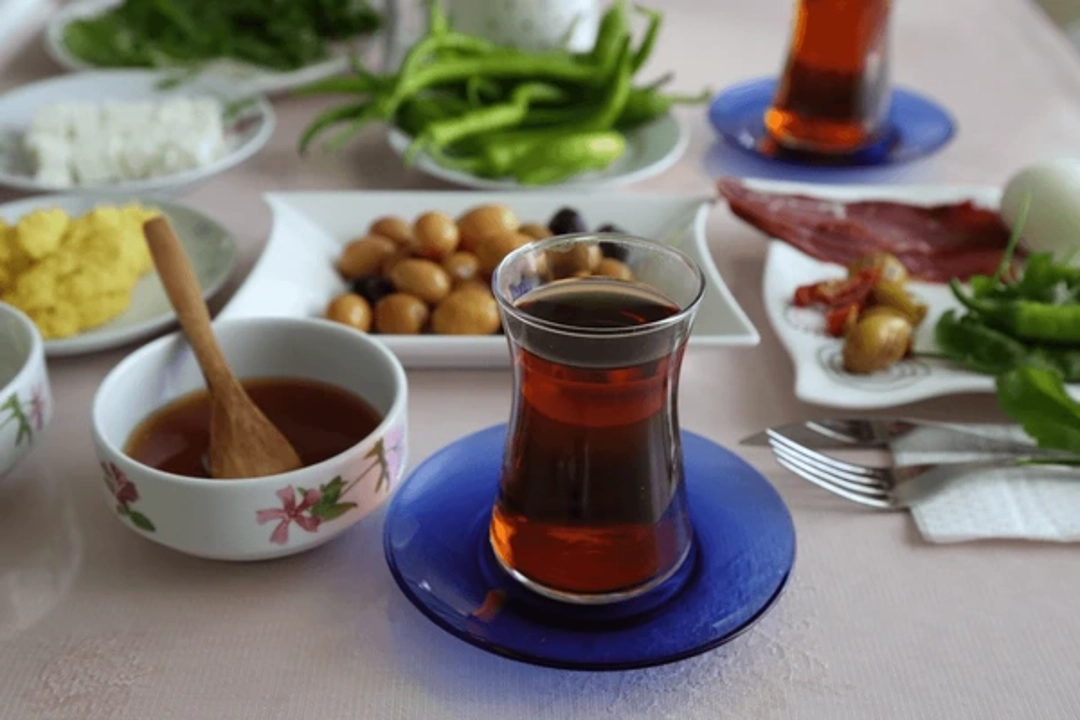
Turkish tea, or çay, is strong black tea served in small tulip-shaped glasses throughout the day. It is less a special-occasion drink than a familiar invitation to sit, talk, welcome a guest, or pause during work.
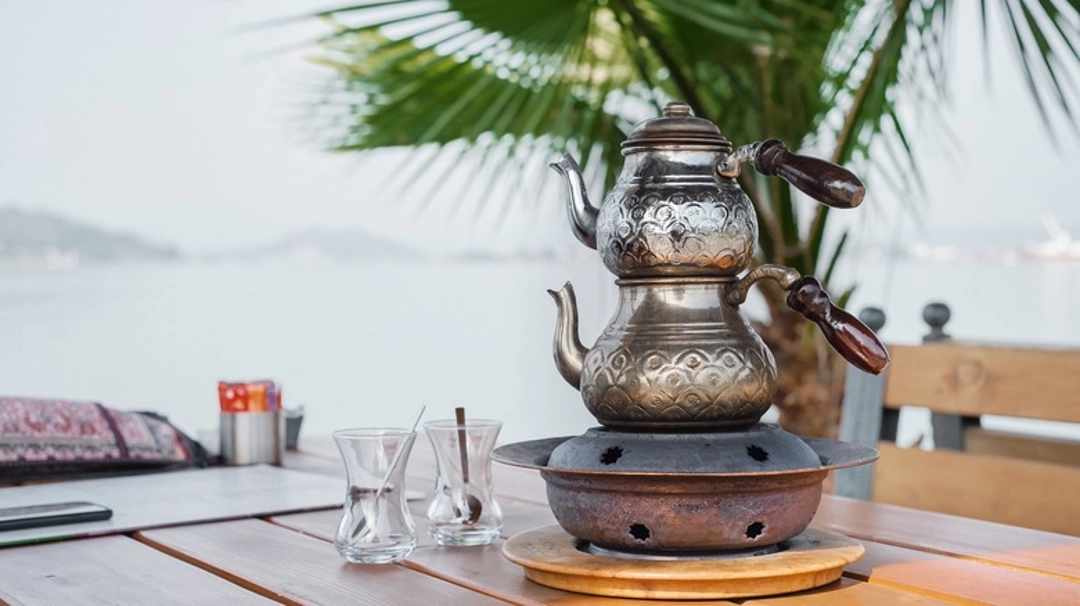
The classic method uses a stacked çaydanlık: concentrated tea steeps in the upper pot while hot water waits below. Each glass can then be adjusted from light to dark without brewing separate pots.
This guide covers the tea’s cultural role, Black Sea origins, brewing method, serving etiquette, varieties, caffeine, and travel tips. During a tea-focused trip, an iRoamly travel eSIM can keep tea-garden maps, market locations, and translation tools available away from Wi-Fi.
Why Turkish Tea Matters
Offering tea is a routine sign of hospitality in homes, shops, offices, workshops, and restaurants. Accepting a glass does not create a formal obligation; it usually opens a relaxed conversation.
UNESCO’s listing for the culture of çay recognizes tea as a shared practice of hospitality and social connection in Azerbaijan and Türkiye. In everyday Turkish service, the offer still matters more than expensive leaves or elaborate equipment.
Tea may arrive with breakfast, after a meal, during a purchase, or throughout a long visit. Sugar is common, milk is not traditional, and the empty glass is often refilled unless the guest politely indicates they have finished.
Tea Growing in the Black Sea Region
Most Turkish tea is associated with the humid eastern Black Sea coast, especially Rize and nearby provinces. The steep green landscape, frequent rain, processing facilities, and local labor connect the drink to a specific agricultural region.
Visiting Rize
When planning a Rize visit, allow time for tea gardens, local food, the city center, and surrounding valleys instead of treating the province as a short factory stop.
Tea-focused visits work best during daylight, when plantation landscapes and processing stops are easier to combine. Confirm access before traveling to a specific garden or factory.
Production region
Turkey’s Ministry of Agriculture and Forestry reported in 2025 that production is concentrated in Rize, Trabzon, Artvin, and Giresun, with Rize holding the largest share.
How to Make Turkish Tea
A çaydanlık allows the host to prepare a concentrated infusion and dilute each serving to preference. Use fresh water and plain loose black tea; heavily scented blends produce a different result.
GoTürkiye’s official Turkish tea method uses the two-part pot and adjusts each glass with concentrate and hot water.
Fill the lower kettle with fresh water and bring it to a boil.
Place loose black tea in the upper pot, using enough for the number of glasses.
Pour some boiled water over the leaves, then return the upper pot to the lower kettle.
Keep the lower water hot while the tea steeps gently until the leaves settle and flavor develops.
Pour concentrate into each glass, then add hot water for the desired strength.
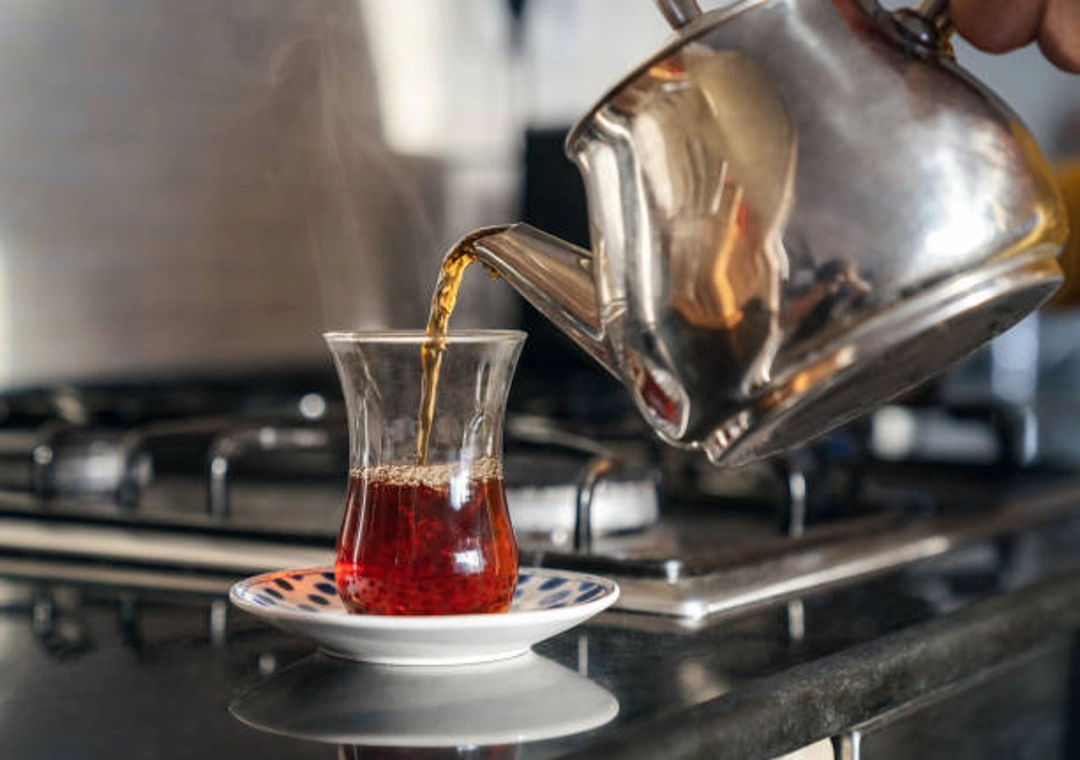
Avoid a hard rolling boil after the tea is combined with water, which can create a harsh taste. If the concentrate becomes too strong, adjust it in the glass rather than flooding the upper pot.
Serving Strength and Etiquette
Guests can request açık for a lighter glass or koyu for a darker one. The host pours concentrate first and adds hot water, while sugar cubes or granulated sugar are usually offered separately.
Preference | How it is served | Useful phrase |
|---|---|---|
Light | Less concentrate, more hot water | Açık çay |
Dark | More concentrate, less hot water | Koyu çay |
No sugar | Tea without added sugar | Şekersiz |
With sugar | Sugar served separately | Şekerli |
Hold the glass by its rim or narrow waist when it is very hot. A small spoon stays on the saucer after stirring, and the glass should not be filled so high that it cannot be carried safely.
Turkish Tea, Apple Tea, and Other Drinks
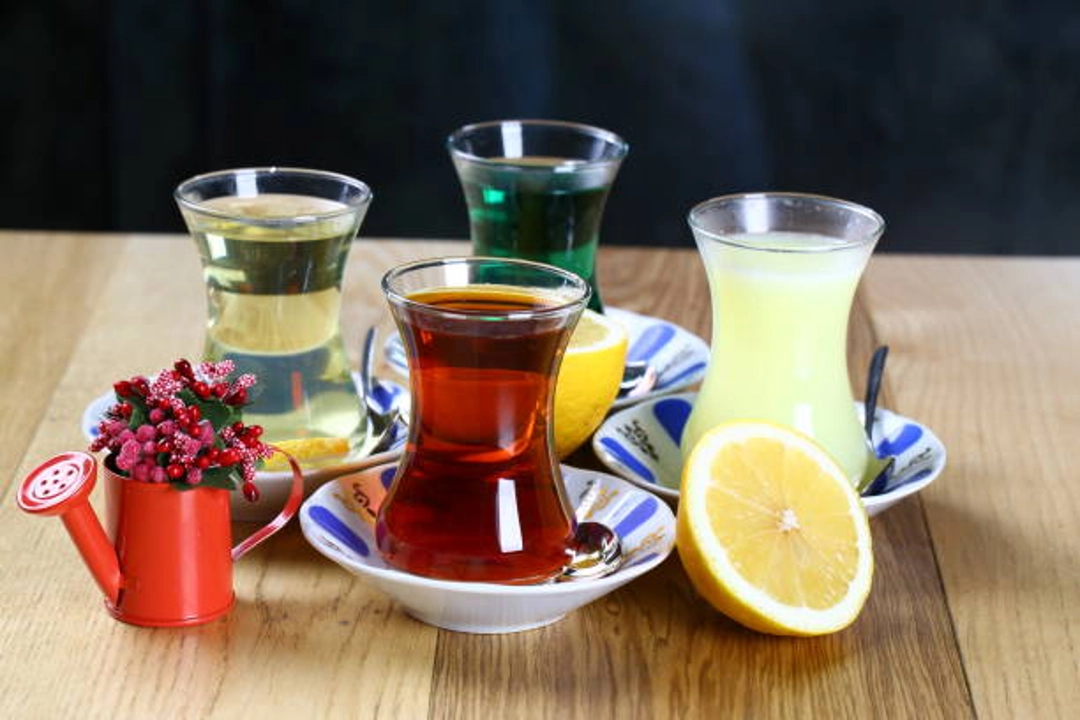
Traditional Turkish çay is brewed from black tea leaves. Instant apple tea and oralet are sweet fruit-flavored drinks, often colorful and caffeine-free, but they are not the everyday black tea served in most homes.

Herbal infusions also vary by region and venue. Ask what a drink contains when caffeine, sugar, allergies, or medication interactions matter instead of relying on the menu word “tea.”
Turkish Tea vs Turkish Coffee
Both drinks express hospitality, but they suit different rhythms. Tea is commonly refreshed across a long conversation, while coffee is a smaller, concentrated serving with grounds that settle in the cup.
Its preparation also differs: Turkish coffee uses cezve brewing, foam, adjustable sugar, and a sedimented cup rather than repeated refills.
Feature | Turkish tea | Turkish coffee |
|---|---|---|
Equipment | Çaydanlık | Cezve |
Serving vessel | Tulip-shaped glass | Small coffee cup |
Filtration | Leaves remain in upper pot | Grounds settle in cup |
Typical pace | Repeated glasses | One slow serving |
Caffeine and Health Considerations
Black tea contains caffeine, but the amount varies with leaf quantity, steeping time, concentrate strength, and glass size. Multiple small glasses can add up across a day.
The EFSA caffeine guidance notes that a 220 ml cup of black tea contains about 50 mg as a broad estimate and that sensitivity and total intake differ.
Tea is not a treatment for disease, and adding sugar changes its nutritional profile. People who are pregnant, caffeine-sensitive, managing a health condition, or taking relevant medication should follow personalized medical guidance.
Buying Tea and Equipment
For home brewing, prioritize fresh packaged black tea, a stable double pot, heat-safe glasses, and a tray. Expensive decoration matters less than comfortable handles, a lid that fits, and a spout that pours cleanly.
Compare leaf size, aroma, packing date, and storage instructions. Buy a smaller amount first if the brand or blend is unfamiliar, then keep tea sealed away from moisture, heat, and strong odors.
Item | What to check |
|---|---|
Loose tea | Pack date, aroma, and sealed packaging |
Çaydanlık | Stable stacking, handles, lid, and pour |
Glasses | Heat resistance and comfortable shape |
Tray | Level surface and easy grip |
Tea in Turkish Hospitality
Tea service changes with the setting, but its social purpose remains recognizable. A shopkeeper may offer one glass during a conversation, while family visits can involve several rounds.
Across Turkish culture, hospitality, shared meals, gestures of respect, and everyday etiquette vary by region and setting, yet tea remains a common way to open conversation.
Setting | Typical role of tea |
|---|---|
Home visit | Welcome and extended conversation |
Shop or office | Courtesy during a discussion |
Tea garden | Leisure, scenery, and social time |
Finding Tea Experiences in Turkey
Tea gardens, neighborhood cafés, ferry terminals, restaurants, and family-run businesses all offer different settings. Look beyond staged tastings and notice how ordinary tea service fits the day.
In Turkey’s regional cities, tea experiences can be combined with local food, museums, markets, and transport planning without turning the day into a tasting checklist.
Setting | What to notice |
|---|---|
Tea garden | Outdoor setting, views, and repeated service |
Neighborhood café | Everyday rhythm and local conversation |
Market | Packaged leaves, glasses, and çaydanlık choices |
Mobile Data for Tea-House Hopping
Save a few tea gardens offline, keep your accommodation address available, and check current opening times before crossing a city for a single venue.
A Turkey eSIM can support maps and translation on a compatible unlocked phone. Install it before the trip and activate it according to the plan instructions.
Phone task | Preparation |
|---|---|
Navigation | Download offline map areas |
Translation | Save useful tea-order phrases |
Venue checks | Confirm current hours and location |
FAQ
1. What kind of tea is Turkish tea?
It is usually strong black tea brewed as a concentrate in a çaydanlık and diluted with hot water.
2. Is milk added to Turkish tea?
Milk is not part of the traditional everyday service, while sugar is commonly offered.
3. Does Turkish tea contain caffeine?
Yes. The amount depends on the leaves, brewing time, concentrate strength, and number of glasses.
4. Is Turkish apple tea traditional black tea?
No. It is generally a sweet fruit-flavored drink rather than brewed black tea.
5. Can Turkish tea be made without a çaydanlık?
Yes, but two heat-safe pots best reproduce the separate concentrate and hot-water method.
Conclusion
Turkish tea is a daily practice of hospitality built around strong black tea, adjustable serving strength, and shared time.
A çaydanlık, fresh water, gentle steeping, and careful dilution create the characteristic glass without unnecessary complexity.
Enjoy it as a cultural experience, distinguish it from sweet fruit drinks, and account for caffeine and sugar across repeated servings.