
Turkish coffee is a finely ground, unfiltered coffee brewed slowly in a cezve and served in a small cup. Its foam, sediment, serving ritual, and social meaning distinguish it from ordinary drip coffee.
The drink rewards precision more than expensive equipment: use fresh water, an extra-fine grind, gentle heat, and the right coffee-to-water ratio. The grounds remain in the cup and should not be swallowed.
This guide covers the cultural tradition, brewing method, sugar choices, regional variations, caffeine considerations, and practical ways to try it in Turkey while using an iRoamly travel eSIM for maps and translation.
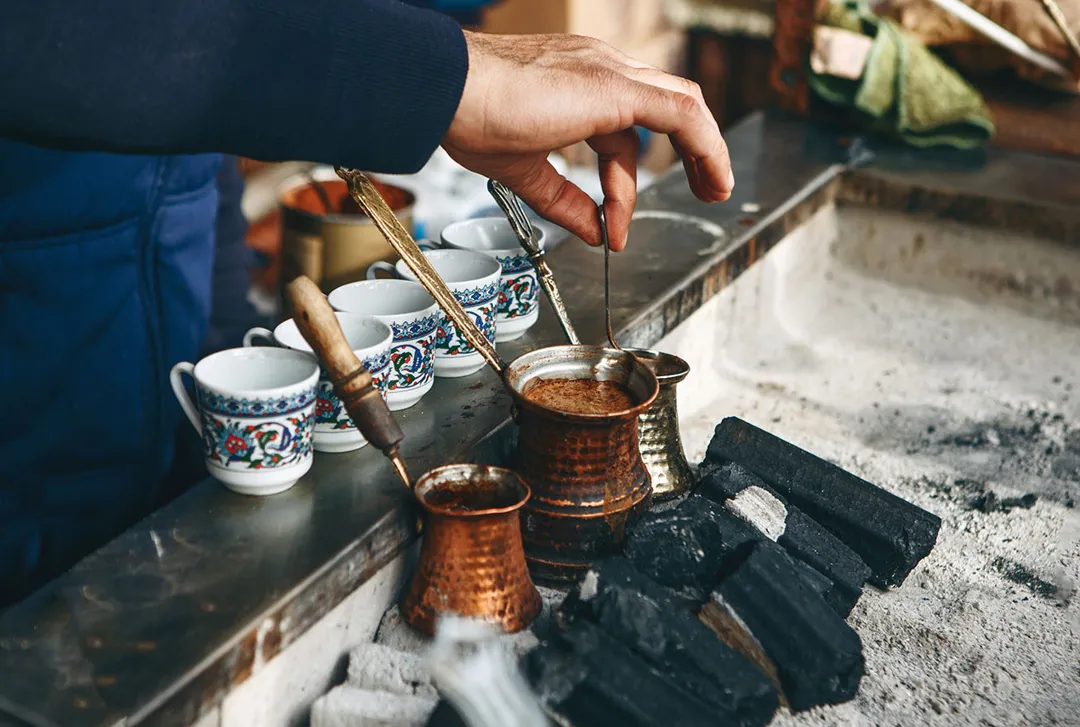
A Cultural Legacy of Hospitality
Turkish coffee developed into more than a brewing method. It became a ritual of welcome, conversation, celebration, and shared time in homes and coffeehouses.
History and cultural recognition
Ottoman coffeehouse culture helped spread the drink’s distinctive preparation and social role. Knowledge of grinding, brewing, serving, and reading the remaining grounds was passed through families and communities.
In 2013, Turkish coffee culture and tradition joined UNESCO’s Representative List of the Intangible Cultural Heritage of Humanity.
The recognition concerns the communal practice as well as the beverage. Hospitality, friendship, engagement customs, and patient conversation are central to the tradition.
Everyday ritual
Coffee may follow a meal or accompany a visit, while tea is more typical throughout a long Turkish breakfast. In both settings, the shared table matters as much as the drink.
Sugar is usually chosen before brewing because it dissolves in the cezve. Guests may request plain, lightly sweet, medium sweet, or sweet coffee.
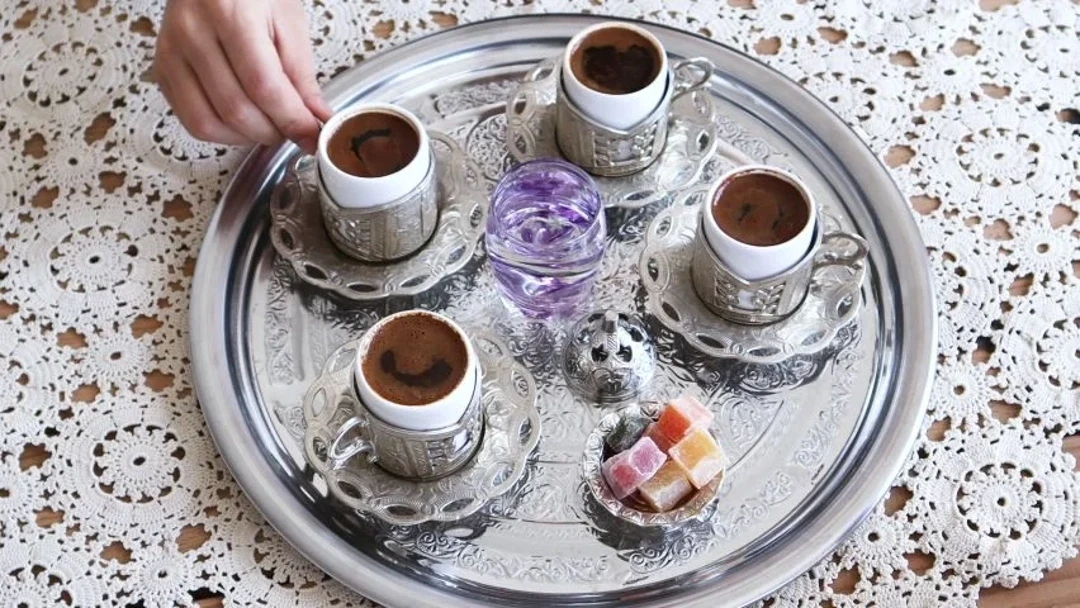
Coffee-ground reading
Some hosts turn the finished cup onto its saucer after the drinker leaves the sediment behind. Once the cup cools, shapes formed by the grounds may be interpreted as part of a playful social custom.
Treat the reading as conversation and folklore, not a reliable prediction. Ask before inverting a host’s cup, since many people enjoy Turkish coffee without practicing fortune reading.
How to Make Turkish Coffee
The basic method uses water, extra-finely ground coffee, optional sugar, and a cezve. Measure with the serving cup so the finished amount matches the vessel.
A dedicated Turkish coffee recipe can help with equipment and troubleshooting, but the essential process remains short.
Add one cup of cool water per serving to the cezve.
Add about one heaped teaspoon of extra-fine coffee per serving and the chosen sugar.
Mix before heating, then warm slowly without repeated stirring.
When the foam rises, remove the cezve before a rolling boil.
Distribute foam between cups, pour gently, and let the grounds settle.
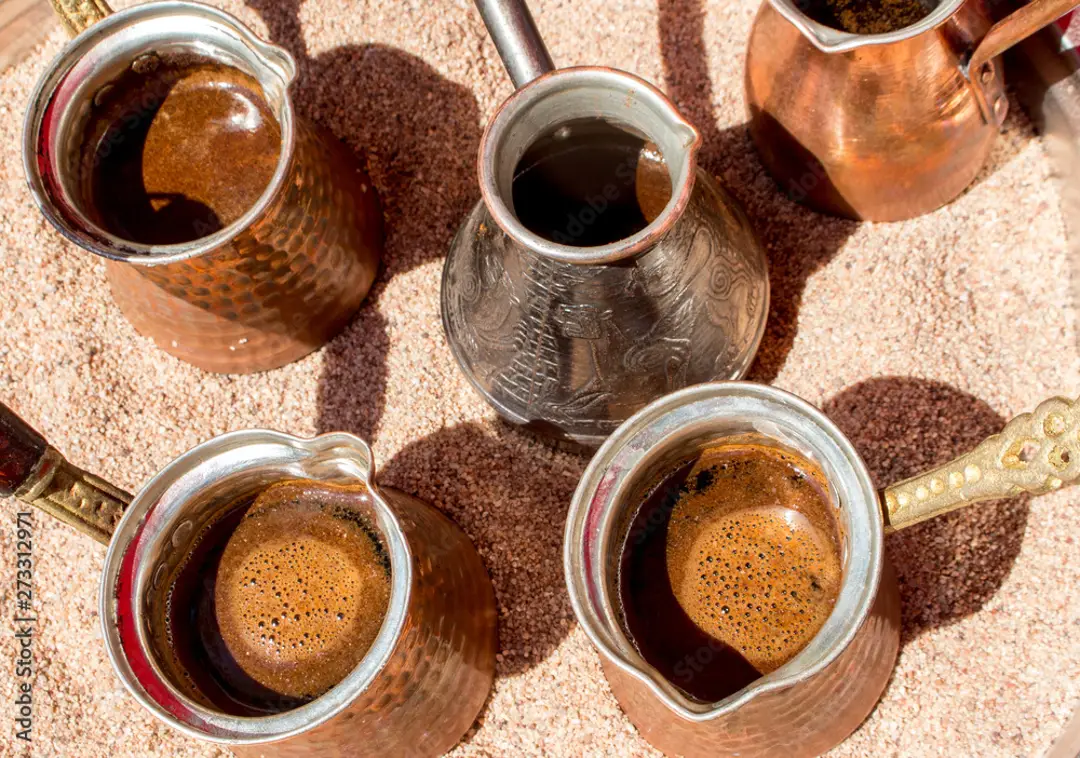
If the coffee tastes weak, check grind size and dose before extending the boil. If it tastes harsh or loses its foam, the heat was probably too high or the brew stayed on the stove too long.
Serving, Sugar, and Pairings
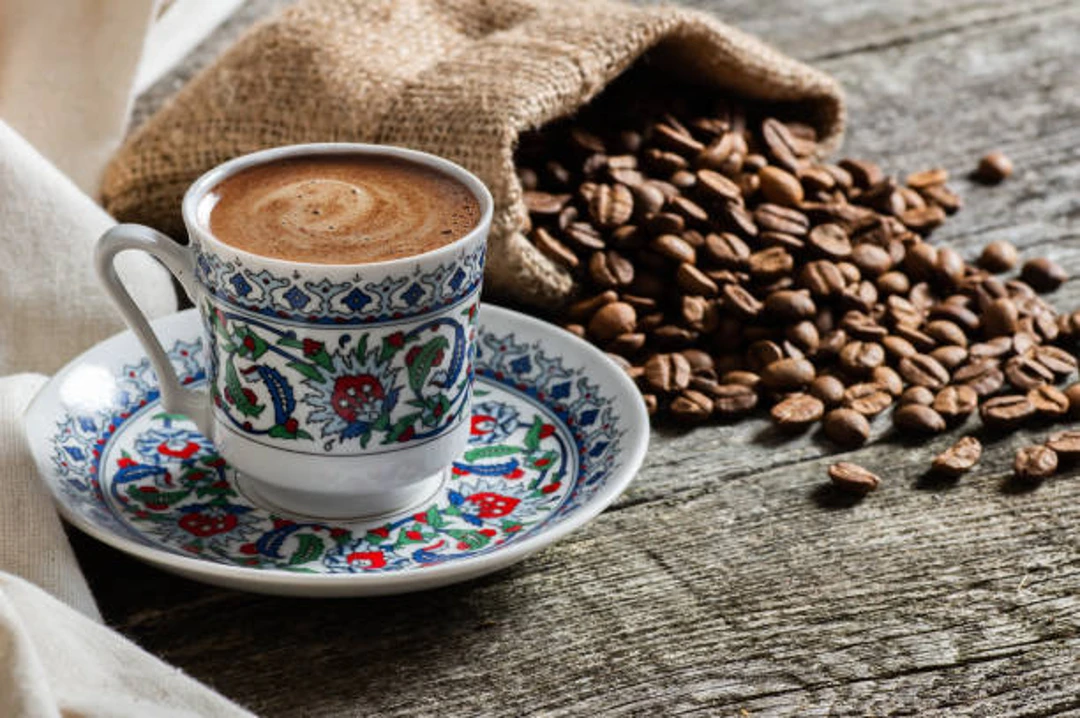
Serve Turkish coffee in a small cup with a glass of water. The water refreshes the palate, while the coffee should be sipped slowly enough for the grounds to settle.
A small piece of Turkish delight balances the drink’s concentrated bitterness without turning the serving into a heavy dessert.

Do not stir the cup after serving. The sediment belongs at the bottom, and drinking the final mouthful can produce an unpleasant gritty texture.
Regional Variations and Related Drinks
Not every drink called a regional “coffee” uses roasted coffee beans. Ingredients and techniques vary, so order by the name of the drink rather than assuming the same flavor or caffeine level.
Menengiç coffee
Menengiç is made from roasted terebinth fruit rather than coffee beans. It has a softer, nutty profile and is commonly prepared with water or milk.
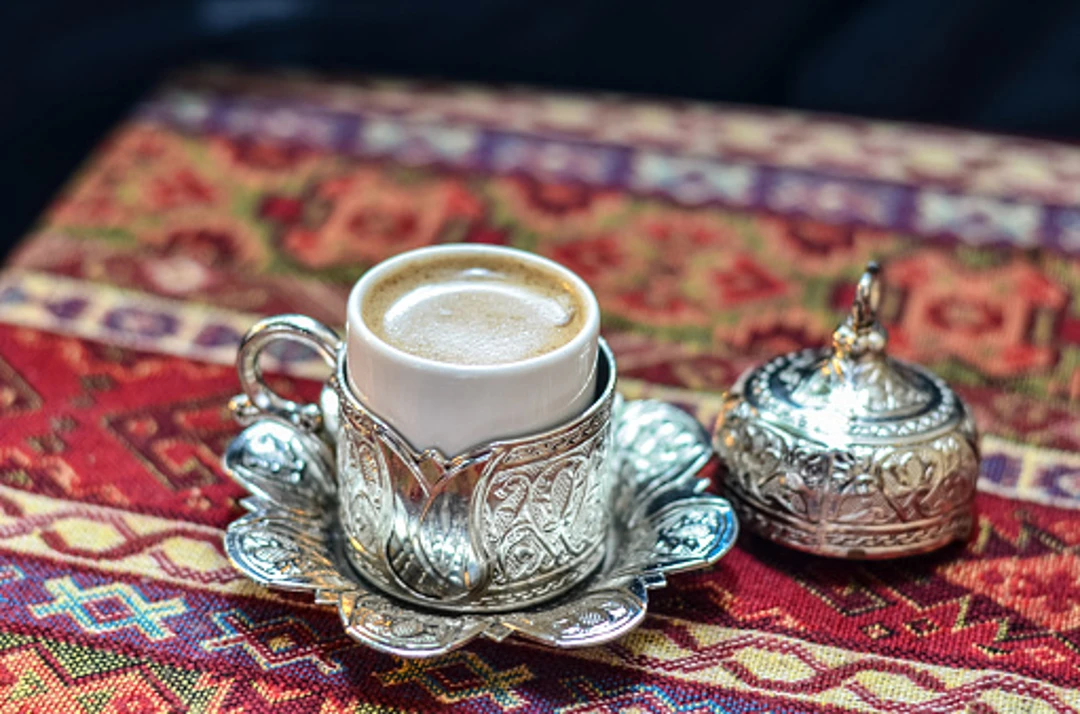
Cardamom coffee
Ground cardamom can be added to the cezve for a warm, aromatic note. Use a small amount so the spice does not overwhelm the coffee.
Dibek coffee
Dibek refers to a pounding method and to blends sold under that name. Recipes can include coffee, spices, or creamy ingredients, so packaged products do not all taste alike.
Traditional cezve coffee
The classic version relies on extra-fine coffee, water, optional sugar, low heat, and foam. It is the clearest reference point for comparing regional variations.
This table separates the main choices.
Drink | Main base | Typical character |
|---|---|---|
Traditional Turkish coffee | Extra-fine coffee | Strong, unfiltered, foamy |
Menengiç | Roasted terebinth fruit | Nutty and often milder |
Cardamom coffee | Coffee with cardamom | Warm and aromatic |
Dibek blend | Varies by producer | Often softer or creamier |
Turkish Coffee vs Vietnamese Coffee
Both traditions turn a strong cup into a social pause, but their equipment and extraction differ. Turkish coffee cooks extra-fine grounds in water, while a phin filter lets water drip through a bed of coffee.
A guide to Vietnamese coffee shows how robusta beans, slow filtration, and condensed milk create a different body, sweetness, and serving style.
The comparison helps home brewers choose equipment and texture rather than treating every concentrated coffee as espresso.
Feature | Turkish coffee | Vietnamese phin coffee |
|---|---|---|
Equipment | Cezve | Phin filter |
Grind | Extra fine | Medium to coarse |
Filtration | Unfiltered | Metal-filtered |
Common accompaniment | Water and a small sweet | Condensed milk or ice |
Caffeine and Health Considerations
Turkish coffee contains caffeine, but the amount varies with the coffee dose, cup size, bean type, and brewing method. Its small serving size does not guarantee a low dose.
For healthy adults, the EFSA caffeine assessment says single doses up to 200 mg generally do not raise safety concerns; pregnancy and individual sensitivity require more caution.

Caffeine can disrupt sleep or cause jitteriness in sensitive people. Choose a smaller dose, avoid late-day servings, and seek medical guidance when a health condition or medication makes caffeine intake uncertain.
Choosing Coffee and Grind Size
Freshness and grind consistency matter more than a specific roast label. Choose coffee ground almost to a powder so it suspends during brewing and settles after pouring.
Medium and darker roasts are common, but personal preference should guide the choice. Buy small amounts, seal the coffee against air and moisture, and keep it away from heat and sunlight.
If a roaster grinds to order, ask specifically for Turkish coffee or cezve grind. An ordinary espresso grind may still be too coarse for the expected texture.
Finding Turkish Coffee in Turkey
Traditional coffeehouses, neighborhood cafés, restaurants, and specialist roasters all offer different experiences. Ask whether the coffee is plain, medium sweet, or sweet before it reaches the cezve.
Maps, current reviews, and translation can help distinguish a historic coffeehouse from a modern specialty café. A Turkey mobile-data eSIM can provide mobile data for those practical searches while traveling.
Use the setting to choose the experience you want.
Place | Best for | What to ask |
|---|---|---|
Traditional coffeehouse | Atmosphere and ritual | Sugar level and house style |
Restaurant | Coffee after a meal | Whether it comes with water or sweets |
Specialty roaster | Fresh beans and home brewing | Roast date and cezve grind |
FAQ
1. Is Turkish coffee filtered?
No. The grounds settle in the cup and are left undrunk at the bottom.
2. Do you stir Turkish coffee while it brews?
Mix before heating, then avoid repeated stirring so the foam can develop.
3. What grind is best for Turkish coffee?
Use an extra-fine, powder-like grind made specifically for cezve brewing.
4. Why is water served with Turkish coffee?
Water refreshes the palate and makes the concentrated coffee easier to appreciate.
5. Does Turkish coffee always contain sugar?
No. It can be plain or brewed with the guest’s chosen sugar level.
Conclusion
Turkish coffee combines an exact brewing method with a living tradition of hospitality, conversation, and patient enjoyment.
Extra-fine coffee, cool water, gentle heat, controlled foam, and a brief settling time produce the characteristic cup.
Choose a serving style that suits your taste, watch your caffeine intake, and treat the ritual as carefully as the recipe.