
Turkish delight, or lokum, is a soft, fragrant confection made by cooking sugar syrup with a starch paste until the mixture becomes glossy, elastic, and firm enough to cut. The ingredient list is short, but temperature, steady stirring, and enough setting time determine the final texture.
This recipe uses rosewater and pistachios for a classic flavor, with practical alternatives for citrus, vanilla, or nut-free batches. Exact quantities, visual cues, troubleshooting advice, and storage guidance make it suitable for a careful first attempt.
Allow about two hours for preparation and cooking, followed by an overnight set. Use a candy thermometer if possible, protect your hands from hot syrup, and keep children and pets away from the stove while the mixture cooks.
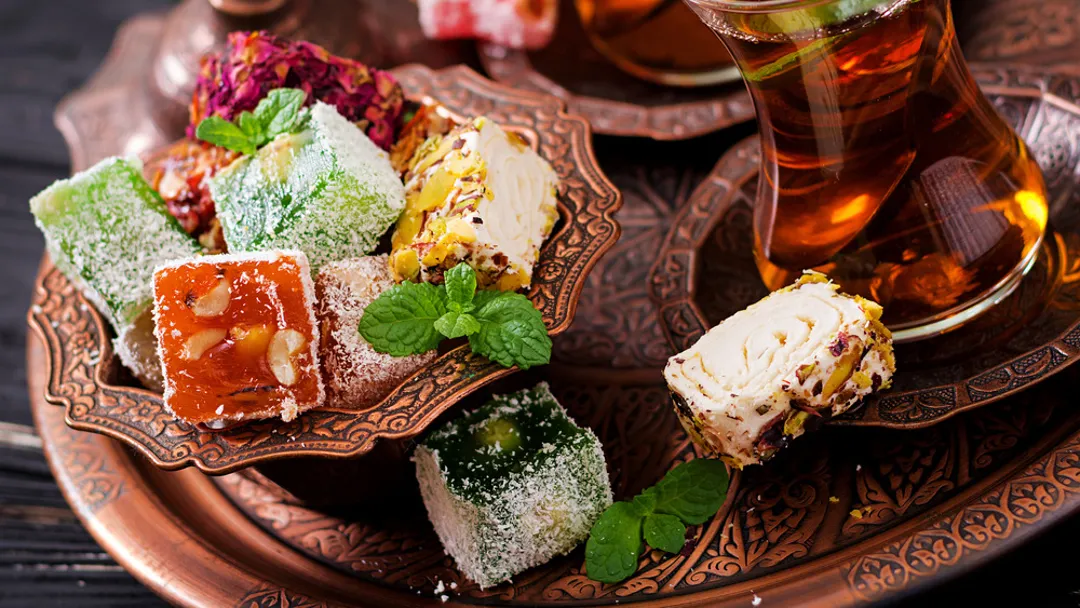
Turkish Delight Recipe at a Glance
This batch fills one 20-centimeter square pan and makes roughly 36 small pieces. Times vary with pan width and stove strength, so use the temperature and texture cues as well as the clock.
Detail | Estimate |
|---|---|
Preparation | 20 minutes |
Cooking | 75–90 minutes |
Setting | 8–12 hours at room temperature |
Yield | About 36 pieces |
Difficulty | Intermediate; continuous attention required |
What Makes Lokum Different?
Traditional lokum does not depend on gelatin for its characteristic chew. A properly cooked cornstarch gel holds the concentrated sugar syrup, creating a tender bite that is distinct from gummy candy or nougat.
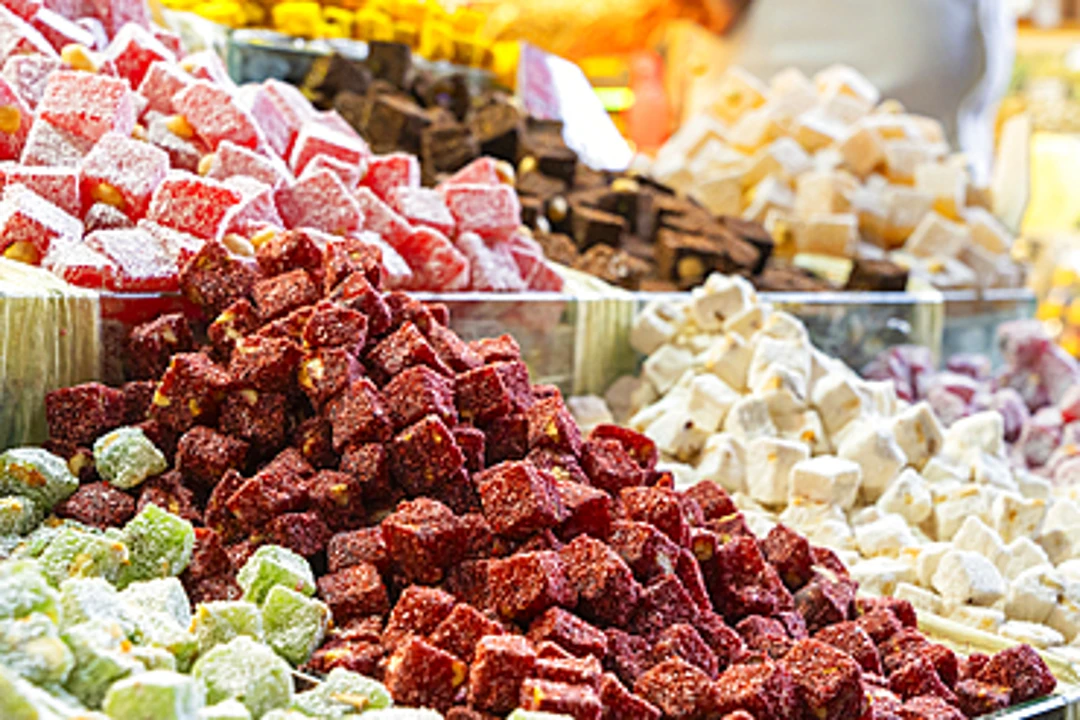
Safranbolu is one of Türkiye’s best-known lokum centers. The Turkish Ministry of Culture and Tourism describes the region’s Safranbolu lokum varieties, including nut-filled and saffron-flavored forms that illustrate how widely the basic confection can vary.
Lokum in Turkish Food Culture
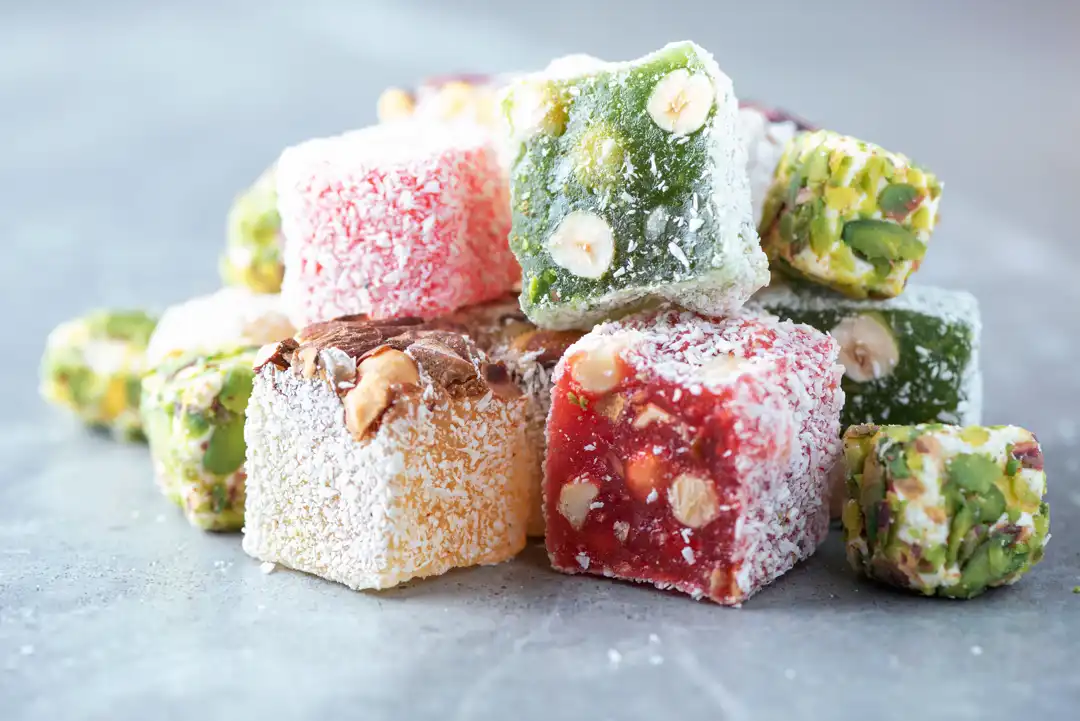
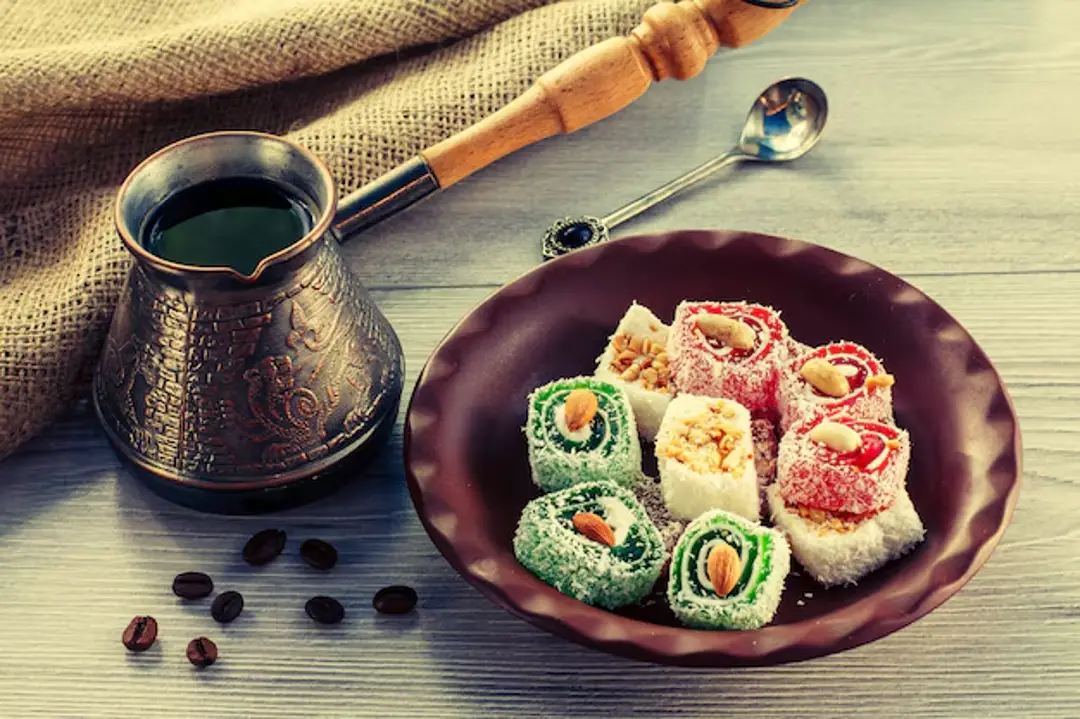
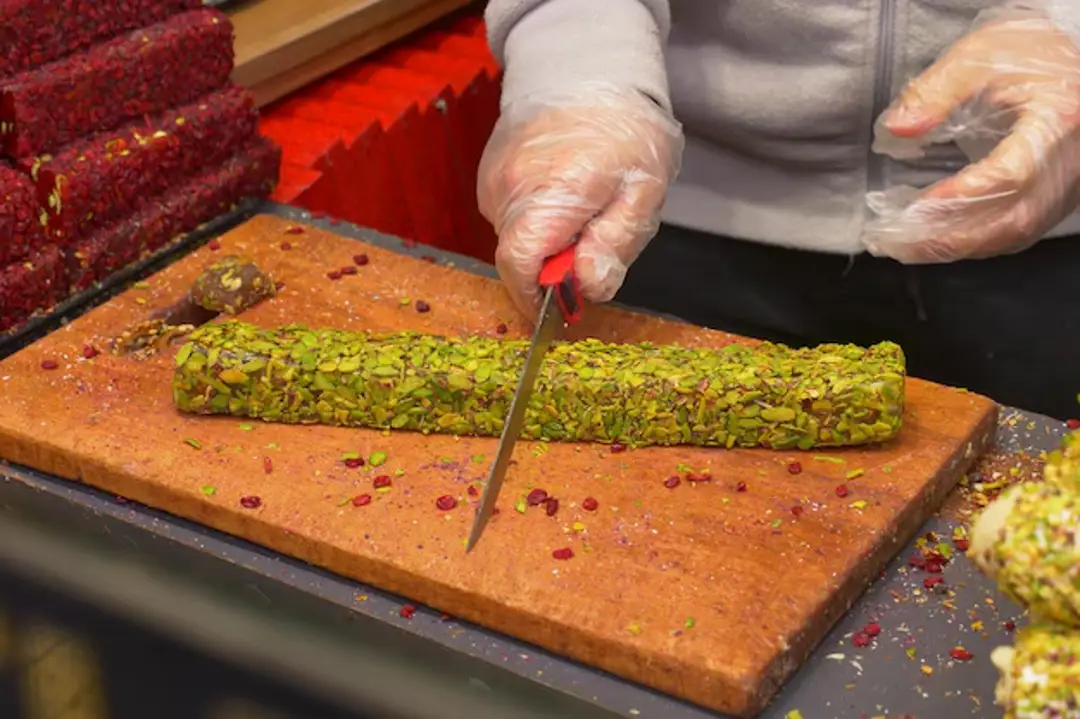
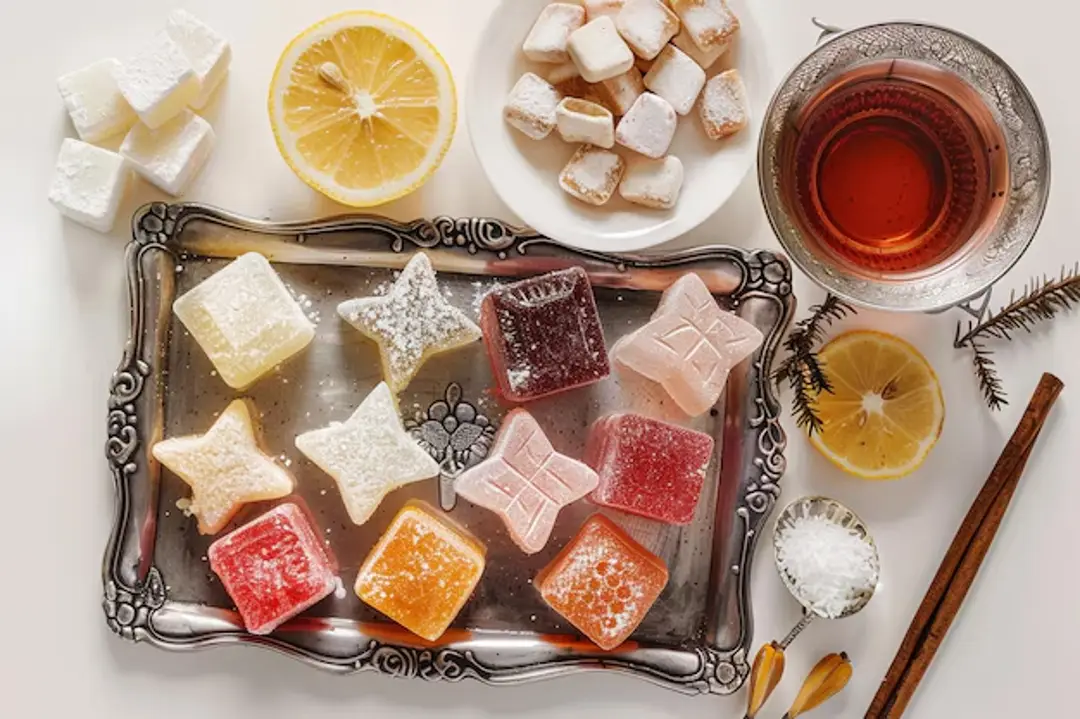
Lokum is commonly offered with coffee or tea and bought as a gift. Shapes, coatings, fillings, and aromas differ by producer, from small powdered cubes to rolled pieces packed with pistachios.
Its role becomes clearer alongside other desserts, drinks, breakfasts, and regional dishes in a broader guide to Turkish food. Homemade lokum is one interpretation, not a substitute for every regional or confectioner-made style.
Ingredients and Equipment
Measure everything before heating the sugar. Once the starch and syrup are combined, the mixture needs frequent stirring and leaves little time to search for tools.
If you want more background before cooking, this guide to what Turkish delight is explains its flavors, cultural context, and common varieties. For the recipe itself, use the quantities below rather than estimating by eye.
Ingredient | Quantity | Purpose |
|---|---|---|
Granulated sugar | 500 g | Forms the concentrated syrup |
Water | 650 ml total | 250 ml for syrup; 400 ml for starch paste |
Lemon juice | 1 tablespoon | Adds acidity and helps limit crystallization |
Cornstarch | 120 g | Creates the gel and chewy structure |
Rosewater | 1–2 teaspoons | Add gradually for aroma |
Unsalted pistachios | 75 g, optional | Adds texture and flavor |
Powdered sugar | 40 g | Part of the final coating |
Cornstarch for coating | 40 g | Reduces sticking |
You also need a heavy-bottomed saucepan, a second medium saucepan, whisk, heatproof spatula, candy thermometer, kitchen scale, 20-centimeter square pan, parchment paper, and a lightly oiled knife. Long sleeves and oven gloves help protect against splashes from the hot, sticky mixture.
Steps to Making Turkish Delight
Line the pan with parchment and lightly oil the paper. Mix the powdered sugar and coating cornstarch in a bowl, then dust a thin layer over the lined base.
Safety Check Before You Start
Boiling sugar sticks to skin, so keep the pan stable, turn handles inward, wear long sleeves and oven gloves, and never taste a drop until it has cooled on a plate. Measure every ingredient before heating so no one needs to step away from the stove.
1. Cook the Sugar Syrup
Combine 500 grams of sugar, 250 milliliters of water, and the lemon juice in the heavy saucepan. Stir over medium heat only until the sugar dissolves, then bring it to a steady boil without further stirring.
Cook until the syrup reaches 115–118°C. Brush visible crystals from the pan wall with a damp pastry brush, but never lean over the pan or touch the syrup.
2. Prepare the Starch Paste
While the syrup heats, whisk 120 grams of cornstarch with 400 milliliters of cold water in the second saucepan until completely smooth. Heat gently and whisk constantly until it becomes a thick, translucent paste.
Reduce the heat before the paste starts sticking. Scrape the bottom and corners regularly so no dense lumps or scorched patches form.
3. Combine and Cook Slowly
Remove the starch pan from direct heat. Wearing oven gloves, pour the hot syrup into the starch paste in a thin stream while whisking continuously. The mixture may bubble and spit, so work slowly.
Return the combined mixture to very low heat. Cook for 45–60 minutes, stirring and scraping frequently, until it is deep golden, glossy, and thick enough to pull away from the pan in a heavy ribbon.
4. Add Flavor and Nuts
Remove the pan from the heat. Stir in one teaspoon of rosewater, taste a cooled drop, and add the second teaspoon only if needed. Fold in the pistachios evenly without overworking the mixture.
5. Set, Cut, and Coat
Carefully scrape the mixture into the prepared pan and smooth the surface with a lightly oiled spatula. Leave it uncovered at cool room temperature for 8–12 hours; do not refrigerate it to speed up the set.
Dust a board with the coating mixture, turn out the slab, and peel away the parchment. Coat the knife, cut the slab into small cubes, and toss every exposed side in more powdered sugar and cornstarch.
Ingredient Alternatives and Dietary Notes
Cornstarch is naturally gluten-free, so it does not need to be replaced with tapioca simply because someone avoids gluten. Choose ingredients explicitly labeled gluten-free if cross-contact during manufacturing is a concern.
A direct one-for-one swap with erythritol or another sugar substitute is not reliable in this recipe. Sugar controls concentration, structure, and moisture as well as sweetness; a medically appropriate reduced-sugar version needs a recipe developed and tested for that specific sweetener.
For a nut-free batch, omit pistachios and check every packaged ingredient for cross-contact statements. The US Food and Drug Administration’s guidance on reading food-allergy labels explains why tree nuts, sesame, and other major allergens require careful label checks.
Preference | Safer adjustment |
|---|---|
Nut-free | Omit nuts; verify labels and cross-contact information |
Gluten-free | Use certified gluten-free cornstarch and coatings |
Different aroma | Replace rosewater with orange blossom water, vanilla, or citrus zest |
Vegan | The base recipe contains no gelatin; still verify processed ingredients |
Reduced sugar | Use a separately tested formula, not an improvised substitution |
Flavor Customization and Pairings
Change one flavor variable at a time so the result stays balanced. Rosewater can quickly dominate; citrus zest, orange blossom water, vanilla, pomegranate, or saffron should also be introduced in small amounts.
Pairing Lokum with Coffee
A small, sweet cube offsets the concentrated bitterness of Turkish coffee. Serve the candy beside the cup rather than dissolving it into the drink.
Plain rose or pistachio lokum works especially well because its aroma remains distinct beside the coffee. Offer water too, as is customary with a strong brew.
Pairing Lokum with Tea
Unsweetened Turkish tea provides a clean, tannic contrast to the confection. Citrus or pomegranate flavors are useful when a floral version feels too perfumed.
For gifting or a shared table, arrange several flavors in small groups and label nut-filled pieces clearly. This makes the selection easier for guests with preferences or allergies.
Common Issues and Troubleshooting
Most failures come from an undercooked syrup, a lumpy starch paste, excessive heat after combining, or insufficient setting time. Note the temperature and cooking time so the next batch is easier to adjust.
Problem | Likely cause | Next-batch fix |
|---|---|---|
Soft or weeping | Syrup or final mixture was undercooked | Verify 115–118°C and cook the combined mixture until very thick |
Hard and rubbery | Too much starch or too much moisture cooked away | Weigh ingredients and stop when the mixture forms a heavy ribbon |
Grainy texture | Sugar crystals formed during boiling | Dissolve sugar first; avoid stirring once the syrup boils |
Brown or scorched flavor | Heat was too high after combining | Use very low heat and scrape the pan continuously |
Overpowering perfume | Too much rosewater | Add one teaspoon first and increase only after tasting a cooled drop |
Storage and Longevity
Store fully coated pieces in an airtight container at cool room temperature, with parchment between layers. Keep the container away from direct sun, steam, and humid cupboards.
Homemade lokum is best within about one week. Check it before serving and discard pieces that develop an unusual odor, visible mold, or excessive moisture.
Refrigeration often causes condensation and a sticky surface, while freezing can damage the delicate gel. For the most consistent texture, make a modest batch and store it in a cool, dry place.
Storage choice | Recommendation |
|---|---|
Airtight container | Yes; separate layers with parchment |
Cool room temperature | Best option for about one week |
Refrigerator | Usually avoid because condensation makes the coating sticky |
Freezer | Not recommended for the intended texture |
FAQ
1. Can Turkish delight be made without gelatin?
Yes. This recipe uses a cooked cornstarch gel and does not require gelatin.
2. Why did my Turkish delight fail to set?
The syrup or combined mixture was probably undercooked; verify the syrup temperature and final heavy-ribbon texture.
3. Can I replace sugar with erythritol?
Not directly. Use a separately tested reduced-sugar recipe because the sweetener also affects structure and moisture.
4. How long should homemade lokum set?
Leave it uncovered at cool room temperature for 8–12 hours before cutting and coating.
5. How long does homemade Turkish delight keep?
It is best within about one week when kept airtight in a cool, dry place.
Conclusion
Successful Turkish delight depends less on complicated ingredients than on measured quantities, controlled heat, and patient stirring. A thermometer and a heavy saucepan remove much of the guesswork.
Start with a modest amount of rosewater, let the slab set overnight, and coat every cut surface. If the first batch is too soft or firm, record the temperature and final cooking time before adjusting the next one.
Once the base texture is dependable, experiment with pistachio, citrus, orange blossom, or saffron while keeping food allergies and ingredient labels in view.