
Turkish rugs are practical textiles, works of design, and records of regional craft. Their materials, knotting, color, motifs, and condition reveal how and where they were made.
For travelers and collectors, the challenge is separating cultural history from sales language. A rug can be handmade without being old, Turkish without using natural dye, or attractive without matching a claimed origin.
This guide explains Turkish rug history, construction, regional styles, motifs, modern production, and buying checks. An iRoamly eSIM plans can support maps and price research while shopping, but evaluation should begin with the textile and written documentation.
Historical Significance and Cultural Heritage
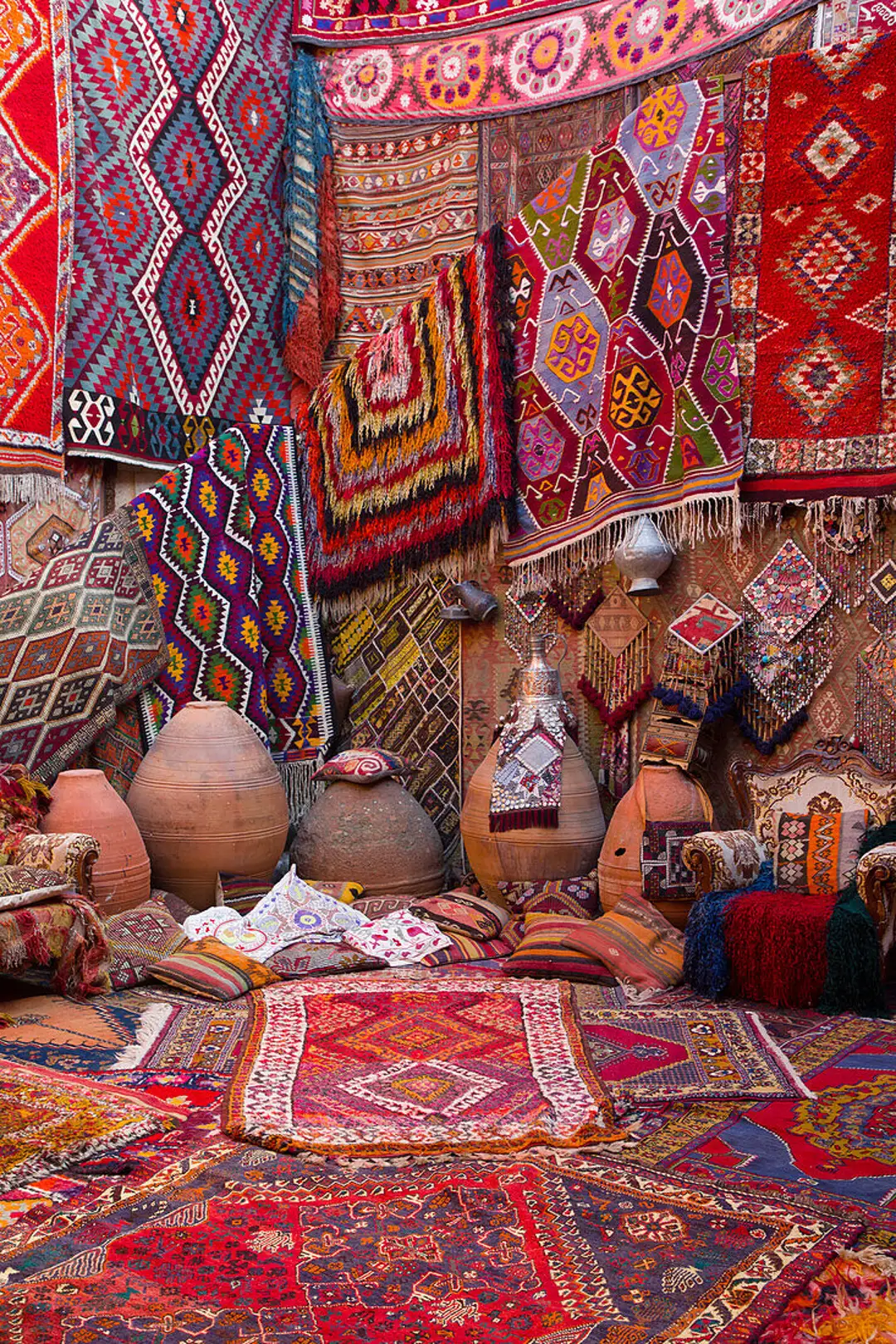
Carpet weaving developed across Anatolia through domestic, commercial, court, and religious use. Seljuk and Ottoman workshops expanded the visual language of knotted carpets, while village and nomadic communities maintained local techniques and designs.
The Metropolitan Museum of Art’s overview of Anatolian carpets in European paintings shows how Uşak and Gördes textiles entered visual and trade histories outside Turkey. Rugs also moved through trade networks and entered mosques, palaces, homes, and overseas collections.
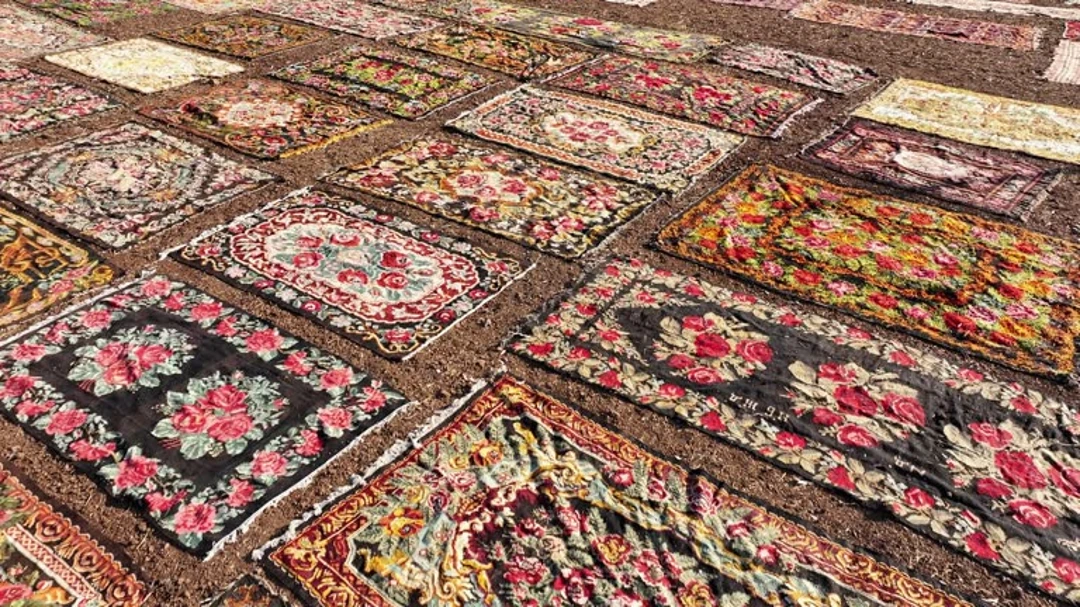
That long development belongs within the broader history of Turkey, including Seljuk settlement, Ottoman trade, urban workshops, and modern cultural preservation. No single rug can represent every period or community.
Place Rugs in the Historical Timeline
Rug traditions changed as Anatolia moved through Seljuk, Ottoman, and republican periods. A broader Turkey history guide helps place those shifts, while a rug’s regional provenance still requires its own evidence.
Craftsmanship: Knots, Structure, and Materials
A pile carpet begins with vertical warp threads, horizontal weft threads, and rows of knots that form the visible surface. The Turkish or Gördes knot loops yarn symmetrically around two adjacent warps, creating a durable double-knot structure.
The official description of Turkish weaving techniques distinguishes pile carpets from flat-woven forms and explains the Gördes knot. This construction detail is more reliable than a seller’s verbal claim.
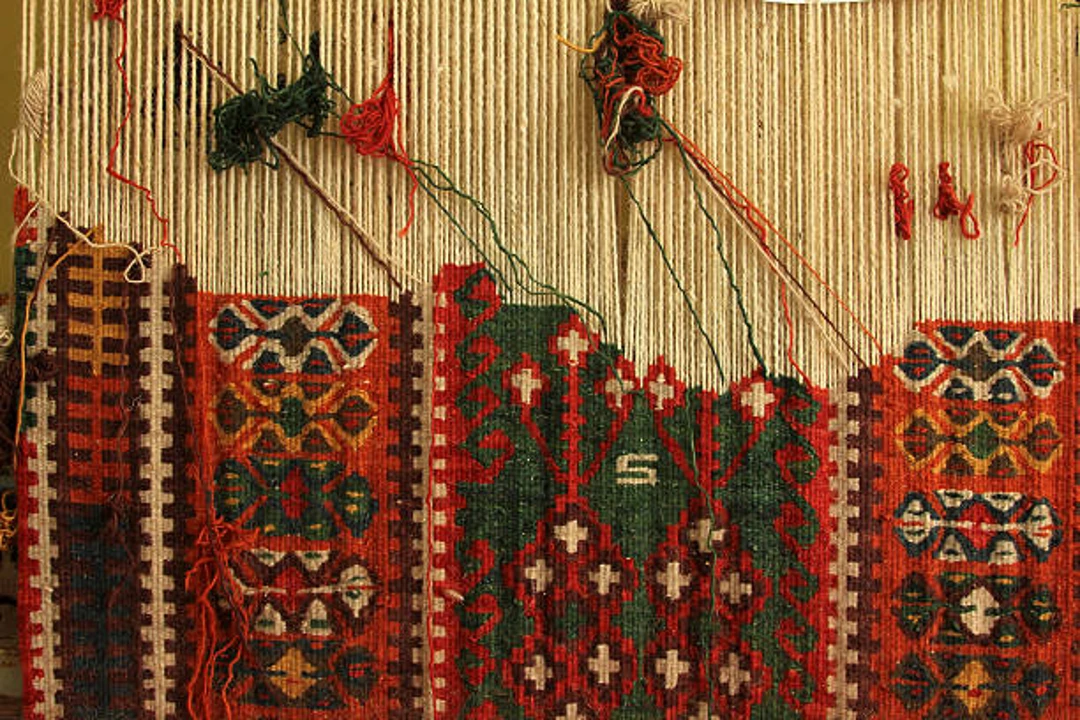
Wool is resilient and common in village rugs; cotton often provides a stable foundation; silk allows finer detail but requires careful handling. Material alone does not prove quality, age, or origin.
Flat-woven kilims do not have the raised pile of knotted carpets. Their lighter structure can be easier to fold and transport, while pile rugs usually offer more cushioning and dimensional pattern.
Feature | Pile rug | Kilim |
|---|---|---|
Structure | Knots over warp and weft | Flat interlaced weave |
Surface | Raised and soft | Flat and lighter |
Typical use | Floor covering and display | Floor, wall, cushion, or bag |
Regional Styles, Color, and Dye
Regional names such as Uşak, Gördes, Bergama, Milas, Konya, and Hereke can refer to recognizable design traditions, weaving centers, or commercial categories. Confirm whether a label describes origin, style, or both.
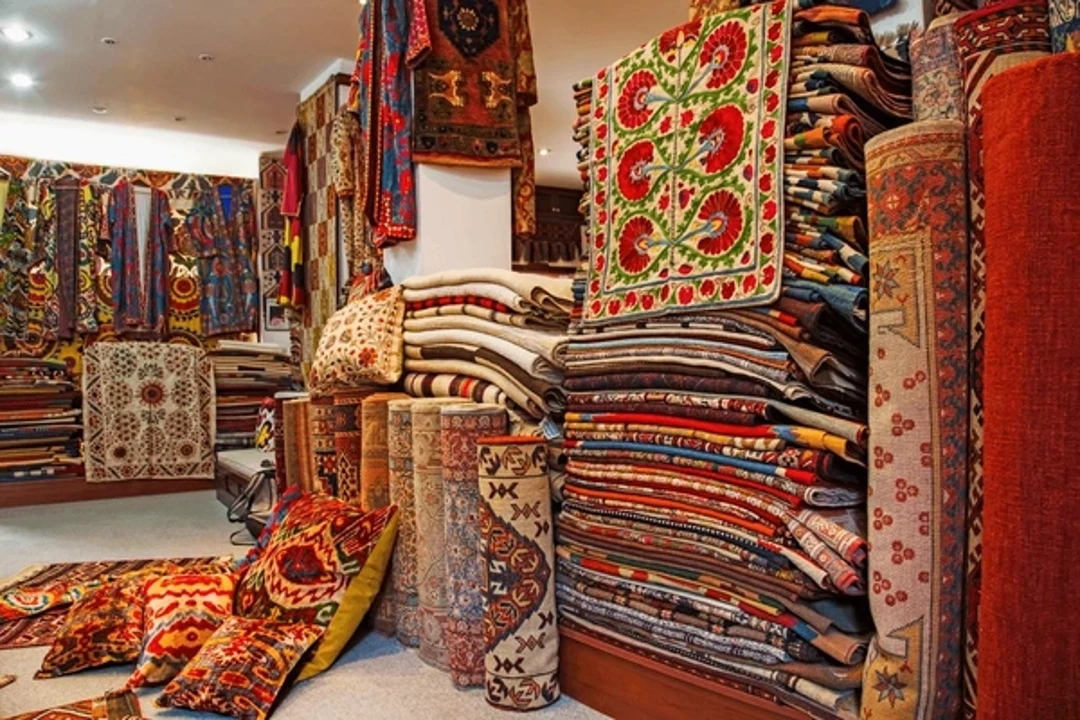
Geometric village compositions, floral court designs, prayer niches, medallions, and borders appear in many combinations. The surrounding Turkish cultural traditions help explain how craft changes while remaining connected to community, belief, and daily life.
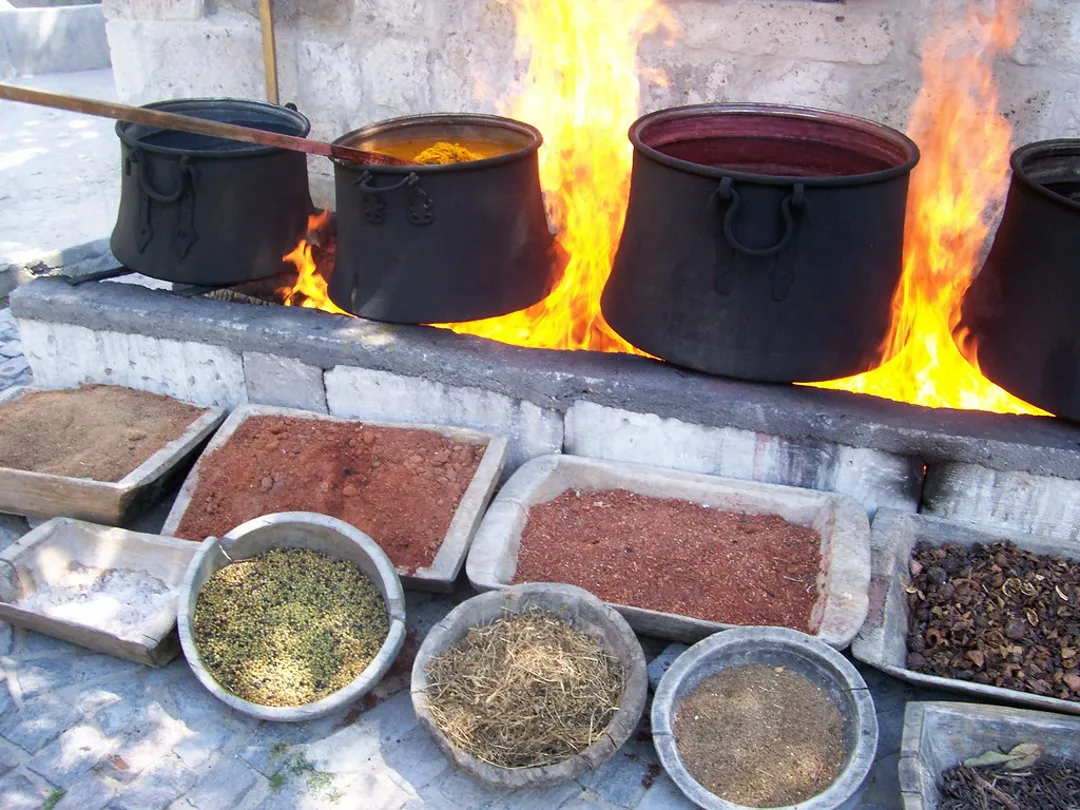
Natural dyes may come from plants, roots, insects, or minerals, while modern synthetic dyes can also produce stable and attractive color. Slight variation may suggest hand dyeing, but uneven color by itself does not prove age or authenticity.
Motifs and Pattern Meaning
Turkish rugs may include hooks, stars, eyes, ram’s horns, trees, flowers, pomegranates, birds, or protective amulet forms. Meanings can vary by period, region, family, and modern interpretation.
Avoid treating a motif dictionary as a universal translation. Sellers and reference books may assign different meanings to the same form, and contemporary weavers can reuse traditional shapes for composition rather than a fixed message.
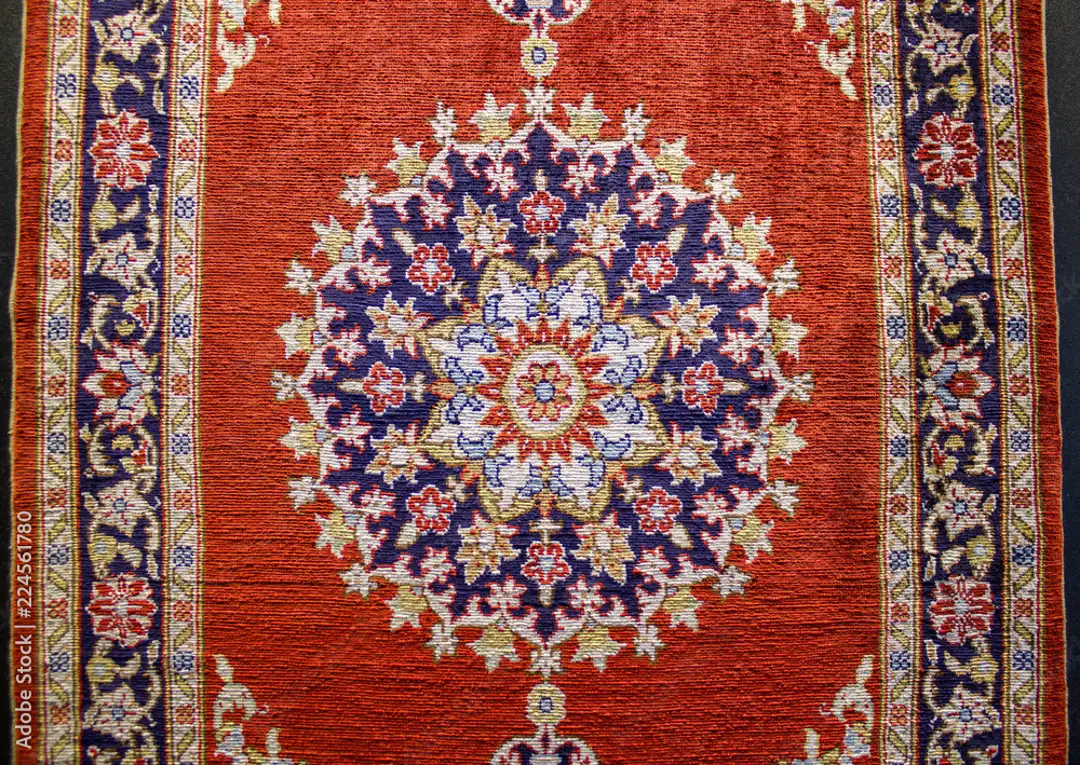
Read the full design instead: central field, borders, color balance, repetition, scale, and how motifs interact. Provenance and maker information carry more weight than a single romantic interpretation.
Contemporary Production and Global Influence
Modern Turkish rug production includes village weaving, workshops, cooperatives, studio design, machine manufacture, vintage restoration, and pieces made for export. Traditional appearance does not automatically mean traditional production.
Global demand has encouraged new palettes, simplified motifs, distressed finishes, and dimensions suited to contemporary interiors. These changes can keep weaving economically viable, but buyers should expect accurate labels about materials, origin, method, and age.
Restoration is not necessarily a defect when disclosed. Repairs, replaced fringe, re-piling, and color correction affect value differently, so ask for condition details and photographs before agreeing to a price.
Buying an Authentic Turkish Rug
Start by defining what you want: a new handmade rug, a vintage decorative piece, a collectible textile, or a portable kilim. Price depends on size, material, workmanship, condition, age, provenance, and seller support.
Use the checks below to separate a visual impression from evidence you can document.
Seller claim | Physical check | Written evidence |
|---|---|---|
Handmade | Visible knots, reverse design, and fringe within the foundation | Weaving method and material |
Regional origin | Construction, material, and design consistent with the claimed area | Workshop or stated place of origin |
Vintage or antique | Wear, patina, re-piling, and repairs inspected | Approximate age and restoration history |
Natural dye | Color variation assessed with the full design and material | Dye statement treated as evidence, not proof |
Shipping-ready | Edges, fringe, and condition photographed | Invoice, return terms, and insurance responsibility |
Inspect the Rug
Turn the rug over. Hand-knotting should show the design on the back, with small irregularities that reflect manual work. Machine-made backing, glued fringe, or a perfectly uniform grid may indicate a different construction.
Check edges, fringe, foundation, pile wear, stains, odor, fading, moth damage, holes, and repairs. View the rug in natural light and ask what cleaning or restoration it has received.
Ask for Written Details
Request the stated origin, material, dimensions, approximate age, weaving method, condition, repair history, total price, return terms, and shipping responsibility in writing. A certificate is useful only when the seller stands behind its claims.
If you are shopping in Istanbul, a Turkey Grand Bazaar guide can help with the market’s layout and history. Compare several sellers before making a high-value purchase.
Plan Payment, Shipping, and Connectivity
Use a payment method that provides a record, keep the invoice, photograph the rug, and confirm insurance for shipped items. Check your home country’s customs rules and any restrictions that apply to antiques or cultural property.
A Turkey eSIM can help you verify addresses, exchange rates, and documentation while away from Wi-Fi. Do not let a limited-time sales claim replace independent research.
FAQ
1. How can I tell whether a Turkish rug is handmade?
Inspect the back for visible knots and natural irregularity, then confirm the foundation, fringe construction, and seller documentation.
2. Are all Turkish rugs made with natural dyes?
No; both natural and synthetic dyes are used, and dye type alone does not determine quality or authenticity.
3. What is the difference between a rug and a kilim?
A pile rug uses knots to create a raised surface, while a kilim is a flat weave without knotted pile.
4. Should I bargain when buying a rug in Turkey?
Prices may be negotiable in some markets, but compare rugs and written terms before discussing a final figure.
5. Can I take an antique rug home?
Export rules can apply to older cultural objects, so confirm documentation and current requirements before purchase or shipment.
Conclusion
Turkish rugs combine structure, material, regional design, and cultural history. Their value cannot be judged from color, age claims, or motif stories alone.
Examine the back and condition, ask precise questions, compare sellers, and obtain written documentation. Decide whether you are buying for use, decoration, or collecting before setting a budget.
A careful purchase respects both the buyer and the craft, allowing the rug’s real workmanship and provenance to matter more than sales pressure.