
Turkey, officially the Republic of Türkiye, is a transcontinental country located mainly in Anatolia in West Asia, with a smaller section in East Thrace in Southeast Europe. The Bosphorus, Sea of Marmara, and Dardanelles separate these land areas.
Its position between the Black Sea, Aegean Sea, Mediterranean Sea, and eight neighboring states has shaped trade, migration, climate, and cultural exchange. Ankara is the capital, while Istanbul occupies both sides of the Bosphorus.
This guide answers where Turkey is, which continents it occupies, which countries border it, and why physical geography matters to travelers. iRoamly travel eSIM plans can support maps and transport updates across long intercity routes.
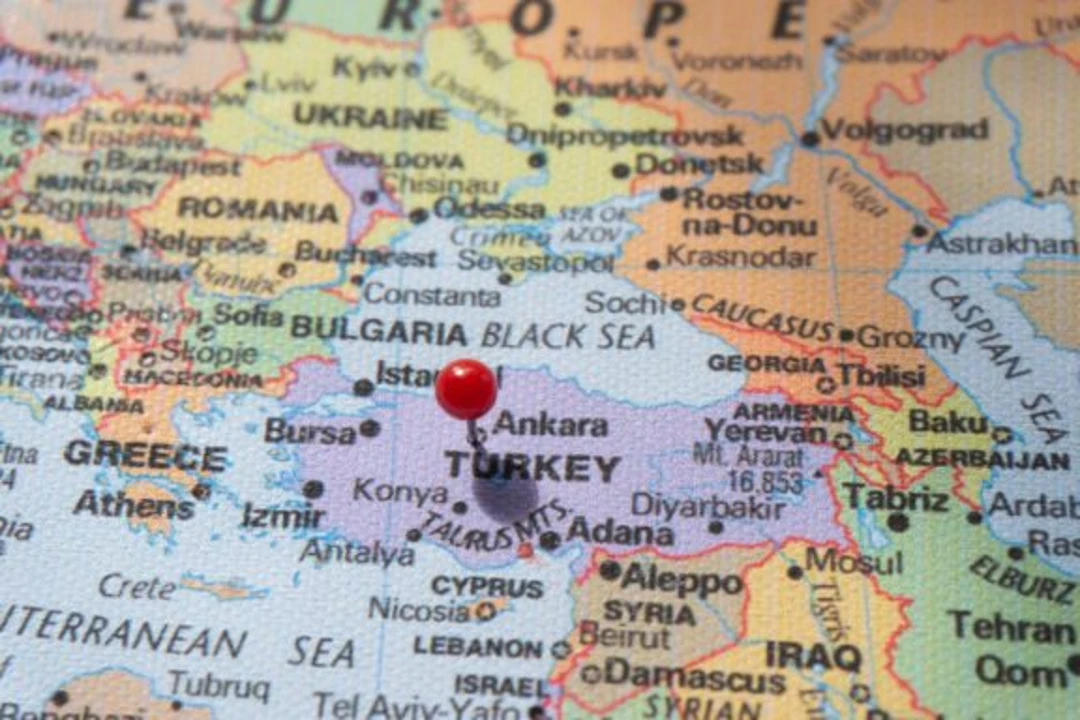
Where Is Turkey Located?
Turkey lies between roughly 36° and 42° north latitude and 26° and 45° east longitude. Most territory is in Anatolia in West Asia, while East Thrace lies in Southeast Europe.
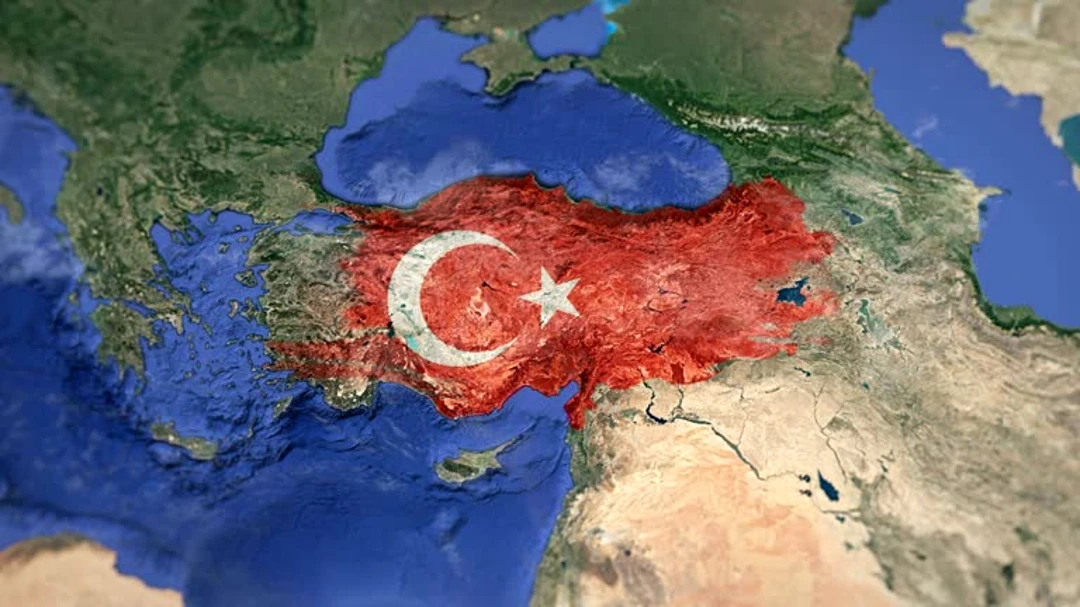
The Turkish Straits consist of the Bosphorus, Sea of Marmara, and Dardanelles. They form the only sea route between the Black Sea and the Mediterranean system.
Detailed Historical Context
Anatolia and Thrace hosted many societies before modern Turkey, including Hittite states, Greek cities, Persian rule, and Roman administration. Constantinople became the capital of the Eastern Roman, or Byzantine, Empire.
Seljuk and Ottoman rule added new political, architectural, and linguistic layers to Turkish cultural history. The Ottoman Empire lasted for roughly six centuries, not a thousand years, and Istanbul remained its capital until the empire ended.
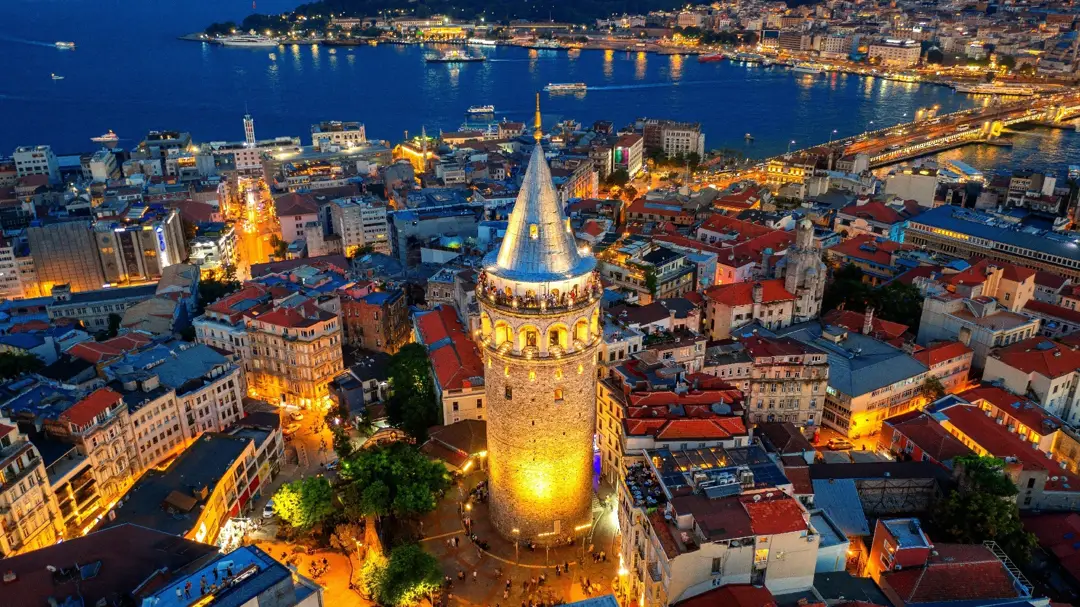
The Republic of Turkey was founded in 1923, with Ankara as its capital. Modern regional identities still reflect geography: Aegean ports, Black Sea valleys, central plateaus, and southeastern borderlands developed through different trade routes and environments.
What Continent Is Turkey In?
Turkey is in both Asia and Europe. About 97% of its land lies in Anatolia in Asia, while roughly 3% lies in East Thrace on the European side of the Turkish Straits.
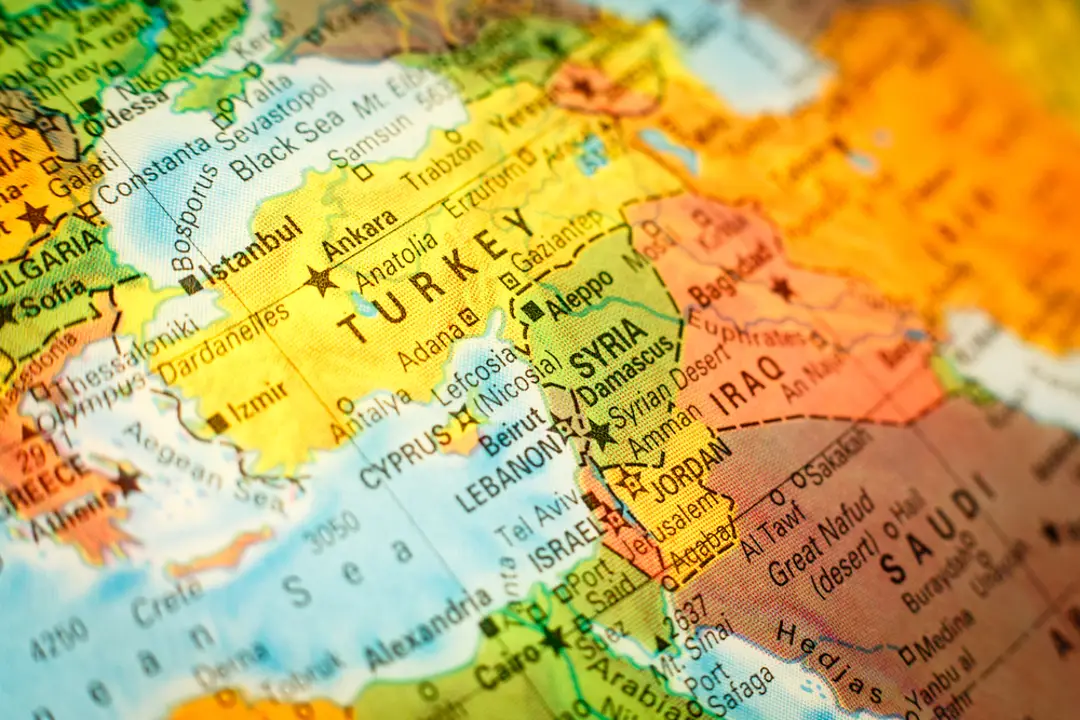
Continental labels describe physical location, not a single cultural identity. The Ministry of Culture and Tourism’s overview of Turkey’s regions distinguishes Thrace and Marmara from the country’s varied Anatolian areas.
Countries Near Turkey
Turkey has eight land neighbors: Greece and Bulgaria to the west; Georgia, Armenia, Azerbaijan’s Nakhchivan exclave, and Iran to the east; and Iraq and Syria to the south.
The border list is easier to understand by direction and regional setting. It also shows why Nakhchivan must be counted separately from Azerbaijan’s main territory.
Direction | Land neighbors | Geographic context |
|---|---|---|
West | Greece, Bulgaria | East Thrace and the Balkans |
Northeast and east | Georgia, Armenia, Azerbaijan, Iran | Caucasus and Iranian plateau approaches |
South | Iraq, Syria | Upper Mesopotamian borderlands |
Mediterranean border lists often include geographic exceptions. Turkey touches Azerbaijan through Nakhchivan, while the countries bordering Italy include two microstates enclosed by Italy. Maps therefore explain more than a simple neighbor count.
A named border does not guarantee a convenient tourist crossing. Entry rules, transport services, security conditions, and opening status can change, so international routes should be checked with the responsible authorities.
How Geography Shapes Travel Planning
Turkey is large enough that a route should be built by region rather than by a list of famous sights. A well-paced selection of places to visit in Turkey usually groups destinations that share practical air, rail, or road connections.
The table summarizes how physical geography changes travel conditions. Actual weather and services vary, so use it for route design rather than as a forecast.
Area | Typical geography | Travel implication |
|---|---|---|
Marmara and East Thrace | Straits, coasts, dense cities | Strong transport links but urban congestion |
Aegean and Mediterranean | Indented coasts, valleys, mountains | Coastal distances can take longer than expected |
Central Anatolia | High plateau and broad inland distances | Rail, flights, and long road transfers matter |
Black Sea and eastern regions | Mountain barriers and varied elevation | Weather and terrain can slow routes |
Cultural Insights and Societal Norms
Turkish customs vary by region, generation, community, and setting. Visitors should avoid reducing the country to a simple East-versus-West identity and follow local cues in homes, markets, workplaces, and religious sites.
Language and Regional Identity
Turkish is the official language, and a short Turkish language guide can help with greetings, signs, and pronunciation. Other languages are also spoken within Turkey’s diverse communities.
Language use and social expectations can differ between a major tourist district and a rural town. Ask politely, dress appropriately for the setting, and avoid treating one encounter as representative of the entire country.
Connectivity Across Long Routes
Long intercity distances make live maps and booking updates useful, while offline copies of tickets, addresses, and essential directions remain sensible backups.
FAQ
1. Is Turkey in Europe or Asia?
Turkey is transcontinental: most land is in West Asia, while East Thrace lies in Southeast Europe.
2. What is the capital of Turkey?
Ankara is the capital; Istanbul is the largest city and spans both sides of the Bosphorus.
3. How many countries border Turkey?
Turkey has land borders with eight countries, including Azerbaijan through the Nakhchivan exclave.
4. Which seas surround Turkey?
Turkey borders the Black Sea, Sea of Marmara, Aegean Sea, and Mediterranean Sea.
5. What separates European and Asian Turkey?
The Bosphorus, Sea of Marmara, and Dardanelles form the waterway between East Thrace and Anatolia.
6. Is mobile data useful for traveling around Turkey?
A Turkey eSIM can support maps and booking updates, while offline copies provide a useful backup.
Conclusion
Turkey lies mainly in West Asia and partly in Southeast Europe, with the Turkish Straits between its two continental sections. Eight land neighbors and four surrounding seas give it a distinctive position.
That geography helps explain varied climates, long travel distances, strategic waterways, and layered history. Travelers should plan by region rather than assuming conditions are uniform nationwide.
Understanding Turkey’s location makes maps, routes, seasons, and cultural connections easier to interpret before a trip.