
Istanbul rewards travelers who mix major monuments with ferries, markets, neighborhoods, food, and time to slow down. These 25 things to do cover both sides of the Bosphorus and suit a first visit of several days.
Group sights by area instead of crossing the city repeatedly. Sultanahmet, the Bazaar Quarter, Galata–Beyoğlu, the Bosphorus shore, and the Asian side each work best as separate route blocks.
This guide explains why each stop matters, how to fit it into a route, and what to verify before visiting. For maps, ferry updates, and mobile tickets, iRoamly travel eSIM plans can be arranged before departure.
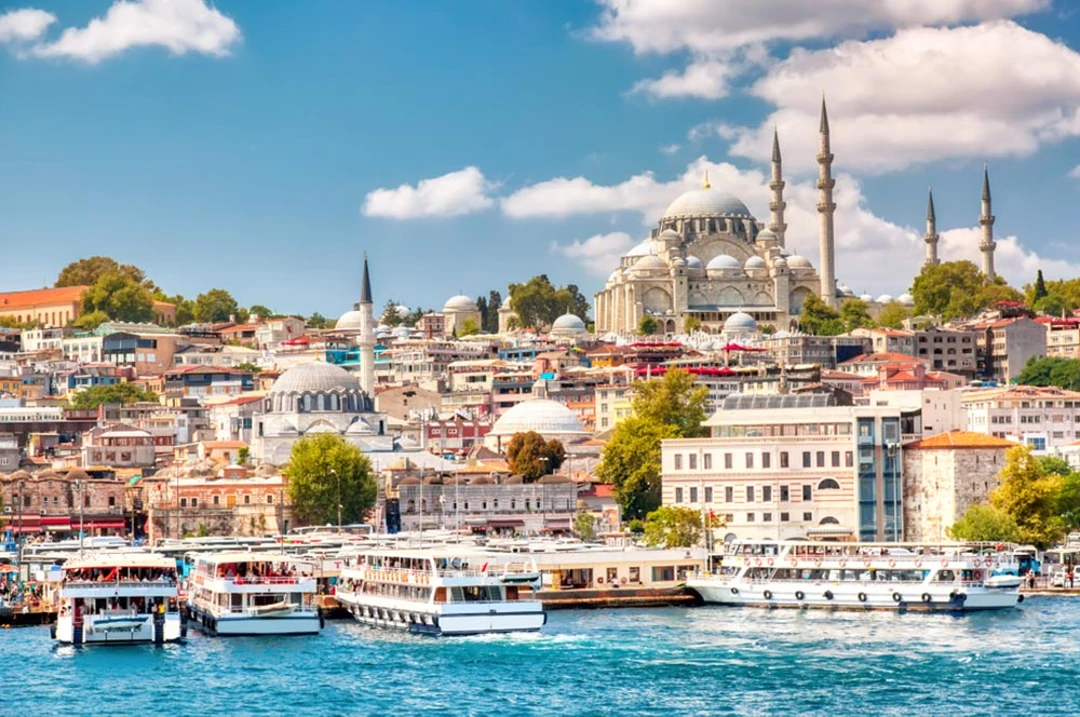
Plan the 25 Best Things to Do in Istanbul
Three full days cover the historic core, Galata–Beyoğlu, and one Bosphorus or Asian-side route at a comfortable pace. Add a fourth or fifth day for the Princes’ Islands, specialist museums, parks, and longer palace visits.
Mobile maps and ticket confirmations are useful for route changes, but save essential addresses and booking details offline as a backup.
Opening hours, prayer closures, restoration work, and ticket rules can change. Check the responsible attraction or operator shortly before your visit.
Area | Best for | Suggested time |
|---|---|---|
Sultanahmet | Hagia Sophia, Blue Mosque, Topkapı Palace, Basilica Cistern | One full day |
Bazaar Quarter | Grand Bazaar, Süleymaniye Mosque, Spice Bazaar | Half to full day |
Galata–Beyoğlu | Galata Tower, İstiklal Avenue, Istanbul Modern | Half to full day |
Bosphorus shore | Ferries, Dolmabahçe Palace, Ortaköy views | Half day |
Asian side or islands | Local neighborhoods, viewpoints, slower day trips | Half to full day |
Build a route around neighborhoods
Use neighborhood context, food interests, and local travel time to decide which districts deserve more attention beyond the landmark list.
Leave a buffer between timed entries and avoid scheduling distant attractions back to back. Ferries can be part of the experience, while road traffic can make a short map distance surprisingly slow.
Historic Landmarks and Museums
Start major monuments early and pair nearby sites. Religious buildings remain active places of worship, so dress modestly, speak quietly, and expect visitor access to pause during prayers.
1. Explore Hagia Sophia Mosque
Hagia Sophia combines Byzantine architecture, Ottoman additions, mosaics, calligraphy, and a vast central dome. It is an active mosque, not a museum, and visitor routes are managed around worship.
The official Hagia Sophia visitor information should be checked for current access, dress, restoration, and route details. Pair the visit with the Blue Mosque and Basilica Cistern.
2. Visit the Blue Mosque
The Sultan Ahmed Mosque is known for its six minarets, cascading domes, and İznik tiles. Non-worshippers may enter outside prayer periods, with respectful clothing and head covering for women.
Visit early or between peak tour groups, then cross Sultanahmet Square to Hagia Sophia. Keep the doorway and prayer areas clear rather than stopping for photos.
3. Walk Through Topkapı Palace
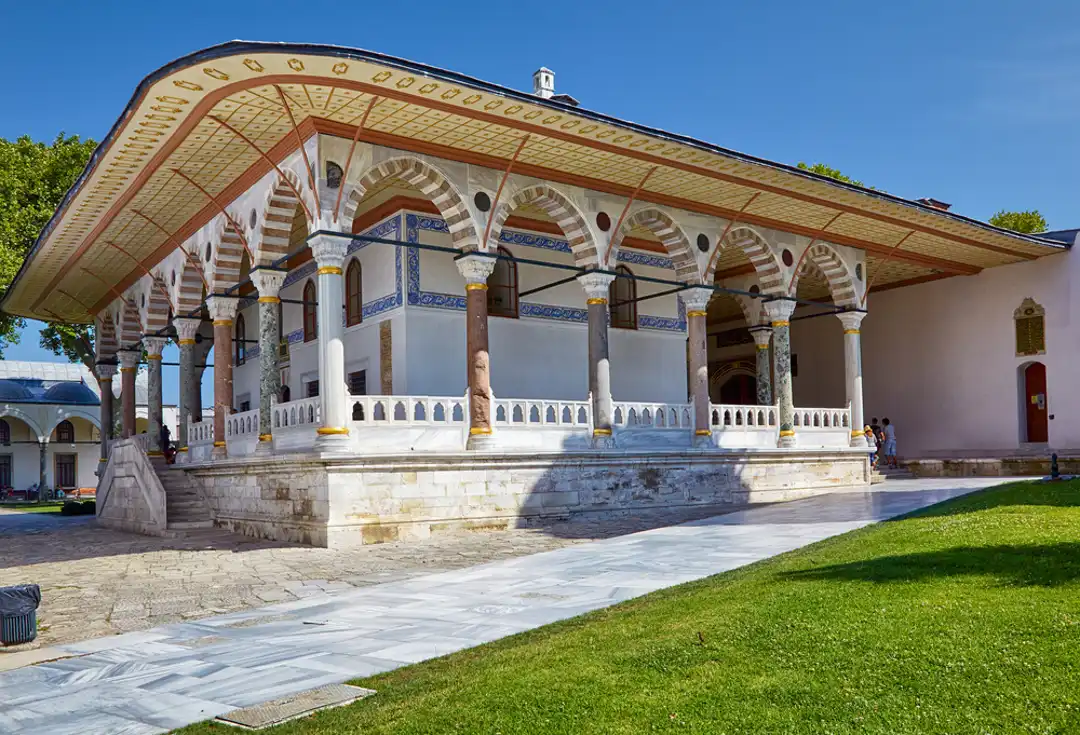
Topkapı Palace served as an Ottoman administrative and residential complex. Its courtyards, imperial collections, kitchens, treasury displays, and Bosphorus viewpoints reward at least two to three hours.
The Harem and Hagia Irene may involve separate access conditions, so verify what your ticket includes. Start early and combine the palace with nearby Gülhane Park or the Archaeological Museums.
4. Descend into the Basilica Cistern
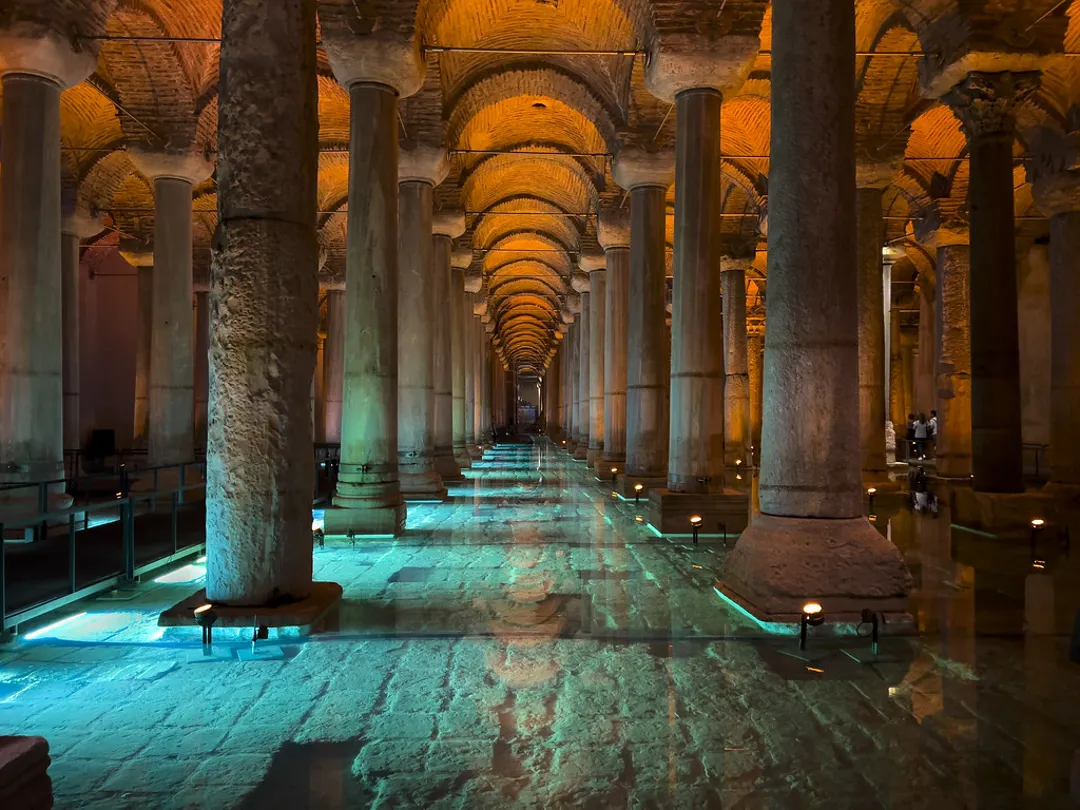
The Basilica Cistern creates a cool, atmospheric break beneath Sultanahmet. Raised walkways pass illuminated columns, sculptural installations, and the famous Medusa-head bases.
Check the Basilica Cistern visitor information for current hours and access. Allow about 45 to 60 minutes and wear shoes with good grip on damp surfaces.
5. Tour Dolmabahçe Palace
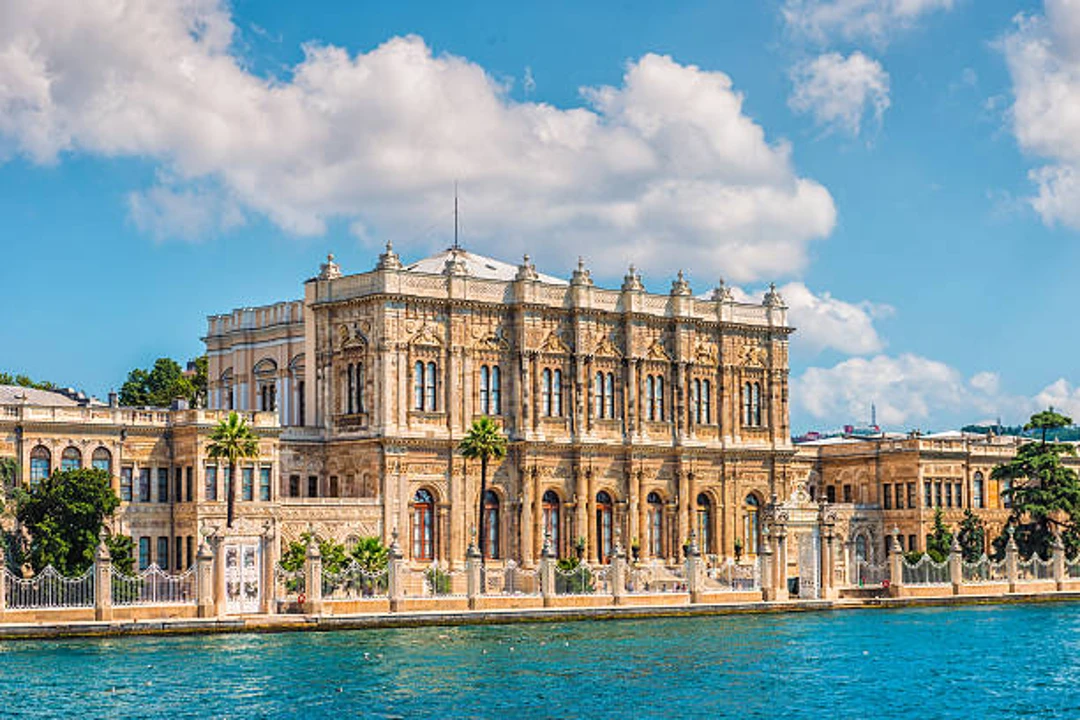
Dolmabahçe Palace presents a later Ottoman style with ceremonial halls, European-influenced interiors, gardens, and a waterfront setting. The scale contrasts clearly with Topkapı Palace.
Allow several hours if visiting both the main palace and residential sections. Photography and guided-route rules may apply indoors, so follow staff directions and check current ticket categories.
6. See Süleymaniye Mosque
Süleymaniye Mosque combines Mimar Sinan’s monumental architecture with a terrace overlooking the Golden Horn. The surrounding complex and nearby streets feel calmer than Sultanahmet at many times of day.
Respect prayer closures and dress requirements. Walk downhill toward the Spice Bazaar afterward, but choose sturdy shoes because some lanes are steep and uneven.
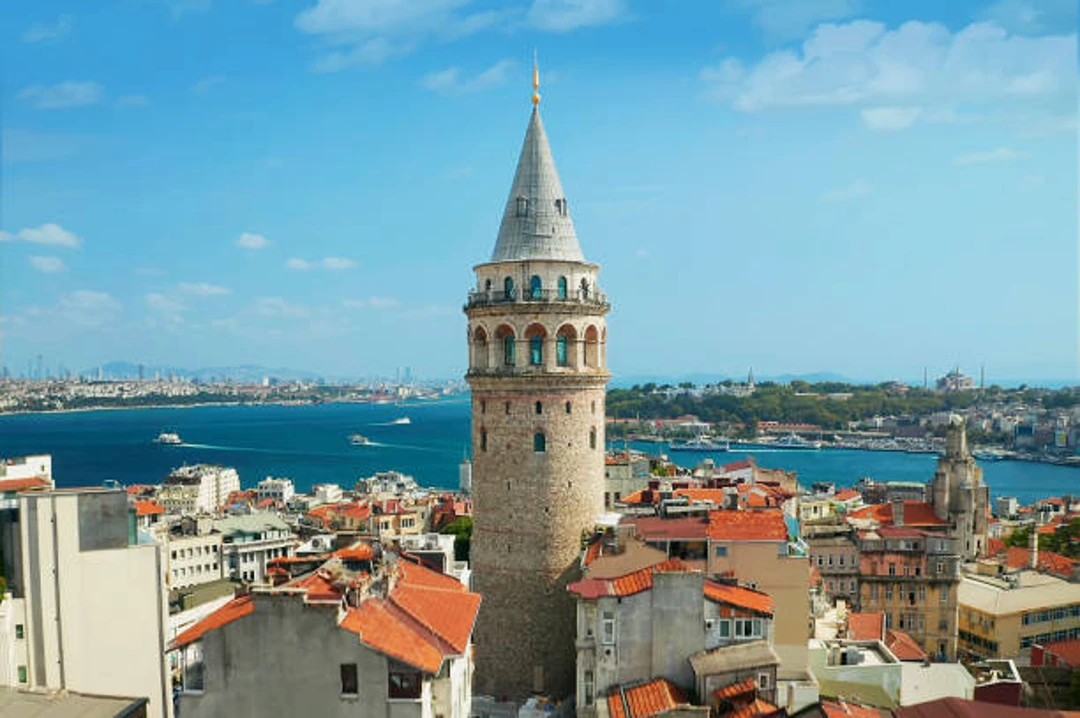
7. Climb Galata Tower
Galata Tower provides a high panorama over the Golden Horn, Bosphorus, historic peninsula, and Beyoğlu. The surrounding lanes are steep, lively, and filled with cafés and small shops.
Reserve enough time for queues and the one-way visitor flow. Early morning offers clearer route planning; sunset is more atmospheric but usually busier.
8. Explore the Istanbul Archaeological Museums
The complex brings together the Archaeological Museum, Museum of the Ancient Orient, and Tiled Kiosk. Collections connect Istanbul to Anatolia, Mesopotamia, the classical Mediterranean, and the Ottoman era.
Choose priority galleries rather than rushing every room. Its location near Topkapı Palace makes it an effective alternative when weather or crowds make outdoor sightseeing less appealing.
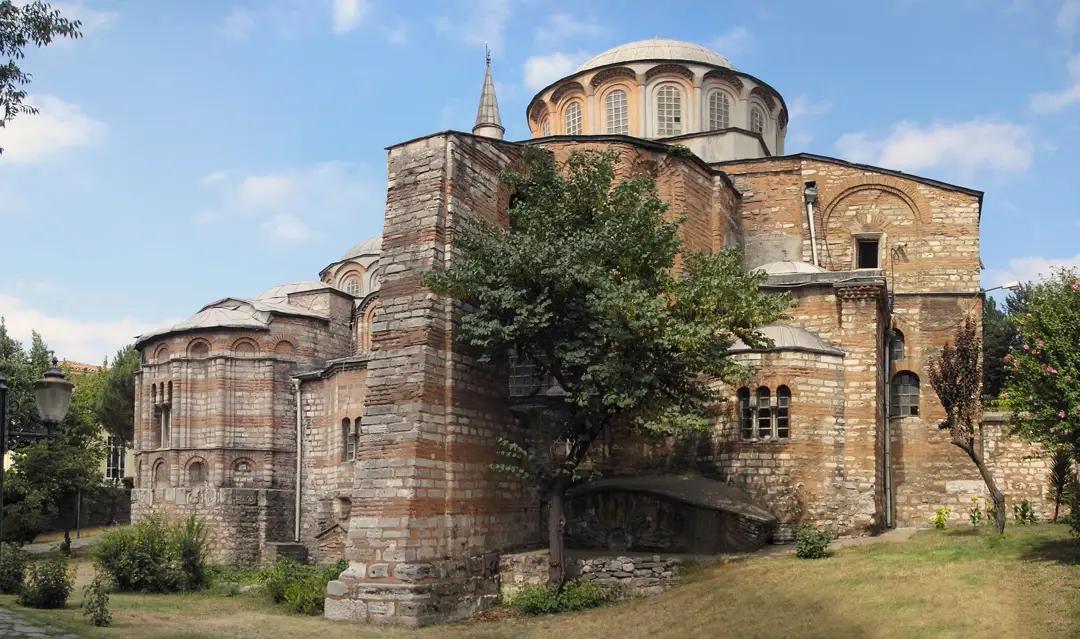
9. Visit Kariye Mosque
Kariye, formerly known as the Chora museum, functions as a mosque and is celebrated for Byzantine mosaics and frescoes. Worship use and conservation needs can affect which areas visitors can see.
The location near Edirnekapı is separate from Sultanahmet, so combine it with the city walls, Fener, or Balat. Verify current visitor access before making the journey.
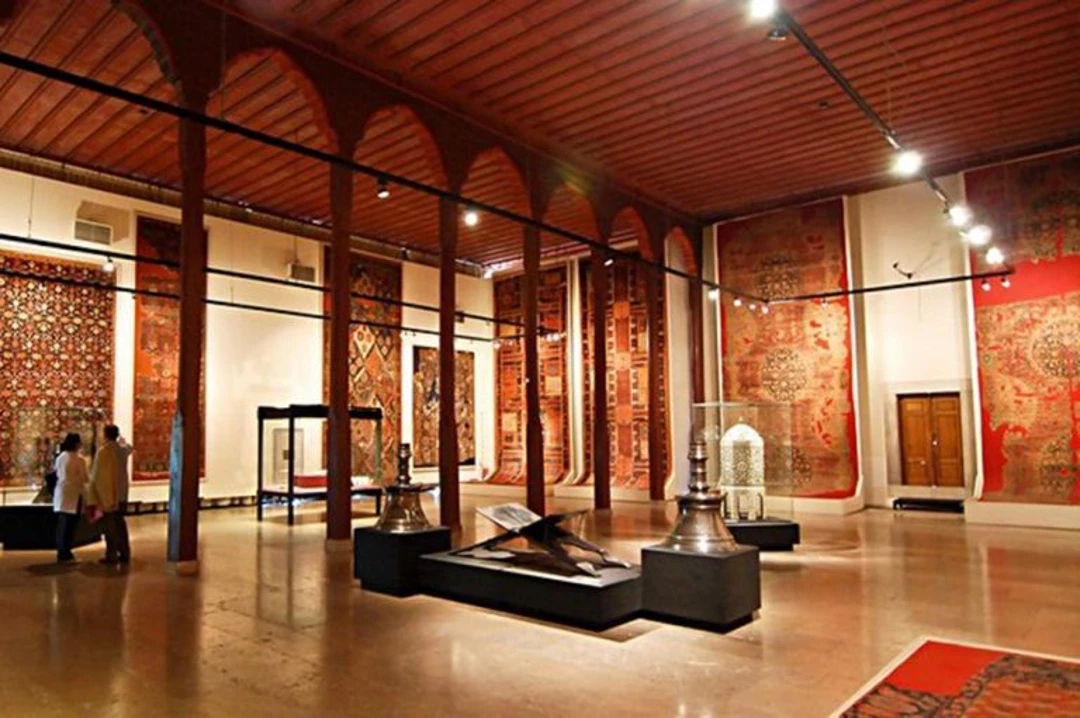
10. Visit the Museum of Turkish and Islamic Arts
This museum displays carpets, manuscripts, woodwork, ceramics, metalwork, and ethnographic material in the former İbrahim Pasha Palace. It provides useful context for details seen in mosques and palaces.
Allow 60 to 90 minutes and pair it with Sultanahmet Square. The museum is especially valuable for travelers interested in craft, design, and material culture.
11. See Contemporary Art at Istanbul Modern
Istanbul Modern offers Turkish and international modern and contemporary art in a Bosphorus-side building at Galataport. Temporary exhibitions mean the experience changes over time.
Check the exhibition program before visiting and combine it with Karaköy, Galata, or a waterfront walk. It gives a deliberate counterpoint to the historic peninsula.
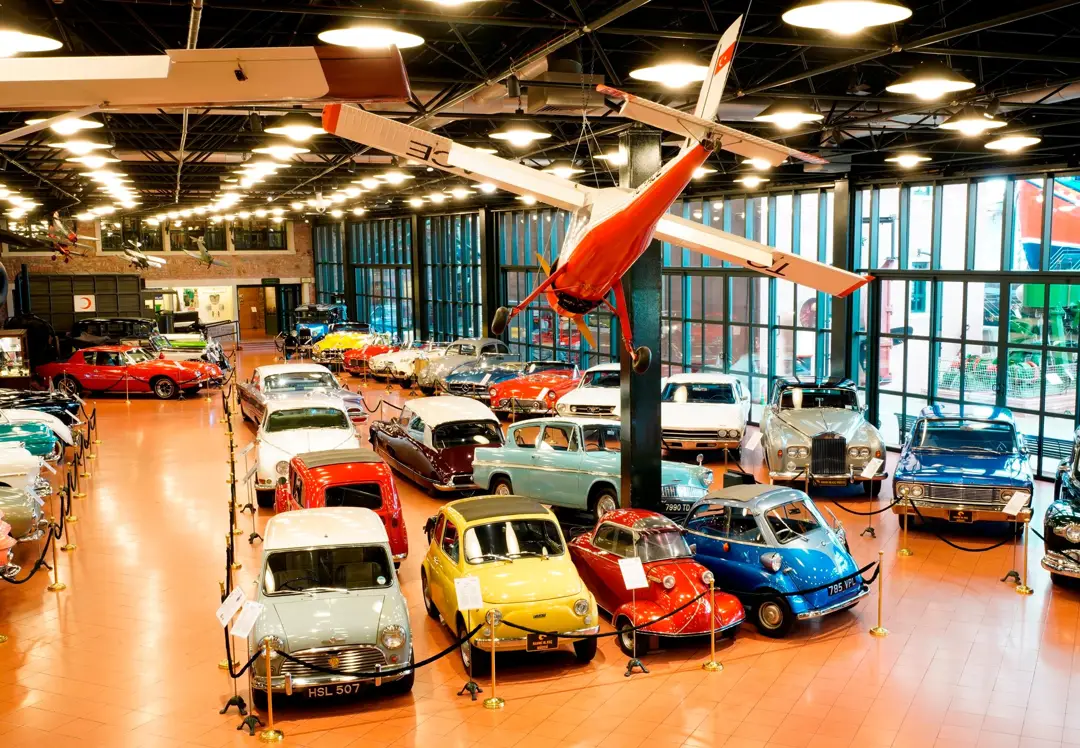
12. Explore the Rahmi M. Koç Museum
This industrial museum covers transport, engineering, communications, and everyday technology through vehicles, machinery, models, and interactive exhibits. It is a strong family option and works well in poor weather.
The Golden Horn location is outside the main monument cluster, so allow travel time. Check which demonstrations or vehicles are operating on your visit day.
13. Stop at the Istanbul Railway Museum
The small railway museum at Sirkeci Station explains the station’s role in rail history and the Orient Express era. It suits train enthusiasts and travelers already passing through Eminönü.
Treat it as a short stop rather than a major destination. Verify opening status before arrival, because small museums can have limited schedules or temporary closures.
Unlike the attractions in Rome, Italy, which are more concentrated in walkable historic districts, Istanbul’s major sights are spread across different neighborhoods, with some routes requiring ferries, trams, and other cross-city connections. You should therefore allow enough time for travel between stops.
If you plan to combine these museums with other attractions in the Old City on the same day, the city’s layout will often have a greater impact on sightseeing efficiency than the number of places on your itinerary.
Markets, Food, and Living Culture
Markets and food experiences are easiest to enjoy when you slow down, compare quality, and ask prices before committing. Keep valuables secure in dense crowds and avoid blocking working shopfronts.
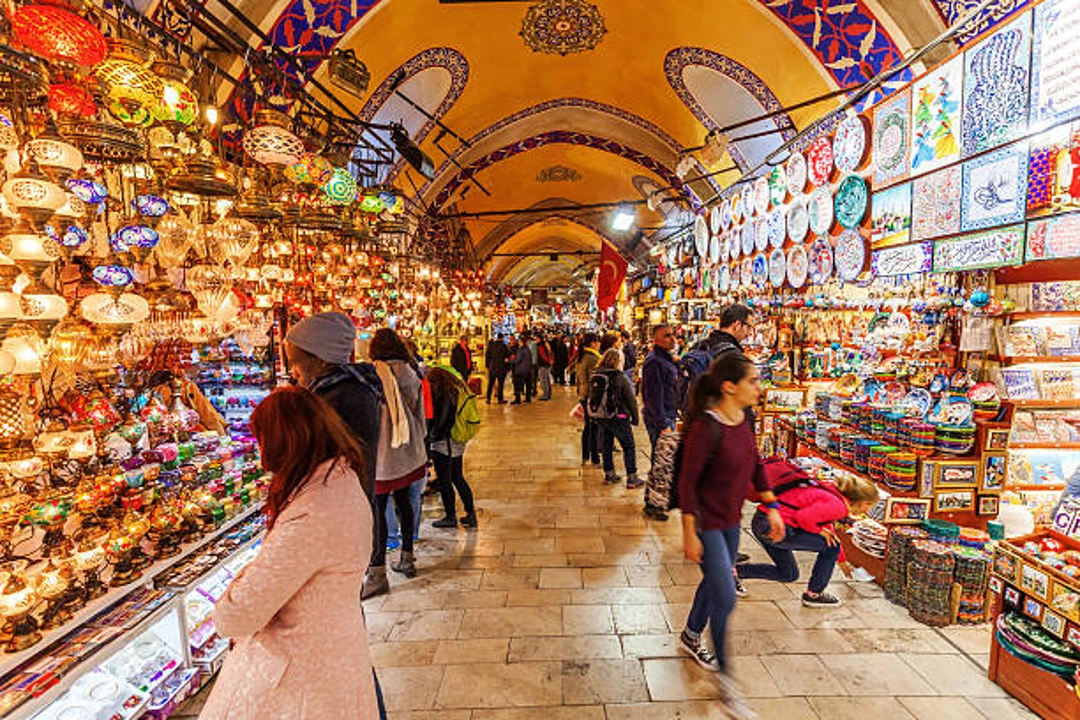
14. Navigate the Grand Bazaar
The Grand Bazaar is a working commercial district of covered lanes, hans, workshops, and shops. A dedicated Istanbul Grand Bazaar guide helps with entrances, bargaining, product types, and route planning.
Decide what you want before negotiating, compare several sellers, and confirm material and workmanship. Use nearby landmarks as orientation points because GPS can be imprecise inside covered passages.
15. Browse the Spice Bazaar
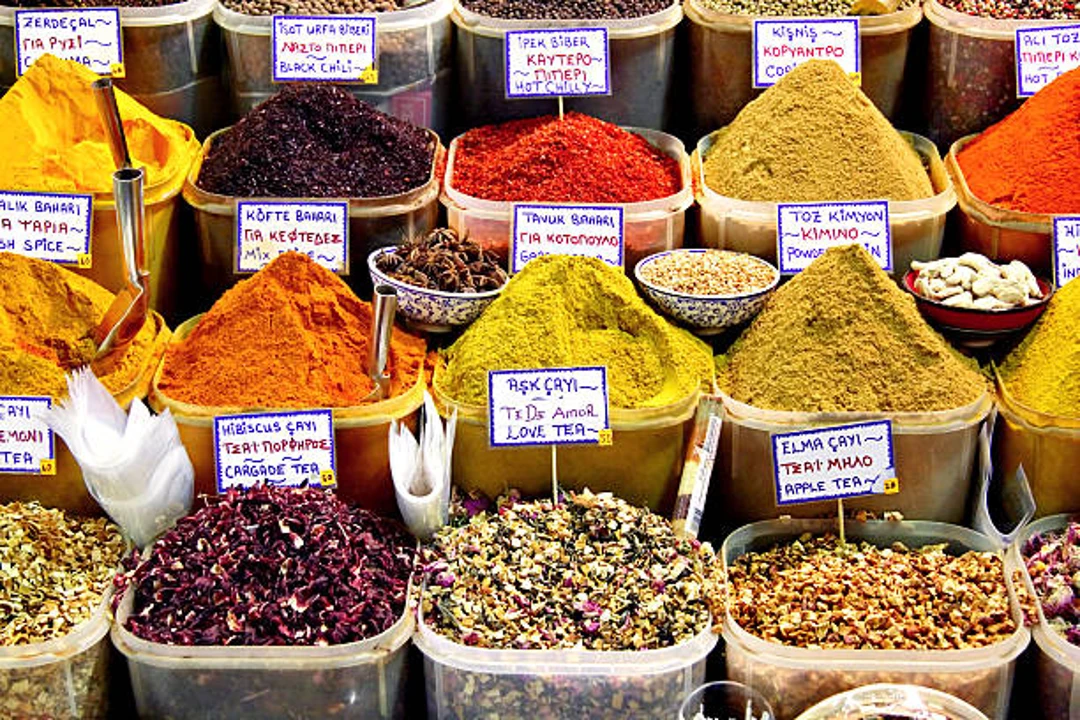
The Spice Bazaar is compact and easy to combine with Eminönü, Yeni Mosque, and the ferry piers. Stalls sell spices, tea, dried fruit, nuts, sweets, and packaged gifts.
Ask to see labels, compare prices, and check customs restrictions before buying plant or food products for an international flight. Walk the surrounding streets for a broader local market atmosphere.
16. Taste Turkish Delight
Lokum ranges from simple rose or citrus cubes to versions with pistachio, hazelnut, pomegranate, or layered fillings. The Turkish delight guide explains varieties and what to expect.
Buy from a shop with clear turnover and ask for a sample when offered. Confirm weight, ingredients, and shelf life before choosing gift boxes.
17. Drink Turkish Coffee Slowly
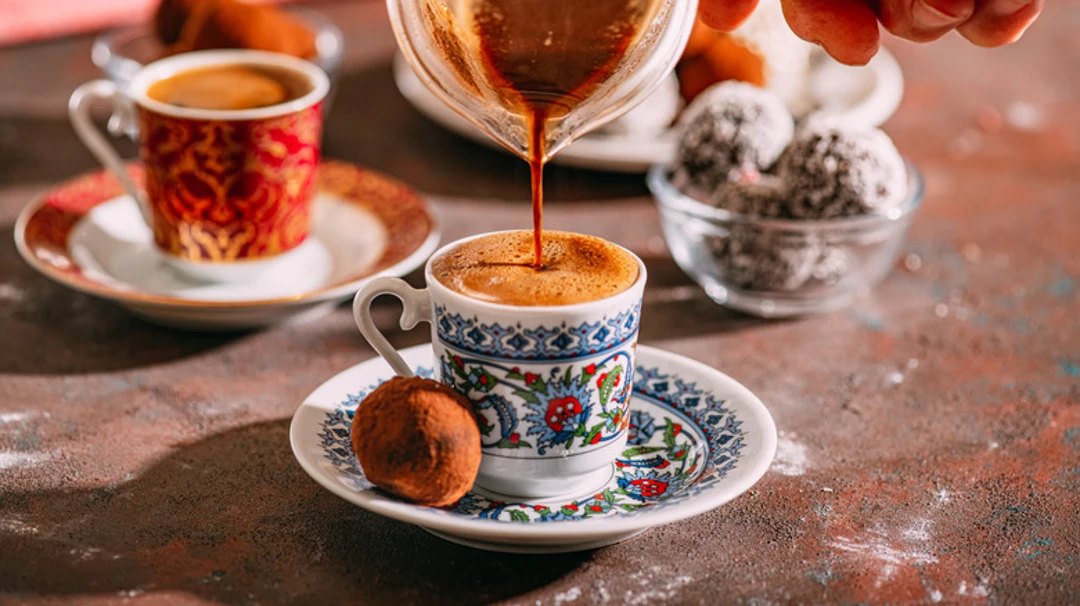
Turkish coffee is unfiltered and served in a small cup, often with water and something sweet. Let the grounds settle and stop drinking before reaching the sediment.
Choose a traditional coffeehouse or a calm neighborhood café rather than treating it as a quick takeaway. Order sugar level when asked, because it is normally set during preparation.
18. Experience a Turkish Bath
A traditional hamam visit usually includes heated rooms, washing, exfoliation, and optional massage. Historic baths vary in atmosphere, privacy, service style, and whether sections or times are separated by gender.
Confirm what the package includes, whether towels and sandals are provided, and how tipping is handled. Tell staff about health concerns or pressure preferences before treatment.
19. Attend a Whirling Dervish Ceremony
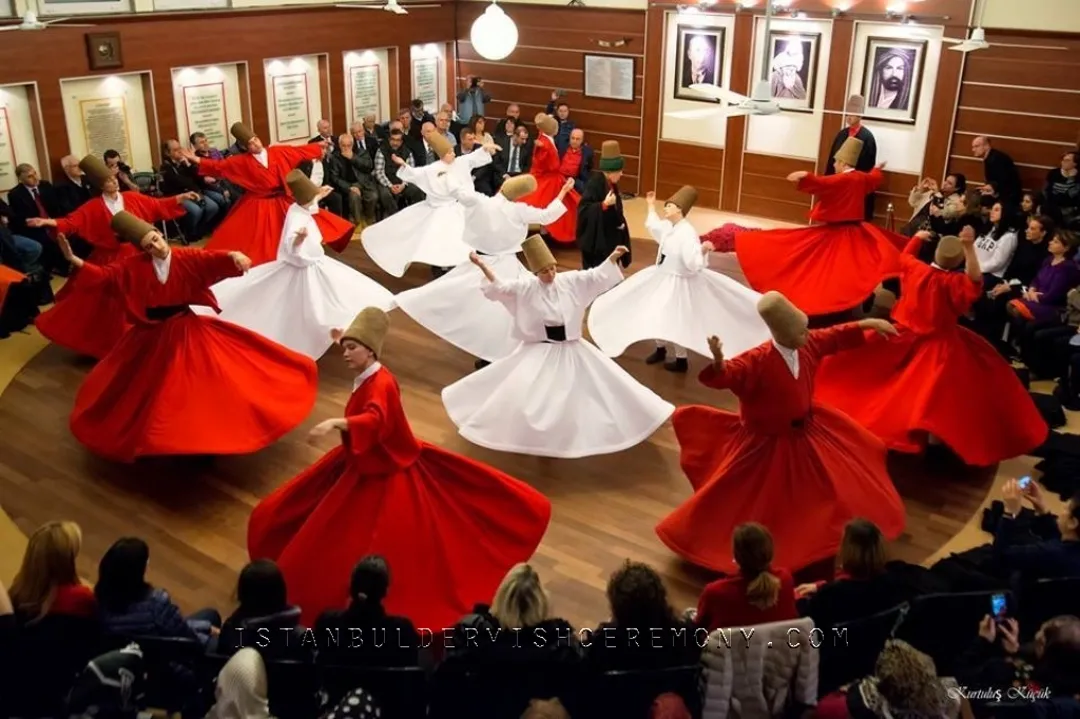
A sema ceremony is a spiritual practice rooted in Mevlevi Sufi tradition, not simply a dance performance. The music, recitation, garments, and movement follow a symbolic structure.
Choose a venue that presents the ceremony respectfully and explains expected behavior. Treat the experience as a cultural and spiritual practice rather than an entertainment photo opportunity.
Waterfronts, Neighborhoods, Parks, and Day Trips
Istanbul’s scale becomes clearer away from the monument core. Ferries, bridges, parks, and residential districts reveal how the city connects Europe, Asia, the Bosphorus, and the Golden Horn.
A Turkey eSIM can support ferry updates, mobile tickets, and route changes, while saved offline details provide a backup when coverage is interrupted.
20. Take a Bosphorus Cruise or Public Ferry
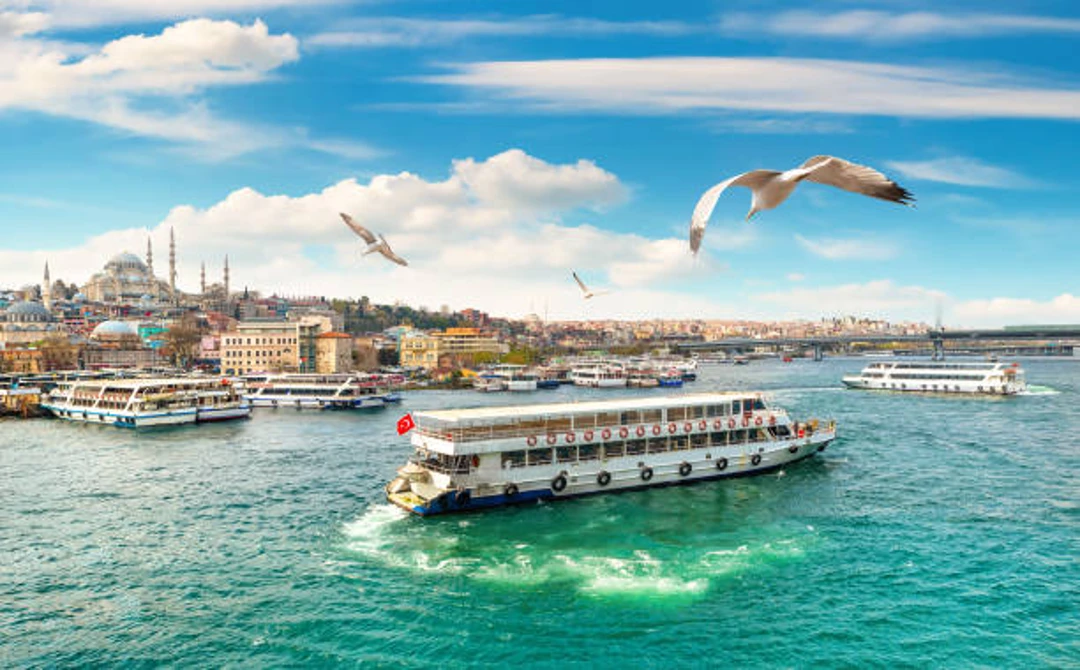
A Bosphorus trip frames palaces, fortresses, waterside mansions, bridges, and hillside neighborhoods from the water. Short cruises fit a busy itinerary, while longer routes make the strait the main activity.
Compare current routes on the official Şehir Hatları Bosphorus tours page. Bring a layer for wind and arrive early enough to find the correct pier.
21. Walk İstiklal Avenue
İstiklal Avenue links Taksim with the Galata area through shops, passages, churches, consulates, cinemas, cafés, and side streets. The historic tram adds character but shares space with heavy pedestrian traffic.
An Istanbul cultural guide can help identify side streets and nearby stops. Daytime suits architecture and shopping; evening brings denser crowds, dining, and nightlife.
22. Cross Galata Bridge on Foot
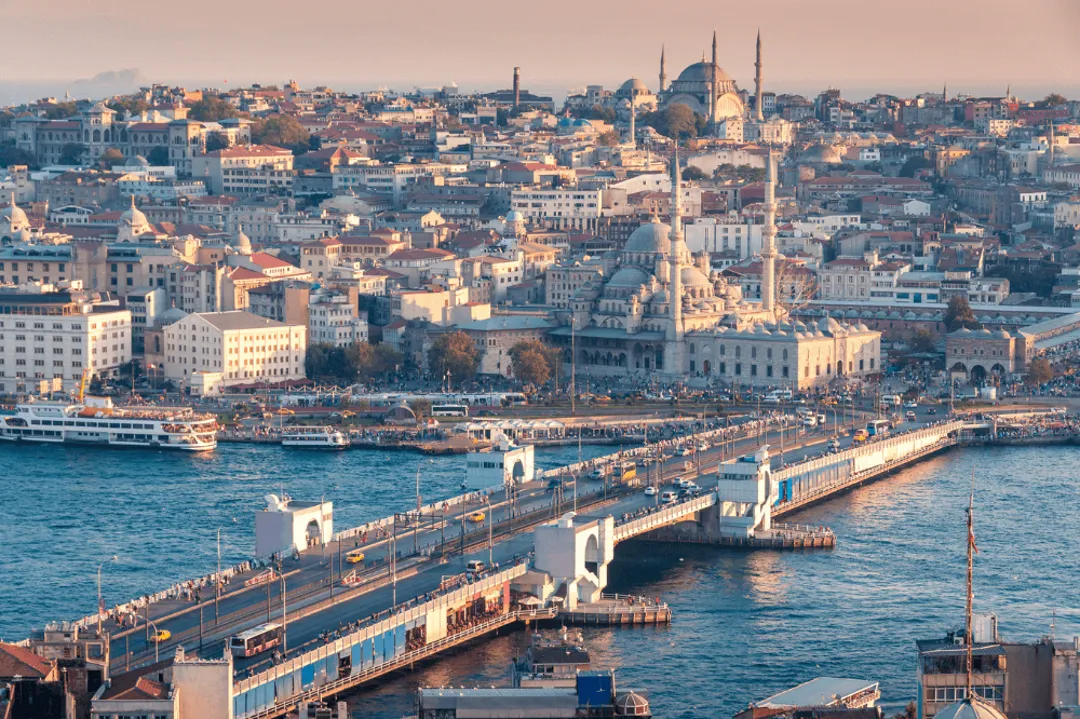
Galata Bridge connects Eminönü with Karaköy and offers views toward the Golden Horn, mosques, ferries, and fishermen. It is a useful walking link between the historic peninsula and Beyoğlu.
Walk one direction and use the tram or ferry for the return. Watch for fishing lines and pause at wider viewpoints rather than in the main pedestrian flow.
23. Escape to the Princes’ Islands
The Princes’ Islands offer waterfront streets, historic houses, walking routes, beaches, and a slower rhythm. Büyükada has the broadest choice of services, while smaller islands can feel quieter.
Check ferry times in both directions and build in a weather buffer. Walking, cycling, and local electric transport replace ordinary private-car sightseeing on the main visitor routes.
24. Relax in Emirgan Park
Emirgan Park spreads across a steep Bosphorus hillside with paths, lawns, ponds, and historic pavilions. Spring tulip displays are the busiest period, but the park works as a green break in other seasons.
Wear shoes for slopes and combine the park with nearby Bosphorus neighborhoods. Weekday mornings are calmer than festival weekends.
25. See the City from Çamlıca Hill
Çamlıca Hill on the Asian side offers a wide view across the Bosphorus and much of Istanbul. The surrounding terraces and landscaped areas make it suitable for a slower afternoon.
Visibility matters more than sunset alone, so choose a clear day when possible. Combine the viewpoint with Üsküdar or a ferry crossing to avoid a long single-purpose trip.
FAQ
1. How many days do I need for Istanbul?
Three days cover the main districts, while four or five allow palaces, museums, parks, and a day trip at a calmer pace.
2. Which Istanbul attractions should I group together?
Group Sultanahmet sights together, then plan separate blocks for the Bazaar Quarter, Galata–Beyoğlu, the Bosphorus shore, and the Asian side.
3. Is Hagia Sophia still a museum?
No. Hagia Sophia functions as an active mosque, with visitor access managed around worship and conservation.
4. Can I visit mosques as a non-Muslim?
Yes, outside prayer closures; wear modest clothing, remove shoes where directed, and remain quiet in worship areas.
5. Is a Bosphorus cruise worth it?
Yes, especially for understanding the city’s geography; choose a short tour for a tight schedule or a longer route for a half-day experience.
6. Is a whirling dervish ceremony only a tourist show?
No. Sema belongs to wider Turkish cultural and spiritual traditions and should be attended respectfully.
Conclusion
The best Istanbul itinerary balances the historic peninsula with markets, museums, neighborhoods, food, and the Bosphorus. Grouping attractions by district saves time and makes the city easier to understand.
Prioritize Hagia Sophia, the Blue Mosque, Topkapı Palace, the Basilica Cistern, Galata–Beyoğlu, and a ferry experience, then add specialist stops that match your interests.
Check official opening, worship, restoration, and transport information shortly before each visit. A flexible route and realistic travel buffers will make these 25 experiences far more enjoyable.