Turkish dondurma is known for a dense, elastic texture that can be cut, stretched, and served more slowly than conventional ice cream. Maraş dondurması from Kahramanmaraş is its best-known regional form.
Salep thickens the mixture, while milk, sugar, churning, and temperature control shape the final bite. Mastic appears in some Turkish ice creams but is not frankincense and is not required in every Maraş recipe.
This guide explains the dessert’s history, ingredients, texture, serving culture, and how to identify a credible version. iRoamly eSIM service can help locate shops and translate ingredient information in Turkey.
Cultural and Historical Significance of Dondurma
Dondurma belongs to a longer history of chilled milk and snow-based sweets in the Ottoman world. Its modern regional identity is especially strong in Kahramanmaraş.
Ottoman-Era Roots
The development of dondurma sits within broader Ottoman history, when palace and urban food traditions combined milk, sweeteners, snow, and aromatic ingredients.
Specific origin stories vary, so it is safer to distinguish documented regional production from later legends about a single inventor.
Maraş Regional Identity
Maraş Dondurması registration identifies it as a protected Turkish geographical indication associated with Kahramanmaraş.
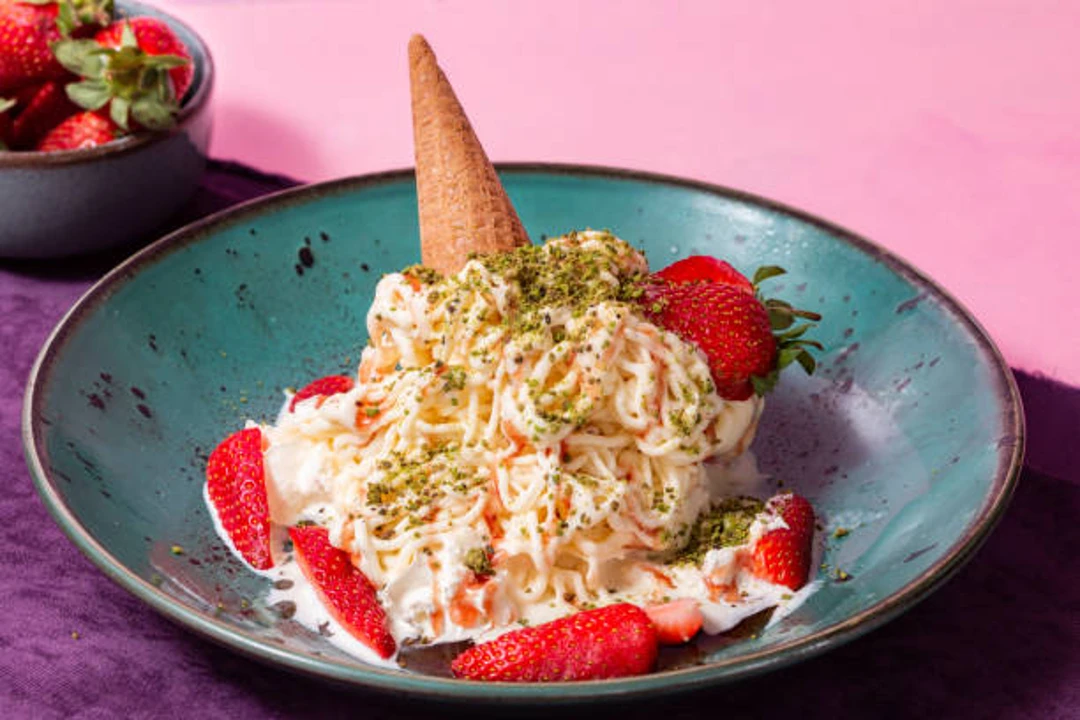
That regional identity reflects ingredients, production knowledge, and a texture sturdy enough to be cut or stretched during service.
Turkish Dessert Culture
Dondurma is one part of a much broader Turkish food tradition that includes milk desserts, syrup pastries, fruit sweets, and regional specialties.
Regional names and recipes still matter, so compare the stated origin and ingredient list instead of treating every elastic ice cream as identical.
Main Ingredients of Dondurma
The official Maraş dondurması description identifies milk, salep, and sugar as the traditional core, with goat milk important to the Kahramanmaraş style.
Salep
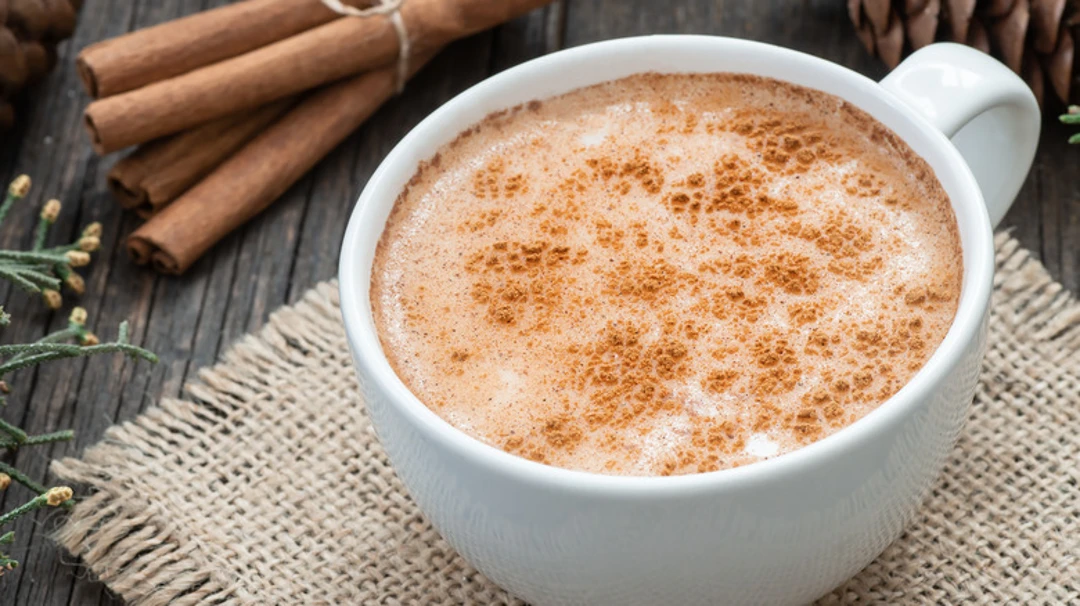
Salep is flour made from the tubers of certain orchids. Its natural thickening properties help create resistance, elasticity, and slower melting. The ingredient is also prepared as a traditional hot drink.
Milk and Sugar
Maraş dondurması traditionally emphasizes goat milk, while other Turkish ice creams may use different milk. Sugar sweetens the base and affects freezing behavior.
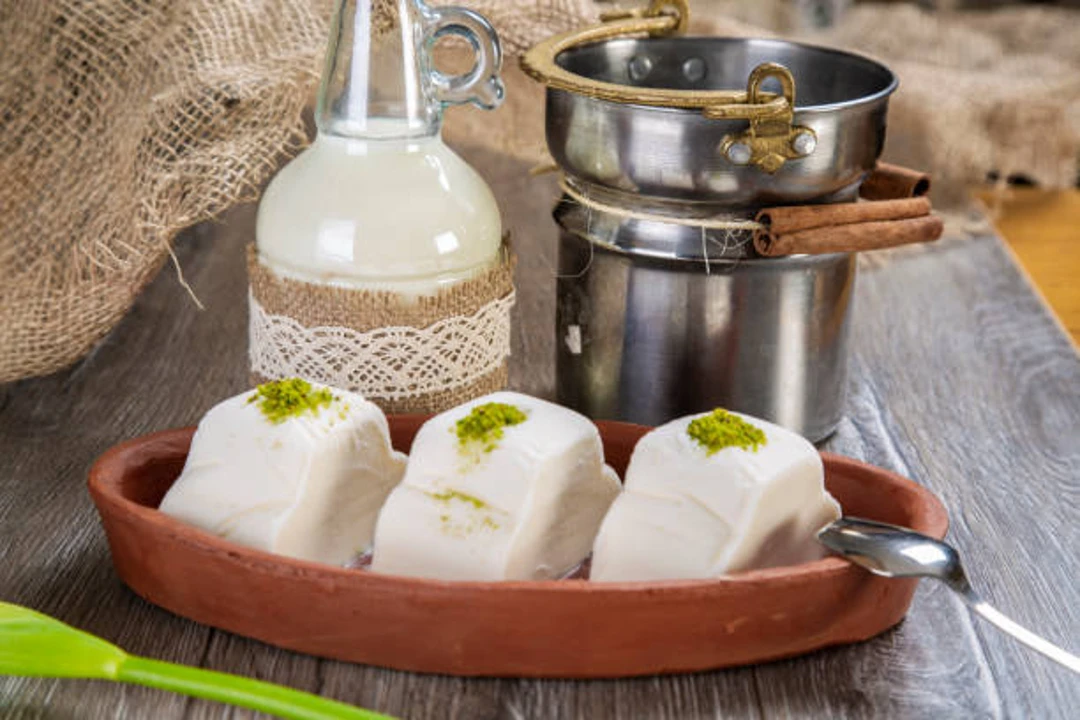
Mastic and Regional Variations
Mastic is a plant resin with a pine-like aroma; it is different from frankincense. Some recipes use it, but salep is the defining thickener in classic Maraş-style dondurma.
Read labels carefully because commercial products may use stabilizers or flavorings instead of the traditional combination.
Ingredient claims are not the same as origin evidence. A broader overview of Ottoman history provides cultural context, while the protected registration remains the stronger source for the modern regional definition.
Comparisons With Other Ice Cream Varieties
Dondurma Versus Gelato
Gelato is smooth and dense because it contains less incorporated air than many ice creams. Dondurma is distinguished by salep-driven elasticity and a firmer, chewier bite.
Within Italian cuisine, gelato is one dessert among many regional specialties, and its appeal comes from smooth density and concentrated ingredient flavor. Dondurma instead makes elasticity, chew, and slow melting central to both texture and the serving experience.
Neither style is automatically more authentic or nutritious. Texture, ingredient quality, freshness, and storage matter more than a broad country label.
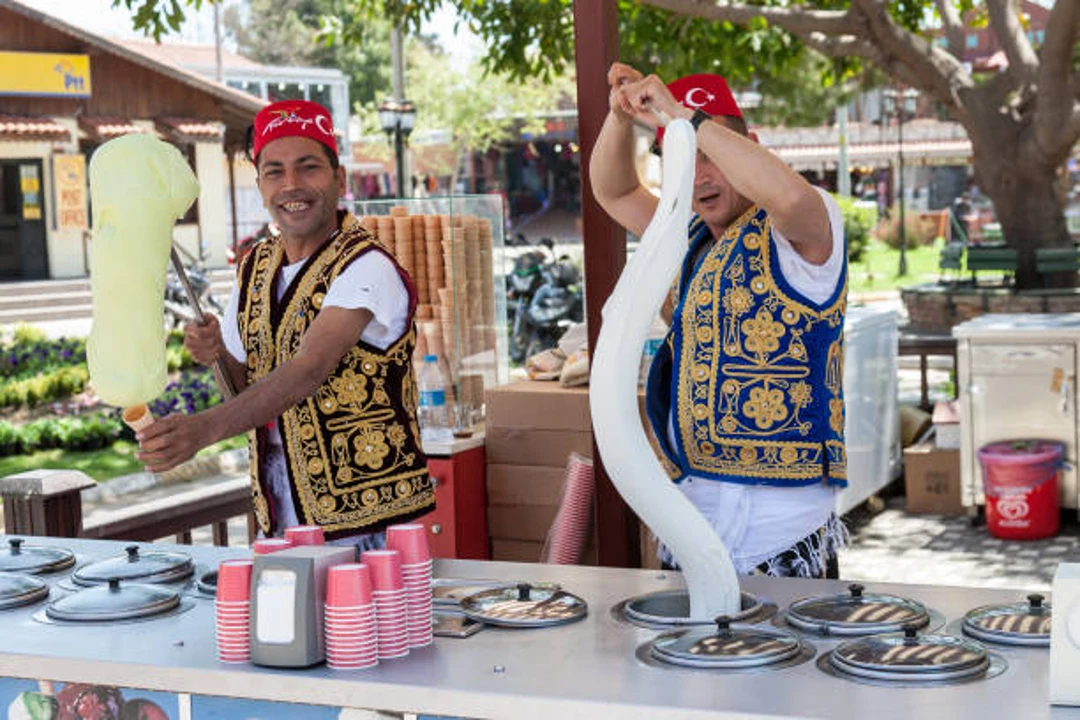
Serving Style and Performance
Long paddles and playful handoffs turn service into part of the experience. The performance reflects contemporary Turkish cultural traditions, but the ice cream should still taste balanced and fresh.
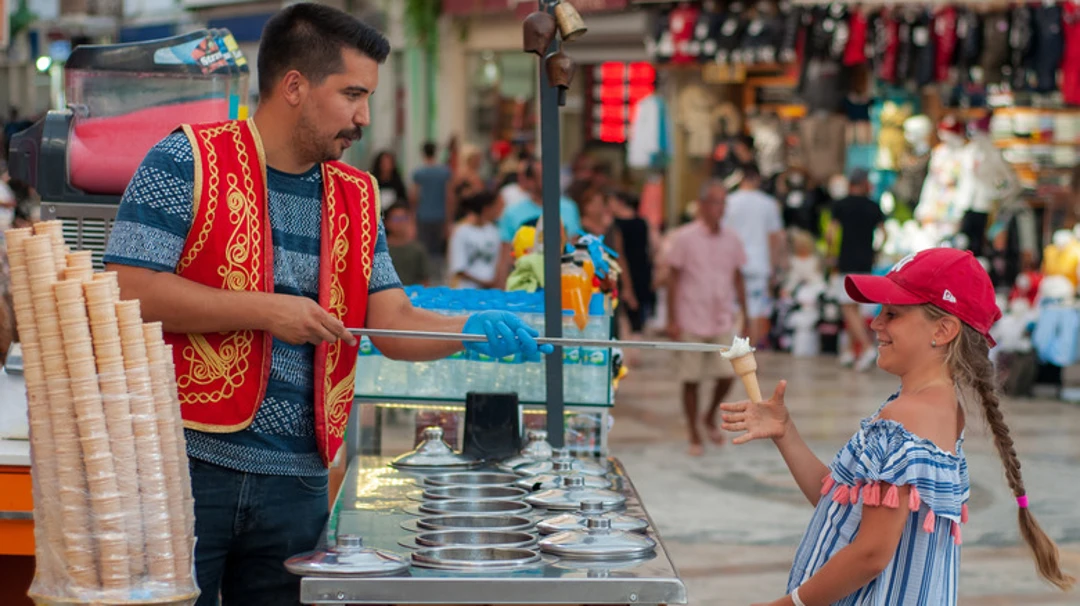
The playful handoff should remain optional and hygienic. Ask for straightforward service if you prefer to receive the cone without a performance.
Where to Find Authentic Dondurma
Finding It in Turkey
Kahramanmaraş is the clearest destination for the regional style, while Istanbul and other cities have specialist shops. A broader guide to places to visit in Turkey helps fit a tasting stop into a realistic route.
Look for a dense texture, a clear ingredient list, high turnover, and cold, clean display conditions. A theatrical service does not prove that traditional salep or goat milk was used.
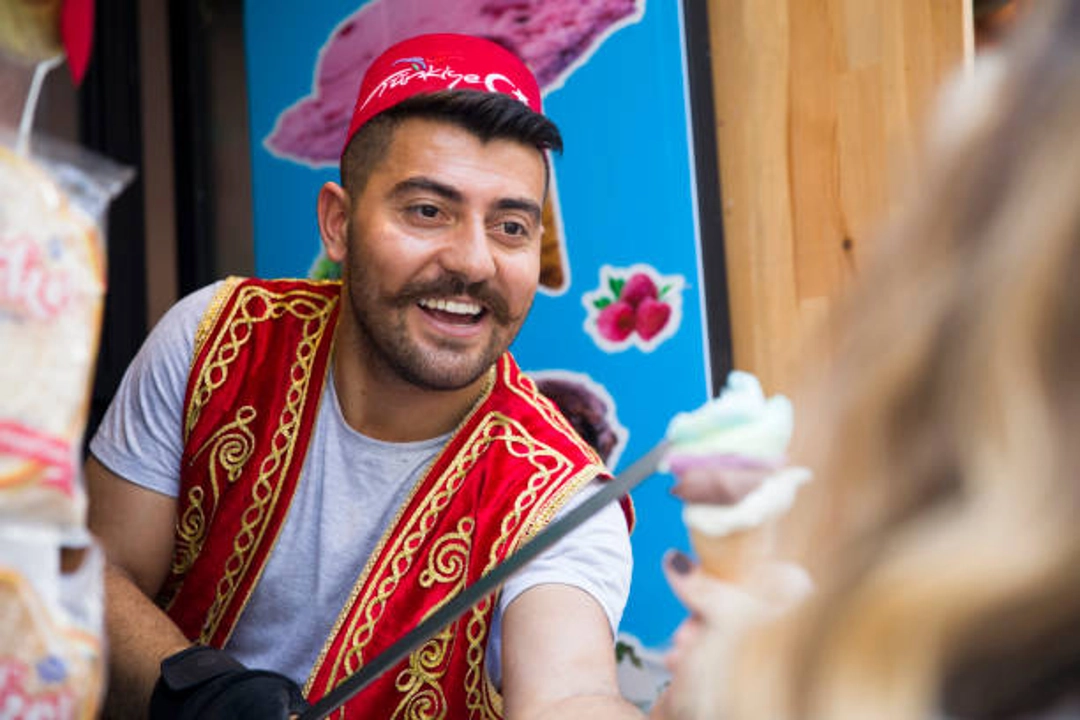
Reading the Label and Display
The protected Maraş name should appear with the producer’s brand, while a packaged product should identify what it is and list its ingredients. Texture alone is not proof of regional origin.
Official Turkish food-label guidance for ice cream also recommends checking that the business is registered or approved and distinguishing ice cream from other edible iced products.
Signal | What to check | What it tells you |
|---|---|---|
Protected regional name | “Maraş Dondurması” displayed with the producer brand | A stronger origin claim than a generic “Maraş-style” description |
Product and ingredients | Milk type, salep, sugar, and any stabilizers or flavorings | Whether the recipe matches the style you expect |
Texture | Dense, elastic, slightly chewy, and slow-melting | A useful consistency clue, but not proof of origin by itself |
Cold handling | Clean utensils, a cold display, and fully frozen packaged stock | How carefully the product is being stored and served |
Searching for a Credible Shop
Ask whether the product is Maraş style, what milk it uses, and whether salep is included. Packaged versions should remain frozen throughout transport.
A Turkey eSIM makes it easier to compare shop locations, translate labels, and confirm opening hours while traveling.
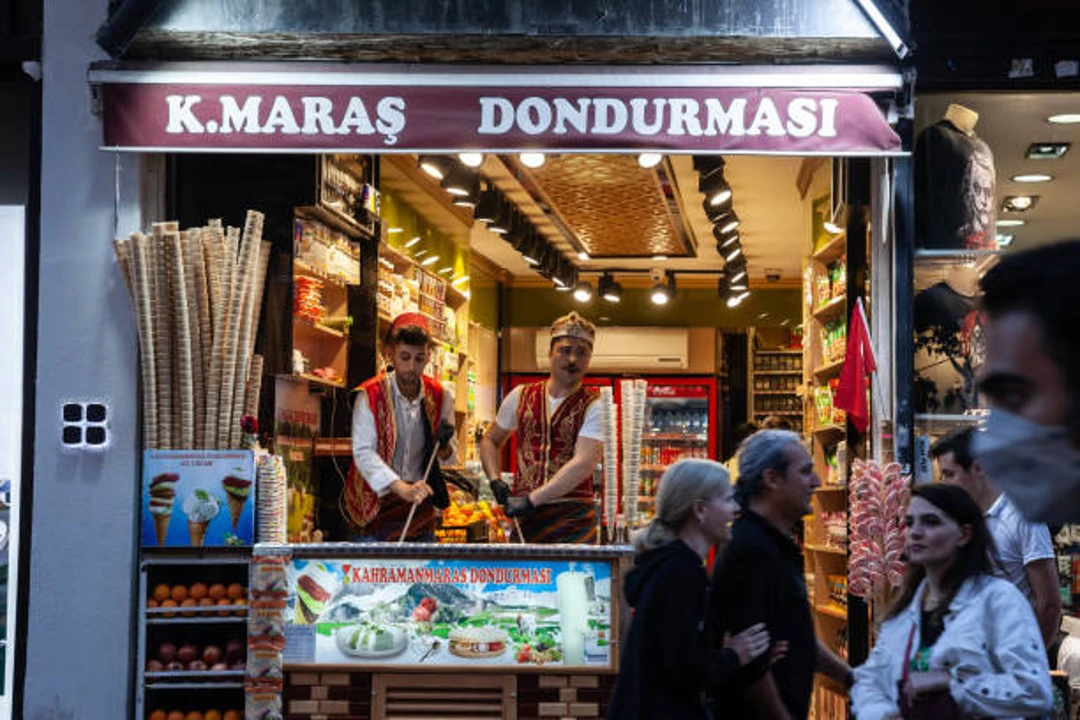
Outside Turkey, specialist Turkish restaurants and grocers may stock dondurma, but texture and ingredients vary. Treat mail-order claims cautiously when cold-chain delivery is unclear.
FAQ
1. What makes Turkish ice cream stretchy?
Salep thickens the base and gives traditional dondurma its elastic, slow-melting texture.
2. Is mastic the same as frankincense?
No, mastic and frankincense are different plant resins.
3. Does all dondurma use goat milk?
Goat milk is central to traditional Maraş dondurması, but other Turkish ice creams may use different milk.
4. Is dondurma healthier than regular ice cream?
Not automatically; nutrition depends on the recipe, portion, sugar, fat, and added ingredients.
5. Where is Maraş dondurması from?
It is associated with Kahramanmaraş in southeastern Turkey.
Conclusion
Dondurma stands apart through salep-driven elasticity, dense texture, and a regional tradition centered on Kahramanmaraş.
Traditional Maraş dondurması emphasizes goat milk, salep, sugar, skilled mixing, and controlled freezing; mastic is a separate optional ingredient in some styles.
Judge a serving by its ingredients, freshness, and handling as well as the performance that accompanies it.